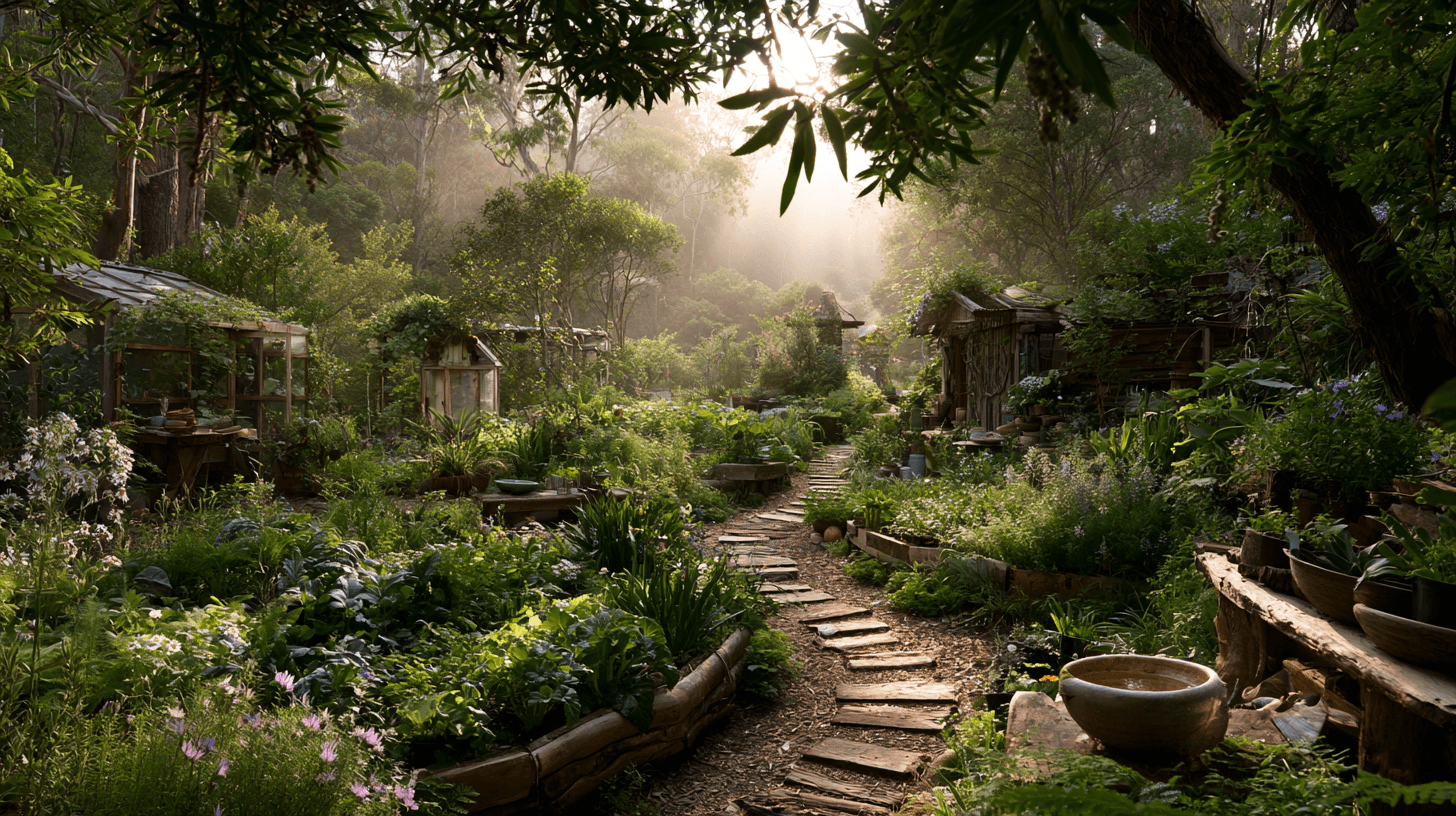
If you’ve ever dreamed of a garden that practically takes care of itself — one that produces abundant food, supports wildlife, builds healthy soil, and gets better every single year — then permaculture might be exactly what you’ve been looking for. In this complete beginner’s guide, we’ll walk you through everything you need to know about permaculture: what it is, why it works, and how to start applying its principles in your own backyard today.
What Is Permaculture?
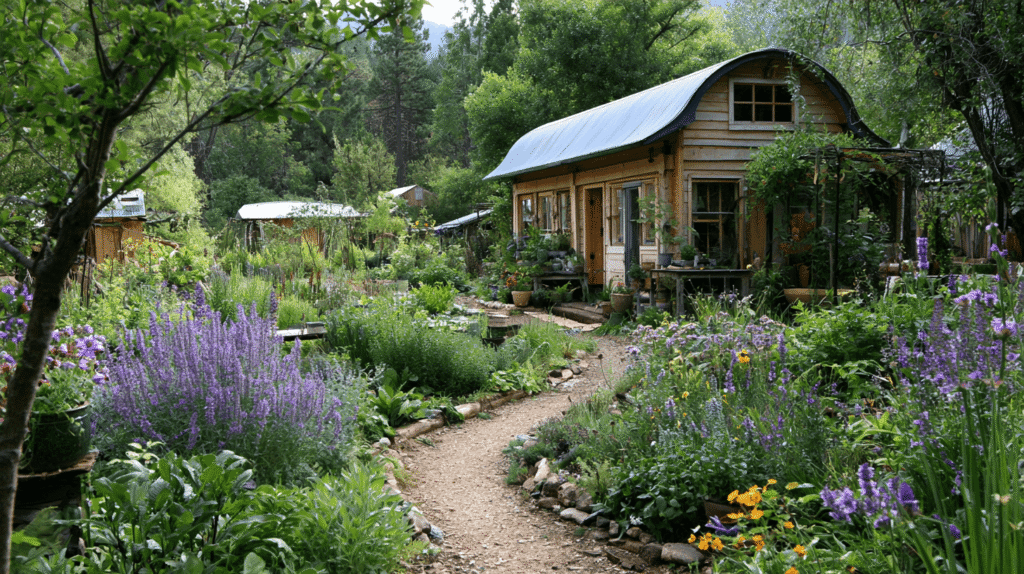
Permaculture is a design philosophy and gardening system that works with nature rather than against it. The word itself is a combination of “permanent” and “agriculture” — or sometimes “permanent culture” — reflecting the core idea of creating food-growing systems that are sustainable, self-renewing, and capable of lasting indefinitely without depleting the resources they depend on.
At its heart, permaculture is about observation. It asks you to look carefully at how natural ecosystems function — how a forest feeds itself, how water moves through a landscape, how plants and animals support one another — and then apply those same patterns and relationships to your garden and homestead.
Unlike conventional gardening, which often works against natural processes (fighting weeds with chemicals, forcing plants into rows, importing fertility through synthetic fertilizers), permaculture designs systems where every element serves multiple functions, waste from one element becomes food for another, and the overall system becomes more productive and resilient over time rather than degrading.
The result, when done well, is a garden that produces an abundance of food and beauty while requiring less and less work as the years go by. It’s a garden that builds soil instead of depleting it, captures water instead of wasting it, and supports biodiversity instead of eliminating it.
Permaculture isn’t just for rural homesteaders with acres of land. Its principles apply equally well to a small urban backyard, a balcony container garden, or a suburban quarter-acre lot. The scale changes — the principles remain the same.
The History of Permaculture
Permaculture was developed in Australia in the 1970s by two visionaries: Bill Mollison, a researcher and naturalist, and David Holmgren, his student. Mollison had spent years observing natural ecosystems — particularly the forests of Tasmania — and became increasingly alarmed by the destructive impact of industrial agriculture on the land, water, and communities that depended on it.
Together, Mollison and Holmgren developed a set of design principles based on their observations of natural systems, indigenous land management practices from around the world, and traditional farming methods that had sustained communities for centuries. In 1978, Mollison published Permaculture One, the foundational text of the movement.
The ideas spread rapidly. Permaculture design courses began being taught around the world. Communities in dozens of countries began applying the principles to everything from backyard gardens to large-scale farms to urban neighborhoods. Today, permaculture has become a global movement with practitioners on every continent, influencing everything from food growing to architecture to community development.
While the formal system is relatively modern, the underlying ideas are ancient. Indigenous cultures around the world have practiced versions of permaculture for thousands of years — managing forests as food systems, directing water across landscapes, building soil through careful observation and intervention. Permaculture essentially rediscovered and codified this wisdom for a modern audience.
The 3 Core Ethics of Permaculture

Everything in permaculture flows from three fundamental ethics. These aren’t just abstract values — they’re the guiding principles that shape every design decision.
Earth Care
The first ethic is caring for the Earth — all living systems, all non-living systems, and the processes that connect them. This means designing and managing land in ways that build rather than deplete: building soil fertility, supporting biodiversity, conserving water, and reducing pollution and waste.
Earth care recognizes that humans are part of nature, not separate from it, and that our long-term wellbeing is inseparable from the health of the natural systems we depend on.
People Care
The second ethic is caring for people — providing access to the resources necessary for people to thrive: food, water, shelter, community, education, and meaningful work. Permaculture isn’t just about growing food; it’s about creating systems that support human health and happiness.
People care also means designing systems that are accessible and enjoyable — gardens and homesteads that people actually want to spend time in, that reduce labor rather than increase it, and that bring communities together.
Fair Share
The third ethic is sometimes expressed as “return of surplus” — the idea that we should take only what we need and share the rest. In practical gardening terms, this might mean composting rather than sending organic matter to landfill, saving seeds to share with neighbors, or contributing excess harvest to community food programs.
Fair share is also about recognizing limits — understanding that the Earth has finite resources and designing our lives and systems to live within those limits rather than constantly pushing against them.
Pro Tip: These three ethics provide a powerful filter for any gardening or land management decision. Before making a change to your garden or property, ask yourself: Does this care for the Earth? Does this care for people? Does this represent a fair share? If the answer to all three is yes, you’re on solid permaculture ground.
The 12 Permaculture Principles Explained
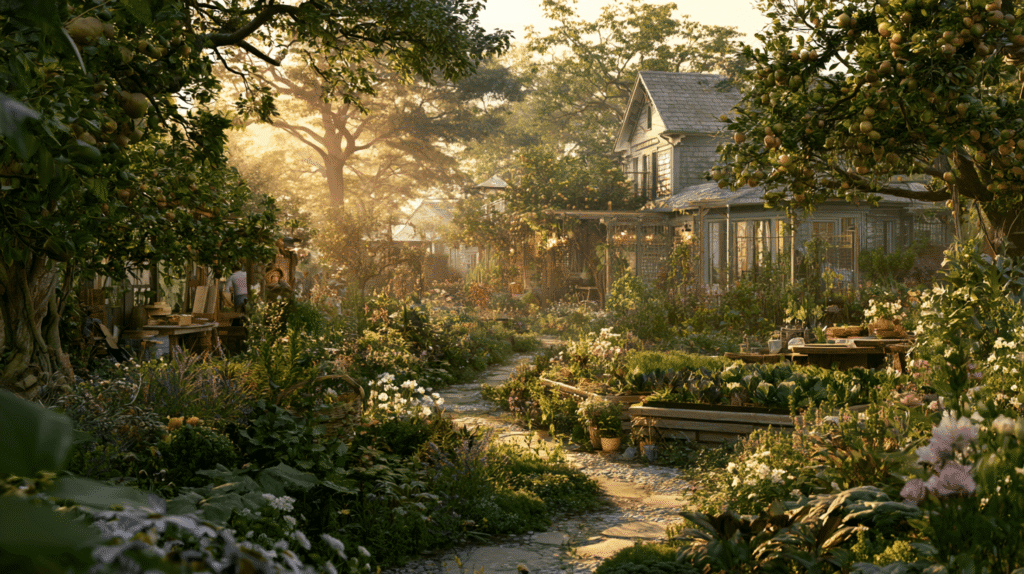
David Holmgren distilled permaculture into 12 design principles that guide how practitioners observe, plan, and manage their systems. Understanding these principles transforms the way you see your garden and landscape.
1. Observe and Interact
“Beauty is in the eye of the beholder.” Before doing anything, spend time watching. Observe how sunlight moves across your property through the seasons. Notice where water flows after rain. Pay attention to which areas are sheltered from wind and which are exposed. The more you observe before you act, the better your designs will be.
2. Catch and Store Energy
“Make hay while the sun shines.” Natural systems are powered by energy flows — sunlight, rainfall, wind, organic matter. Permaculture design aims to capture and store these energies rather than letting them pass through unused. Rainwater harvesting, composting, food preservation, and solar energy all embody this principle.
3. Obtain a Yield
“You can’t work on an empty stomach.” Every element of your garden should produce something useful. A fruit tree provides food, shade, habitat, and beauty. A compost pile produces fertility. Even a garden path, properly designed, can provide habitat for beneficial insects along its edges.
4. Apply Self-Regulation and Accept Feedback
“The sins of the fathers are visited on the children unto the seventh generation.” Design systems that regulate themselves rather than requiring constant intervention. Pay attention to feedback — if plants are struggling, the system is telling you something. Listen and adjust rather than forcing and overriding.
5. Use and Value Renewable Resources and Services
“Let nature take its strain.” Favor resources and processes that renew themselves over those that are depleted by use. Compost over synthetic fertilizer. Rainwater over municipal water. Hand tools over power tools where practical.
6. Produce No Waste
“A stitch in time saves nine.” In a well-designed permaculture system, there is no waste — only resources in the wrong place. Kitchen scraps become compost. Compost becomes soil fertility. Spent plants become mulch. Water that flows off the roof becomes irrigation. Design your system so that the output of every element feeds another element.
7. Design from Patterns to Details
“Can’t see the wood for the trees.” Observe the patterns in nature — the branching of rivers, the spiral of a shell, the edge where forest meets meadow — and let these patterns guide your designs before getting lost in the details. A good overall design will make the details easier and more effective.
8. Integrate Rather Than Segregate
“Many hands make light work.” Place elements in your garden so they work together and support one another. Plant nitrogen-fixing trees near heavy feeders. Grow pest-repelling herbs near vulnerable vegetables. Design for relationships and connections rather than isolated elements.
9. Use Small and Slow Solutions
“The bigger they are, the harder they fall.” Small, thoughtful interventions are usually more sustainable and effective than large, dramatic ones. Start with a small raised bed rather than converting your entire yard at once. Build soil slowly through composting rather than importing large quantities of amendments.
10. Use and Value Diversity
“Don’t put all your eggs in one basket.” Diversity creates resilience. A garden with 30 species of plants is far more resistant to pest outbreaks, disease, and weather extremes than a monoculture of one or two crops. Diversity in plant species, structures, and functions makes the whole system more stable and productive.
11. Use Edges and Value the Marginal
“Don’t think you are on the right track just because it’s a well-beaten path.” The edge where two ecosystems meet — forest and meadow, land and water — is one of the most productive and biodiverse places in nature. Design your garden to maximize edge: curved beds rather than straight ones, ponds with irregular shorelines, layered plantings that create multiple habitat zones.
12. Creatively Use and Respond to Change
“Vision is not seeing things as they are but as they will be.” Change is inevitable — in climate, in your life circumstances, in your garden. Design flexible systems that can adapt and evolve. See problems as opportunities and disturbances as chances to improve the system.
Permaculture Zones: Designing Your Space Smartly
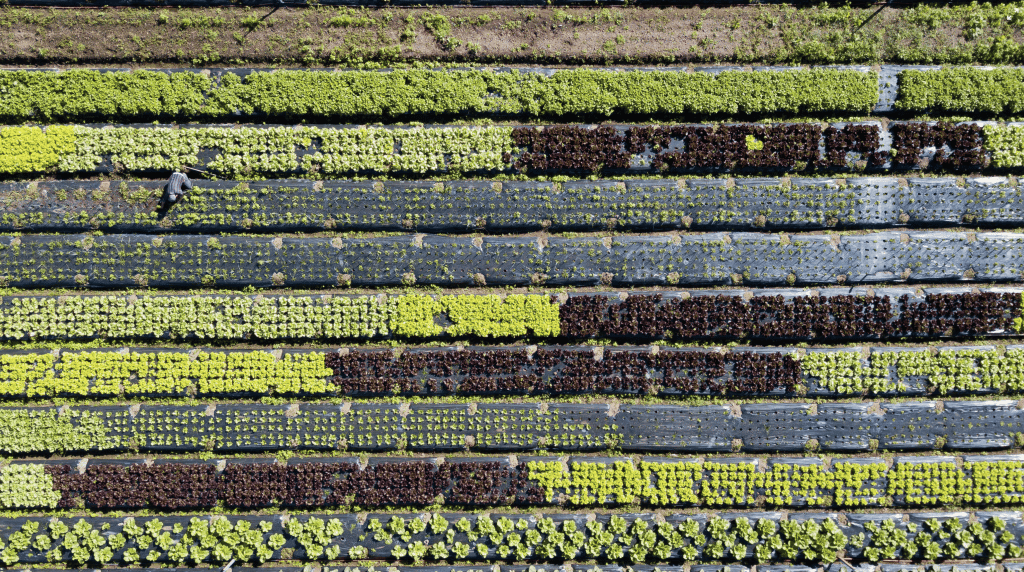
One of the most practical tools in permaculture design is the concept of zones — a way of organizing your property based on how frequently different areas are visited and how much attention different elements need.
Zone 0: The Home
Zone 0 is your house — the center of activity and energy use. Permaculture design considers how the house itself can be made more efficient and integrated with the garden: passive solar design, rainwater harvesting from the roof, composting food scraps, growing herbs on windowsills.
Zone 1: The Kitchen Garden
Zone 1 is immediately outside your door — the area you visit multiple times every day. This is where you grow the things that need the most attention and frequent harvesting: salad greens, herbs, tomatoes, peppers, and other vegetables you use daily. Because you pass through this zone constantly, you’ll notice pest problems early, harvest at peak ripeness, and water consistently.
Zone 2: The Main Garden
Zone 2 is visited once or twice a day. This is where you grow larger vegetables, fruit bushes, chickens (if you have them), and compost systems. Plants here need regular but not constant attention — things like squash, beans, brassicas, and berry bushes.
Zone 3: The Orchard and Main Crops
Zone 3 is visited weekly. Fruit trees, nut trees, larger food crops like potatoes and corn, and any livestock that needs daily feeding but not constant observation. This zone is largely self-managing once established.
Zone 4: Semi-Wild
Zone 4 is visited occasionally — perhaps monthly. This might be a woodlot for timber and firewood, a foraging area, or land managed for wildlife habitat. Minimal intervention, maximum observation.
Zone 5: Wilderness
Zone 5 is left entirely wild — a space for nature to do as it pleases, providing habitat, biodiversity, and the inspiration that comes from observing truly natural systems.
For most suburban backyard gardeners, you’re primarily working with Zones 0, 1, and 2. The zone concept helps you think about where to place elements based on how much attention they need — high-maintenance plants close to the house, low-maintenance ones further away.
Key Permaculture Techniques for Your Backyard
Permaculture has developed a rich toolkit of practical techniques. Here are the most valuable ones for backyard gardeners.
Food Forests
A food forest is perhaps the most iconic permaculture creation — a multi-layered planting system modeled on the structure of a natural woodland but designed to produce food at every level. A mature food forest typically has seven layers:
- Canopy layer — large fruit and nut trees
- Sub-canopy layer — smaller fruit trees, dwarf varieties
- Shrub layer — fruiting shrubs like currants, gooseberries, elderberries
- Herbaceous layer — perennial vegetables and herbs
- Ground cover layer — low-growing edibles like strawberries and thyme
- Root layer — root vegetables and tubers
- Vine layer — climbing plants like kiwi, grapes, and beans
A food forest requires significant investment of time and plants in the establishment phase but becomes increasingly productive and self-managing as it matures. Even a small backyard can accommodate a simplified food forest with two or three layers. Food forest design guide
Hugelkultur
Hugelkultur (from the German for “hill culture”) is a raised bed technique that uses buried wood as the foundation for an incredibly fertile growing system. Logs, branches, and woody debris are piled up and covered with layers of compost, soil, and organic matter. As the wood slowly decomposes over years, it acts like a sponge — absorbing water during wet periods and releasing it slowly during dry periods — while providing a continuous stream of nutrients to plants growing above.
A well-built hugelkultur mound can go years without supplemental watering once established, and the fertility increases year after year as the buried wood continues to break down. Organic gardening tips for beginners
Swales
A swale is a water-harvesting earthwork — essentially a level trench dug along the contour of a slope, designed to slow water down and allow it to soak into the ground rather than running off. Swales are one of the most powerful tools for managing water in a permaculture landscape, turning rainfall from a brief event into a long-term resource stored in the soil.
On a home scale, even a simple swale along the contour of a gently sloping yard can dramatically reduce the need for supplemental irrigation by capturing rainwater where it falls and directing it toward your plants and trees.
Companion Planting
Companion planting — growing mutually beneficial plants together — is a cornerstone of permaculture design. Rather than growing plants in isolated monocultures, permaculture gardeners design plant communities where each species supports the others through pest control, nitrogen fixation, ground covering, pollinator attraction, and nutrient cycling.
Sheet Mulching
Also known as lasagna gardening, sheet mulching is a no-dig method for creating new garden beds over existing grass or weeds. Layers of cardboard (which smother existing vegetation) are covered with alternating layers of carbon-rich and nitrogen-rich organic matter — straw, compost, wood chips, leaves, kitchen scraps — building a deep, fertile growing medium from the top down.
Sheet mulching is one of the best ways to establish new garden areas quickly and inexpensively without the back-breaking work of digging or the use of herbicides.
Building Healthy Soil the Permaculture Way
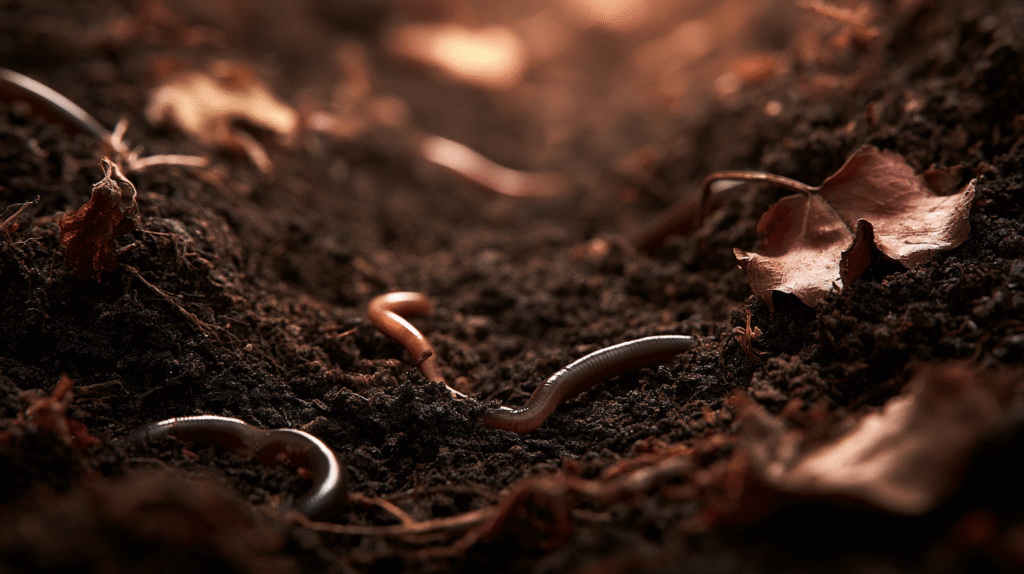
In permaculture, soil health is everything. Healthy soil — teeming with bacteria, fungi, worms, and countless other organisms — is the foundation of a productive and resilient garden. Permaculture approaches soil building very differently from conventional gardening.
The No-Dig Philosophy
Conventional gardening involves regular tilling and digging, which disrupts the complex web of fungal networks and soil organisms that make healthy soil so productive. Permaculture favors a no-dig approach — building fertility from the top down through mulching, composting, and cover cropping rather than turning the soil.
When you stop digging, soil structure improves dramatically. Worm populations increase. Fungal networks — which help plants access nutrients and water — establish and expand. Carbon is stored rather than released. The soil becomes progressively more alive and fertile year after year.
Composting
Composting is the backbone of permaculture soil building. Every scrap of organic matter — kitchen waste, garden trimmings, cardboard, wood ash, animal manure — has value as future soil fertility. A well-managed compost system transforms these materials into rich, dark humus that feeds plants, improves soil structure, and supports soil life.
In a permaculture garden, multiple compost systems often run simultaneously: a hot compost pile for fast breakdown of kitchen and garden waste, a worm bin for processing finer materials, and perhaps a cold pile for slower decomposition of woody materials.
Mulching
Keeping soil covered at all times is one of the most important permaculture practices. Bare soil loses moisture, erodes in rain, and bakes in sun. A thick layer of mulch — wood chips, straw, shredded leaves, or living ground cover — moderates soil temperature, retains moisture, suppresses weeds, and feeds soil organisms as it breaks down.
In a mature permaculture garden, the soil is rarely if ever bare. Living plants or organic mulch covers every surface, mimicking the way natural forests keep the ground protected year-round.
Cover Cropping
Cover crops — plants grown specifically to be incorporated back into the soil rather than harvested — are a powerful soil-building tool. Leguminous cover crops like clover, vetch, and winter peas fix atmospheric nitrogen into the soil, providing free fertility for subsequent plantings. Deep-rooted cover crops like daikon radish break up compaction and mine nutrients from deep in the soil profile.
Water Management in Permaculture

Water is the most precious resource in any garden, and permaculture design places enormous emphasis on capturing, storing, and using water wisely.
Slow It, Spread It, Sink It
The fundamental permaculture approach to water management is captured in three words: slow it, spread it, sink it. Rather than letting rainwater run rapidly off your property — taking topsoil with it — permaculture design slows the flow, spreads it across the landscape, and allows it to sink into the ground where it can be stored in the soil and accessed by plants.
Swales, rain gardens, ponds, and mulched planting beds all contribute to this approach. Even a simple garden design that creates multiple opportunities for water to pool and soak in rather than run off can dramatically reduce irrigation needs.
Rainwater Harvesting
Collecting rainwater from roof surfaces and storing it in tanks or cisterns is one of the simplest and most effective permaculture water strategies. Even a modest collection system can capture thousands of gallons during rainy periods, providing a reserve for dry spells.
Greywater Systems
Water that has been used for washing — from sinks, showers, and laundry — can be directed to water fruit trees and garden beds rather than going down the drain. Simple greywater systems can dramatically reduce household water consumption while providing irrigation for the garden.
Drought-Resilient Design
By building deep, organic-rich soil that acts as a water sponge, mulching heavily, planting densely to shade the soil, and selecting drought-tolerant plant varieties, permaculture gardens can remain productive through dry periods that would devastate conventionally managed gardens.
Permaculture Plants: What to Grow
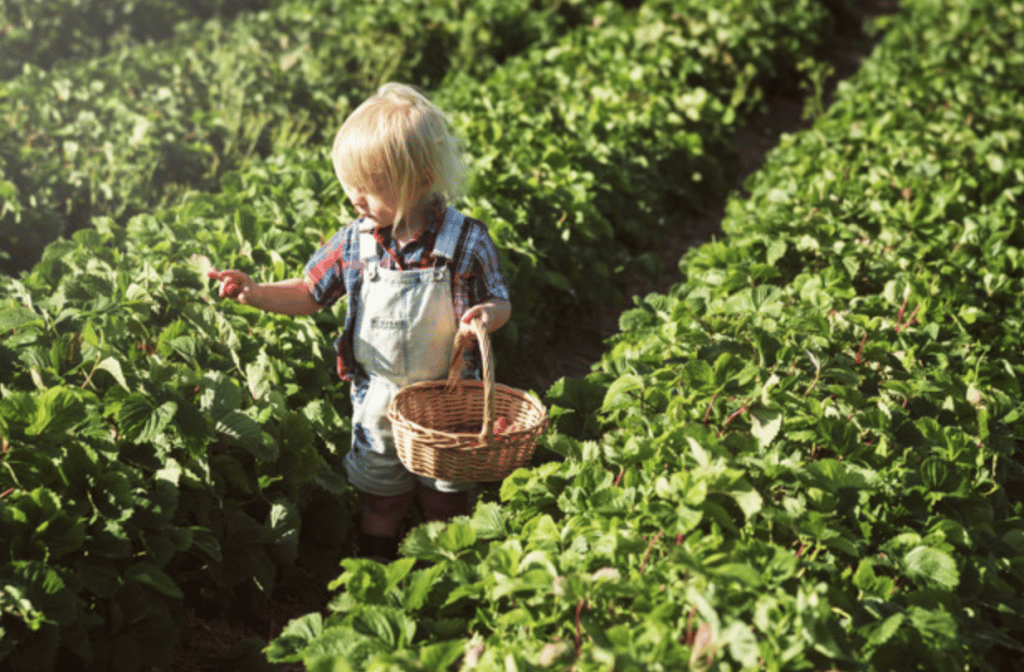
Permaculture favors perennial plants — those that come back year after year — over annuals that must be replanted each season. Perennials require less work, build deeper root systems, and contribute more to long-term soil health.
Essential Perennial Food Plants
Fruit trees are the backbone of any permaculture garden. Apple, pear, plum, cherry, and fig trees provide food for decades with minimal ongoing care once established. Even a small yard can accommodate two or three dwarf or semi-dwarf fruit trees.
Berry bushes — blueberries, currants, gooseberries, raspberries, blackberries — are among the most productive food plants per square foot in any climate. They require minimal maintenance once established and provide abundant fruit year after year.
Asparagus is one of the most rewarding perennial vegetables. Plant it once and harvest for 20+ years. It’s one of the first vegetables ready in spring, providing food when little else is available.
Artichokes are architectural plants that produce delicious food while adding dramatic beauty to the garden. In mild climates they’re truly perennial; in colder areas they can be mulched through winter.
Herbs — particularly woody perennials like rosemary, thyme, sage, oregano, and mint — provide constant harvests with minimal care and perform valuable functions as companion plants and pollinator attractors.
Nitrogen Fixers
Nitrogen-fixing plants are essential in permaculture design. These plants host bacteria in their roots that capture atmospheric nitrogen and convert it into a form that plants can use — essentially manufacturing free fertilizer. Key nitrogen fixers include:
- Clover — excellent ground cover and bee forage
- Beans and peas — annual nitrogen fixers that also provide food
- Alder trees — powerful nitrogen fixers for larger landscapes
- Autumn olive — fast-growing shrub that fixes large quantities of nitrogen
- Black locust — excellent nitrogen-fixing tree that also provides timber and bee forage
Dynamic Accumulators
Dynamic accumulators are plants with deep root systems that mine nutrients from deep in the soil and concentrate them in their leaves. When these leaves fall or are cut and composted, those nutrients become available to shallower-rooted plants. Classic examples include comfrey (one of the most valued plants in permaculture), yarrow, dandelion, and chicory.
Pro Tip: Comfrey is often called the permaculture workhorse. It grows vigorously, produces enormous quantities of nutrient-rich leaves that make excellent compost activator and liquid fertilizer, attracts bees with its flowers, and has deep roots that break up subsoil. Plant it at the base of fruit trees and chop the leaves regularly to feed the soil around them.
How to Start a Permaculture Garden Step by Step
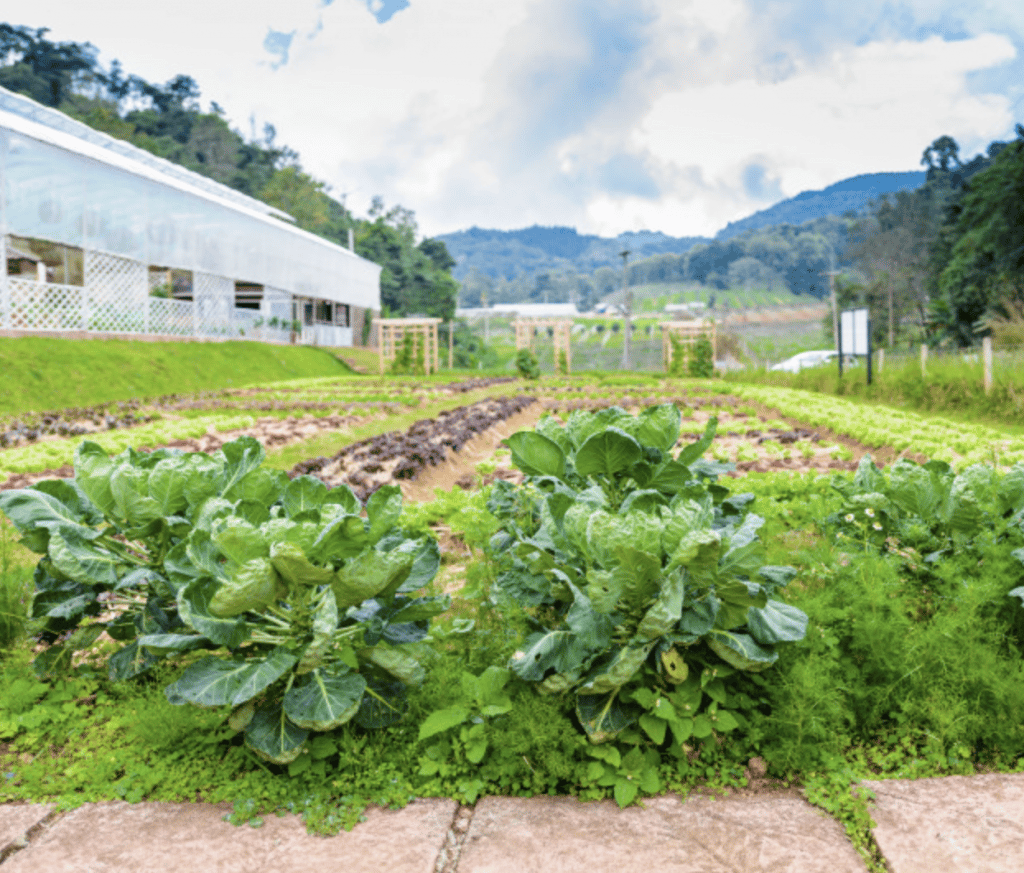
Starting a permaculture garden doesn’t require a complete overhaul of your property. The best approach is gradual, thoughtful, and observation-based.
Step 1: Observe Your Property
Before doing anything else, spend time observing your land through at least one full season if possible. Notice:
- Where does the sun shine at different times of day and year?
- Where does water collect or run after rain?
- Which areas are sheltered and which are exposed?
- What plants are already growing and thriving?
- Where do birds, bees, and other wildlife spend time?
Keep a journal of your observations. This information is invaluable for making good design decisions.
Step 2: Draw a Base Map
Sketch a simple map of your property showing the house, existing trees and structures, slopes, and sun angles. This doesn’t need to be precise — it’s a thinking tool, not an engineering drawing. Use it to plan where different elements might go.
Step 3: Start with Zone 1
Begin with the area immediately outside your door. Establish a small kitchen garden — perhaps a raised bed or two — where you can grow herbs and salad greens that you use daily. Getting comfortable with intensive food growing close to home is the best foundation for expanding into more complex permaculture design. raised bed gardening complete guide
Step 4: Build Your Soil
Start composting immediately if you aren’t already. Begin sheet mulching areas where you plan to establish new beds. The earlier you start building soil, the sooner you’ll have the fertility base your garden needs.
Step 5: Plant Perennials
As your comfort and confidence grow, begin establishing perennial elements — fruit trees, berry bushes, perennial herbs. These take time to mature, so the sooner you plant them, the sooner they’ll be producing.
Step 6: Add Water Harvesting
Look for simple opportunities to slow and sink water on your property. Even simple measures like positioning mulched beds to capture roof runoff or creating a small rain garden in a low spot can make a significant difference.
Step 7: Observe, Adjust, and Expand
Permaculture is an ongoing practice of observation and refinement. Pay attention to what’s working and what isn’t. Celebrate the successes and learn from the failures. Gradually expand the permaculture elements of your garden as your knowledge and confidence grow.
Common Permaculture Mistakes Beginners Make
Learning from others’ mistakes is one of the fastest paths to success. Here are the most common pitfalls new permaculture gardeners encounter.
Trying to do everything at once. Permaculture is rich with exciting ideas and it’s tempting to implement them all immediately. The result is usually an overwhelming, half-finished mess. Start small, do it well, and expand gradually.
Skipping the observation phase. The temptation to start digging and planting is powerful, but designs made without careful observation often create more work than they save. A season of watching before acting can prevent years of correcting mistakes.
Planting too many annuals, not enough perennials. Annual vegetables are rewarding but labor-intensive. A truly permaculture garden is dominated by perennials that come back stronger every year with minimal work. Beginners often under-invest in perennials because the rewards take longer to arrive.
Ignoring water. Water management is central to permaculture but easy to overlook when you’re focused on plants. Design water harvesting and management into your system from the beginning.
Expecting instant results. Permaculture systems improve over time. The first year is often the hardest — soil is still building, perennials are establishing, systems aren’t yet integrated. Trust the process and play the long game.
Over-complicating the design. Permaculture can become an intellectual exercise that never translates into actual garden. Remember: a simple, well-executed garden bed is worth more than an elaborate design that never gets built.
Pro Tips for Permaculture Success
Start a compost system on day one. Everything else in your permaculture garden depends on fertility, and compost is the foundation of fertility. Start composting before you do anything else.
Learn to identify what’s already growing. Many “weeds” are valuable permaculture plants — dandelion is a dynamic accumulator and early bee food, clover fixes nitrogen, nettles make excellent compost activator. Before removing anything, find out what it is and what it does.
Connect with your local permaculture community. Permaculture design courses are available worldwide and provide a structured introduction to the full system. Local permaculture groups, community gardens, and online forums are invaluable resources for region-specific knowledge.
Think in guilds. A guild is a group of plants that work together to support a central element — typically a fruit tree. Design plant communities rather than isolated individuals. A classic apple tree guild might include comfrey for nutrient accumulation, daffodils to deter pests, fennel to attract beneficial insects, and clover as a nitrogen-fixing ground cover.
Document everything. Keep a garden journal with photos, planting dates, observations, and notes on what worked and what didn’t. This record becomes more valuable every year and is the foundation of a truly evolving, improving permaculture system.
Be patient with perennials. The old gardening saying applies perfectly to permaculture: “First year sleeps, second year creeps, third year leaps.” Give perennial plants time to establish their root systems before judging their performance. Food forest design guide
Frequently Asked Questions
Do I need a lot of land to practice permaculture? Not at all. Permaculture principles apply at any scale — from a small balcony container garden to hundreds of acres. The principles of observation, working with nature, building soil health, and creating integrated systems apply whether you have 200 square feet or 200 acres.
Is permaculture the same as organic gardening? They overlap significantly but aren’t the same thing. Organic gardening is primarily about avoiding synthetic chemicals. Permaculture is a broader design philosophy that includes organic principles but goes much further — encompassing water management, land design, plant communities, and whole-system thinking. Most permaculture gardeners are organic by default. DIY organic gardening tips for beginners
How long does it take to establish a permaculture garden? This depends enormously on scale and approach. A small kitchen garden can be productive within weeks. A food forest takes 5-10 years to reach full production. The most honest answer is that a permaculture garden is never “finished” — it’s always evolving and improving. The first three years typically require the most input; after that, the system becomes increasingly self-managing.
What’s the difference between permaculture and traditional gardening? Traditional gardening tends to work against natural processes — fighting weeds, importing fertility, controlling pests. Permaculture works with natural processes — encouraging beneficial relationships, building native fertility, designing pest resistance into the system. Traditional gardens often require more work over time as soil degrades; permaculture gardens require less work as systems mature and improve.
Can I practice permaculture in a cold climate? Absolutely. Permaculture principles apply in every climate. Cold climates have their own permaculture strategies — cold-hardy perennial plants, season extension techniques, deep mulching for winter soil protection, and careful attention to microclimates that can extend the growing season.
How much does it cost to start a permaculture garden? One of permaculture’s great virtues is that it can be started with very little money. Sheet mulching uses cardboard (free from local businesses) and organic matter you may already have. Seeds are inexpensive. Many permaculture plants can be obtained as divisions or cuttings from other gardeners. The biggest investment is time and attention — which are exactly what permaculture rewards most generously.
What is a permaculture design course (PDC)? A Permaculture Design Certificate course is a 72-hour curriculum that provides a comprehensive introduction to permaculture design principles and techniques. PDCs are offered worldwide, both in person and online, and provide a strong foundation for anyone serious about applying permaculture at home or professionally.
How is permaculture different from rewilding? Rewilding is about removing human management and allowing natural processes to restore ecosystems. Permaculture is about thoughtful human management that mimics and supports natural processes while producing food and other resources. They share a respect for natural systems but differ in the degree of human involvement.
Permaculture offers something rare in the modern world — a way of growing food and caring for land that gets easier and more productive over time rather than harder and more depleted. It asks you to slow down, observe carefully, and work with the extraordinary intelligence of natural systems rather than constantly fighting against them. Start small, be patient, and trust the process. Your backyard has the potential to become something far more beautiful, productive, and alive than you might imagine.
Ready to start your permaculture journey? Begin with a simple compost pile and a season of careful observation — and let the transformation unfold from there. 🌱
Related Articles:
- Food Forest Design: How to Build One in Your Backyard
- Complete Guide to Growing Tomatoes
- Garden Lighting Ideas