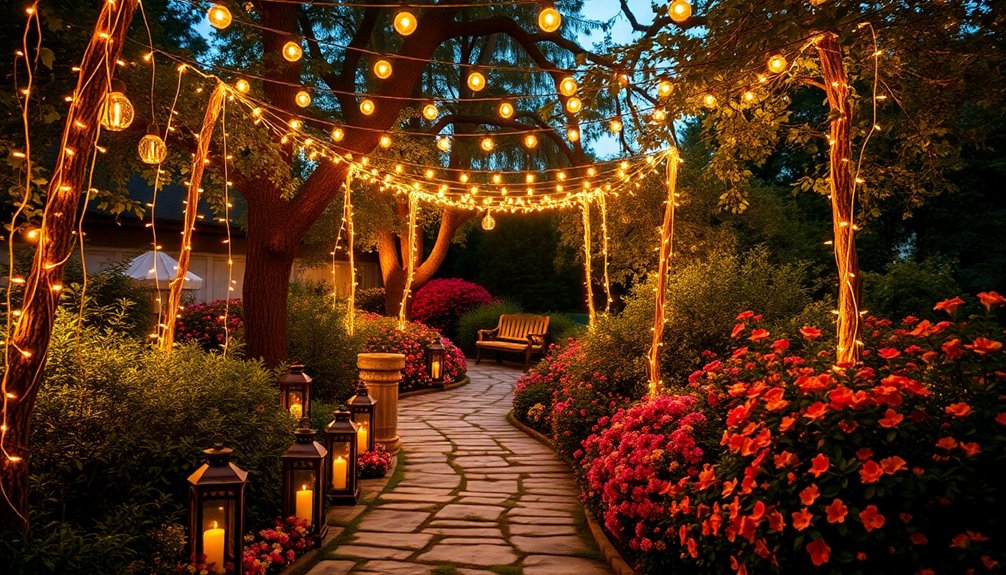
The right garden lighting transforms your backyard from a space you enjoy during daylight hours into a magical outdoor retreat you can appreciate morning, noon, and night. Whether you’re looking to create a warm, intimate atmosphere for evening entertaining, highlight the best features of your landscape, improve safety along pathways and steps, or simply extend the hours you spend outdoors, this complete guide covers everything you need to know about garden lighting — from planning and design principles to the best types of lights for every application.
Why Garden Lighting Matters
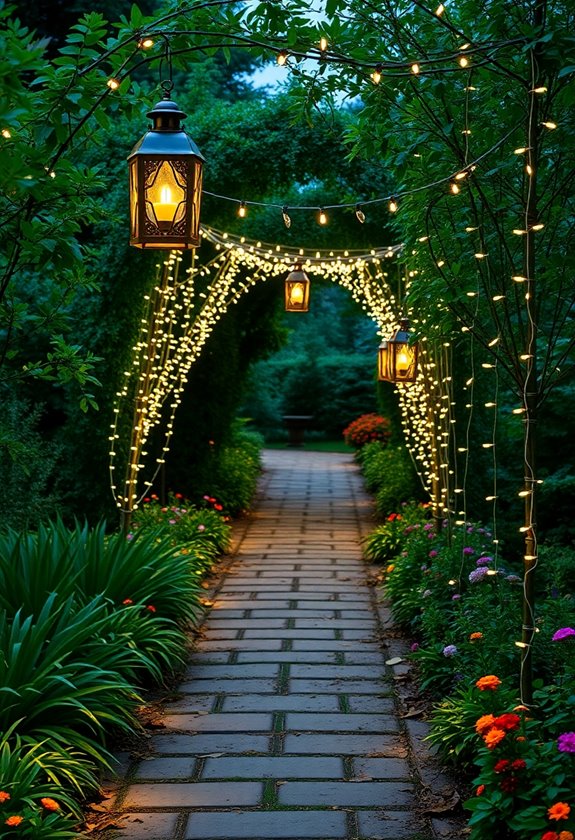
Most people spend significant time, money, and energy making their gardens beautiful — planting flowers, building raised beds, creating pathways, installing water features — and then abandon all of that beauty the moment the sun goes down. Garden lighting changes that equation entirely.
A well-lit garden is a completely different experience from a daylit one. Shadows deepen. Textures become dramatic. Focal points that compete with each other in full daylight become singular, jewel-like highlights in the dark. Water features that are pleasant in daylight become mesmerizing at night when lit from below. Trees that are simply background during the day become architectural sculptures when uplighted after dark.
Beyond beauty, garden lighting serves important practical functions. Pathway lighting makes moving around your garden safe after dark. Security lighting deters unwanted visitors. Lighting near outdoor seating areas extends entertaining possibilities well into the evening. For families with children, a lit backyard means more hours of outdoor play and activity.
Garden lighting also adds perceived value to your home. A beautifully lit garden makes a powerful impression — both on guests arriving in the evening and on potential buyers if you ever sell. Landscape lighting consistently ranks among the outdoor improvements with the best return on investment.
Perhaps most importantly, garden lighting allows you to actually use and enjoy the outdoor space you’ve invested in creating — not just during the limited daylight hours of spring and autumn, but year-round, in the long evenings of summer and the early dark of winter.
Garden Lighting Design Principles
Good garden lighting design follows a set of principles that distinguish beautiful, professional-looking results from the haphazard scattering of lights that characterizes many amateur attempts.
Less Is More
The most common garden lighting mistake is using too many lights. More lights don’t create more beauty — they create visual clutter and wash out the dramatic contrasts between light and shadow that make garden lighting magical. Professional garden lighting designers typically use far fewer lights than their clients initially expect, placed with great care for maximum effect.
Resist the urge to light everything. Choose your most beautiful features — a magnificent tree, a water feature, a specimen plant, a beautiful pathway — and light those. Leave other areas in shadow. The interplay of light and darkness is what creates atmosphere.
Layer Your Lighting
Just as good interior lighting combines ambient, task, and accent lighting, good garden lighting combines multiple types at different heights and angles:
- Ambient lighting — general illumination that allows safe movement around the garden
- Task lighting — functional lighting for specific activities like cooking at an outdoor kitchen or reading in a seating area
- Accent lighting — dramatic highlighting of specific features, plants, or architectural elements
A garden that has only one type of lighting looks flat and one-dimensional. Combining all three creates depth, interest, and a professional result.
Direct Light Down, Not Up Into Eyes
Light fixtures should direct light toward what you want to illuminate, not into the eyes of people in the garden. Glare is the enemy of beautiful garden lighting — a fixture that shines directly into your eyes when you’re sitting in the garden destroys the atmosphere completely.
Use shielded fixtures, position lights carefully to avoid sightlines, and choose fixtures designed to direct light precisely. Path lights that illuminate the ground rather than projecting light upward at eye level are one example of this principle in practice.
Consider the View from Inside
Your garden lighting will be viewed from inside your house as well as from within the garden itself. Stand at your main windows and think about what you see looking out at night. Some of the most beautiful garden lighting effects are designed as much for the view from the kitchen window or living room as for the experience of being in the garden.
Use Warm White Light
For most garden applications, warm white light (2700-3000 Kelvin color temperature) creates a more natural, flattering, and atmospheric effect than cool white or daylight-temperature LEDs. Warm light makes plants look lush and inviting, flatters skin tones, and creates the kind of golden evening glow that makes outdoor spaces feel magical.
Cool white light can look harsh and institutional in garden settings. Reserve it for security lighting where maximum visibility is the priority.
Think About Light Pollution
Poorly designed garden lighting can cause significant light pollution — wasted light that goes upward into the sky rather than illuminating what you intend. Beyond being wasteful, upward-directed light disrupts wildlife (particularly insects and nocturnal animals) and contributes to the broader problem of light pollution that affects stargazing and ecosystems.
Choose full-cutoff fixtures that direct all light downward. Keep lighting levels modest. Turn lights off when not needed or use timers and motion sensors.
Pro Tip: Before buying any lights, walk around your garden at night with a flashlight or a single lamp. Experiment with different positions and angles. See what looks beautiful when illuminated and what remains better left in shadow. This simple exercise will save you money and produce better results than buying lights first and experimenting afterward.
Types of Garden Lighting
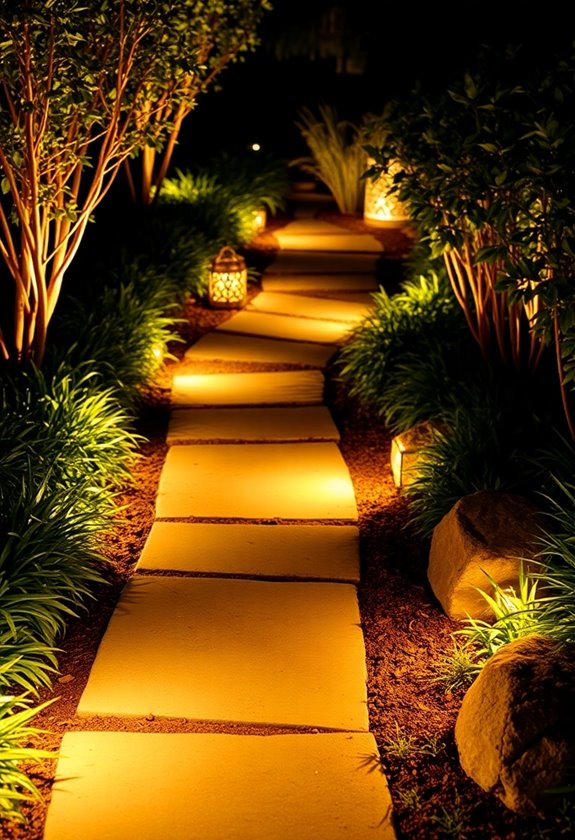
Understanding the main categories of garden lighting helps you choose the right tools for each application.
Solar Powered Lights
Solar lights harvest energy from sunlight during the day and use it to power LED lights after dark. They require no wiring, no electricity costs, and are easy to install anywhere with adequate sun exposure. The technology has improved dramatically in recent years and modern solar lights offer genuinely useful illumination.
Low Voltage Wired Systems
Low voltage (12V) landscape lighting systems connect to a transformer that steps household current down to safe, low-voltage power. Lights are connected by simple cable runs that can be buried just below the surface. Low voltage systems offer consistent, reliable performance and greater brightness than most solar alternatives. They require slightly more installation effort but are well within DIY capability.
Mains Voltage Systems
Full mains voltage (120V in the US) outdoor lighting offers maximum brightness and the widest range of fixture options. Mains voltage installation typically requires a licensed electrician and proper weatherproof wiring. Most homeowners use low voltage systems for garden lighting and reserve mains voltage for security lights, outdoor ceiling fixtures, and other permanent installations.
Battery Powered Lights
Modern rechargeable battery-powered lights offer increasing performance and flexibility. They’re particularly useful for temporary installations, seasonal decorating, and locations where neither solar nor wired power is practical.
Solar Garden Lighting: Pros, Cons and Best Uses
Solar lighting has become enormously popular and for good reason — but it’s important to understand both its strengths and limitations before committing to a solar-only garden lighting scheme.
The Advantages of Solar Garden Lights
No wiring required — the biggest practical advantage. Solar lights go anywhere without the need to run cables or hire an electrician. This makes them ideal for remote garden areas, rental properties where you don’t want to make permanent changes, and quick, easy lighting projects.
Zero operating cost — once purchased, solar lights cost nothing to run. Over their lifespan, this can represent significant savings compared to wired systems.
Easy installation — most solar path lights simply push into the ground. No tools, no cables, no expertise required. A complete solar lighting scheme can be installed in an afternoon.
Safe — no risk of electric shock, no buried cables to accidentally dig through, no transformer to install.
The Limitations of Solar Garden Lights
Dependent on sunlight — solar lights need direct sun for several hours each day to charge effectively. In shaded gardens, north-facing aspects, or during overcast winter periods, performance can be poor or nonexistent. A solar light that works beautifully in a sunny summer garden may fail almost completely on dark winter evenings.
Limited brightness — most solar lights produce modest illumination compared to wired alternatives. For dramatic uplighting of large trees, bright pathway illumination, or powerful security lighting, wired systems generally outperform solar.
Variable quality — the solar light market contains a vast range of quality, from excellent to very poor. Cheap solar lights often have short battery lifespans, dim output, and unreliable performance. Investing in quality brands makes an enormous difference.
Battery degradation — solar light batteries typically need replacing every two to four years, which adds ongoing cost and maintenance.
Best Uses for Solar Garden Lights
Solar lighting excels in these applications:
- Pathway and border lighting in sunny locations
- Decorative accent lighting where ambiance rather than brightness is the priority
- Remote garden areas away from the house where running cable would be difficult
- Temporary or seasonal lighting displays
- Rental properties or situations where permanent installation isn’t desired
Low Voltage and LED Garden Lighting
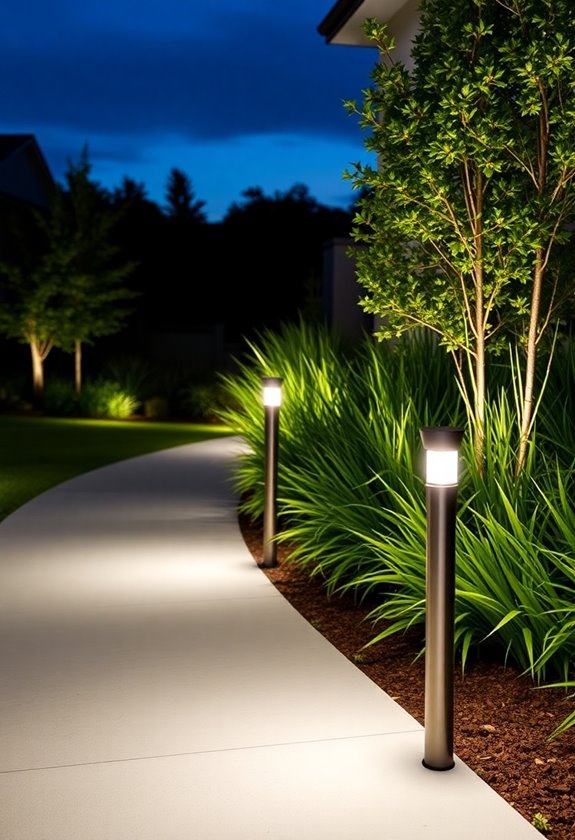
Low voltage LED landscape lighting is the gold standard for most home garden lighting projects — combining professional-quality results with DIY-friendly installation and very low operating costs.
Why Low Voltage LED Is the Best Choice for Most Gardens
Consistent, reliable performance — wired systems deliver consistent brightness regardless of weather, season, or sun exposure. Your lighting looks the same on a dark December evening as on a bright July night.
Dramatically improved LED technology — modern LED lamps last 25,000-50,000 hours (compared to 1,000-2,000 hours for halogen), consume a fraction of the energy, produce excellent color quality, and are available in a wide range of color temperatures and beam angles.
Low operating costs — a typical home garden lighting system using LED lamps costs just a few dollars per month to run, even with generous use.
Wide range of fixture options — path lights, spotlights, well lights, step lights, deck lights, and many other fixture types are available in low voltage versions, giving you professional-quality options for every application.
DIY-friendly installation — low voltage cable can be laid on the surface and covered with mulch, or buried just a few inches deep. Connections are simple push-in or crimp connectors that require no electrical expertise. A complete low voltage system can be installed by a careful DIYer in a day.
Planning a Low Voltage System
The key to a successful low voltage system is correct transformer sizing. Add up the wattage of all fixtures you plan to install (with some extra capacity for future additions) and choose a transformer rated for that total load. Transformers are typically available in 150W, 300W, and 600W sizes for residential use.
Modern digital transformers offer programmable timers, multiple zones, and sometimes even smartphone control — useful features that add convenience without significant cost.
String Lights and Fairy Lights for the Garden
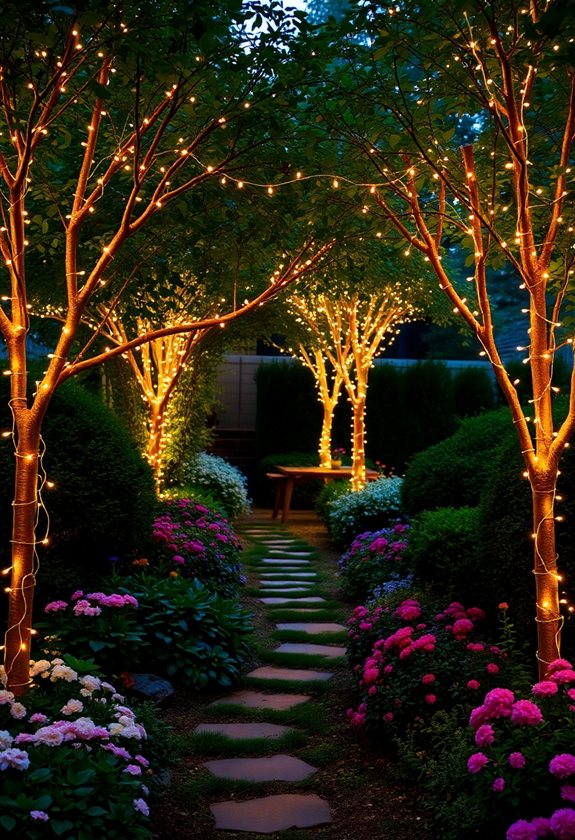
String lights and fairy lights have become one of the most popular garden lighting choices — and it’s easy to understand why. They’re affordable, versatile, easy to install, and create an immediately warm and festive atmosphere that people find universally appealing.
Where String Lights Work Best
Pergolas and arbors — draping string lights across a pergola ceiling creates an instant outdoor room with a warm, intimate atmosphere. This is perhaps the most popular string light application and for good reason — the effect is reliably beautiful. DIY Garden Archway Construction Guide
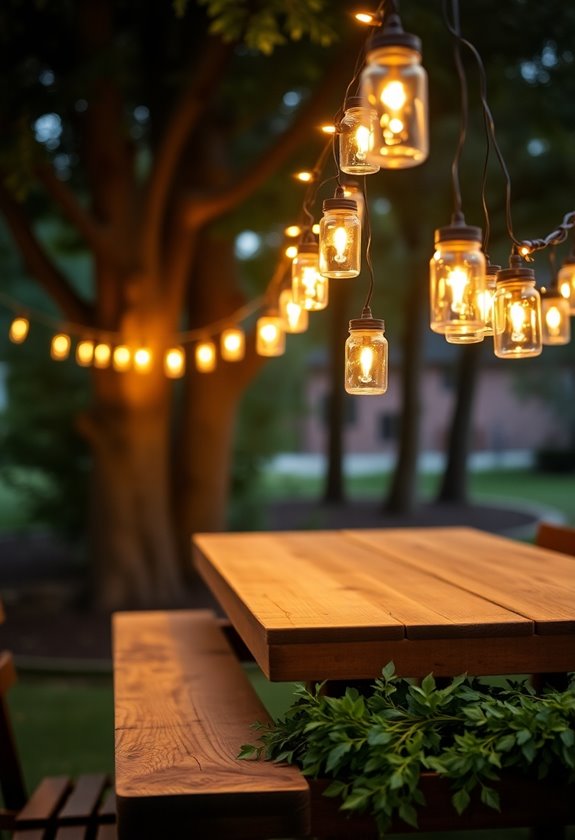
Between trees or posts — stringing lights between trees, fence posts, or purpose-installed poles creates a canopy effect that’s magical for outdoor entertaining. The lights define the space without walls or ceiling.
Along fences and trellises — winding string lights through fence panels or garden trellises creates beautiful boundary definition and adds depth to garden edges after dark.
Around seating areas — encircling a patio, deck, or fire pit area with string lights creates a warm, defined social space that encourages evening use.
Choosing Quality String Lights
Outdoor string lights vary enormously in quality. Key factors to consider:
IP rating — look for IP44 or higher for outdoor use. IP65 or higher for lights that will be exposed to direct rain.
Bulb type — Edison-style filament LED bulbs create the warmest, most atmospheric effect and have become enormously popular. Standard LED string lights are brighter and more uniform. Traditional incandescent bulbs have beautiful warm quality but high energy consumption and short life.
Cable material — rubber or heavy-duty PVC cables are significantly more durable than thin plastic cables. Worth paying more for quality here.
Length and spacing — think carefully about coverage. Measure your space and buy enough lights to create a lush, full effect rather than sparse coverage.
Fairy Lights for Subtle Magic
Ultra-fine fairy lights — very thin wire with tiny LED points — create a more subtle, delicate effect than standard string lights. They’re particularly beautiful woven through hedges and shrubs, wrapped around tree trunks and branches, or used to create a starfield effect under a pergola.
Modern copper wire fairy lights with warm white LEDs have a particularly beautiful quality — the thin copper wire is nearly invisible during the day, appearing magically at dusk as the tiny lights come to life. Transform Your Garden With Modern Minimalist Lanterns
Pathway and Walkway Lighting
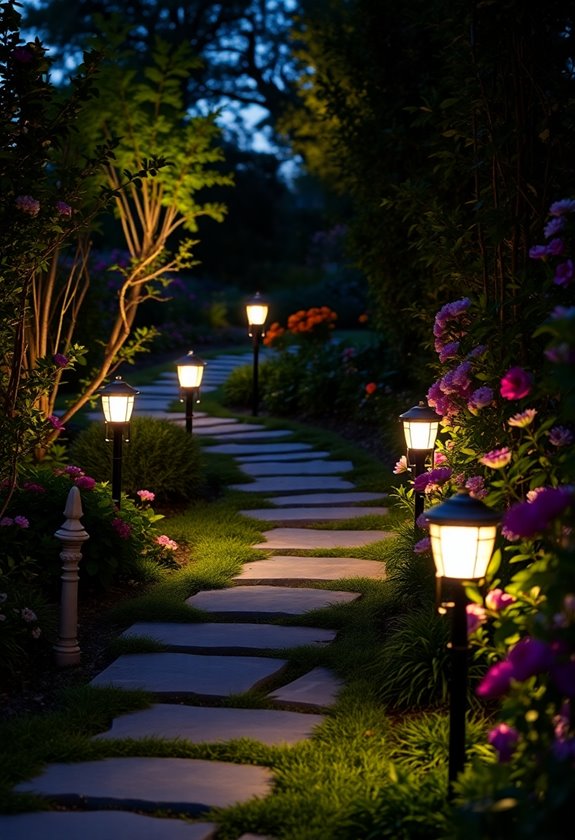
Pathway lighting serves the dual purpose of safety and beauty — guiding movement safely through the garden after dark while creating a magical atmosphere along garden paths and walkways.
Design Principles for Pathway Lighting
Light the path, not the lights — the goal is to illuminate the walking surface, not to create a row of visible light fixtures. Choose fixtures designed to direct light downward onto the path rather than outward or upward.
Alternate sides — rather than placing lights symmetrically on both sides of a path, alternate them in a staggered pattern. This creates a more natural, less regimented appearance.
Spacing matters — path lights should be spaced to provide continuous, overlapping illumination without dark gaps. Typically 6-8 feet apart is appropriate, though this depends on the spread of each fixture.
Don’t over-light — a gently lit pathway is more atmospheric and inviting than one blazing with light. The goal is comfortable visibility, not flood illumination.
Types of Path Lights
Stake path lights — the most common type, pushed directly into the ground alongside the path. Available in solar and low voltage versions in a huge range of styles from modern to traditional. Easy to install and reposition.
Recessed ground lights — flush with the ground surface, these create a clean, contemporary look particularly well-suited to formal garden designs and hard surfaces. Require more installation work but produce a very polished result.
Step lights — small fixtures installed directly into risers of garden steps, providing both safety illumination and a beautiful visual detail. Essential for any garden with steps that will be used after dark.
Bollard lights — taller than stake lights (typically 18-24 inches), bollards work well for wider paths and driveways where more illumination height is needed.
Pathway Materials and Lighting
Different pathway materials interact with light in different ways. Light-colored gravel and pale stone reflect light beautifully and remain visible with relatively modest illumination. Dark materials like dark slate or black mulch absorb light and may need more fixtures for adequate visibility.
Consider the reflective qualities of your path surface when planning fixture spacing and brightness.
Spotlights and Uplighting for Trees and Features
Spotlights and uplights are the tools of dramatic garden lighting — used to highlight specimen trees, architectural plants, garden structures, and other focal points with precision and impact.
Uplighting Trees
Uplighting — placing spotlights at the base of trees and directing light upward into the canopy — is one of the most beautiful effects in garden lighting. A large, well-shaped tree lit from below at night becomes a breathtaking focal point that transforms the entire garden.
For best results:
- Use multiple lights from slightly different angles to create depth and avoid a flat, theatrical appearance
- Choose warm white light (2700-3000K) for the most natural, flattering effect on foliage
- Position lights carefully to avoid creating hot spots — you want even illumination across the canopy, not a single bright spot
- Consider the light in leaf and without — an uplighted deciduous tree looks very different in winter when bare than in summer when full. Both can be beautiful, but adjust expectations accordingly
Downlighting (Moonlighting)
Downlighting from above creates the opposite effect from uplighting — placing lights high in trees or on structures and directing them downward creates a soft, naturalistic effect that mimics moonlight filtering through a canopy. The dappled light patterns on the ground created by downlighting through tree branches are particularly beautiful.
Moonlighting is more complex to install than ground-based uplighting but produces some of the most naturalistic and beautiful garden lighting effects possible.
Spotlighting Focal Points
Any garden feature that deserves attention during the day deserves to be highlighted at night — a beautiful water feature, a piece of garden sculpture, a striking specimen plant, a decorative pot. A single well-placed spotlight can make a feature that disappears in the general darkness into a compelling nighttime focal point.
Keep spotlights aimed precisely — light spillage onto surrounding areas reduces the dramatic impact of a highlighted feature. Garden Waterfalls: How to Add a Water Feature to Your Backyard
Patio and Entertaining Area Lighting
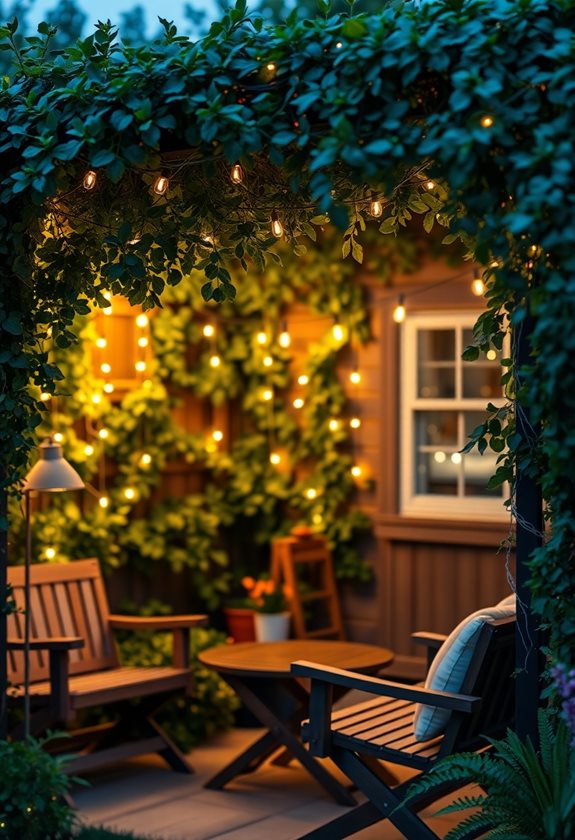
The area where you eat, entertain, and relax deserves especially thoughtful lighting — a combination of ambient illumination, task lighting, and atmosphere that makes the space genuinely usable and beautiful after dark.
Overhead Lighting for Patios
String lights, lanterns hung from pergola beams, and pendant fixtures all provide the overhead ambient lighting that makes a patio feel like a proper outdoor room. The key is to achieve soft, even illumination without glare — you want to see the faces of your dining companions clearly without anyone being blinded by bare bulbs.
Consider dimmable options for overhead patio lighting — the ability to reduce intensity as the evening progresses from lively dining to relaxed conversation makes a significant difference to atmosphere.
Task Lighting for Outdoor Kitchens and BBQ Areas
If you cook outdoors, you need proper task lighting over the cooking area — bright enough to see what you’re doing clearly and positioned to illuminate the cooking surface without creating shadows. Under-counter LED strips, directional spotlights, or dedicated outdoor kitchen lighting fixtures all work well.
Candles and Fire
No garden lighting guide would be complete without mentioning the oldest and most atmospheric lighting of all — fire. Candles in lanterns, pillar candles on outdoor tables, fire pits, fire bowls, and tiki torches all create a warmth and intimacy that electric lighting cannot fully replicate. The flickering, dynamic quality of candlelight and firelight is endlessly appealing for outdoor entertaining.
Modern flameless LED candles have become increasingly realistic and are a practical alternative in windy conditions or where open flames aren’t permitted.
Lanterns as Garden Lighting
Lanterns deserve special mention as one of the most versatile and beautiful garden lighting tools. From large floor lanterns that anchor a seating area to small hanging lanterns that decorate a pergola or fence, lanterns bring an immediately warm and inviting character to outdoor spaces.
Solar lanterns have improved dramatically and many now produce genuinely useful light. Lanterns designed for real candles or tea lights create the most beautiful atmosphere but require more attention and aren’t suitable in all situations. Transform Your Garden With Enchanting Antique Chandeliers
Water Feature Lighting
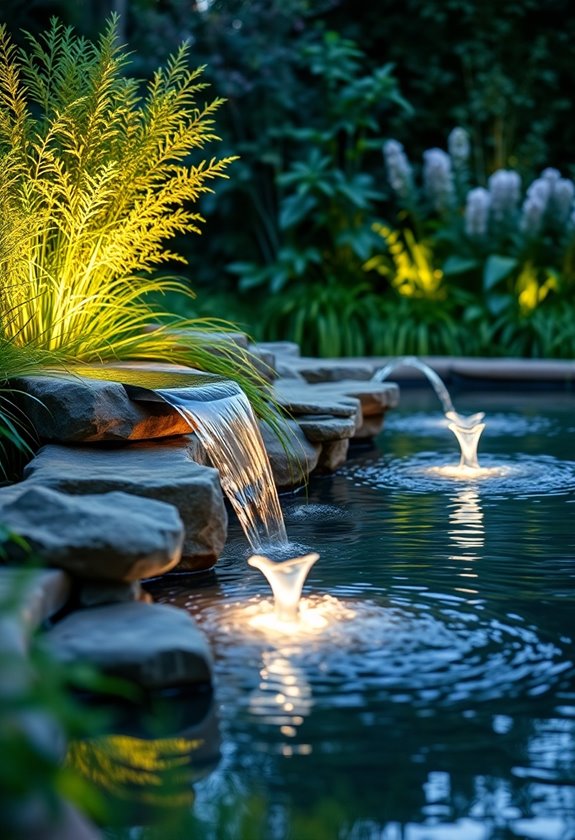
Water and light are a naturally magical combination. Even a modest water feature — a small pond, a simple fountain, a garden rill — becomes dramatically more beautiful when thoughtfully illuminated.
Underwater Lighting
Submersible LED lights placed within ponds, fountains, and water features create beautiful effects — illuminating the water from within to create glowing pools of light, highlighting the movement of water in fountains and waterfalls, and silhouetting fish and aquatic plants.
Modern submersible LEDs are highly energy efficient, long-lasting, and available in color-changing versions that can create dramatic effects (though warm white is usually more beautiful than constantly changing colors).
Uplighting Water Features
Placing spotlights outside the water and directing them at a fountain, waterfall, or pond edge creates a different but equally beautiful effect — highlighting the texture of water in motion and creating reflections on surrounding surfaces.
The combination of uplighting from outside and submersible lighting within a water feature creates depth and dimensionality that neither approach alone can achieve.
Garden Lighting for Safety and Security
Beyond atmosphere, garden lighting plays an important practical role in safety and security — illuminating potential hazards and deterring unwanted visitors.
Path and Step Safety Lighting
Steps, changes in level, and path edges are the primary safety concerns in a garden after dark. Ensure all steps have adequate lighting — either dedicated step lights built into the risers or path lights positioned to illuminate the tread surface clearly. Changes in level on paths should also be highlighted.
Particular attention to safety lighting is important if children or elderly family members use the garden regularly. Even beautiful atmospheric lighting should not compromise the ability to move safely.
Motion-Activated Security Lighting
Bright, motion-activated security lights are a proven deterrent to intruders and provide useful illumination when returning home after dark. Modern PIR (passive infrared) motion sensors are reliable and adjustable — you can set sensitivity and coverage to avoid false triggering by animals or passing traffic.
LED security lights are dramatically more energy efficient than older halogen floodlights and last far longer. Many modern security lights also include cameras, adding an extra layer of security.
Balancing Security and Atmosphere
There’s sometimes tension between bright security lighting and the atmospheric quality of decorative garden lighting. The solution is usually to treat them as separate systems — decorative lighting on timers that runs every evening, security lighting on motion sensors that activates only when triggered.
This approach means your garden looks beautiful and atmospheric on a normal evening while providing immediate, bright illumination if triggered by movement.
Seasonal and Decorative Garden Lighting
Garden lighting doesn’t have to be permanent — seasonal and decorative lighting can transform your outdoor space for special occasions and times of year.
Festive and Holiday Lighting
Christmas lights, Halloween lighting, and other seasonal decorations extend the appeal of your garden throughout the year. Modern LED holiday lights are energy efficient, long-lasting, and available in an enormous variety of styles — from traditional warm white to color-changing smart lights controllable by smartphone.
For permanent plantings and garden structures, choose lighting fixtures designed for outdoor use year-round. For purely seasonal decorative use, lighter-duty options may be appropriate.
Party and Event Lighting
Temporary lighting for parties, outdoor dinners, and garden events can transform your space for special occasions. Festoon string lights, paper lanterns, fire torches, candles in paper bags, and projection lighting all create atmosphere for specific events.
Planning party lighting in advance — testing where strings of lights will hang, ensuring adequate illumination for the dining area, arranging candles safely — makes a significant difference to the evening’s success.
Installing Garden Lighting: What You Need to Know
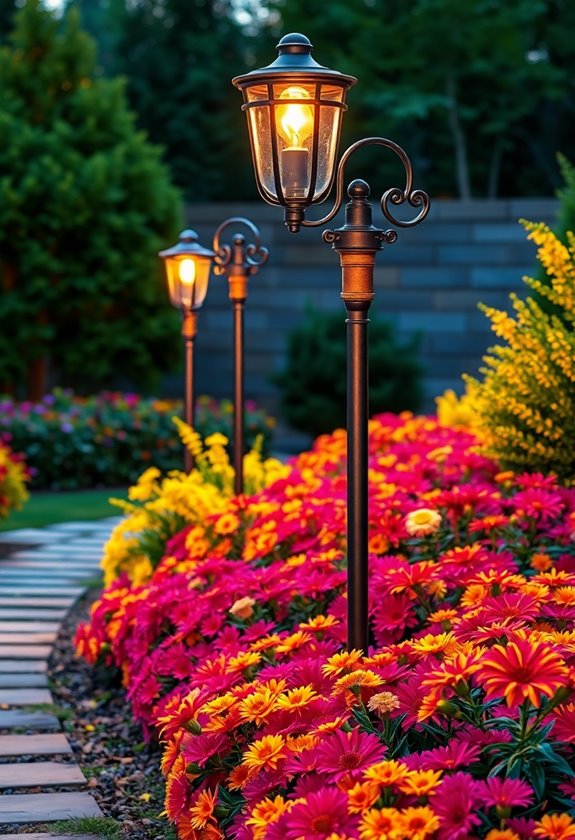
Understanding the basics of garden lighting installation helps you plan effectively and avoid common mistakes.
Solar Light Installation
Solar path lights and garden lights are the simplest possible installation — most simply push into the ground. Ensure they’ll receive adequate sun (at least 6 hours direct sunlight daily for best performance). Position the solar panel to face south in the northern hemisphere for maximum light collection.
Low Voltage System Installation
A low voltage system installation follows these basic steps:
- Install the transformer — mount near an outdoor electrical outlet, following manufacturer instructions. Program timer settings.
- Plan your cable runs — lay out cable from the transformer to each light fixture, planning routes that avoid future digging areas.
- Connect fixtures — most low voltage systems use simple push-in or crimp connectors that pierce the cable insulation. No wire stripping required.
- Lay and cover cable — low voltage cable can run under mulch or be buried 2-3 inches deep for a neater result.
- Test and adjust — power on and check all fixtures. Adjust positions and angles as needed.
When to Hire an Electrician
Any mains voltage (120V) outdoor wiring — whether for security lights, outdoor outlets, or permanent fixture installation — should be done by a licensed electrician. Low voltage garden lighting is safely DIY; mains voltage outdoor wiring is not.
If you’re planning a comprehensive garden lighting scheme that includes both decorative low voltage lighting and mains voltage security or structural lighting, a landscape lighting professional can design and install the complete system to a high standard.
Pro Tips for Beautiful Garden Lighting
Walk your garden at night before buying anything. Understand what’s beautiful in darkness and what benefits from illumination. Design from observation rather than assumption.
Invest in quality fixtures. Cheap outdoor lights corrode, fail, and look poor quickly. Quality outdoor fixtures — particularly for low voltage wired systems — will last decades. The price difference between budget and quality fixtures is modest compared to the cost of replacing failing lights every few years.
Use fewer, better-placed lights. Resist the urge to add more lights. Every additional light should earn its place. A focused, considered lighting scheme with six carefully positioned fixtures will always outperform a scattered approach with twenty.
Install dimmers where possible. The ability to adjust light levels dramatically increases your lighting’s versatility — bright for active entertaining, dim and atmospheric for quiet evenings.
Consider smart lighting. Smart outdoor lighting systems that can be controlled by smartphone allow you to adjust zones, set schedules, and create scenes with great flexibility. Increasingly affordable and genuinely useful.
Maintain your lighting. Clean fixtures regularly — dust, spider webs, and debris reduce output significantly. Replace failed lamps promptly. Check cable connections annually on wired systems.
Add lighting gradually. Rather than installing a complete lighting scheme all at once, add lighting incrementally. Test the effect of each addition, live with it for a season, and add more only where you’re certain it will improve the result. Illuminate Your Garden: Choosing Solar Lights Wisely.
Frequently Asked Questions
How many lights do I need for my garden? Far fewer than you think. Most professional garden lighting designers use the minimum number of lights needed to achieve the desired effect. For a typical suburban garden, a well-designed scheme of 8-15 carefully positioned fixtures produces better results than 30+ scattered lights. Start with fewer and add more only where genuinely needed.
Are solar lights good enough for serious garden lighting? Modern quality solar lights are excellent for pathway lighting, border accents, and decorative applications in gardens with good sun exposure. For dramatic uplighting of large trees, bright security lighting, or reliable performance in shaded or northern gardens, wired low voltage or mains systems are more reliable.
What color temperature should I choose for garden lights? For most decorative garden lighting, warm white (2700-3000K) creates the most natural, atmospheric, and flattering effect. Cool white (4000K+) can look harsh and institutional in garden settings. Reserve cool white for security lighting where maximum visibility matters more than atmosphere.
How do I protect outdoor lights from weather? Choose fixtures with appropriate IP (Ingress Protection) ratings for their location. IP44 is the minimum for outdoor use; IP65 or higher for lights exposed to direct rain or water features. Quality outdoor fixtures are designed for weather exposure — don’t use indoor fixtures outdoors.
Can I install garden lighting myself? Solar lights and low voltage wired systems are well within DIY capability. Mains voltage (120V) outdoor wiring should be done by a licensed electrician. Most home garden lighting projects are achievable with low voltage systems, so professional electrical work is rarely needed for decorative garden lighting.
How long do outdoor LED lights last? Quality outdoor LED lamps typically last 25,000-50,000 hours — many years of normal use. This is dramatically longer than the halogen lamps they replace. Solar light batteries typically need replacing every 2-4 years even when the LED itself is still performing.
How do I prevent my path lights from being knocked over? Choose path lights with sturdy, deep ground stakes. In areas where lights are at risk of being disturbed — near active play areas or high-traffic paths — consider recessed ground lights flush with the surface, or position stake lights slightly further from the path edge.
What’s the best way to light a small garden? In a small garden, lighting needs to be particularly thoughtful — too many lights in a confined space creates an overwhelming, carnival effect. Focus on two or three key features: a beautiful specimen plant, a water feature, a seating area. Use restraint and let the quality of each lit feature speak for itself. String lights overhead can add ambient illumination to the whole space without creating clutter at ground level.
Garden lighting is one of the most transformative things you can do for your outdoor space — and one of the most underestimated. The difference between a garden that goes dark at sunset and one that glows beautifully into the evening is not just aesthetic; it’s a fundamental change in how much you use and enjoy the space you’ve created. Start with one beautiful feature, light it well, and discover for yourself how much magic a little well-placed light can create in your backyard. 🌟
Have questions about lighting your garden? Drop them in the comments below — we love helping fellow gardeners make their outdoor spaces shine!
Related Articles:
- The Complete Guide to Raised Bed Gardening
- DIY Organic Gardening: The Ultimate Beginner’s Guide
- Food Forest Design: How to Build One in Your Backyard
- Garden Pathways: A Complete Design Guide