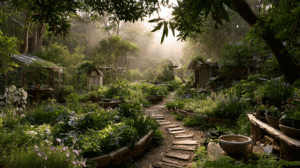
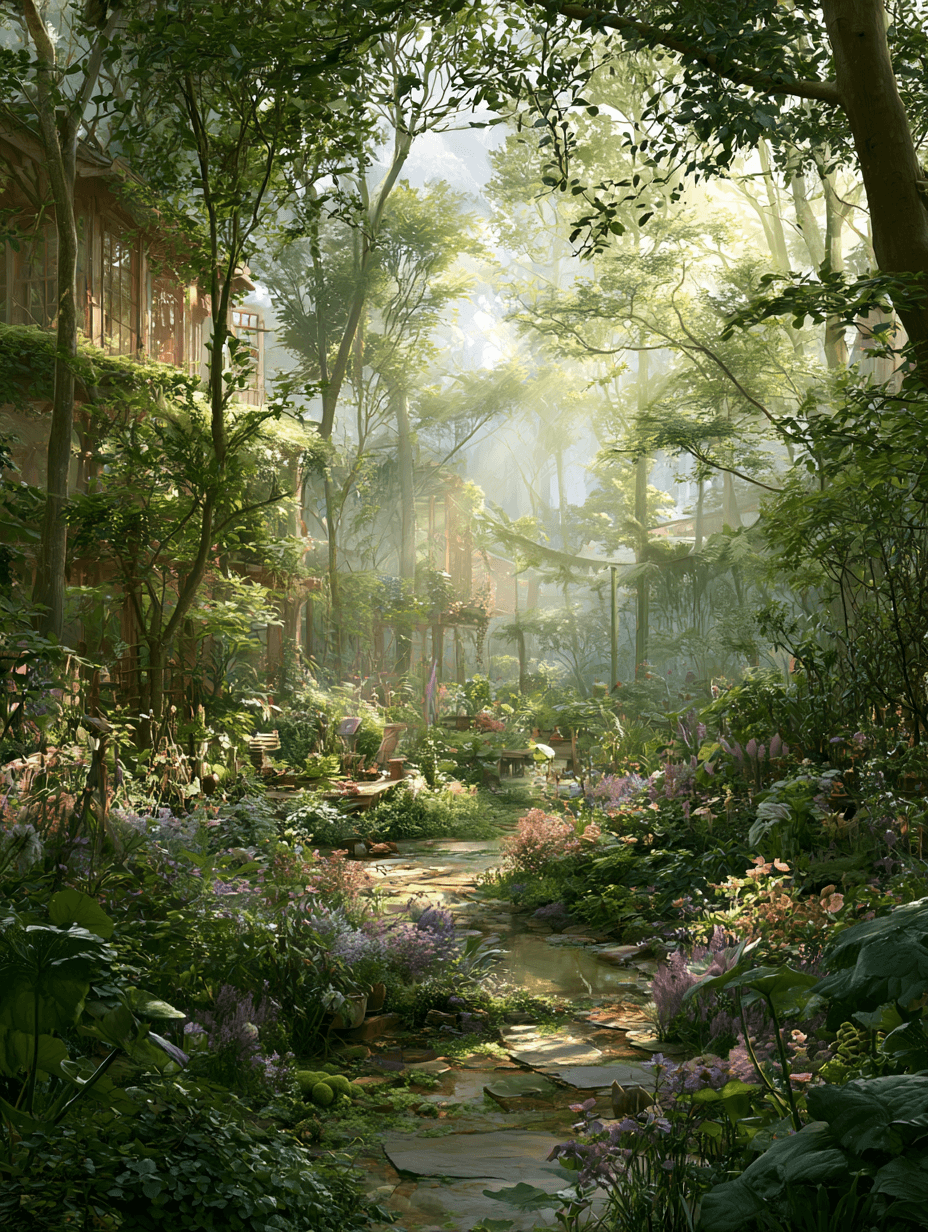
Imagine stepping outside your back door into a lush, layered garden that produces fruit, nuts, berries, herbs, and vegetables — a garden that feeds itself, builds its own soil, and gets more productive every year with less and less work from you. That’s the promise of a food forest, and it’s one that thousands of backyard gardeners across the world are discovering for themselves. This complete guide will walk you through everything you need to know to design and build your own backyard food forest, no matter how much space you have.
What Is a Food Forest?
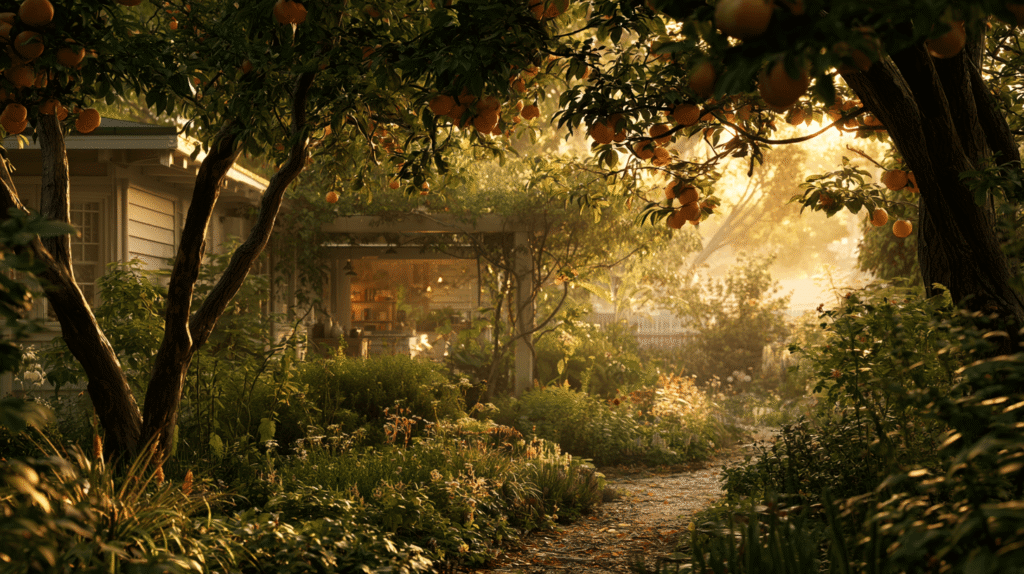
A food forest — also called a forest garden — is a designed, multi-layered planting system that mimics the structure and function of a natural woodland ecosystem while producing an abundance of food for human use. Unlike a conventional garden where plants grow in rows and monocultures, a food forest grows plants in a dense, diverse, mutually supportive community that closely resembles the way plants naturally organize themselves in a forest.
The key distinction between a food forest and a natural forest is intention. A natural forest evolves randomly over centuries, governed by competition and chance. A food forest is deliberately designed by a human gardener who selects plants for their food value, their ecological functions, and their relationships with one another, then arranges them in patterns that maximize productivity, resilience, and beauty.
The result, when done well, is a growing system of remarkable abundance. A mature food forest produces food from multiple layers simultaneously — fruit and nuts from the canopy, berries from the shrub layer, vegetables and herbs from the ground — while building its own fertility, managing its own water, suppressing its own weeds, and supporting a rich community of beneficial wildlife.
Perhaps most remarkably, a food forest becomes more productive and requires less maintenance as it matures. Unlike a conventional garden that needs replanting, constant fertilizing, and regular pest management, a food forest builds toward a stable, self-sustaining system that improves with time. The work is heaviest in the design and establishment phase; once the system is established, it largely takes care of itself.
Food forests can be established at almost any scale — from a small 10×10 foot pocket forest in an urban backyard to multi-acre food forest farms. The principles and plant relationships are the same regardless of scale. Permaculture for Beginners: The Complete Guide
The History and Origins of Food Forests
The food forest concept is both ancient and modern. Indigenous peoples around the world have managed forest gardens for thousands of years — the home gardens of Southeast Asia, the forest gardens of the Amazon basin, the agroforestry systems of West Africa, and the traditional orchards of Europe all embody food forest principles in various forms.
The formal articulation of the food forest concept in the Western world came primarily through the work of British horticulturist Robert Hart, who in the 1960s began transforming a small field in Shropshire, England into what became one of the most influential food forests in the Western world. Hart identified the seven-layer model that has become the foundation of food forest design, observing that natural forests organize themselves into distinct vertical layers and that a productive garden could be designed on the same principle.
Hart’s work was taken up and expanded by permaculture founders Bill Mollison and David Holmgren, who incorporated food forest design as a central element of permaculture practice. Later, writers and practitioners like Patrick Whitefield, Martin Crawford, and Dave Jacke further developed and documented food forest design methodology, making it accessible to gardeners worldwide.
Today, food forests exist on every continent. Community food forests have been established in cities across the United States, Europe, and Australia. Home food forests are being planted in suburban backyards everywhere. The concept has moved from the margins of alternative agriculture into the mainstream of sustainable gardening.
The Seven Layers of a Food Forest
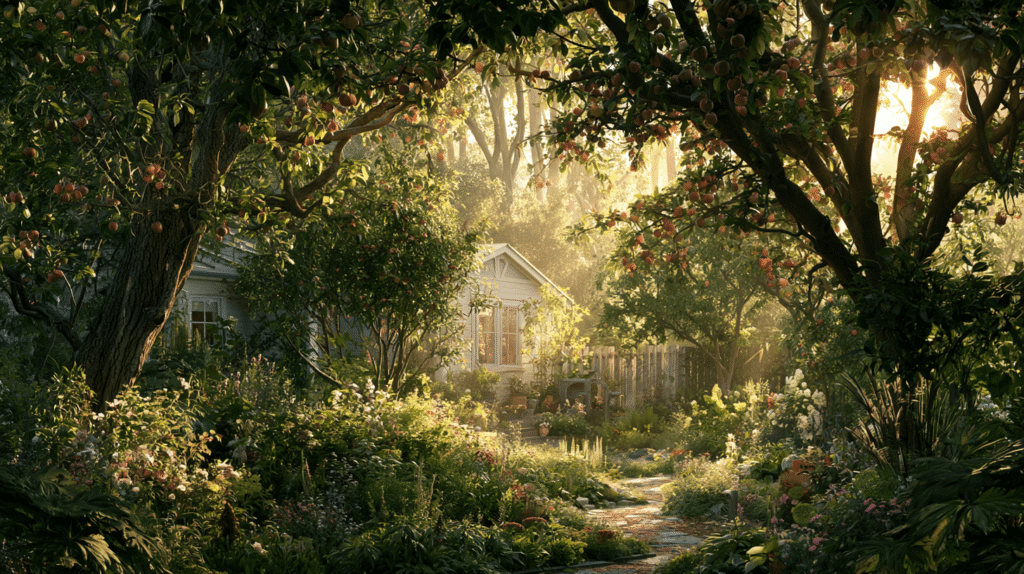
The seven-layer model is the defining framework of food forest design. Natural forests organize themselves into vertical layers, each occupying a different niche in the light spectrum from the canopy to the forest floor. A food forest mimics this structure, placing useful plants in each layer to maximize the productive use of space, light, and resources.
Layer 1: The Canopy Layer
The canopy is the tallest layer — the overstory of large trees that forms the roof of the food forest. In a food forest, canopy trees are selected for their food value: large fruit trees like apple, pear, cherry, persimmon, and mulberry, or nut trees like walnut, chestnut, hazel, and pecan.
Canopy trees define the overall character of the food forest and determine how much light reaches the layers below. In a small backyard food forest, you may have only one or two canopy trees, or you may choose dwarf or semi-dwarf fruit tree varieties to keep the canopy lower and allow more light to the layers beneath.
Layer 2: The Sub-Canopy Layer
Below the canopy, the sub-canopy layer consists of smaller trees and large shrubs that thrive in the partial shade of the canopy. Dwarf and semi-dwarf fruit trees are excellent sub-canopy choices — apple, pear, plum, and fig in smaller varieties. Elder, serviceberry, and cornelian cherry are other excellent sub-canopy options that provide fruit while tolerating some shade.
Layer 3: The Shrub Layer
The shrub layer occupies the space between the lower canopy and the ground — a zone of fruiting shrubs, flowering plants, and structural plants. This is one of the most productive layers in a food forest, particularly once established. Excellent shrub layer plants include:
- Currants (black, red, and white)
- Gooseberries
- Blueberries
- Elderberries
- Raspberries and blackberries
- Rosemary, sage, and other woody herbs
- Comfrey (a permaculture workhorse)
Layer 4: The Herbaceous Layer
The herbaceous layer consists of non-woody plants — annual and perennial vegetables, herbs, and flowers — that grow in the spaces between shrubs and under the partial shade of the canopy. This is where most of the annual food production happens in a food forest: salad greens, brassicas, root vegetables, culinary herbs, and edible flowers.
This layer is also where many of the support plants live — nitrogen fixers, dynamic accumulators, pest deterrents, and pollinator attractors that serve the health of the overall system. DIY Organic Gardening: The Ultimate Beginner’s Guide
Layer 5: The Ground Cover Layer
Ground cover plants spread horizontally across the soil surface, suppressing weeds, retaining moisture, and protecting soil from erosion and compaction. In a food forest, ground covers are chosen for their food value and ecological function:
- Strawberries — produce abundant fruit while creating dense, weed-suppressing ground cover
- Creeping thyme — aromatic, edible, and beautiful
- Clover — fixes nitrogen and provides bee forage
- Violets — edible flowers and leaves with beautiful spring color
- Mint — vigorous ground cover (contain it if necessary) with culinary value
Layer 6: The Root Layer
The root layer consists of plants valued for their edible underground parts — tubers, bulbs, and roots. This layer occupies the underground dimension of the food forest, with different plants rooting at different depths and accessing different soil horizons:
- Jerusalem artichokes — highly productive, easy to grow, and naturalizing
- Garlic — powerful pest deterrent and culinary staple
- Potatoes and sweet potatoes
- Burdock — deep taproot that mines subsoil nutrients
- Daikon radish — breaks up compaction and adds organic matter
Layer 7: The Vine Layer
The vertical layer — vines that climb through the other layers, using the structure of trees and shrubs as scaffolding. Vines are extraordinarily productive in proportion to the ground space they occupy, since they grow upward rather than outward:
- Kiwi — vigorous climbers that produce abundant fruit in warm enough climates
- Grapes — produce fruit, provide shade, and make excellent wine and preserves
- Climbing beans — annual nitrogen fixers and food producers
- Nasturtiums — edible flowers and leaves, beautiful, and easy to grow
- Hops — culinary use and excellent wildlife habitat
Pro Tip: Not every food forest needs all seven layers fully represented. In a small backyard, you might work with just four or five layers. The important principle is vertical diversity — growing plants at multiple heights to make use of the full vertical dimension of your space and create the overlapping relationships that make a food forest system so productive.
The Benefits of a Backyard Food Forest
The case for food forests is compelling on multiple levels.
Abundant, Diverse Food Production
A well-established food forest produces a remarkable range of food from a single space — fruit, nuts, berries, vegetables, herbs, and edible flowers from multiple layers simultaneously. The harvest season extends from the earliest spring fruits to late autumn nuts and preserves, with something available at almost every time of year in mild climates.
Dramatically Reduced Maintenance Over Time
This is the quality that most surprises new food forest gardeners. Unlike a conventional vegetable garden that requires constant replanting, fertilizing, and intervention, a food forest becomes progressively more self-managing as the system matures. Canopy trees shade out weeds. Ground covers suppress new weed germination. Nitrogen-fixing plants build fertility. Mulching from leaf fall feeds the soil. After the establishment phase, a food forest requires a fraction of the labor of a conventional garden for a much greater yield.
Outstanding Wildlife Habitat
A food forest is one of the richest wildlife habitats a suburban backyard can offer. The diversity of plants, structures, and food sources attracts an extraordinary range of birds, beneficial insects, pollinators, and other wildlife. The buzz of bees in a food forest in full bloom is one of the most joyful sounds a garden can produce.
Continuous Soil Building
Unlike annual vegetable gardens that can deplete soil if not carefully managed, a food forest continuously builds soil fertility. Leaf litter from canopy trees decomposes into rich humus. Root systems of perennial plants add organic matter at multiple depths. Nitrogen-fixing plants enrich the soil with available nitrogen. Over time, food forest soil becomes extraordinarily fertile and alive.
Climate Resilience
The diversity and depth of a food forest makes it far more resilient to weather extremes than a conventional garden. Deep-rooted perennials access water far below the surface during drought. The canopy moderates temperature extremes. Diverse plantings mean that if one species struggles in a difficult year, others compensate. A food forest that has weathered several seasons is remarkably robust.
Beauty and Connection to Nature
Perhaps less quantifiable but no less real — a mature food forest is stunningly beautiful. The layered canopy, the seasonal succession of flowers and fruits, the wildlife activity, and the sensory richness of a diverse planting create an outdoor space of extraordinary beauty and vitality that no conventional garden can match.
Planning Your Food Forest Design
Good design is the foundation of a successful food forest. Time spent planning before planting pays enormous dividends over the life of the system.
Start with Observation
Before designing anything, observe your site for at least one season. Note where the sun falls at different times of day and year. Observe how water moves across your property after rain. Identify existing trees and structures that will influence your design. Note which areas are sheltered and which are exposed to wind. This information is the raw material of good design.
Draw Your Base Map
Create a simple scale drawing of your property showing the house, existing trees, structures, fences, slopes, and compass directions. This doesn’t need to be precise — a rough sketch is sufficient. Use this map to experiment with different design configurations before committing to anything in the ground.
Identify Your Goals
What do you want your food forest to produce? Are you primarily interested in fruit? Nuts? Herbs? Wildlife habitat? A beautiful outdoor space? Your goals will shape your plant selection and design priorities. A food forest designed primarily for wildlife habitat looks quite different from one designed primarily for maximum food production.
Consider Your Climate and Microclimate
Plant selection depends heavily on your climate. Research your USDA hardiness zone and choose plants accordingly. Also consider microclimates within your property — a south-facing slope is warmer than a north-facing one; the area against a south-facing brick wall may be a full zone warmer than the open garden. These microclimates can dramatically expand your plant palette.
Plan for Succession
A food forest goes through distinct phases as it matures. In the early years, fast-growing pioneer plants fill space and begin building soil while slower-growing permanent plants establish. Over time, the pioneers are gradually removed or managed as the permanent plants mature and fill their spaces. Plan for this succession from the beginning — include pioneer species that will provide early production and ecological function while the permanent structure establishes.
Choosing the Right Location
Location profoundly influences what you can grow and how your food forest will develop.
Sunlight
Most fruit trees and food-producing plants need significant sunlight — at least six hours daily for most fruit trees, with some shade-tolerant understory plants managing with less. Choose the sunniest area of your property for your food forest, or design the canopy layer to be on the north side so it doesn’t shade the rest of the system.
Water Access and Drainage
Food forests need water during establishment and during dry periods thereafter. Choose a location with reasonable access to water for irrigation. Also consider drainage — most fruit trees dislike waterlogged soil and will struggle in areas that stay wet after rain. Excellent drainage is important, particularly for the canopy trees.
If your site has drainage challenges, consider building the food forest on slightly raised ground or incorporating swales and water management earthworks into the design.
Existing Vegetation
Existing trees can be incorporated into a food forest design as canopy elements, even if they’re not food producers. A large oak or maple can serve as a canopy anchor around which productive understory plants are arranged. Alternatively, if existing trees are in the wrong location or species, they may need to be removed before establishing the food forest.
Proximity to the House
The most intensively managed parts of the food forest — the kitchen garden layers, the annual vegetables, the herbs used daily — should be closest to the house for convenient access. Larger trees and less frequently harvested elements can be further away. This reflects the permaculture zone concept: high-attention elements close to the house, lower-attention ones further away.
Food Forest Guilds: Designing Plant Communities
A guild is a group of plants that work together to support a central element — typically a fruit tree — by providing pest control, fertility, ground cover, and pollinator attraction. Designing in guilds rather than thinking about individual plants is one of the most important skills in food forest design.
The Classic Apple Tree Guild
The apple tree guild is the most widely documented example of food forest guild design:
- Central element: Apple tree
- Nitrogen fixers: Comfrey, clover, vetch — build fertility at the base of the tree
- Pest deterrents: Garlic, chives, daffodils — deter pests and rodents from approaching the trunk
- Pollinator attractors: Borage, fennel, dill — attract beneficial insects including pollinators and pest predators
- Ground covers: Strawberries, creeping thyme — suppress weeds and retain moisture
- Dynamic accumulators: Comfrey, yarrow — mine deep nutrients and make them available at the surface
Each plant in this guild serves the apple tree while also producing something useful in its own right — nitrogen, pest control, food, beauty. This is the essence of permaculture design: every element serves multiple functions.
Designing Your Own Guilds
You can design a guild around any central tree or shrub. The process is:
- Identify the central element — your fruit or nut tree
- Identify its needs — what does this tree need most? Nitrogen? Pest protection? Pollination?
- Select support plants that meet those needs while also providing their own yields
- Layer them appropriately — taller plants on the north side, ground covers at the outer edge
- Include diversity — aim for at least 5-7 species in each guild
The Best Plants for Each Layer
Choosing the right plants for your climate and space is one of the most enjoyable parts of food forest planning. Here are the top performers for each layer across a range of climates.
Top Canopy Trees (Zone 5-9)
Apple — the quintessential food forest canopy tree. Enormous variety selection allows cultivation in almost every climate. Choose disease-resistant varieties for lower management needs.
Pear — productive and long-lived. Asian pears are particularly reliable and produce abundant crisp fruit.
Mulberry — fast-growing, incredibly productive, and beloved by birds. White mulberry is extremely hardy; red and black mulberries are more flavorful.
Persimmon — one of the most beautiful and productive food forest trees. American persimmon is extremely hardy; Asian varieties prefer milder climates.
Chestnut — excellent nut tree for larger food forests. Produces abundant, calorie-rich nuts and beautiful seasonal color.
Black Walnut — produces nutritious nuts but inhibits the growth of many other plants through its roots (allelopathy). Research companion plants carefully if including walnut.
Top Sub-Canopy Trees
Elderberry — fast-growing, extremely productive, and useful for both food and medicine. Berries make excellent wine, syrup, and preserves.
Serviceberry (Juneberry) — beautiful spring flowers followed by blueberry-like fruit beloved by birds and people.
Fig — incredibly productive in warm climates. In colder areas, grow against a south-facing wall or in a large container.
Quince — beautiful, fragrant fruit excellent for preserves. Very disease resistant.
Top Shrub Layer Plants
Currants — among the most productive and reliable food forest shrubs. Black currants are rich in vitamin C and make excellent jam; red and white currants are beautiful and delicious fresh.
Blueberries — require acid soil (pH 4.5-5.5) but reward the effort with abundant, delicious fruit and stunning autumn color.
Gooseberries — incredibly productive and easy to grow. Both culinary and dessert varieties available.
Comfrey — not strictly food-producing but one of the most important plants in any food forest. Produces enormous quantities of nutrient-rich leaves for composting and mulching, attracts bumblebees, and has deep roots that mine subsoil nutrients.
Top Herbaceous Layer Plants
Rhubarb — productive perennial that provides tart stalks for cooking from early spring. Beautiful large leaves add architectural interest.
Artichoke — dramatic, architectural perennial that produces delicious edible flower buds. In mild climates, truly perennial; in colder areas, mulch heavily through winter.
Lovage — underused perennial herb with a strong celery flavor. Very productive and easy to grow.
Sorrel — one of the earliest spring greens, providing fresh salad leaves before almost anything else is ready.
Horseradish — vigorous perennial with intensely flavored roots. Use as a dynamic accumulator at the edge of guilds.
Top Ground Cover Plants
Strawberries — the ultimate food forest ground cover. Productive, beautiful, and effective at suppressing weeds.
Creeping thyme — aromatic, edible, and virtually indestructible. Creates a beautiful, fragrant carpet that tolerates light foot traffic.
White clover — excellent nitrogen fixer and bee forage. Keeps the soil covered and feeds the system.
Violets — edible flowers and leaves with beautiful early spring blooms.
How to Build Your Food Forest Step by Step
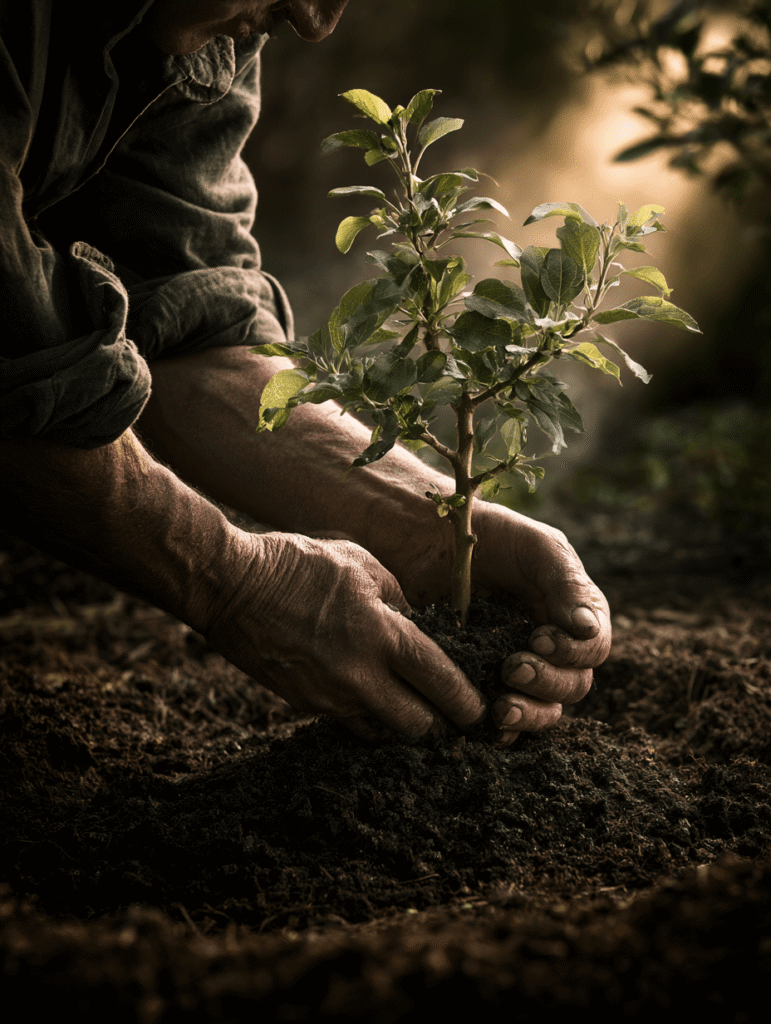
Building a food forest is a multi-year project, but the early steps are straightforward and deeply satisfying.
Year 0: Design and Preparation (Season Before Planting)
Design your system. Using your base map and the guild concept, plan where each plant will go. Research mature sizes carefully — the most common food forest mistake is planting trees too close together. Give canopy trees the space they need: most standard fruit trees need 15-20 feet between them; dwarf varieties need 8-12 feet.
Prepare your site. Sheet mulch the entire food forest area in the season before you plan to plant. Lay overlapping cardboard over the existing vegetation, then cover with 4-6 inches of wood chips or compost. This smothers existing grass and weeds and begins building soil. By planting time, the cardboard will have decomposed, and you’ll have a weed-suppressed, improved soil surface to plant into.
Source your plants. Research and order or source plants in advance. Bare-root fruit trees (available in late winter/early spring) are significantly less expensive than container-grown trees and establish just as well. Many perennial herbs and ground covers can be obtained as divisions from other gardeners.
Year 1: Plant the Canopy and Sub-Canopy
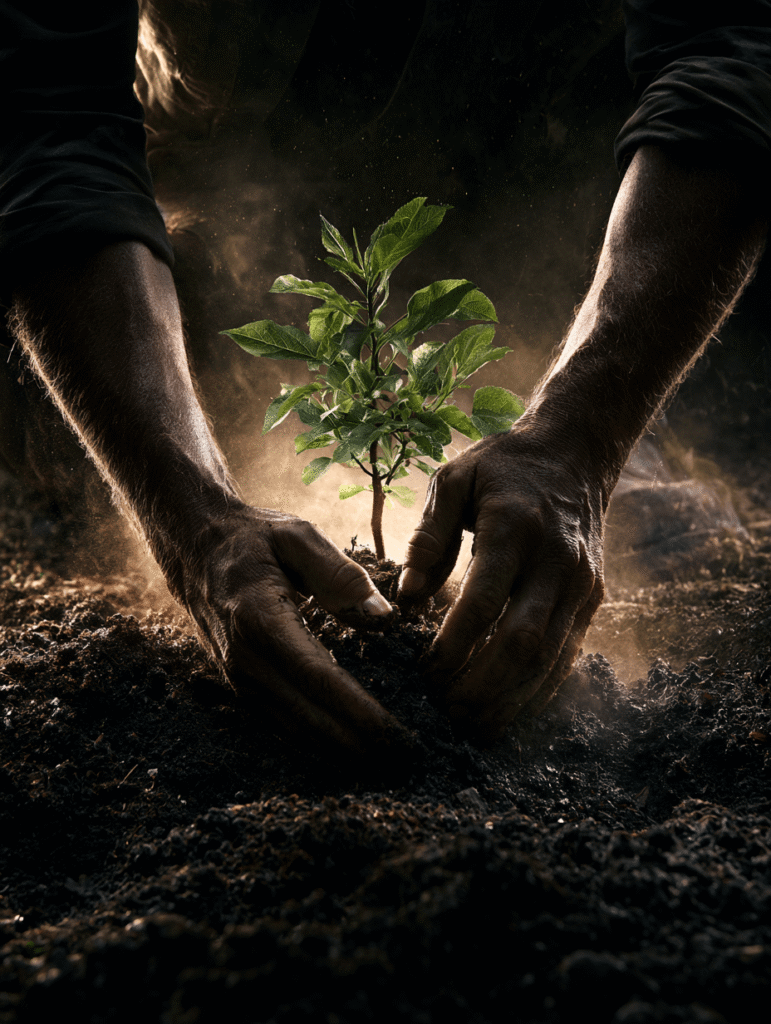
Plant your trees first — they’re the framework around which everything else is designed. Plant bare-root trees in late winter while still dormant. Stake if necessary in exposed sites. Mulch heavily (6 inches of wood chips) in a wide circle around each tree, keeping mulch away from the trunk itself.
Establish comfrey and other support plants in each guild during the first growing season. These will begin building soil fertility and suppressing weeds immediately.
Plant pioneer species — fast-growing, nitrogen-fixing plants that will provide early production and ecological function while the permanent structure establishes.
Year 2-3: Establish the Shrub and Herbaceous Layers
As canopy trees begin establishing, plant shrubs, perennial vegetables, and herbs into the spaces between guilds. Continue sheet mulching any bare ground. Remove pioneer species that are beginning to crowd permanent plants.
Begin establishing ground covers throughout the system. Strawberries, clover, and creeping thyme planted now will fill in beautifully over the following seasons.
Add vines to appropriate climbing structures — existing fences, purpose-built trellises, or the framework of established trees. The Complete Guide to Raised Bed Gardening
Year 3-5: The System Comes Together
By years three to five, the food forest begins to look and function like a real system. Canopy trees are producing fruit. Shrubs are fully established and producing heavily. Ground covers are filling in. The soil is noticeably improving.
Management shifts from establishment work (planting, mulching, watering) to maintenance work (pruning, harvesting, occasional replanting of annual herbs and vegetables). The system begins to demonstrate its promise.
Year 5 and Beyond: Mature Abundance
A mature food forest of five or more years is a remarkable thing. Production is abundant across multiple layers and seasons. Wildlife activity is extraordinary. Soil is deep, rich, and teeming with life. Maintenance requirements are minimal compared to a conventional garden of equivalent size and productivity. The investment of the early years pays off magnificently.
Establishing and Caring for Your Food Forest
The establishment phase — roughly the first three years — is when your food forest needs the most attention. Here’s how to support it successfully.
Watering During Establishment
Newly planted trees and shrubs need consistent moisture during their first season, particularly during dry spells. Deep watering once or twice a week (rather than frequent shallow watering) encourages deep root development that will eventually make the trees largely drought-independent. A drip irrigation system timed to run during dry periods significantly reduces establishment work.
After the first season, well-mulched food forest plants typically need irrigation only during extended drought. By year three or four, most perennial plants are largely self-sufficient.
Mulching
Generous mulching is the single most important maintenance task in an establishing food forest. Maintain a 4-6 inch layer of wood chips throughout the system, refreshing as it decomposes. This suppresses weeds, retains moisture, moderates temperature, and feeds soil life. Wood chips from tree surgeons are often available free or very cheaply in large quantities — an excellent resource for food forest establishment.
Pruning
Fruit trees need annual pruning to maintain productivity, good structure, and air circulation. Basic fruit tree pruning — removing crossing branches, opening the center for light penetration, and encouraging fruiting wood — is a learnable skill that makes a significant difference to productivity. Prune in late winter while trees are dormant.
Observation and Adjustment
A food forest is a living system that evolves in sometimes unexpected ways. Plants may thrive in locations you didn’t expect, or struggle where you thought they’d excel. Some guild relationships will work beautifully; others may need adjustment. Regular observation and willingness to adapt your design based on what you see is the mark of a skilled food forest gardener.
Food Forests for Small Spaces
Don’t have much space? A food forest can still work for you. Here’s how to scale down the concept without sacrificing its core benefits.
The Three-Layer Micro Forest
In a space as small as 10×15 feet, you can establish a simplified three-layer food forest:
- Canopy: One or two dwarf fruit trees (apple, pear, or fig)
- Shrub: Currants, gooseberries, or blueberries around the base
- Ground cover: Strawberries, clover, and herbs filling the remaining space
This modest planting, once established, produces a surprising variety of food from a very small footprint.
Vertical Food Forests
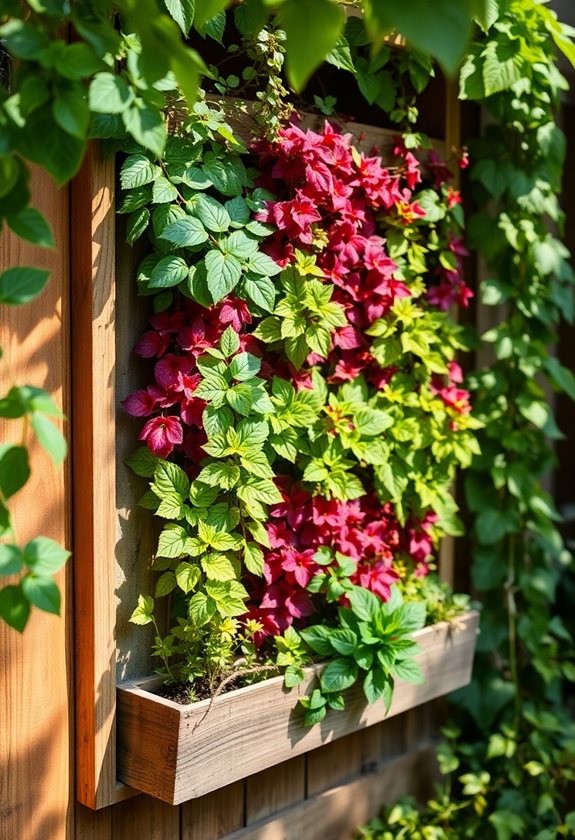
In very limited spaces, maximize vertical production. A single fence or wall can support climbing plants like kiwi, grapes, and espaliered fruit trees trained flat against the surface. Pair with ground-level herb and ground cover plantings for a functional two-layer vertical food forest.
Containers and Raised Beds
Even without ground planting space, food forest principles can be applied in containers. Dwarf fruit trees in large containers, underplanted with herbs and strawberries, create a mini food forest on a patio or balcony. The scale is tiny, but the principles — layering, companion planting, building soil — are identical.
Common Food Forest Mistakes and How to Avoid Them
Planting trees too close together. The most common food forest mistake. Research mature sizes thoroughly and resist the temptation to plant densely for immediate effect. Trees that are too crowded compete for light, air, and nutrients and never reach their productive potential.
Skipping the design phase. Planting without a plan produces a confusing jumble rather than a functional system. Spend time designing before planting — it makes everything easier and the result significantly better.
Neglecting the establishment phase. The first two to three years require real attention — watering, mulching, weeding pioneer weeds. Food forests don’t manage themselves from day one; they earn their self-sufficiency through good establishment care.
Choosing the wrong plants for the climate. Research hardiness carefully. A beautiful plant that freezes to death in your climate is not a food forest asset. Focus on plants proven in your area before experimenting with more marginal choices.
Expecting immediate production. A food forest is a long-term investment. Some plants produce in year one; others take five years to reach productive maturity. Plan for this timeline and enjoy the journey.
Ignoring support plants. The non-food support plants — nitrogen fixers, dynamic accumulators, ground covers, pest deterrents — are what make the system function. Skimping on these in favor of more food plants produces a less resilient and productive result.
Pro Tips for Food Forest Success
Choose disease-resistant plant varieties. Disease resistance dramatically reduces management requirements, particularly for fruit trees. Modern disease-resistant apple and pear varieties produce excellent fruit with far less intervention than traditional varieties.
Plant nitrogen fixers generously. Nitrogen is the nutrient most likely to limit production in a young food forest. Generous planting of nitrogen-fixing trees, shrubs, and ground covers like comfrey, clover, and vetch provides the fertility the system needs during establishment and beyond.
Document your design and plantings. Keep records of what you planted, where, and when. As the food forest fills in and plants grow together, it can become difficult to remember what’s what. Photos and notes are invaluable.
Connect with other food forest gardeners. The food forest community is generous with knowledge, plants, and advice. Local permaculture groups, food forest networks, and online communities are excellent resources for plant swaps, site visits, and guidance.
Visit mature food forests if possible. Seeing a well-established food forest in person is transformative — it makes the potential of the concept viscerally real in a way that no amount of reading quite achieves.
Be patient and trust the process. The early years of a food forest can feel like slow going. Plants are small, spaces are bare, production is modest. Trust that the system is establishing itself below ground as well as above, building the root networks and soil relationships that will power the mature abundance to come.
Frequently Asked Questions
How much space do I need for a food forest? You can start with as little as 100 square feet for a simplified micro food forest with dwarf trees. A more complete food forest with all seven layers needs at least 500-1000 square feet. Larger is better if you have the space, but the principles work at any scale.
How long does it take for a food forest to become productive? Some elements produce from year one — annual vegetables, herbs, and fast-fruiting plants like strawberries. Shrubs like currants and elderberries typically produce well by year two or three. Fruit trees begin meaningful production by years three to five. A fully mature, abundantly productive food forest typically takes seven to ten years to reach its potential.
How much work does a food forest require? During establishment (years one to three), a food forest requires regular attention — watering, mulching, weeding, and planting. After establishment, maintenance requirements drop dramatically. A mature food forest might need only a few hours of attention per week during the growing season — primarily harvesting, pruning, and occasional replanting of annual elements.
Do I need to take a permaculture course to design a food forest? No, though a Permaculture Design Certificate course provides an excellent foundation. Many successful food forests have been designed by self-taught gardeners using books, online resources, and observation. The key skills — observation, design thinking, understanding plant relationships — can be developed through practice and study without formal coursework.
Can I convert an existing garden into a food forest? Yes, gradually. You can begin by planting fruit trees and perennial food plants into an existing garden, then over time shift the balance from annual vegetables to perennial food forest plants. The transition can happen over several years without requiring a complete overhaul at once.
What’s the difference between a food forest and an orchard? An orchard consists primarily of one layer — fruit and nut trees, typically in rows, managed as a monoculture or near-monoculture. A food forest has multiple layers of diverse plants working together as a community. Food forests are more complex, more diverse, and generally lower-maintenance once established than traditional orchards.
Do food forests work in cold climates? Yes, with appropriate plant selection. Cold-hardy fruit trees like apple, pear, and cherry; cold-hardy shrubs like currants, gooseberries, and elderberries; and cold-hardy perennials make productive food forests possible in Zone 3 and above. The plant palette is more limited than in mild climates, but an abundance of productive options remains.
How do I deal with deer in my food forest? Deer pressure is a significant challenge in many areas. Options include fencing (most effective but expensive), tree tubes or cages around individual trees during establishment, deer-resistant plant selection, and dogs or other deterrents. In heavy deer areas, fencing the perimeter during the establishment phase (first three to five years) is usually the most practical solution.
A food forest is one of the most ambitious and rewarding things you can do with your backyard. It asks for patience, observation, and a long-term perspective — but it returns those investments with extraordinary abundance, beauty, and the deep satisfaction of having created something that will feed people and support wildlife for decades to come. Start with a simple design, plant with care, and watch as nature does what it does best: build, connect, and flourish.
Ready to start planning your food forest? Begin with a season of careful observation, a sketch of your space, and a handful of fruit trees planted with intention. The forest will do the rest. 🌳
Related Articles: