
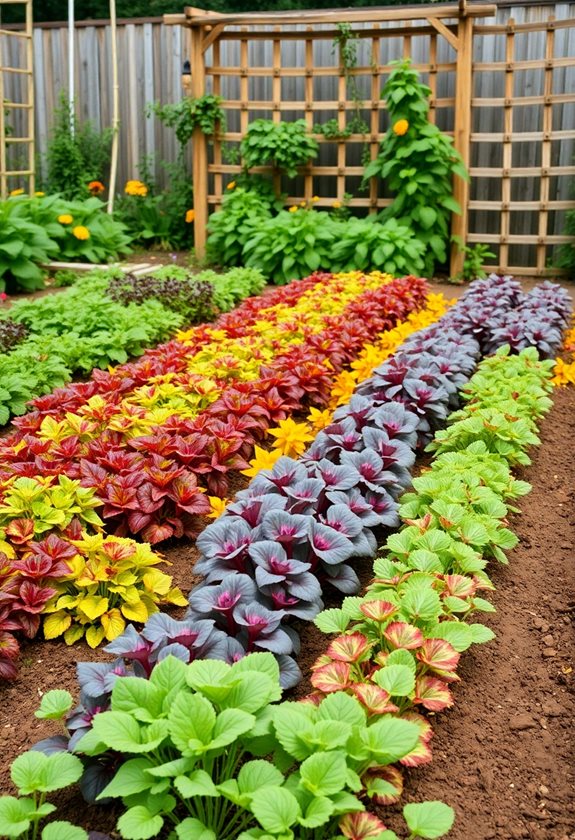
To ace succession planting and enjoy a bounty all season, start by knowing your growing seasons—what’s your last frost date? Choose crops like tomatoes and lettuce that thrive together, and don’t forget to stagger your plantings for continuous harvests! Companion planting is a game-changer; marigolds with tomatoes can repel pests! Rotate your crops to keep soil healthy and records to learn what worked best. Curious about more tips to keep your garden thriving? There’s so much to explore!
Design Highlights
- Understand your local frost dates to time your succession planting accurately and maximize growing opportunities throughout the season.
- Choose a variety of crops suited to your climate, allowing for staggered harvests and diverse flavors in your garden.
- Implement a planting schedule that includes fast-growing crops for early harvests and staggered plantings for continuous yields.
- Utilize companion planting to enhance plant growth and deter pests while maintaining a balanced garden ecosystem.
- Rotate crops annually to improve soil health, reduce disease risk, and promote biodiversity in your garden.
Understand Your Growing Seasons
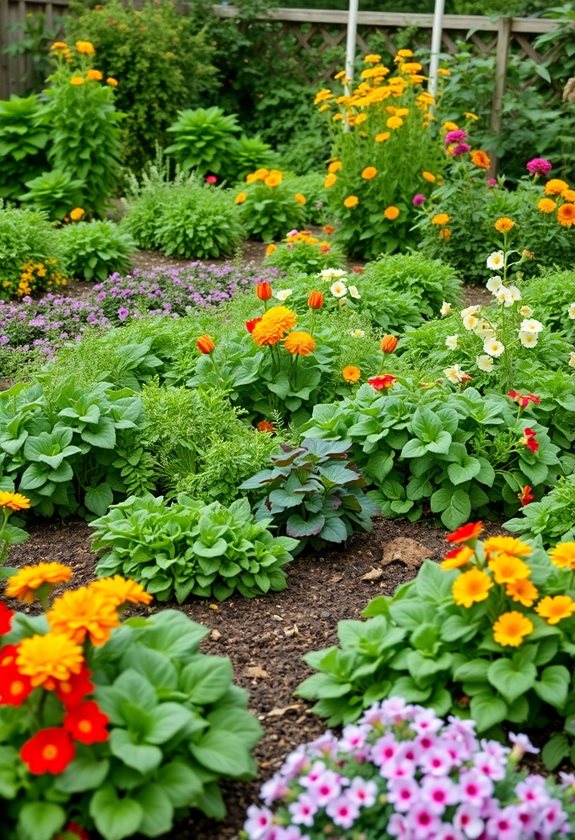
When you think about starting your garden, have you ever considered how much your success depends on understanding your growing seasons? Knowing when to plant is vital. For instance, if you live in a cooler climate, you might want to start your seeds indoors. Here are a few tips:
Understanding your growing seasons is crucial for gardening success; timing your planting can make all the difference.
- Frost Dates: Check your local frost dates; they’re key!
- Season Length: Understand your growing season’s length.
- Weather Patterns: Watch for unexpected cold snaps.
It can be challenging, but getting the timing right makes all the difference. Additionally, understanding seasonal plantings can help you maximize your garden’s productivity. So, why not plunge into and explore your local growing conditions? Happy planting!
Choose the Right Crops
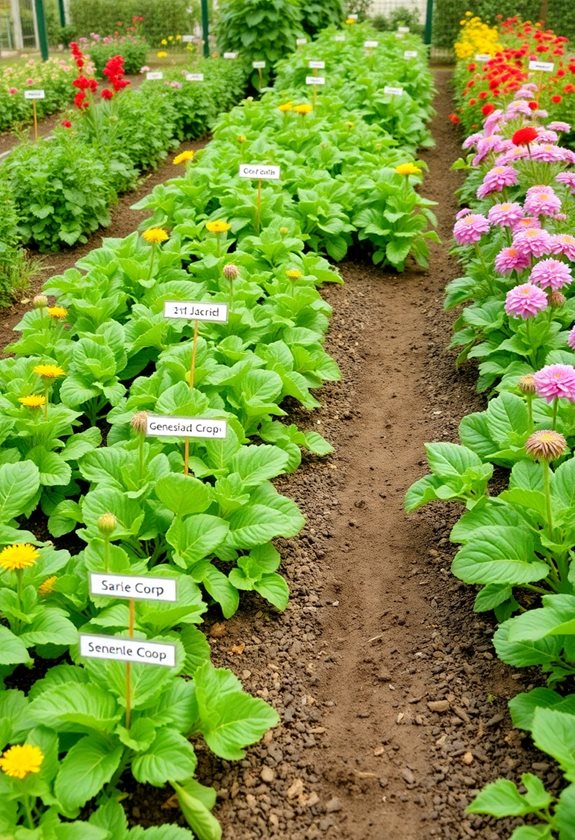
Choosing the right crops for your garden can feel like a thrilling adventure! You want to pick varieties that not only thrive in your climate but also suit your taste. Consider these tips:
- Start with easy-to-grow options: Think tomatoes, carrots, or lettuce. They’re forgiving and rewarding!
- Mix it up: Don’t plant just one type; diversity keeps pests at bay and adds flavor.
- Seasonal choices: Go for cool-season crops in spring and summer varieties later on. Additionally, incorporating edible plants into your design can enhance both beauty and flavor in your garden!
Plan Your Planting Schedule
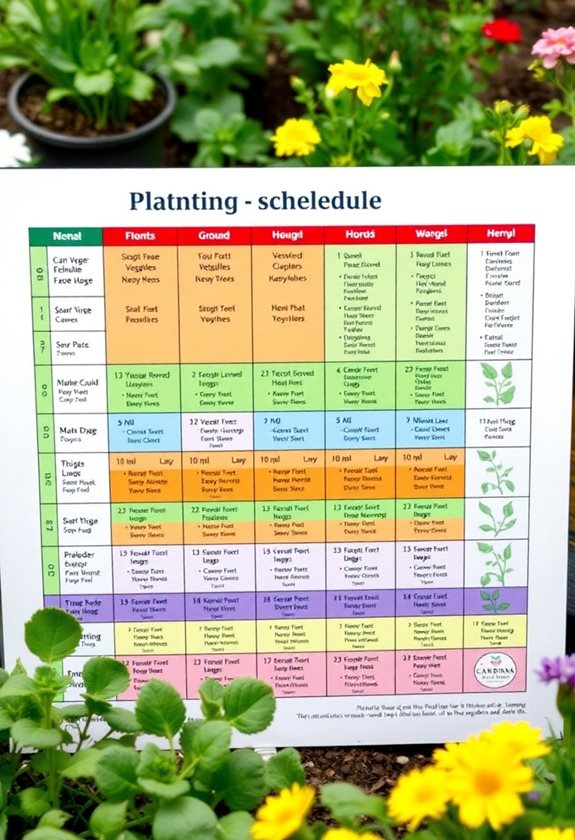
Have you ever wondered how to keep your garden blooming all season long? Planning your planting schedule is key! Here’s how you can get started:
- Know your frost dates: This helps you plant at the right times.
- Choose fast-growing crops: They’ll give you an earlier harvest!
- Stagger plantings: Try to plant new seeds every few weeks for continuous growth.
- Consider seasonal rotations: Switch crops to keep your soil healthy.
- Keep a gardening calendar: Track what you planted and when.
- Invest in quality soil: Using the best soil for container gardening will enhance nutrient availability and support robust plant growth.
Utilize Companion Planting
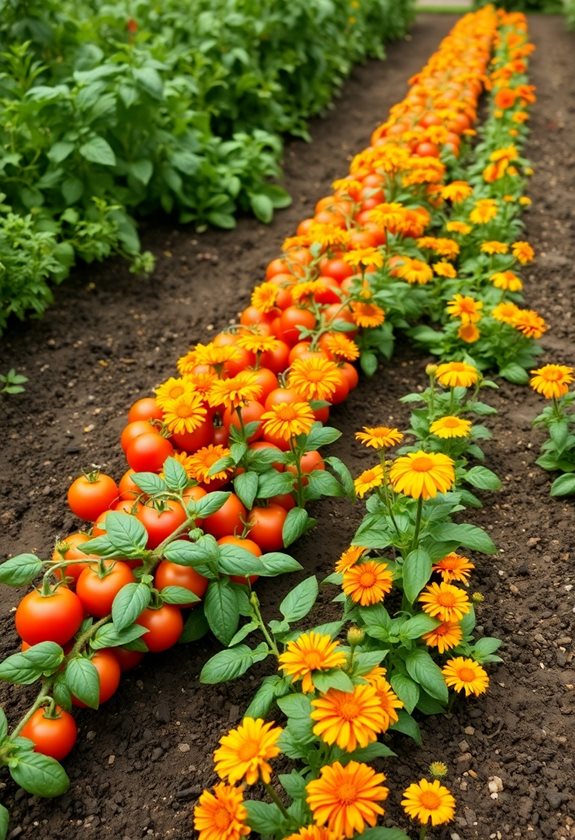
Utilizing companion planting can transform your garden into a thriving ecosystem where plants help each other flourish. By pairing compatible plants, you can naturally deter pests and promote healthy growth. For instance, planting marigolds with tomatoes can repel harmful nematodes—who knew flowers could be such great bodyguards?
Try these combinations:
- Basil with peppers for flavor boost
- Beans with corn for nitrogen fixing
Don’t forget to experiment! You might find surprising friendships among your plants. Have you ever noticed how some plants just seem happier together? It’s nature’s way of keeping your garden safe and vibrant! Additionally, exploring flower companion planting combinations can offer even more benefits to your garden’s health and productivity.
Rotate Your Crops
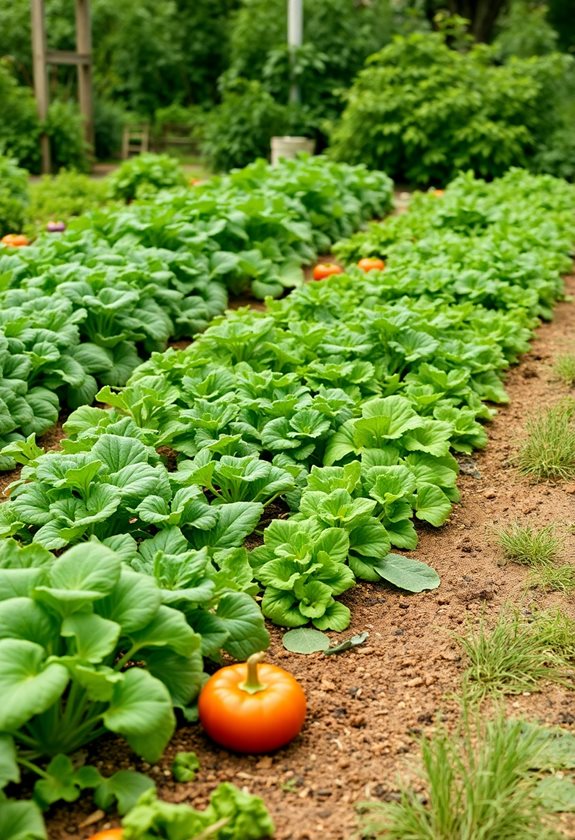
While it might seem tempting to plant the same crops in the same spot every year, rotating your crops is an essential practice that can keep your garden healthy and productive. It’s like giving your soil a well-deserved break! Here are some reasons why you should consider crop rotation:
Crop rotation isn’t just beneficial—it’s vital for a thriving garden, giving your soil a much-needed rest!
- Reduces pests and diseases
- Enhances soil nutrients
- Prevents weed buildup
- Encourages biodiversity
- Promotes better overall yields
Additionally, incorporating garden waterfalls into your landscape design can create a serene atmosphere that complements the health of your garden.
Monitor and Adjust
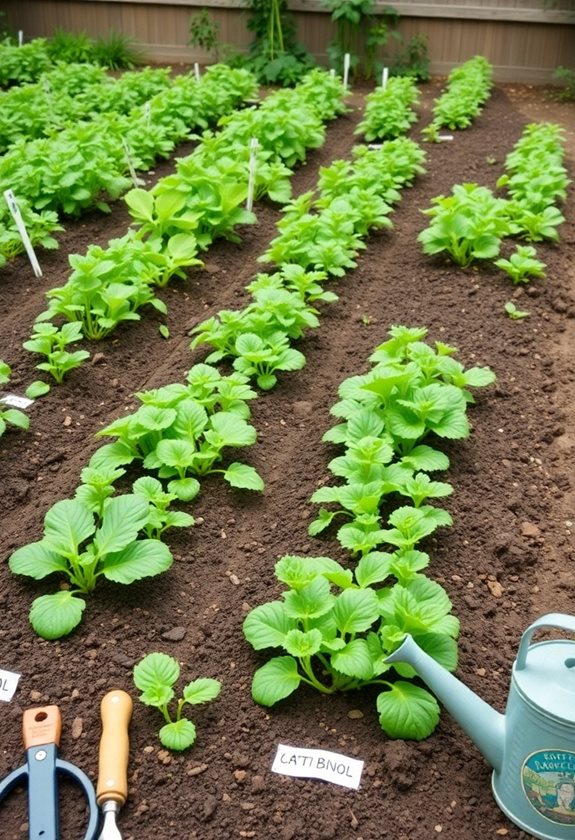
As you immerse yourself in the world of succession planting, one essential step you can’t overlook is monitoring and adjusting your garden as the seasons change. Keep an eye on your plants; are they thriving or struggling? Adjust watering and light based on their needs. For instance, if your leafy greens start wilting, they might need more water or shade. Don’t hesitate to swap crops if something isn’t working! Consider planting quick-growing varieties like radishes between slower ones. Additionally, incorporating drought-resistant plants can help reduce maintenance while ensuring a flourishing garden. Remember, a garden is like a puzzle—sometimes you need to rearrange pieces to see the full picture! Happy gardening!
Keep Records for Future Planning
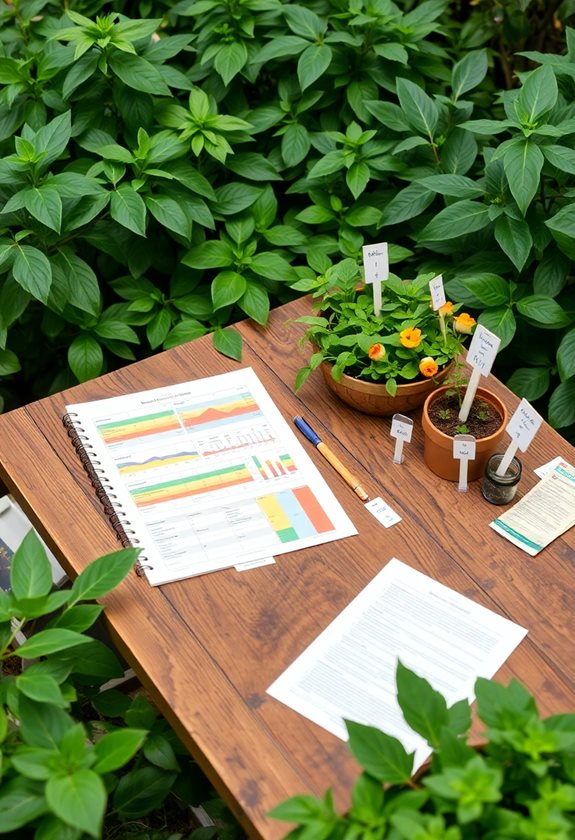
Keeping records for future planning is a game-changer when it comes to gardening success! You won’t believe how much easier it gets! By tracking your garden’s progress, you’ll learn what works and what doesn’t. Here’s what you should note:
- Planting dates and varieties
- Weather conditions during growth
- Pests or diseases encountered
- Harvest times and yields
- Personal observations and changes
These insights help you make informed decisions next season. Plus, it’s like having a gardening diary! Who doesn’t love flipping through it, reminiscing about your green adventures? So, grab that notebook and start documenting your gardening journey! Remember, succession planting can maximize your garden’s output throughout the seasons! Happy planting!
Frequently Asked Questions
What Tools Are Best for Efficient Succession Planting?
When you’re diving into succession planting, think of your garden as a symphony. You’ll want the right tools to create that harmony! Grab a trowel for digging, a hoe for weeding, and seed trays for starting plants. A garden planner keeps your schedule in tune, while labels help you remember your plant varieties. Don’t forget a watering can! Isn’t it satisfying to see your garden thrive? Let’s make some beautiful music together!
How Do I Handle Pests in Succession Plantings?
Dealing with pests in your succession plantings can be tricky, but you’ve got options! Start by inspecting your plants regularly. If you spot pests, try introducing friendly insects like ladybugs—they love munching on aphids! You can also use organic solutions like neem oil or insecticidal soap. And don’t forget the power of companion planting; some plants naturally repel pests. Isn’t gardening fun? Just remember, a little diligence goes a long way!
Can I Succession Plant in Small Garden Spaces?
You’ve hit the nail on the head—succession planting can absolutely work in small garden spaces! Think of it as a game of Tetris; you can squeeze in more plants by timing their growth. Start with fast-growing crops like radishes or lettuce, then follow up with slower ones, like tomatoes. Just remember to keep an eye on sunlight and water. You’ll be amazed at how much you can grow in a little patch!
What Are the Best Cover Crops for Off-Seasons?
When you think about the best cover crops for your off-seasons, consider options like clover, rye, and buckwheat. They not only improve soil health but also keep your garden alive during those quiet months! Clover adds nitrogen, rye protects against erosion, and buckwheat attracts beneficial insects. Plus, who doesn’t love a little green in the winter? Give them a try, and watch your soil thrive while you sip hot cocoa! Isn’t gardening wonderful?
How Do Weather Changes Affect My Planting Schedule?
How often do you check the weather before planting? Weather changes can really shake up your planting schedule! If you notice a sudden drop in temperature or unexpected rain, it’s essential to adjust your plans. For example, if frost threatens, you might want to delay planting tender seedlings. Always keep an eye on forecasts and be ready to adapt; after all, a little flexibility can lead to a bountiful garden! Happy gardening!