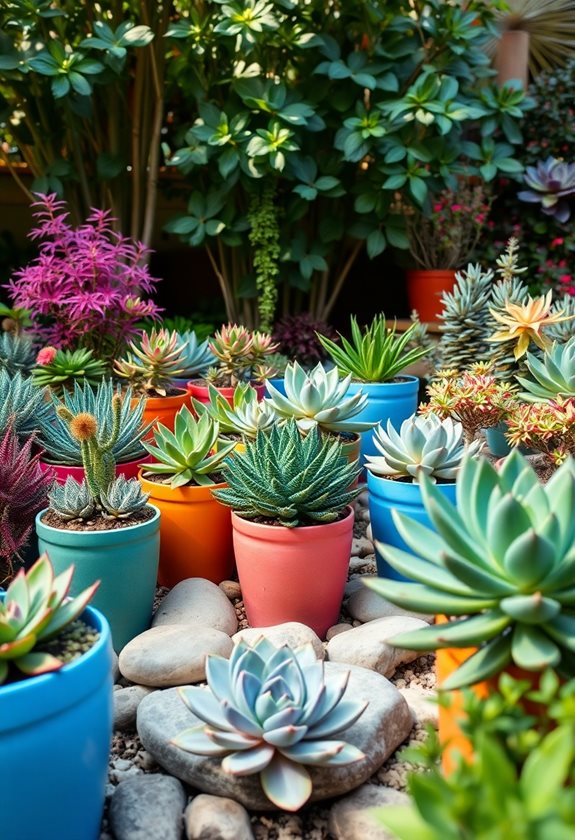
Want to create a lush succulent garden? Start by choosing the right container with drainage holes to prevent root rot! Consider building a charming succulent wall with varied plants for visual interest. Don’t forget to mix in colorful rocks for a pop of fun and contrast textures. Incorporate some decorative elements like quirky signs or fairy lights for personality. Using these tips, your garden will shine, and there’s much more to discover to bring your vision to life!
Design Highlights
- Choose containers with drainage holes in materials like terracotta or ceramic to support healthy succulent growth.
- Create a succulent wall using a sturdy frame and well-draining soil for an eye-catching vertical garden.
- Incorporate colorful rocks and gravel to enhance visual appeal and create pathways around your succulent plants.
- Mix different textures and heights by pairing low-growing and tall succulents for a dynamic display.
- Add decorative elements like whimsical figurines and solar-powered lights for charm and nighttime illumination.
Choose the Right Container
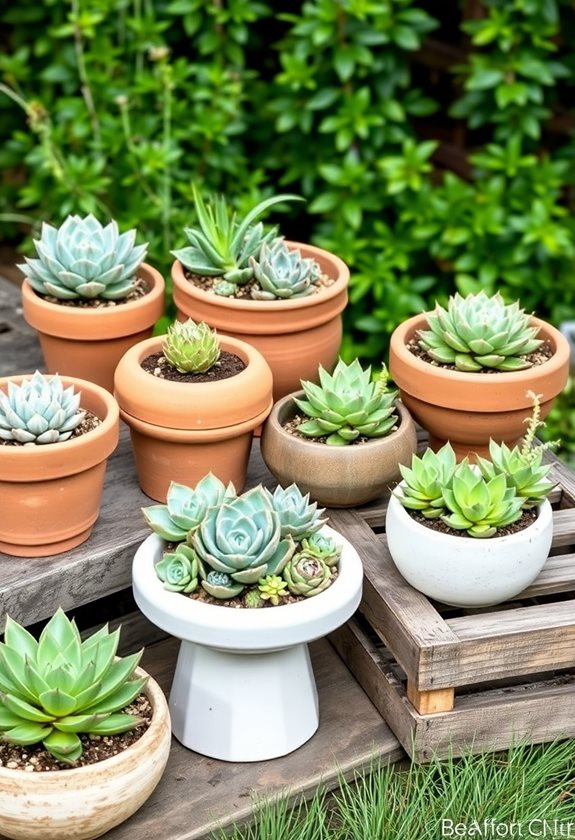
When it comes to creating your succulent garden, choosing the right container is like picking the perfect outfit for a big day—it’s all about making a statement and ensuring comfort! You want something that not only looks good but also keeps your plants safe. Consider these options:
- Drainage holes: Essential for preventing root rot!
- Materials: Terracotta, ceramic, or plastic—what fits your style?
- Size: Make sure it’s roomy enough for growth, but not too big! Additionally, consider the importance of drainage features to ensure optimal plant health.
Create a Succulent Wall
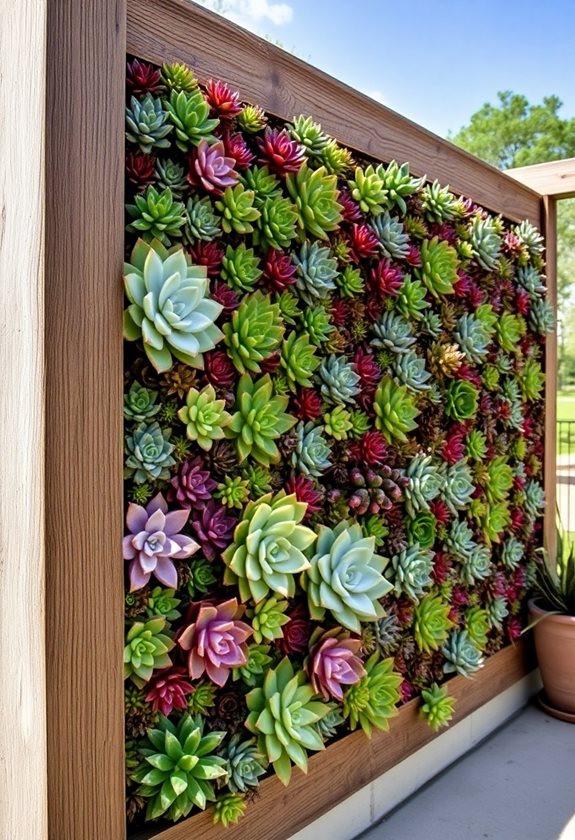
Creating a succulent wall can transform any dull space into a vibrant vertical garden that’s sure to impress! Imagine a stunning display of lush greenery right in your home. First, choose a sturdy frame—wood, metal, or even an old pallet works great! Next, pick a variety of succulents; mix shapes and colors for visual interest. Don’t forget to use well-draining soil to keep them healthy. You can even add a drip tray to catch excess water. Finally, hang it in a spot with bright, indirect light. How cool is that? Your friends will be asking for tips in no time! Additionally, incorporating beautiful succulent gardens can enhance your outdoor space and provide a serene atmosphere.
Incorporate Colorful Rocks and Gravel
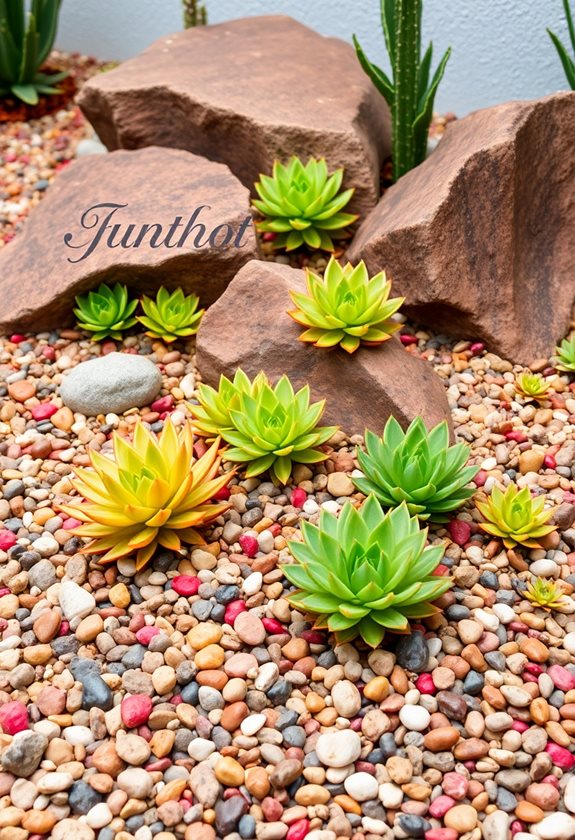
Adding colorful rocks and gravel can really elevate your succulent garden, turning it into a stunning masterpiece! Not only do they add visual interest, but they also help with drainage. Who knew rocks could be so versatile? Here are some ideas to get you started:
- Choose vibrant colors like reds, blues, and purples for a pop!
- Use gravel to create pathways or borders around your plants.
- Mix sizes to add depth and dimension.
- Consider safety by selecting non-toxic materials, especially if pets are around.
- Layer different textures for a unique look! Additionally, selecting non-toxic stones ensures that harmful chemicals won’t leach into your garden, which is essential for maintaining a healthy environment.
Mix Different Textures and Heights
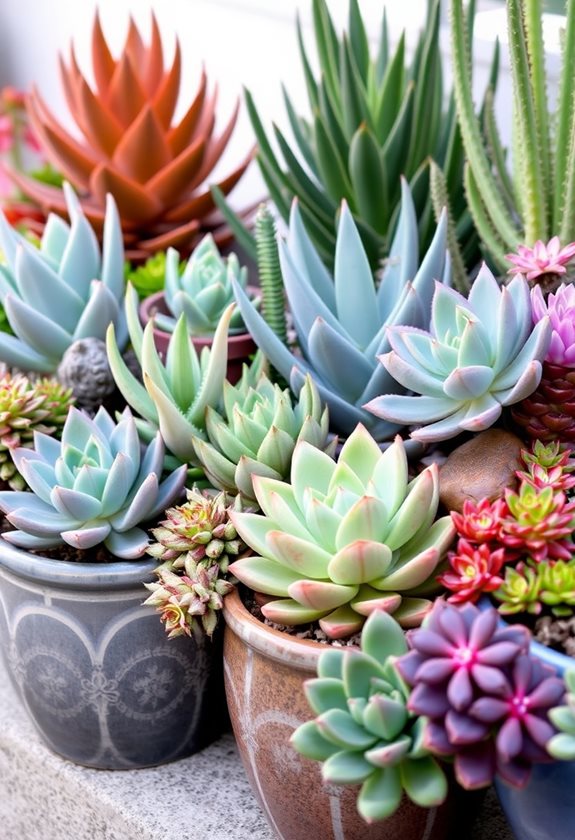
Imagine walking through a succulent garden where every plant seems to tell a story, each one uniquely shaped and colored. Mixing different textures and heights creates a dynamic display! Why settle for just one kind? Pair smooth, round rosettes with spiky, tall varieties to add interest. You might try:
Create a captivating succulent garden by mixing textures and heights for a dynamic, thriving display.
- Low-growing jade plants beside tall, slender agaves.
- Fluffy echeverias next to sharp haworthias.
This variety not only captivates the eye but also encourages healthy growth. Incorporating layering techniques can enhance the visual appeal and depth of your garden. So, don’t be afraid to experiment! Your garden will thrive, and trust me, the results will be worth every bit of effort. Happy gardening!
Add Decorative Elements
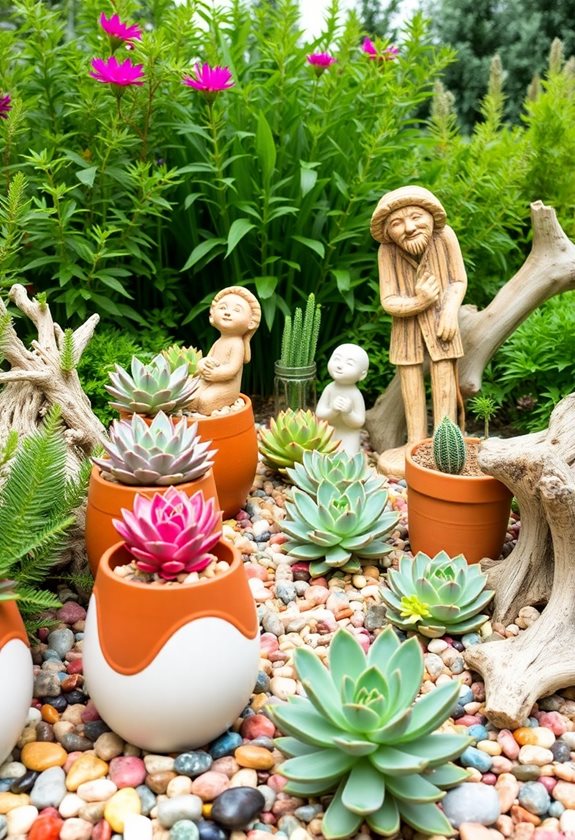
While your succulent garden might already be a visual feast, incorporating decorative elements can take it to the next level, making it truly one-of-a-kind. Think of these additions as the icing on your succulent cake!
Consider these fun ideas:
- Colorful pots: Choose vibrant hues that pop against your greenery.
- Whimsical figurines: Add a touch of personality with charming statues.
- Natural stones: Use smooth pebbles for a rustic feel.
- Garden signs: Personalize your space with quirky labels.
- Fairy lights: Illuminate your garden at night for a magical vibe, especially with solar-powered efficiency that provides hours of enchanting illumination.
Ready to get creative? Your garden will thank you!
Use Succulents in Vertical Gardens
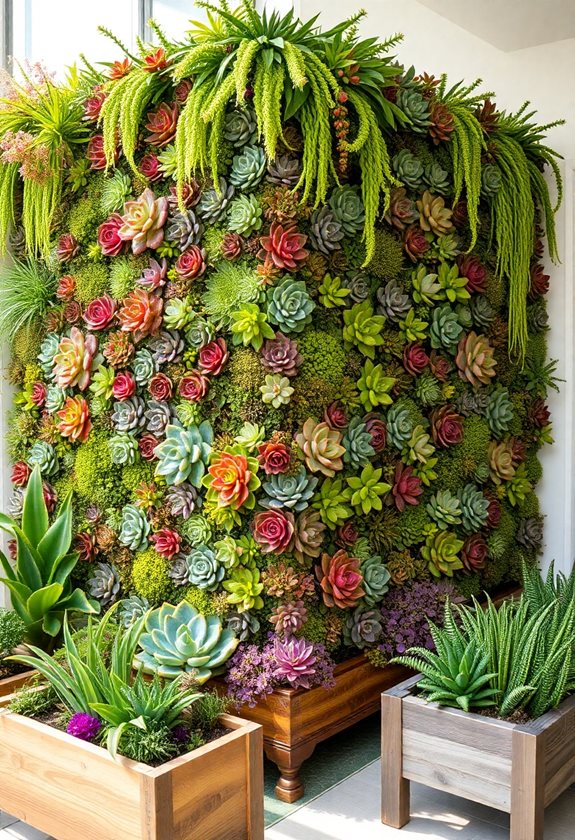
If you’re looking to maximize your gardening space while showcasing your love for succulents, vertical gardens are the way to go! Imagine lush greenery climbing your walls, turning an ordinary space into a vibrant oasis. You can use old pallets or pocket planters to create stunning vertical displays. Just remember, keep heavier pots lower to avoid any mishaps!
- Choose low-maintenance succulents like Echeveria or Haworthia.
- Guarantee proper drainage to prevent rot.
- Use a sturdy frame to hold everything safely. Additionally, consider incorporating vertical gardening solutions to enhance your design and functionality.
Design a Succulent Pathway
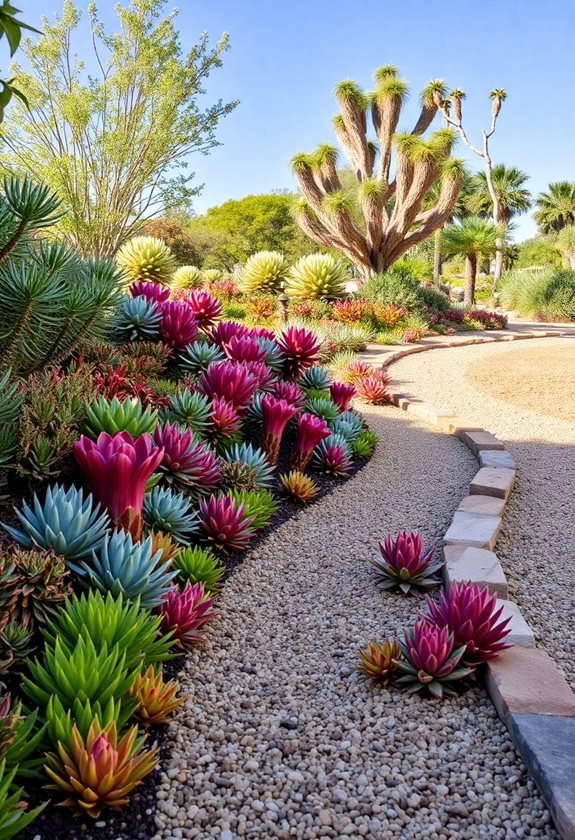
Creating a succulent pathway can transform your garden into a whimsical journey that delights both you and your visitors. Imagine strolling through vibrant colors and unique textures! To design your pathway safely, consider these tips:
Transform your garden with a whimsical succulent pathway, inviting vibrant colors and unique textures to delight all who stroll through!
- Choose non-slip materials for the path.
- Select low-maintenance succulents that thrive in your climate.
- Incorporate lighting to illuminate the walkway at night.
- Add decorative stones or gravel for a sturdy base.
- Plant taller succulents at the edges to frame the path.
Vertical garden solutions can also enhance your succulent pathway with space-saving structures that maximize greenery in small areas. With a little creativity, your succulent pathway can lead to magical moments and cherished memories! Ready to get started? Let’s dig in!
Frequently Asked Questions
How Often Should I Water My Succulent Garden?
Imagine your succulents basking in the sun, thriving like little green jewels! You should water your succulent garden every two to three weeks, but it depends on the season. In summer, they might need a bit more love, while winter calls for less. Always check the soil; if it’s dry an inch down, it’s time to water. Remember, it’s better to underwater than overwater! Your green friends will thank you!
What Types of Succulents Are Best for Beginners?
If you’re just starting with succulents, you’ll love how easy they are! Some great options include:
- Aloe Vera: It’s not just pretty; it’s useful too!
- Jade Plant: This one’s like a little money tree—who doesn’t want that?
- Echeveria: These come in stunning colors!
These varieties are forgiving and resilient. Just remember, they don’t need much water. Isn’t that a relief? You’ll have a thriving garden in no time!
Can Succulents Survive in Low Light Conditions?
Did you know that some succulents can actually thrive in low light? While most prefer bright sun, varieties like the jade plant and snake plant can survive with minimal light. Just remember, if you notice your succulent stretching, it’s craving more sunshine! To keep them happy, rotate your plants occasionally and give them a little water when the soil feels dry. It’s all about finding that perfect balance, right? Happy gardening!
How Do I Prevent Pests in My Succulent Garden?
To prevent pests in your succulent garden, start by keeping an eye on your plants. Regularly check for signs of trouble, like tiny holes or sticky residue. You can use neem oil as a natural pesticide—just mix it with water and spray it on. Plus, don’t forget to remove any dead leaves, since they attract pests. Isn’t it amazing how a little care can keep your garden thriving? Happy gardening!
When Is the Best Time to Plant Succulents Outdoors?
The best time to plant succulents outdoors is during spring, when temperatures warm up and the risk of frost is low. You’ll want to wait until the soil temperature hits about 60°F. Just think about it—your plants will thrive with plenty of sunlight and warmth! If you live in a hot climate, consider planting in the early morning or late afternoon to avoid scorching your new green friends. Excited to get started?