Looking to attract more wildlife to your garden? You can’t go wrong with native wildflowers like coneflowers and milkweed, which lure butterflies and bees! Sunflowers add a cheerful touch while offering snacks for birds. Don’t forget berry-producing shrubs for delicious treats and oak trees to support a variety of critters. And for shady spots, ferns work wonders! They’re low-maintenance and bring charm too. Ready to learn how to create that inviting wildlife haven?
Design Highlights
- Native wildflowers like coneflowers and black-eyed Susans support local wildlife and enhance garden beauty with low-maintenance requirements.
- Milkweed is essential for attracting monarch butterflies and supports pollinators, offering habitat for caterpillars.
- Sunflowers provide cheerful blooms, attracting bees and birds while creating a lively garden space.
- Berry-producing shrubs, such as blueberries and raspberries, offer delicious fruits and attract beneficial insects and birds.
- Ferns thrive in shady spots, providing essential habitats for critters and enhancing the aesthetic appeal of garden landscapes.
Native Wildflowers
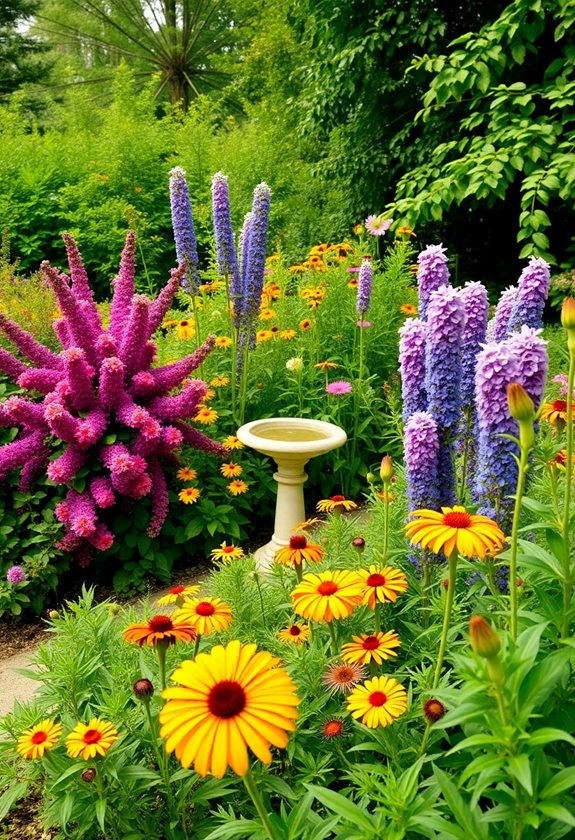
When you immerse yourself in the world of gardening, you might be surprised to discover just how much joy native wildflowers can bring to your backyard! These vibrant plants not only brighten your space but also create a sanctuary for local wildlife. Imagine butterflies dancing around as you sip your morning coffee! To get started, choose wildflowers native to your area—like coneflowers or black-eyed Susans. They’re low-maintenance, drought-resistant, and safe for your family. Plus, you’ll help sustain local ecosystems! Incorporating edible plants into your garden can further enhance its beauty and functionality. Have you ever considered planting a wildflower patch? It’s a delightful way to connect with nature while beautifying your garden!
Milkweed
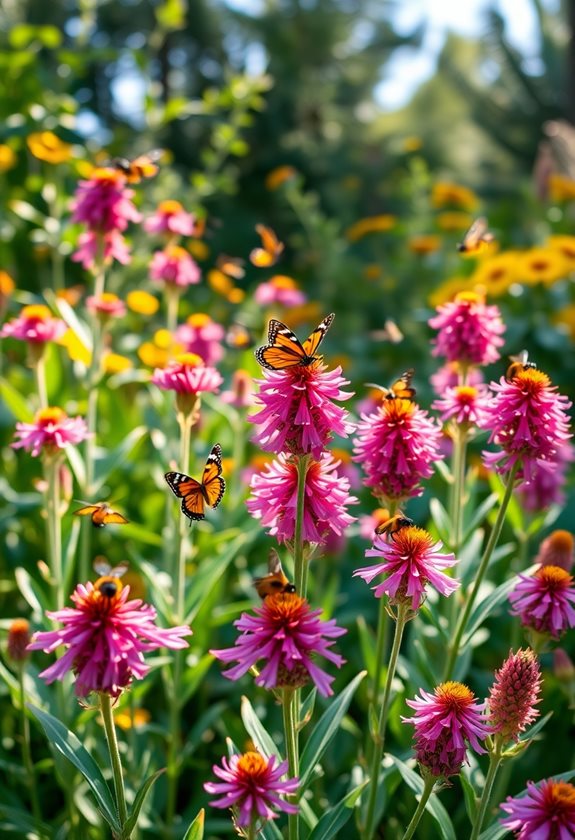
Milkweed isn’t just a pretty plant; it’s a superhero for our gardens! This vibrant flower attracts butterflies, especially the beloved monarchs. Imagine watching them flutter around your backyard! Plus, milkweed helps support other pollinators, creating a buzzing ecosystem. Planting it is easy—just choose a sunny spot, prepare the soil, and sow those seeds! You’ll love how it thrives.
Don’t worry about safety; milkweed’s sap can be irritating, so wear gloves when handling it. Have you ever seen a caterpillar munching on its leaves? It’s a joy! With milkweed, you’re nurturing nature while adding color to your garden. Pollinator-friendly foliage plants are essential for maintaining biodiversity and supporting local wildlife. What’s not to love?
Sunflower
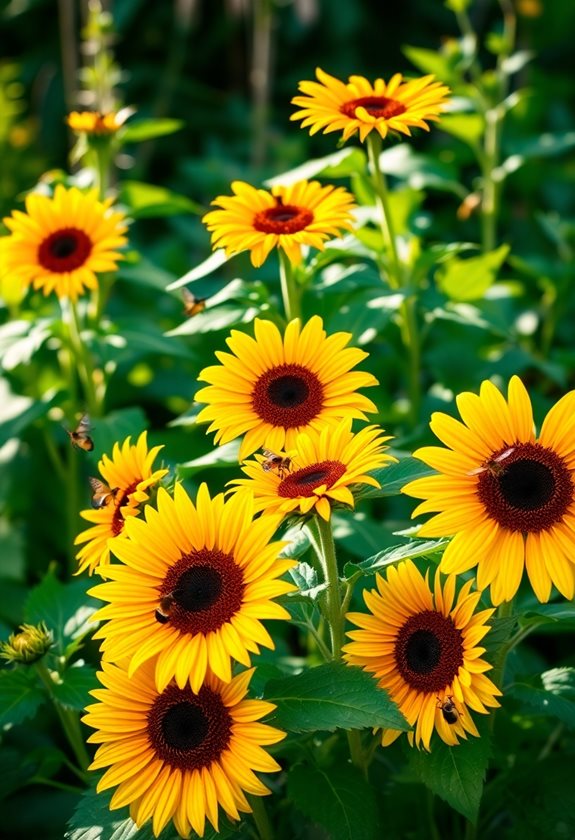
Sunflowers are like the cheerful faces of the garden, always turning toward the sun and brightening up any space! These vibrant blooms attract bees and birds, making your garden a buzzing hub of activity. Plus, they’re easy to grow! Just find a sunny spot, plant those seeds, and watch them soar. Did you know sunflowers can grow over six feet tall? Imagine the joy when you spot them peeking over your fence! Don’t forget—make sure to keep your garden free from pesticides to protect those helpful critters. Additionally, incorporating native plants can enhance the biodiversity in your garden and provide essential habitats for wildlife. Are you ready to plant some sunshine in your backyard?
Coneflower
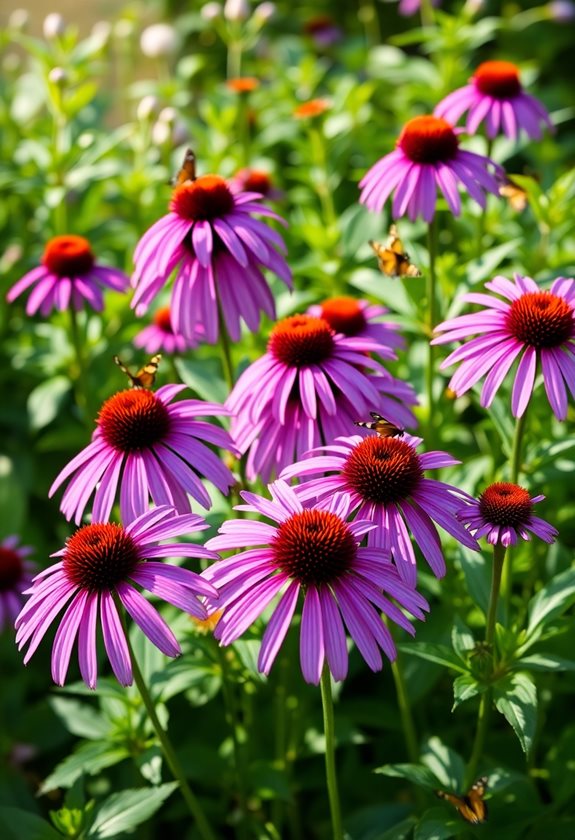
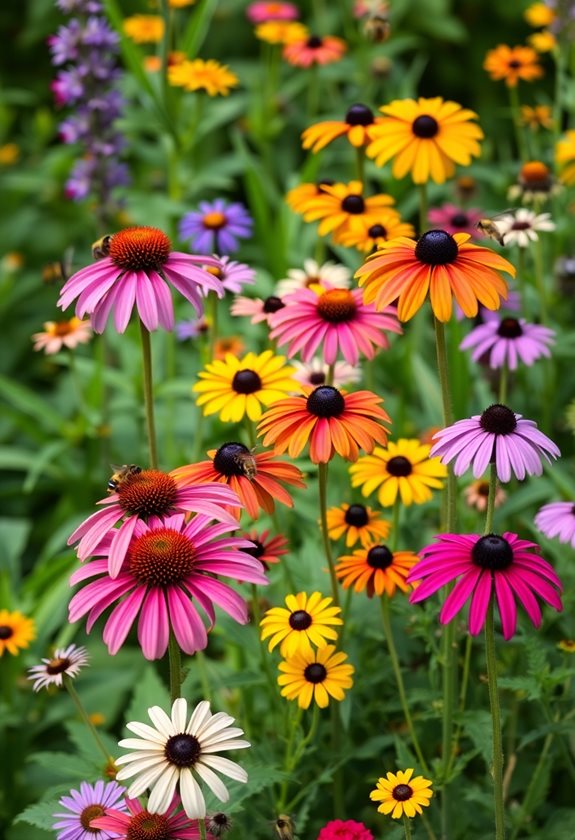
If you think sunflowers are the only stars of the garden, wait until you meet coneflowers! These vibrant beauties attract butterflies and bees, making your garden buzz with life. Plus, they’re super easy to grow!
Here’s why you’ll love them:
- Drought-tolerant: Perfect for those hot, dry days.
- Long-blooming: They’ll keep blooming from summer to fall, giving your garden a pop of color.
- Low-maintenance: Just deadhead them occasionally, and they’ll thrive!
Imagine sipping lemonade while watching butterflies dance around your coneflowers. Isn’t that a garden dream? Get ready to invite nature right to your backyard! Additionally, coneflowers are known for their colorful garden layout, making them a fantastic addition to any wildlife-friendly garden.
Aster
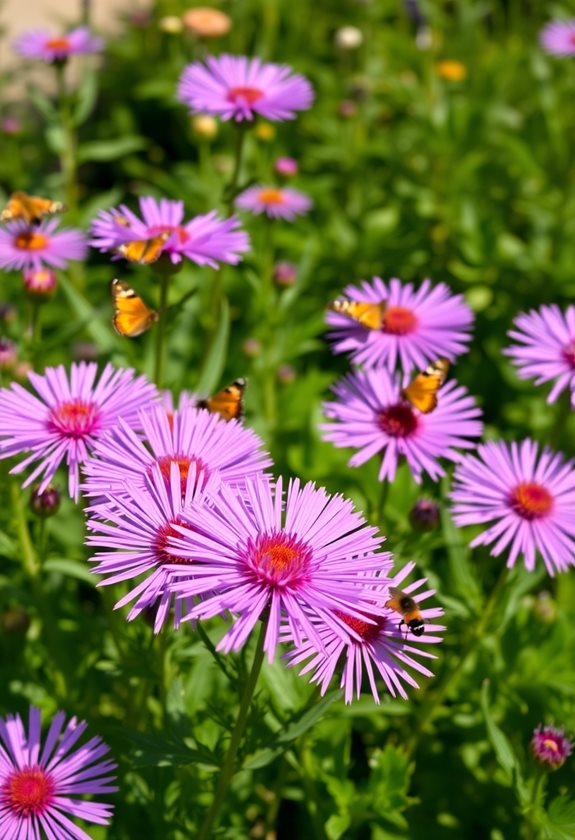
Asters are like the confetti of your garden in the fall, bursting with color just when you think summer’s done! These beauties attract butterflies and bees, making your garden a buzzing haven. Imagine sipping tea while watching them flutter around—sounds delightful, right?
Here’s why you should plant them:
- Variety: Asters come in different colors and sizes.
- Easy to Grow: They thrive in well-drained soil and full sun.
- Late Bloomers: They offer beautiful blooms well into autumn. Additionally, they can be a great choice for small space gardens, as they fit perfectly in compact areas while still providing vibrant color and attracting wildlife.
Black-eyed Susan
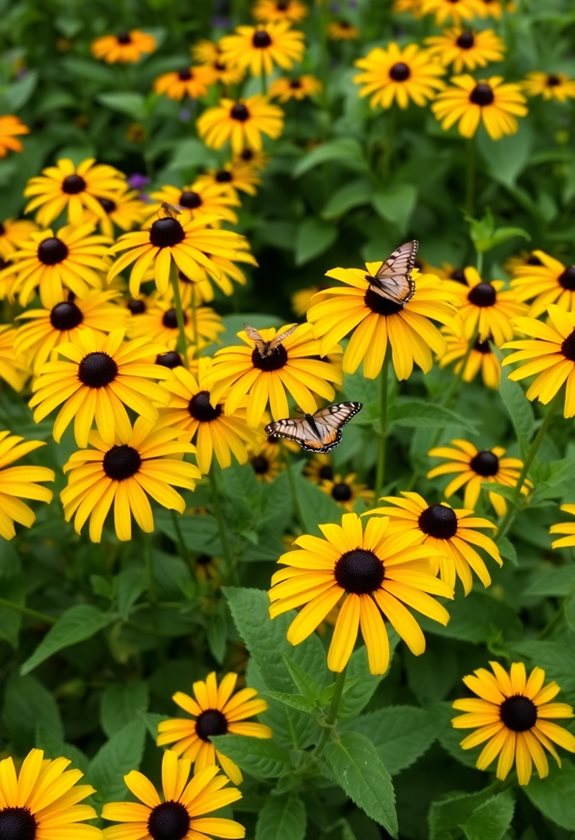
While you might think of summer as the peak season for flowers, Black-eyed Susans prove that the fun doesn’t end there! These vibrant blooms add a splash of yellow to your garden, attracting butterflies and bees. They’re easy to grow and thrive in various soil types—perfect for beginner gardeners! Just plant them in full sun and watch them flourish.
Want to impress your friends? Try grouping them with other wildflowers for a stunning effect. Remember, they’re not just pretty; their seeds provide food for birds in the fall! Isn’t nature amazing? Get ready to enjoy your wildlife-friendly garden! To enhance your garden’s aesthetic, consider incorporating stunning climbing plants that can add vertical interest and attract even more wildlife.
Lavender
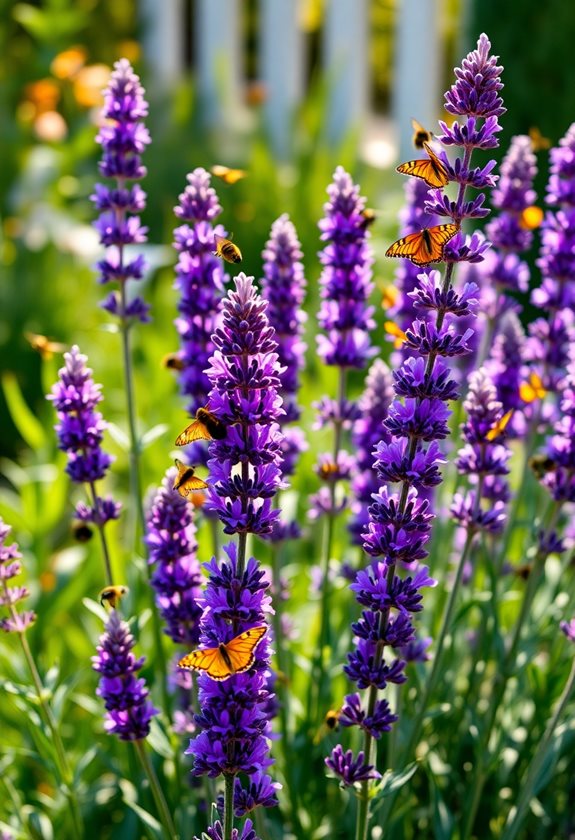
After you’ve enjoyed the cheerful sight of Black-eyed Susans, why not add another standout to your wildlife-friendly garden? Lavender is not just pretty; it’s a magnet for bees and butterflies! Imagine the delightful scent wafting through your yard while these pollinators dance around.
When you plant lavender, choose a sunny spot with well-drained soil. Water it sparingly—too much can be a killer!
Plus, did you know lavender can deter pests? It’s like a natural bug repellent! Additionally, incorporating garden waterfalls in your design can create a serene atmosphere, attracting even more wildlife to your space.
Berry-producing Shrubs
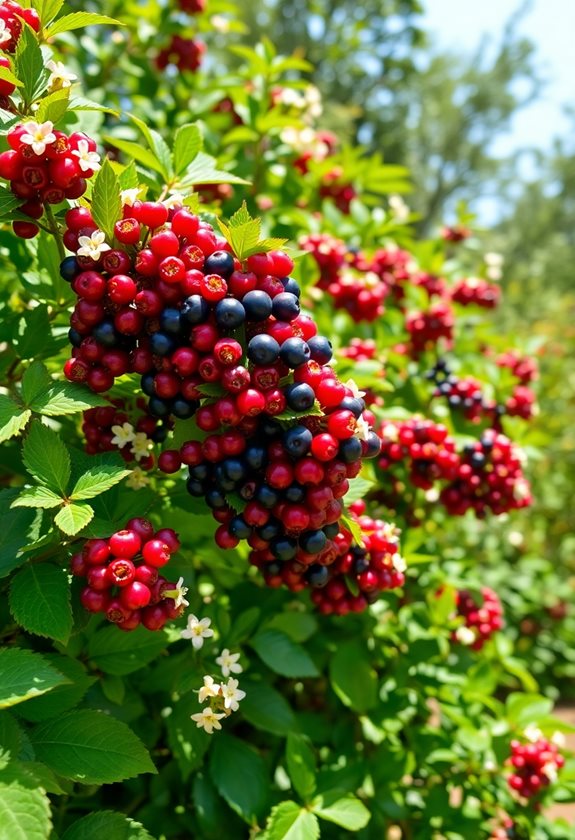
Imagine stepping into your garden and being greeted by the vibrant colors of berry-producing shrubs, each bursting with juicy, delicious fruits just waiting to be picked! These shrubs not only offer tasty treats but also attract birds and beneficial insects. Consider planting:
- Blueberries: They thrive in acidic soil and are perfect for snacking!
- Raspberries: Easy to grow, they can be enjoyed fresh or in desserts.
- Blackberries: Their thorny vines add a bit of adventure to harvesting!
Plus, they’re safe for your family and pets. Additionally, companion plants for roses can enhance the growth and health of your berry shrubs. So, why not add a few berry-producing shrubs and enjoy nature’s candy right at home?
Oak Trees
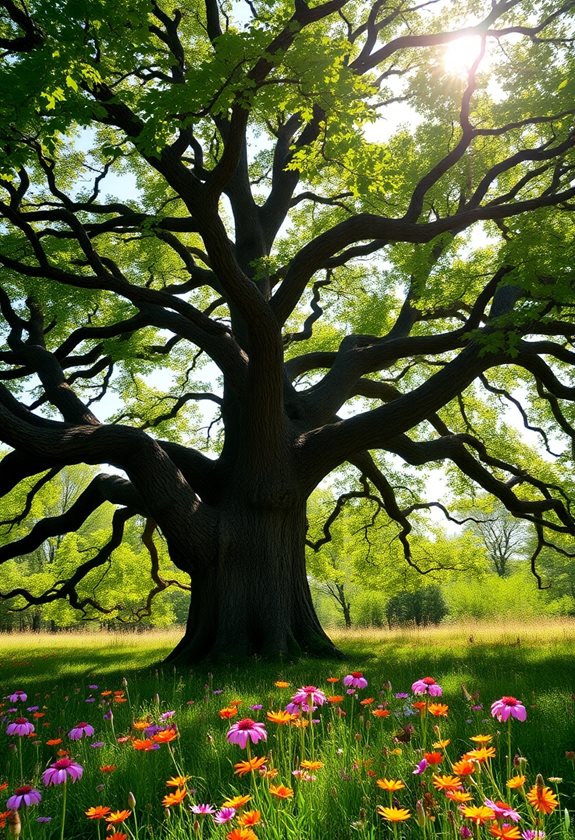
When you think about creating a wildlife-friendly garden, oak trees might not be the first plants that come to mind, but they’re absolute powerhouses for supporting local ecosystems! Not only do they provide shade and beauty, but they also attract a variety of wildlife. Imagine welcoming birds, squirrels, and even beneficial insects to your yard!
Oak trees may not seem like a top choice for wildlife gardens, but they are vital for supporting diverse ecosystems and attracting wildlife.
- They produce acorns, an essential food source for many animals.
- Their sturdy branches offer nesting sites for birds.
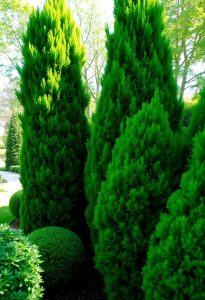
- Oak trees can live for centuries, becoming a focal point in your garden. Additionally, planting fast-growing evergreen shrubs can enhance your privacy and provide shelter for wildlife.
Ferns
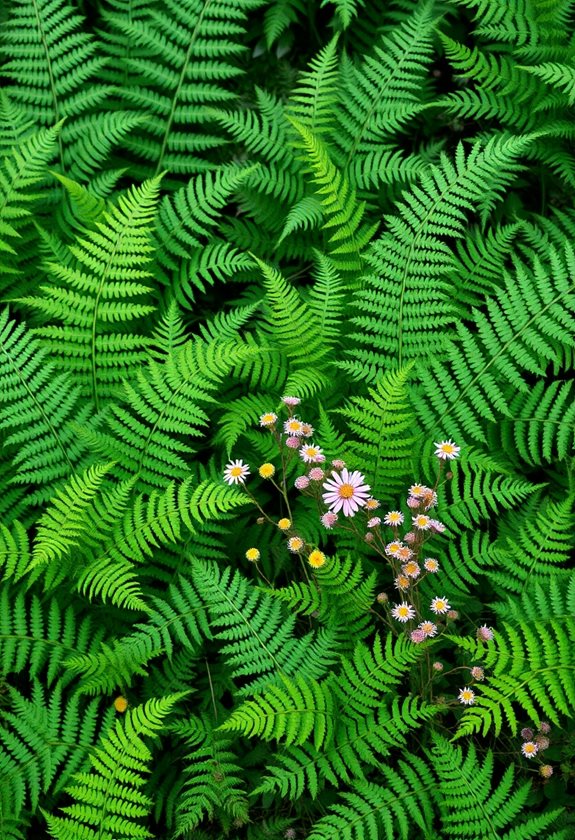
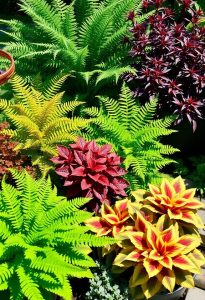
If you’ve ever strolled through a lush forest or a shaded woodland, you might have noticed how ferns seem to dance in the breeze, adding a touch of magic to the scenery. These graceful plants not only thrive in shady spots but also provide essential habitat for critters like frogs and insects. Want to attract more wildlife? Consider planting:
- Lady Ferns
- Boston Ferns
- Maidenhair Ferns
They’re low-maintenance and bring a serene vibe to your garden. Just remember to keep the soil moist and avoid direct sunlight. Creating a fern-filled oasis can transform your backyard into a safe haven for nature! Additionally, incorporating beautiful ferns into your garden design can enhance its aesthetic appeal while supporting local wildlife.
Frequently Asked Questions
How Can I Attract More Pollinators to My Garden?
Want to see buzzing bees and fluttering butterflies in your garden? It’s easier than you think! Start by planting bright, nectar-rich flowers like lavender and echinacea. Don’t forget to create cozy habitats with native shrubs and grasses. Avoid pesticides—those little critters need a safe space! You could even add a shallow water dish for a revitalizing drink. Who wouldn’t want to sip their morning coffee while watching nature’s beauty right outside?
What Are the Best Companion Plants for Wildlife-Friendly Gardens?
When you think about companion plants for your wildlife-friendly garden, consider mixing flowers and herbs! For example, you can plant marigolds alongside veggies like tomatoes. Marigolds attract beneficial insects, while tomatoes thrive! You might also try basil near peppers; they’re great buddies. Have you ever noticed how certain plants just work better together? It’s all about creating a balanced ecosystem. Plus, it’s fun to experiment and see what happens in your garden!
How Do I Maintain a Wildlife-Friendly Garden Year-Round?
Maintaining a wildlife-friendly garden year-round is easier than you think! Start with these tips:
- Plant native species that bloom in different seasons.
- Provide shelter with brush piles or birdhouses.
- Offer fresh water using a shallow dish or birdbath.
Keep an eye on pests—sometimes they’re friends! If you spot a few critters munching, just remember, nature’s a balancing act. It’s all about creating a cozy home for your wild visitors! Isn’t that exciting?
Are There Any Plants to Avoid in a Wildlife Garden?
When creating your wildlife garden, you’ve gotta be mindful of certain plants! Some can be harmful or invasive. For instance:
- English Ivy: It smothers native plants and wildlife.
- Monoculture Lawns: They offer little nutrition for critters!
- Certain Non-Native Species: They might not provide the right habitat.
Instead, why not focus on native plants that support local wildlife? It’s safer, and you’ll feel great watching nature thrive! Isn’t that what we all want?
Can I Create a Wildlife Garden in a Small Space?
Absolutely, you can create a wildlife garden in a small space! Even a balcony or tiny yard can attract critters. Start by choosing native plants; they’re usually easier to care for and more appealing to local wildlife. Consider adding a small water feature or bird feeder. You could also incorporate vertical gardening with trellises or hanging pots! Have you thought about using containers? They’re great for maximizing space and adding charm! Happy gardening!