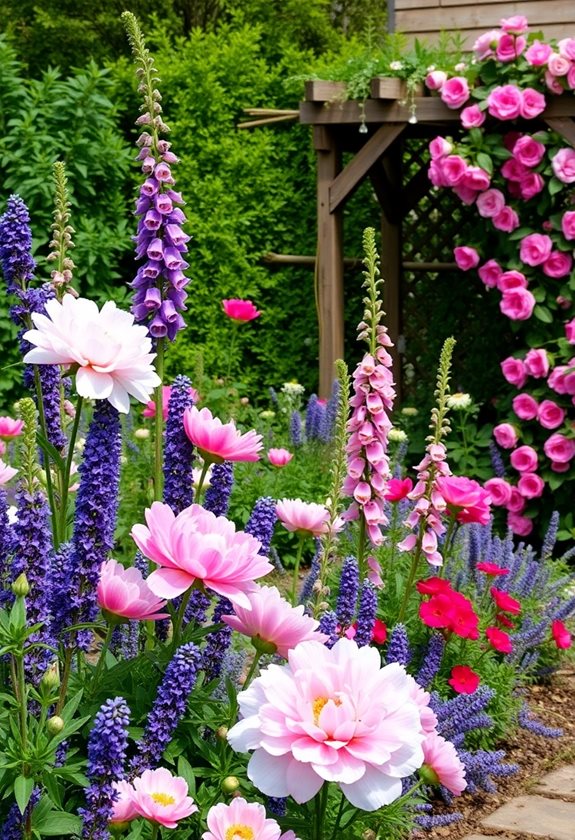
If you want a lush cottage garden that’s both vibrant and inviting, try these five plants: English Lavender for its sweet fragrance, Coneflower with cheerful colors, elegant Foxglove for height, eye-catching Delphinium, and sunny Black-Eyed Susans! They all thrive in sunny spots and well-drained soil, making them easy to care for. Just imagine butterflies flitting around your flowers! Ready to make your garden the envy of the neighborhood? There’s so much more to discover!
Design Highlights
- English Lavender adds a sweet fragrance and beautiful purple blooms, thriving in sunny spots and attracting pollinators for garden vibrancy.
- Coneflower features striking petals in vibrant colors, is drought-tolerant once established, and encourages more blooms through deadheading.
- Foxglove offers elegant, bell-shaped blooms, thrives in partial shade, and attracts bees and butterflies, enhancing biodiversity in the garden.
- Delphinium showcases impressive spikes of blue, purple, and white flowers, requiring full sun and well-drained soil for optimal growth.
- Black-Eyed Susan brings cheerful yellow petals that brighten gardens, is easy to grow, and attracts butterflies while thriving in full sun.
English Lavender
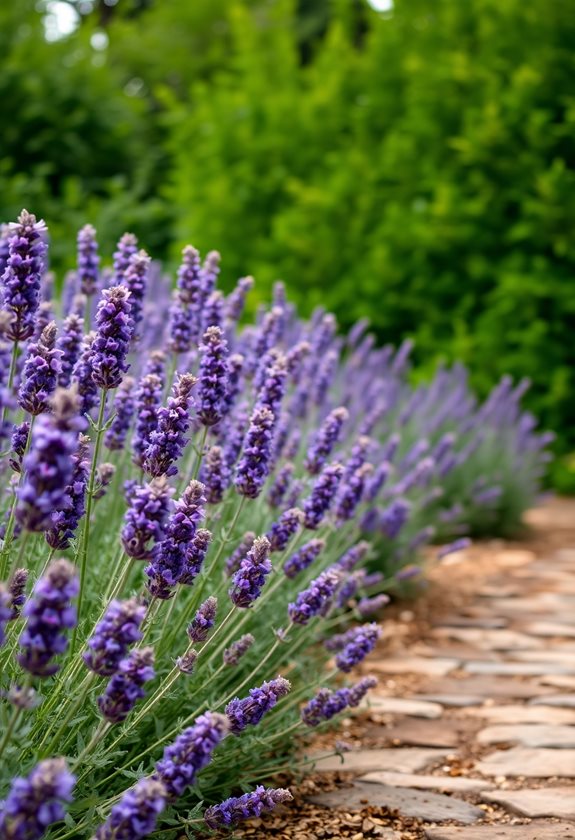
When you think of a cozy cottage garden, what comes to mind? English Lavender might just top that list! Its sweet fragrance and beautiful purple blooms create a serene atmosphere. Plus, growing lavender is simpler than you’d think! Here’s how you can start:
- Choose a sunny spot; lavender loves sunlight!
- Guarantee excellent drainage—nobody likes soggy roots!
- Water sparingly; too much can lead to root rot.
You’ll find lavender attracts helpful pollinators, keeping your garden vibrant and safe. Just imagine strolling through your garden, breathing in that calming scent. Isn’t that a delightful thought? Additionally, consider incorporating year-round greenery by mixing in evergreens to enhance your garden’s visual appeal in all seasons.
Coneflower
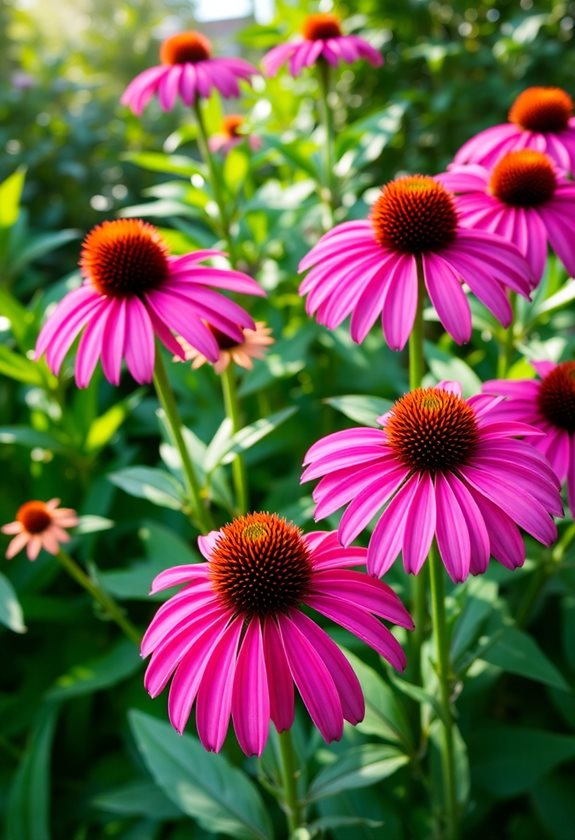
Coneflowers, with their striking petals and vibrant colors, are like the cheerful friends of your cottage garden! These hardy perennials are easy to grow and attract butterflies, making your garden a lively spot. Here’s how to make the most of them:
- Choose the right spot: Coneflowers thrive in full sun and well-drained soil.
- Water wisely: Once established, they’re drought-tolerant, but regular watering helps during dry spells.
- Deadhead spent blooms: This encourages more flowers and keeps your garden looking fresh! Additionally, planting coneflowers alongside lush garden ideas can enhance the overall appeal of your small space.
Foxglove
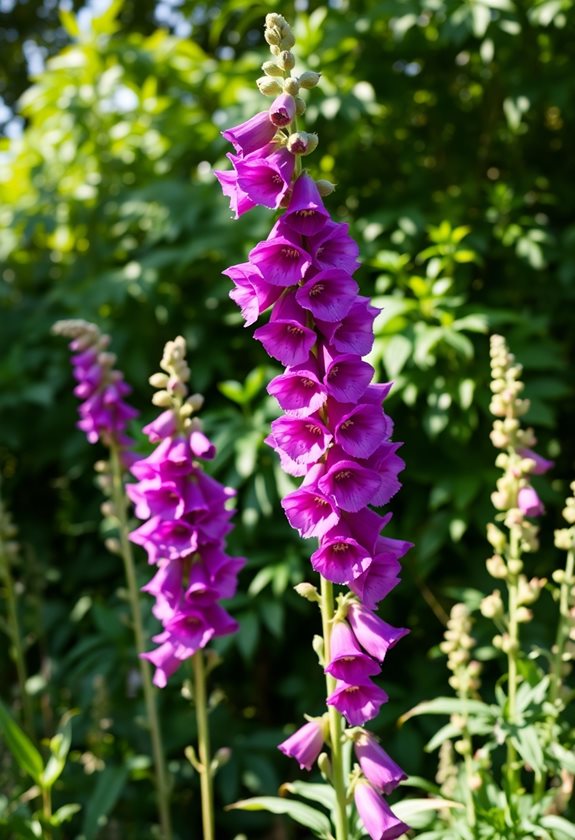
Imagine walking through your cottage garden and spotting the towering, bell-shaped blooms of foxglove—such a sight! These stunning flowers add elegance and charm, but remember, they’re also toxic if ingested. So, plant them away from curious pets and little ones. Foxgloves thrive in partial shade and well-drained soil, making them perfect for those tricky spots in your yard. Their vibrant colors attract bees and butterflies, ensuring your garden buzzes with life! Have you ever seen a garden without these beauties? I haven’t! Just make sure to enjoy their beauty from a safe distance. Additionally, consider pairing them with stunning native flowers to enhance the biodiversity of your garden. Happy gardening!
Delphinium
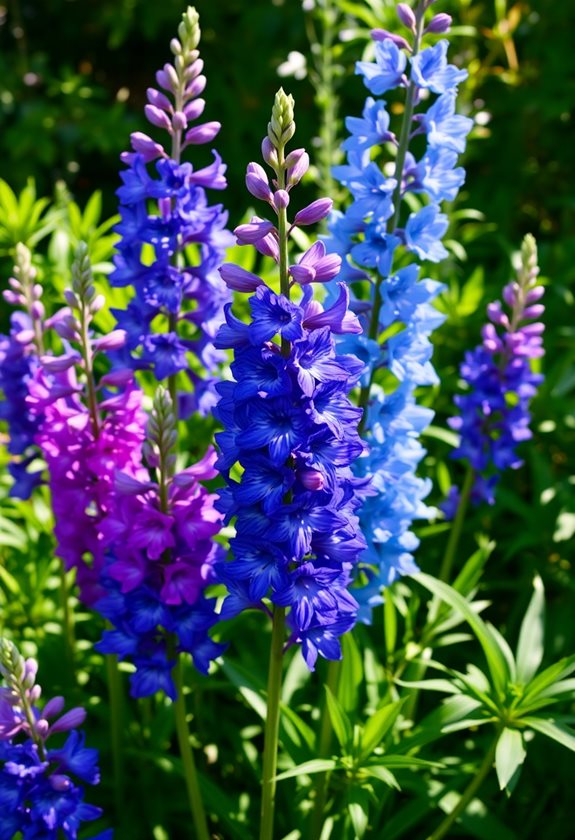
Delphiniums are like nature’s skyscrapers, reaching for the sky with their impressive spikes of blue, purple, and white flowers. These stunning plants can add a touch of elegance to any cottage garden. If you’re considering planting them, here are three essential tips:
- Sunshine: Delphiniums thrive in full sun, so choose a sunny spot!
- Soil: Guarantee well-draining soil enriched with compost for healthy growth.
- Support: Use stakes to keep tall blooms upright and prevent damage from wind.
With a little care, you’ll enjoy their breathtaking beauty—just watch out for their toxic nature if you have pets! Additionally, consider incorporating heat-resistant annuals to ensure your garden remains vibrant even in the hottest months.
Black-Eyed Susan
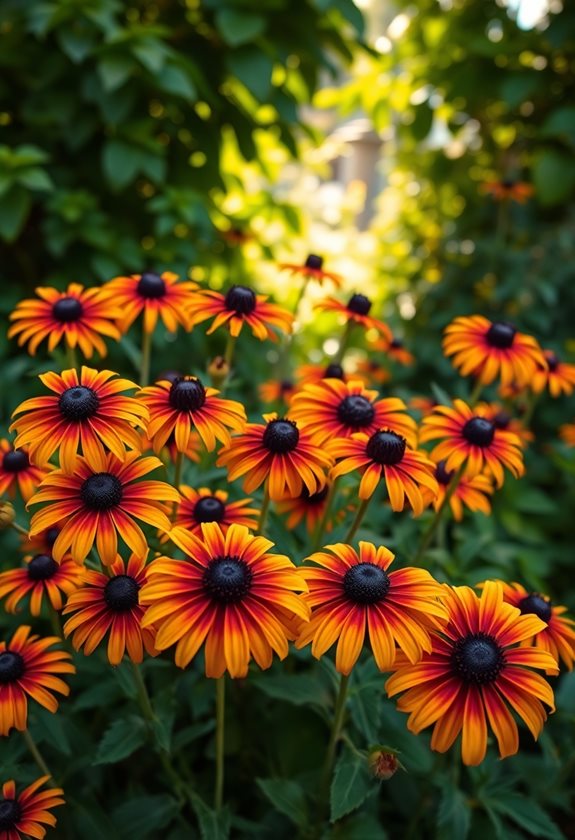
You might find that adding Black-Eyed Susans to your cottage garden not only brightens up your space but also brings a sense of joy with their cheerful yellow petals and dark centers! These perennials are pretty easy to grow, thriving in well-drained soil and full sun. Plus, they attract butterflies, which is a delightful bonus! Just remember to water them regularly without overdoing it—nobody wants soggy plants, right? If you’re wondering how to start, you can even plant seeds directly in your garden. Additionally, incorporating colorful flower beds can greatly enhance the appeal of your garden and further attract various pollinators. So, why not sprinkle some Black-Eyed Susans into your garden mix and enjoy their sunny charm?
Frequently Asked Questions
What Soil Type Is Best for a Cottage Garden?
Imagine your garden as a cozy blanket, wrapping your home in warmth. For a cottage garden, you’ll want well-draining, loamy soil that feels just right. Mixing in organic matter like compost helps your plants thrive. Here’s a tip: test your soil! You can buy a simple kit at a garden center. If your soil’s too sandy or clay-heavy, don’t worry! Amend it with peat moss or sand for that perfect touch. Happy gardening!
How Much Sunlight Do Cottage Garden Plants Need?
Cottage garden plants typically thrive in full sun, needing at least six hours of sunlight daily. Why’s that important? Well, sunlight fuels their growth, making them vibrant and lush! So, if your garden’s a bit shady, consider planting sun-loving flowers like daisies or lavender. Trust me, they’ll thank you with colorful blooms! Just imagine sipping lemonade in your sunny garden oasis—sounds delightful, right? Keep that sunlight coming for a happy, healthy garden!
When Is the Best Time to Plant These Flowers?
Did you know that more than 70% of flowering plants thrive when planted in spring? It’s the perfect time to get your hands dirty! Ideally, you’ll want to plant your flowers after the last frost, usually between late March and early June. This guarantees they’ve got the best chance to grow strong and vibrant. Plus, it’s exciting to watch them bloom as the weather warms up. Ready to dig in? Happy gardening!
How Do I Maintain a Cottage Garden Throughout the Year?
Maintaining a cottage garden throughout the year can feel like a fun adventure! You’ll want to:
- Water regularly during dry spells.
- Prune plants in early spring to encourage growth.
- Mulch to keep weeds at bay and retain moisture.
Don’t forget to observe seasonal changes—some plants may need extra care in winter! And hey, have you ever tried planting bulbs for spring blooms? It’s like a surprise party waiting to happen! Enjoy your garden journey!
Are These Plants Deer and Pest Resistant?
Some plants are great at keeping deer and pests at bay. You might want to try:
- Lavender: Its strong scent deters many critters.
- Marigolds: They’re known for repelling pests like aphids.
- Rosemary: Not only is it tasty, but its aroma keeps deer away too!