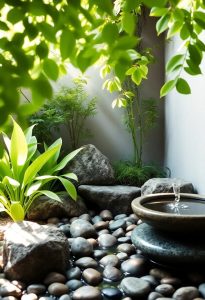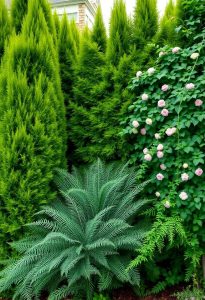
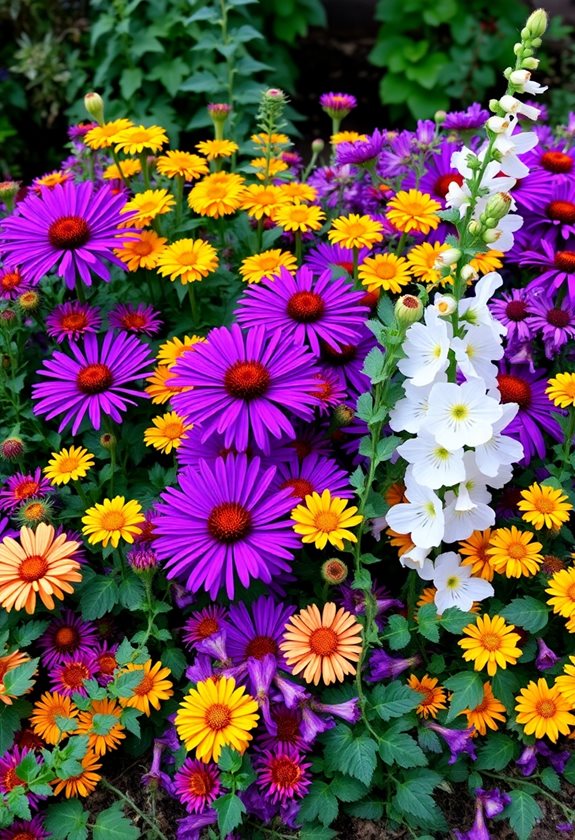
To enhance your garden bed aesthetics, you’ll want to mix plants with vibrant colors, interesting textures, and varying heights. Think about pairing broad, glossy leaves with feathery ferns for that perfect contrast, or try colorful daisies alongside tall sunflowers. You can create visual depth by filling in shorter spots with cheerful marigolds. Plus, don’t forget about seasonal blooms that keep your garden lively all year! Want tips on specific combos? There’s so much more to explore!
Design Highlights
- Use a harmonious color palette of three main colors to create balance and visual appeal in garden beds.
- Combine plants with contrasting colors to make softer shades stand out and enhance overall aesthetics.
- Incorporate varied textures by mixing broad-leaved plants with delicate foliage for added visual interest.
- Vary plant heights to create depth; mix tall, medium, and short plants for a layered effect in garden beds.
- Select seasonal blooms to ensure year-round beauty, combining early spring flowers with summer and fall varieties for continuous color.
The Power of Color Harmony in Plant Pairings
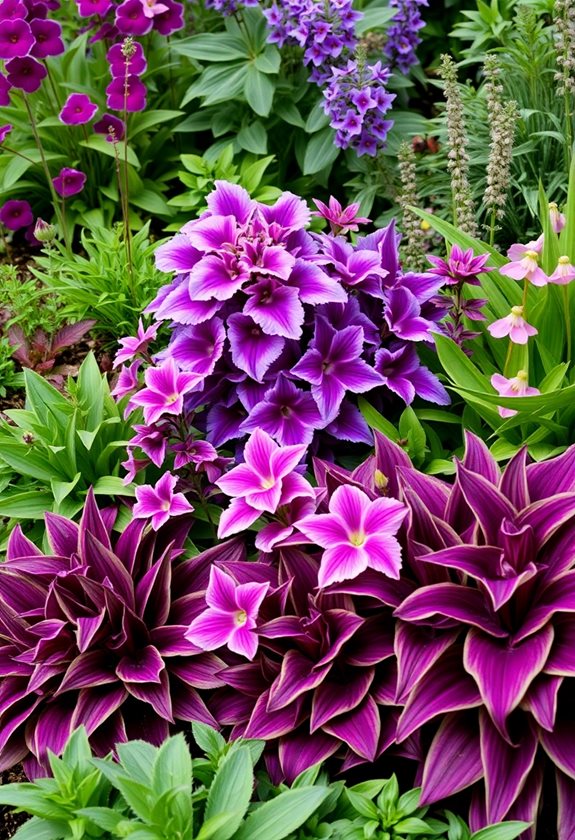
When you think about creating a stunning garden bed, have you ever considered how color can transform your space? Imagine vibrant yellows paired with calming blues. It’s like a dance of hues! To achieve color harmony, try these tips:
- Choose a palette: Stick to three main colors for balance.
- Consider seasonal blooms: Mix early and late bloomers for year-round beauty.
- Use contrasting colors: Bright flowers can make softer shades pop!
In addition, exploring creative plant combinations can further enhance the aesthetic appeal of your garden.
Textural Contrast: Mixing Foliage for Visual Interest
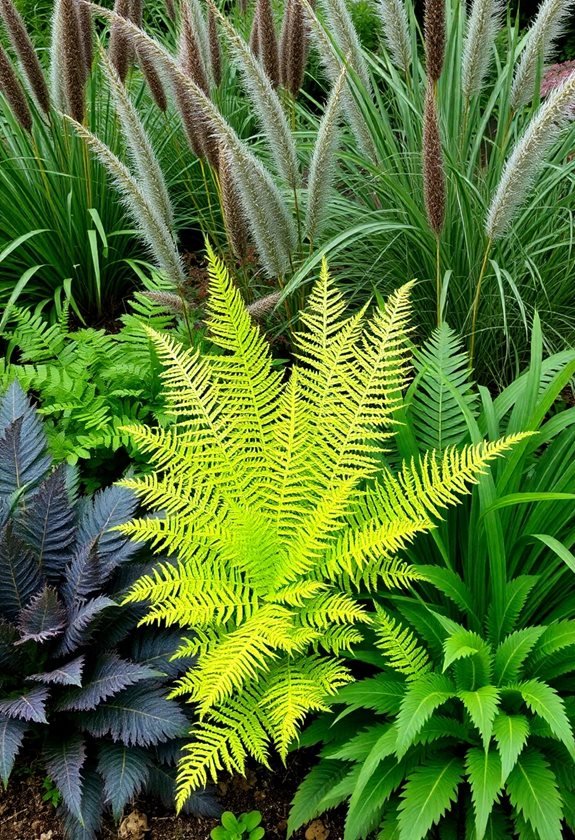
While you might think flowers steal the show, mixing different foliage types can add a whole new layer of excitement to your garden beds! Consider combining broad, glossy leaves with delicate, feathery ones. For example, pairing hostas with ferns creates a stunning contrast.
Mixing varied foliage types can elevate your garden, creating stunning contrasts and dynamic textures that truly captivate the eye.
- Try mixing textures like soft lamb’s ear with spiky sage.
- Use vibrant greens alongside darker hues for visual interest.
Don’t be afraid to experiment! It’s like crafting a living tapestry. Remember, a diverse foliage palette not only looks great but also promotes a healthier ecosystem. Additionally, incorporating layering techniques can create depth and dimension in your garden design. So, why not plunge in and get creative? Your garden will thank you!
Height Variation: Creating Depth in Your Garden Bed
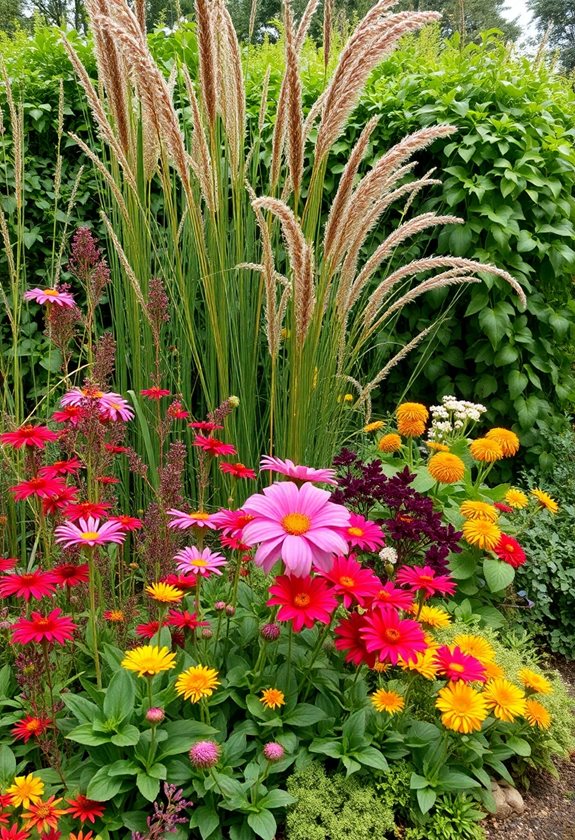
If you want to create a garden bed that truly stands out, consider the magic of height variation—it’s like giving your plants a stage to shine on! Mix tall plants, like sunflowers or hollyhocks, with medium-sized blooms, such as coneflowers, and fill in the front with shorter beauties like marigolds. This layered approach not only adds depth but also keeps everything safe from harsh winds! Plus, it makes your garden visually interesting. Have you ever tried standing back and admiring your work? It’s rewarding! So, go ahead and play with heights—your garden will thank you for it! Additionally, incorporating diverse plant selection can enhance seasonal beauty and visual interest in your garden bed.
Seasonal Combinations for Year-Round Beauty
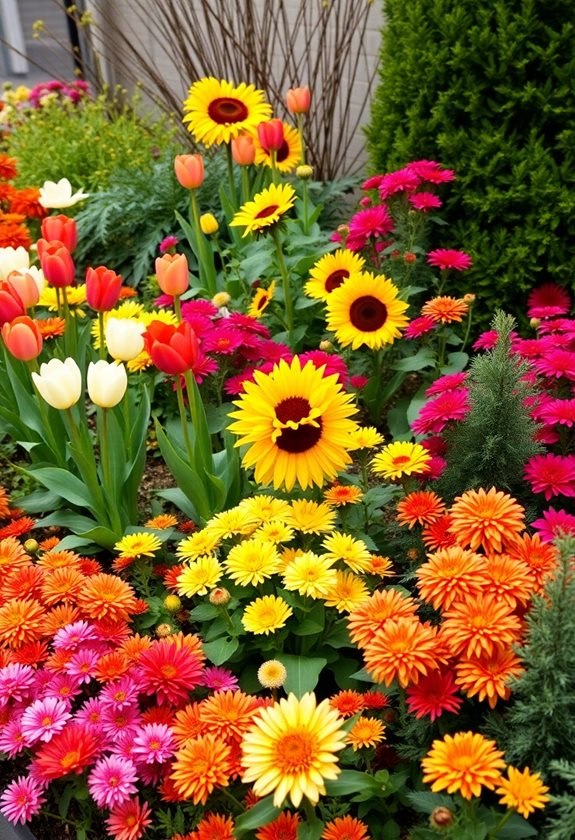
To achieve a garden that delights you through every season, think about combining plants that bloom at different times of the year. Start with cheerful daffodils in early spring, followed by vibrant tulips. As summer rolls in, add sunflowers for height and color, while fall brings stunning asters. Don’t forget winter interest! Evergreens like boxwood keep your garden lively even in the cold months. Discover vibrant plants that can enhance your garden’s aesthetics throughout the year. You can mix textures too! Consider combining grasses with flowers for depth. Isn’t it rewarding to step outside and see something beautiful year-round? Let your garden reflect the joy every season can bring! Happy gardening!
Companion Planting: Enhancing Growth and Aesthetics
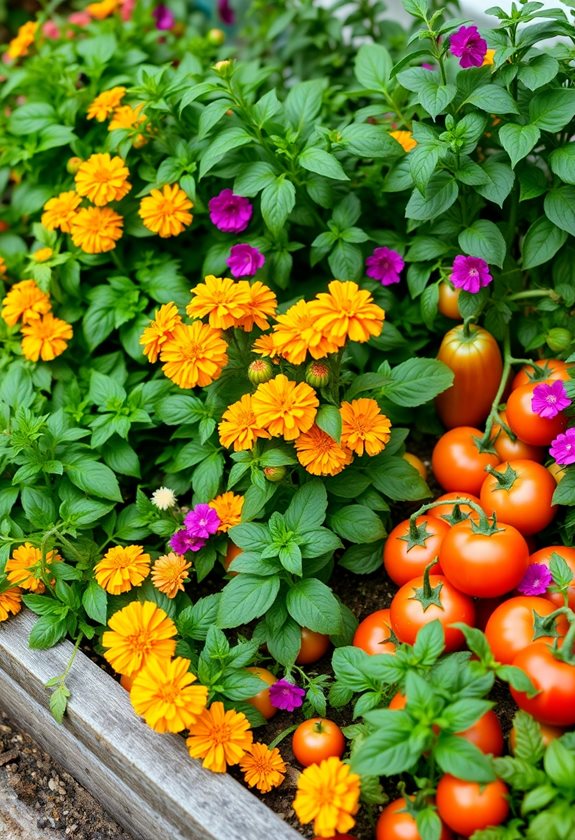
When you think about planting your garden, why not consider how certain plants can thrive together? Companion planting isn’t just about boosting growth—it’s also about creating a stunning visual display! For example, pairing marigolds with tomatoes can deter pests while adding vibrant color.
- Basil loves being near tomatoes, too, enhancing flavors while keeping them healthy.
- Nasturtiums can attract beneficial insects and look gorgeous trailing over edges! Additionally, incorporating beneficial flower pairings can significantly enhance pest control in your garden.
Frequently Asked Questions
How Do I Choose Plants for Different Sun Exposure Levels?
Choosing plants for different sun exposure levels is like picking the right shades for your style! First, check your garden’s sunlight. For full sun (6+ hours), try lavender and sunflowers; they love the light! In partial shade, consider hostas and ferns, which thrive with a bit of protection. In full shade, go for astilbe or fuchsia. Remember, it’s all about matching plants with their favorite sun! Happy planting! 🌞
What Are Some Plants That Attract Pollinators?
Think of your garden as a vibrant dance floor, where bees and butterflies twirl among flowers. To attract these pollinators, you can plant:
- Lavender: Its fragrance is irresistible!
- Coneflowers: They’re tough and beautiful.
- Milkweed: A must for monarchs!
How Can I Maintain Plant Health in Mixed Beds?
To maintain plant health in mixed beds, you’ve got to keep an eye on a few key factors! Make sure to:
- Water regularly, but don’t drown them!
- Check for pests – they love to crash the party.
- Rotate plants yearly to keep the soil happy.
And remember, a little compost goes a long way. Have you ever tried companion planting? It can be a game changer for health and harmony! Happy gardening!
When Is the Best Time to Plant My Garden Bed?
Did you know that 70% of gardeners find spring the perfect time to plant? You’ll want to dig into your garden bed once the frost has passed, usually around late March to early May. It’s the ideal time for most plants to thrive! Just make sure to check your local frost dates. Trust me, planting at the right time can lead to a vibrant, flourishing garden. Ready to get your hands dirty?
How Do I Prevent Weeds in My Garden Bed?
To prevent weeds in your garden bed, you can use a few simple tricks! First, mulch is your best friend—spread a thick layer around your plants to block sunlight. Have you tried hand-pulling weeds when they’re small? It’s surprisingly satisfying! You might also consider using landscape fabric or planting ground covers. Remember, a little effort now saves you big headaches later. Happy gardening, and may your beds be weed-free and thriving!