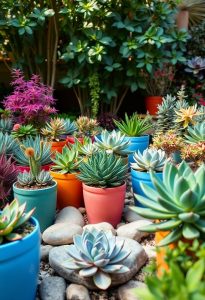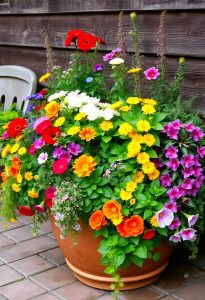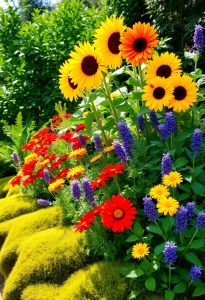
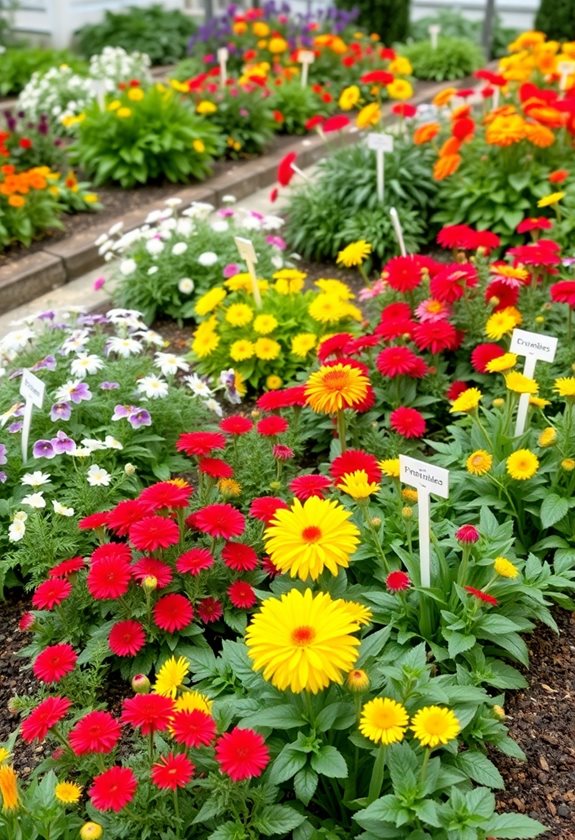
Planning a garden filled with seasonal plantings is super rewarding! Start by evaluating your space—check sunlight and soil type. Then, pick plants suited for each season; think colorful flowers in spring and tasty veggies in summer! Sketch out your layout for easy access and add a cozy seating area for breaks. Don’t forget to prep your soil for planting success! Curious about how to create a planting schedule? There’s more fun ahead as you dig deeper!
Design Highlights
- Assess your space and climate to understand sunlight, soil type, and water access for optimal plant selection.
- Research and choose seasonal plants that thrive in your local climate, ensuring they are non-toxic for pets and children.
- Design your garden layout by sketching plant placements, considering height, spread, and accessibility for maintenance.
- Prepare your soil by testing pH and nutrient levels, clearing debris, and amending with compost or organic potting mix.
- Implement a planting schedule based on local frost dates, and create a calendar to track planting and harvest times.
Assessing Your Space and Climate
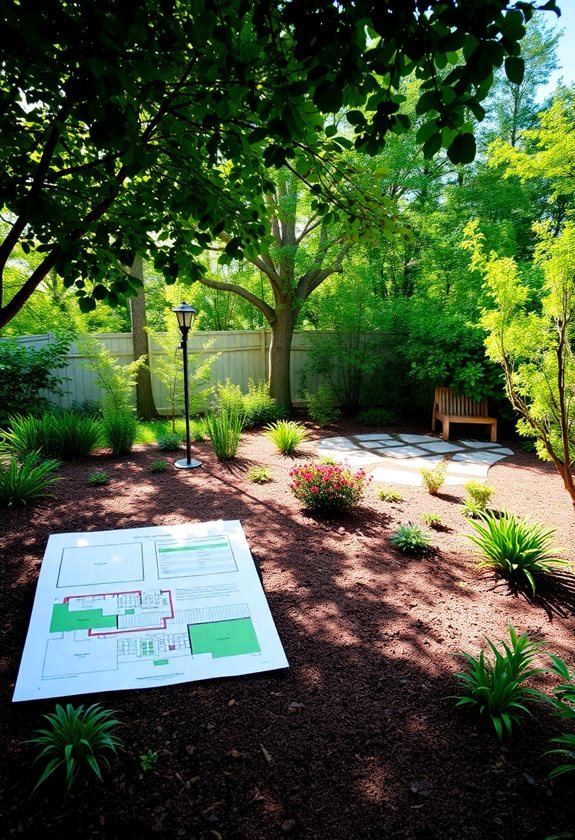
Have you ever wondered just how much your garden’s success depends on the space and climate you have? Evaluating your garden area is key! Consider these factors:
- Sunlight: Does your spot get full sun, or is it shaded?
- Soil: Is it sandy, clay, or loamy? Test it!
- Water Access: Is there a nearby source, or will you need to haul buckets?
I once planted in too much shade; my tomatoes sulked! By understanding your unique environment, you’ll set your garden up for success. Additionally, mastering succession planting will allow you to maximize your seasonal harvest. So, grab a notebook, jot down your observations, and get ready to dig in!
Selecting the Right Plants for Each Season
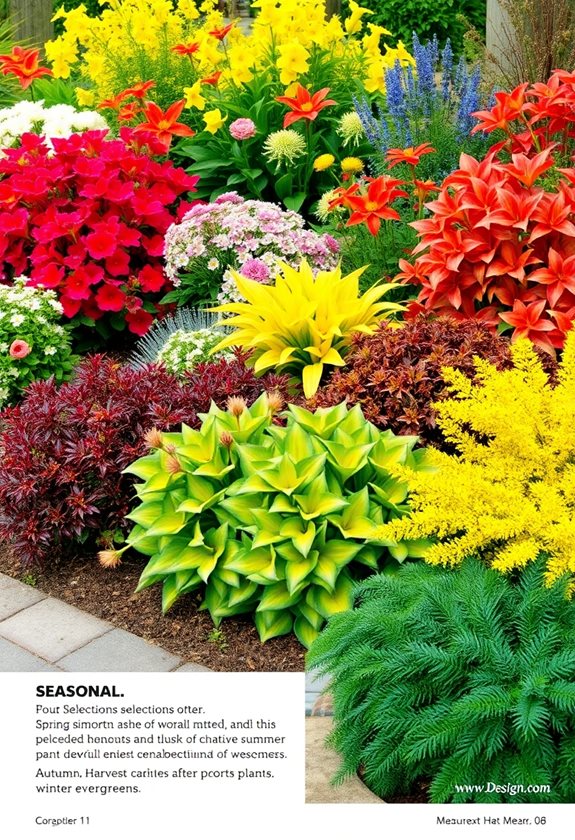
After you’ve assessed your space and climate, the fun part begins: selecting the right plants for each season! It’s like picking your favorite snacks for a party—it sets the mood! Here are three tips to help you choose wisely:
- Know Your Season: Research what thrives in spring, summer, fall, and winter.
- Consider Safety: Opt for non-toxic plants, especially if pets or kids are around.
- Mix and Match: Combine flowers, vegetables, and herbs for a vibrant, productive garden. Additionally, consider incorporating stunning native flowers that are well-suited for your local environment to enhance biodiversity and attract pollinators.
Designing Your Garden Layout
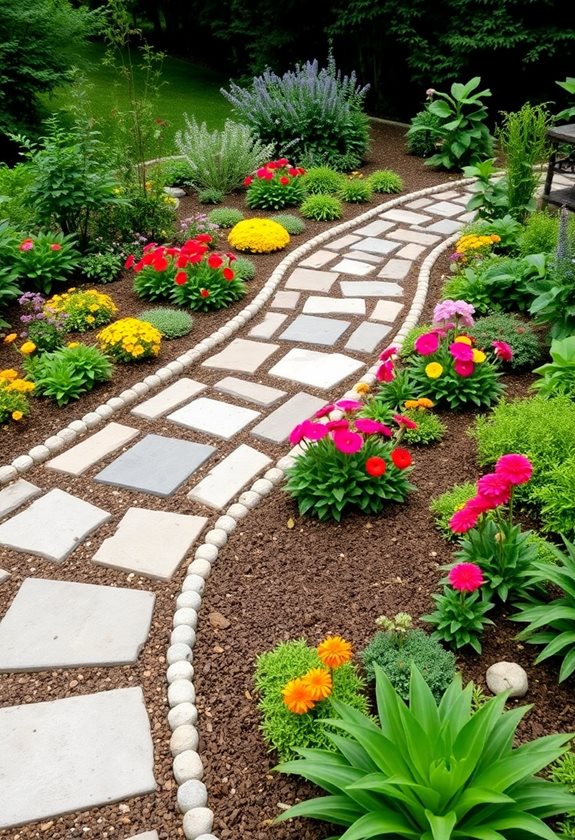
How do you envision your dream garden? Picture a vibrant space, filled with colors and scents, where you can relax and enjoy nature’s beauty. Start by sketching a layout that considers sunlight, wind direction, and safety. Group plants by height and spread to avoid crowding. Are there paths for easy access? You want to keep things safe and enjoyable! Consider raised beds to prevent bending over too much. Add seating areas for relaxation, and maybe a splash of whimsy with decorative elements. Incorporate layering techniques to create depth and visual interest in your garden. Remember, it’s your garden—make it a welcoming haven that reflects your personality and passion for gardening!
Preparing the Soil for Planting
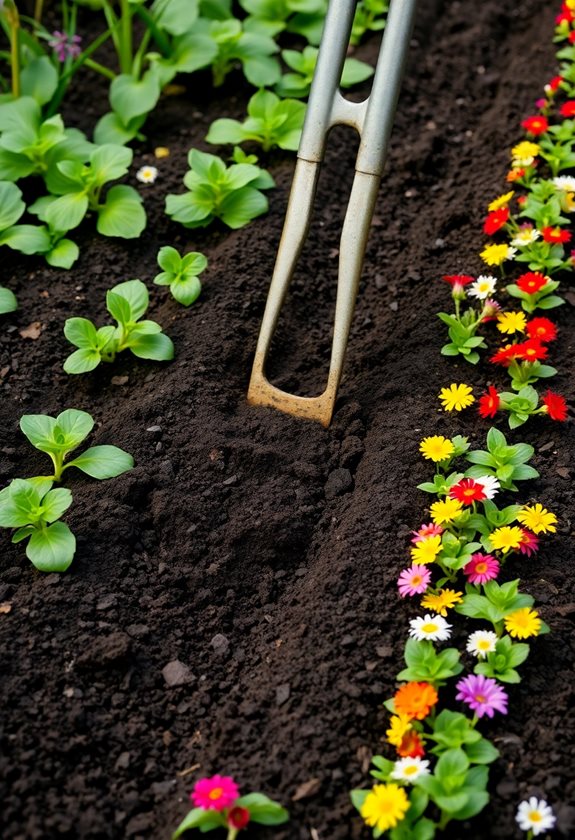
While you might be tempted to rush into planting your favorite flowers and veggies, taking the time to prepare your soil can make all the difference in creating a thriving garden. Healthy soil is the foundation of a successful garden! Here’s how to get started:
- Test the soil: Check pH and nutrient levels to understand what your soil needs.
- Clear debris: Remove rocks, weeds, and old plants to create a clean workspace.
- Amend the soil: Add compost or well-rotted manure for essential nutrients. Consider using organic potting mix to further enhance soil quality and support plant growth.
Trust me, a little prep work now means bountiful blooms and fresh veggies later! Happy gardening!
Implementing a Planting Schedule
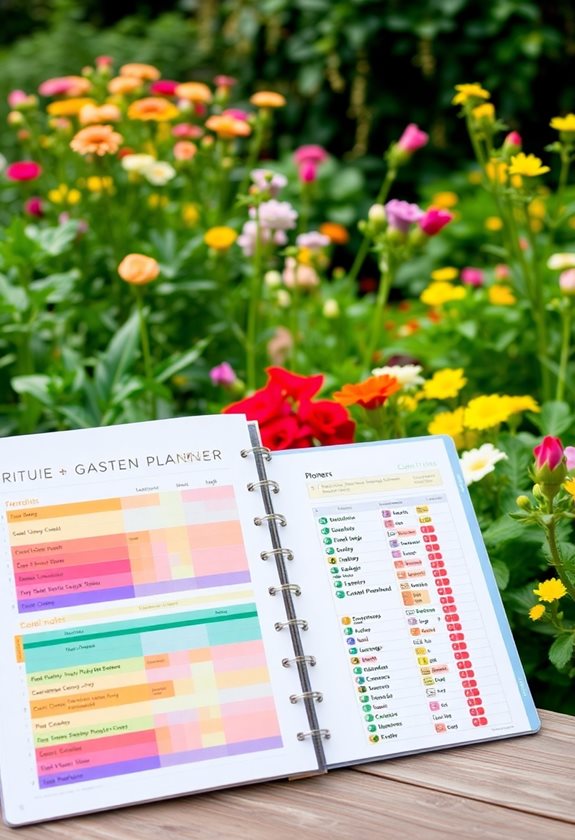
When should you plant those vibrant flowers and delicious veggies? Timing’s everything! Start by checking your local frost dates. Here’s a simple guide:
- Cool-season crops: Plant in early spring or late fall. Think lettuce and peas!
- Warm-season veggies: Wait until the last frost has passed—usually around mid-spring for most areas. Try tomatoes and peppers!
Consider creating a calendar to track your plantings. Trust me, it helps! You’ll avoid those “Oops, I missed my planting window!” moments! And remember, gardening’s a learning journey, so don’t stress if things don’t go perfectly. You’ve got this! Happy planting! Additionally, understanding your local frost dates can significantly enhance your planting success.
Maintaining Your Garden Throughout the Year
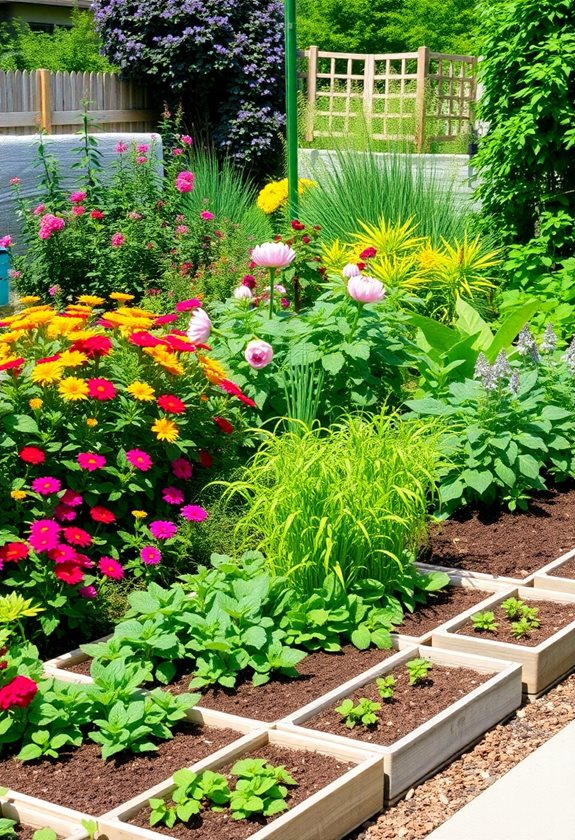
Once your planting schedule is on point, the real fun begins! Maintaining your garden is vital for flourishing plants and a thriving ecosystem. You’ll want to keep a close eye on your garden all year round. Here are three essential tasks:
Maintaining your garden is key for vibrant plants and a healthy ecosystem, so stay attentive throughout the year!
- Watering – Make sure your plants get enough moisture, especially during dry spells.
- Weeding – Regularly remove pesky weeds to give your plants room to grow.
- Pruning – Trim dead or overgrown branches to encourage healthy growth. Additionally, using ergonomic tools can help reduce strain on your hands during these maintenance tasks.
Frequently Asked Questions
Can I Incorporate Edible Plants Into My Seasonal Garden Design?
Absolutely, you can totally incorporate edible plants into your seasonal garden design! Imagine stepping outside and plucking fresh tomatoes or fragrant herbs right from your backyard—how amazing is that?! Just think about planting quick-growing crops like lettuce or radishes in spring, and savoring your harvest! Plus, mixing flowers with veggies not only looks beautiful, but it also attracts helpful pollinators. Why not create a feast for both your eyes and your taste buds?
How Do I Attract Pollinators to My Garden?
To attract pollinators to your garden, you’ve got to think flowers! Choose plants like lavender, sunflowers, and coneflowers, which are bee magnets. Don’t forget to avoid pesticides; they can scare these friendly visitors away. Plant in clusters for a bold splash of color that draws them in. Have you tried a little water feature? It’s like a spa day for bees! With these tips, your garden will buzz with life in no time!
What Are Companion Planting Strategies for Seasonal Gardens?
Imagine your garden as a bustling café, where plants mingle like friends! Companion planting‘s all about pairing plants that help each other thrive. For instance, you could plant tomatoes with basil—basil repels pests while enhancing tomato flavor. Consider these pairs: carrots with onions, or beans with corn. By mixing these buddies, you create a balanced ecosystem, making your garden safer and more productive. Isn’t it fun to think about your plants working together?
How Can I Extend My Growing Season?
You can extend your growing season with a few nifty tricks! Try using row covers to protect your plants from unexpected frost, or start seedlings indoors to get a jump on the season. Consider planting cold-tolerant crops like kale or spinach in the fall. Have you ever thought about using a greenhouse? It can work wonders! With some planning and care, you’ll be harvesting fresh veggies well into the colder months! Happy gardening!
What Are Common Pests to Watch for in Seasonal Gardens?
When you’re tending your garden, keep an eye out for pesky pests! Common culprits include aphids, slugs, and spider mites. They can munch on your plants and ruin your hard work. You might want to try companion planting or natural repellents to keep them at bay. Have you ever spotted a caterpillar? They can be charming, but they can also be trouble! Stay vigilant; a proactive gardener is a happy gardener! 🌱