Looking to jazz up your vertical garden? Climbing plants are your best friends! Sweet peas offer fragrant blooms, while clematis packs a colorful punch. Don’t forget climbing roses for timeless elegance or wisteria’s jaw-dropping cascades! Honeysuckle will attract buzzing bees with its sweet scent, and jasmine adds a luxurious aroma. Just imagine the vibrant walls they’ll create! Curious about which plants work best in your space? Stick around and discover more fantastic options!
Design Highlights
- Sweet peas and climbing roses add beauty and fragrance, making them ideal for vertical garden designs.
- Clematis offers diverse colors and shapes, perfect for enhancing visual interest in vertical spaces.
- Wisteria provides stunning cascading blooms, creating a dramatic focal point in your garden.
- Honeysuckle attracts pollinators while adding sweet scents, enhancing the overall garden ecosystem.
- Jasmine’s rapid growth and enchanting aroma make it a versatile choice for covering structures quickly.
Sweet Peas: A Fragrant Climbing Delight
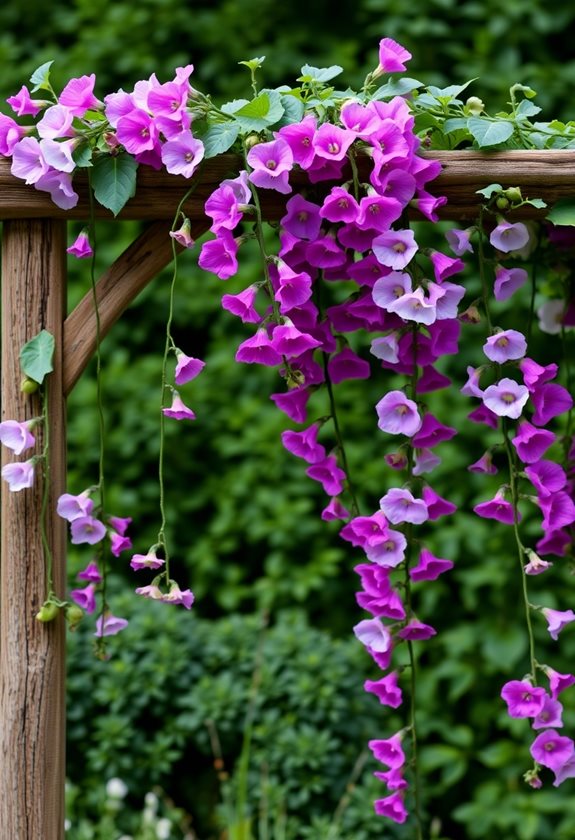
If you’ve ever walked through a garden and caught a whiff of something sweet and fragrant, chances are those delightful aromas came from sweet peas. These charming climbing plants not only add beauty but also bring a burst of delightful scent to your garden! They’re easy to grow, perfect for beginners. Just plant them in rich soil, give them a trellis, and watch them climb!
What’s more exciting? They bloom in various colors! Imagine a rainbow of sweet peas swaying in the breeze. Climbing plants can transform any vertical space into a lush oasis. So, are you ready to invite these fragrant friends into your garden? You won’t regret it!
Climbing Roses: Timeless Beauty and Elegance
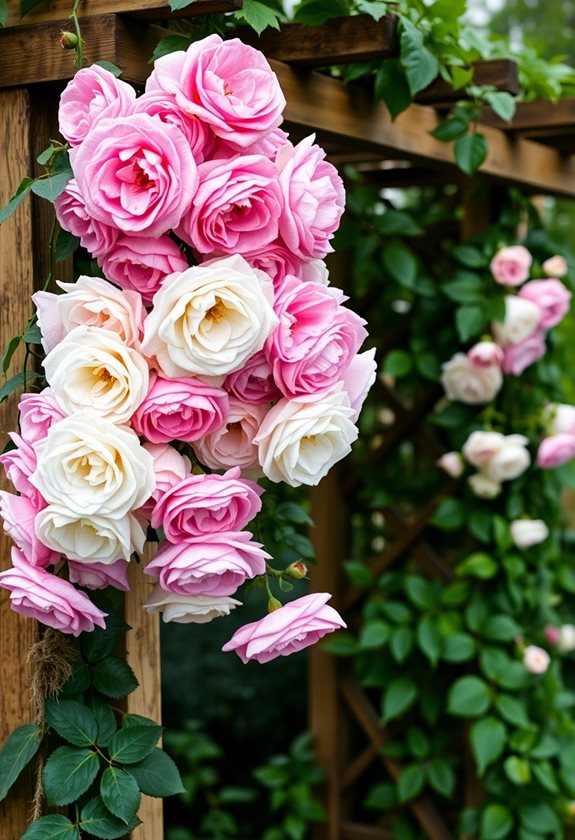
When you think of timeless beauty in the garden, climbing roses immediately come to mind, don’t they? Their lush blooms and delightful fragrance can transform any vertical space into a romantic retreat. Imagine training these elegant vines along a trellis or archway—what a stunning sight!
To guarantee safety while gardening, wear gloves when handling thorns and be cautious when climbing ladders. Choose disease-resistant varieties like ‘New Dawn’ or ‘Climbing Iceberg’ for ease of care. You’ll be rewarded with vibrant colors and a lovely scent. Additionally, incorporating decorative garden structures can enhance the visual appeal of your climbing roses. So, why not invite climbing roses into your garden? They’re simply irresistible!
Clematis: A Diverse Range of Colors and Shapes
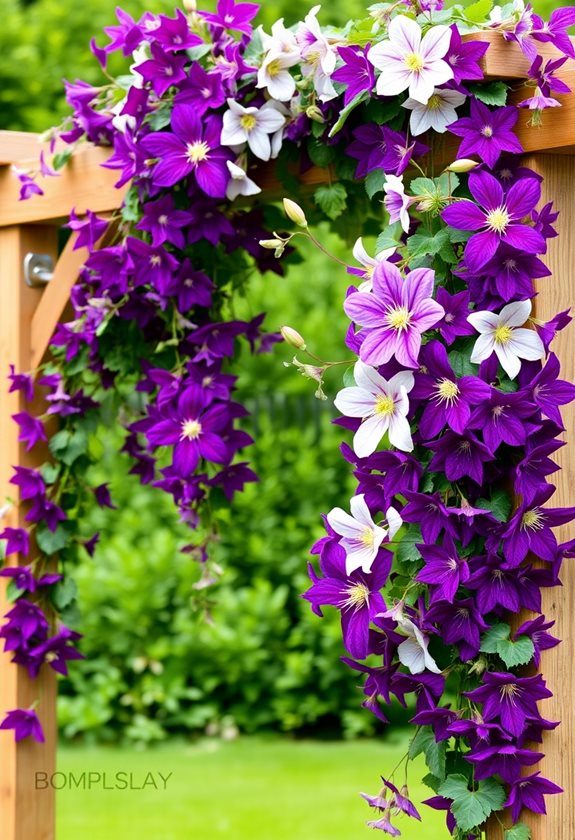
Clematis is one of those plants that can truly take your vertical garden to the next level, especially since it boasts a diverse range of colors and shapes that can fit any style. Imagine vibrant purples, soft pinks, and bright whites climbing gracefully up your trellis! You’ll find varieties like the large-flowered clematis, perfect for dramatic flair, or the compact ones, ideal for smaller spaces. Just guarantee you provide sturdy support and regular pruning for healthy growth. Why not add a few different types to create a stunning color palette? You’ll love the beauty they bring to your garden! Additionally, choosing best plants to accompany your clematis can enhance the overall lushness of your vertical design.
Wisteria: Cascading Blooms for Dramatic Impact
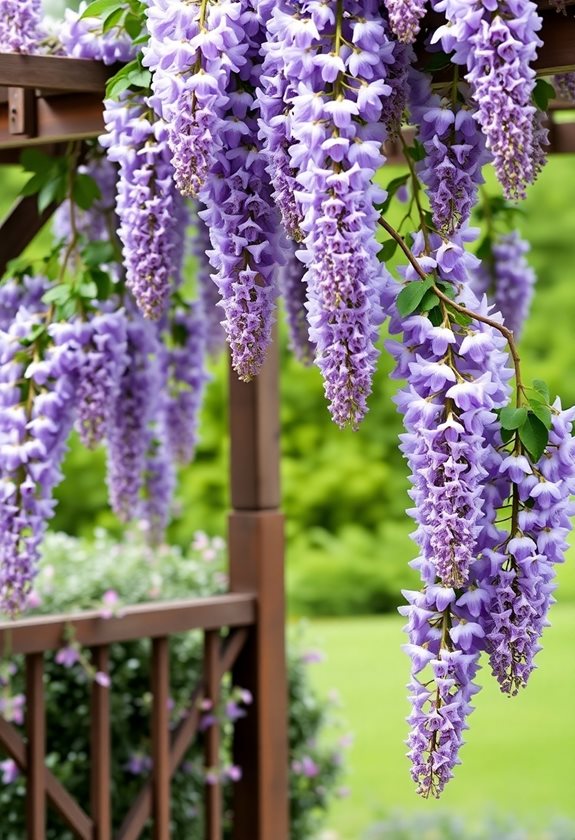
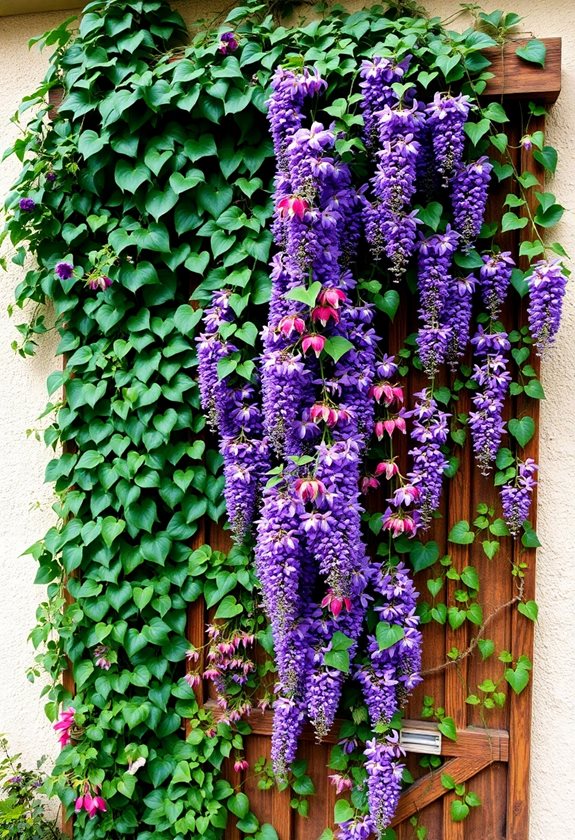
Wisteria is like the showstopper of the climbing plant world, with its stunning, cascading blooms that can transform any vertical garden into a breathtaking masterpiece. Imagine hosting friends under a trellis draped in purple flowers! Just be certain to plant it where it has room to grow—these beauties can spread!
Consider these tips:
- Choose a sturdy support structure.
- Prune regularly for safety and shape.
- Ascertain it gets enough sunlight.
A word of caution: Wisteria seeds and pods are toxic if ingested. So, keep curious pets and little ones in mind. Additionally, incorporating climbing plants for privacy fences can enhance the overall aesthetics of your garden. Aren’t you excited to add this dramatic touch to your garden?
Honeysuckle: Attracting Pollinators With Scent
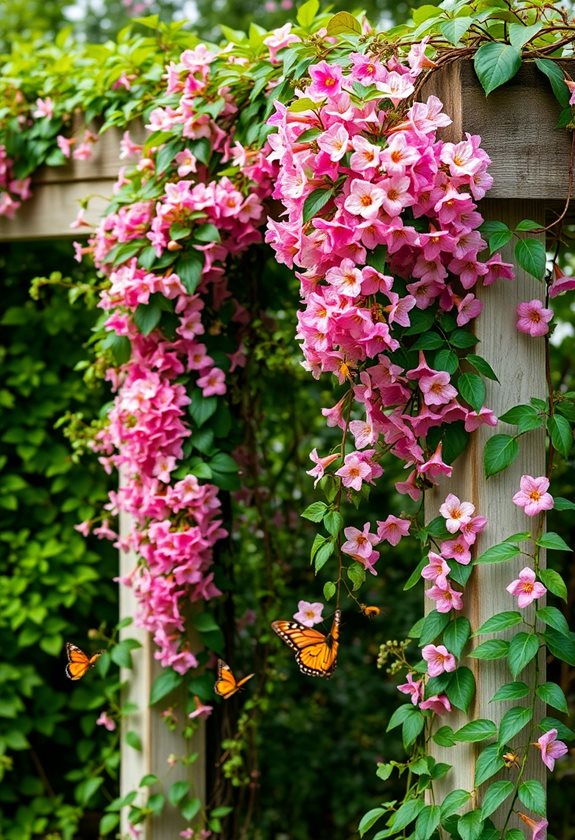
Have you ever walked through a garden and been enchanted by the sweet, intoxicating scent of honeysuckle? This climbing plant not only adds beauty but also attracts pollinators like bees and butterflies! Imagine the joy of watching these creatures flutter around your garden. To grow honeysuckle safely, choose a sunny spot and guarantee it has sturdy support. Prune it regularly to prevent overgrowth, and always check for any unwanted pests. With some care, you’ll enjoy delightful blooms and a bustling ecosystem. Additionally, consider incorporating flower companion planting to enhance the benefits of your honeysuckle garden. So, why not plant a honeysuckle? You’ll create a haven for pollinators and an aromatic retreat for yourself!
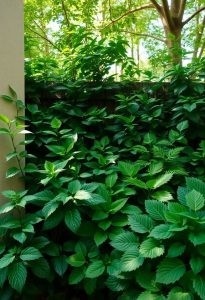
Ivy: A Classic Choice for Instant Greenery
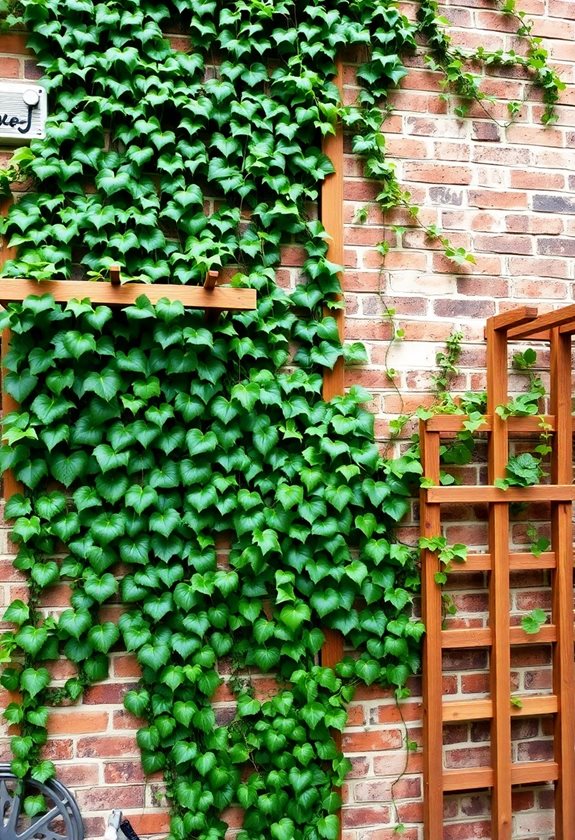
When you’re looking to add a touch of instant greenery to your space, ivy might just be your best friend! This classic climbing plant not only offers lush foliage but also thrives in various conditions. Here’s why you’ll love it:
- Fast Growth: Ivy quickly covers walls and trellises, giving you that green look in no time.
- Low Maintenance: It’s easy to care for, needing just occasional pruning.
- Shade Tolerant: Ivy thrives in low-light areas, perfect for dim corners.
- Air Purifying: It helps improve indoor air quality—how cool is that?
Additionally, ivy can flourish when you provide it with a supportive trellis to climb, enhancing its growth and aesthetic appeal. Embrace ivy, and watch your garden come alive!
Passionflower: Exotic Blooms and Edible Fruit
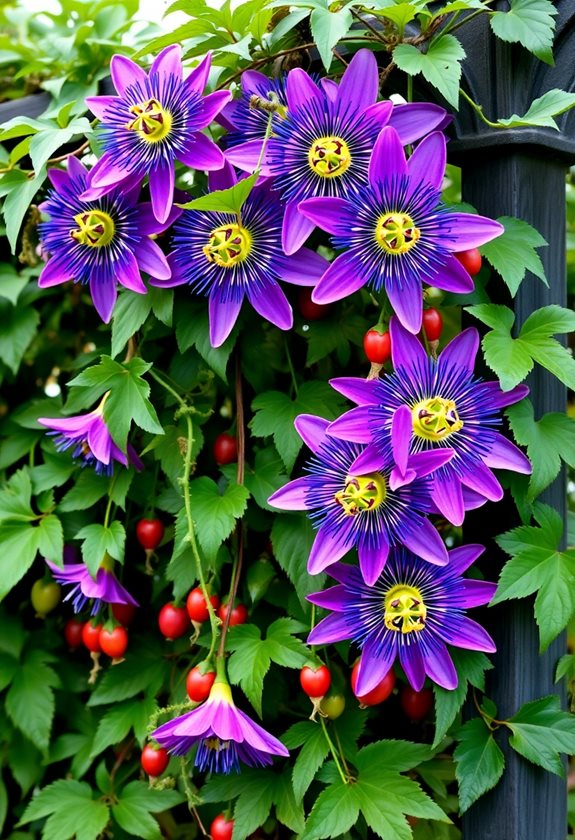
If you’re looking for a climbing plant that brings a splash of color and a hint of tropical flair to your vertical garden, passionflower is definitely worth considering! With its stunning, intricate blooms, it instantly grabs attention. Plus, who wouldn’t love to munch on its delicious, edible fruit? Just imagine plucking a ripe passionfruit after a long day! Remember, though, while passionflower is generally safe, some varieties may not be suitable for pets. So, always check before planting. With a bit of care, you’ll create a vibrant oasis that’ll have everyone talking! Additionally, using climbing plants for fence coverage can enhance your privacy while adding beauty to your space. Ready to make your garden pop?
Morning Glory: Vibrant Colors for Quick Growth
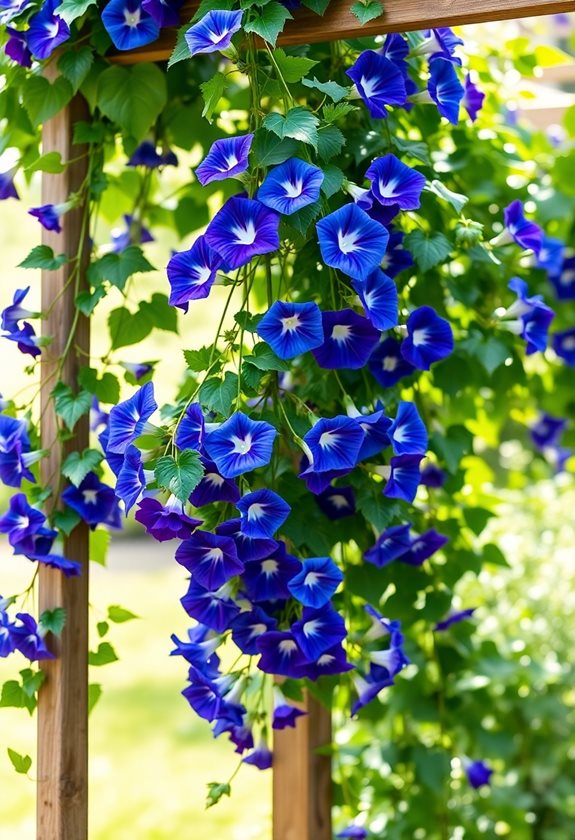
Morning glories are a fantastic choice for anyone enthusiastic to add vibrant colors and quick growth to their vertical garden! These beauties bloom in various shades, bringing cheer to any space. Plus, they’re easy to grow! Here are some tips to get you started:
- Choose the right spot: Morning glories love full sun.
- Use good soil: Well-draining soil promotes healthy growth.
- Water wisely: Keep the soil moist but not soggy.
- Support structure: Provide trellises or fences for them to climb.
Additionally, consider incorporating vertical gardening solutions to maximize your space and create a stunning display. With a little care, you’ll enjoy a stunning display in no time! Happy gardening!
Black-eyed Susan Vine: Cheerful and Hardy
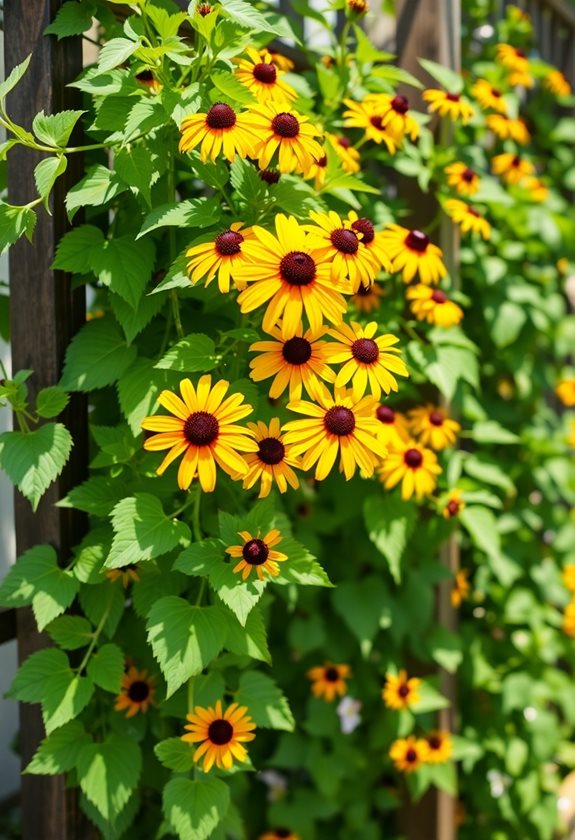
After enjoying the vibrant hues of morning glories, it’s time to explore another delightful option for your vertical garden: the Black-eyed Susan vine! This cheerful plant not only brightens up your space with its sunny yellow flowers but also thrives in various conditions. It’s hardy and adaptable, making it a perfect choice for beginners. Plus, it attracts pollinators like butterflies, adding life to your garden. Just be sure to provide a sturdy trellis for support! Have you ever seen how quickly they climb? You’ll be amazed! Vertical planters can significantly maximize your gardening space, so why not add this joyful vine to your green sanctuary?
Jasmine: Aromatic Foliage for a Lush Atmosphere
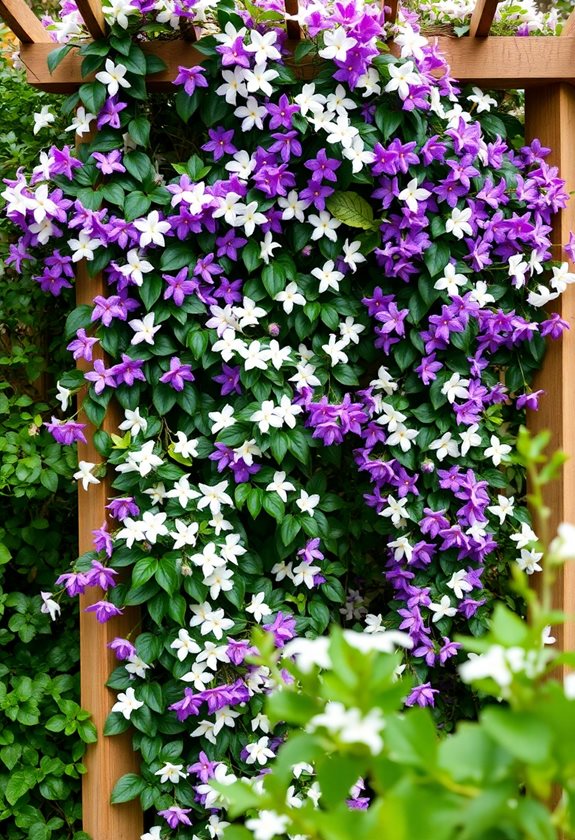
When you think of creating a lush atmosphere in your vertical garden, Jasmine is one of those plants that comes to mind almost instantly, doesn’t it? Its enchanting fragrance and beautiful blooms can elevate any space! Here are four reasons to choose Jasmine:
- Aromatic Appeal: The sweet scent wafts through the air, making your garden a delight.
- Rapid Growth: It climbs quickly, covering trellises and fences in no time.
- Versatile Varieties: From star jasmine to Arabian jasmine, there’s a type for everyone!
- Wildlife Friendly: Attracts pollinators, enhancing your garden’s ecosystem.
Additionally, Jasmine is known for its ability to transform your space with its lush foliage, creating a stunning visual impact in any garden design.
Frequently Asked Questions
How Do I Choose the Right Climbing Plant for My Climate?
Choosing the right climbing plant for your climate’s easier than you think! Start by checking your hardiness zone, since some plants thrive better in certain temperatures. Consider sunlight; does your garden get full sun or shade? Also, think about water needs—some plants love moisture while others prefer dry conditions. Don’t forget to check for pests! You want a plant that’s beautiful and safe. Happy gardening! Which climbing beauty will you pick?
What Support Structures Are Best for Climbing Plants?
When you’re setting up support for climbing plants, think about stability and safety! Some great options include:
- Trellises: They’re classic and can be decorative too.
- Arbors: Perfect for creating a beautiful entrance.
- Wire or String: Simple yet effective for lightweight vines.
Make sure whatever you choose is sturdy enough to support your plants as they grow. After all, you don’t want your garden becoming a jungle gym! Have fun choosing!
How Often Should I Water My Climbing Plants?
Watering your climbing plants is like giving them a revitalizing drink on a hot day! Generally, you should check your soil once a week. If it feels dry an inch down, it’s time to water. Remember, overwatering can be just as harmful as underwatering. A good rule? Water deeply but less frequently. And don’t forget, every plant has its own needs. So, are you ready to keep your green friends thriving?
Are Climbing Plants Safe for Pets and Children?
Absolutely, climbing plants can be safe for pets and kids, but you’ve gotta choose wisely! Some common choices like morning glories or sweet peas are non-toxic. But beware of plants like foxglove, which can be harmful. Always check if a plant’s safe before bringing it home. And hey, isn’t it fun to get the kids involved in picking out safe plants together? Just think of the memories you’ll create while gardening!
Can I Grow Climbing Plants in Containers?
Absolutely, you can grow climbing plants in containers! It’s like having your own mini jungle right on your patio. Just make sure your containers are deep enough for roots and have drainage holes. Think about using trellises or stakes for support. Some great choices are sweet peas or morning glories—they’re not just pretty, but they also add charm! Isn’t it exciting to watch them climb? Just remember to water them regularly!