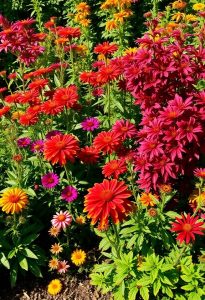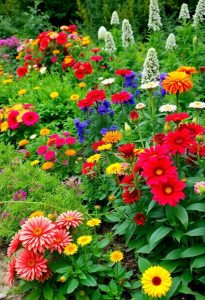
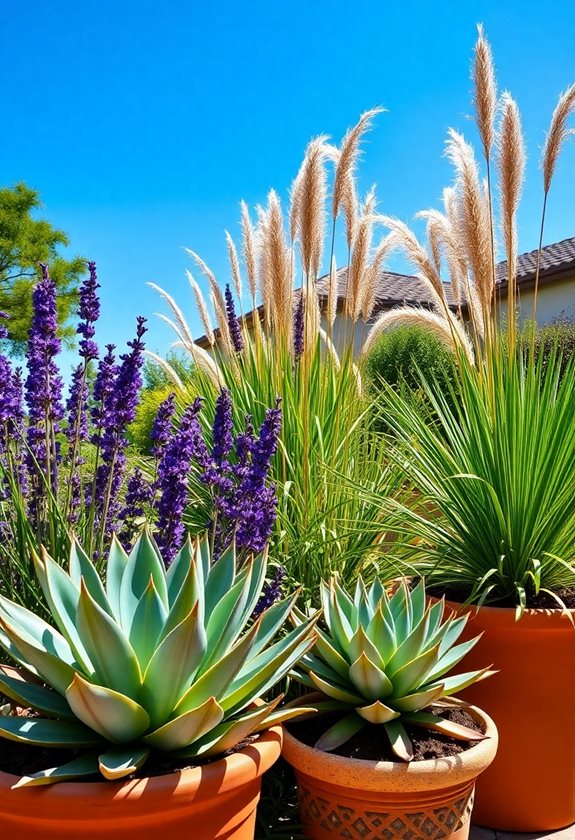
Looking to create a stunning garden without all the fuss? You can’t go wrong with drought-resistant, low-maintenance plants like Agave, Lavender, and Sedum! These beauties not only thrive in dry conditions, but they also add charm and color to your space. Imagine the vibrant blooms of Echinacea or the unique structure of Yucca gracing your garden! Plus, they attract pollinators and keep your watering can at bay. Ready to discover more plant possibilities? Keep exploring!
Design Highlights
- Agave offers striking architectural leaves, thriving in dry conditions with minimal maintenance.
- Lavender adds fragrance and beauty, attracts pollinators, and requires little water in sunny spots.
- Sedum creates vibrant ground cover, thrives in poor soil, and is safe for kids and pets.
- Echinacea features colorful petals, attracts pollinators, and provides medicinal benefits while being low-maintenance.
- Yucca serves as a unique focal point with spiky leaves, thriving in drought-prone areas with minimal care.
Agave: The Ultimate Succulent
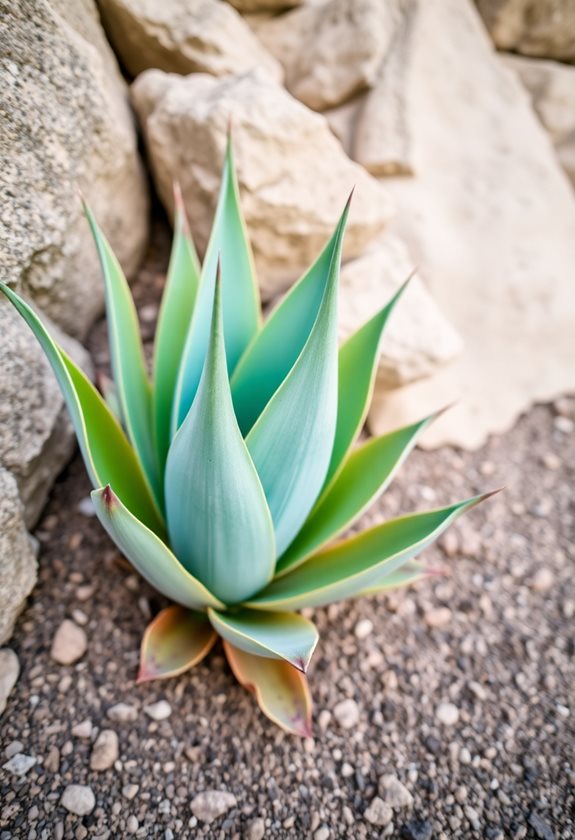
When you think of a garden bursting with life, you might not immediately picture a spiky, bold Agave plant, but trust me, it could be the ultimate game-changer for your backyard! Agave thrives in dry conditions, making it perfect for drought-prone areas. Its striking, architectural leaves add flair without much fuss. Plus, it’s low-maintenance—just plant it and let it be!
Consider these benefits:
- Drought-resistant
- Low upkeep
- Unique aesthetics
Just imagine how cool it’ll look against your other plants! Drought-resistant plants are becoming increasingly popular for effortless gardening. Why not give Agave a go? You might just fall in love with this tough yet beautiful succulent!
Lavender: Fragrant and Resilient
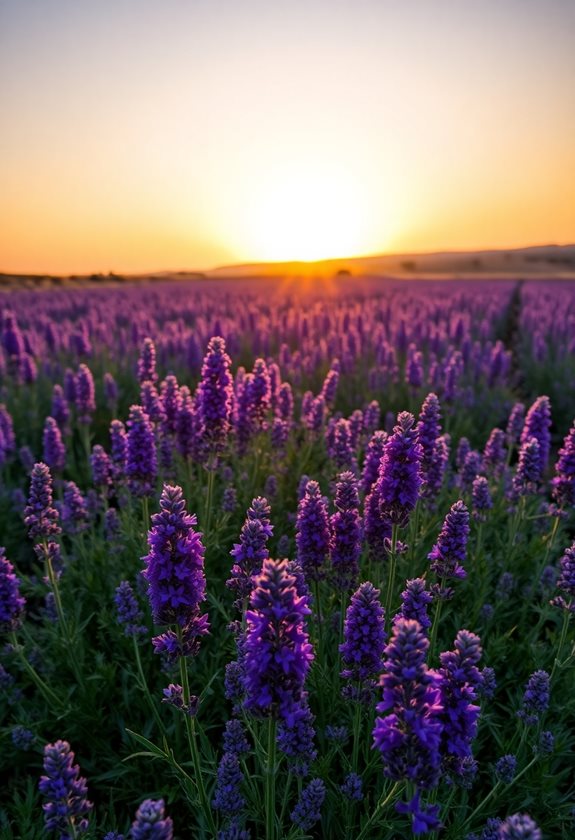
If you’re looking for a plant that’s not only beautiful but also brings a delightful fragrance to your garden, lavender might just be the perfect choice! This hardy herb thrives in sunny spots and requires minimal water once established. Plus, it attracts pollinators like bees—how cool is that? Imagine walking through your garden, inhaling that sweet scent!
To plant lavender, choose well-draining soil, and dig a hole twice the size of the root ball. Water sparingly, and watch it flourish! Lavender is also known for its drought tolerance, making it an ideal option for sustainable gardening.
Whether for cooking or fragrance, lavender’s versatility adds charm and resilience to your garden. You’ll love it!
Sedum: Colorful Ground Cover
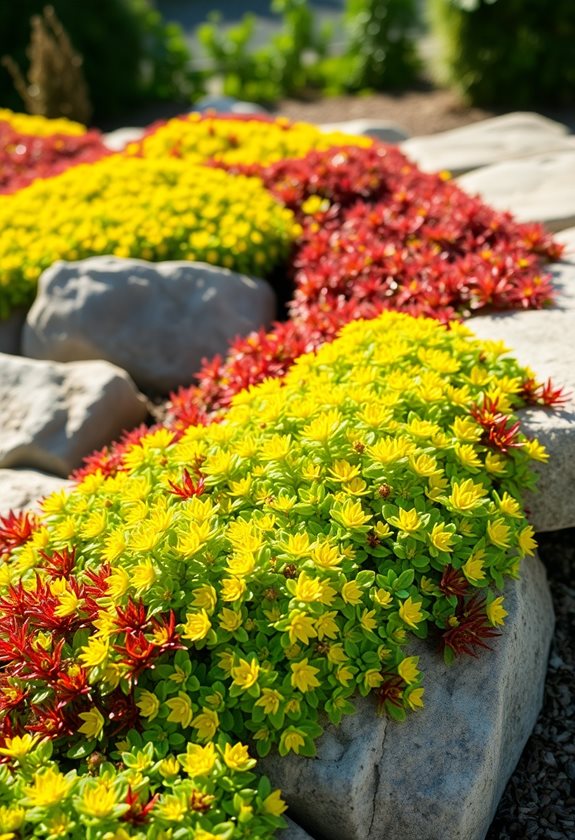
Sedum, often affectionately referred to as stonecrop, is a vibrant addition to any garden that craves a splash of color without demanding much attention. These hardy plants thrive in poor soil and are drought-resistant, making them perfect for your low-maintenance garden. With various colors and textures, they create a stunning ground cover. Imagine walking through your garden, with cheerful greens and reds underfoot! Plus, they’re safe for kids and pets. Just plant them in well-draining soil and watch them flourish. Additionally, sedum is a great alternative to high-maintenance plants that require more care and resources. So, why not add some sedum to your garden? You’ll love how easy and beautiful they are!
Echinacea: Beautiful and Beneficial
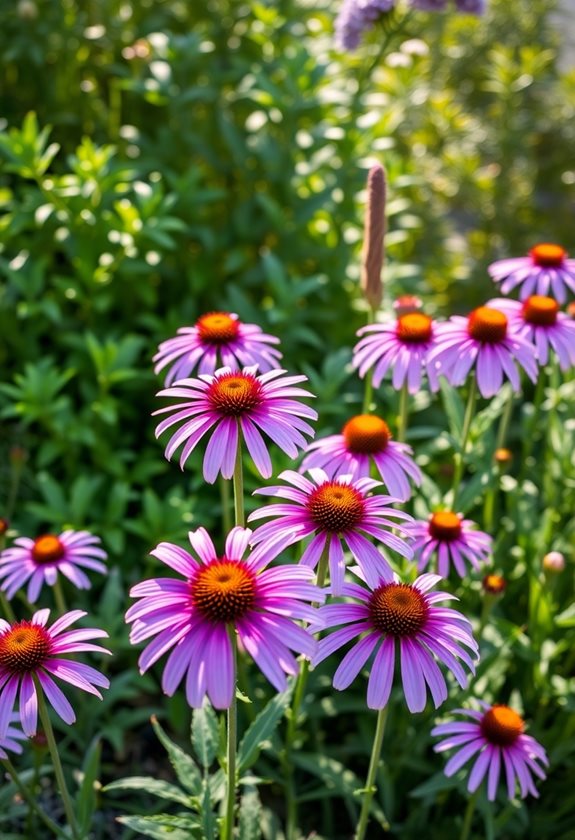
Imagine strolling through your garden, where bright petals of Echinacea, commonly known as coneflower, greet you with a wave of color and charm. Not only are these beauties stunning, but they also offer incredible benefits! Here’s why you’ll love adding Echinacea to your garden:
- They attract pollinators, helping your garden flourish.
- Their drought resistance makes them a low-maintenance choice.
- Echinacea’s medicinal properties may boost your immune system.
- They thrive in various soil types, ensuring adaptability. Additionally, incorporating beautiful ferns into your landscape can enhance the visual appeal of your garden.
Yucca: Striking Architectural Plant
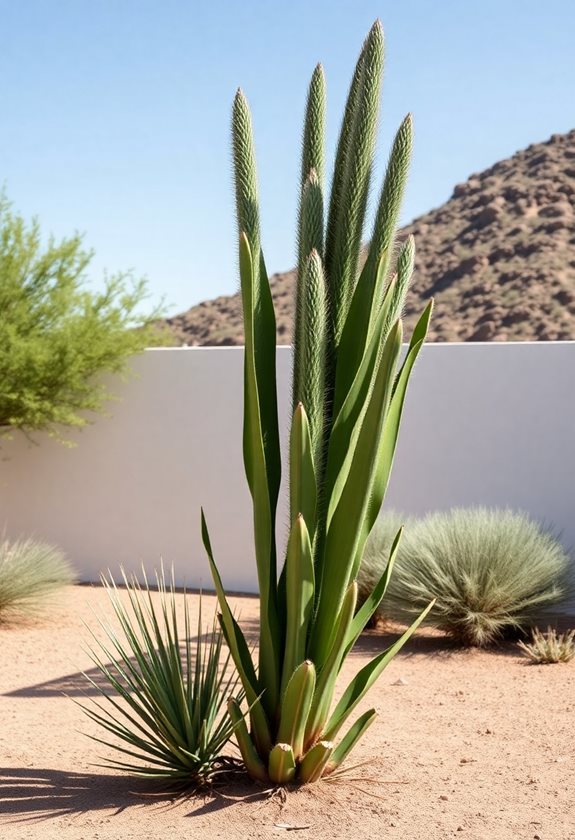
When you think of adding a striking architectural element to your garden, yucca plants often come to mind. These bold beauties thrive in dry conditions, making them perfect for drought-resistant gardens. Their spiky leaves and tall flower stalks create a unique focal point that’s sure to impress. Plus, they’re low-maintenance! Just a little water now and then, and they’re good to go. Imagine standing next to your yucca, feeling proud of your garden design. Curious about different varieties? You might find one that fits your style perfectly! Additionally, yucca plants are known for their low-maintenance needs, which means you can enjoy their beauty without a lot of effort. So, why not bring home a yucca and elevate your outdoor space?
Ornamental Grasses: Movement and Texture
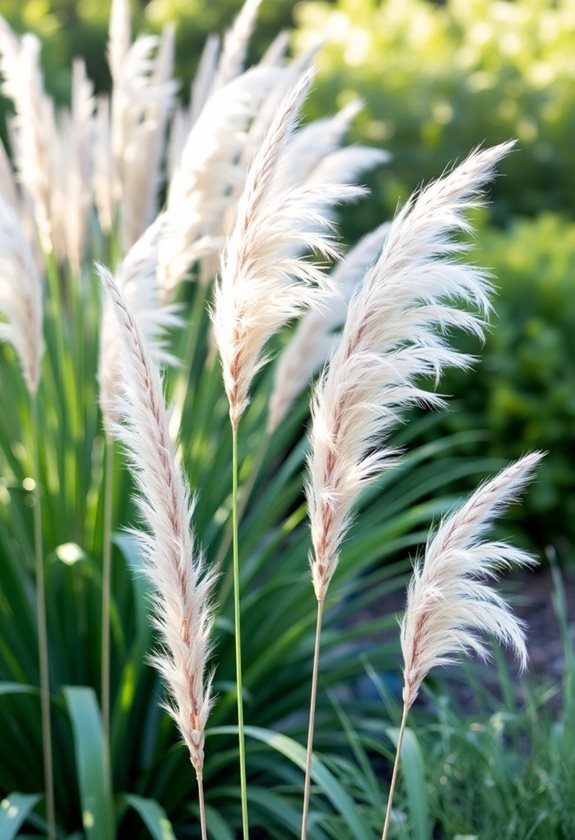
Ornamental grasses bring a delightful dance to your garden, swaying gently in the breeze and adding a touch of elegance that’s hard to resist. They’re not just pretty; they’re also low-maintenance and drought-resistant! Here are some fantastic choices to reflect on:
- Blue Fescue: Its silvery-blue color adds a cool touch.
- Miscanthus: Tall and feathery, it creates a stunning backdrop.
- Pampas Grass: Its dramatic plumes offer a bold statement.
- Switchgrass: Perfect for adding movement and wildlife habitat.
These grasses can transform your space while keeping it safe and beautiful. Additionally, many of these grasses are shade-tolerant foliage plants, making them versatile for various garden settings. What’s not to love?
Salvia: Vibrant and Hardy
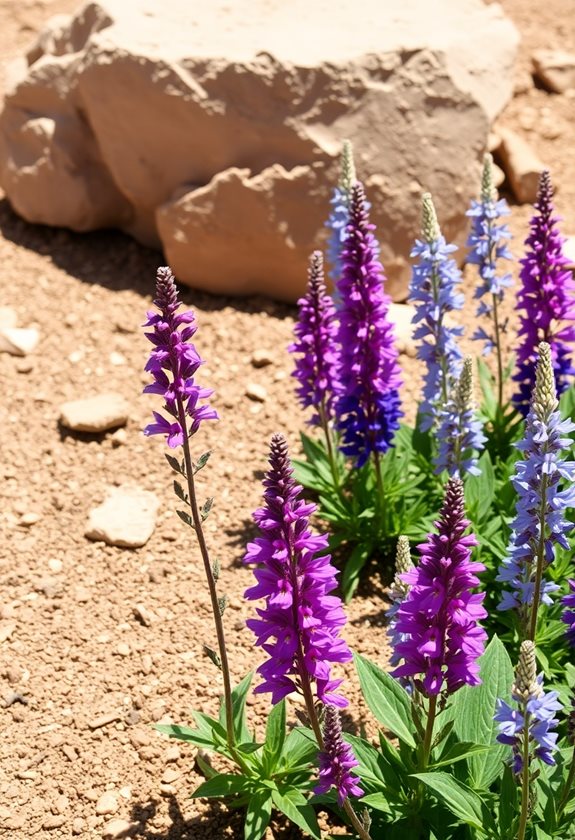
If you’re looking for plants that not only survive but thrive in tough conditions, salvia might just be your garden’s new best friend. These vibrant beauties offer stunning colors and attract pollinators, making your garden come alive! Plus, they’re drought-resistant and easy to care for—who doesn’t love that? Salvia is also known for its drought-resistant qualities, making it a perfect choice for dry climates.
Here are a few tips for planting salvia:
- Choose a sunny spot.
- Confirm well-drained soil.
- Water them well initially, then let them be!
With their resilience and flair, salvia can transform any garden into a lively sanctuary. Ready to give them a try? You won’t regret it!
Russian Sage: A Touch of Silver
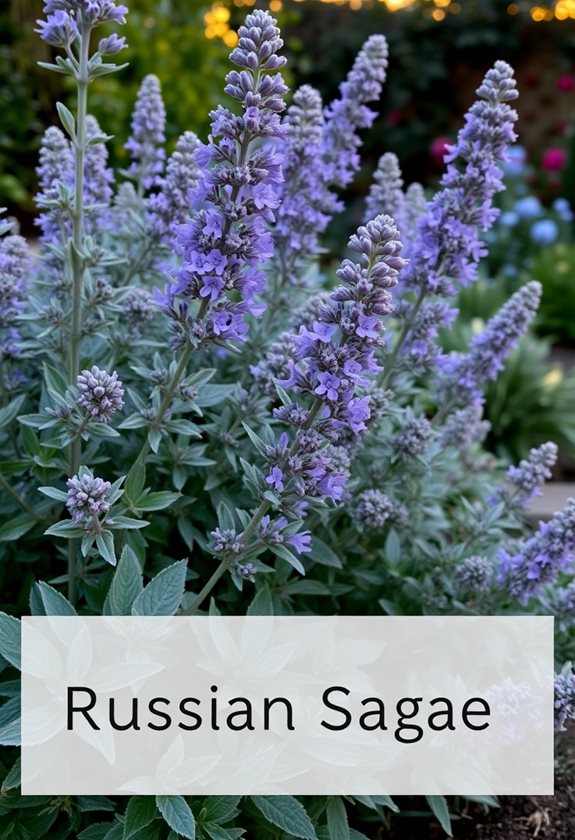
Imagine a garden that shimmers under the sun, with silvery leaves glistening like tiny mirrors—this is the magic of Russian sage! This drought-resistant beauty not only thrives in tough conditions but also adds elegance to your space. Here’s why you’ll love it:
- Low maintenance: It requires minimal care, perfect for busy gardeners.
- Attracts pollinators: Bees and butterflies adore its flowers!
- Versatile: It complements various garden styles, from modern to rustic.
- Deer-resistant: Say goodbye to garden munchers!
Additionally, Russian sage is known for its drought-resistant qualities, making it an ideal choice for small spaces that need a bit of greenery. With Russian sage, you get a stunning, worry-free addition that’ll have your garden shining bright!
California Poppy: Bright and Cheerful
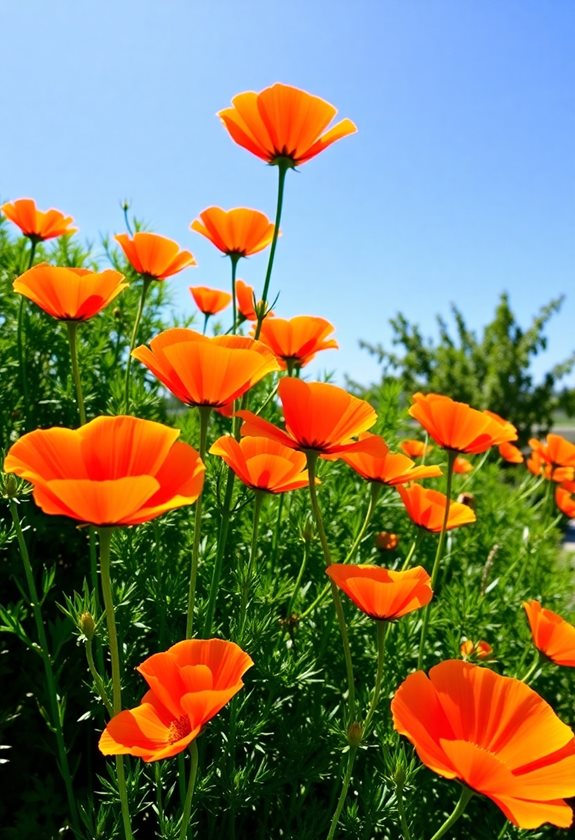
Bright orange and sunny yellow petals burst forth from the California poppy, instantly transforming any garden into a vibrant oasis. These cheerful flowers are not just pretty; they thrive in dry conditions, making them perfect for your low-maintenance garden. Plus, they attract butterflies and bees, adding life to your space!
California poppies bring vibrant color and life to your garden, thriving in dry conditions while attracting delightful butterflies and bees!
To grow them:
- Plant seeds in well-draining soil.
- Water sparingly; they prefer neglect!
- Enjoy their blooming beauty from spring to summer.
Isn’t it amazing how something so bright can thrive with so little? With California poppies, you’ll bring joy to your garden without the stress! Additionally, incorporating edible plants can enhance both the beauty and utility of your garden.
Frequently Asked Questions
How Often Should I Water Drought-Resistant Plants?
When you’re nurturing drought-resistant plants, think of them as resilient warriors. They don’t need constant watering like their high-maintenance counterparts. Generally, watering once every week or two is enough, but always check the soil—if it’s dry an inch down, it’s time to hydrate! Remember, you’re not just watering; you’re giving them a rejuvenating drink after a long day. Isn’t it rewarding to watch them thrive with just a little care?
What Type of Soil Is Best for These Plants?
When it comes to soil for your plants, well-draining soil is essential! You don’t want them sitting in water, right? Here’s what you can do:
- Mix in sand or gravel to improve drainage.
- Use a blend of potting soil and organic matter, like compost, for nutrients.
Just remember, a little test can go a long way! Grab a handful of soil, squeeze it, and see how it holds together. Happy gardening!
Can I Grow These Plants in Containers?
Absolutely, you can grow these plants in containers! Isn’t that exciting? Just choose pots with good drainage and use a well-draining soil mix. Make sure to position your containers in a spot where they’ll get plenty of sunlight, too. Remember, regular watering is key, but these plants can handle a little drought. So, whether you’re tight on space or just love the idea of potted plants, you’re in for a treat!
Are These Plants Deer-Resistant?
Are these plants deer-resistant? Great question! While not all drought-resistant plants keep deer away, many do! For example, plants like lavender and sage have strong scents that deer dislike. You could also try ornamental grasses—they’re often left alone. Isn’t it frustrating when our hard work is nibbled away? So, mix in some deer-resistant varieties, and you’ll have a beautiful, thriving garden that stays safe from those pesky critters! Happy gardening!
How Do I Propagate Drought-Resistant Plants?
They say, “A little patience goes a long way.” Propagating drought-resistant plants is easier than you think! Start by taking cuttings from healthy stems, about 4-6 inches long. Remove the lower leaves, dip the ends in rooting hormone, and plant them in well-draining soil. Keep them slightly moist and in indirect sunlight. In a few weeks, you’ll have new plants! Isn’t that exciting? Just remember, good things take time!