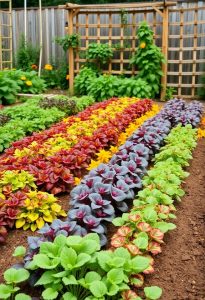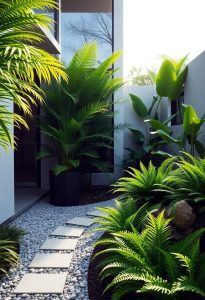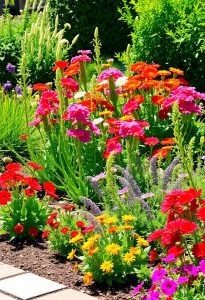
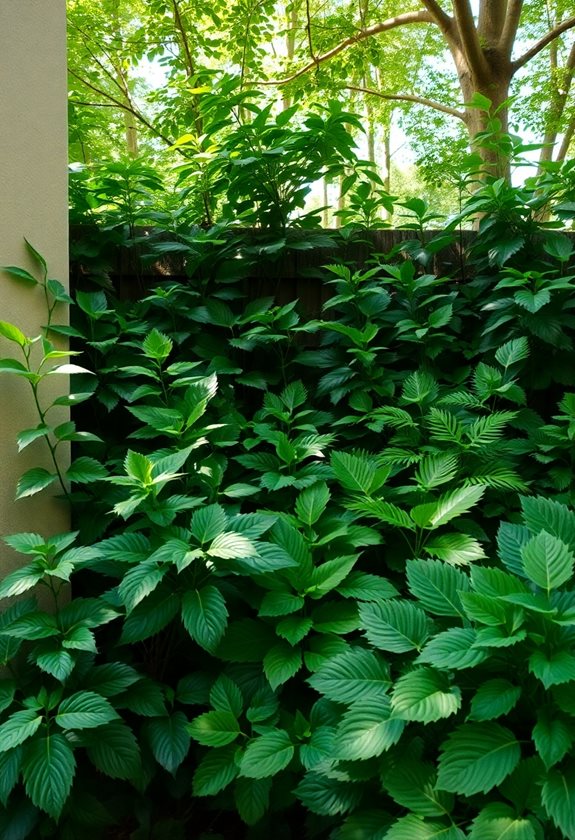
Foliage plants are perfect for shaded areas because they thrive where sunlight’s scarce! They bring life to dull corners and require less care—no scorching worries here! Imagine lush ferns or striking hostas sprucing up your space. Plus, they filter the air, boosting your home’s health. Just water them when the top inch of soil dries out, and they’re good to go! Want to explore cool design tips for these beauties? Stick around, there’s so much more to discover!
Design Highlights
- Foliage plants thrive in low-light environments, making them perfect for enhancing shaded areas that receive little sunlight.
- They require minimal sunlight, reducing the risk of leaf scorching and ensuring healthy growth in darker spaces.
- These plants improve indoor air quality by filtering toxins and releasing oxygen, contributing to a healthier living environment.
- Foliage plants are low maintenance, making them easy to care for and ideal for busy lifestyles or novice plant owners.
- Their diverse textures and colors add depth and visual interest to shaded areas, enhancing the overall aesthetic of your space.
The Benefits of Foliage Plants in Low-Light Environments
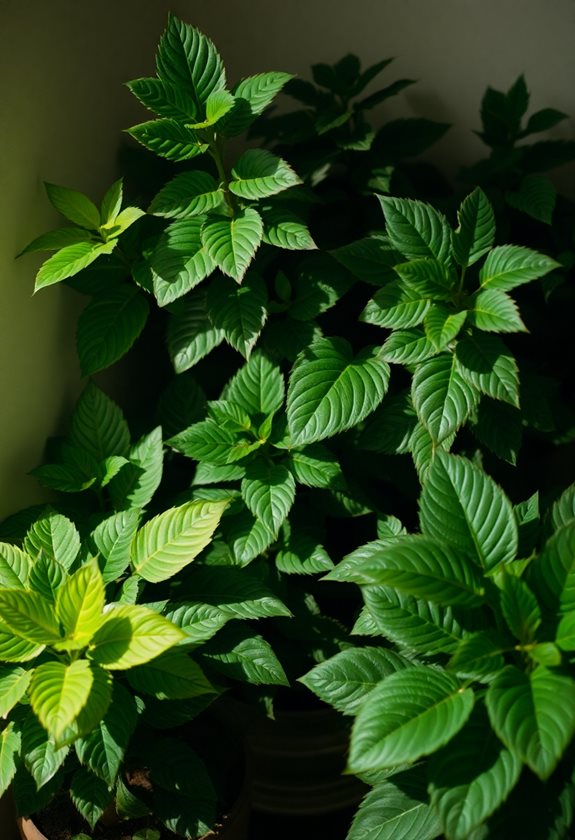
When you think about gardening, do you picture vibrant blooms basking in the sunlight? But what if you’ve got shady spots? Foliage plants thrive in low-light environments, bringing life to those darker corners. They’re perfect for enhancing your space safely, requiring less sunlight, which means less worry about scorching. Plus, they filter the air, creating a healthier home!
Foliage plants brighten shady corners, thriving in low light while filtering air for a healthier home.
Consider these benefits:
- Low maintenance
- Variety of textures
- Year-round greenery
Additionally, many shade-tolerant foliage plants are known for their ability to adapt to different humidity levels, making them versatile choices for any indoor environment.
Diverse Selection of Foliage Plants for Every Aesthetic
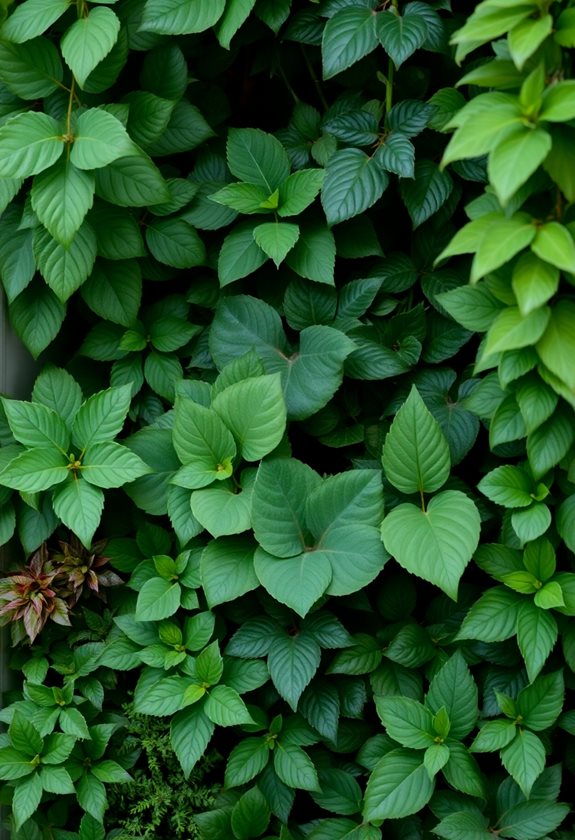
While you might think that decorating a shady corner of your garden is a lost cause, the truth is, there’s a vibrant world of foliage plants just waiting to bring your space to life! From lush ferns to striking hostas, there’s something for every style. Want a tropical vibe? Try a philodendron! Prefer a classic look? Opt for a peace lily!
Just imagine the textures and colors you can mix:
- Bold greens
- Variegated patterns
- Soft, feathery leaves
These plants not only look great but can thrive in low-light areas. In fact, many foliage plants for shaded areas can help enhance the beauty of your garden effortlessly. So, what are you waiting for? Let’s get planting!
How Foliage Plants Improve Indoor Air Quality
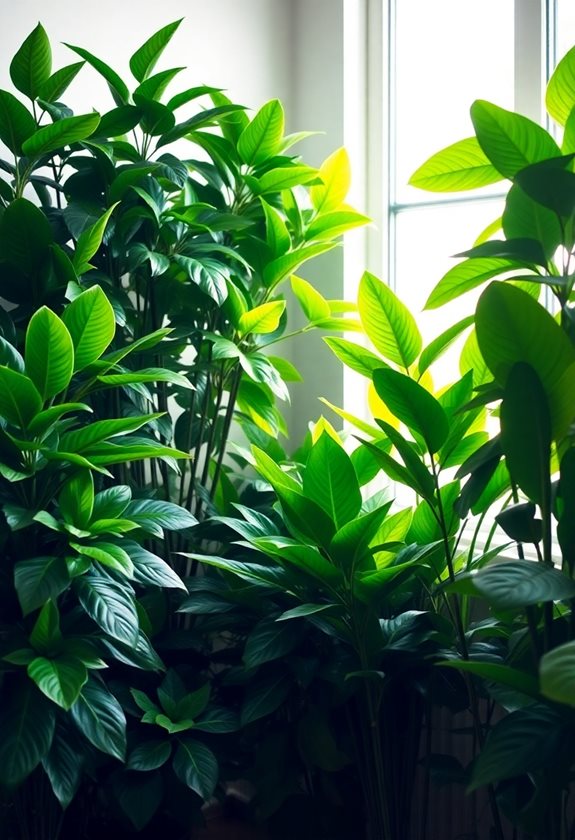
If you’ve ever walked into a room and felt a sudden sense of calm, you might have foliage plants to thank! These leafy companions don’t just look great; they actively improve your indoor air quality. By absorbing toxins and releasing oxygen, they create a healthier environment. Think about it—who wouldn’t want cleaner air?
Here are a few benefits:
- Removes harmful pollutants: Plants like peace lilies and snake plants work wonders!
- Boosts humidity: This can help with dry skin and respiratory issues.
- Reduces stress: Just being around greenery calms your mind! Additionally, incorporating edible plants into your indoor space can enhance both beauty and flavor.
Creating Depth and Texture With Foliage Plants
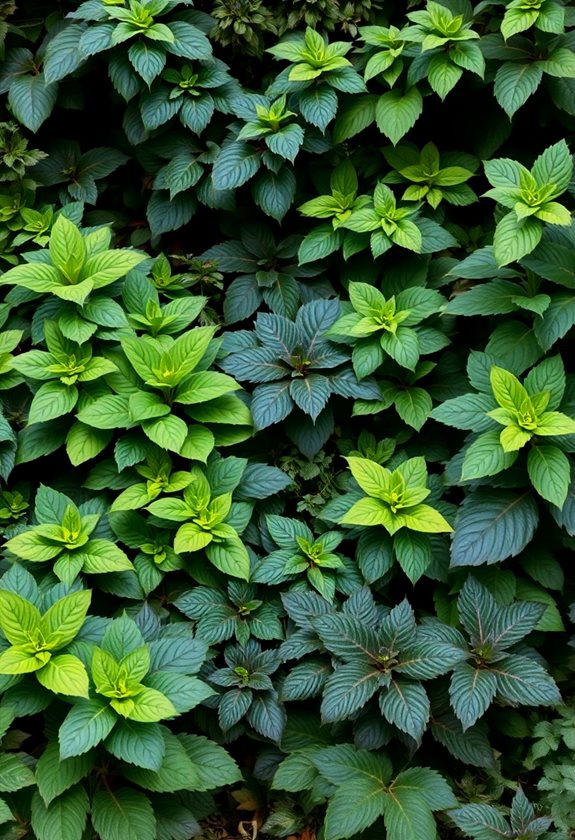
Foliage plants do more than just spruce up your space; they can turn your garden into a vibrant tapestry of depth and texture! Imagine walking through a lush landscape where the leaves dance in the breeze. To create that enchanting vibe, consider these three elements:
- Layering: Mix tall plants with low-growing varieties for a stunning visual effect.
- Variety: Combine different leaf shapes and colors—think broad ferns paired with delicate ivy.
- Height: Use taller plants at the back and shorter ones in front to draw the eye and create interest.
Additionally, incorporating layering techniques can significantly enhance the overall design and appeal of your garden. Isn’t it exciting to think about the possibilities?
Easy Care and Maintenance of Foliage Plants
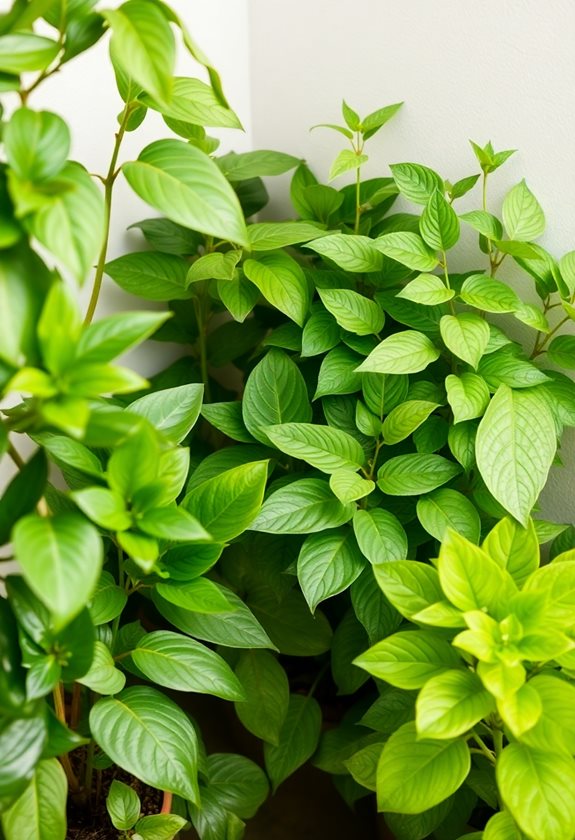
When you plunge into the world of gardening, maintaining your foliage plants doesn’t have to feel like a chore! Just think about it—these beauties thrive in low light and require minimal fuss. Water them when the top inch of soil feels dry, and don’t stress if you forget sometimes; they’re pretty forgiving! Regularly check for pests, and if you spot any, a gentle spray of soap and water can often do the trick. Got a little time? Wipe the leaves with a damp cloth to keep them looking fresh. Additionally, many foliage plants are considered low-maintenance plants, making them perfect for busy individuals. How easy is that? Happy gardening!
Designing With Foliage Plants: Tips and Tricks
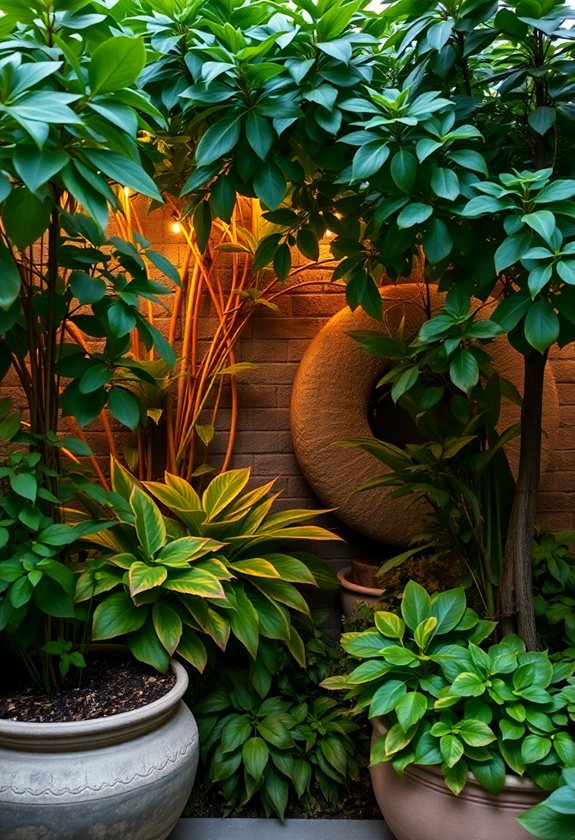
Designing a garden with foliage plants can be a delightful adventure, especially if you embrace the beauty of greens that flourish in shaded areas. You’ll find that with the right approach, your space can be both safe and stunning! Here are a few tips to get you started:
- Layer Your Plants: Use taller plants in the back and shorter ones in the front to create depth.
- Mix Textures: Combine smooth and rough leaves for visual interest.
- Add Color: Consider foliage with varied colors to brighten those shadowy spots. Additionally, incorporating shade-loving plants can enhance the overall aesthetic and health of your garden.
Frequently Asked Questions
Can Foliage Plants Survive in Completely Dark Rooms?
Foliage plants can’t survive in completely dark rooms, unfortunately! They need at least some light to thrive. Think about it—plants are like us; they need energy! If you’ve got a dimly lit space, consider plants like snake plants or pothos; they can handle low light but still need a little brightness now and then. So, how about placing them near a window? Even a bit of indirect light can work wonders!
Are There Any Foliage Plants That Flower in Low Light?
When it comes to low light, you might think you’re out of luck, but let me tell you, there are some stars in the plant world! While most foliage plants don’t flower, you can find gems like the Peace Lily and Spathiphyllum that brighten up dim corners with their lovely blooms. Just remember, they need a bit of TLC—keep them moist and they’ll reward you with a stunning display! Isn’t that fantastic?
How Often Should I Fertilize Foliage Plants in Shaded Areas?
You should fertilize your foliage plants in shaded areas every 4 to 6 weeks during the growing season. Think about it—these plants need nutrients to thrive, even in low light! Use a balanced, water-soluble fertilizer, and always follow the package instructions. If you notice yellowing leaves, that’s a sign they might need a boost! Just remember, over-fertilizing can be harmful, so stick to the recommended amounts! Happy gardening!
Can I Propagate Foliage Plants Easily?
Did you know that over 90% of gardeners try propagating plants at least once? You can easily propagate foliage plants! Just take a healthy cutting, about 4-6 inches long, and remove the lower leaves. Place it in water or soil, and keep it moist. In a few weeks, you’ll see roots forming! Isn’t that exciting? With a little patience and care, you’ll have new plants to brighten your space in no time!
What Pests Are Common for Foliage Plants in Shaded Conditions?
When you’ve got foliage plants in shady spots, pests like aphids, spider mites, and mealybugs can sneak in. These little critters love to munch on your plants! Keep an eye out for yellowing leaves or sticky residue—those are signs of trouble. You can use insecticidal soap or neem oil to tackle them safely. Have you ever found pests on your plants? It’s frustrating, but with a little care, you can keep them healthy and thriving!