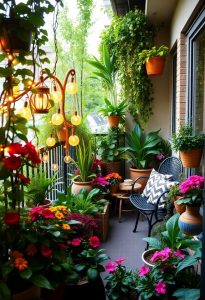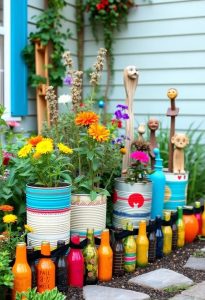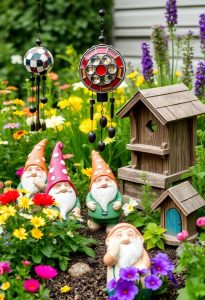
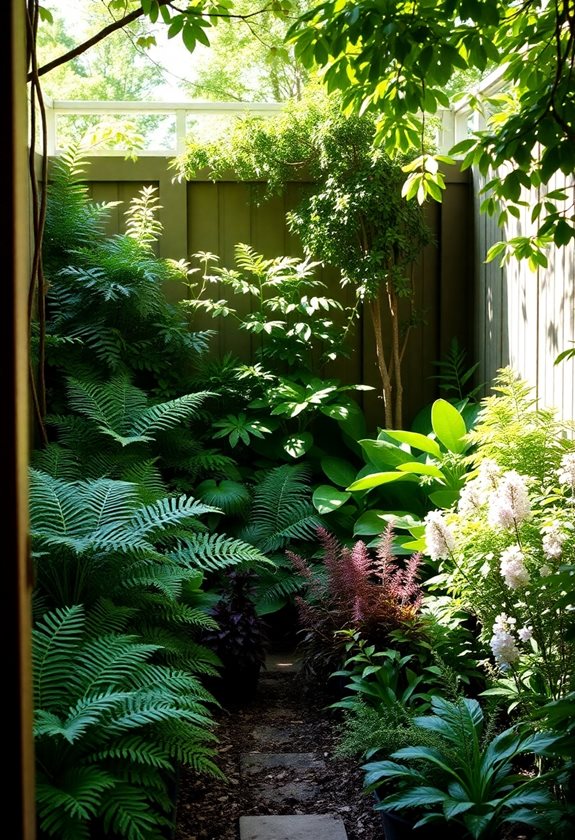
Choosing shade-loving plants for your enclosed garden can be a fun challenge! Consider adding hostas for their stunning leaves, or ferns for a touch of elegance. Don’t forget about vibrant blooms like astilbe and impatiens to brighten dark spaces. Mix heights and textures for depth—tall ferns in the back, hostas in the middle, and low ground covers in front. Remember to water early and keep an eye out for pests. Want to create a magical retreat? There’s so much more to explore!
Design Highlights
- Assess the sunlight exposure in your enclosed garden to determine if it’s full shade, partial shade, or dappled light.
- Choose shade-loving plants like hostas, ferns, and astilbe that thrive in low-light conditions.
- Create layers with varying plant heights to add depth and visual interest to your garden.
- Incorporate colorful flowers such as astilbe and bleeding hearts to brighten up shaded areas.
- Maintain your garden by watering early, using mulch, and regularly checking for pests and dead foliage.
Understanding Shade Conditions in Your Garden
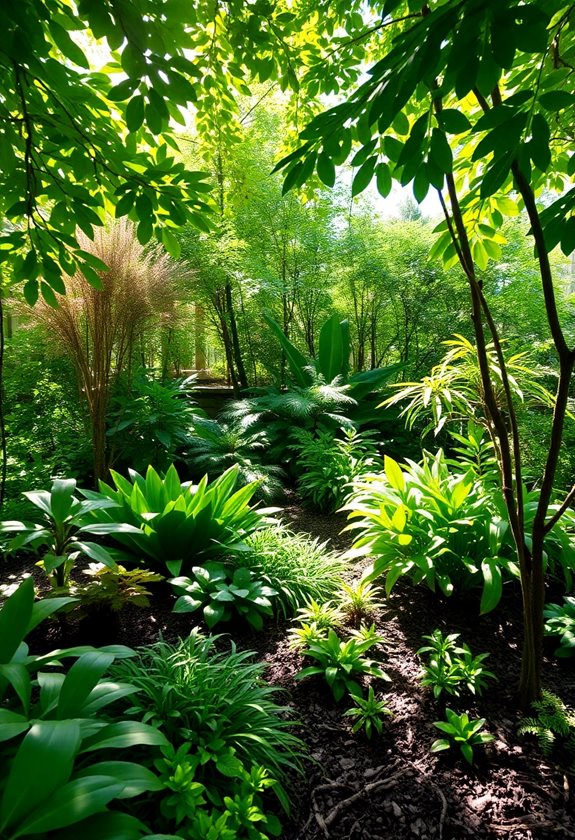
When you step into your garden, have you ever noticed how some areas seem perpetually shaded, as if they’re hiding from the sun? Understanding shade conditions is essential for your plants’ health. Different types of shade exist, like full shade, partial shade, and dappled light. Take a moment to observe how sunlight filters through trees or buildings.
Understanding the varying shade conditions in your garden is crucial for selecting the right plants and ensuring their health.
- Full shade: No direct sun, only indirect light.
- Partial shade: 3-6 hours of sunlight.
- Dappled light: Sunlight that peeks through leaves.
Identifying these areas helps you choose the right plants, ensuring your garden thrives safely and beautifully! For instance, many shade-tolerant foliage plants are ideal for low-light conditions. Happy gardening!
Top Shade-Loving Plants for Low-Light Spaces
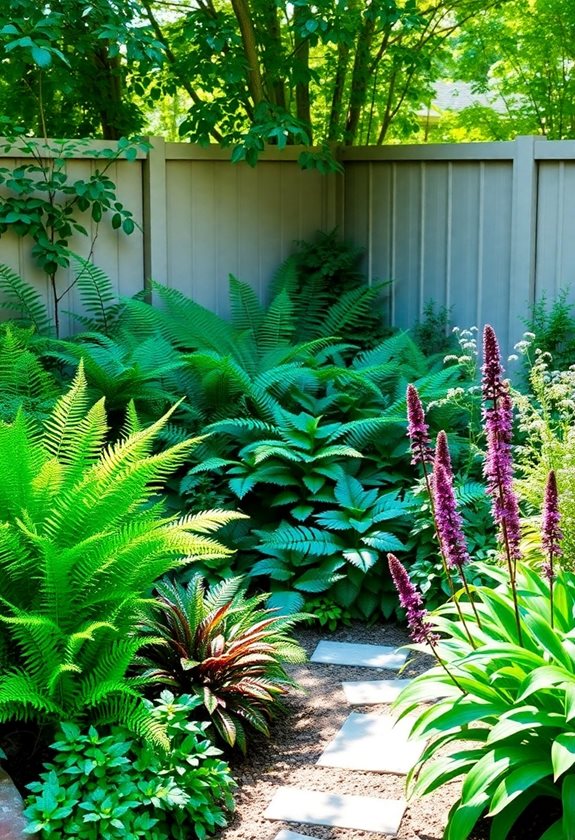
Have you ever wandered through your garden, only to find those tricky spots where sunlight barely reaches? Don’t sweat it! You can still create a lush oasis with shade-loving plants. Consider these favorites:
- Hostas: Their broad leaves come in various colors and sizes.
- Ferns: These delicate beauties add texture and elegance.
- Astilbe: With vibrant blooms, they brighten up dark corners.
- Lungwort: Its spotted leaves and lovely flowers are a delightful surprise.
These plants not only thrive in low light but also make your garden feel cozy and inviting! Additionally, selecting low-maintenance plants can enhance your gardening experience by reducing care needs. So, why not give them a try? You’ll be amazed!
Creating Layers With Foliage and Texture
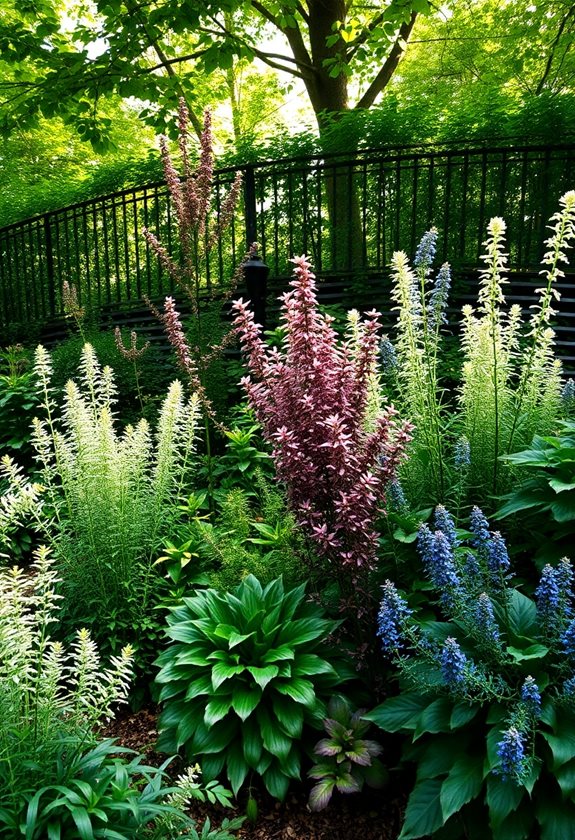
Creating layers with foliage and texture can transform your garden into a stunning visual feast—not to mention, it’s a fun way to showcase your creativity! Start by mixing different plant heights and leaf shapes to create depth. Here are a few ideas to get you going:
Transform your garden into a visual delight by layering different plant heights and textures for a unique, creative touch!
- Use tall plants, like ferns, to create a backdrop.
- Layer mid-height plants, such as hostas, for a soft shift.
- Introduce low-growing ground covers to fill gaps and protect soil.
- Experiment with various leaf textures, like glossy versus matte.
Incorporating shade-loving plants will ensure your garden thrives in low light conditions. Don’t be afraid to play around—your garden’s personality will shine through! Happy layering!
Adding Color With Shade-Resistant Flowers
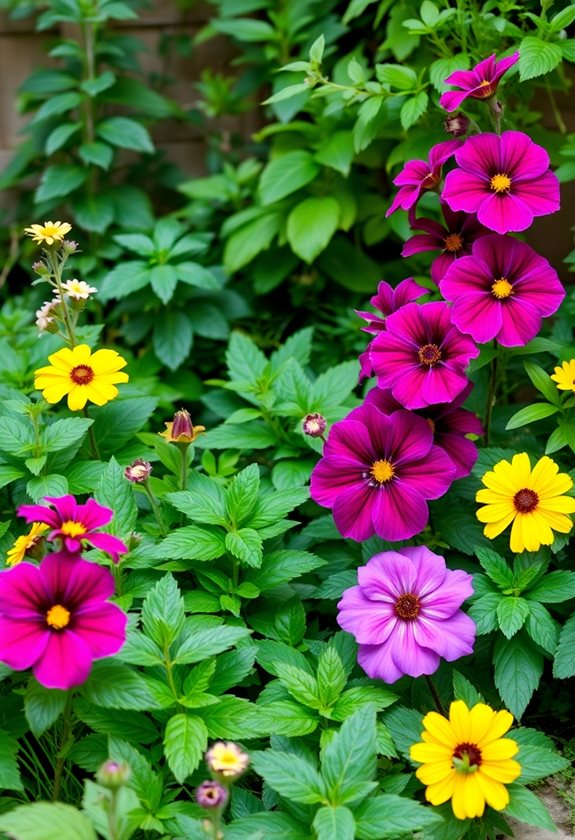
Even the shadiest corners of your garden can burst with color, and that’s where shade-resistant flowers come into play! Imagine vibrant astilbes or cheerful impatiens lighting up your space. Have you considered planting bleeding hearts or hostas? They’re not just pretty; they thrive in low light!
To make your garden pop, try mixing flowers with different heights and colors. Consider:
- Astilbe: Fluffy pink or white blooms
- Impatiens: Bright reds, purples, and whites
- Bleeding hearts: Unique heart-shaped flowers
Incorporating shade-loving plants will ensure that your garden remains colorful throughout the year. With these beauties, you’ll create a stunning oasis that’s safe and inviting. Your garden deserves to shine, even in the shade!
Incorporating Ground Covers for a Lush Look
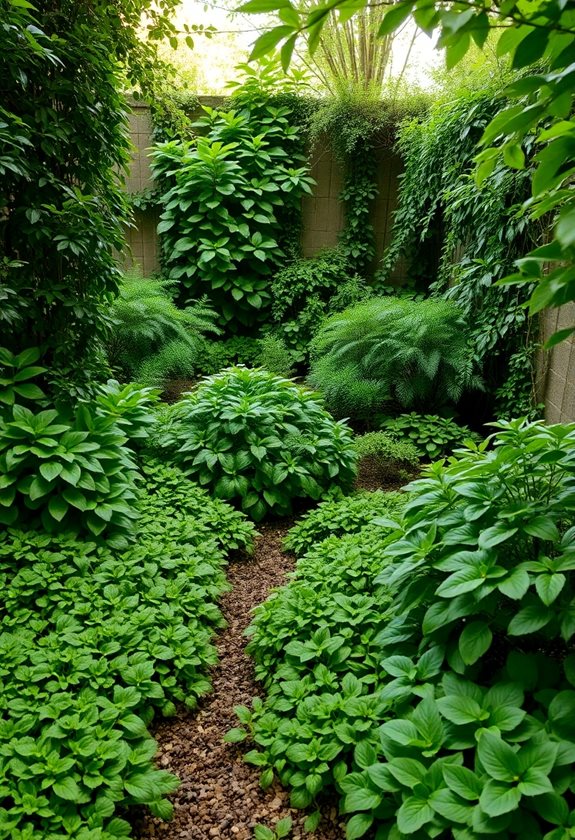
While shade might seem like a challenge for gardeners, incorporating ground covers can transform those dim areas into lush, inviting spaces. These low-growing plants not only fill in gaps but also create a beautiful carpet of greenery. You’ll love how they soften hard edges and suppress weeds! Here are some great options to ponder:
- Creeping Thyme – A fragrant option that’s tough and resilient.
- Pachysandra – Perfect for densely shaded spots.
- Ajuga – Offers colorful foliage and flowers.
- Vinca Minor – A classic with lovely purple blooms!
To enhance your garden’s aesthetic even further, consider using layering techniques that can add depth and interest to your shaded areas.
Tips for Maintaining a Thriving Shade Garden
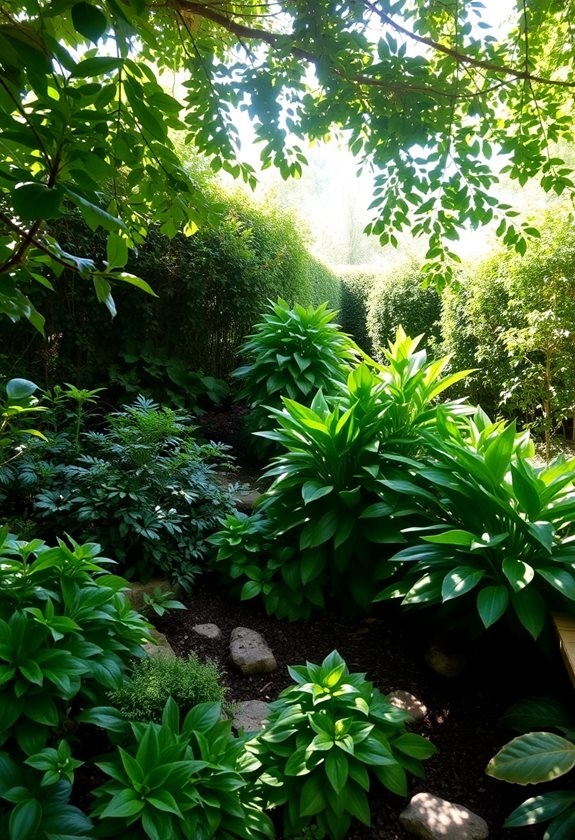
Maintaining a thriving shade garden can feel like a delightful puzzle, especially when you discover how much life and beauty those cooler corners of your yard can hold! To keep your plants happy, consider these tips:
- Water wisely: Water early in the morning to prevent mold.
- Mulch magic: Use organic mulch to retain moisture and suppress weeds.
- Prune and pamper: Regularly check for dead leaves or pests.
Have you tried companion planting? It can boost plant health! Additionally, incorporating drought-resistant plants can help ensure your garden remains vibrant even during dry spells. Embrace the challenge; you’ll find that your shade garden can be just as vibrant as any sunlit space. Enjoy the journey!
Designing Your Enclosed Garden for Maximum Impact
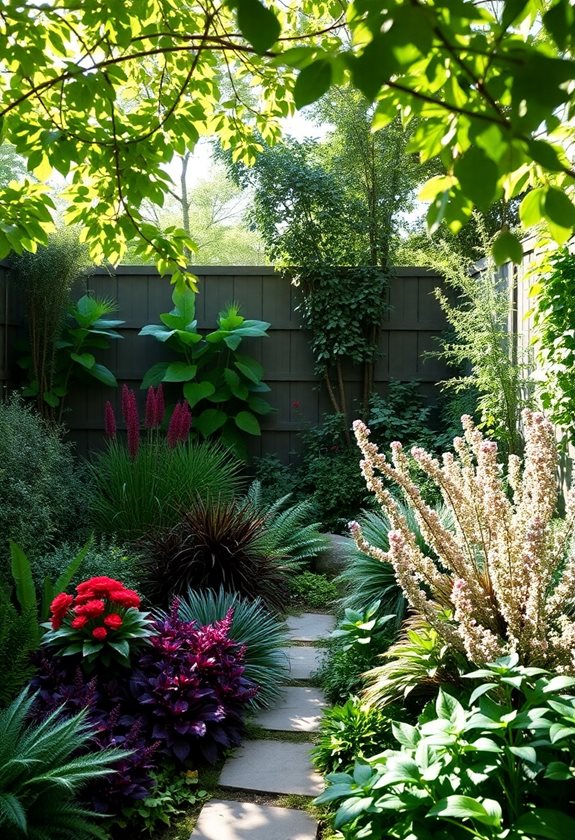
When you think about designing your enclosed garden, it’s easy to get lost in the possibilities, isn’t it? Creating a space that feels safe and inviting can be so rewarding! To maximize impact, consider these elements:
- Layered Planting: Use varying heights for visual interest.
- Focal Points: Add a sculpture or water feature to draw the eye.
- Seating Areas: Create cozy nooks to relax and enjoy the view.
- Lighting: Use soft lights to enhance safety and ambiance at night.
Incorporating shade-loving plants can further enhance the lushness and tranquility of your garden.
With thoughtful design, your garden can become a serene escape, blending beauty and safety perfectly!
Frequently Asked Questions
What Types of Soil Are Best for Shade-Loving Plants?
When you’re picking soil for shade-loving plants, think about a few key factors! You’ll want well-drained, rich soil that holds moisture without getting soggy. Mixing in organic matter like compost or leaf mold can boost nutrients. Don’t forget to check pH levels—most shade plants love slightly acidic soil. Have you ever tried this combo? It’s like giving your plants a cozy bed to thrive in! Happy gardening! 🌱
How Do I Prevent Pests in a Shaded Garden?
To keep pests away in your shaded garden, you’ve got some fun options! Try planting marigolds or garlic, as they naturally deter bugs. Regularly check your plants for any unwelcome guests and remove them by hand—it’s like a mini treasure hunt! Also, consider using a gentle neem oil spray. Isn’t it exciting to keep your garden healthy and thriving? With a little effort, you can enjoy a pest-free paradise!
Can I Grow Vegetables in an Enclosed Shaded Garden?
Absolutely, you can grow vegetables in an enclosed shaded garden! While it’s a bit tricky, certain veggies thrive in low light. Think leafy greens like spinach and lettuce—they love the shade! You’ll want to check your garden’s light levels, and maybe rotate your plants for the best results. Have you tried growing herbs like basil or parsley? They can brighten up your meals and your garden! So, don’t shy away from that shade!
What Are the Best Pots for Shade Plants?
When it comes to pots for shade plants, you’ve got some great options! Consider using terracotta pots—they’re breathable, which helps roots stay healthy. Or try lightweight resin pots, perfect for moving around if you change your mind. Don’t forget drainage holes! Your plants will thank you. You might want to add a fun layer of moss on top for a cozy, natural look. Isn’t gardening just the best?
How Often Should I Water Shade-Loving Plants?
Did you know that overwatering is one of the top reasons plants struggle? When it comes to shade-loving plants, you should water them about once a week. Of course, check the soil first! If it’s dry an inch down, it’s time to hydrate. Remember, they don’t like soggy roots! You might even consider using a moisture meter. Isn’t gardening fun? With a little practice, you’ll find the right balance!