If you want a stunning garden bed, try these unique plant pairings! Consider sun-loving marigolds and zinnias for a colorful display. For shady spots, hostas and ferns create a lovely texture combo. Edible options like kale and nasturtiums not only look great but also taste amazing! Don’t forget drought-tolerant lavender and sedum, which thrive in dry conditions. Finally, attract pollinators with asters and bee balm! Curious about more plant matches that’ll elevate your gardening game? You’re in for a treat!
Design Highlights
- Pair marigolds with zinnias for a vibrant, pollinator-friendly garden that also deters pests.
- Combine hostas and ferns to create a lush shade garden with varied textures and colors.
- Grow kale alongside nasturtiums to enhance growth while adding nutritional and culinary value.
- Use lavender and sedum together for a drought-resistant garden that offers beautiful blooms and foliage.
- Create a pollinator-friendly space by planting asters and bee balm, attracting butterflies and bees throughout the seasons.
Sun-Loving Companions: Marigolds and Zinnias
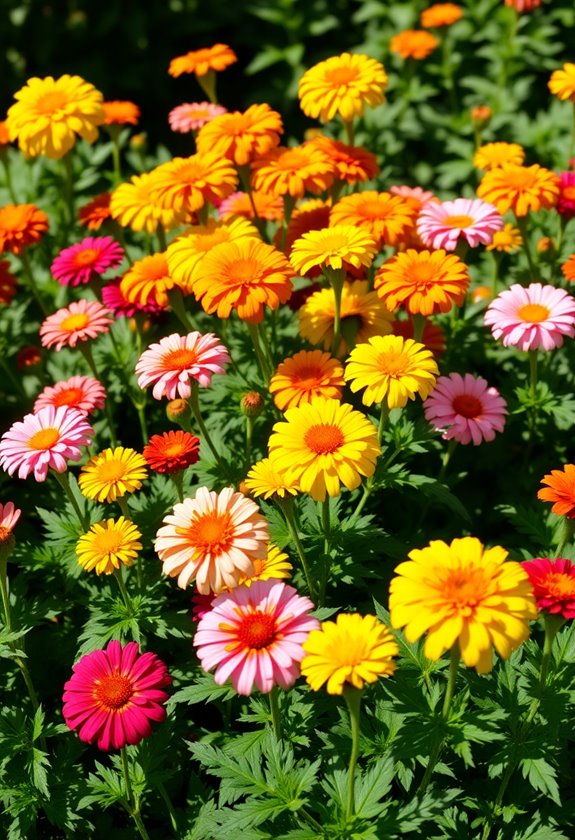
When you think about planting a vibrant garden, wouldn’t it be amazing to pair sun-loving companions like marigolds and zinnias? These two powerhouses thrive in full sun, creating a stunning display of color. Marigolds act as natural pest repellents, protecting your zinnias while adding a burst of gold and orange. Zinnias, with their bold hues and easy care, draw in pollinators, making your garden a buzzing hub of activity. Additionally, incorporating native flowers can enhance biodiversity and support local ecosystems. So, why not mix them together for a dynamic duo? Plant them in clusters for maximum impact, and watch your garden transform into a lively masterpiece! Ready to make it happen?
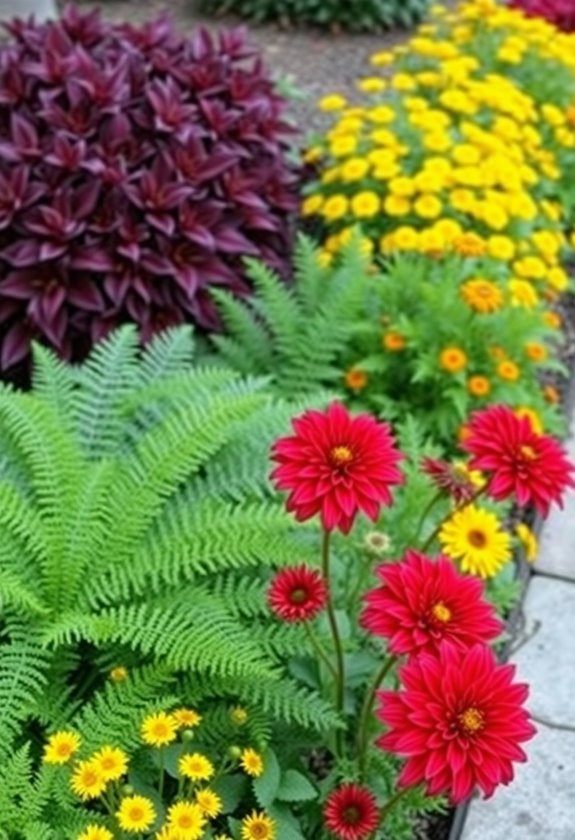
Shade Garden Delight: Hostas and Ferns
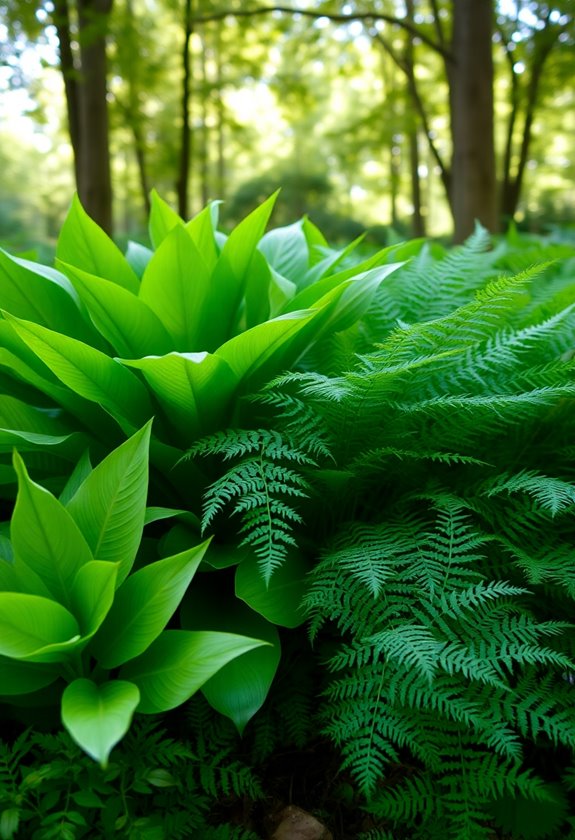
Creating a shade garden can be a delightful escape, especially when you pair lush hostas with graceful ferns. These two thrive in low-light conditions, transforming dull corners into vibrant retreats. Hostas offer bold foliage, while ferns add delicate texture—talk about a power combo!
To make the most of your shade garden, consider:
- Layering: Plant hostas in the back for height, with ferns in front for softness.
- Variety: Choose different hosta colors and fern types to create visual interest.
Adding a mix of shade-loving plants can further enhance the beauty and biodiversity of your garden. Why not start today? With just a few plants, you can craft a serene space that invites relaxation and rejuvenation!
Edible Elegance: Kale and Nasturtiums
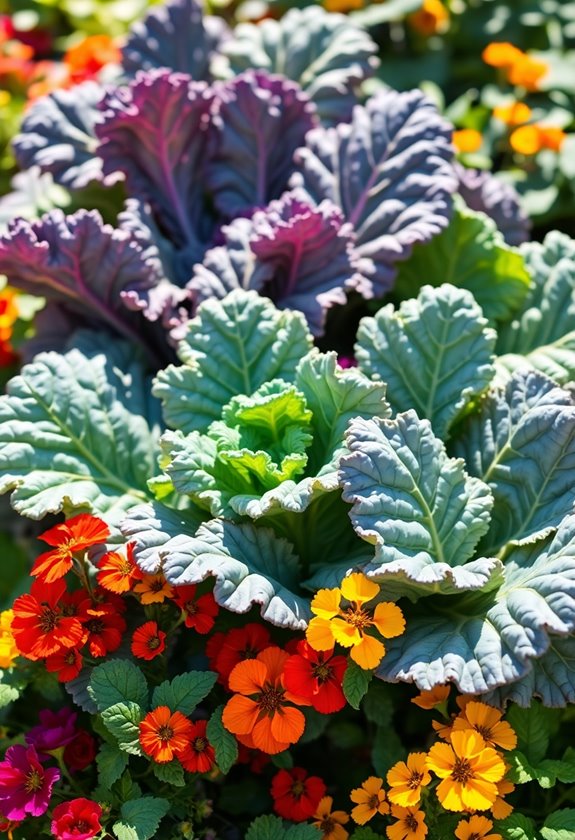
If you think your garden can’t be both beautiful and productive, think again! Imagine lush, leafy kale paired with vibrant nasturtiums, creating a feast for both the eyes and your plate. These bold plants not only thrive together but also boost each other’s growth—how cool is that?
Kale offers nutrient-dense leaves, while nasturtiums add a peppery kick to salads and stunning pops of color. To maximize their potential:
- Plant kale in rich soil.
- Scatter nasturtium seeds nearby for easy access.
This dynamic duo transforms your garden into a masterpiece, proving that elegance and edibility can coexist beautifully! Additionally, incorporating upcycled decor projects can enhance the visual appeal of your planting beds. Are you ready to dig in?
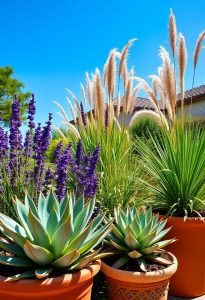
Drought-Resistant Duo: Lavender and Sedum
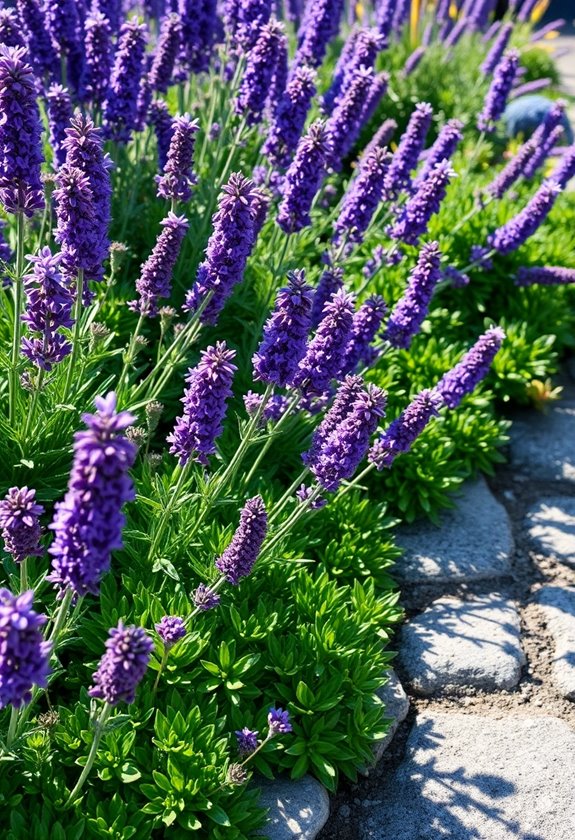
Imagine stepping into your garden and being greeted by the delightful aroma of lavender, mingling with the subtle earthiness of sedum. This dynamic duo not only thrives in dry conditions but also creates a stunning visual impact. Lavender’s vibrant purple blooms contrast beautifully with sedum’s lush green foliage, making your space pop!
To maximize their benefits:
- Plant lavender in full sun for ideal growth.
- Choose low-growing sedum varieties to fill gaps.
Trust me, once you experience this pairing, you’ll wonder how you lived without it! Additionally, both plants are excellent choices for drought-tolerant flowers, ensuring your garden can withstand dry spells with ease. Are you ready to transform your garden into a drought-resistant haven?
Pollinator Paradise: Asters and Bee Balm
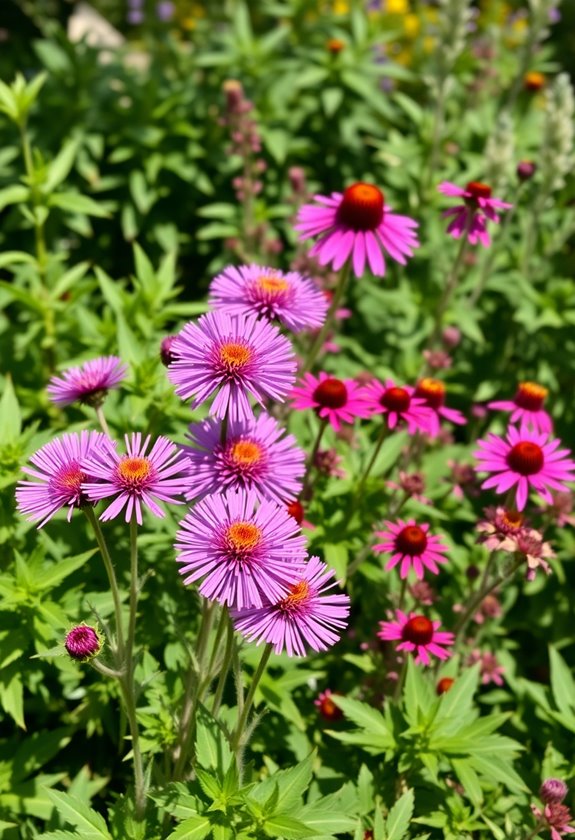
There’s something incredibly enchanting about a garden buzzing with life, and pairing asters with bee balm can turn your backyard into a true pollinator paradise! Imagine vibrant blooms attracting butterflies and bees—what’s not to love? Asters thrive in the fall, while bee balm bursts with color in summer, creating a stunning display.
To guarantee success, plant them in well-drained soil and full sun. They’re not just beautiful; they’re also resilient! Plus, the aromatic leaves of bee balm can even repel some pests. Additionally, incorporating garden structures that support pollinators will enhance your garden’s appeal. Ready to transform your garden? Immerse yourself in this dynamic duo and watch nature flourish!
Frequently Asked Questions
How Do I Choose the Right Soil for These Plant Pairings?
Choosing the right soil is essential for your plants’ success! First, consider your plants’ needs—do they prefer well-draining soil or moisture-retaining? You can mix compost, peat moss, or perlite to tailor the texture. Don’t forget to check the pH level; some plants thrive in acidic, while others love alkaline. And remember, a good soil mix makes all the difference! So, are you ready to dig in and create your dream garden?
What Pests Should I Watch for With These Combinations?
When you’re gardening, keeping an eye out for pests is essential! You wouldn’t want your hard work ruined, right? Watch for common culprits like aphids, slugs, and spider mites. They love a good feast! Regularly inspect your plants, especially the undersides of leaves. If you spot any, don’t panic! Try natural remedies like soapy water or neem oil. How rewarding is it to protect your garden with a bit of effort? Happy gardening!
Can I Grow These Plants in Containers?
They say, “Good things come in small packages,” and that’s true for container gardening! You can absolutely grow these plants in containers. Just make sure your pots have drainage holes to prevent waterlogging. Choose a quality potting mix, and consider the sun and water needs of each plant. For instance, herbs like basil thrive in smaller spaces. Ready to create your own mini-garden? Let those pots shine with your green thumb!
What Is the Best Time to Plant These Pairings?
The best time to plant your pairings really depends on what you’re growing! Generally, spring is fantastic for most plants, as the soil warms up and the frost fades. If you’re in a warmer climate, you might even start in late winter. Just remember: check for your local frost dates! You wouldn’t want your garden to be a chilly surprise party! So, grab your seeds and get ready to dig in!
How Do I Maintain These Plants Throughout the Seasons?
Imagine your garden as a symphony, with each plant playing its unique note. To keep this harmony alive, you’ll need regular care. Water them deeply, especially during dry spells, and mulch to retain moisture. Check for pests like a detective on a mission! Trim dead leaves and support struggling plants. Seasonal changes can be tricky, but don’t worry—embrace them! Your garden deserves your dedication, and trust me, it’ll thrive with your love!