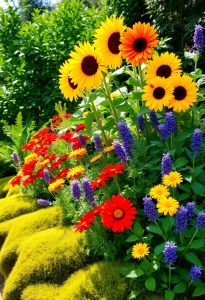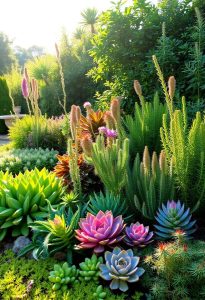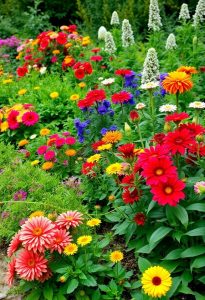
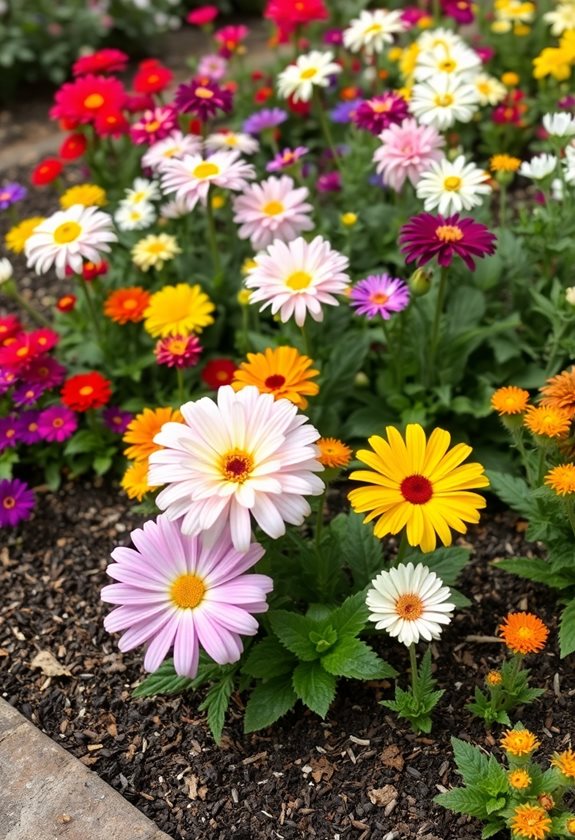
Want your garden to bloom year-round? Start by choosing vibrant seasonal plants like pansies in spring and sunflowers in summer. Next, practice succession planting! Sprinkle in fast-growing crops like radishes, then follow up with slower ones like carrots. Finally, don’t forget perennials like daylilies that’ll return year after year, keeping your garden lively and colorful. By following these tips, you’ll create a thriving space that makes you proud! There’s more to explore, so let’s keep going!
Design Highlights
- Select seasonal plants that thrive in each season to ensure vibrant blooms year-round, such as pansies for spring and sunflowers for summer.
- Implement succession planting by starting with fast-growing crops and following up with slower ones to maintain continuous harvests.
- Incorporate perennial plants like daylilies and coneflowers for long-term blooms that return each year, minimizing replanting efforts.
- Plan ahead to stagger planting times, ensuring that new flowers bloom as older ones fade to maintain vibrant garden aesthetics.
- Utilize companion planting strategies to enhance plant health and attract beneficial insects, promoting a lively and balanced garden ecosystem.
Choose the Right Plants for Each Season
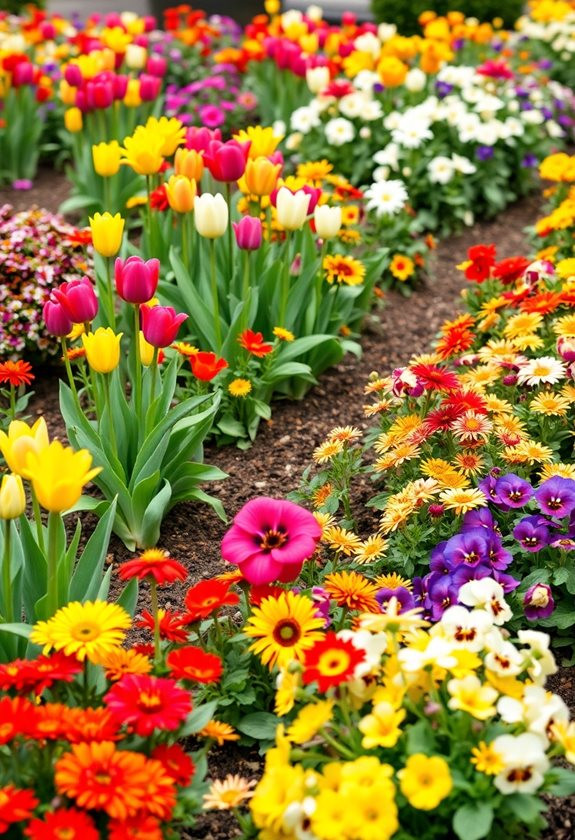
When you dig into gardening, it’s essential to choose the right plants for each season, or you might end up with a backyard that’s more sad than spectacular! Think about it: who wants wilted flowers or barren patches?
For spring, consider vibrant pansies or cheerful daffodils. In summer, opt for sunflowers and zinnias that thrive in the heat. As fall approaches, plant marigolds or asters for a pop of color. Winter? Evergreens keep your garden lively! Incorporating perennial plants can also enhance your landscape’s beauty throughout the year.
Plan for Succession Planting
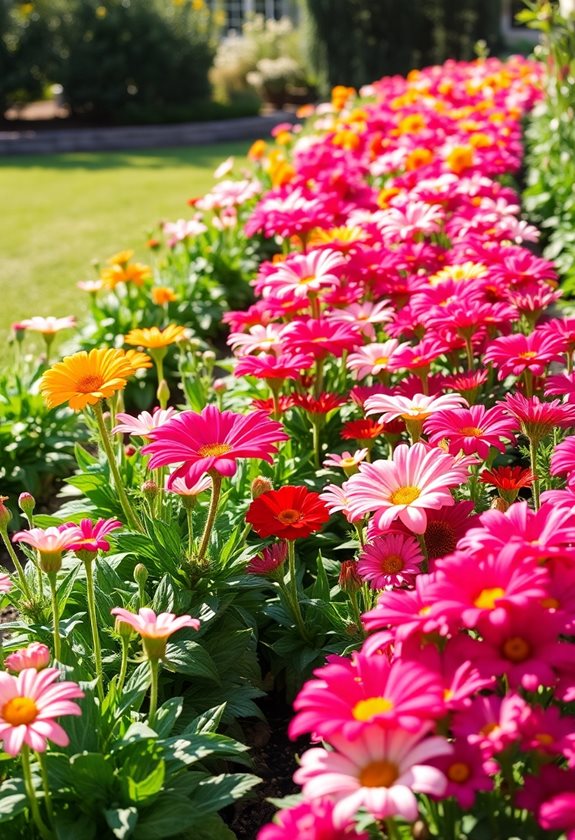
As you immerse yourself in the world of gardening, why not think ahead and plan for succession planting? It’s a fantastic way to keep your garden vibrant all season long! Start by planting fast-growing crops like radishes or lettuce, then follow up with slower ones like carrots or beets.
Want to keep it exciting?
- Consider planting sunflowers for a cheerful boost!
- Don’t forget to space your seeds properly; it helps prevent overcrowding and keeps pests at bay.
Planning ahead means fewer gaps and more blooms. A seasonal planting guide can help you identify the best times for planting different crops. Who doesn’t want a colorful garden? Let’s get planting!
Incorporate Perennials for Long-Term Blooms
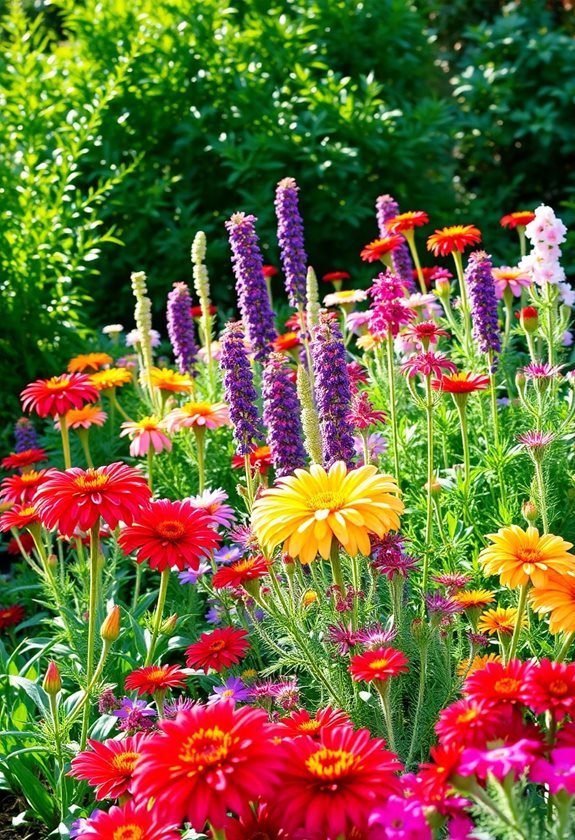
Incorporating perennials into your garden can be a game-changer, especially if you want blooms that come back year after year without the fuss of replanting. Just imagine strolling through your garden, filled with color and life every spring!
Consider these easy-to-grow options:
- Daylilies: They bloom for weeks and thrive in various soils.
- Coneflowers: These attract butterflies and are super hardy!
- Sedum: A low-maintenance choice that’s perfect for sunny spots.
Additionally, using native plants can enhance your garden’s ecosystem by supporting local wildlife and promoting biodiversity.
Frequently Asked Questions
How Do I Determine My Planting Zone?
To determine your planting zone, start by checking the USDA Plant Hardiness Zone Map. It divides regions based on climate, helping you choose plants that thrive in your area. You can find your zone by entering your zip code online. Isn’t that neat? Once you know it, you can confidently select flowers and veggies that’ll flourish! Remember, planting the right way makes gardening so much more rewarding. Happy planting!
What Are the Best Tools for Seasonal Planting?
When you’re gearing up for seasonal planting, having the right tools makes all the difference! You’ll want a sturdy trowel for digging, pruners for trimming, and a watering can or hose for hydration. Don’t forget garden gloves to protect your hands! Have you thought about a soil thermometer? It’s super handy for checking soil temperatures. With these tools, you’re ready to dig in and create your blooming paradise! Happy gardening!
How Often Should I Water Seasonal Plants?
Watering seasonal plants depends on their needs and the weather. Generally, you should check the soil moisture about once a week. If it feels dry an inch down, it’s time to water! Remember, overwatering can be just as harmful. Try to water in the morning to avoid evaporation. Also, consider using mulch to retain moisture. Trust me, your plants will thrive, and you’ll feel like a gardening superstar! Isn’t that a great feeling?
Can I Grow Seasonal Plants in Containers?
Absolutely, you can grow seasonal plants in containers! It’s a great way to brighten up your space. Just make sure your containers have drainage holes—nobody wants soggy roots! Choose potting soil that retains moisture but drains well. For sunny spots, consider vibrant annuals like petunias or marigolds. You’ll love watching them thrive! Plus, if you have limited space, container gardening’s the way to go—who doesn’t love a little greenery? Happy planting!
What Are Common Pests to Watch For?
Did you know that about 30% of garden plants can fall victim to pests? It’s true! When you’re gardening, keep an eye out for common culprits like aphids, spider mites, and whiteflies. They love to munch on your plants! You can easily spot them by checking for discolored leaves or sticky residue. Using neem oil or insecticidal soap can help keep them at bay. Got any pest stories? I’d love to hear them!