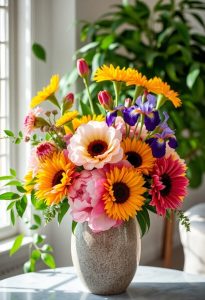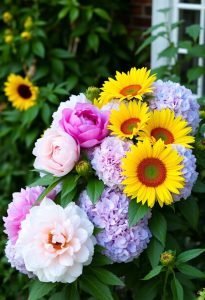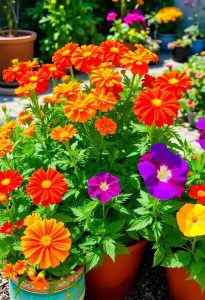
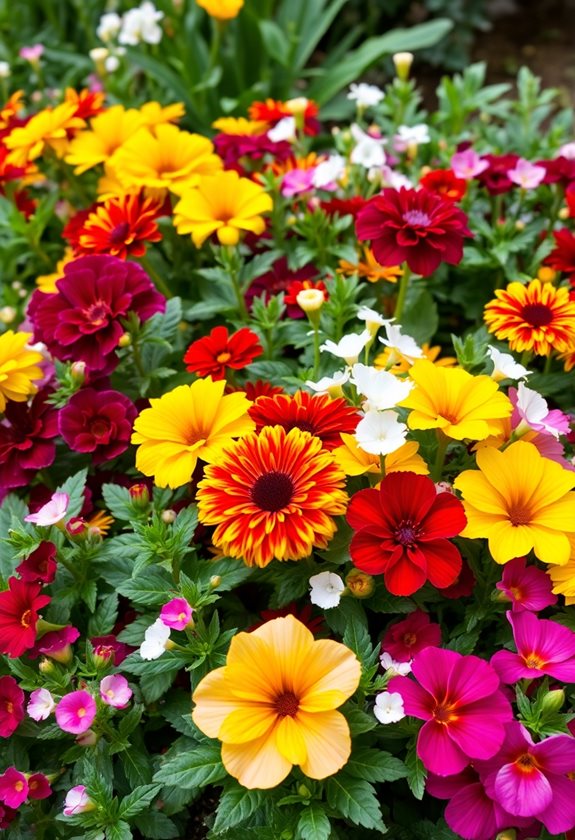
Looking to spice up your flower beds? Mixing colors can totally transform your space! Consider bold reds and yellows with sunflowers and marigolds for a punchy vibe. Or, go soft and serene with blues and purples like lavender and hydrangeas. Warm oranges and browns bring a cozy feeling, while pastels like pink and lavender enchant like magic! Don’t forget the classic elegance of whites and greens. Want your garden to stand out? Let’s explore even more vibrant combinations!
Design Highlights
- Combine bold reds and yellows with sunflowers and marigolds for a vibrant and dynamic flower bed.
- Create a calming atmosphere using serene blues and purples, incorporating lavender and hydrangeas to attract butterflies.
- For a cozy look, use warm earth tones like oranges and browns with marigolds and rustic sedum.
- Soft pastels, such as pink and lavender, enchant gardens and attract pollinators when paired together.
- Striking contrasts can be achieved with black flowers alongside bright colors like yellows or reds for a dramatic effect.
Bold and Vibrant: Red and Yellow
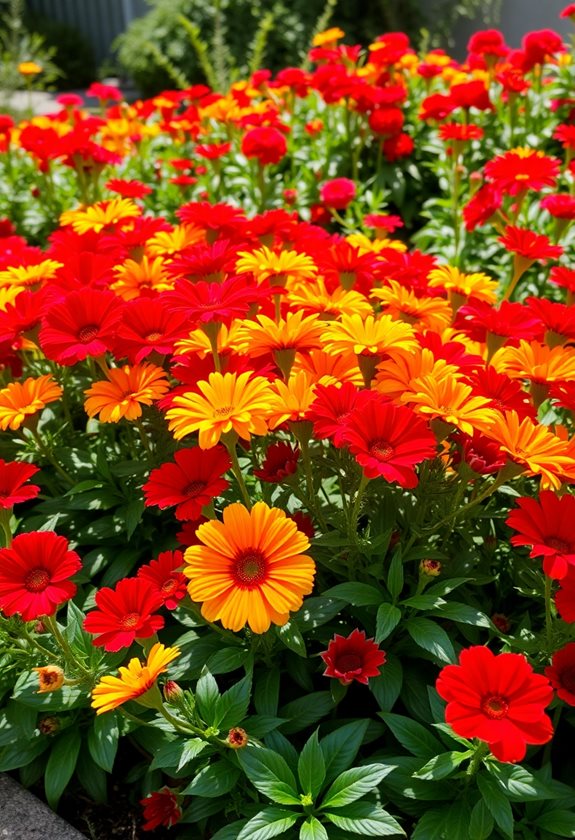
When you think about adding a pop of color to your flower bed, have you ever considered the dynamic duo of red and yellow? These bold hues can really brighten your garden and uplift your mood! Picture vibrant red roses alongside cheerful yellow daisies—what a sight!
To create a balanced look, mix different heights. Maybe add some tall sunflowers and low-growing marigolds. And don’t forget about safety! Always wear gloves when handling plants, especially if you’re new to gardening. With these colors, you’ll not only make your flower bed eye-catching, but you’ll also enjoy the fun of nurturing your little green paradise! Additionally, using vibrant flower bed tips can help you achieve the most striking combinations for your garden.
Serene Blues and Purples
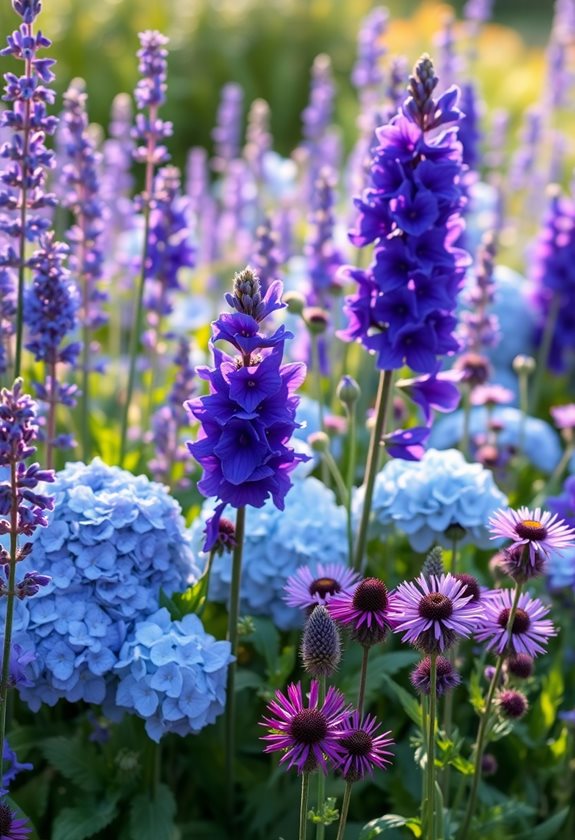
Imagine stepping into your garden oasis, where serene blues and purples wrap around you like a cozy blanket. These calming hues can transform your space into a peaceful retreat. Ever consider planting lavender, delphiniums, or hydrangeas? They not only look stunning but also attract butterflies!
To create a balanced look, mix deep purples with soft blues, or pair lighter shades with white flowers for contrast. Don’t forget to add some greenery for depth! How about a winding path lined with these beauties? Gardening can be challenging, but with a splash of serenity, you’ll find joy in every bloom! 🌸 Additionally, incorporating colorful flower beds can enhance the overall aesthetic of your shade garden.
Warm Earth Tones: Oranges and Browns
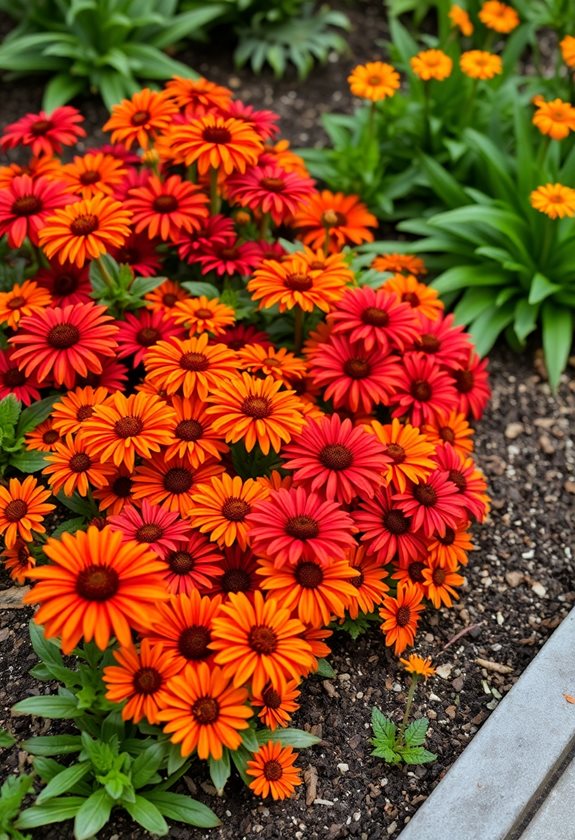
There’s something undeniably cozy about warm earth tones, like a soft sweater on a chilly day. These shades can transform your flower bed into a welcoming retreat. Here are a few ideas to get you started:
Warm earth tones create a cozy atmosphere, turning your flower bed into a delightful retreat.
- Marigolds: Their vibrant oranges and yellows brighten any space.
- Rustic Brown Sedum: The earthy tones ground your garden beautifully.
- Amber Roses: These add elegance with their warm hues.
- Golden Sunflowers: They create a cheerful atmosphere, perfect for sunny days.
Incorporating these plants not only enhances the aesthetic but also supports the attraction of pollinators, making your garden a vibrant ecosystem.
Soft Pastels: Pink and Lavender
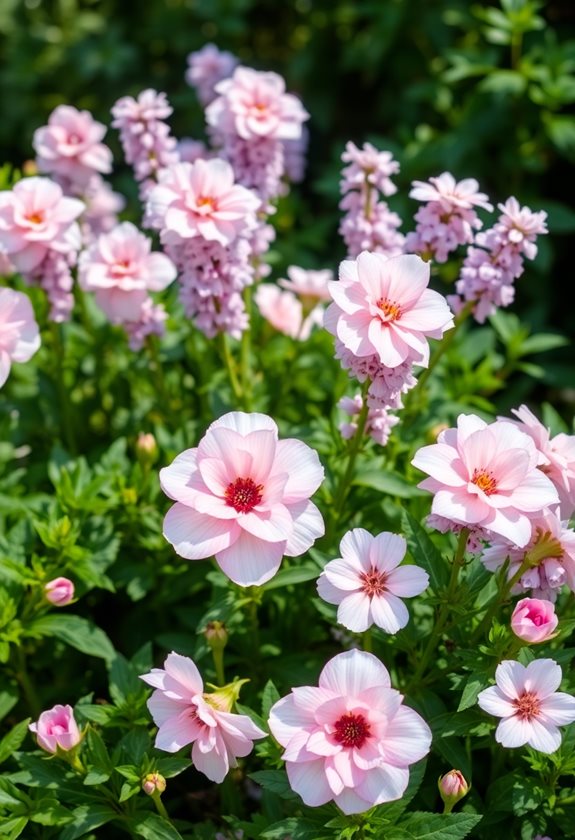
Soft pastels, like gentle whispers of color, can bring an enchanting touch to your flower bed, creating a serene escape that feels both fresh and inviting. Imagine planting delicate pink roses alongside soft lavender. It’s a match made in gardening heaven! These colors not only brighten your space but also attract friendly pollinators. Additionally, using vibrant flower arrangements can enhance the visual appeal of your garden.
To get started:
- Choose a sunny spot and prepare your soil.
- Mix in some compost for nutrients.
- Plant your pink and lavender flowers in clusters for a stunning effect!
Have you ever tried this combo? It’s a delightful way to express your passion for gardening!
Classic White and Green Combinations
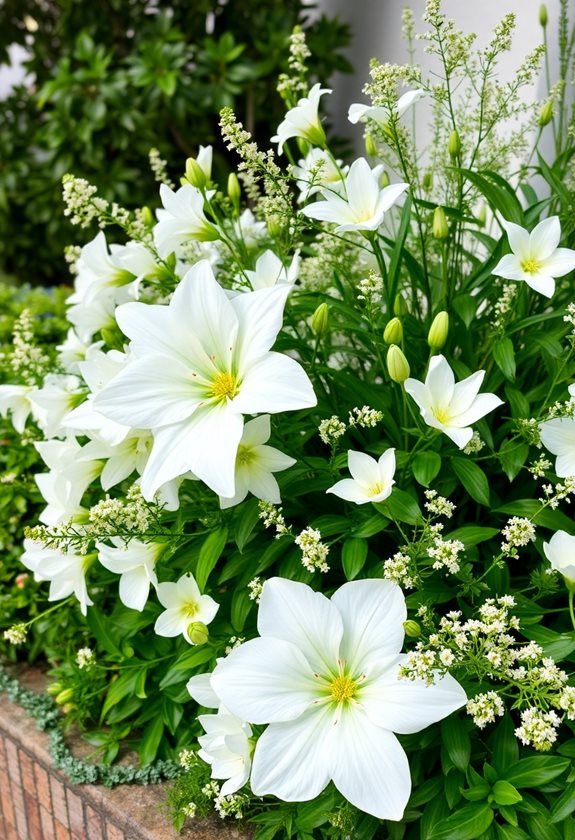
When it comes to flower beds, few combinations evoke a sense of timeless elegance quite like classic white and green. This pairing not only feels fresh and clean but also offers a serene backdrop for your garden. You can create a stunning display by considering these four elements:
- White Roses – Their blooms shine in sunlight, attracting attention.
- Lamb’s Ear – Its soft, fuzzy leaves add texture.
- Hostas – These leafy greens create a lush foundation.
- Daisies – Their cheerful white petals bring joy.
Incorporating fragrant colorful flowers into your garden can enhance the overall sensory experience, making it even more inviting.
Eye-Catching Contrasts: Black and Bright Colors
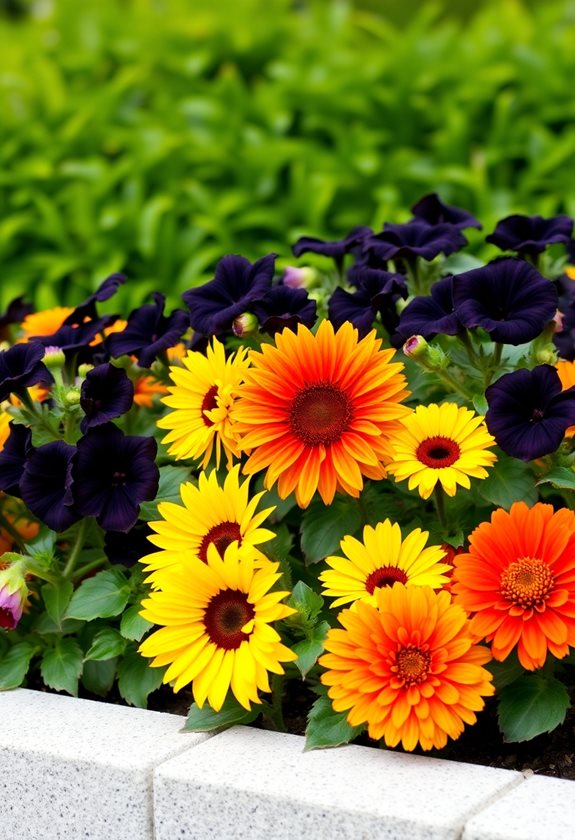
Imagine stepping into your garden and being greeted by a striking display of colors that make your heart race and your eyes widen with delight! Pairing black flowers, like black petunias or calla lilies, with bright hues creates a stunning contrast. Think about vibrant yellows, fiery reds, or electric blues—these colors pop against the deep backdrop of black. Why not try planting bright marigolds alongside dark dahlias? It’s like a visual party! Just remember, keep an eye on your plants’ sunlight needs and water them safely to maintain that beautiful display. Isn’t it exciting how colors can transform your space? Additionally, incorporating best plants for year-round garden color can enhance your garden’s vibrancy and ensure a stunning display throughout the seasons.
Frequently Asked Questions
How Do I Choose the Right Flowers for My Climate?
Choosing the right flowers for your climate is key to a thriving garden! Start by checking your USDA hardiness zone—it’s like your garden’s secret code! Then, consider these tips:
- Look for native plants; they’re adapted to your environment.
- Pay attention to sunlight and soil type.
- Ask local gardeners for their favorites!
When Is the Best Time to Plant Flower Beds?
Ah, the thrill of planting your flower beds! You’ll want to aim for early spring or fall, depending on your climate. If you’re in a colder area, wait until the last frost has passed. In warmer zones, you can plant in early spring or even late summer! Just make sure to check your local weather forecast. Remember, timing can be the difference between a blooming success or a wilted disaster! Ready to dig in?
How Can I Maintain Color Throughout the Seasons?
To maintain color throughout the seasons, you’ll want to plan ahead! Think about mixing early bloomers like tulips with late bloomers like asters. Here’s a quick tip: consider planting perennials that bloom at different times. This way, you’ll have something blooming from spring to fall! Also, don’t forget about foliage—some plants have gorgeous leaves that add color even when flowers fade. Isn’t gardening fun? You’ll love watching your garden change!
What Tools Do I Need for Planting and Maintaining Flower Beds?
To plant and maintain your flower beds, you’ll need a few essential tools! Grab a good trowel for digging, gloves to protect your hands, and a sturdy watering can. A garden rake helps level the soil, while pruning shears make trimming easy. Don’t forget a kneeling pad for comfort—trust me, your knees will thank you! Are you ready to dig in? With the right tools, your garden dreams can bloom beautifully!
How Do I Prevent Pests and Diseases in My Flower Beds?
To prevent pests and diseases in your flower beds, you’ve got a few smart options! Start by keeping your plants healthy—healthy plants are less appealing to pests. Try companion planting; some plants actually repel bugs! Regularly check for any signs of trouble, like wilting or spots. And don’t forget to rotate your crops each season; it confuses pests! Isn’t it fun to outsmart them? Happy gardening! 🌼