
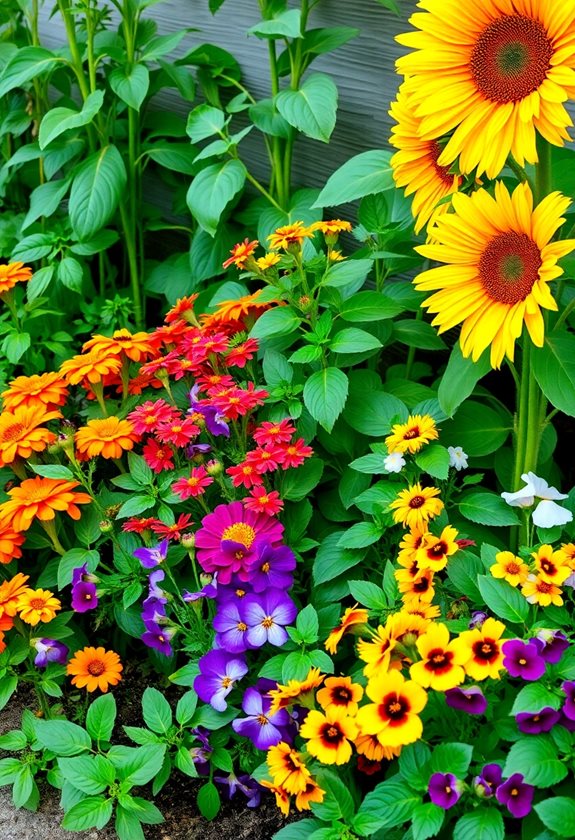
Want to make your garden thrive? Try these five flower companion combinations! Plant marigolds with tomatoes; they repel pests and boost growth. Nasturtiums are great around cabbage, acting like little bodyguards for them! Calendula near squash brightens your space while attracting beneficial insects. Borage brings bees to strawberries, enhancing both yield and flavor. Finally, sunflowers shade corn and attract even more pollinators! How cool is that? Stick around, and you’ll discover more fabulous combos!
Design Highlights
- Marigolds paired with tomatoes repel pests and attract beneficial pollinators, enhancing growth and garden health.
- Nasturtiums effectively trap cabbage worms and aphids, providing natural pest control while offering edible leaves for salads.
- Calendula, when planted near squash, attracts pollinators and deters harmful pests like aphids, boosting overall garden biodiversity.
- Borage supports strawberry growth by attracting bees and deterring pests, while adding vibrant color to the garden.
- Sunflowers provide shade for corn while attracting pollinators, improving corn yield and creating a visually appealing garden display.
Marigolds and Tomatoes
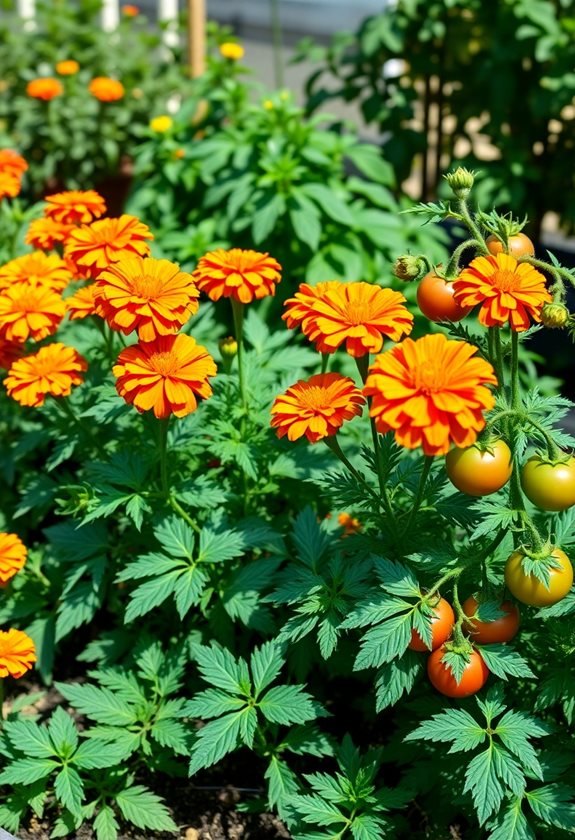
When you think about planting tomatoes, have you ever considered adding marigolds to the mix? These vibrant flowers aren’t just pretty; they’re a gardener’s secret weapon! Marigolds naturally repel pests like nematodes and aphids, protecting your precious tomatoes. Plus, they attract pollinators, boosting your garden’s health. Additionally, this flower companion planting method not only enhances growth but also creates a more diverse ecosystem in your garden.
Here’s how to do it:
- Plant marigolds alongside your tomatoes.
- Choose a sunny spot—both love the sun!
- Water regularly, but don’t overdo it.
Trust me, this combination not only enhances your garden’s beauty but also promotes safety by keeping harmful pests at bay. Isn’t nature amazing? Happy gardening!
Nasturtiums and Cabbage
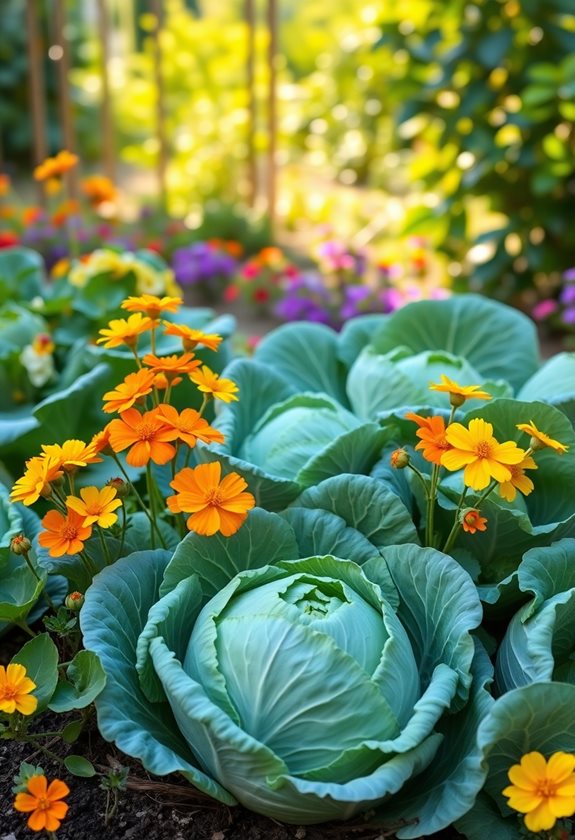
If you’ve ever found yourself battling pesky cabbage worms or aphids in your garden, you might want to ponder inviting nasturtiums to the party! These vibrant flowers not only brighten your garden but also act as a trap for those troublesome pests, keeping your cabbage safe. Here’s how to plant them together:
- Plant nasturtiums around your cabbage.
- Watch as they attract pests away from the cabbage.
Plus, nasturtiums are edible! You can toss their peppery leaves in salads. So, why not give this combo a shot? Your cabbage will thank you, and your garden will flourish! 🌼🥬 Additionally, nasturtiums are known for their ability to enhance your garden by providing natural pest control solutions.
Calendula and Squash
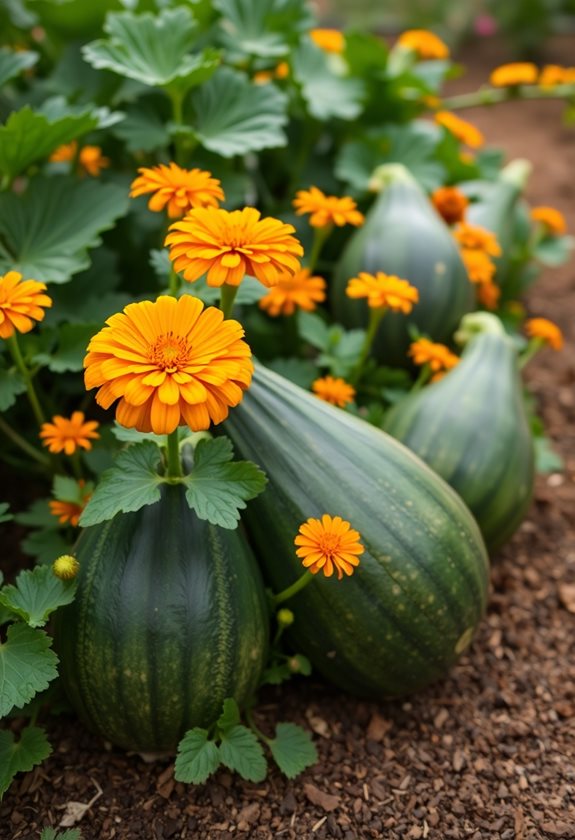
After you’ve enjoyed the benefits of planting nasturtiums alongside your cabbage, it’s time to explore another fantastic duo: calendula and squash! These bright, cheerful flowers attract beneficial insects, which help pollinate your squash plants. Plus, calendula can deter pests like aphids and nematodes—talk about a win-win! Additionally, incorporating a wildlife-friendly water feature can further enhance your garden’s ecosystem, providing hydration for both plants and pollinators.
Here are a few tips:
- Plant calendula next to your squash for added protection.
- Enjoy their vibrant blooms while boosting your garden’s health.
Borage and Strawberries
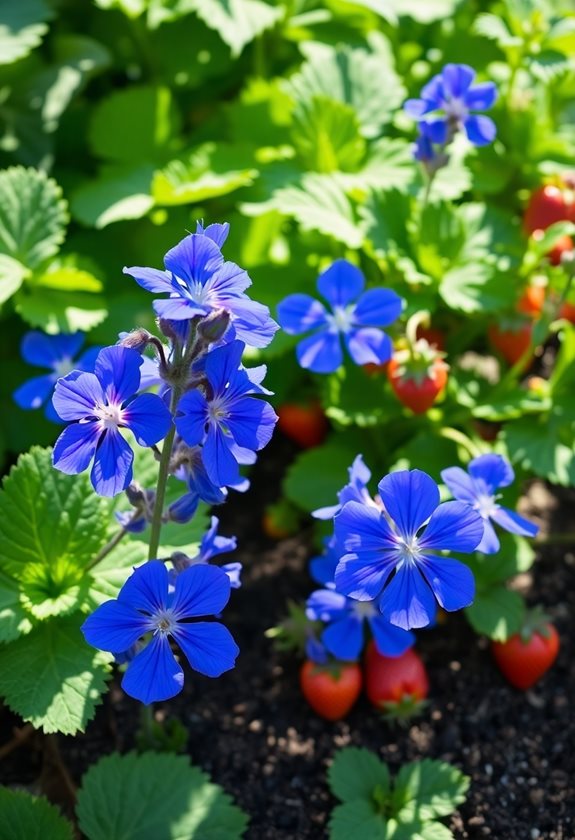
Imagine strolling through your garden, the sun shining down, and you spot the vibrant blue flowers of borage nestled among your luscious strawberry plants. Borage isn’t just pretty; it’s a superstar! This herb attracts pollinators like bees, which love your strawberries just as much as you do. Plus, its leaves can help deter pests that might munch on your fruit. Adding edible plants not only enhances your garden’s beauty but also provides flavor and nutrition for your meals.
Here’s a quick tip: plant borage near your strawberries in spring. You’ll enjoy a bountiful harvest while adding stunning color to your garden. Isn’t that a win-win? So, are you ready to give this combo a try? Happy gardening!
Sunflowers and Corn
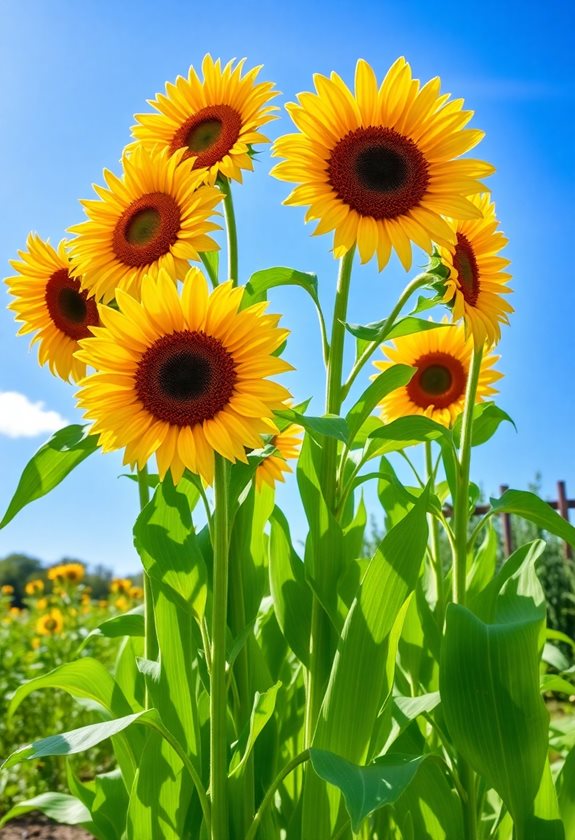
Just picture it: your corn plants swaying gently in the breeze, towering proudly beside cheerful sunflowers that seem to stretch toward the sky. This duo isn’t just pretty; they actually help each other thrive! Sunflowers attract pollinators, boosting your corn’s yield. Plus, their tall stalks provide shade, protecting corn from harsh sun. Additionally, incorporating elements like garden waterfalls can enhance the overall serenity of your outdoor space.
Imagine corn and sunflowers working together in harmony, enhancing each other’s growth and creating a stunning garden display!
Want to try it? Here’s how:
- Plant sunflowers along the northern edge of your corn patch.
- Make certain they get plenty of sunlight and water.
With a little care, you’ll create a vibrant, productive garden that’s sure to impress your friends! Who wouldn’t love that?
Frequently Asked Questions
How Do Companion Plants Affect Soil Health?
Companion plants can really boost your soil health! When you mix different plants, you encourage biodiversity, which helps create a balanced ecosystem. For instance, legumes like beans add nitrogen back into the soil, benefiting nearby plants. Plus, certain flowers attract pollinators and beneficial insects, keeping pests at bay. Have you ever noticed how some plants thrive together? It’s like they’re best friends! So, why not give your garden that extra love with companion planting?
Can I Plant Different Flowers Together?
Absolutely, you can plant different flowers together! Mixing varieties can create a stunning display and even attract beneficial pollinators. Just keep a few things in mind:
- Height: Place taller flowers behind shorter ones.
- Sunlight: Make certain they all need similar light levels.
- Watering needs: Group plants with similar moisture needs.
I once mixed marigolds and zinnias, and it turned out beautifully! Isn’t gardening all about experimenting and having fun? Go for it!
What Pests Do Companion Plants Repel?
What if you could naturally keep pests away while beautifying your garden? Companion plants do just that! For instance, marigolds can repel nematodes and aphids, while basil helps fend off flies and mosquitoes. You’ll find that planting these flowers not only adds color but also creates a safer, healthier space for your veggies. Imagine the satisfaction of a thriving garden without chemical sprays—it’s possible! Isn’t that an exciting thought? 🌼
How Much Space Do Companion Plants Need?
When considering how much space companion plants need, think about their growth habits! Most plants thrive with at least 12 to 18 inches between them. This gives them room to spread out and access sunlight. For example, if you’re planting marigolds with tomatoes, make sure they’ve got their own space, or they’ll compete for resources. Remember, a crowded garden can lead to stress. So, give your plants some breathing room, and they’ll reward you with beauty!
When Is the Best Time to Plant Companions?
Planting companions is like piecing together a puzzle—timing is everything! Ideally, you want to plant your companions in spring, after the last frost. This gives them a chance to grow strong together. You can also try late summer for fall crops! Keep an eye on the weather, and don’t forget to check your local frost dates! Have you ever noticed how plants thrive when they’re paired together? It’s magical!