Want to create a buzzing paradise for pollinators? Start with native plants—they love them and they’re super easy to grow! Mix up flower shapes like flat daisies for bees and tubular honeysuckle for hummingbirds. Don’t forget about cozy shelters, like brush piles or bee hotels; they’ll appreciate the safety! Skip harsh chemicals; go for natural pest solutions instead. Finally, plant flowers that bloom throughout the season—hello, continuous color! Curious how to get started? Stick around for more tips!
Design Highlights
- Choose native plants to ensure they thrive locally and attract essential pollinators like bees and butterflies.
- Include a variety of flower shapes and colors to appeal to different pollinators and create a vibrant garden.
- Create shelter and nesting sites using brush piles and bee hotels to support pollinator reproduction and provide safe resting spots.
- Avoid pesticides and herbicides by opting for natural alternatives to protect pollinators and promote a healthy ecosystem.
- Plan for continuous blooms throughout the season by selecting flowers that bloom at different times for ongoing pollinator activity.
Choose Native Plants
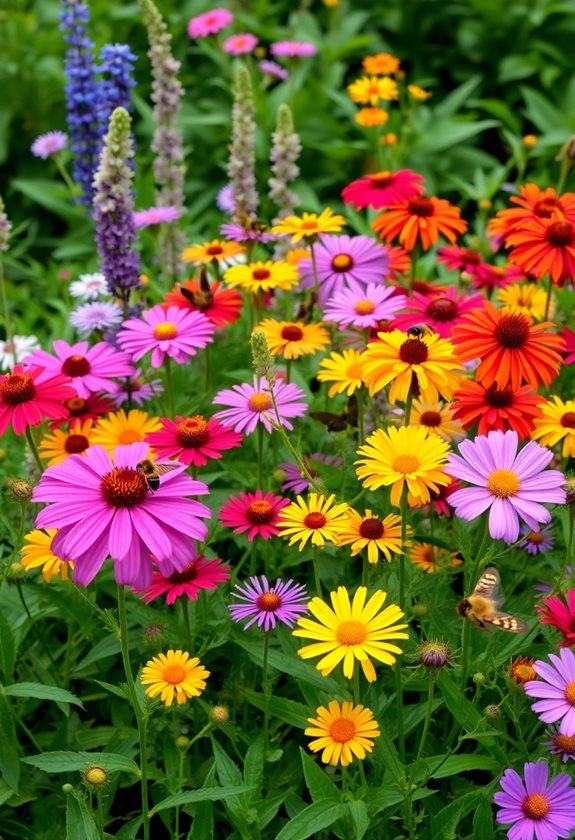
When you think about creating a pollinator-friendly flower bed, choosing native plants is like picking the perfect ingredients for a delicious recipe! Native plants thrive in your local environment, making them easier to grow and care for. Plus, they attract bees, butterflies, and other helpful pollinators! Imagine walking into your yard, greeted by buzzing friends.
To get started, consider:
- Local wildflowers, like coneflowers and black-eyed Susans
- Shrubs such as elderberry or serviceberry
- Grasses that provide shelter
Planting these beauties isn’t just good for nature; it’s a safe, sustainable choice that helps your garden flourish! Isn’t that exciting? Additionally, incorporating stunning native flowers into your garden design can enhance biodiversity while providing essential food sources for pollinators.
Provide a Variety of Flower Shapes and Colors
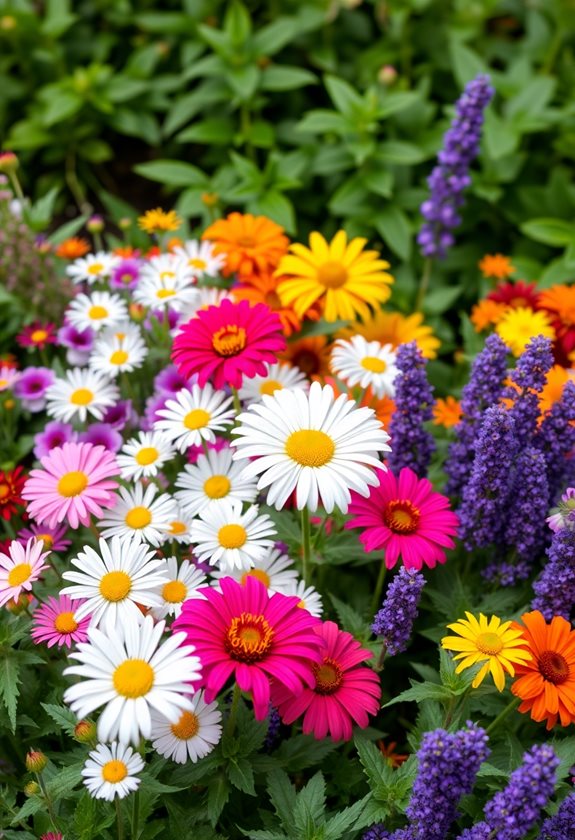
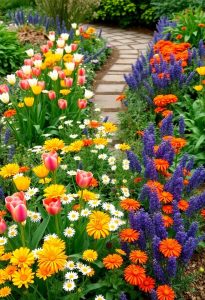
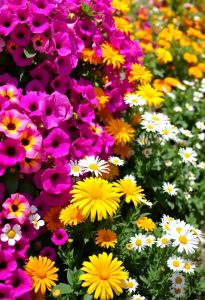
Imagine stepping into your garden and being greeted by a vibrant tapestry of colors and shapes—this isn’t just a feast for your eyes; it’s a buffet for pollinators! By planting flowers of various shapes and hues, you attract diverse pollinators. Think about:
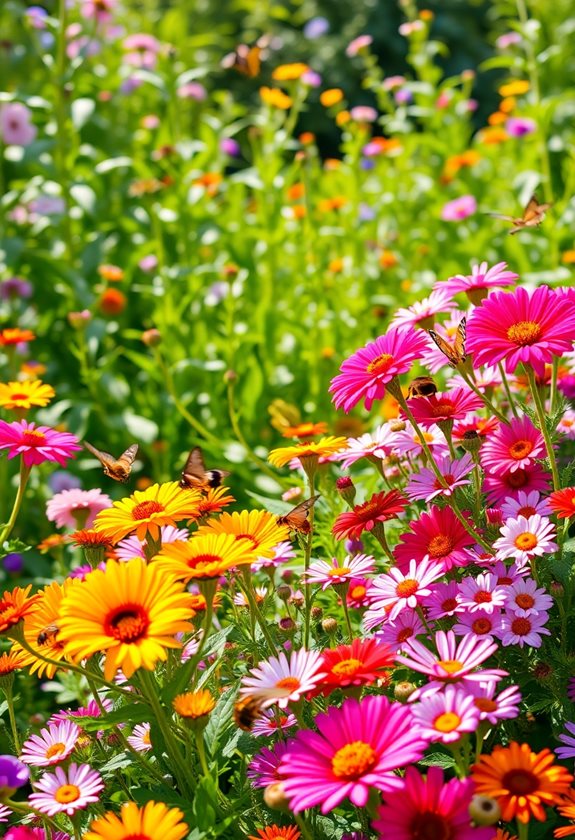
Step into a garden bursting with colors, where every flower invites pollinators to dance and thrive!
- Flat flowers like daisies for easy landing.
- Tubular blooms such as honeysuckle for hummingbirds.
- Bright colors like yellows, purples, and reds to catch their attention!
Mix it up! You’ll create a lively atmosphere and help your garden thrive. Plus, who can resist smiling at a butterfly fluttering by? Your garden will be a true pollinator paradise! Additionally, incorporating native wildflowers can further enhance biodiversity and attract even more beneficial insects to your space.
Create Shelter and Nesting Sites
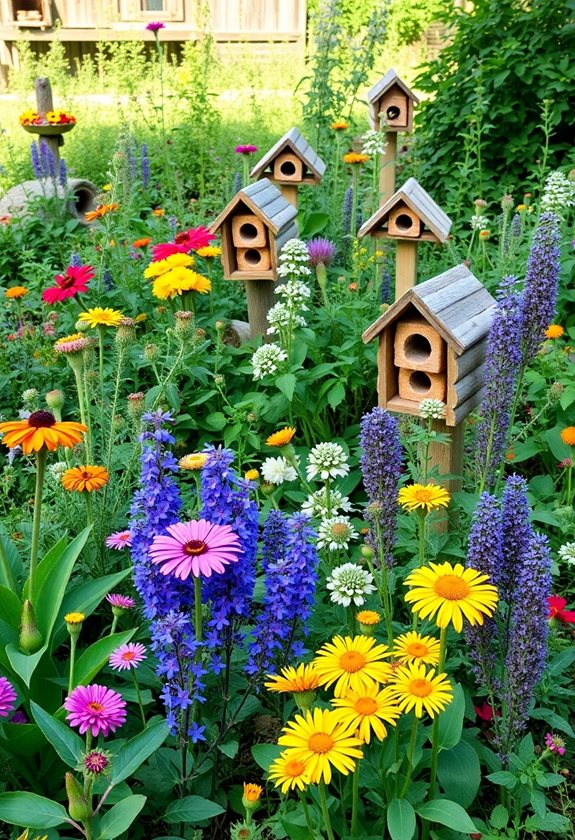
Creating a cozy haven for pollinators in your garden is just as important as providing them with colorful flowers. Think about adding shelter and nesting sites! You can use:
- Brush piles for bees to hide in.
- Native plants that provide natural nesting spots.
- Bee hotels made from wood or bamboo.
Have you ever watched a bee settle into its little hideaway? It’s heartwarming! By incorporating these elements, you’re giving pollinators a safe space to rest and reproduce. Plus, it adds charm to your garden! Additionally, consider using wildlife-friendly materials in your shelters to ensure a more sustainable environment for these important creatures. So, roll up your sleeves and start creating your own pollinator paradise today! They’ll thank you for it!
Avoid Pesticides and Herbicides
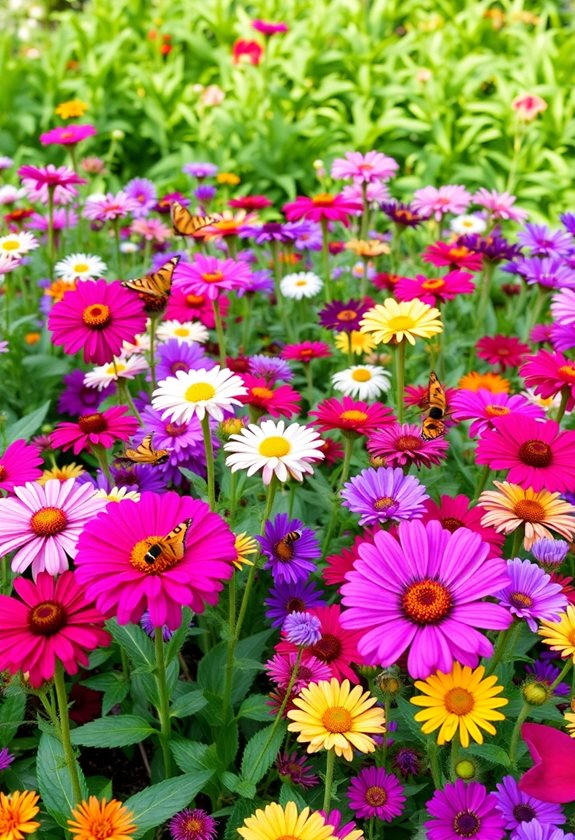
While it might be tempting to reach for that bottle of pesticide when pests invade your garden, think twice before you spray! Those chemicals can harm not just pesky bugs but also our precious pollinators. Imagine a bee buzzing happily around your flowers, only to be affected by your spray! Instead, consider natural alternatives like neem oil or insecticidal soap. You can also attract beneficial insects like ladybugs, which munch on harmful pests. Remember, a healthy ecosystem thrives without harsh chemicals. So, next time you spot a pest, ask yourself: “Can I handle this naturally?” Your garden—and the pollinators—will thank you! Additionally, incorporating pollinator-friendly foliage plants can further enhance your garden’s appeal and support these vital creatures.
Plan for Continuous Blooms Throughout the Season
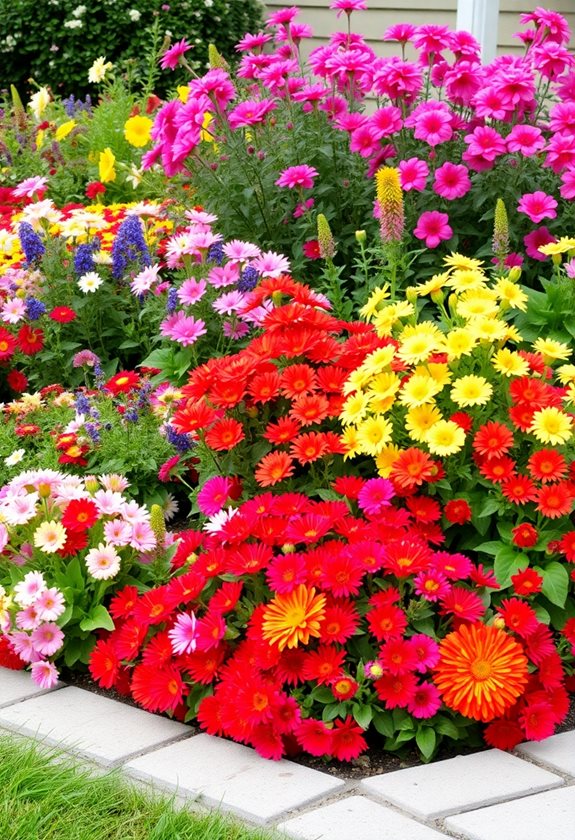
To keep your garden buzzing with activity all season long, it’s essential to plan for continuous blooms. Think about planting flowers that bloom at different times! You can mix early spring favorites like crocuses with summer stars like coneflowers.
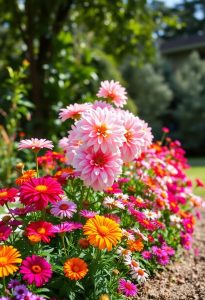
Plan for continuous blooms by mixing spring and summer flowers to keep your garden vibrant and inviting for pollinators all season long!
Here’s a simple plan:
- Spring: Plant tulips and daffodils.
- Summer: Add zinnias and sunflowers.
- Fall: Finish with asters and mums.
This way, you’ll always have something blooming! Plus, it’s a joy to see the butterflies and bees enjoying your efforts. Creating vibrant flower beds is a fantastic way to ensure a thriving ecosystem for our pollinators. Isn’t it fulfilling to create a safe haven for our pollinators? Happy gardening!
Frequently Asked Questions
How Do I Attract Specific Types of Pollinators to My Garden?
To attract specific pollinators, start by researching their favorites! Bees love bright, fragrant flowers like sunflowers and lavender, while butterflies are drawn to milkweed and zinnias. Create a diverse garden with plants blooming at different times—this keeps the buffet open all season! Don’t forget to provide water sources, like shallow dishes. Ever seen a bee dance on a flower? It’s a joy! So, let your garden be their happy place!
Can I Plant Flowers in Containers for Pollinators?
Absolutely, you can plant flowers in containers to attract pollinators! Think of your container garden as a vibrant beacon, calling in bees and butterflies. Choose native flowers like coneflowers or bee balm, and don’t forget to guarantee they get enough sunlight and water. You might even mix in some herbs like lavender for added charm. Isn’t it exciting to create a cozy spot for these important visitors? Your garden will thank you! 🌼✨
What Is the Best Time to Plant Pollinator-Friendly Flowers?
The best time to plant pollinator-friendly flowers is usually in spring or early fall. You’ll want to wait until after the last frost—trust me, you don’t want your hard work to freeze! Preparing your soil and choosing native plants can make a big difference. For example, try planting asters or coneflowers; they’re bee magnets! Plus, planting in cycles keeps your garden buzzing all season long. Isn’t that exciting? Happy planting!
How Can I Maintain My Flower Bed Without Harming Pollinators?
To maintain your flower bed without harming pollinators, focus on natural methods! Use organic fertilizers instead of harsh chemicals, and hand-pick pests when possible. Water early in the morning to minimize evaporation and avoid disrupting bees. Mulch with organic materials to retain moisture and keep weeds at bay. Have you ever tried companion planting? It’s a fun way to support your flowers while creating a vibrant garden! Remember, a happy garden means happy pollinators!
Are There Any Flowering Plants That Are Invasive to Avoid?
Imagine your garden as a cozy café for butterflies and bees. But watch out! Some plants, like Japanese Knotweed and Purple Loosestrife, are like unwelcome guests that take over the party. They crowd out the lovely locals you want to thrive. So, when picking flowers, stick to native varieties like Echinacea or Black-eyed Susans. They’ll invite pollinators to your garden without the drama! Isn’t it great to keep your garden buzzing happily?