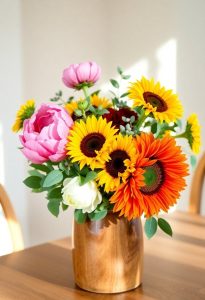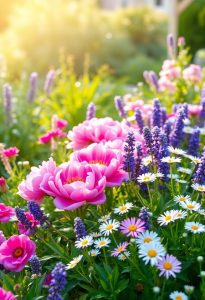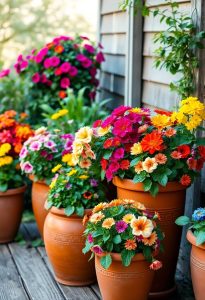
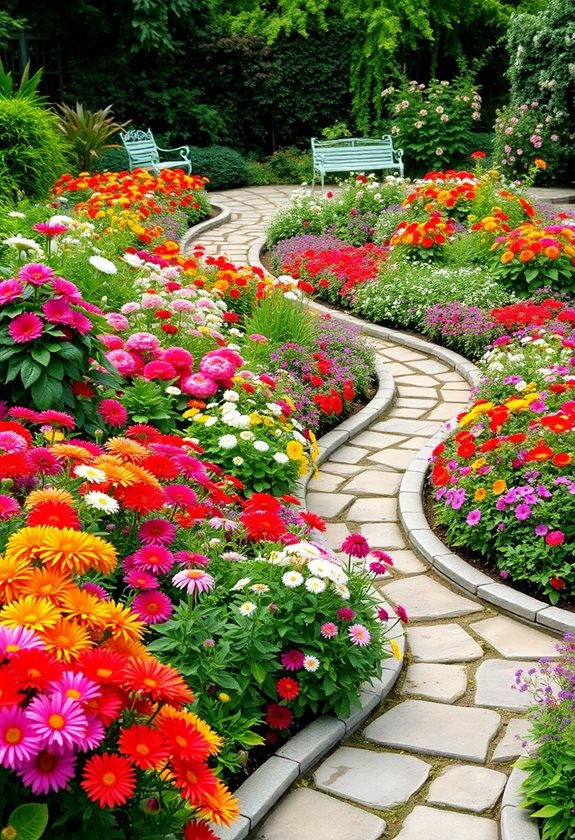
Creating a stunning flower garden layout can feel overwhelming, but it’s exciting too! Start by evaluating your space and sunlight – you’ll want the brightest spots for your favorites. Pick a focal point that draws the eye, like a quirky statue or a vibrant plant. Choose complementary colors that dance together, and vary plant heights for depth. Don’t forget about seasonal blooms! With a bit of planning, your garden will be a beautiful oasis. Want to learn more tips?
Design Highlights
- Assess sunlight patterns and choose sunny spots for vibrant flowers, while selecting shade-tolerant varieties for shaded areas.
- Establish a focal point, like a sculpture or birdbath, to enhance visual interest and guide the eye throughout the garden.
- Utilize a color wheel to select harmonious color combinations, mixing contrasting colors for a dynamic and inviting display.
- Vary plant heights by placing taller plants at the back, mid-height plants in the center, and shorter blooms in the front for balance.
- Plan for seasonal blooms by incorporating plants that flower at different times, ensuring year-round color and interest in your garden.
Assess Your Space and Sunlight
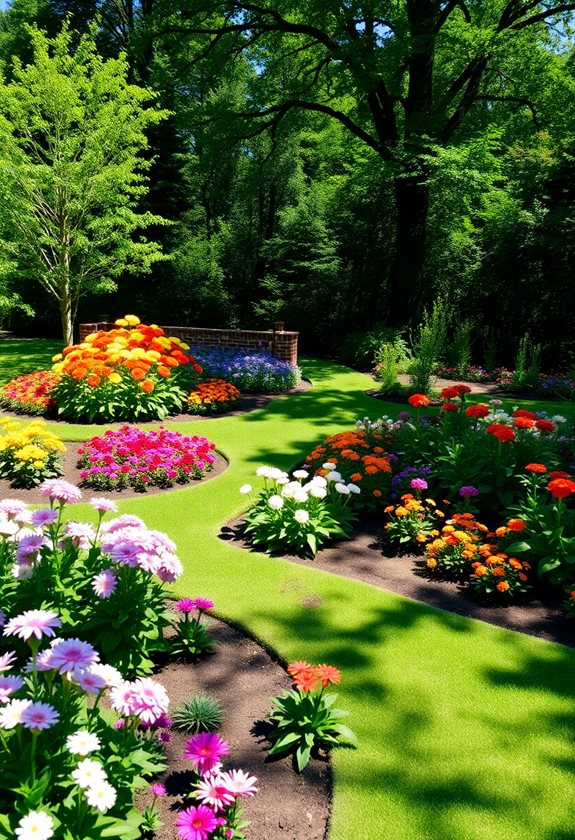
Before you immerse yourself in planting your flower garden, take a moment to assess your space and sunlight—trust me, it’s essential! Start by measuring your garden area; knowing the dimensions helps you plan effectively. Next, observe how sunlight hits your yard. Do you have sunny spots, shady corners, or a mix? Remember, most flowers love the sun!
- Sunny areas: Great for vibrant blooms!
- Shady spots: Choose shade-tolerant varieties!
Additionally, incorporating lush garden ideas for small spaces can maximize your planting potential and enhance your garden’s beauty.
Choose a Focal Point
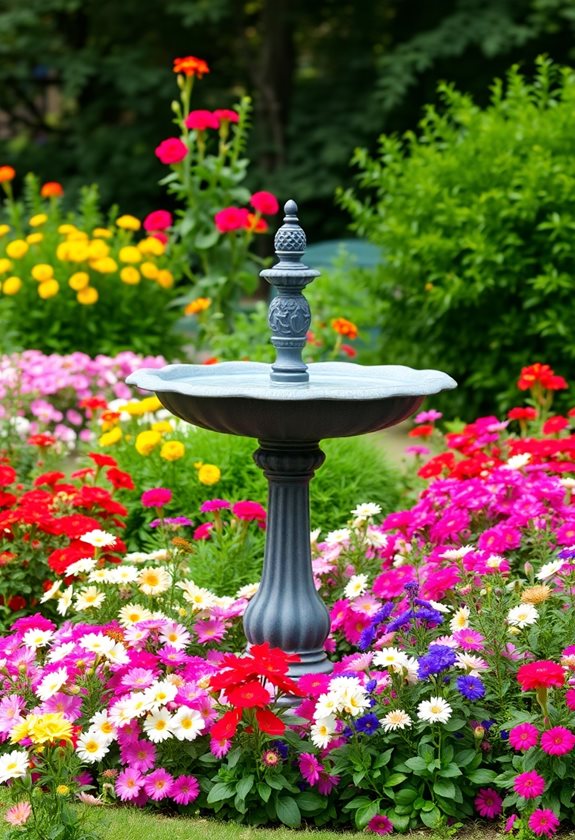
A stunning flower garden draws the eye, and choosing a focal point is like placing the cherry on top of your sundae! It can be a striking sculpture, a vibrant birdbath, or even a unique plant. Think about what catches your attention—what would make you stop and admire? Position your focal point where it’s easily visible from your favorite viewing spot. This helps create a sense of balance while guiding the eye throughout the garden. Remember, safety first! Make sure your focal point isn’t a tripping hazard. Additionally, incorporating beautiful flower bed ideas can enhance the overall aesthetics of your garden. So, what will you choose to make your garden truly stand out?
Select Complementary Colors
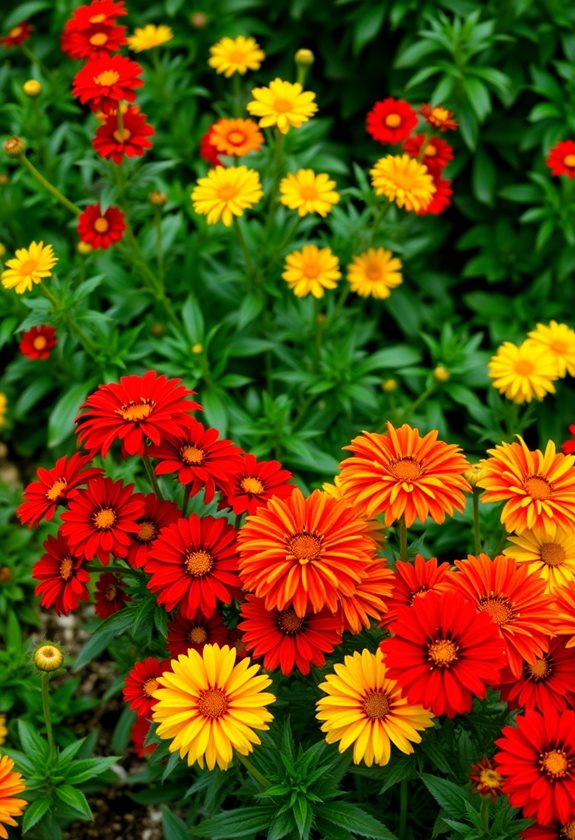
When you start planning your flower garden, picking colors that complement each other can make all the difference—after all, who doesn’t love a vibrant display that feels like a masterpiece? Think about using color wheels to find perfect pairs. For example, blue and orange create a striking contrast, while yellow and purple bring a warm harmony. Try planting:
- Red tulips with white daisies
- Pink roses alongside lavender
Don’t forget to contemplate the bloom times, too! Mixing colors can be a bit like cooking—sometimes, adding a dash of unexpected color creates a delightful surprise. A vibrant display can not only enhance the beauty of your garden but also attract beneficial pollinators. Ready to paint your garden? Let’s go!
Vary Plant Heights and Textures
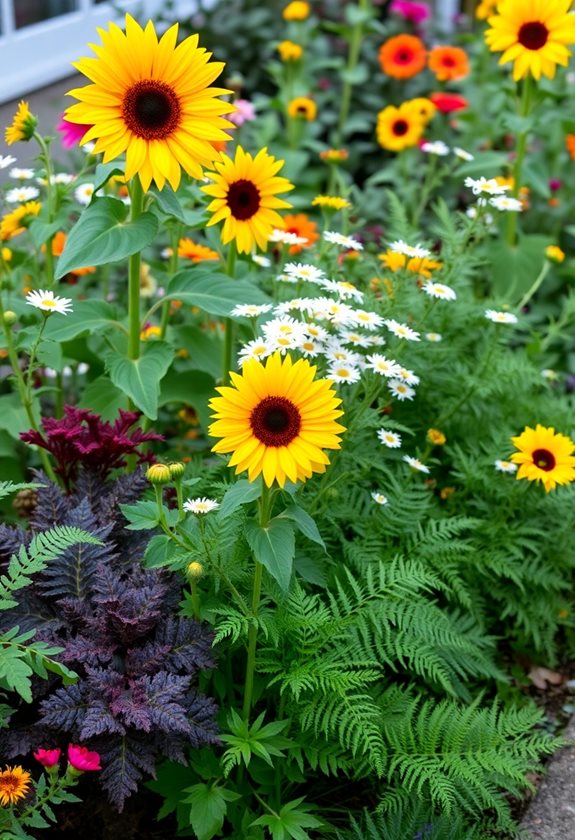
As you dream up your flower garden, consider how varying plant heights and textures can transform your space into a dynamic landscape. Imagine tall sunflowers reaching for the sky, while soft, low-growing pansies create a cozy border. Mixing different textures—like feathery ferns with sturdy succulents—adds visual interest.
To get started, try these tips:
- Group taller plants at the back or center, depending on your layout.
- Layer in mid-height plants for depth.
- Finish with shorter blooms in the front for a balanced look.
A varied garden not only looks stunning but can also attract diverse pollinators! Creating a lush garden design will enhance your floral display. Why not give it a shot?
Plan for Seasonal Blooms
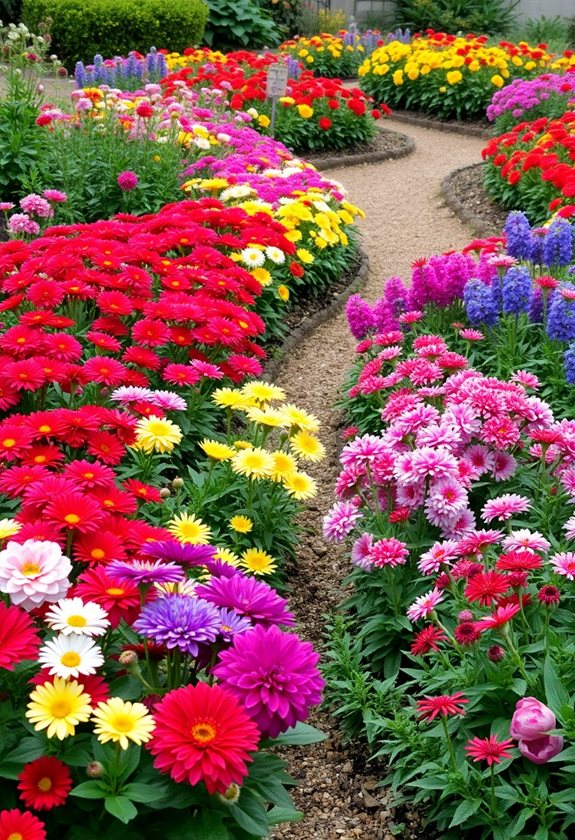
Creating a flower garden that blooms throughout the seasons can feel like piecing together a beautiful puzzle. You’ll want to choose plants that flower at different times, ensuring color year-round. Start with early bloomers like crocuses and daffodils, then add summer favorites like sunflowers. Don’t forget about fall’s chrysanthemums!
To keep it safe and manageable, group plants by their water needs. Have you ever tried mixing perennials with annuals? It’s a game-changer! Remember, a little planning goes a long way. Adding year-round color to your garden will enhance its beauty and appeal. What’s your favorite flower? Let that inspire your seasonal choices, and watch your garden come alive with vibrant beauty!
Incorporate Pathways and Borders
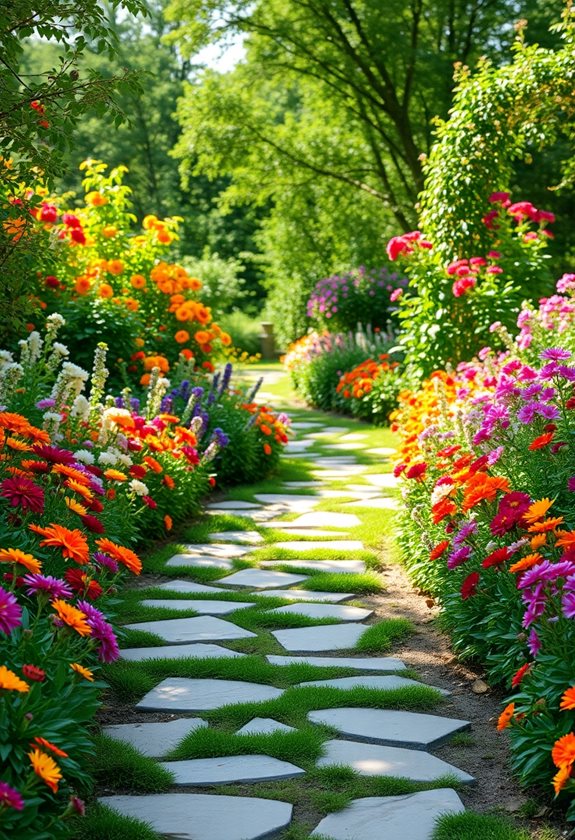
Although you might think of a flower garden as just a collection of plants, incorporating pathways and borders can transform it into a stunning oasis. Picture yourself strolling along a winding path, surrounded by vibrant blooms! Here are some tips to ponder:Transform your flower garden into a stunning oasis with winding paths and defined borders for an enchanting stroll among vibrant blooms!
- Choose materials: Use gravel, wood, or bricks for safety and durability.
- Create clear pathways: Make sure they’re wide enough for easy navigation.
- Add borders: Use low fences or flower beds to define areas.
Incorporating decorative stones for garden pathways not only enhances beauty but also keeps your garden organized and safe. So, are you ready to create your perfect garden getaway? Let’s dig in!
Maintain Balance and Harmony
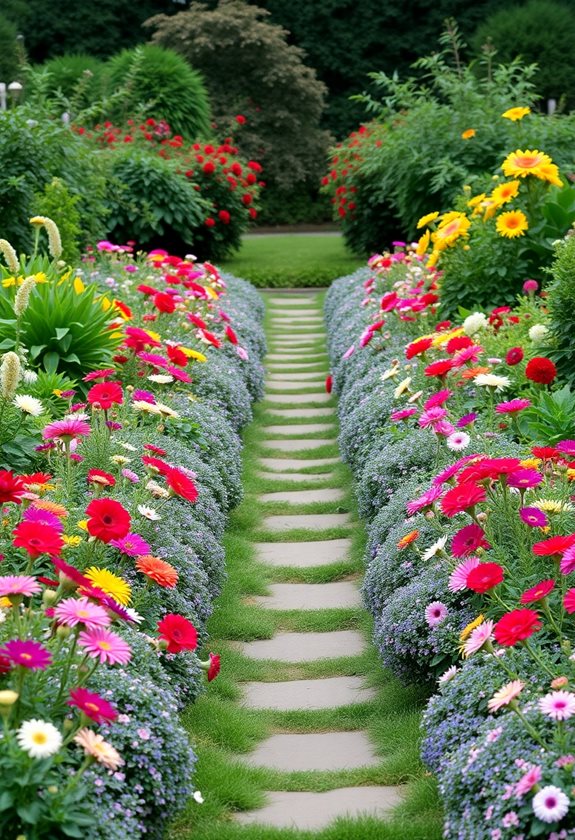
Once you’ve established those lovely pathways and borders, the next step is to focus on maintaining balance and harmony in your flower garden. Think of it like a symphony—each flower plays its part! Position taller plants at the back, medium ones in the middle, and shorter varieties up front. Mix colors and shapes, but don’t go overboard; aim for a cohesive look. Have you considered using repeating elements? They tie everything together! Additionally, incorporating colorful flower beds can significantly enhance your garden’s appeal and attract more pollinators. And remember, a well-placed bench or decoration can add a focal point. Keep your garden safe and inviting, so you can enjoy it to the fullest. Happy gardening!
Frequently Asked Questions
What Types of Flowers Attract Pollinators to My Garden?
Want to attract pollinators to your garden? You’ve got some fantastic options! Try planting bright, fragrant flowers like lavender, sunflowers, and zinnias—bees and butterflies love them! Incorporate native plants, too, since they’re already familiar to local pollinators. Remember to avoid pesticides; they can be harmful. Creating a diverse garden not only looks beautiful but also supports the ecosystem. Isn’t that a win-win? Happy gardening! You’ll love watching the buzz!
How Can I Prevent Pests in My Flower Garden?
To prevent pests in your flower garden, you’ve got a few smart strategies up your sleeve! First, encourage beneficial insects like ladybugs; they’re nature’s little helpers! You could also use companion planting—mixing flowers that repel pests with those that attract them. Don’t forget to keep your garden tidy; pests love hiding in clutter! And when all else fails, a gentle soap spray can work wonders. Isn’t gardening just the best?
What Soil Type Is Best for Flower Gardens?
Imagine your flower garden as a canvas, waiting for vibrant colors to bloom. To create that masterpiece, you need well-draining, nutrient-rich soil. Loamy soil, a mix of sand, silt, and clay, is perfect for flowers, helping roots thrive while keeping them safe from rot. Don’t forget to add organic matter, like compost! Have you ever seen a flower wilt? Yikes! Let’s avoid that by giving your plants the best home possible! 🌼
How Often Should I Water My Flowers?
Watering your flowers can feel like a balancing act! You should aim to water them about once a week, but it depends on the weather. If it’s super hot or dry, you might need to water more often. Just remember, soil should be moist but not soggy. Ever tried sticking your finger in the soil? If it’s dry an inch down, it’s time to water! Happy gardening! 🌼
When Is the Best Time to Plant Flowers?
When’s the best time to plant flowers? Well, it kinda depends! Generally, spring is your go-to time, but if you’re enthusiastic, some hardy types can go in as early as late winter. Imagine watching them bloom while spring arrives! Just make sure to check your local frost dates—safety first! You wouldn’t want a surprise frost ruining your hard work, right? So grab those seeds, and let’s get planting! 🌼