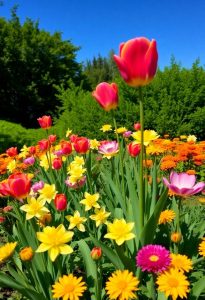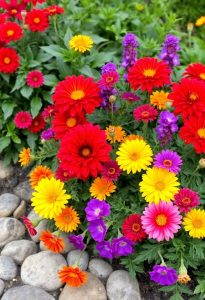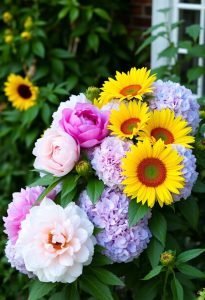
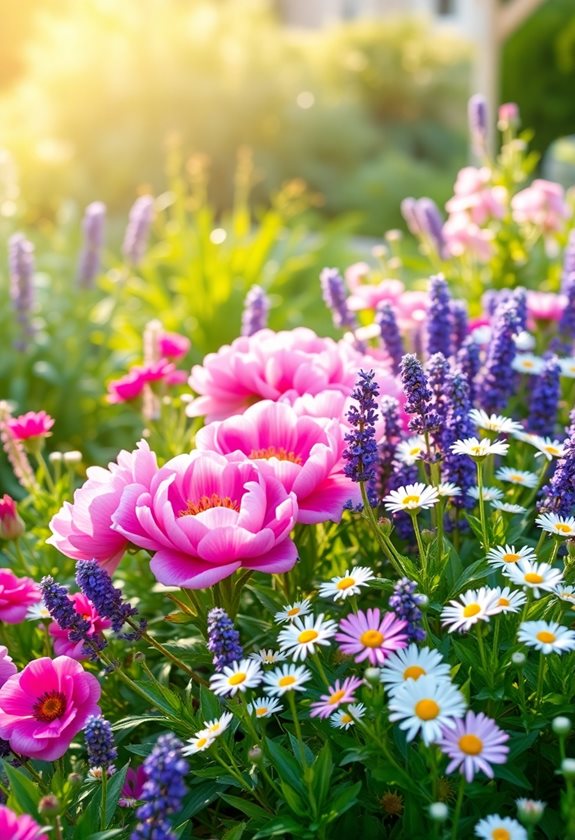
Creating the best flower borders for your garden is all about mixing colors, heights, and seasonal blooms! Think about combining tall sunflowers with cheerful marigolds for a punchy look. How about using vibrant zinnias next to calming lavender for a pollinator-friendly border? Don’t forget to include perennials like daylilies and coneflowers—they’re low-maintenance champions! Plus, adding mulch will keep your plants happy and healthy. Excited to learn more about stunning combinations and maintenance tips? Let’s get going!
Design Highlights
- Select a mix of perennial and annual flowers for continuous blooms and seasonal flair in your garden borders.
- Incorporate native plants for better adaptation and to support local wildlife in your flower borders.
- Use varying heights of flowers to create depth and visual interest in your garden layout.
- Consider low-maintenance options like daylilies and lavender for easy care and resilience.
- Plan for pollinator-friendly flowers to enhance biodiversity and improve your garden’s ecosystem health.
Understanding Your Garden’s Environment
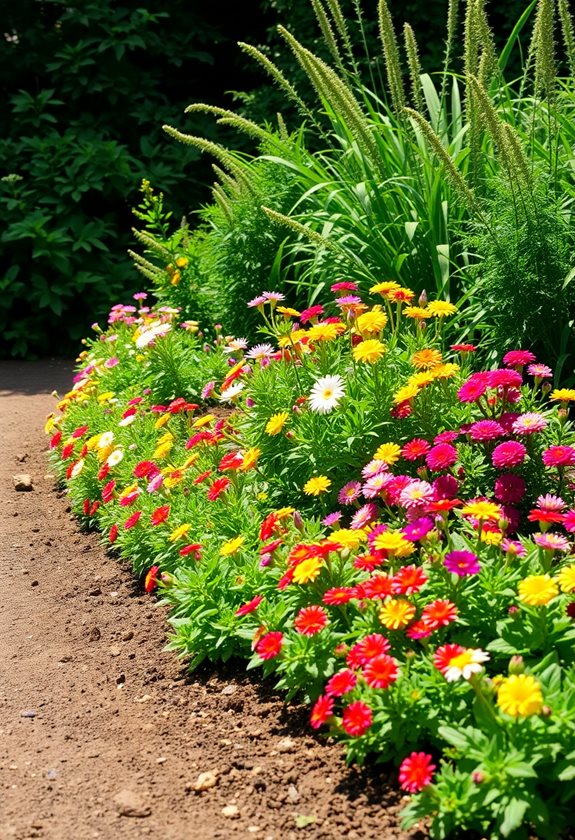
Have you ever wondered what makes your garden thrive? Understanding your garden’s environment is key! Factors like sunlight, soil type, and moisture levels play a huge role. For instance, if your garden gets full sun, you’ll want flowers that can handle the heat! Check your soil—sandy, clay, or loamy? Each type has its own quirks. And don’t forget about drainage; standing water isn’t a friend to most plants. A well-planned planting scheme can also enhance the beauty and health of your flower borders.
- Observe your space throughout the day.
- Test your soil’s pH.
With a little effort, you can turn your garden into a flourishing paradise. Happy planting!
Choosing the Right Flowers for Different Seasons
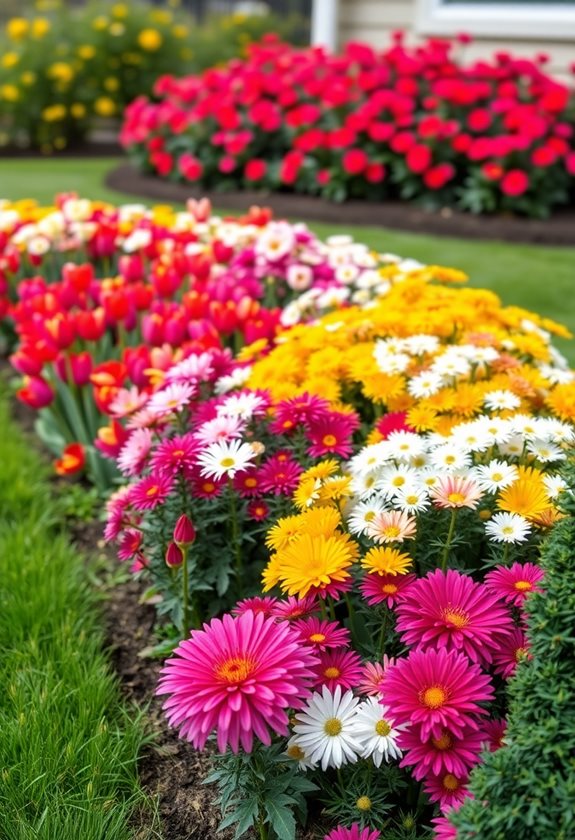
Once you’ve got a handle on your garden’s environment, it’s time to think about the flowers that will bring your space to life throughout the year! Choosing seasonal flowers can be both fun and rewarding. In spring, consider cheerful daffodils and tulips; they signal new beginnings. Summer’s heat calls for vibrant sunflowers and zinnias, perfect for attracting butterflies. As autumn approaches, plant marigolds and asters to keep the colors alive. Winter? Try holly or pansies for a splash of color! Don’t forget to check for any allergies or safety concerns with your selections. Additionally, incorporating edible plants can enhance both the beauty and flavor of your garden. Which flowers will you choose to brighten your garden?
Perennial vs. Annual Flowers: What’s Best for Borders?
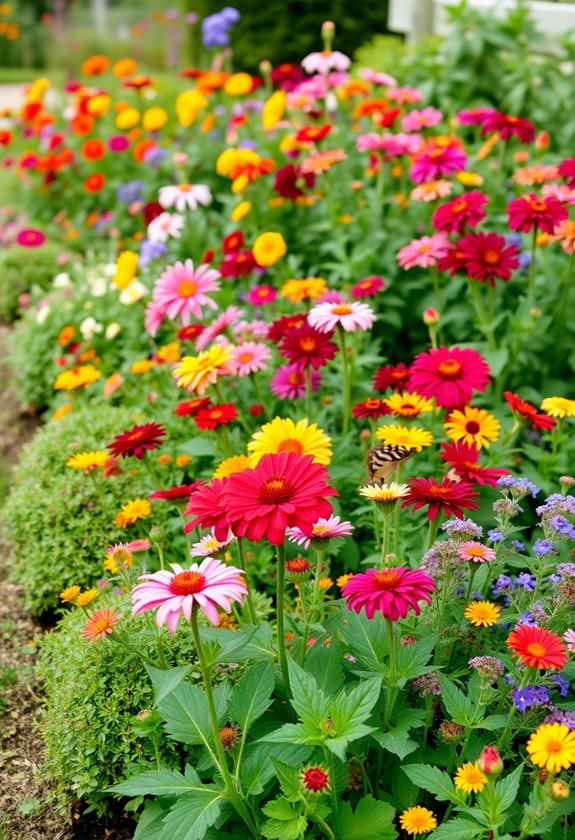
When you’re planning flower borders for your garden, choosing between perennial and annual flowers can feel like a tough decision—especially if you’re keen to see immediate results or want lasting beauty. Perennials come back year after year, offering a stable foundation, while annuals burst with color and vibrancy, perfect for instant gratification.
Consider your garden goals:
- Perennials: Less maintenance, long-term beauty.
- Annuals: Seasonal flair, endless variety.
Why not blend both? This combo lets you enjoy vibrant blooms now and the reliable charm of perennials later. Additionally, incorporating year-round foliage from perennials can enhance your garden’s aesthetic throughout all seasons. Gardening should be fun—so experiment and see what grows best for you!
Popular Flower Border Combinations
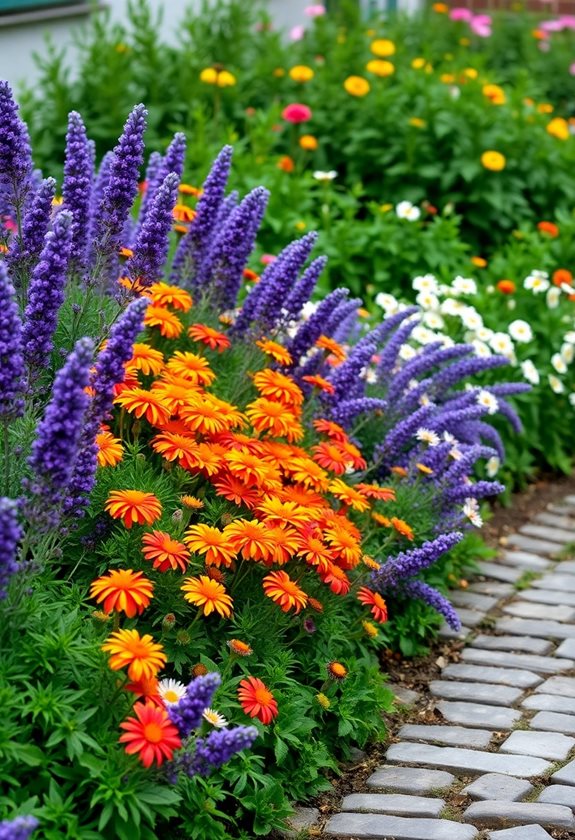
Creating stunning flower borders can be as easy as pie when you know which combinations work best together! Have you tried mixing tall, showy sunflowers with cheerful marigolds? Or how about pairing delicate lavender with vibrant zinnias? These combos not only look great but also attract friendly pollinators, keeping your garden safe and lively.
Mixing vibrant flowers like sunflowers and marigolds can create stunning borders while attracting helpful pollinators to your garden!
Here are a few more ideas to inspire you:
- Roses and Salvia: Classic elegance!
- Daisies and Coreopsis: A sunny duo!
- Petunias and Verbena: Color explosion!
Adding vibrant flower borders to your garden can significantly enhance its beauty and create a welcoming atmosphere.
Color Schemes to Enhance Your Garden
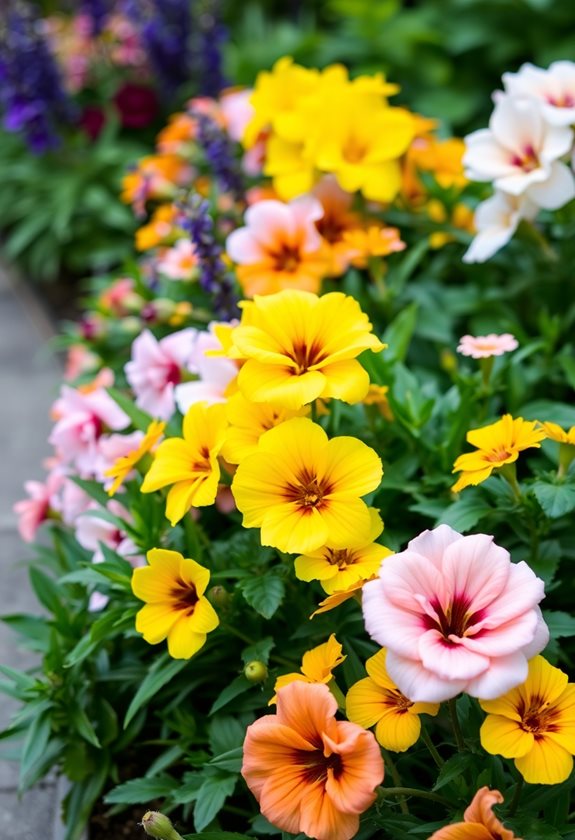
Have you ever walked through a garden and felt like you were transported to another world? Color schemes can make that magic happen! Think about pairing vibrant yellows with calming blues for a cheerful vibe. Or, how about soft pastels mixed with deep greens for a serene escape?
- Use contrasting colors to create drama.
- Stick to a theme, like monochromatic or complementary colors.
Don’t forget to take into account bloom times, too! Imagine the joy of seeing your carefully selected colors blossom together. What colors speak to your heart? Let your garden reflect your personality, and watch it thrive! Incorporating best flower selections will ensure your garden is both vibrant and captivating throughout the seasons.
Low-Maintenance Flower Borders for Busy Gardeners
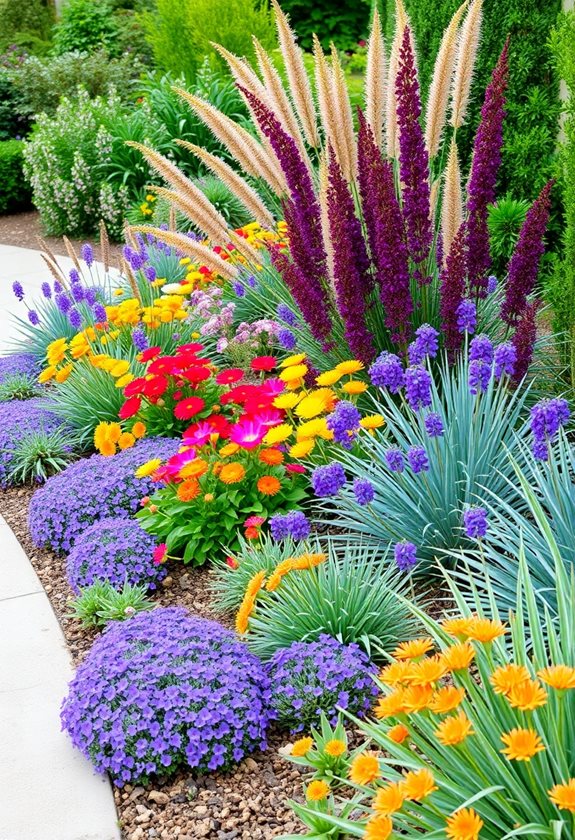
If you’re juggling a busy schedule but still want a stunning garden, low-maintenance flower borders are your best friend! These easy-to-care-for options let you enjoy vibrant blooms without constant upkeep. Here are some great picks:
- Daylilies: Hardy and colorful, they thrive with minimal attention.
- Sedum: Drought-resistant and perfect for sunny spots.
- Lavender: Fragrant, attracts pollinators, and needs little watering.
- Coneflowers: Resilient and can withstand various weather conditions.
- Black-eyed Susans: Brighten up your garden with their cheerful yellow blooms!
Incorporating layering techniques can add depth and visual interest to your low-maintenance flower borders. With these, you’ll have a beautiful border and more time to relax!
Incorporating Foliage Plants for Year-Round Interest
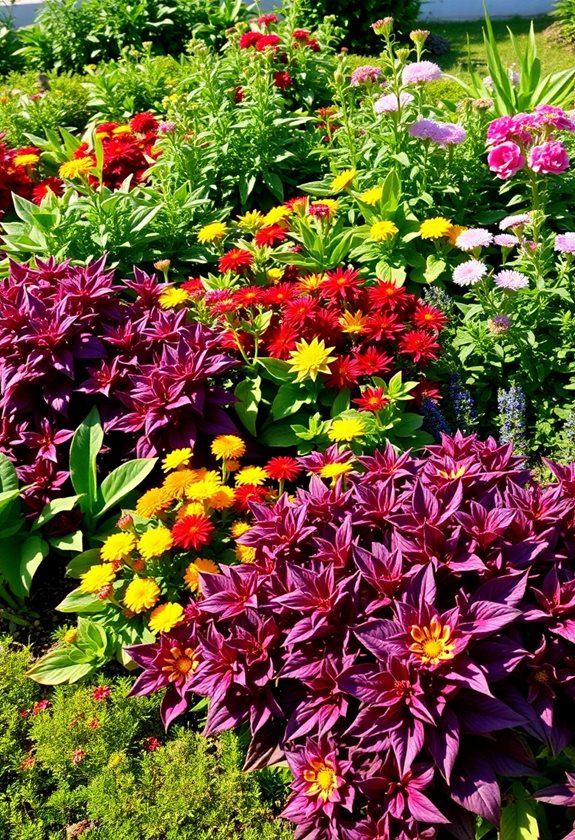
While many gardeners focus solely on flowers to add color, incorporating foliage plants can elevate your garden’s appeal year-round! Just think about it—while blooms come and go, lush leaves stay vibrant through every season. Consider adding hostas, ferns, or colorful shrubs to your borders.
These plants not only provide texture but also create a stunning backdrop for your flowers. Plus, they’re often low-maintenance! Aesthetic appeal and design play a crucial role in ensuring your garden remains attractive throughout the year.
Have you ever thought about how amazing a garden can look even in winter? So, go ahead and mix those greens in! Your garden will thank you with beauty that lasts all year long!
Tips for Planting and Maintaining Flower Borders
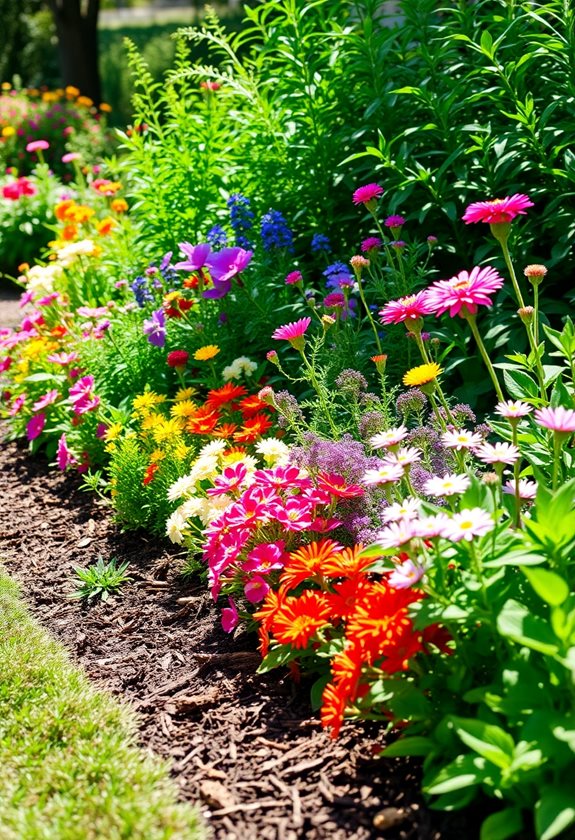
When you immerse yourself in planting and maintaining flower borders, it’s like setting the stage for a beautiful performance in your garden! To guarantee your flower borders thrive, keep these tips in mind:
- Choose the right plants for your climate.
- Prepare the soil by mixing in compost.
- Water regularly, especially during dry spells.
- Prune dead flowers to encourage new growth.
- Mulch to retain moisture and suppress weeds.
Additionally, selecting vibrant flower bed ideas can enhance the visual appeal of your borders. Trust me, a little effort goes a long way! You’ll face challenges, but every bloom will remind you why you love gardening. So, grab your gloves and dig in—your garden awaits!
Seasonal Care for Flower Borders
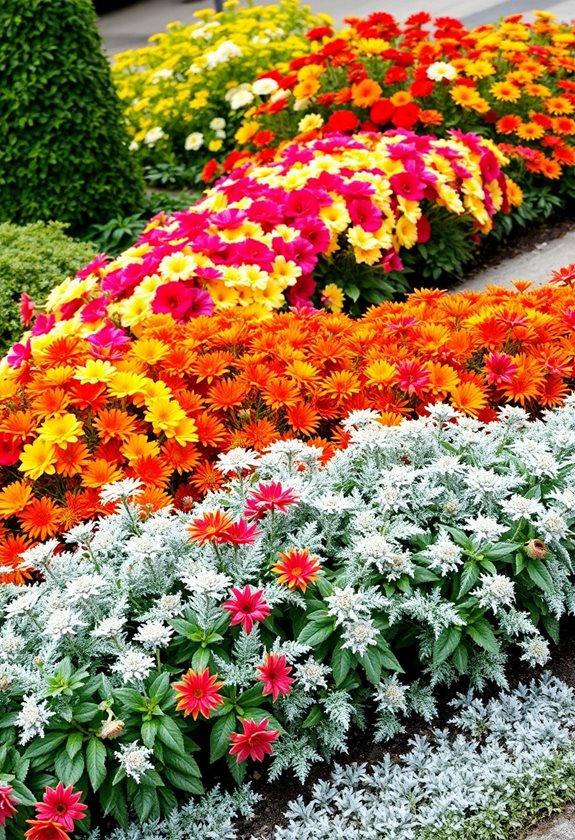
As the seasons change, so does the care your flower borders need to flourish! In spring, you’ll want to prune back any dead growth and add fresh mulch to nourish the soil. Don’t forget to water regularly, especially as blooms start to emerge! Summer means deadheading spent flowers to encourage new growth—who doesn’t love a vibrant display? When autumn rolls around, consider planting bulbs for spring blooms while tidying up fallen leaves. Finally, in winter, protect your borders with a layer of mulch to insulate roots. Additionally, incorporating colorful flower beds can significantly enhance your garden’s appeal to pollinators. Ready to enjoy your beautiful garden year-round? Let’s get growing!
Frequently Asked Questions
What Are the Best Flower Borders for Small Gardens?
If you’ve got a small garden, you’ll want flower borders that maximize beauty without overwhelming the space. Consider using compact perennials like lavender or daisies. They’ll add vibrant color and fragrance! Try mixing in some ornamental grasses for texture, too. Don’t forget about height—place taller plants at the back and shorter ones in front. What’s more, you can even add a whimsical touch with some colorful garden decor! Isn’t that exciting?
How Can I Attract Pollinators With My Flower Borders?
You know what they say, “You reap what you sow!” To attract pollinators, plant native flowers like coneflowers and milkweed. These blooms provide food and shelter. Create clusters of flowers in vibrant colors, as bees and butterflies are drawn to them. Avoid pesticides—safety first! Consider adding a shallow water source, too. Have you seen how bees love a little splash? With these tips, your garden will buzz with life in no time!
What Tools Do I Need for Planting Flower Borders?
To plant your flower borders, you’ll need a few essential tools! Grab a spade, trowel, and a rake—they’re your best friends in the garden. Don’t forget gloves to protect your hands; trust me, you’ll appreciate that after digging in the dirt! A watering can or hose is vital for keeping your flowers hydrated. Have you thought about a garden fork for loosening soil? It makes a huge difference! Happy planting!
How Do I Prevent Pests in Flower Borders?
To keep pests away from your flower borders, start with prevention! You can try:
- Planting pest-repelling herbs like basil or mint.
- Using natural insecticides like neem oil or soap sprays.
- Encouraging beneficial insects, like ladybugs, to help control pests.
Don’t forget to regularly check your plants for signs of trouble—early detection can save your garden! Remember, a little effort now can lead to a flourishing, pest-free paradise. Isn’t that exciting?
Can Flower Borders Be Planted in Containers?
Absolutely, you can plant flower borders in containers! It’s a fantastic way to brighten up your space. Just make sure your containers have drainage holes—no one likes soggy roots! Start with a mix of colors and heights to create visual interest. Try combining perennials like petunias and marigolds for a stunning display. Plus, container gardening‘s great for keeping pests at bay. Who knew gardening could be so fun, right? Give it a shot!