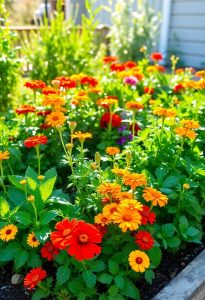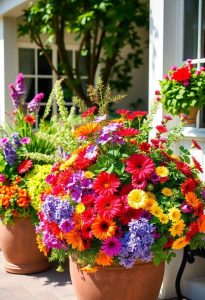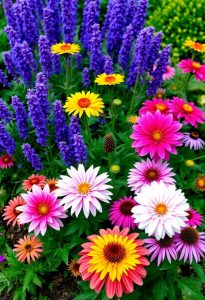
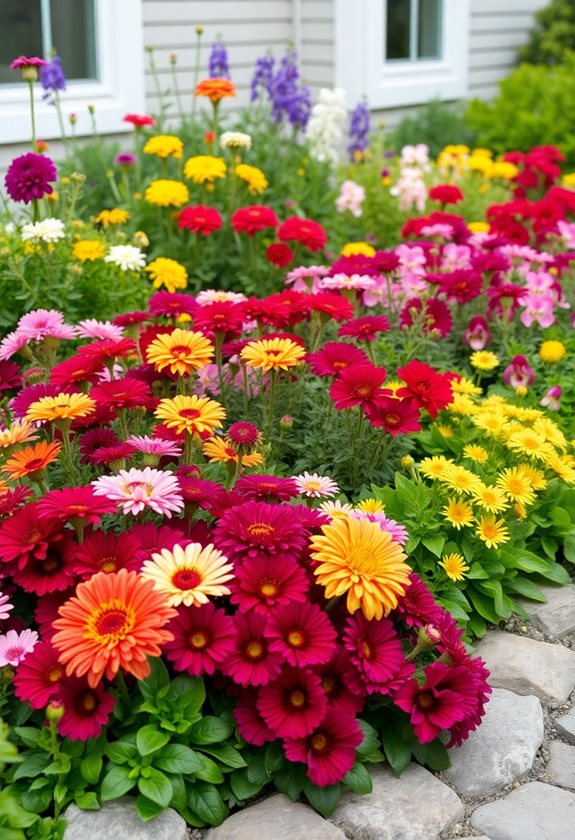
To create stunning perennial flower beds, start by choosing the right plants for your climate—think coneflowers and daylilies in colder zones. Mix early and late bloomers to keep color all season long, adding evergreens for winter interest. Don’t forget about maintenance! Water deeply but less often, apply mulch to fight weeds, and check for pests regularly. With these tips, your garden will be a vibrant, welcoming space. Want to discover more gardening secrets? Stick around!
Design Highlights
- Choose perennials suited for your hardiness zone to ensure they thrive in your climate.
- Plan for seasonal interest by mixing early and late bloomers for year-round color.
- Layer plants by height to create visual depth and an engaging garden layout.
- Incorporate diverse leaf shapes and colors for added texture and vibrancy.
- Regular maintenance, including pest checks and proper watering, promotes healthy flower beds.
Choose the Right Perennials for Your Climate
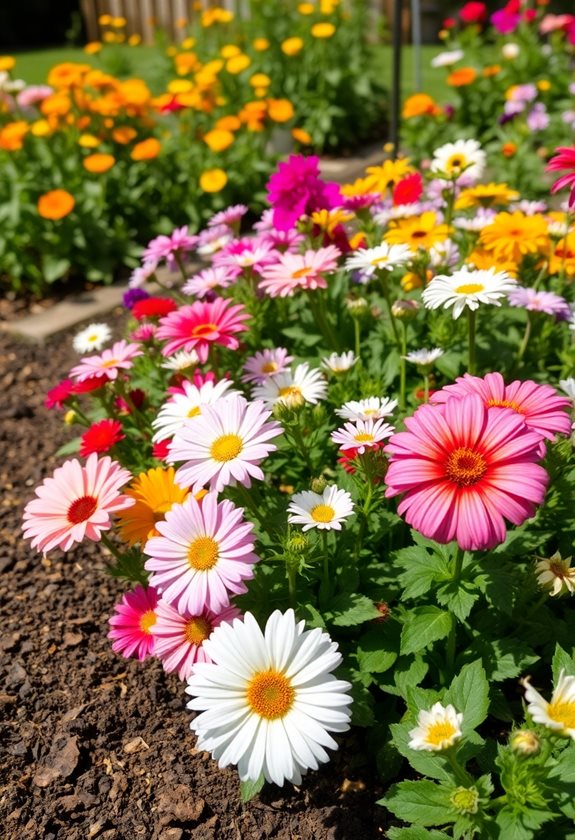
When you’re diving into the world of perennial gardening, it’s essential to contemplate your climate—after all, not every flower thrives in every environment! You wouldn’t want to plant delicate blossoms in a harsh, cold area, right?
Start by researching your hardiness zone, which tells you what plants can survive in your area. For instance, if you live where winters are chilly, consider hardy perennials like coneflowers or daylilies.
Always check local resources or talk to gardening friends. They might have insights on what works best! Additionally, consider incorporating vibrant plants that can provide color throughout the year. Remember, choosing the right perennials will create a beautiful, thriving garden that feels like home!
Plan for Seasonal Interest
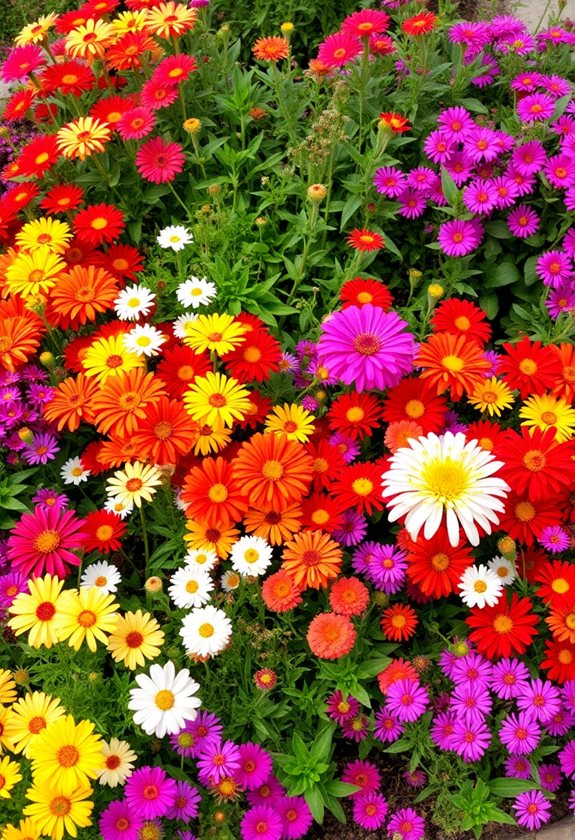
Creating a perennial garden that captures your interest throughout the seasons can feel like a delightful puzzle! To keep the excitement alive, you’ll want to mix early bloomers like crocuses with late-season stars like asters. Think about these tips:Designing a perennial garden is like piecing together a beautiful puzzle that enchants you every season!
- Color: Choose flowers with varying colors to brighten your garden year-round.
- Texture: Incorporate different leaf shapes for visual interest.
- Height: Layer taller plants in the back and shorter ones in front for depth.
Don’t forget to include evergreens for winter beauty! By planning for seasonal changes, your garden will always be a feast for the eyes. Stunning perennial flower beds can transform any outdoor space into a vibrant display. Isn’t that a win?
Implement Proper Maintenance Techniques
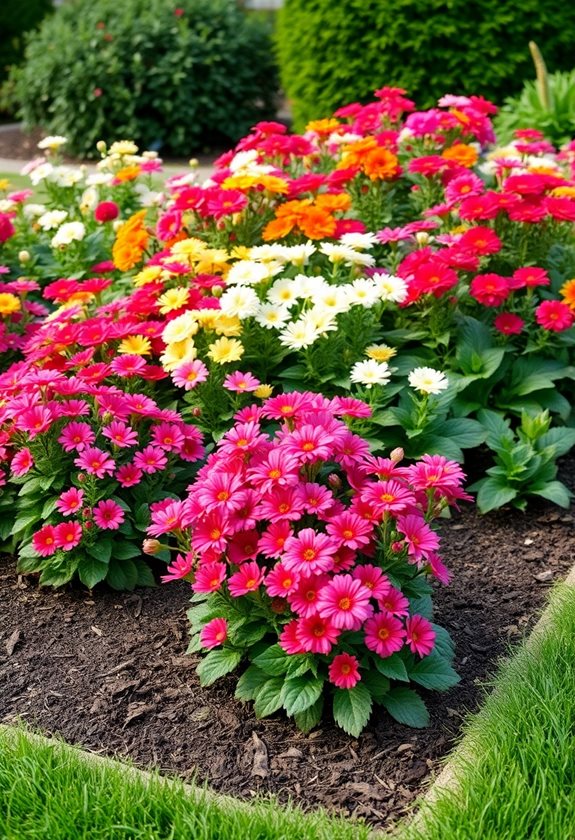
To keep your stunning perennial flower beds flourishing, you’ll want to roll up your sleeves and get into some proper maintenance techniques. Start by regularly checking for pests—those little critters can ruin your hard work! Water deeply, but less frequently; it encourages strong roots. Don’t forget to mulch! It helps retain moisture and suppress weeds. Prune spent blooms to encourage new growth; it’s like giving your plants a little haircut! And, hey, did you know that soil testing can help you know what nutrients your flowers need? Additionally, ensuring enhanced drainage can prevent waterlogging, which is crucial for root health. Keeping things safe means wearing gloves, too—protect those hands while you garden! Happy planting!
Frequently Asked Questions
How Do I Choose Companion Plants for My Perennials?
Choosing companion plants for your perennials can be a fun adventure! Think about plants that share similar sunlight and water needs. You might consider mixing taller plants, like coneflowers, with shorter ones, like sedums, to create visual interest. Don’t forget about color harmony! Have you tried adding herbs? They can attract beneficial insects! Just remember, you want a happy garden, so choose plants that get along—just like your favorite friends!
What Are the Best Colors to Combine in a Flower Bed?
When you’re picking colors for your flower bed, think about what makes your heart sing! Consider combining warm colors like reds and oranges for a vibrant look, or cool colors like blues and purples for a calming vibe. Ever tried a mix of both? It’s like a party for your eyes! You could even use white or yellow to brighten things up. Don’t forget, the right combo can make your garden truly pop!
Can I Grow Perennials in Containers?
Absolutely, you can grow perennials in containers! It’s like creating your own mini garden paradise. Just make sure the containers have good drainage. Choose perennials that thrive in pots, like daylilies or lavender, and watch them flourish. Don’t forget to use quality potting soil and water them regularly. Have you ever seen a container overflowing with blooms? It’s a sight to behold! So, grab those pots and get planting! You won’t regret it!
How Do I Attract Pollinators to My Flower Beds?
Attracting pollinators to your flower beds is super fun! You can start by planting a variety of colorful flowers like coneflowers and sunflowers that bloom at different times. Did you know that butterflies love nectar-rich plants? Also, avoid pesticides—they can scare off our buzzing friends! Creating a small water source, like a shallow dish with pebbles, helps too. So, why not add some native plants? They’re like a buffet for pollinators!
What Are Some Common Pests That Affect Perennial Flowers?
Pests can invade your perennial flowers like uninvited party guests! You might spot aphids, slugs, or even spider mites wreaking havoc. To keep your garden safe, regularly inspect your plants and remove any pests you find. You can also use natural remedies like neem oil or insecticidal soap. Have you tried companion planting? Marigolds can repel some pests! Remember, a little effort today can save your beautiful blooms tomorrow! Happy gardening!