To create stunning colorful flower beds, start by choosing the right spot with plenty of sunlight and good drainage. Next, pick a color palette that excites you—try mixing bold hues like purple and yellow! Consider heights too; tall sunflowers can make a great backdrop. Don’t forget seasonal blooms—mixing early, mid, and late flowers keeps things lively all year round. Finally, maintain your garden by watering, weeding, and fertilizing. Ready to dig into more flower bed tips?
Design Highlights
- Choose a sunny location with well-drained soil to ensure healthy flower growth and vibrant blooms.
- Select a color palette using complementary or analogous colors for a visually appealing garden.
- Vary flower heights and textures to create depth and interest in your flower bed design.
- Incorporate seasonal blooms to ensure continuous color and beauty throughout the year.
- Maintain the flower bed by watering, weeding, and fertilizing regularly for optimal health and vibrancy.
Choose the Right Location
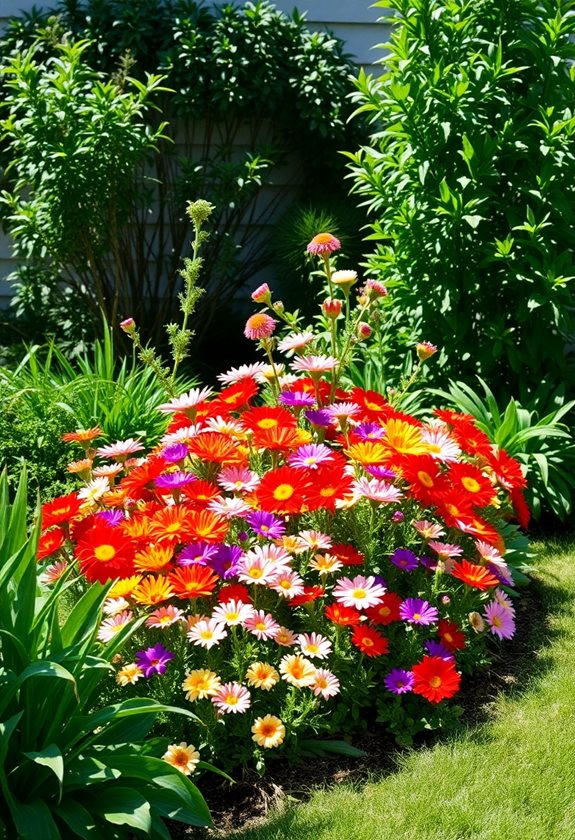
When it comes to choosing the right location for your flower beds, think of it as picking the perfect spot for a picnic—sunshine, shade, and everything in between matters! Start by observing sunlight patterns; most flowers crave at least six hours of daily sun. Avoid spots near large trees that may steal nutrients. Make certain the ground’s well-drained to prevent soggy roots—nobody wants a mud bath for their blooms! Consider nearby structures that might cast unwanted shadows. Remember, a safe area away from traffic and pets is ideal. Additionally, ensure the location can accommodate features like garden waterfalls, which can enhance the serene atmosphere of your flower beds. So, are you ready to find that dreamy spot for your garden? Let’s dig in!
Select a Color Palette
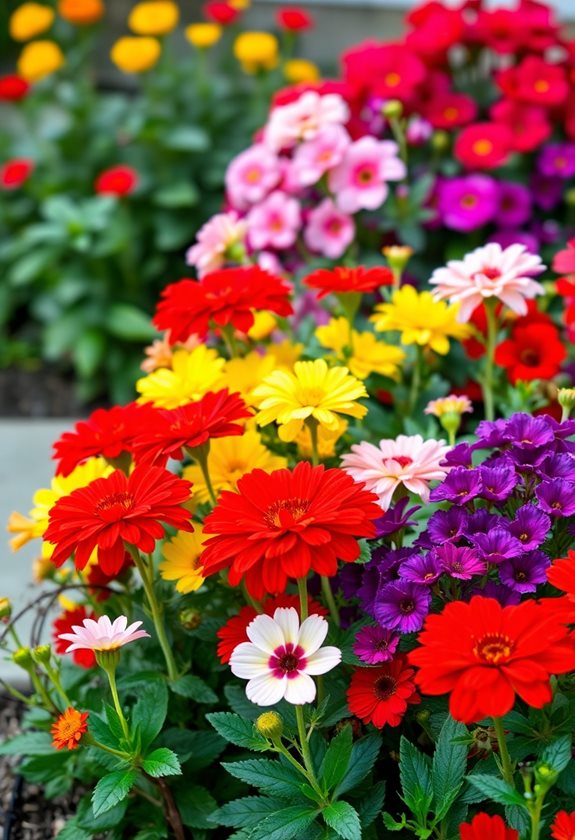
Picking the right color palette for your flower beds can feel like choosing the perfect outfit for a big event—everything needs to harmonize! So, what colors speak to you? Consider these tips:
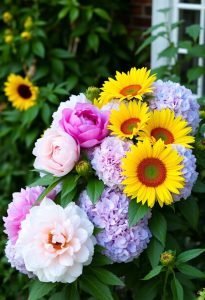
- Complementary Colors: Pair opposites on the color wheel, like purple and yellow, for a vibrant look.
- Analogous Colors: Choose colors next to each other, like blue and green, for a calming effect.
- Neutrals: Don’t forget whites and greens to balance bold hues!
Experiment a bit. You might find that mixing colors brings out a joy in gardening you didn’t know you had! Vibrant flower bed designs can elevate your garden to a whole new level of beauty. What’s your favorite combo?
Consider Flower Height and Texture
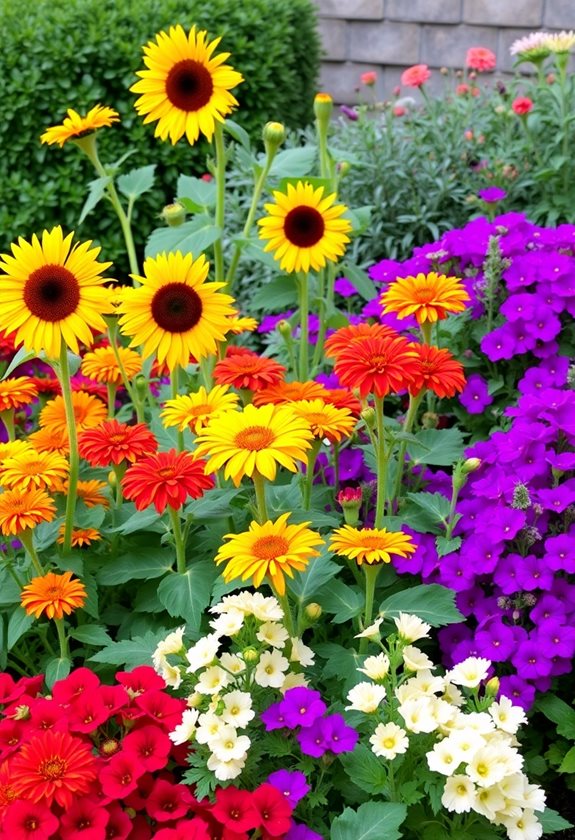
Flower height and texture can make or break your flower bed, so you’ll want to think about how each plant will fit into the overall design. Mixing heights adds depth and interest, while varying textures creates a dynamic look. Consider these tips:
Consider flower height and texture to enhance your flower bed’s design, mixing various heights and textures for visual interest.
- Tall plants like sunflowers can serve as a backdrop, giving your garden a solid foundation.
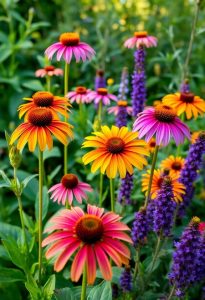
- Medium-height flowers such as coneflowers bring balance and fill in gaps.
- Low-growing varieties like creeping thyme soften edges and create a lush carpet. Additionally, incorporating a variety of colorful flower varieties will further enhance the appeal of your garden and attract more pollinators.
Incorporate Seasonal Blooms
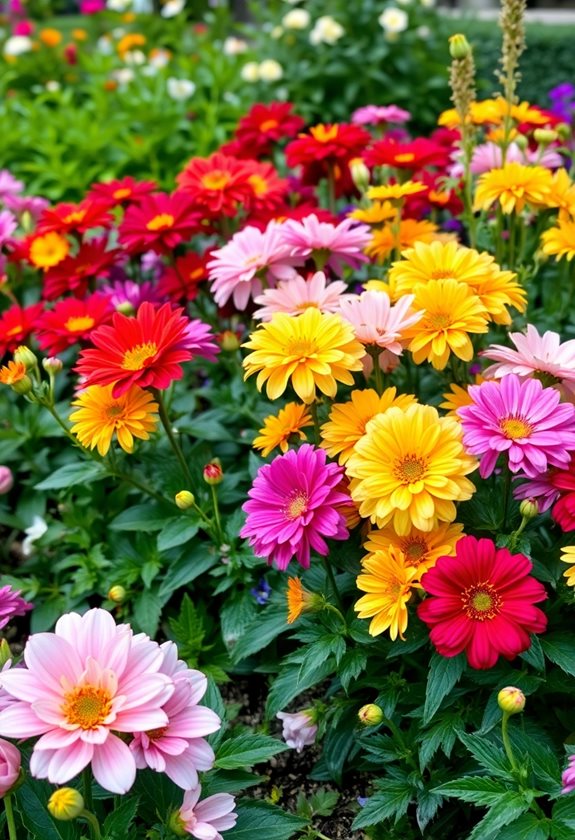
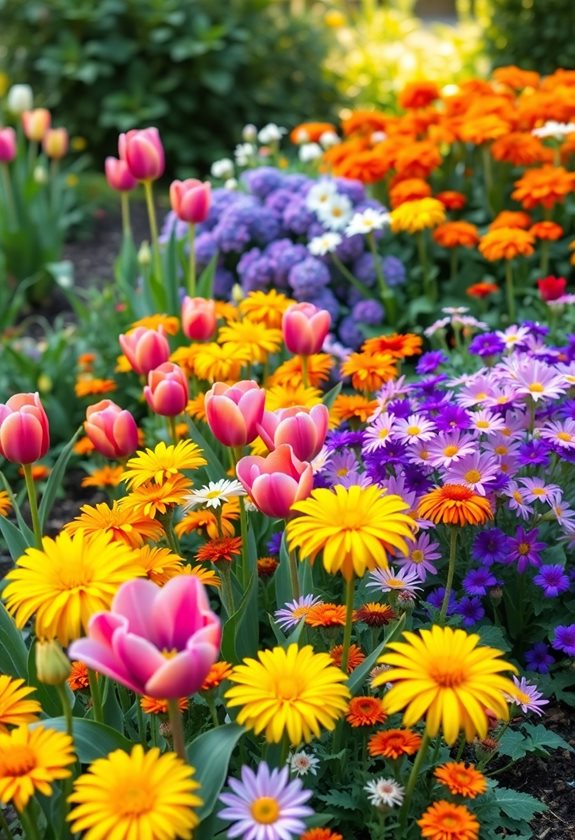
While it may seem intimidating at first, incorporating seasonal blooms into your flower bed can truly transform your garden into a vibrant masterpiece throughout the year! Think about it—flowers like tulips in spring, sunflowers in summer, and chrysanthemums in fall can keep your garden alive with color. Mix and match different species for a dynamic look!
- Choose early, mid, and late-season blooms.
- Consider the colors you love!
- Don’t forget to include some perennials for added stability.
Additionally, using seasonal flower bed arrangements can enhance the overall aesthetic of your garden and provide a cohesive design. You’ll not only enjoy the beauty but also the thrill of watching your garden evolve with each season. Exciting, right?
Maintain Your Flower Bed
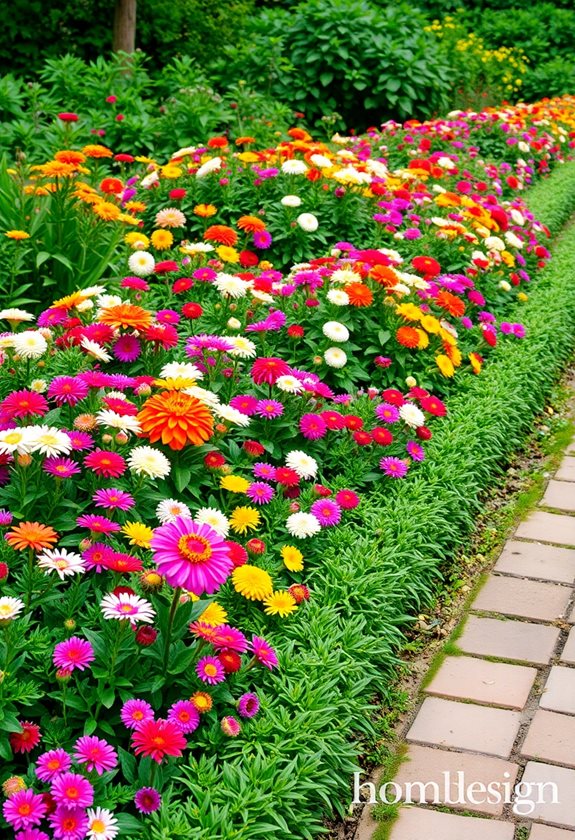
Keeping your flower bed thriving can feel like a full-time job, but don’t worry—it’s totally manageable with a few simple tips! To keep your blooms beaming, remember to:
Keeping your flower bed vibrant is easier than you think—just follow a few simple tips!
- Water consistently, especially during dry spells—your flowers will thank you!
- Remove weeds regularly, as they compete for nutrients; think of them as the uninvited guests at your garden party.
- Fertilize your soil every season to provide essential nutrients, just like you’d fuel your body for a big game! Incorporating perennial flowers can also enhance the resilience and beauty of your garden throughout the year.
With these easy steps, you’ll create a vibrant, healthy flower bed that’ll make your neighbors green with envy! Happy gardening!
Frequently Asked Questions
What Tools Do I Need for Planting a Flower Bed?
Think of your garden as a blank canvas, waiting for your artistic touch! To plant a flower bed, you’ll need some essential tools. Grab a sturdy trowel, a rake for leveling, and a watering can to keep those plants hydrated. Don’t forget gloves to protect your hands, and a kneeling pad for comfort! A shovel can help with deeper digging. Are you ready to dig in and create a vibrant masterpiece? Let’s get started!
How Often Should I Water My Flower Bed?
You should water your flower bed about once a week, but it really depends on the weather. If it’s super hot or dry, you might need to water more often. A good rule of thumb is to check the soil; if it’s dry an inch down, it’s time to give those flowers a drink! Remember, overwatering can be just as harmful. So, how’s your watering game going? Let’s get those blooms thriving!
Can I Mix Perennials and Annuals Together?
Absolutely, you can mix perennials and annuals together! It’s like creating a colorful tapestry in your garden. Just think about bloom times and heights—annuals can fill gaps while perennials establish roots. For instance, plant bright petunias alongside towering sunflowers for a stunning contrast! Just remember, some plants might compete for nutrients, so keep an eye on them. Isn’t gardening fun? You’re crafting nature’s beauty right in your backyard!
What Pests Should I Watch for in Flower Beds?
When you’re tending to your flower beds, keep an eye out for common pests! You might encounter aphids, slugs, and spider mites. They can wreak havoc on your blooms if you’re not careful. Have you ever found holes in your leaves? That’s usually a sign of trouble! A simple solution is to use neem oil or introduce beneficial insects like ladybugs. Remember, healthy flowers start with a pest-free environment—so stay vigilant and happy gardening!
How Can I Attract Pollinators to My Flower Bed?
To attract pollinators to your flower bed, plant native blooms, create diverse colors, and make sure a continuous bloom season. You could try:
- Lavender for bees,
- Coneflowers for butterflies,
- Sunflowers for a splash of sunshine!
Don’t forget to avoid pesticides—those little critters need a safe haven! Have you noticed how busy your garden gets with the right flowers? It’s like hosting a party for nature! Happy gardening!