If you want to attract pollinators, set up three fantastic structures in your garden! Start with bee hotels using hollow reeds or wood blocks to give solitary bees a cozy place to rest. Next, create a butterfly garden filled with colorful native flowers like milkweed for delightful nectar. Finally, hang hummingbird feeders filled with a sugar-water mix to entice those vibrant winged visitors! Ready to get buzzing and learn about more exciting ideas? Let’s keep going!
Design Highlights
- Bee Hotels: Provide cozy shelters using hollow reeds or wood blocks to attract solitary bees for resting and egg-laying.
- Butterfly Gardens: Create vibrant spaces with native nectar-rich flowers and flat stones for butterflies to sunbathe and hydrate.
- Hummingbird Feeders: Hang bright-colored feeders filled with sugar-water solution in sunny areas to attract these colorful pollinators.
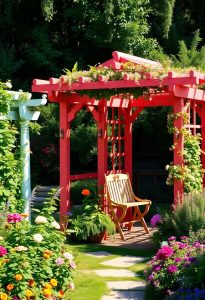
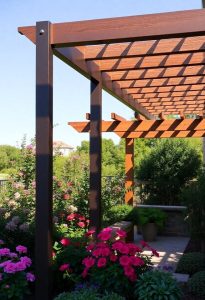
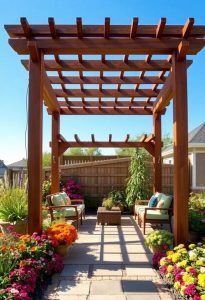
- Shelter Structures: Incorporate trellises or pergolas with climbing plants to provide shelter and nesting opportunities for various pollinator species.
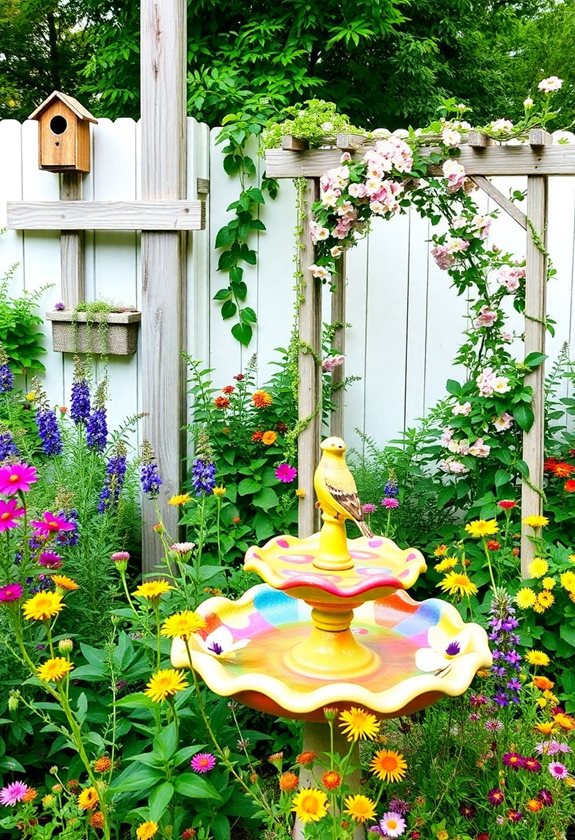
- Water Features: Add shallow dishes with pebbles or small ponds to offer hydration sources for all types of pollinators visiting your garden.
Bee Hotels: Providing Shelter for Solitary Bees
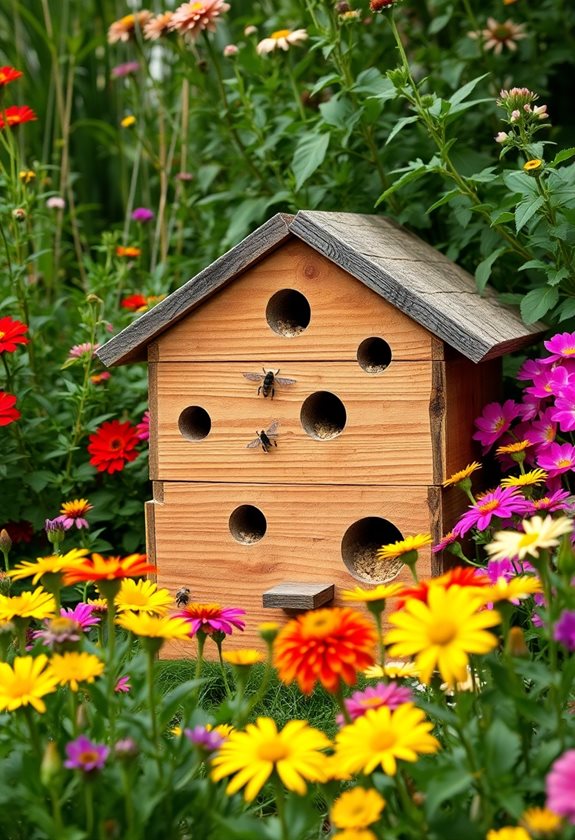
If you’ve ever wandered through a garden and noticed the buzz of bees flitting from flower to flower, you know just how magical those little creatures can be! One way to help them is by building bee hotels. These cozy shelters provide solitary bees a safe place to rest and lay eggs.
To create a bee hotel, gather materials like hollow reeds, wood blocks with drilled holes, or even bamboo. Place it in a sunny spot, sheltered from wind. Incorporating edible plants into your garden design can further enhance the attraction for pollinators.
You’ll be amazed at how quickly these tiny pollinators find their new home. Isn’t it exciting to play a part in nature’s symphony?
Butterfly Gardens: Creating a Nectar Oasis
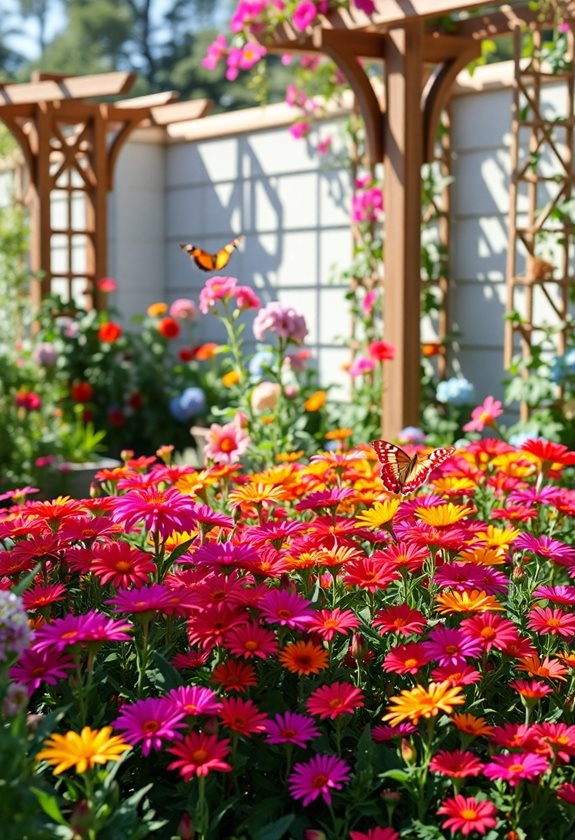
Creating a butterfly garden can be one of the most rewarding projects you undertake, especially when you see those colorful wings fluttering about. Imagine planting native flowers like milkweed and coneflowers, which provide essential nectar. Don’t forget to include some flat stones for warming—who knew butterflies loved sunbathing?
To keep them safe, avoid pesticides; instead, use natural alternatives. Consider adding a shallow dish of water with pebbles for hydration. Additionally, incorporating a vibrant butterfly garden design can enhance the aesthetic appeal of your space while attracting more pollinators.
Why not invite your friends to help? Gardening together is a blast! Plus, watching butterflies dance around your oasis is simply magical. Ready to get started? Let’s make some fluttering friends!
Hummingbird Feeders: A Sweet Attraction for Winged Visitors
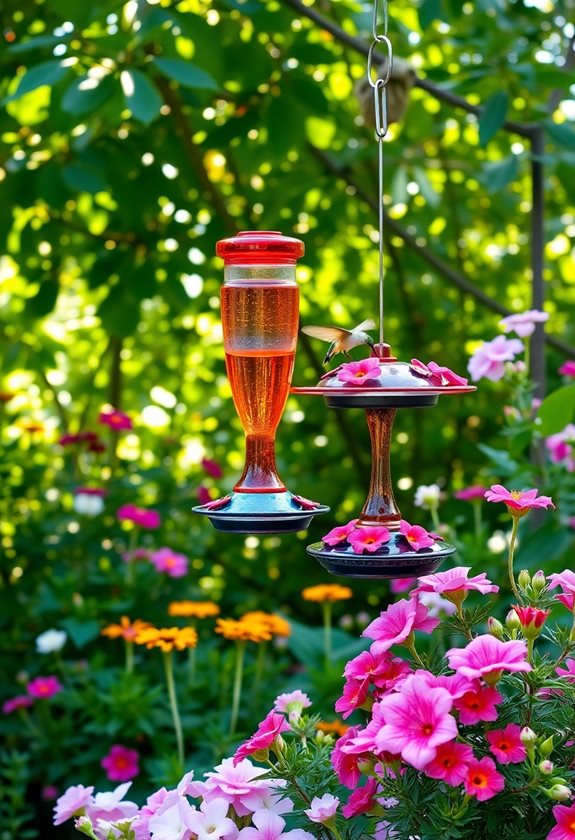
Hummingbird feeders can turn your backyard into a bustling hub of activity, attracting these tiny marvels with their vibrant plumage and incredible speed. To get started, choose a feeder with bright colors—red works wonders! Fill it with a simple sugar-water solution (1 part sugar to 4 parts water), and avoid red dye for safety. Hang it in a sunny spot, preferably near flowering plants to entice them further. Don’t forget to clean the feeder every few days to prevent mold. Have you ever watched a hummingbird hover? It’s mesmerizing! So, grab that feeder and welcome these delightful visitors! Additionally, consider planting edible plants nearby to create a more inviting environment for these pollinators.
Frequently Asked Questions
What Plants Are Best for Attracting a Variety of Pollinators?
Have you ever wondered why some gardens buzz with life? To attract a variety of pollinators, consider planting these beauties:
- Lavender: Its fragrance draws in bees and butterflies.
- Coneflowers: They’re like a buffet for pollinators.
- Milkweed: A must for monarchs!
Mixing these in your garden creates a vibrant ecosystem. Plus, you’ll enjoy watching the busy pollinators at work! It’s rewarding and safe for the environment too!
How Can I Create a Water Source for Pollinators?
Creating a water source for pollinators is easier than you think! Start by finding a shallow dish or birdbath, then fill it with fresh water. Add some pebbles or marbles for safety—pollinators need a place to land without slipping! Change the water regularly to keep it clean and inviting. You might even attract butterflies and bees! Didn’t know they loved a good splash? It’s a simple way to support nature right in your backyard!
Are There Any Plants That Repel Pollinators?
Sure, some plants can actually repel pollinators! For instance, marigolds and certain types of mint can keep bees and butterflies away. If you’re looking to create a garden that minimizes these visitors, consider adding these plants. But why would you want to do that? Maybe you’re dealing with allergies or just prefer a quieter space. Just remember, every garden has its own unique personality, so choose wisely! What’s your garden vibe?
How Do I Maintain My Garden Structures for Pollinators?
Keeping your garden structures in top shape is like tuning a beloved instrument; it makes the whole symphony sing! Start by regularly checking for wear and tear. Clean off debris, and fix any loose parts. You can also paint or seal wood to protect it from the elements. Don’t forget to inspect for pests! Have you ever found unexpected guests? A little maintenance goes a long way, ensuring your garden stays a welcoming haven!
Can I Use Pesticides Without Harming Pollinators?
You might think pesticides are a quick fix, but they can really harm pollinators! If you must use them, consider these tips:
- Choose organic options; they’re often less harmful.
- Apply them in the evening when pollinators are less active.
- Always read the label carefully!
It’s a bit tricky, but keeping pollinators safe while managing pests is totally possible! Remember, a happy garden is a buzzing garden! Isn’t that what we all want?