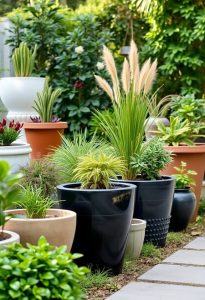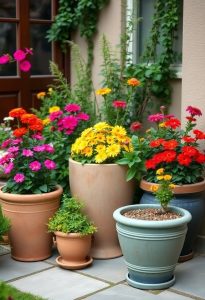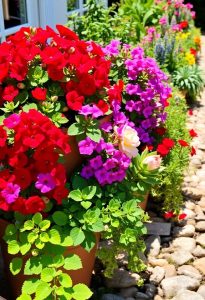
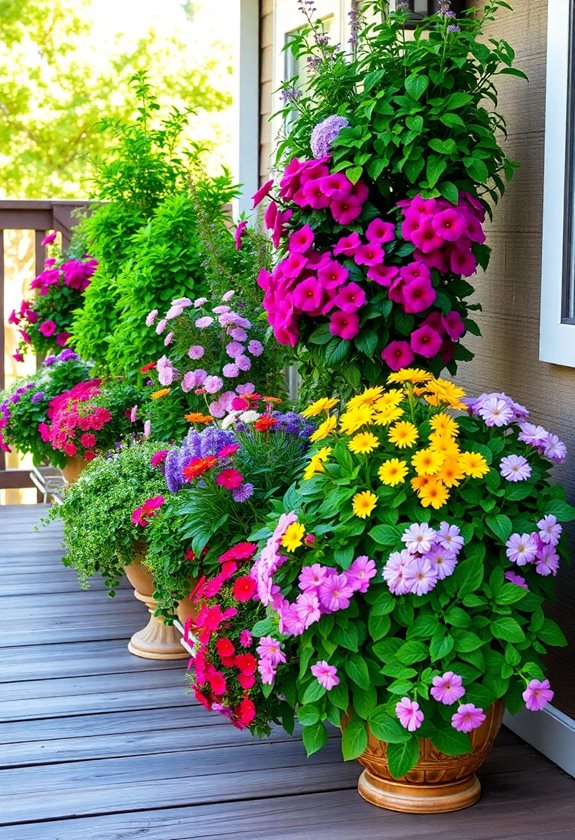
Transforming your garden with DIY container projects is a fun and rewarding way to brighten up your space! Have you ever thought about using old teacups or wooden crates as quirky planters? Just remember to drill drainage holes! You can even create stunning vertical gardens with stacked containers or wall-mounted planters. Mix in some herbs for a splash of flavor. Excited yet? Let’s explore some creative ideas and tips to get your garden growing beautifully!
Design Highlights
- Upcycle household items like old teacups or tin cans into unique planters while ensuring they have proper drainage.
- Create vertical gardens using recycled pallets or wall-mounted planters to save space and add visual interest.
- Experiment with seasonal container arrangements, mixing flowers and herbs for vibrant displays throughout the year.
- Incorporate self-watering systems in DIY projects to simplify maintenance and ensure plants receive consistent hydration.
- Design themed containers, such as a succulent garden or herb collection, to enhance your garden’s aesthetic and functionality.
Choosing the Right Containers for Your Garden
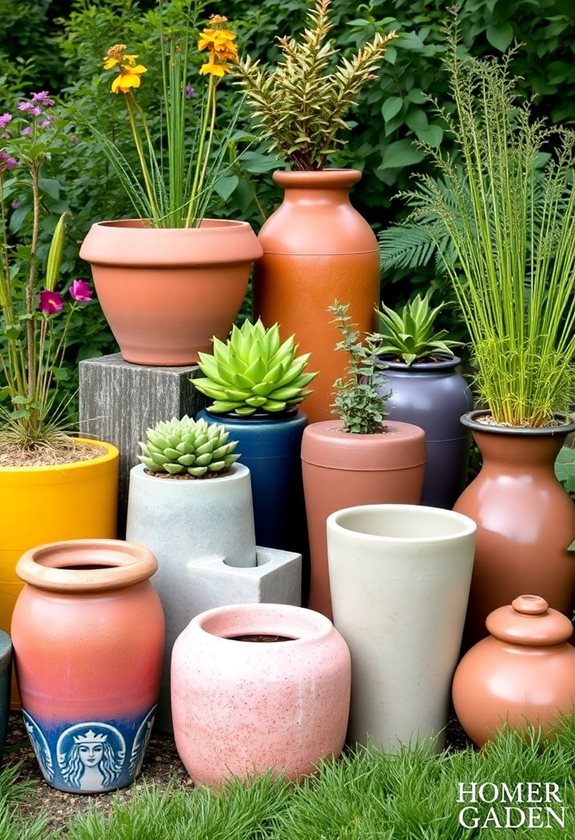
When it comes to choosing the right containers for your garden, you might feel a bit overwhelmed—after all, there are so many options out there! But don’t stress! Start by considering materials. Plastic is lightweight and safe, while terracotta adds charm but can crack. Think about drainage, too; you don’t want your plants swimming!
Choosing garden containers can be daunting, but consider materials and drainage to keep your plants happy!
Here are some tips:
- Choose containers with drainage holes.
- Make certain they’re deep enough for roots.
- Consider your garden’s aesthetic.
And remember, a little creativity goes a long way! Which colors or styles excite you? Let your personality shine through your container choices! Additionally, consider the best pots that are specifically designed for vegetable gardening to enhance your growing experience. Happy gardening!
Upcycling Household Items Into Unique Planters
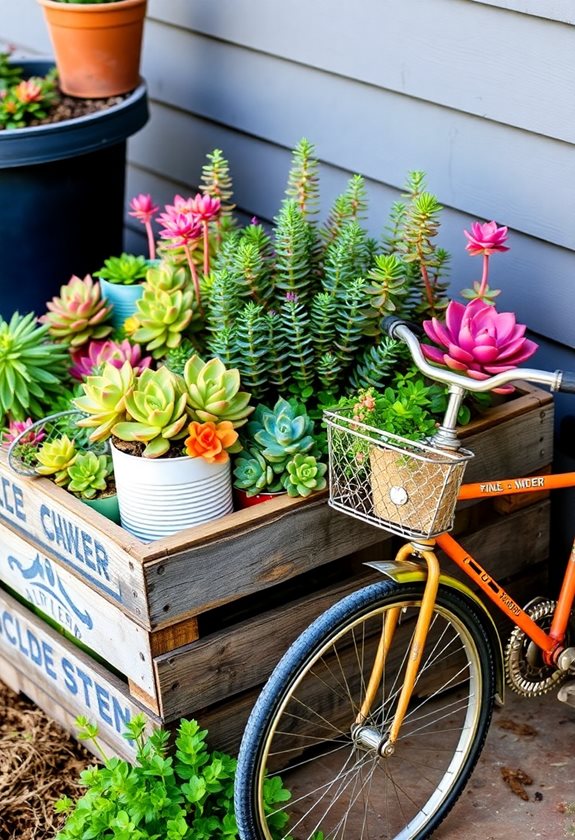
Looking to add some flair to your garden without breaking the bank? Upcycling household items into unique planters is the perfect solution! Think old teacups, tin cans, or wooden crates. Just make sure they’re clean and safe for your plants. You can drill holes for drainage if needed.
Here are a few ideas to spark your creativity:
- Use a colander for a quirky herb planter.
- Transform an old shoe into a fun succulent home.
- Paint an old bucket for a pop of color.
Incorporating upcycled garden decor not only enhances your space but also promotes sustainability. It’s a fun way to express your style while keeping your garden eco-friendly! Ready to get started?
Crafting Your Own Custom Pots From Scratch
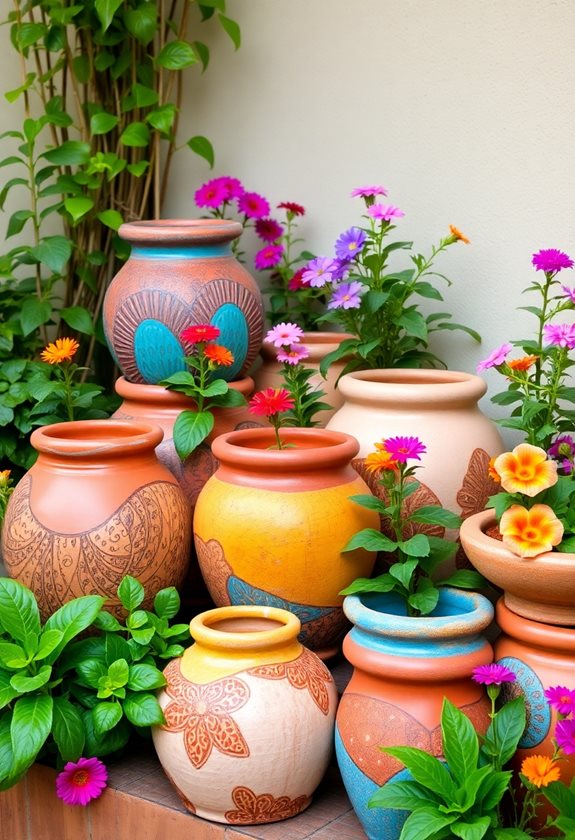
Have you ever thought about how satisfying it is to create something entirely your own? Crafting custom pots from scratch can be a rewarding experience! Start by gathering safe materials like clay, wood, or even recycled metals. Don’t forget proper tools, and always wear gloves for protection.
Creating custom pots from scratch is a fulfilling way to express your creativity and make something uniquely yours!
- Mold your clay into desired shapes.
- For wood, use a safe sealant to prevent rot.
Let your creativity flow! Imagine your pots adorned with colors that brighten your garden. Consider incorporating proper drainage features to ensure your plants thrive. You might hit a few bumps, but that’s part of the fun! So, are you ready to release your inner artist? Let’s get started!
Creative Ideas for Vertical Gardening
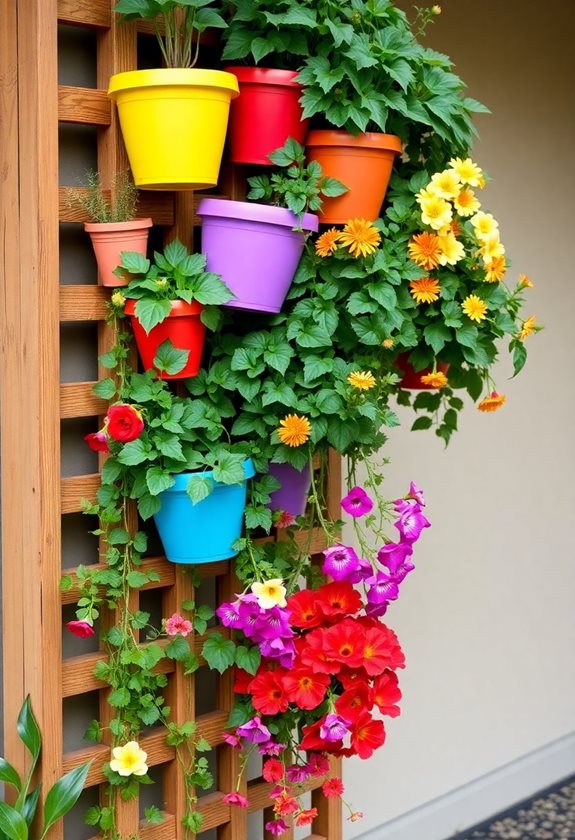
Creating your own custom pots is just one way to express your gardening flair, but why stop there? Vertical gardening offers a space-saving solution that’s both fun and functional! Imagine herbs cascading down a wall or vibrant flowers reaching for the sky. You could use:
- Recycled pallets for a rustic look
- Wall-mounted planters for easy access
- Hanging pots to add dimension
Just make sure to choose sturdy materials to keep everything safe and secure. Trust me, your vertical garden will become a stunning focal point! Additionally, consider incorporating vertical gardening solutions to maximize your urban space’s potential. Ready to elevate your gardening game? Let’s get growing!
Painting and Decorating Your Containers
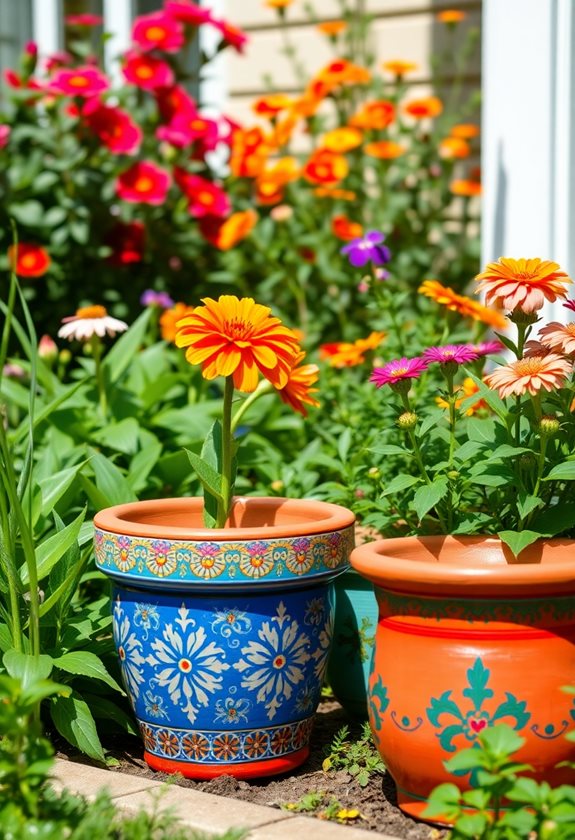
While you might think of containers as simple vessels for your plants, they can actually become vibrant pieces of art that reflect your unique style! Why not jazz them up with some paint? Use non-toxic, outdoor-safe paint for a splash of color, or try decoupage with fun fabric or paper. Remember to seal your designs to protect them from the elements! You could also add personal touches like stenciled names or creative patterns. Don’t shy away from experimenting—your container can be as bold or subtle as you like! What’s stopping you from transforming your garden into a masterpiece? Additionally, consider incorporating DIY garden decor ideas to further enhance your small space and showcase your creativity!
Incorporating Herbs and Edible Plants in Containers
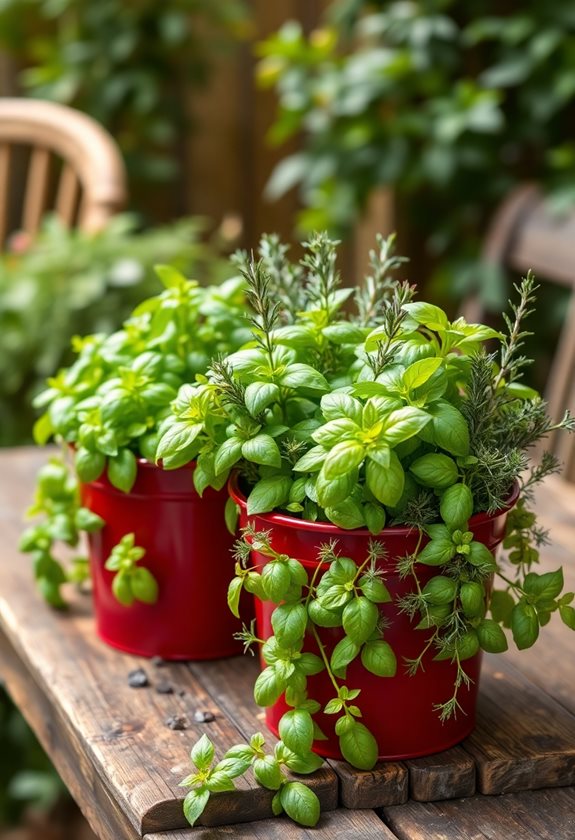
If you’ve ever tasted a fresh basil leaf right from your garden, you know there’s nothing quite like it! Incorporating herbs and edible plants in containers not only adds flavor to your meals but also brings a vibrant touch to your space. Imagine the joy of snipping fresh herbs while cooking!
Consider these easy-to-grow options:
- Basil, perfect for pasta dishes
- Mint, invigorating for drinks
- Cherry tomatoes, delightful in salads
Planting in containers keeps your garden safe from pests and makes it easy to manage. Plus, using self-watering containers can ensure your plants stay hydrated with minimal effort. So, why not start your own edible garden adventure today? You won’t regret it!
Seasonal Container Arrangements for Year-Round Appeal
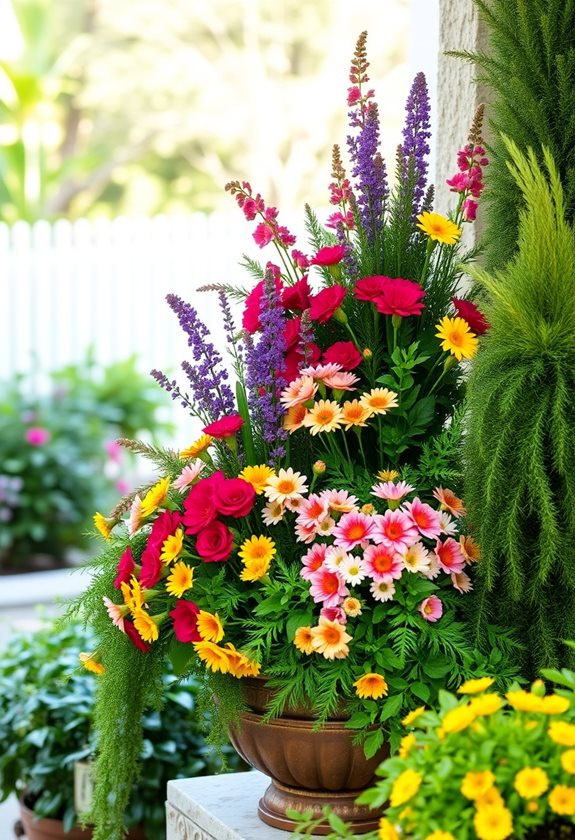
Seasonal container arrangements can transform your garden into a year-round spectacle, and trust me, it’s easier than you might think! Start with sturdy containers that can withstand the elements. For spring, think vibrant tulips and cheerful pansies. As summer approaches, swap in sun-loving petunias and marigolds. Don’t forget the fall; add colorful chrysanthemums and ornamental kale! In winter, use evergreen branches and festive ornaments to keep things lively. By changing your arrangements seasonally, you create a fresh look that’s safe and inviting. What’s more exciting than seeing your garden evolve? Let your creativity blossom—your garden deserves it! Additionally, using container gardening tips can help you select the best plants for each season and ensure a thriving garden year-round.
Mixing Plants for a Stunning Container Display
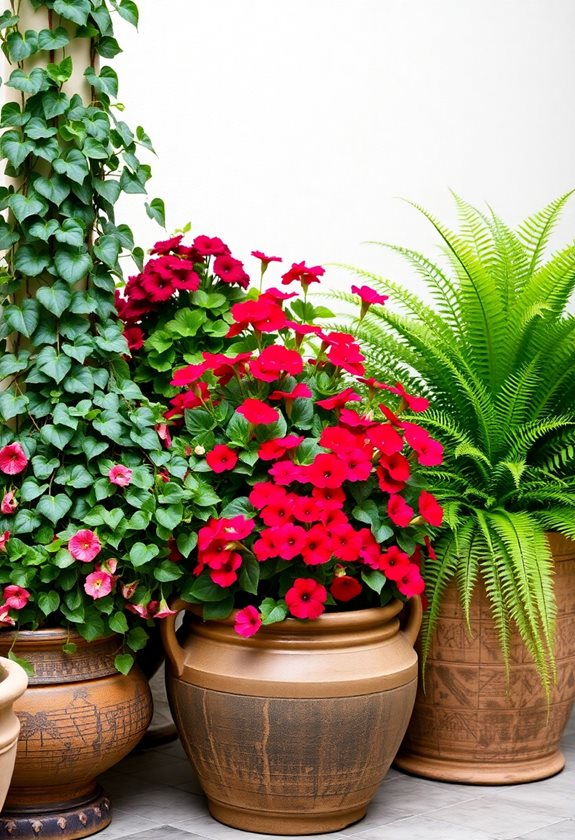
Creating a stunning container display is all about mixing plants that complement each other and thrive in harmony. You want to create a feast for the eyes while keeping safety in mind, right? Here’s how to mix it up:
- Choose a thriller, like tall grasses, to add height.
- Include fillers, like colorful petunias, to create a lush look.
- Add spillers, such as ivy, to let them cascade over the edges.
Additionally, consider incorporating plants with different light requirements to ensure all your selections can flourish in their designated spots.
Maintenance Tips for Thriving Container Gardens
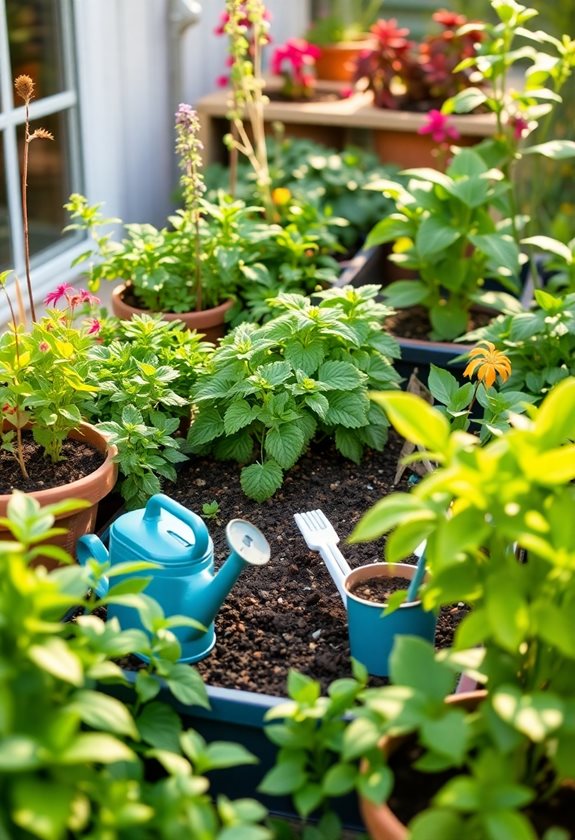
While you might think that once you’ve planted your container garden, the hard work is done, maintaining those beauties is where the real magic happens! Regular watering is essential—don’t let them dry out, especially in hot weather. Check for pests often; a little soap and water can work wonders! Don’t forget to fertilize every few weeks; your plants will thank you for the extra nutrients. Pruning dead leaves not only looks good but helps your plants thrive. Have fun experimenting with different plants! Container gardens can be an excellent way to maximize small spaces. What’s your favorite combination? Remember, a little care goes a long way in keeping your garden vibrant!
Frequently Asked Questions
How Do I Choose the Right Soil for Container Gardening?
Choosing the right soil for container gardening is key to your plants’ success! You’ll want a lightweight mix that drains well. Look for potting soil labeled as “for containers” or “lightweight.” It often contains ingredients like peat moss, perlite, or vermiculite. Have you considered adding compost for extra nutrients? That’ll keep your plants happy! Remember, different plants have different needs, so check specific requirements too. Happy gardening! You’ve got this!
What Drainage Methods Should I Use for My Containers?
Imagine your plants drowning in a pool of mud—yikes! To prevent that, you’ll need solid drainage methods for your containers. Start by adding a layer of small rocks or gravel at the bottom. Then, use potting mix that includes perlite or vermiculite for better aeration. Don’t forget to drill holes in the container! This’ll help excess water escape. Your plants will thank you for keeping their feet dry! Ready to get started?
Can I Plant Multiple Types of Plants in One Container?
Absolutely, you can plant multiple types of plants in one container! It’s a fun way to create a vibrant mini-garden. Just make sure to choose plants with similar water and light needs. For instance, combine herbs like basil and parsley, or mix colorful flowers like petunias and marigolds. Just think about the size and growth habits, so they don’t outgrow each other—unless you want a botanical wrestling match! Have fun experimenting!
How Do I Protect My Containers From Winter Weather?
To protect your containers from winter weather, you’ve got a few options! First, move them to a sheltered spot, like a porch or garage. If they’re too heavy, wrap them in burlap or bubble wrap. You could also insulate the bottom with straw or foam. Just remember to check for drainage! Have you ever tried using old blankets? They work wonders! Winter doesn’t have to ruin your gardening dreams—get creative and keep those plants cozy!
What Are the Best Watering Practices for Container Plants?
When you’re caring for container plants, watering’s essential! You don’t want them too dry or soggy, right? Here are some tips to help you out:
- Check the soil moisture with your finger—if it’s dry an inch down, it’s time to water!
- Water thoroughly until it drains out the bottom.
- Consider using self-watering pots for convenience.
Your plants will thrive with a little attention, and you’ll feel like a gardening pro!