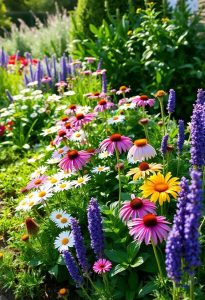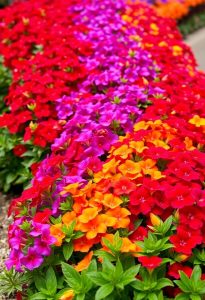
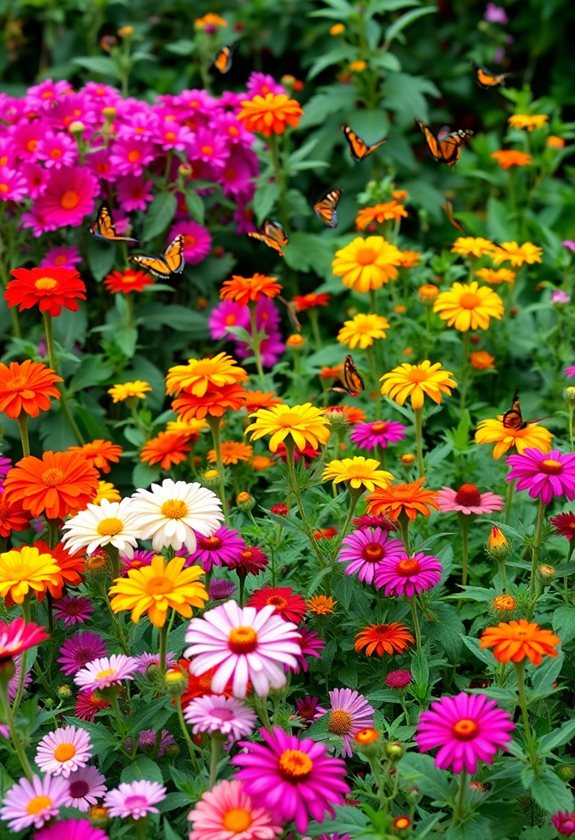
Creating a stunning butterfly garden in your flower beds is easier than you think! Start by choosing a sunny spot where butterflies can bask in the sun. Select butterfly-friendly plants like coneflowers and milkweed, and don’t forget to include native species to attract more butterflies. Mix in host plants for caterpillars, and consider adding a small water feature for extra charm. Keep it well-maintained, and you’ll soon enjoy a colorful flutter of wings in your backyard! Want to know more tricks for success?
Design Highlights
- Choose a sunny, sheltered location with at least six hours of sunlight for optimal butterfly attraction and viewing.
- Incorporate a mix of colorful nectar plants like coneflowers, lantana, and milkweed to create a vibrant environment.
- Focus on native species, such as black-eyed Susan and aster, to better attract local butterflies and support biodiversity.
- Include larval host plants like parsley and fennel to provide sustenance for caterpillars alongside nectar sources.
- Regular maintenance, including weeding, watering, and organic fertilizing, ensures a healthy and flourishing butterfly garden.
Choose the Right Location for Your Butterfly Garden
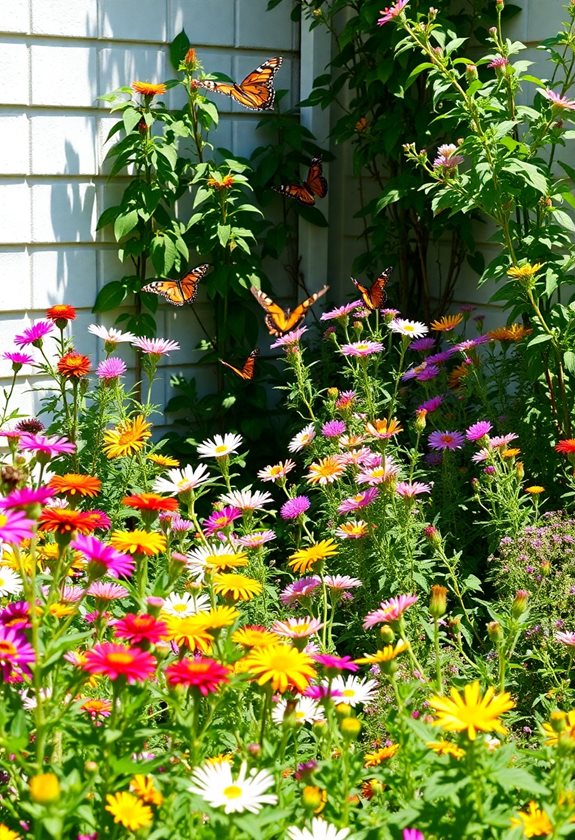
When it comes to creating your butterfly garden, choosing the right location can make all the difference! You’ll want a sunny spot, ideally with at least six hours of sunlight daily. Butterflies love warmth, so don’t shy away from that bright corner of your yard! Make certain it’s sheltered from strong winds, too. Maybe consider planting near a fence or wall for protection. Also, think about accessibility—do you want to enjoy watching them up close? Keeping safety in mind, avoid areas with heavy foot traffic. By picking the perfect spot, you’re already setting the stage for a butterfly paradise! Isn’t that exciting? Additionally, incorporating lush garden ideas can help attract even more butterflies and enhance the beauty of your space.
Select Butterfly-Friendly Plants
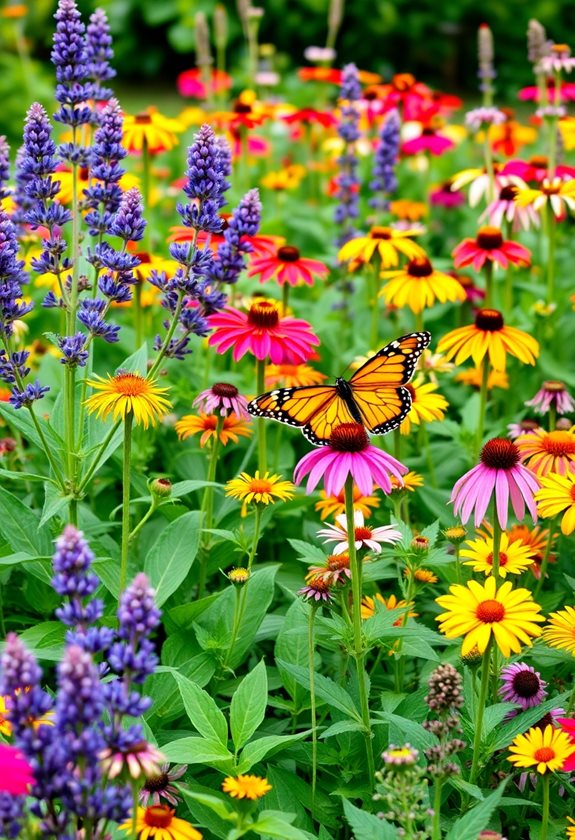
Selecting butterfly-friendly plants is where the magic truly begins! You’ll want to choose blooms that not only attract butterflies but also keep them safe. Think about planting:
Choosing the right blooms is key to creating a safe haven for butterflies in your garden!
- Milkweed for monarchs.
- Coneflowers for their vibrant color.
- Lantana for a sweet nectar feast!
These plants create a colorful buffet while providing shelter. Remember, pesticides can be harmful, so opt for organic solutions. Trust me, I learned the hard way when my beloved butterflies vanished after a spray! By choosing the right plants, you’re inviting nature’s beauty right into your backyard. Incorporating beautiful ferns alongside these blooms can enhance the overall aesthetic and provide additional habitat. Isn’t that worth the effort? Get planting, and watch the magic unfold!
Incorporate Native Species for Better Attraction
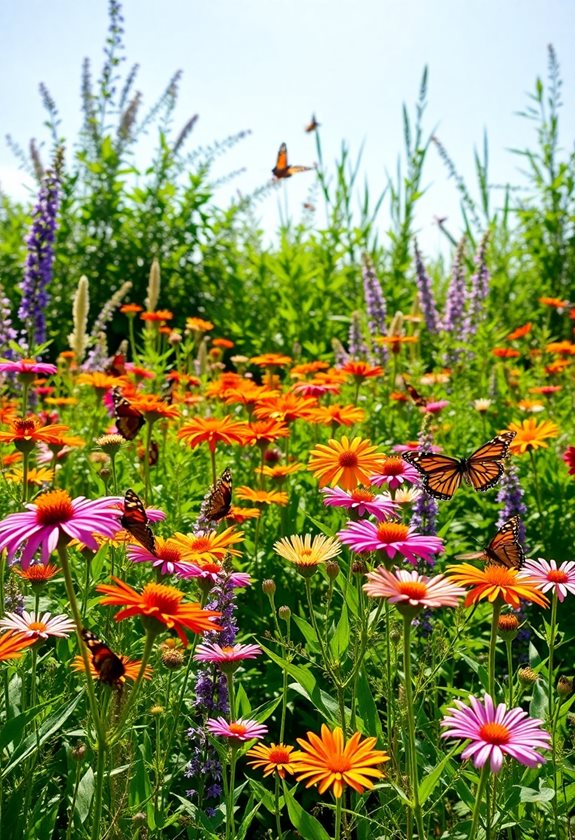
You’ve got your butterfly-friendly plants all set, but did you know that incorporating native species can take your garden to the next level? Native plants are like VIPs for butterflies, attracting them better than any imported variety. Imagine this: when you plant milkweed, you’re not just adding beauty; you’re providing a home for monarch caterpillars!
Consider these native options:
- Coneflower
- Black-eyed Susan
- Aster
These plants thrive in your local environment, needing less care, and they support your local ecosystem. Additionally, designing gardens with native plants can enhance biodiversity and resilience in your garden. Plus, who doesn’t love a garden buzzing with life? Let’s create that butterfly paradise together!
Create a Diverse Planting Strategy
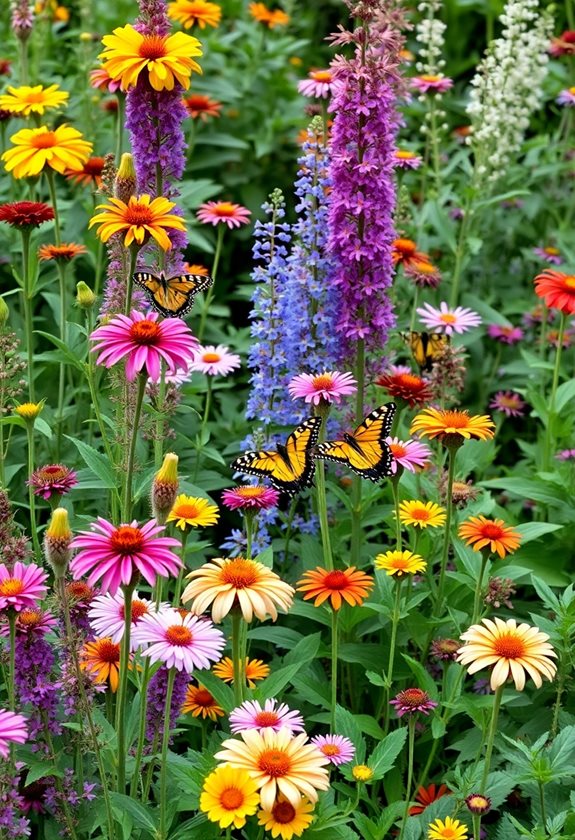
Creating a butterfly garden isn’t just about planting a few flowers; it’s a chance to get a bit creative and make your space truly unique! To attract butterflies, mix various plants with different colors, shapes, and bloom times. Consider adding:
- Nectar plants like coneflowers and milkweed for food.
- Larval host plants such as parsley and fennel for caterpillars.
- Herbs like lavender that look great and smell amazing!
Incorporating a vibrant butterfly garden design can enhance the overall appeal and create a more inviting environment for these beautiful creatures.
Add Water Features for Enhanced Appeal
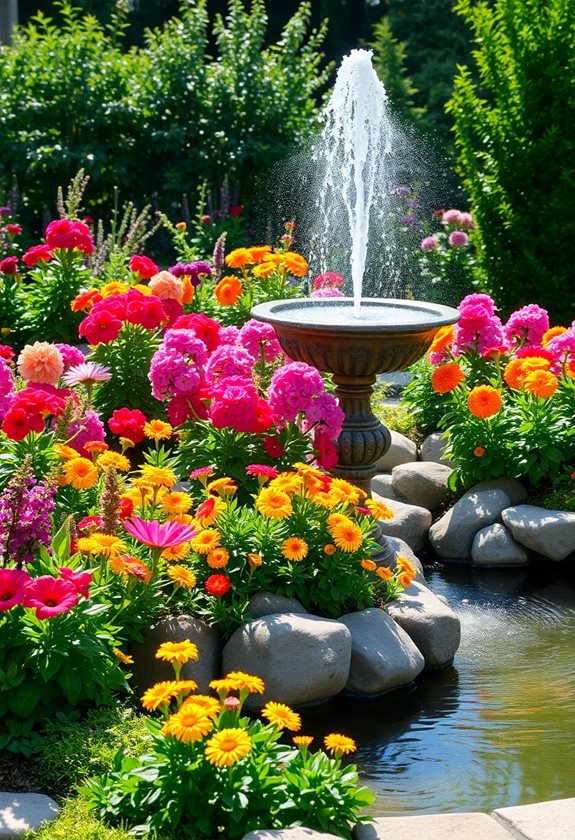
Adding water features to your butterfly garden can transform it into a tranquil oasis that not only attracts these beautiful creatures but also enhances the overall atmosphere of your space. Imagine a serene pond or a bubbling fountain—sounds delightful, right?
Transform your butterfly garden into a tranquil oasis with serene ponds or bubbling fountains that attract beautiful creatures.
Here are a few ideas:
- Small pond: A shallow pond filled with native aquatic plants offers butterflies a safe drinking area.
- Birdbath: A simple birdbath can attract butterflies while providing a splash of fun!
Just remember to keep water features clean and safe, avoiding any sharp edges or deep areas. Additionally, incorporating water features can create a peaceful retreat that will make your garden even more inviting! Creating this peaceful retreat will make your garden even more inviting!
Include Host Plants for Caterpillars
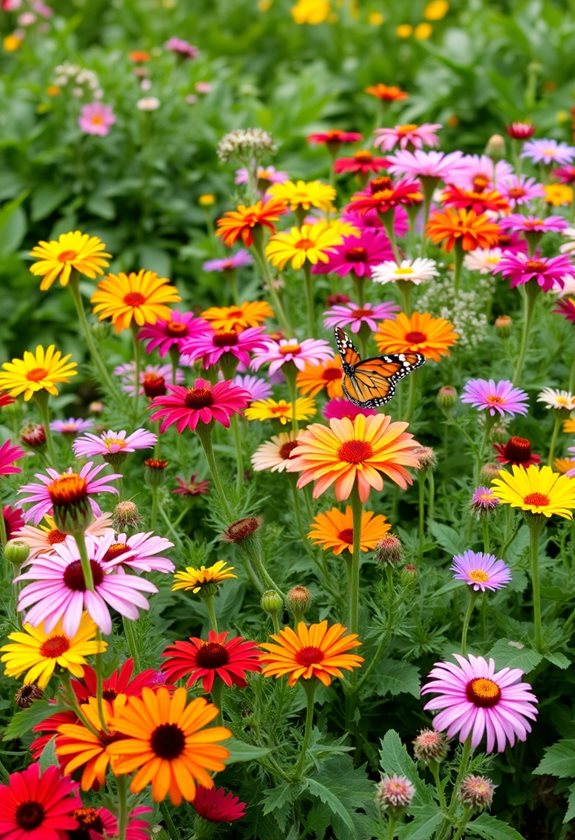
While you might think butterflies only flutter around to sip nectar, they actually need a cozy place for their caterpillars to munch and grow. By including host plants like milkweed for monarchs or parsley for swallowtails, you’re creating a safe haven for those little munchers!
Consider these tips:
- Plant a variety of native species.
- Make certain the plants are pesticide-free, keeping your garden safe and healthy.
- Add some milkweed, fennel, or dill to attract those beautiful butterflies! Additionally, incorporating vibrant plants can enhance the overall appeal of your butterfly garden.
Design Pathways and Seating Areas
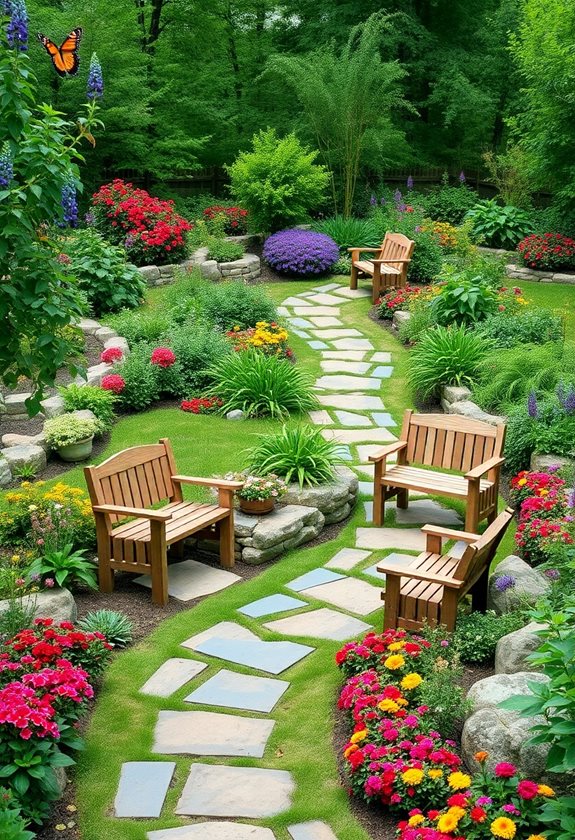
Once you’ve welcomed those caterpillars with a buffet of host plants, it’s time to think about how you and your guests can enjoy the beauty of your butterfly garden. Designing inviting pathways and cozy seating areas will enhance your experience. Here are some ideas to get you started:
- Use natural materials like gravel or wood chips for safe walking paths.
- Create a secluded nook with a bench surrounded by flowers.
- Add whimsical stepping stones to lead the way, such as natural stone walkways that blend beautifully with your garden’s aesthetics.
- Incorporate raised beds near seating to enjoy close-up views.
- Consider soft lighting for evening enjoyment, ensuring safety and charm.
Happy gardening!
Maintain Your Butterfly Garden for Long-Term Success
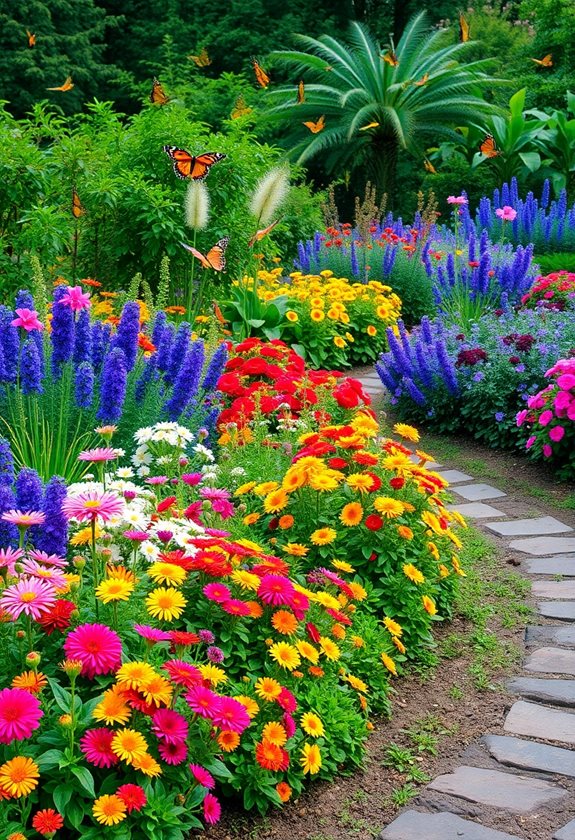
To guarantee your butterfly garden thrives for years to come, embracing a regular maintenance routine is key. Have you ever noticed how quickly weeds sneak in? Pull them out regularly to keep your flowers happy! Also, don’t forget to water and check for pests—your butterflies need a safe haven. Fertilizing with organic options keeps the soil rich, supporting vibrant blooms. Pruning dead flowers encourages new growth, too! Remember, patience is essential; gardens take time to flourish. So, grab your gardening gloves and enjoy the process. After all, watching butterflies dance in your garden is worth every bit of effort! 🦋 Additionally, incorporating year-round foliage into your garden design can attract more butterflies and provide continuous beauty.
Frequently Asked Questions
How Long Does It Take for Butterflies to Find My Garden?
When you create a welcoming space, butterflies can find your garden in just a few days to a couple of weeks! They’re drawn to vibrant colors and sweet scents, so consider planting flowers like coneflowers or milkweed. To attract them, try:
- Adding water sources
- Avoiding pesticides
- Providing shelter with native plants
Have patience, and enjoy the process! You might even spot a butterfly before you know it—nature’s little surprises are the best, right?
Can I Use Pesticides in My Butterfly Garden?
You might think using pesticides in a butterfly garden is okay, but it’s a tricky business! For example, a friend of mine learned the hard way when she accidentally harmed her beloved monarchs. Instead, consider natural alternatives like neem oil or insecticidal soap, which are safer for butterflies. Always read labels and apply at night when butterflies are less active. Wouldn’t you want your garden buzzing with life, not chemical worries?
What Time of Year Should I Plant for Butterflies?
You should plant for butterflies in early spring or late summer! These seasons provide the best conditions for them to thrive. Think about adding nectar-rich flowers like coneflowers and milkweed. Did you know most butterflies prefer sunny spots? So, pick a sunny patch in your garden! Plus, planting a variety of colors attracts different species, which is super fun. Trust me, watching butterflies flutter around your garden is a magical experience you won’t forget!
How Do I Attract Specific Butterfly Species?
Did you know that over 750 species of butterflies flutter across North America? To attract specific kinds, start by planting their favorite nectar-rich flowers, like milkweed for monarchs or asters for painted ladies. Add host plants where they can lay eggs, and guarantee your garden’s a safe haven—avoid pesticides! Keep it sunny and water them regularly. Have you ever watched a butterfly choose your blooms? It’s magical! Happy gardening!
Are There Any Butterfly Garden Design Competitions?
Absolutely, there are butterfly garden design competitions! They’re a fantastic way to showcase your creativity while supporting a great cause. You can check local gardening clubs or community events for contests. Consider these tips:
- Research past winners for inspiration.
- Incorporate native plants that attract butterflies.
- Think about unique layouts and color schemes.
Have you ever thought about how your garden could win a prize? It’s a fun way to get involved!