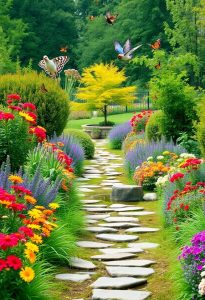
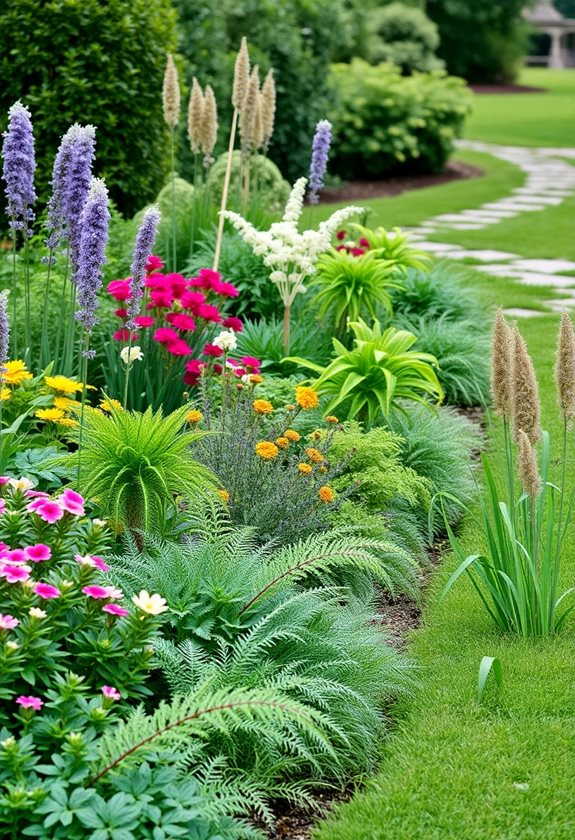
Want to transform your garden border? First, choose plants that suit your climate; native species often thrive with less care! Next, think about height and texture. Mix tall spiky plants with low, bushy ones for a lively look—it’s like fashion for your garden! Finally, don’t forget regular maintenance. A little weeding and deep watering now can save you tons of trouble later! Curious about more gardening secrets? Stick around; there’s so much more to explore!
Design Highlights
- Choose plants suited to your local climate and soil conditions for optimal growth and reduced maintenance.
- Layer plants by height, placing taller varieties at the back and shorter ones in front for visual depth.
- Mix different textures and colors, combining spiky plants with bushy ones for a vibrant garden border.
- Incorporate low-maintenance plants to simplify upkeep while ensuring aesthetic appeal.
- Regularly monitor and maintain your garden, including weeding and pruning, to keep borders healthy and attractive.
Choose the Right Plants for Your Climate
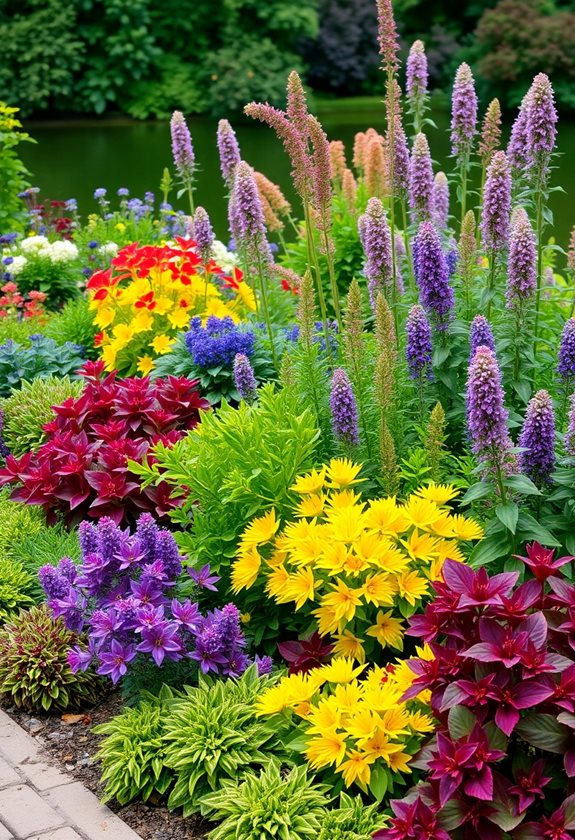
When you’re planning your garden border, it’s essential to choose plants that thrive in your climate—after all, you wouldn’t want your beautiful blooms to wither away after just a few weeks! Research local weather patterns and soil types, and don’t forget to check the USDA Plant Hardiness Zone Map. Consider these tips:
- Opt for native plants; they’re adapted to your area and require less care.
- Look for drought-resistant varieties if you live in a dry climate.
- Make sure you know the sunlight requirements; some plants prefer shade while others thrive in full sun. Incorporating layering techniques can also add depth and visual interest to your garden.
Happy planting! Your garden will thank you!
Consider Height and Texture for Visual Interest
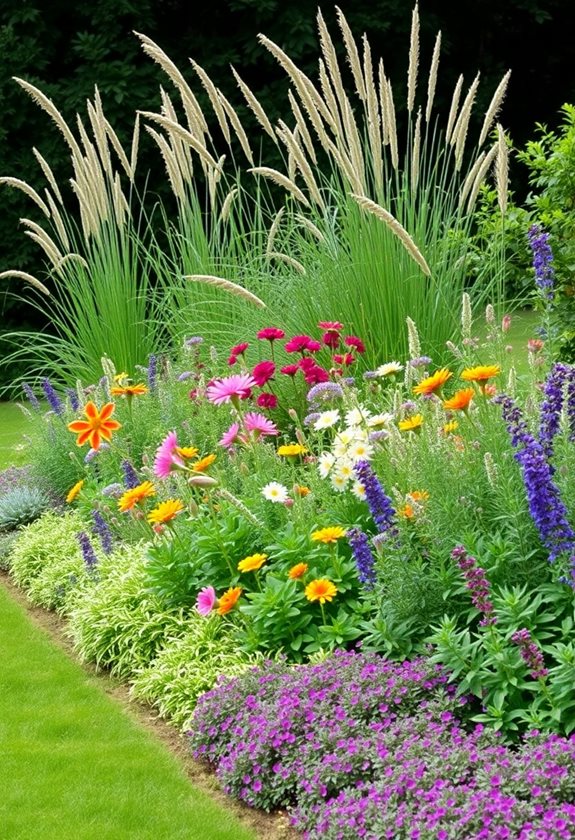
Choosing the right plants for your climate sets a solid foundation for your garden border, but there’s more to creating a stunning display than just picking the right species. Think about height and texture! Mixing tall, spiky plants with low, bushy ones adds depth. For instance, try pairing ornamental grasses with colorful ground covers.
Choosing plants for your climate is just the beginning—mix heights and textures for a captivating garden display!
- Tall sunflowers can stand proud, while soft lavender hugs the ground.
- Evergreens add structure in winter, ensuring year-round interest.
Don’t forget to reflect on leaf shapes; smooth, glossy leaves contrast beautifully with fuzzy ones. Additionally, consider low vs. high-maintenance plants to ensure you choose varieties that fit your gardening style. What combinations excite you? Your garden can be a vibrant masterpiece!
Regular Maintenance for Healthy Growth
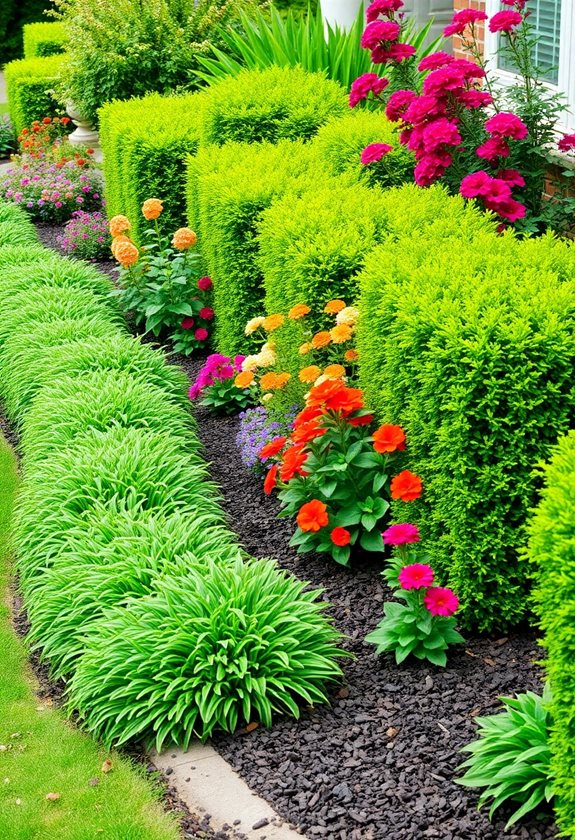
While it might seem like the fun stops after planting, keeping your garden border thriving actually takes a bit of ongoing care! Regular maintenance is key to healthy growth. Have you thought about weeding? It’s essential to keep those pesky intruders at bay. Plus, watering deeply but less frequently encourages strong roots. Don’t forget to check for pests—no one wants unwanted visitors munching on their plants! Pruning helps promote bushier growth, too. And hey, a little mulch can work wonders by retaining moisture and preventing weeds. Additionally, incorporating low-maintenance ground cover plants can further enhance your garden’s health and appearance. So, roll up your sleeves, and let’s keep that garden looking fabulous!
Frequently Asked Questions
What Are the Best Plants for Attracting Pollinators to My Garden Border?
If you want to attract pollinators to your garden, you’ve got some great options! Consider planting bee balm, lavender, or echinacea. Not only do these plants look beautiful, but they also draw in butterflies and bees. Have you ever seen a butterfly fluttering around? It’s magical! Try mixing these in your border for a colorful display. And don’t forget to provide a little water source; even pollinators need a drink! Happy gardening!
How Can I Incorporate Seasonal Color Into My Garden Borders?
Imagine walking through a garden bursting with color in every season! You can easily achieve this by mixing perennials with seasonal annuals. For instance, plant cheerful pansies in spring, then switch to vibrant zinnias in summer. Don’t forget to take into account your climate and sun exposure; it matters! Layering these plants creates a stunning, ever-changing display. So, why not experiment? Your garden can reflect not just the seasons, but your personality too!
What Are Effective Ways to Prevent Weeds in Garden Borders?
To keep pesky weeds at bay in your garden borders, you can try a few effective methods! First, mulching helps smother weeds and retains moisture. Use organic materials like bark or straw. You can also plant dense perennials that naturally crowd out weeds. Don’t forget to regularly check for weeds and pull them out when they’re small—trust me, it’s way easier! What’s your favorite way to tackle those sneaky invaders?
Can I Use Edible Plants in My Garden Borders?
Absolutely, you can use edible plants in your garden borders! Imagine picking fresh herbs or strawberries right from your border! Not only do they look great, but they also provide delicious snacks. Just remember to choose plants that thrive in your climate and soil. Some fun options are chives, nasturtiums, or even dwarf tomatoes. Think about planting them in clusters for a vibrant, tasty display. Who wouldn’t want a salad growing right next to their flowers?
How Do I Choose Plants That Require Low Water Maintenance?
Choosing low-water plants can be a game-changer for your garden! Start by looking for drought-tolerant species like succulents, lavender, or ornamental grasses. They thrive with minimal watering and add beauty. Check your local nursery’s labels—many plants mention their water needs. Also, consider grouping plants with similar water requirements together. This keeps things simple. Have you thought about using mulch? It helps retain moisture, too! Happy gardening! 🌱