
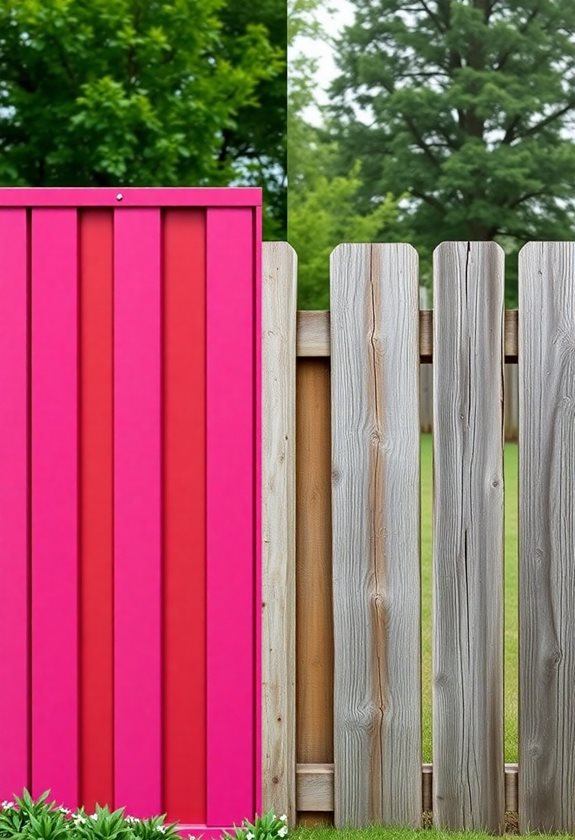
When you’re deciding between vinyl and wood fencing, you’ll notice some big differences in durability! Vinyl can last over 30 years, while wood usually sticks around for just 10 to 15. Plus, vinyl doesn’t warp, splinter, or fade like wood can, especially without regular upkeep. Imagine spending more time enjoying your garden and less on maintenance—sounds great, right? In the fencing world, vinyl’s longevity and low maintenance really take the cake! Curious about the other factors to contemplate?
Design Highlights
- Vinyl fencing can last up to 30 years, while wood typically lasts 10 to 15 years, making vinyl a more durable option.
- Vinyl resists harsh weather conditions and does not warp, splinter, or fade, unlike wood which can suffer from moisture and insect damage.
- Maintenance for vinyl is minimal, requiring only occasional washing, whereas wood needs regular staining or painting to maintain its appearance.
- Vinyl is resistant to pests like termites, while wood is vulnerable to pest damage, necessitating ongoing vigilance with wood fences.
- Aesthetic appeal of vinyl remains vibrant over time with little fading, while wood can warp or splinter, requiring more upkeep to retain its charm.
Lifespan and Longevity
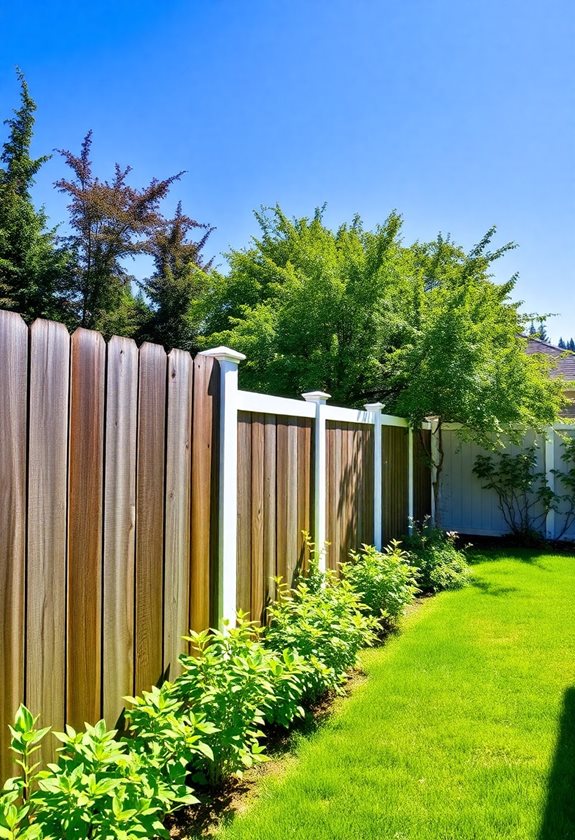
When you’re thinking about fencing options for your backyard, one of the first things that pops into your mind is probably how long it’ll last, right? Well, let’s break it down!
- Vinyl fencing can last up to 30 years or more!
- Wood fencing, on the other hand, might only last 10 to 15 years if you’re lucky.
Choosing vinyl means less worry about replacing it anytime soon. Plus, you won’t have to deal with warping or splintering. Additionally, vinyl fencing’s durability can save you money on maintenance in the long run. So, if you want a safe space for your family and pets, vinyl might just be your best bet! Isn’t that a relief?
Weather Resistance
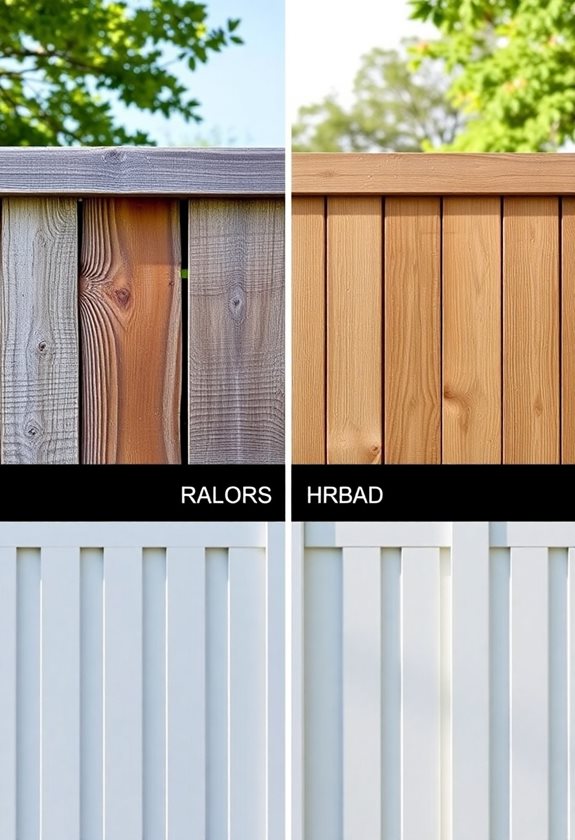
While you might dream of a beautiful fence that complements your garden, it’s essential to contemplate how it stands up to the elements. Did you know vinyl fences can resist harsh weather, like rain, snow, and intense sun? They won’t warp, splinter, or fade over time, ensuring your yard looks great year-round. On the other hand, wood fences may struggle with moisture, leading to rotting or insect damage. So, if you want a safe, long-lasting option that withstands storms and sunshine, vinyl’s your best friend! Additionally, many eco-friendly fencing options are available that can enhance both durability and sustainability. Isn’t it nice to have peace of mind while enjoying your backyard oasis?
Maintenance Requirements
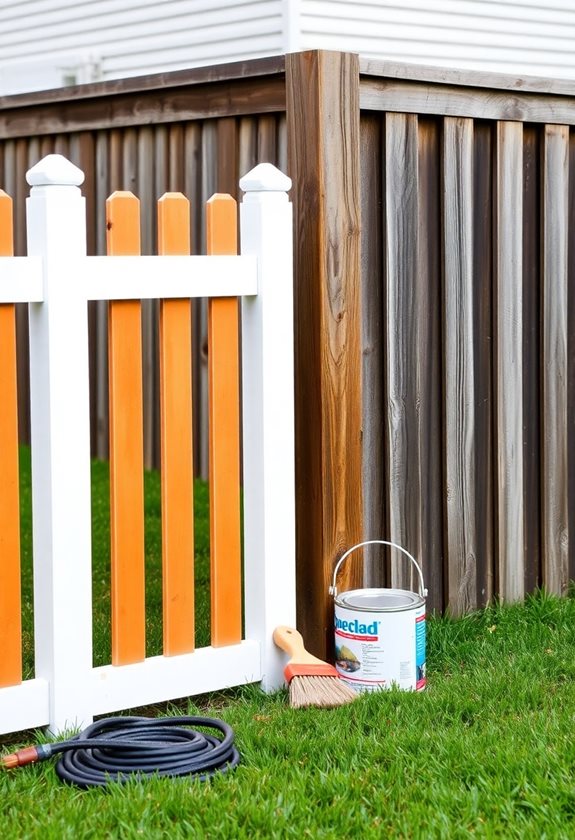
After you’ve settled on the perfect fencing material, it’s time to think about how much upkeep you’re willing to commit to. If you choose wood, expect regular staining or painting to keep it looking sharp and safe from rot. Think about it—who wants a fence that looks like it’s seen better days? On the other hand, vinyl requires minimal maintenance. A quick wash with soap and water can do wonders! Additionally, consider that rustproof metal garden fences offer excellent durability and protection against weather elements. So, ask yourself: do you want to spend weekends maintaining your fence or enjoying your garden? Choose wisely, and you’ll keep your space safe and beautiful for years!
Resistance to Pests
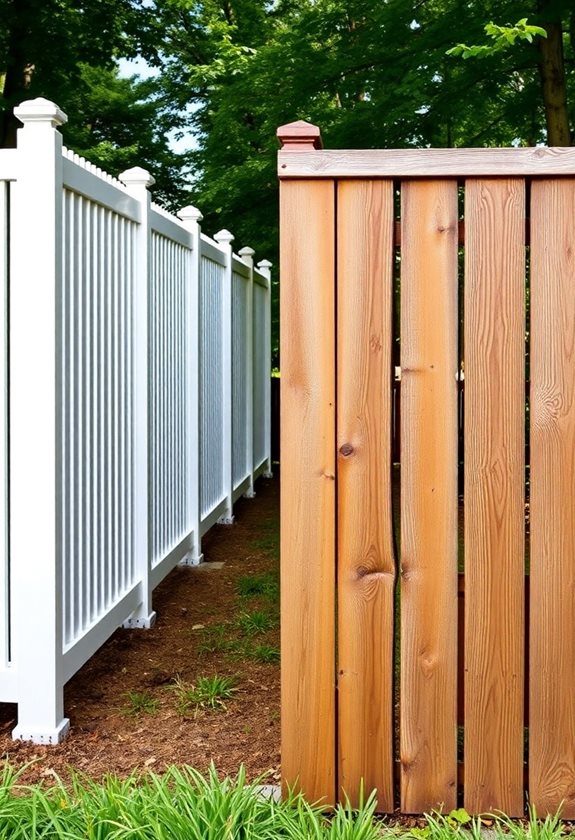
Choosing the right fence isn’t just about looks; it’s also about how well it holds up against pesky critters! When you’re protecting your garden, vinyl fencing shines because it’s resistant to pests like termites and wood-boring insects. Imagine not worrying about those little invaders munching on your beautiful plants!
In contrast, wood can be a feast for termites, requiring constant vigilance and maintenance.
So, ask yourself: do you want to spend weekends fixing a rotting fence?
Consider these options:
- Vinyl: Pest-proof and low-maintenance.
- Wood: Beautiful but vulnerable.
Additionally, incorporating evergreen shrubs for privacy can enhance your garden’s defenses against pests.
Choose wisely, and keep your garden safe and thriving!
Aesthetic Appeal Over Time
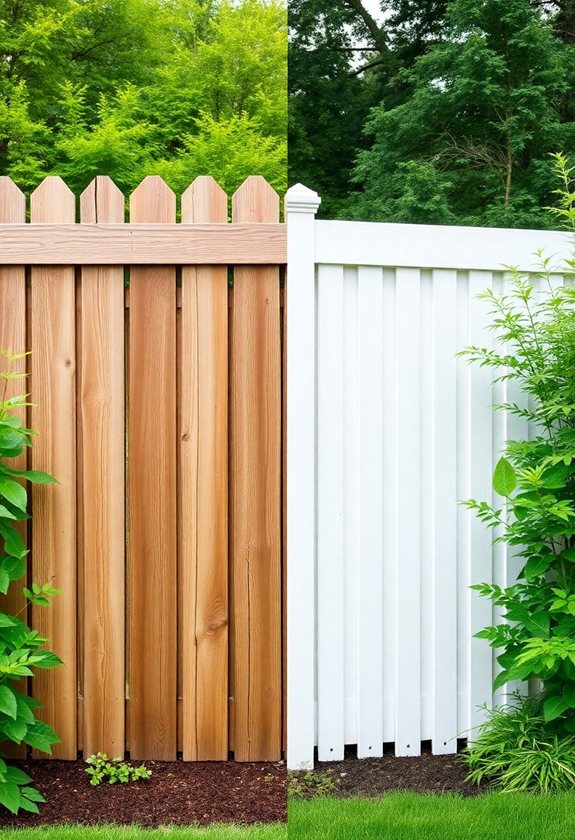
When you think about how your fence will look down the road, it’s hard not to feel a bit of excitement and concern at the same time. Will it still look great years later? Vinyl and wood fences each have their charm, but they age differently.
Consider these points:
Explore the lasting appeal of vinyl versus the rustic charm of wood for your backyard oasis.
- Vinyl stays vibrant and colorful, with minimal fading.
- Wood can warp or splinter, needing regular maintenance.
- Both options can complement your garden’s beauty, but vinyl requires less effort.
- A well-maintained wood fence can exude rustic charm, creating a cozy, inviting atmosphere.
- Many homeowners prefer low-maintenance privacy fencing solutions to ensure long-lasting appeal without the hassle of upkeep.
Which style will best enhance your backyard oasis?
Cost-Effectiveness
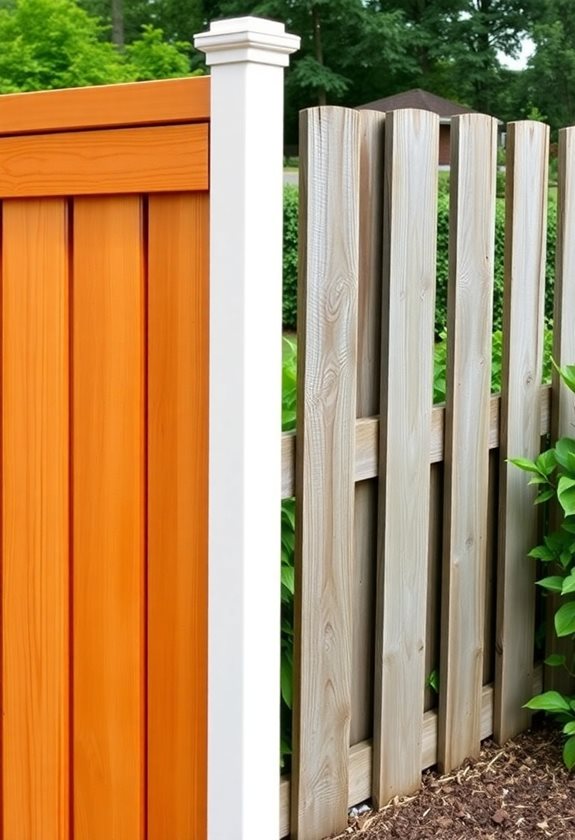
While it might seem like a small detail, the cost-effectiveness of your fence choice can have a big impact on your wallet and peace of mind. Have you ever added up the costs of maintenance? With wood, those unexpected expenses can sneak up on you. Vinyl, on the other hand, often requires little to no upkeep, saving you money over time. Plus, think about the lifespan—vinyl can last decades! Additionally, consider that vinyl fencing is often considered low-maintenance plants compared to wood fencing when it comes to durability and upkeep. So, when considering your options, ask yourself: Do I want to invest in a fence that’ll last, or one that’ll need constant care? Your wallet—and garden—will thank you!
Environmental Impact
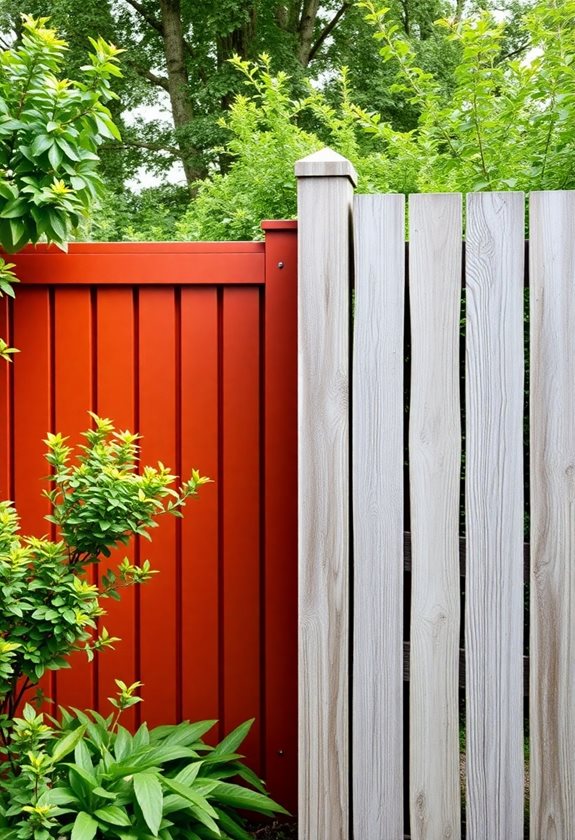
Although both vinyl and wood fencing have their own charm, the environmental impact of your choice can greatly influence not just your garden’s aesthetics, but also the planet’s health. Have you considered where your materials come from? Choosing wisely can create a safer space for your family and the environment. Here are some key points to ponder:
Consider the environmental impact of your fencing choice; it shapes both your garden and the planet’s health.
- Vinyl isn’t biodegradable, but it lasts longer and requires less maintenance.
- Wood can be sourced sustainably but may involve pesticides.
- Manufacturing processes differ in energy use.
- Both options can contribute to habitat loss depending on sourcing.
- Additionally, opting for climate-friendly garden structures can further enhance sustainability in your gardening practices.
Frequently Asked Questions
How Do Vinyl and Wood Fencing Perform in Extreme Temperatures?
Have you ever seen a fence bend under the weight of ice? In extreme temperatures, vinyl’s flexible nature helps it withstand cold without cracking, while wood can warp or splinter. Imagine your backyard garden thriving, safe behind a sturdy vinyl fence! It’ll keep your plants protected from harsh weather. So, if you’re worried about durability, vinyl might be your best friend, ensuring your space stays inviting regardless of the temperature extremes!
Can Vinyl and Wood Fences Be Easily Customized or Painted?
Absolutely, you can customize both vinyl and wood fences! Vinyl offers a range of colors and styles, while wood is a blank canvas waiting for your creative touch. Want a fun color? Just grab some outdoor paint! Remember, though, wood needs regular maintenance, so you’ll want to stain or seal it to keep it looking fab. Have you thought about adding some fun designs? Personal touches make your garden even more inviting!
Which Fencing Option Is More Prone to Fading Over Time?
Think of your fence as a sunbather—some materials tan while others burn. Vinyl fences tend to fade over time due to UV exposure, especially if they’re lighter colors. Wood, while it may weather, can often maintain its natural beauty with proper staining. To keep your yard looking vibrant, consider these tips:
- Choose darker colors for vinyl.
- Regularly apply protective treatments to wood.
What’s your fence saying about your garden?
How Do Vinyl and Wood Fences Handle Impacts or Damage?
When it comes to handling impacts, vinyl fences are generally more resilient. They flex upon impact, reducing the chance of breaking. On the flip side, wood fences can splinter or crack if hit hard enough. Have you ever bumped into a fence while playing? It’s not fun! Here’s a tip: if you’re worried about damage, consider adding protective barriers or plants around your fence. That way, you keep things looking great while staying safe!
What Are the Installation Differences Between Vinyl and Wood Fencing?
When it comes to installing fencing, you’ll notice some key differences! Vinyl fencing usually comes in pre-assembled panels, making it quicker to set up. You’ll just need to secure the posts and attach the panels. Wood fencing, on the other hand, requires more customization—cutting and staining the boards. Have you ever tried measuring and cutting? It can be a challenge! But once it’s up, both fences can really enhance your garden’s charm!