When it comes to choosing mulch for your garden walkways, you’ve got some fantastic options! Imagine soft wood chips or bark mulch, which not only cushion your steps but also help keep plants cozy. Prefer something more durable? Gravel and rubber mulch are great for preventing slips and lasting years. Want an eco-friendly choice? Straw or decorative stones can add charm while controlling weeds. Curious about the best fit for your garden? There’s so much more to explore!
Design Highlights
- Wood chips provide a cushioned surface, enhance drainage, and suppress weeds, making them a safe choice for garden walkways.
- Bark mulch retains moisture, insulates plants, and offers a soft landing, ideal for reducing slips and falls.
- Straw and pine needles are lightweight, eco-friendly options that suppress weeds and improve soil moisture retention.
- Gravel offers excellent drainage, is customizable in color and size, and adds rustic charm to outdoor pathways.
- Rubber mulch is durable, low-maintenance, and provides a cushioned walking experience, enhancing safety in garden areas.
Wood Chips
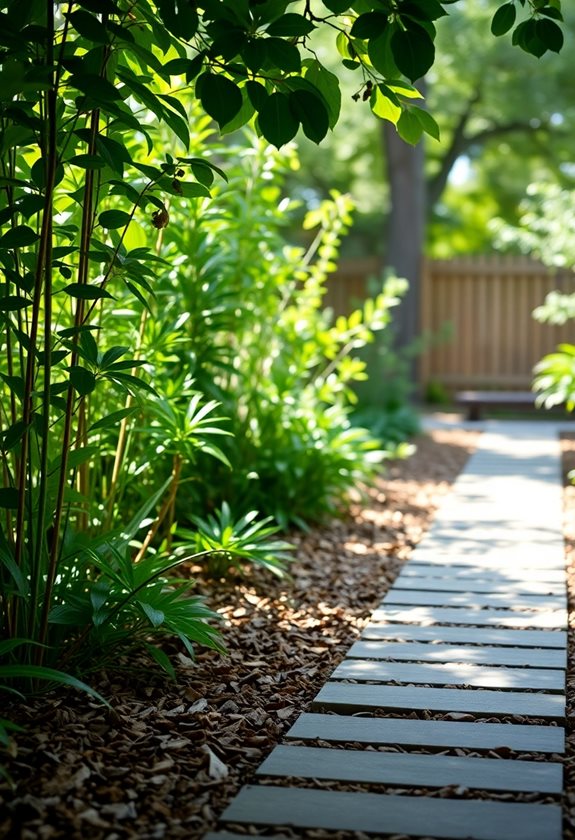
When it comes to creating a cozy and inviting garden walkway, wood chips are your best friend—seriously, they can transform a plain path into something special! Imagine this: walking on a soft, cushioned surface instead of harsh stones. Plus, wood chips help with drainage and keep pesky weeds at bay. Just be sure to:
Transform your garden walkway with soft, inviting wood chips that enhance comfort and keep weeds away!
- Choose untreated wood chips for safety.
- Layer them about 2-3 inches thick.
- Replenish every year for freshness.
Got pets? No problem! Wood chips are safe for furry friends. The soothing sound of cascading water from a nearby waterfall can further enhance the tranquility of your garden space. So, why not give your garden the walkway it deserves? You’ll love the warmth and charm they bring!
Bark Mulch
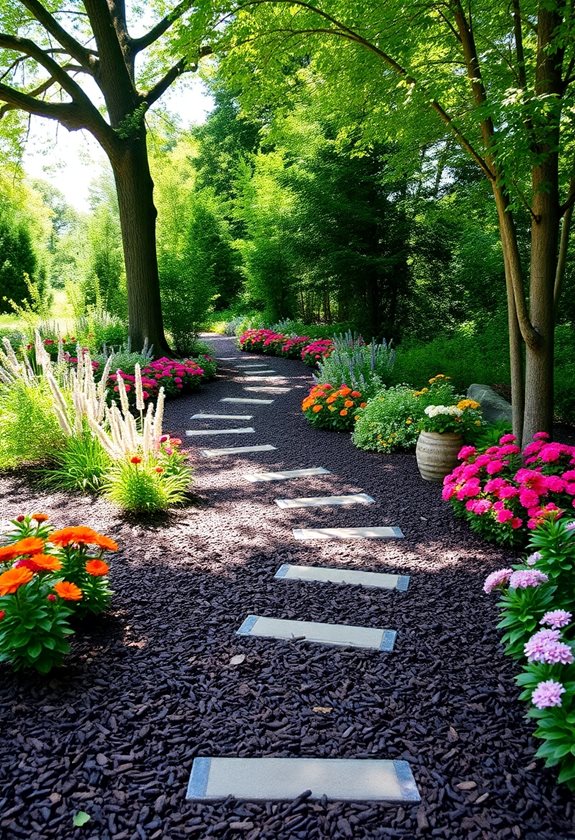
Bark mulch is a fantastic choice for your garden walkways, and trust me, it can really elevate your outdoor space! Not only does it look great, but it also provides excellent insulation for your plants and helps with moisture retention. Plus, it’s a soft landing if you happen to trip—who hasn’t done that? Just spread a 2-3 inch layer, and you’re set! Additionally, using mulch can complement natural stone walkways that enhance the aesthetic appeal of your garden.
- Choose shredded bark for a finer texture.
- Opt for hardwood for durability.
Gravel
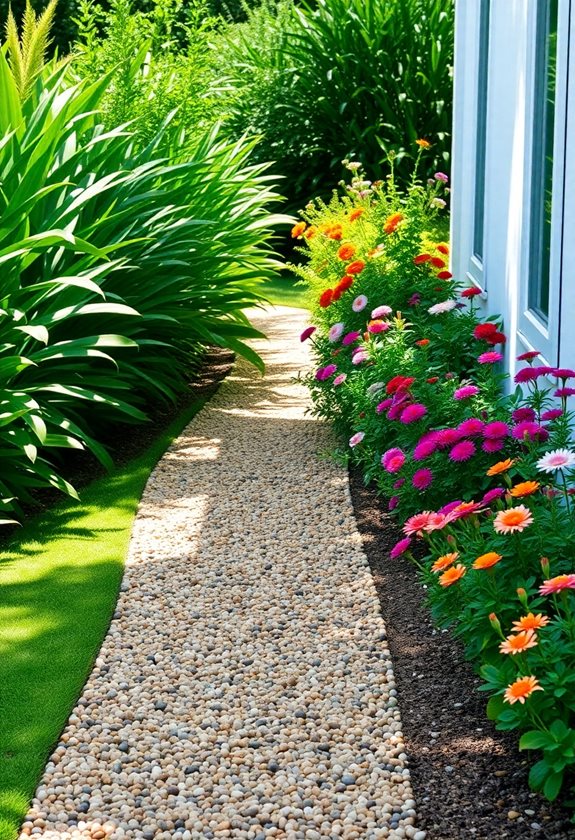
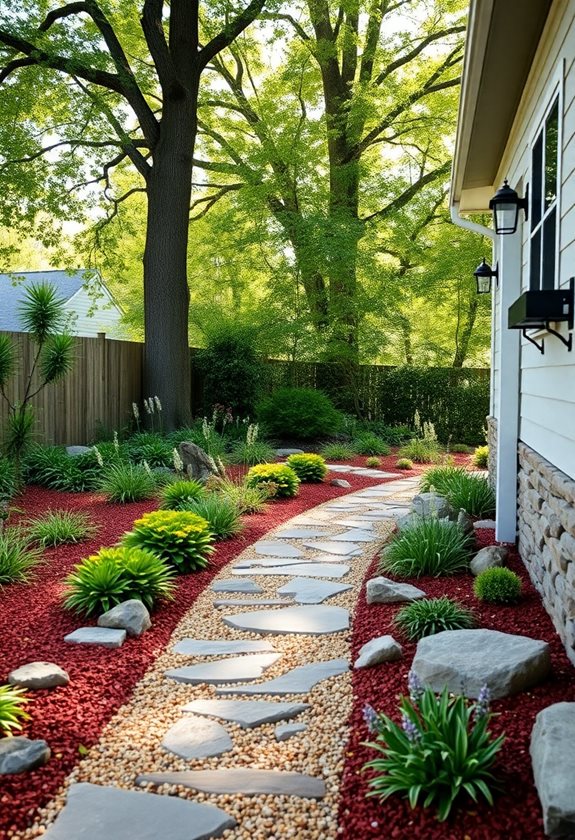
If you’re looking to add a touch of rustic charm to your garden walkways, gravel might just be the perfect option! It’s not only affordable, but it also allows for excellent drainage—no more muddy feet! Plus, you can choose from various sizes and colors, making it easy to match your garden’s vibe.
Consider these tips:
Consider these helpful tips for a successful gravel walkway: use landscape fabric, choose rounded gravel, and add edging for a neat finish.
- Use a landscape fabric underneath to prevent weeds.
- Opt for rounded gravel to reduce slipping.
- Edging can keep the gravel in place and add a polished look. Additionally, using gravel can enhance the drainage efficiency of your garden walkways, ensuring they remain functional and beautiful.
Rubber Mulch
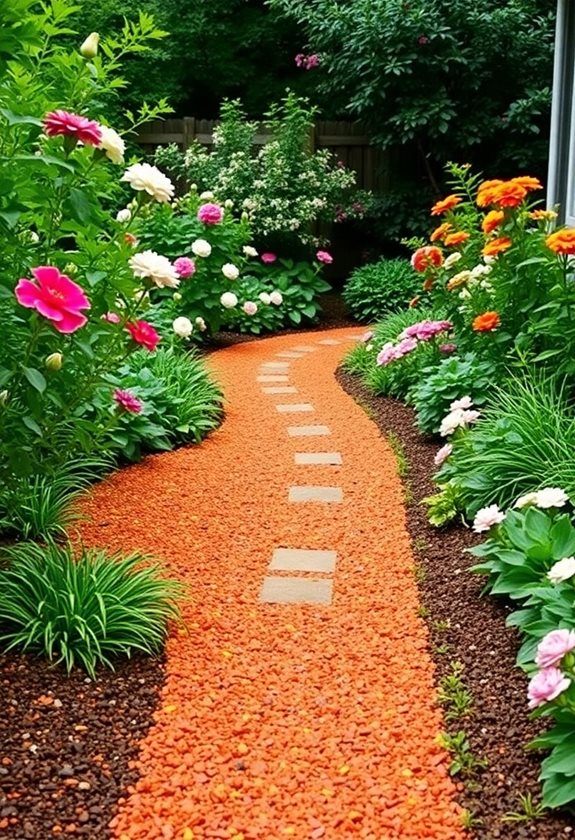
Have you ever thought about how rubber mulch could transform your garden walkways? This innovative option not only looks great but also offers safety benefits. Imagine walking on a soft surface that cushions your steps! Here are some reasons to take into account rubber mulch:
- Durability: It lasts for years without breaking down.
- Safety: It reduces slips and falls, especially for kids and pets.
- Low Maintenance: No need to replace it frequently!
- Eco-Friendly: Made from recycled tires, it helps the environment.
Rubber mulch can make your walkways safer and more enjoyable—what’s not to love? Additionally, it can enhance your garden’s overall aesthetic with beautiful pathway solutions. Give it a try!
Straw
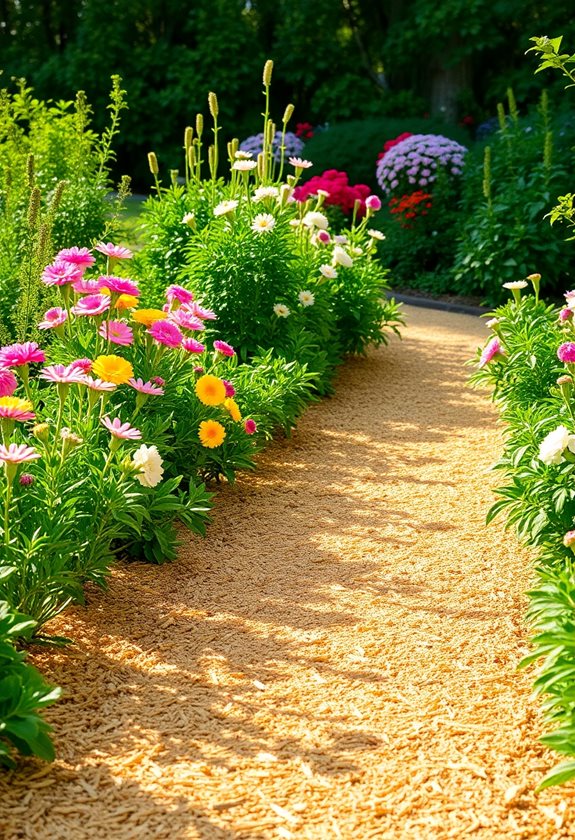
When you think of garden walkways, straw might not be the first material that comes to mind, but it can be a real game-changer! Straw’s lightweight nature makes it easy to spread, and it’s a fantastic eco-friendly option. Plus, it offers excellent drainage, so you won’t have to worry about muddy paths.
Here are some benefits to evaluate:
- Soft underfoot, reducing slip hazards.
- Helps suppress weeds.
- Breaks down, enriching your soil over time.
- Straw is a weather-resistant material that can withstand various conditions, making it a practical choice for outdoor spaces.
Just make sure to refresh it regularly. Why not give straw a try and enjoy a cozy, safe pathway in your garden?
Pine Needles
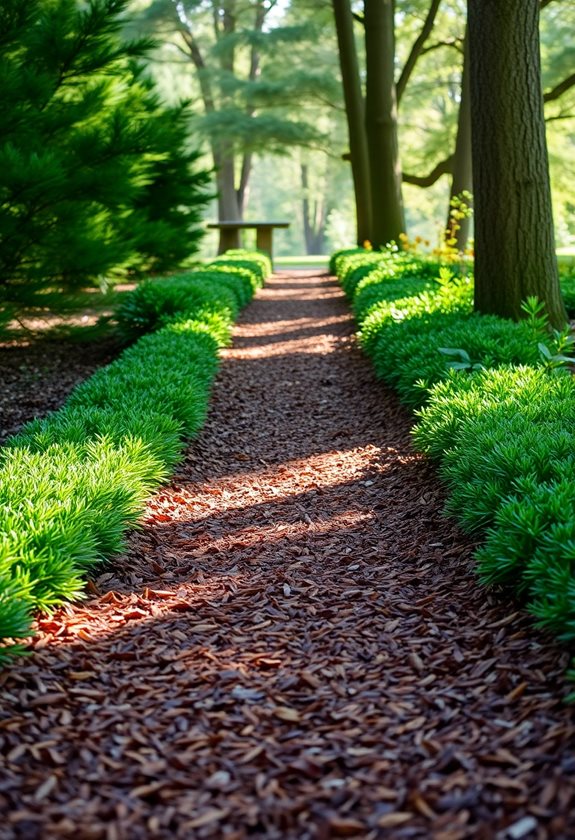
Picture your garden pathways adorned with a natural carpet of pine needles—sounds inviting, doesn’t it? These soft, fragrant needles not only look great but also provide several benefits:
- Weed Suppression: Pine needles create a barrier that keeps pesky weeds at bay.
- Moisture Retention: They help retain soil moisture, reducing the need for frequent watering.
- Acidic Soil: Pine needles naturally acidify the soil, perfect for acid-loving plants.
- Lightweight: Easy to spread, they won’t weigh you down during application!
Additionally, using eco-friendly garden structures can enhance the overall sustainability of your gardening efforts.
Cocoa Hulls
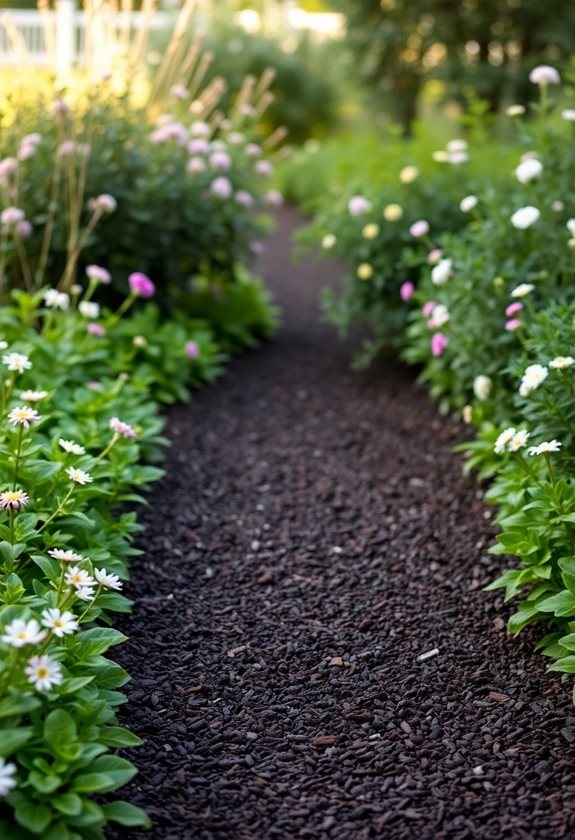
If you’re looking for a mulch that not only enhances your garden walkways but also smells amazing, cocoa hulls might just be your new best friend. These delightful shells add a rich chocolate scent that can brighten your gardening experience. Just remember, while they’re great for aesthetics, they can be toxic to pets if ingested. Additionally, using cocoa hulls can help attract pollinators and biodiversity, enriching your garden’s ecosystem.
Here are some quick tips:
- Spread a layer about 2-3 inches thick.
- Keep it away from your pets.
- Combine with other mulches for a unique look.
Sand
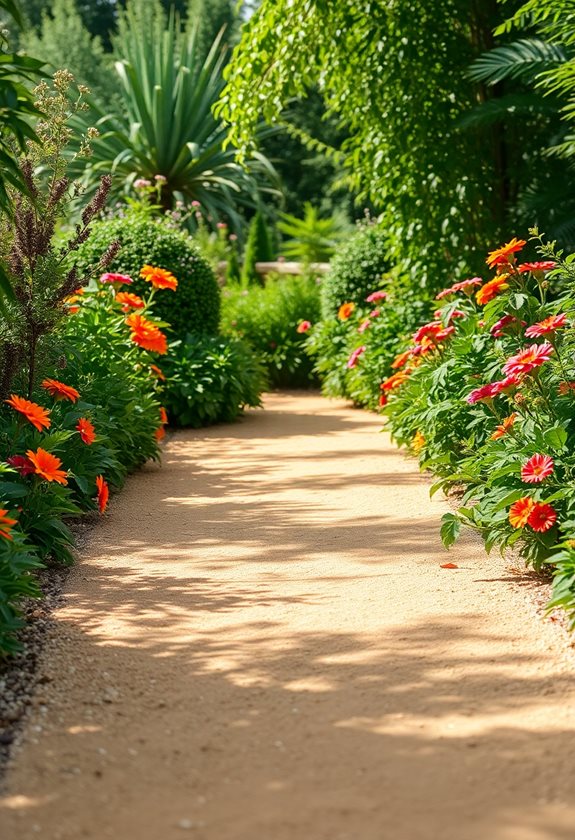
While you might think of sand as just something to build castles at the beach, it can actually be a fantastic choice for your garden walkways! Sand is not only practical, but it also adds a unique aesthetic to your space. Plus, it’s low-maintenance! Here are some reasons to evaluate it:
- Provides excellent drainage
- Keeps pathways dust-free and tidy
- Easily customizable for different designs
- Affordable and widely available
Just imagine walking on a soft, sandy path! You’ll love how it enhances your garden while keeping things safe. Additionally, incorporating low-maintenance plants along the sandy walkways can further enhance the overall appeal of your garden. So, why not give sand a try for your next project?
Pea Gravel
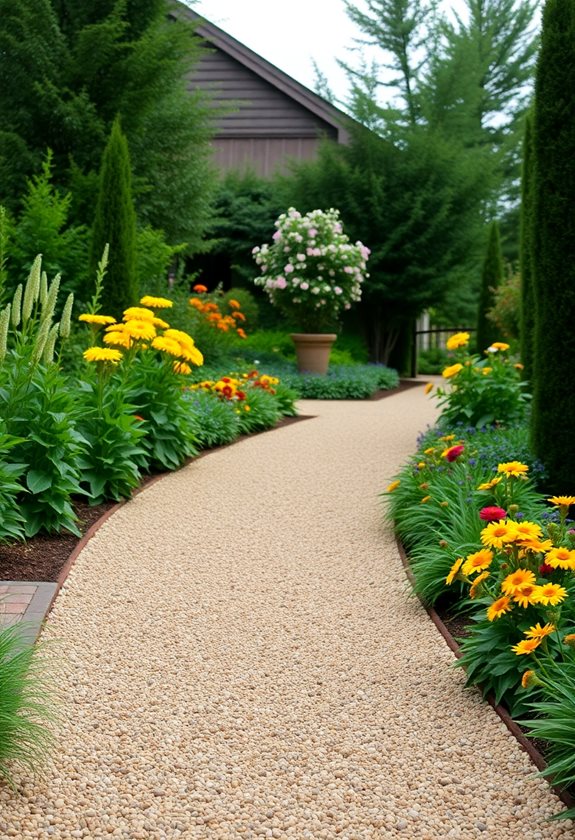
When it comes to creating charming pathways in your garden, pea gravel is a fantastic option that brings both beauty and practicality to the table. It’s safe, easy to walk on, and allows for good drainage—perfect for those rainy days! Plus, it adds a rustic touch to your garden.
Pea gravel pathways offer beauty, practicality, and rustic charm while ensuring safety and excellent drainage in your garden.
When laying pea gravel, consider these tips:
- Depth: Aim for about 2-3 inches for effective coverage.
- Borders: Use edging to keep it contained.
- Maintenance: Rake it occasionally to keep it looking fresh. Additionally, incorporating eco-friendly options like coconut fiber or wood can enhance the overall sustainability and aesthetic of your garden pathways.
Decorative Stones
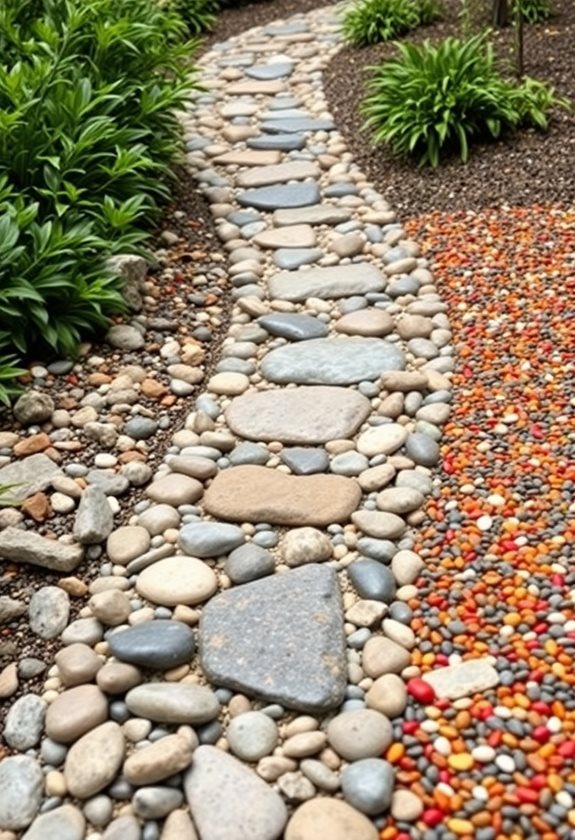
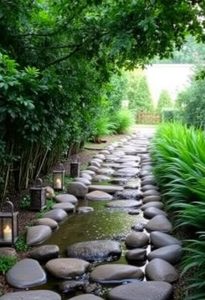
Imagine stepping into your garden and being greeted by an enchanting pathway made of decorative stones. Not only do they look stunning, but they also create a safe, sturdy walkway. You’ll love how they blend beauty with functionality! Here are some great benefits:
- Variety: Choose from colors and sizes to match your style.
- Durability: Stones can withstand the elements and last for years.
- Low Maintenance: No need for frequent upkeep like wood or mulch.
- Drainage: Decorative stones allow water to flow, preventing puddles. Additionally, using stones can provide lasting garden paths that enhance the overall aesthetics of your outdoor space.
Frequently Asked Questions
How Often Should I Replenish Mulch on Walkways?
You’ll want to replenish your mulch every six months or so. Think of it as giving a cozy blanket to your garden! Check for spots where it’s thinning. If it’s looking sparse or washed away, it’s time for a refresh. Also, remember to keep it about two to three inches thick for safety and to prevent weeds. So, grab that shovel and let’s keep your walkways safe and stylish! Isn’t gardening fun?
Can Mulch Attract Pests or Insects?
Yes, mulch can attract pests or insects if you’re not careful! It’s important to choose the right type. For example, organic mulches, like wood chips or straw, can invite critters looking for a cozy home. But don’t worry, you can minimize this! Make sure to keep your mulch dry and avoid over-mulching. Also, regularly check for any unwanted guests. Have you considered using gravel or rubber mulch instead? They’re less appealing to pests!
Is Mulch Safe for Pets and Children?
You’re right to wonder if mulch is safe for your pets and kids! Generally, most organic mulches like bark or straw are safe, but some, like cocoa mulch, can be toxic to pets. Always check what you’re using. Also, keep an eye on how they interact with it. You wouldn’t want them munching on something they shouldn’t! So, stick to safe options, and everyone can enjoy the garden together!
How Do I Prevent Weeds From Growing Through Mulch?
To keep weeds from sneaking through your mulch, you’ve got a couple of fun strategies! First, lay down a thick layer—about 3 inches—of mulch. This smothers those pesky weeds. You could also use landscape fabric underneath for extra protection. Don’t forget to pull any weeds before mulching; they won’t stand a chance! Regularly check your garden, and you’ll stay ahead of those uninvited guests. Happy gardening! Isn’t it satisfying to see a weed-free space?
What Is the Ideal Thickness for Mulch on Walkways?
Did you know that a mulch layer of about 2 to 4 inches can reduce weed growth by up to 90%? For walkways, stick to around 2 inches for safety—this thickness prevents slipping while still controlling weeds. Too thick, and you might create a tripping hazard! Plus, it keeps moisture in the soil. Just remember to refresh it annually, so your garden path stays neat and inviting! Isn’t gardening fun?