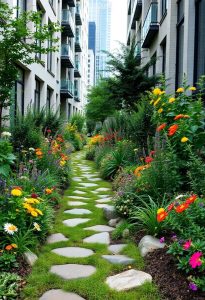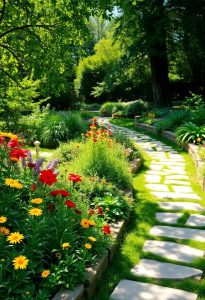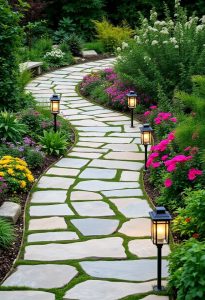
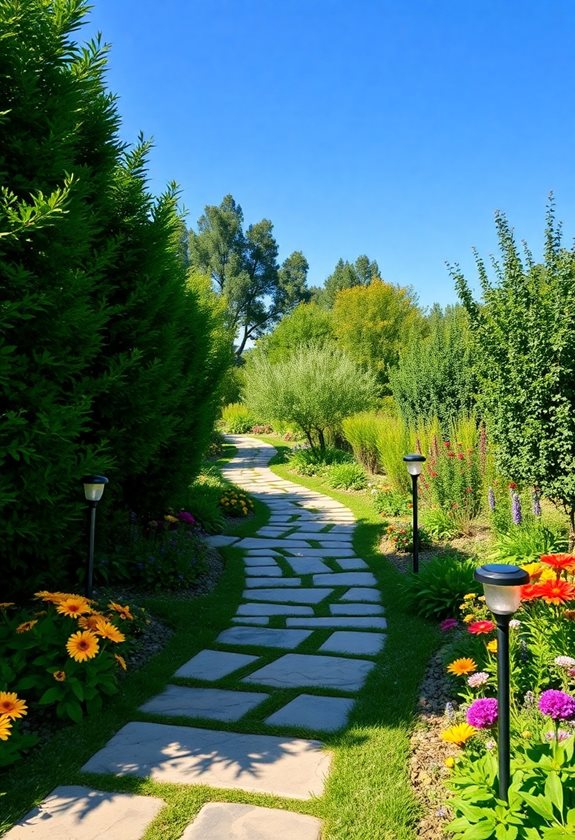
Creating eco-friendly pathways in your garden is a fantastic way to blend beauty with sustainability! You can use natural materials like gravel and stone, or even upcycle old bricks for a unique touch. Don’t forget to tuck in some plants along the edges to soften those hard lines—plus, they help attract pollinators! Regular maintenance, like checking for weeds or loose stones, keeps them safe and inviting. Curious about more tips to enhance your garden?
Design Highlights
- Eco-friendly pathways enhance garden accessibility, prevent soil compaction, and improve aesthetics while supporting sustainable practices.
- Utilize natural materials like gravel, brick, and flagstone, or recycled options to create durable and unique pathways.
- Regular maintenance, including weed removal and seasonal inspections, is crucial for ensuring the longevity and safety of pathways.
- Sealants can protect wooden pathways from moisture and pests, extending their lifespan and enhancing their visual appeal.
- Incorporate curved designs and plantings alongside pathways to create a natural look and add visual interest to the garden space.
The Importance of Eco-Friendly Pathways
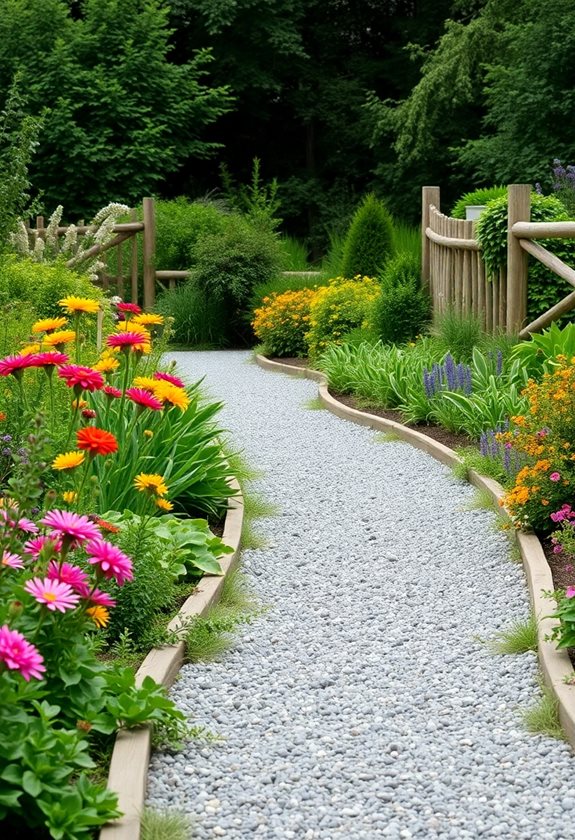
Have you ever thought about how the pathways in your garden can impact the environment? Eco-friendly pathways not only beautify your space but also protect local ecosystems. When you choose sustainable materials, you’re reducing waste and minimizing harm to wildlife. Plus, they help with drainage, preventing soil erosion. Imagine walking through a lush garden, knowing your path is safe for both you and nature! Additionally, creating sustainable garden walkways can further enhance the overall health of your garden.
Eco-friendly pathways enhance your garden’s beauty while safeguarding local ecosystems and promoting sustainability.
Here are a few benefits of eco-friendly pathways:
- They reduce carbon footprints.
- They encourage biodiversity.
- They’re safer for kids and pets.
Natural Materials for Pathway Construction
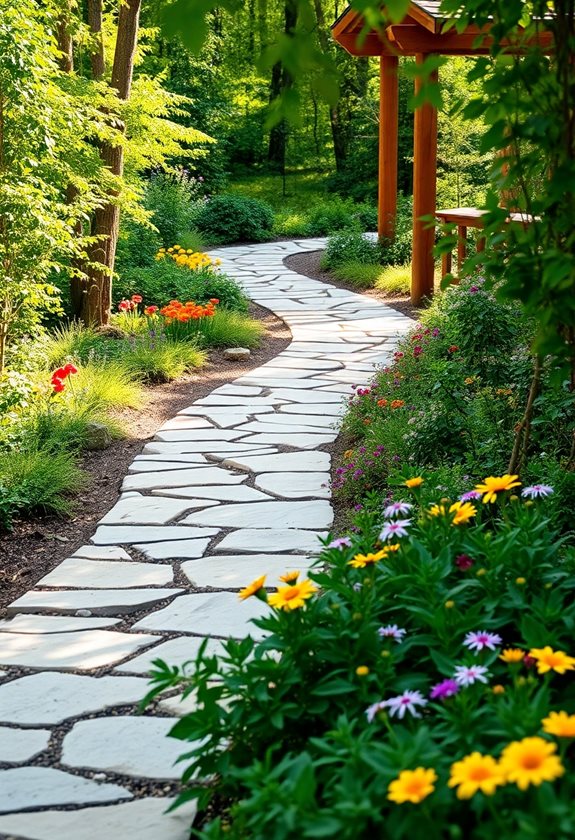
When it comes to creating those eco-friendly pathways, the materials you choose can make all the difference. Think about using natural options like gravel, brick, or decomposed granite. They’re safe, durable, and blend beautifully with your garden! Plus, they won’t harm the environment.
Here are a few ideas:
- Wood chips: Great for a rustic look!
- Flagstone: Provides a sturdy surface and looks classy.
- Coconut coir: Soft underfoot and biodegradable!
Additionally, incorporating eco-friendly materials into your garden design can enhance its sustainability. Now, isn’t it exciting to think about walking on a path that’s both beautiful and sustainable? Let your imagination run wild!
Recycled and Upcycled Pathway Options
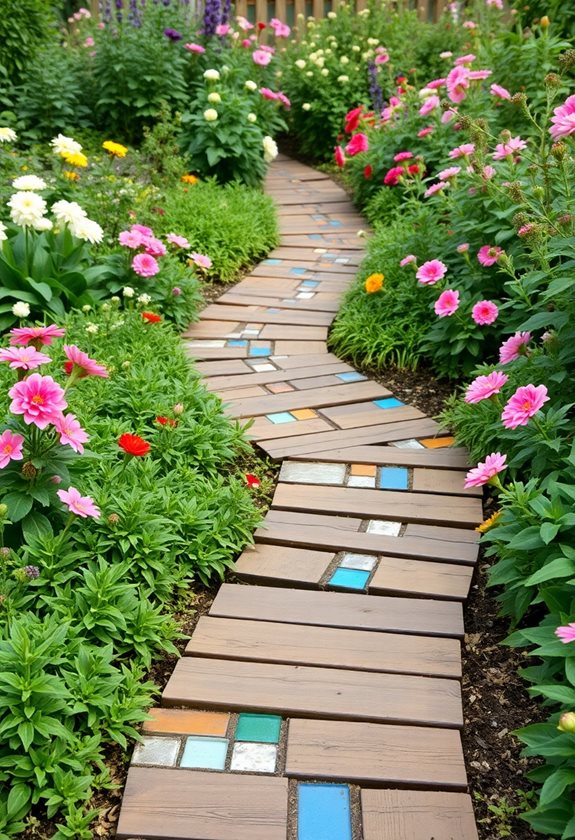
If you’re looking to make your garden pathways both unique and eco-friendly, why not consider using recycled and upcycled materials? You can create stunning walkways from old bricks, reclaimed wood, or even discarded tiles. Imagine the stories those materials could tell!
- Bricks: Lay them out in a herringbone pattern for a chic look.
- Wood: Use old pallets for rustic charm—just sand them down for safety.
- Tiles: Create colorful mosaics!
Each choice not only helps the environment but also adds personality to your garden. Incorporating upcycled garden decor ideas can inspire you to think outside the box. So, what are you waiting for? Get creative and start your eco-friendly path today!
Permeable Paving Solutions
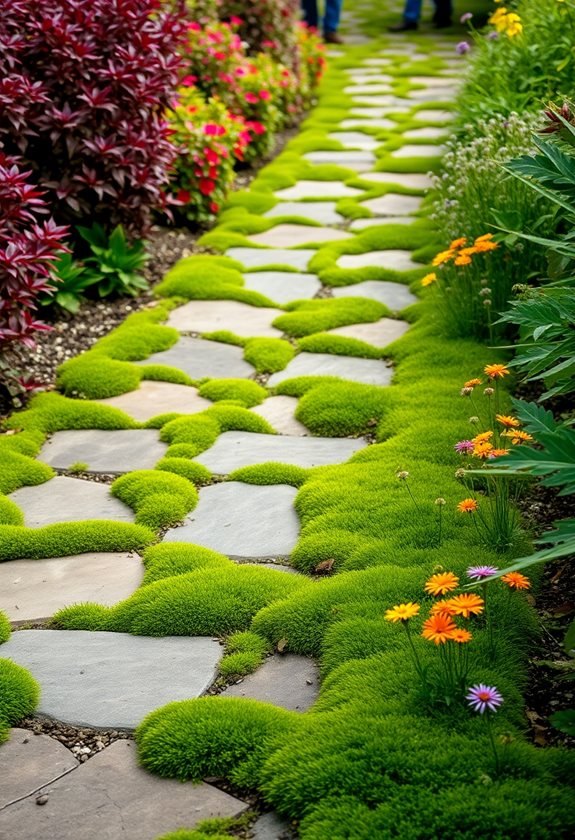
After exploring the beauty of recycled and upcycled materials, let’s shift focus to another fantastic option for your garden pathways: permeable paving solutions. These pathways not only look great but also help manage water runoff, keeping your garden safe and healthy. Here are four types to evaluate:
Consider permeable paving solutions for your garden pathways—they enhance aesthetics while effectively managing water runoff.
- Permeable Concrete: Durable and customizable.
- Porous Asphalt: Perfect for driveways and walkways.
- Plastic Grid Systems: Easy to install and maintain.
- Gravel Pavers: Eco-friendly and visually appealing. Additionally, investing in quality pathway materials can enhance the durability and aesthetics of your garden pathways.
Using Local Stone and Gravel
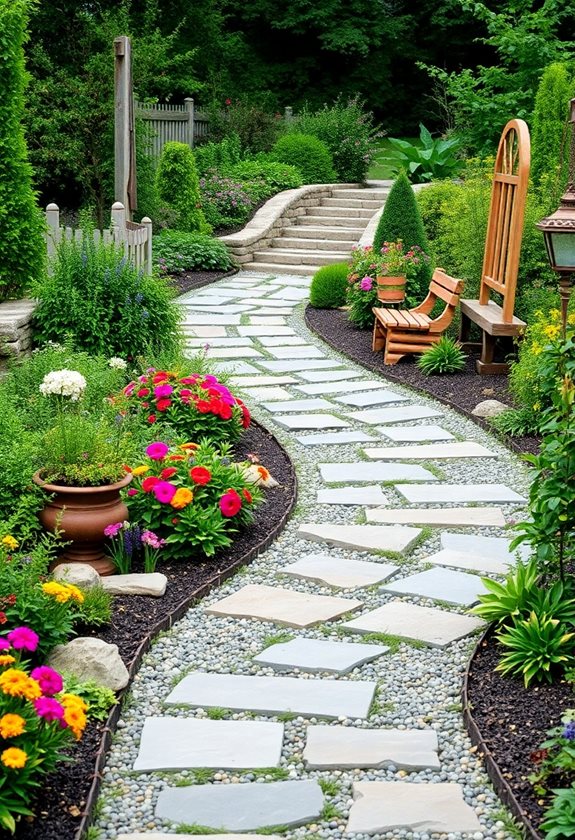
Using local stone and gravel in your garden pathways isn’t just a practical choice; it can transform your outdoor space into a stunning showcase of natural beauty! Imagine walking on smooth stones or crunching gravel beneath your feet. Plus, it’s safer—no slippery surfaces here!
When choosing materials, look for:
- Durability: Local stones withstand weather changes.
- Aesthetics: They blend beautifully with your landscape.
- Cost-effectiveness: Often cheaper than imported options.
Additionally, choosing the right materials can significantly enhance the longevity and visual appeal of your garden paths.
Incorporating Plants Into Pathways
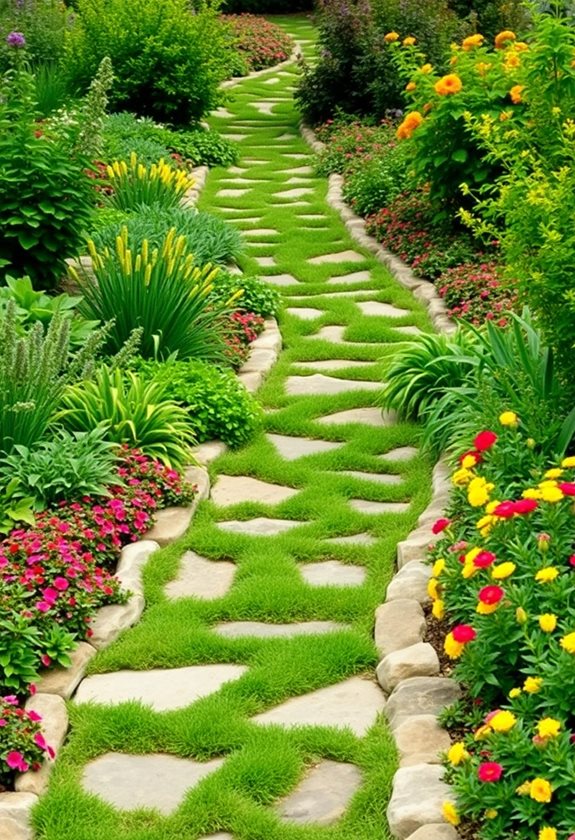
While you might think of pathways as just a way to get from point A to point B, incorporating plants into them can turn these routes into vibrant, living corridors that invite exploration. Imagine strolling through a lush, green garden where flowers peek through stones! Here are some ideas to get you started:
Transform your pathways into vibrant corridors by incorporating plants that invite exploration and create a lush garden experience.
- Low-growing herbs like thyme or chamomile create a fragrant experience.
- Perennial flowers such as violets add color and charm.
- Groundcover plants help prevent erosion while looking lovely.
- Edible plants like strawberries can add a delicious twist!
Incorporating drought-resistant plants can enhance your garden’s sustainability and beauty while requiring minimal maintenance. Let’s make your pathways not just functional, but beautiful!
Benefits of Mulch and Wood Chips
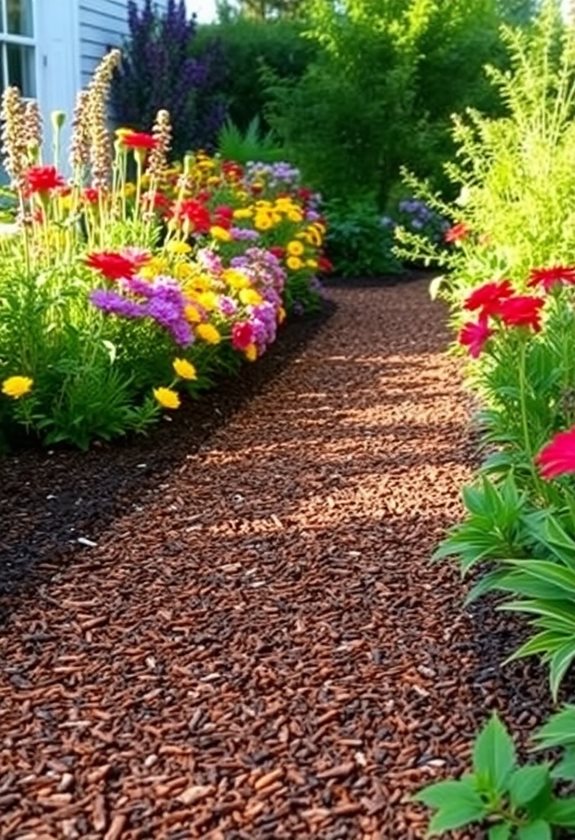
When you think about transforming your garden, have you considered how mulch and wood chips can make a huge difference? They not only keep your soil moist, but they also suppress those pesky weeds! Plus, they give your garden a neat look. Using natural materials like wood chips can keep your garden safe, avoiding harmful chemicals.
Here are some benefits:
- Insulation: Protects roots from extreme temperatures.
- Nutrients: As they break down, they enrich the soil.
- Aesthetic appeal: Adds a rustic charm to your pathways! Additionally, eco-friendly materials like mulch and wood chips contribute to a healthier environment by reducing waste.
Designing Pathways for Wildlife
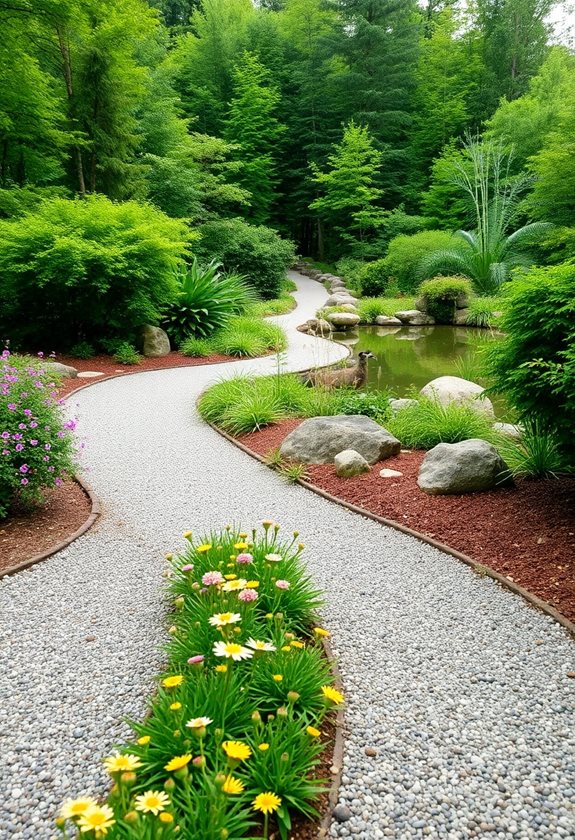
Creating pathways in your garden that invite wildlife can be a rewarding endeavor, especially if you’re looking to connect with nature in your own backyard. To design these inviting pathways, consider these tips:
Designing wildlife-friendly pathways can enhance your garden and deepen your connection with nature.
- Use native plants to attract local species.
- Incorporate natural materials like stones or logs for a rustic feel.
- Create gentle curves to mimic natural trails.
- Add water features—like a small pond—to draw in birds and butterflies. These stunning water features can enhance the beauty of your garden while providing essential resources for wildlife.
Maintenance Tips for Sustainable Pathways
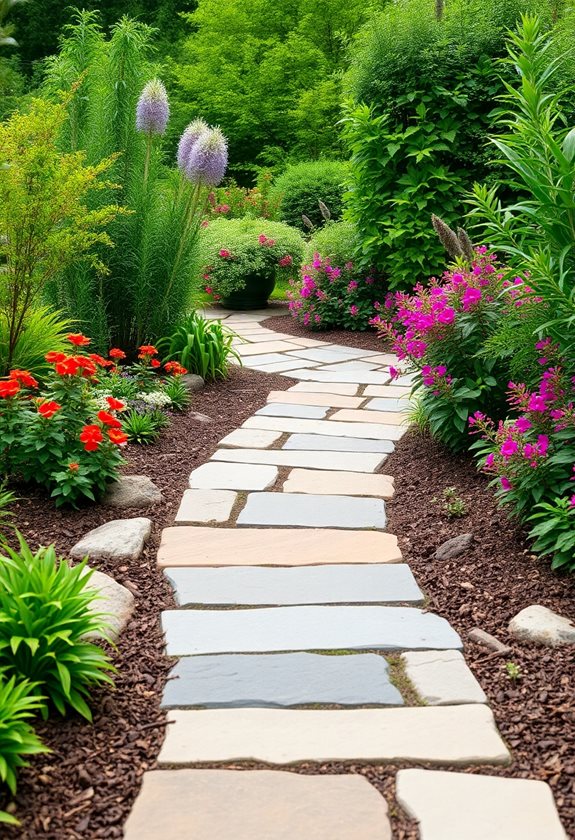
Maintaining sustainable pathways in your garden can feel like a fun puzzle, especially when you discover how easy it is to keep them looking great while being eco-friendly! Start by regularly removing weeds and debris—trust me, it’s less intimidating than it sounds. You might enjoy using a natural mulch to help suppress those pesky weeds! Also, check for any loose stones or uneven surfaces; safety first, right? Finally, a quick rinse with water can keep your pathways clean and inviting. Applying sealants to wooden pathways can also enhance their longevity and protect against wear and tear. So, are you ready to keep your garden safe and beautiful? Let’s make those pathways shine!
Frequently Asked Questions
What Are the Best Plants to Grow Alongside Eco-Friendly Pathways?
When you’re picking plants to grow alongside your eco-friendly pathways, think about low-maintenance and native options. Have you tried lavender? It smells amazing and attracts pollinators! Or maybe consider hostas for their lush greenery. Here’s a fun idea: mix in some colorful annuals like marigolds for a pop of color! Just imagine strolling through your garden, surrounded by vibrant blooms. Doesn’t that sound delightful? Happy planting!
How Do Pathways Impact Soil Erosion in Gardens?
Imagine watching your garden’s soil wash away like sandcastles at high tide. Pathways can play an essential role in soil erosion. They help manage water flow and reduce the impact of foot traffic. To keep your soil safe:
- Use gravel or wood chips for pathways.
- Create barriers with plants or stones.
Can Pathways Attract Beneficial Insects and Wildlife?
Pathways can be a magnet for beneficial insects and wildlife. Think about it—when you create a safe space with native plants along your pathways, you invite pollinators like bees and butterflies. Plus, a little water feature or some flowers can attract birds and beneficial bugs. Just imagine watching ladybugs munch on aphids! So, why not design your pathways to double as habitats? You’ll be amazed at the life they can support!
What Is the Cost Comparison of Eco-Friendly Pathways Versus Traditional Options?
Ever wondered if eco-friendly pathways really save you money? While traditional options like concrete can be cheaper upfront, they often lack durability and require more maintenance. Eco-friendly choices, like gravel or recycled materials, might cost a bit more initially, but they last longer and promote biodiversity! Plus, you might even get some extra benefits, like attracting pollinators. So, investing in sustainable pathways could be the smarter choice for your garden and wallet!
Are There Any Local Regulations Regarding Pathway Materials and Construction?
Before you start building that awesome pathway, you should check your local regulations! Different areas have rules about what materials you can use and how to construct them. It’s like finding the right recipe—ingredients matter! So, ask yourself:
- Are there restrictions on certain materials?
- Do you need permits?
You wouldn’t want to lay down beautiful stones only to find out they’re a no-go. Stay safe and informed, and your garden will thrive!