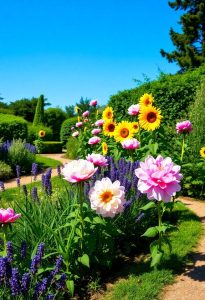
If you want a lush garden, these seasonal plants are a must! Try vibrant tulips and cheerful daffodils in spring; they’ll light up your space. In summer, tall sunflowers and colorful zinnias create a stunning display. For autumn, sprinkle in chrysanthemums and asters for a warm vibe. Winter? Pansies add color amidst the snow, while evergreens keep things interesting. Don’t forget hostas and ferns for lush greenery year-round. Intrigued? There’s so much more to explore!
Design Highlights
- Spring: Plant vibrant tulips and cheerful daffodils for bright colors and healthy growth in well-drained soil with plenty of sunlight.
- Summer: Incorporate tall sunflowers for natural privacy and bushy zinnias for a variety of hues, ensuring regular watering for lush foliage.
- Autumn: Use chrysanthemums and asters to add vibrant colors to your garden; these hardy plants thrive in cooler temperatures with ample sunlight.
- Winter: Include pansies for colorful blooms and evergreens for year-round structure, attracting birds and maintaining garden interest during colder months.
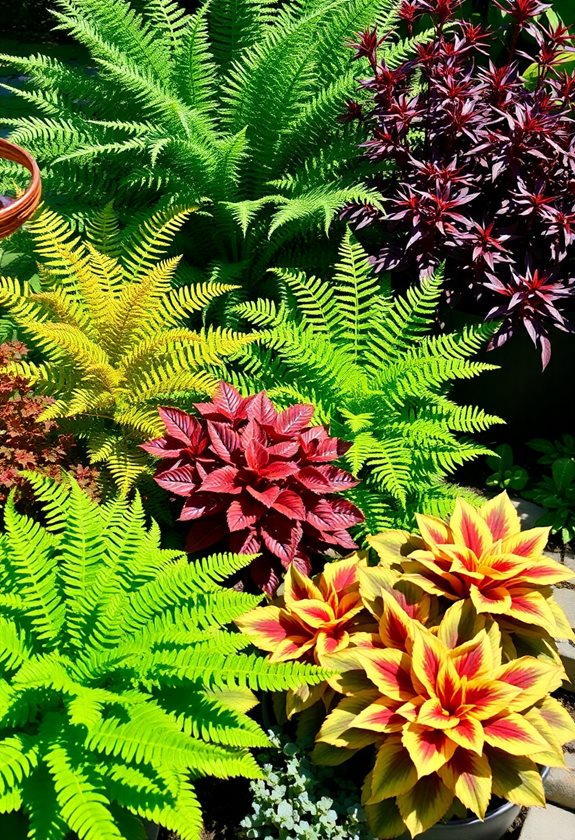
- Year-Round: Combine hostas and ferns for lush green foliage in shady areas, keeping soil moist and protected from harsh conditions.
Spring Blooms: Tulips and Daffodils
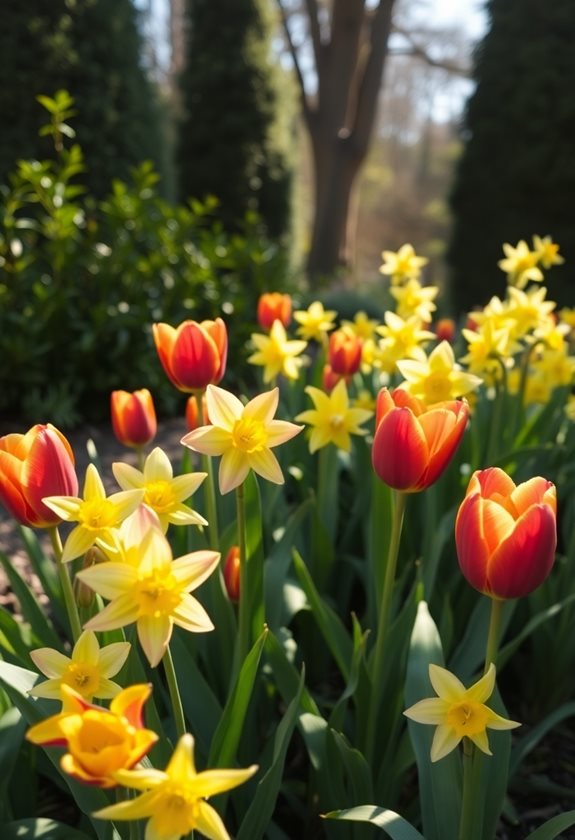
Spring is just around the corner, and if you’re anything like me, the thought of vibrant tulips and cheerful daffodils bursting into bloom makes you giddy with excitement! These spring favorites are perfect for your garden!
Spring is on its way, bringing vibrant tulips and cheerful daffodils that will fill our gardens with joy!
- Tulips come in every color imaginable!
- Daffodils, with their sunny yellow, can brighten any dull spot.
When planting, make sure to choose well-drained soil and a sunny spot. Remember, they thrive in cool weather, so don’t wait too long! Additionally, consider incorporating pest-repelling flowers to enhance your garden’s health and beauty!
Have you ever tried mixing colors? It’s a delightful surprise! Let’s embrace the season together and watch our gardens come alive!
Summer Standouts: Sunflowers and Zinnias
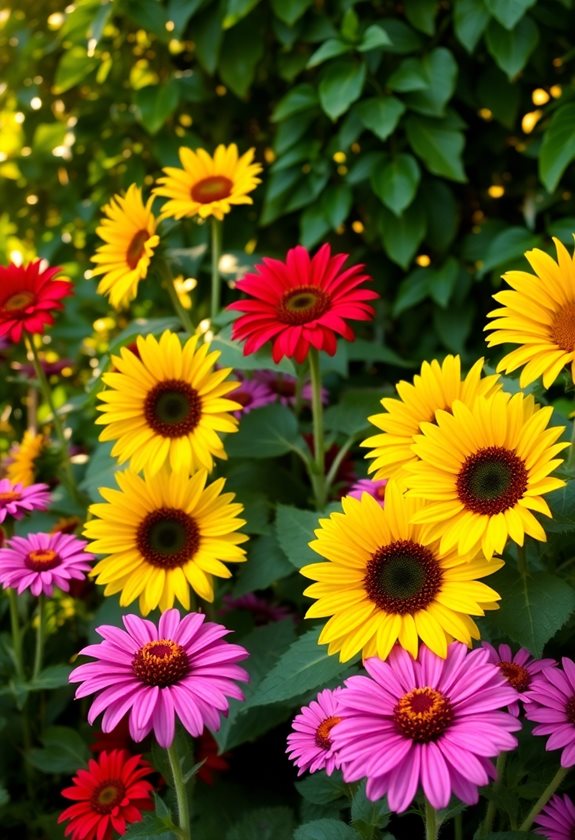
As the days get longer and the sun shines brighter, your garden can transform into a vibrant canvas with summer standouts like sunflowers and zinnias. These cheerful blooms not only add color but also attract pollinators—how great is that? Sunflowers, with their towering height, can be perfect for creating a natural privacy screen, while zinnias offer a rainbow of hues in smaller, bushier forms. Just remember to plant them in well-drained soil and guarantee they get plenty of sunlight. Don’t forget to water regularly! What’s your favorite color? Adding these beauties will make your garden the talk of the neighborhood! Additionally, consider incorporating best flower varieties for continuous blooms throughout the summer.
Autumn Allure: Chrysanthemums and Asters
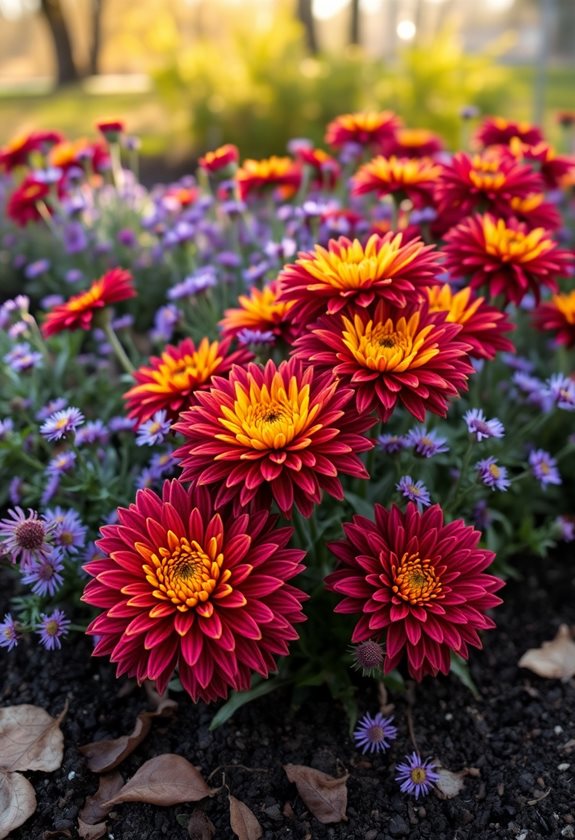
When the air starts to turn crisp and leaves begin to paint the landscape with hues of gold and crimson, it’s time to embrace the stunning allure of autumn with chrysanthemums and asters. These hardy beauties not only add vibrant color but also thrive in cooler temperatures. Additionally, incorporating seasonal plant selection can transform your garden into a picturesque autumn wonderland.
Have you ever thought about mixing their shades? Asters, with their star-like blooms, pair beautifully with the round, cheerful heads of chrysanthemums.
- Plant them in well-drained soil.
- Guarantee they get at least six hours of sunlight daily.
With a little care, your garden will be bursting with autumn’s charm! Who wouldn’t love that?
Winter Wonders: Pansies and Evergreens
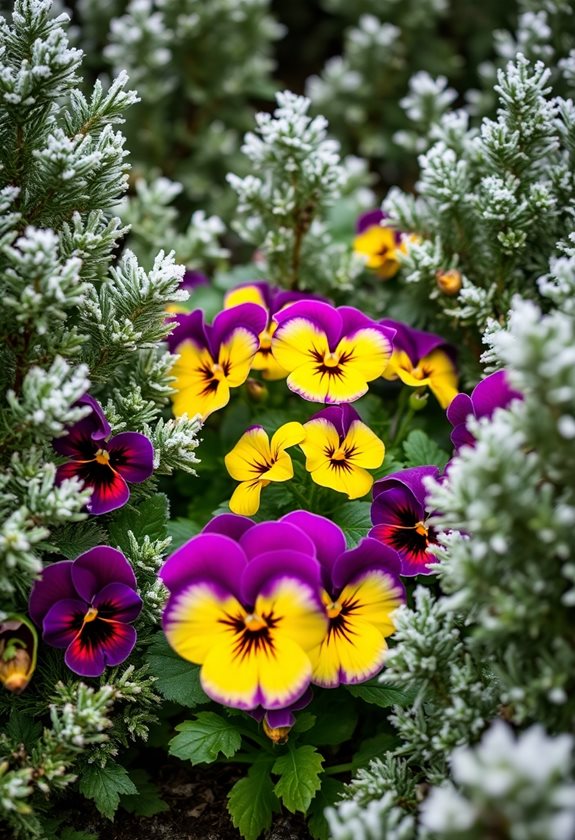
As the coziness of winter settles in, your garden might seem like it’s ready for a long nap, but there’s no need to let it go dreary and dull! With vibrant pansies and resilient evergreens, you can keep your outdoor space lively. Here are four reasons to embrace these winter wonders:
- Colorful Blooms: Pansies add cheerful hues to snowy landscapes.
- Year-Round Structure: Evergreens provide a solid backdrop, even in frost.
- Low Maintenance: Both require minimal care during winter.
- Wildlife Friendly: They attract birds, bringing life to your garden.
Additionally, incorporating perennial flowers into your winter garden ensures that there is always something blooming throughout the year. Why not bring some joy to your winter garden?
Year-Round Foliage: Hostas and Ferns
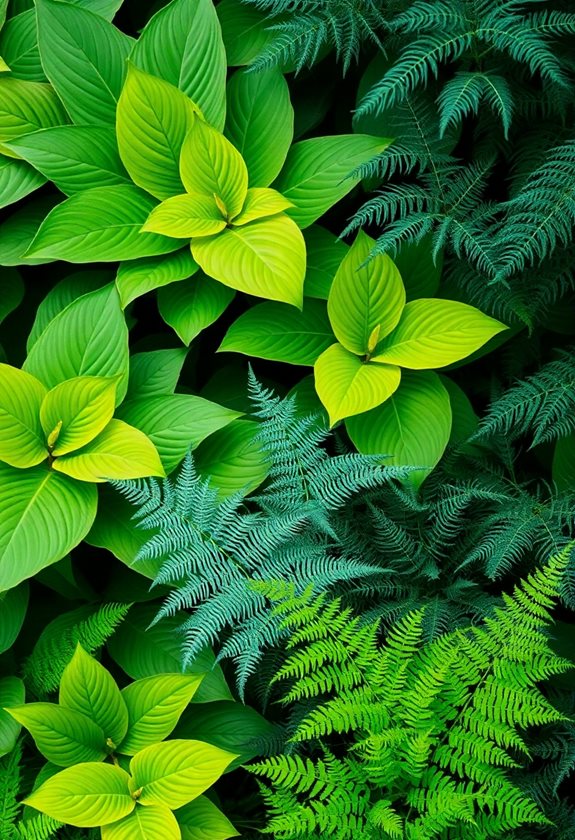
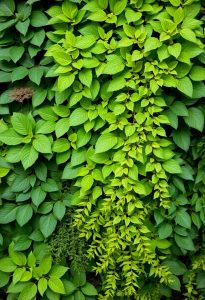
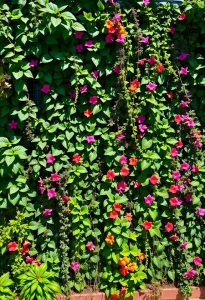
While winter might seem like a time for your garden to hibernate, it’s actually the perfect opportunity to embrace the lush beauty of hostas and ferns! These hardy plants thrive in shady spots, providing vibrant green foliage year-round. Hostas come in a variety of sizes and colors, making them versatile for any garden. Ferns, with their delicate fronds, add an elegant touch. Why not combine them for a stunning display? Just remember to keep the soil moist and provide some protection from harsh winds. Trust me, you’ll love the way they transform your garden into a serene retreat! Additionally, consider incorporating climbing plants to enhance your garden’s vertical space and create a more dynamic landscape.
Textured Touch: Ornamental Grasses
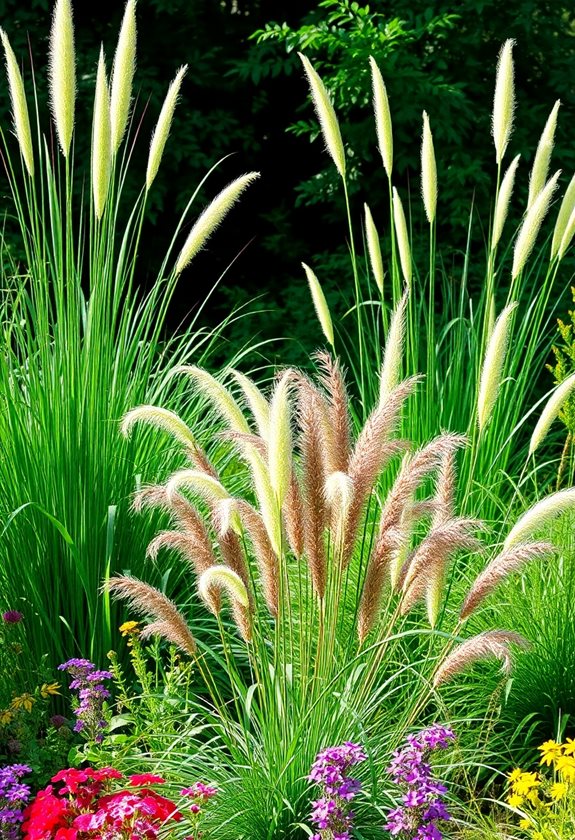
Ornamental grasses can add a fabulous textured touch to your garden that truly makes it pop! They wave gracefully in the breeze and provide a stunning backdrop for other plants. Want to enhance your garden with these beauties? Here’s how:
- Choose the Right Varieties: Consider Miscanthus or Fountain grass for height and drama.
- Mix Textures: Pair them with softer plants like hostas for contrast.
- Create Movement: Position them where they catch the wind.
- Consider Color: Look for varieties with unique hues, like purple or variegated greens.
Additionally, incorporating ornamental grasses into your landscape design can create a dynamic visual interest throughout the seasons. Your garden will thank you with its vibrant, lively appearance!
Seasonal Succulents: Echeveria and Sedum
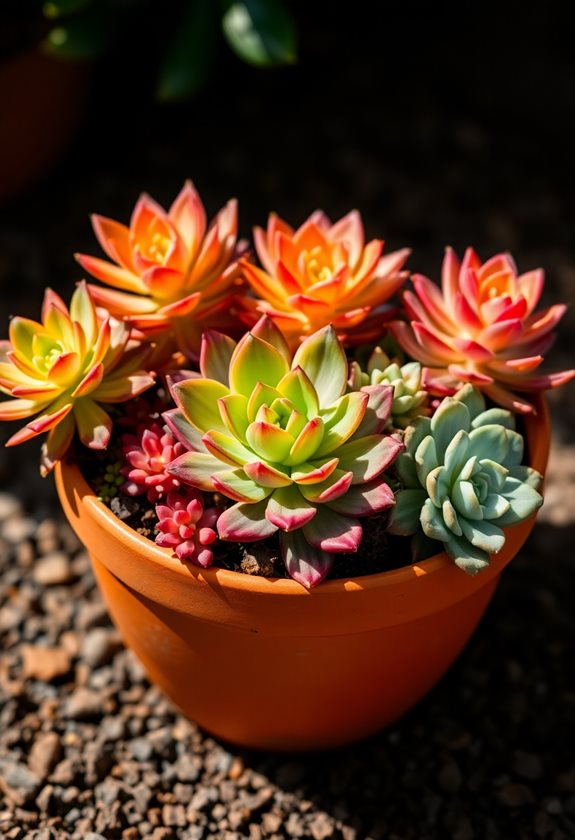
If you’re looking to add a splash of color and personality to your garden, you can’t go wrong with seasonal succulents like Echeveria and Sedum! These hardy plants thrive in various conditions and require minimal care, making them perfect for busy gardeners. Echeveria’s rosette shape comes in stunning colors, while Sedum offers vibrant flowers that attract bees—just be cautious not to overwater!
Consider these tips:
- Place them in well-draining soil.
- Verify they get plenty of sunlight.
- Mix different varieties for a dynamic display.
Additionally, incorporating drought-tolerant flowers into your garden can enhance its resilience during dry spells. With these beauties, your garden will shine, and you won’t have to worry too much!
Frequently Asked Questions
How Do I Choose Plants for My Garden’s Specific Climate?
Choosing plants for your garden’s specific climate can feel overwhelming, but it’s easier than you think! Start by checking your USDA hardiness zone—it’s like your garden’s secret code! Then, consider the sunlight and moisture levels. Ask yourself: Do you want colorful blooms or lush greenery? For example, if you’re in a hot area, succulents thrive! Remember, gardening’s about experimenting and having fun, so don’t be afraid to try new plants! Happy gardening!
What Soil Types Are Best for Seasonal Plants?
Imagine your garden’s soil as a cozy blanket, wrapping your plants in comfort! For seasonal plants, well-draining loamy soil is ideal. It holds nutrients yet allows excess water to escape, preventing root rot. Sandy soil improves drainage, while clay can retain moisture—just mix in compost to balance. Have you tried testing your soil’s pH? A simple kit can guide you! Happy gardening, and remember, the right soil makes all the difference!
How Can I Extend the Blooming Season of My Plants?
Want to extend your plants’ blooming season? You’ve got options! Start by deadheading spent blooms; it encourages new growth. Consider staggered planting for continuous color—like mixing early, mid, and late bloomers! Regular feeding with a balanced fertilizer can also boost their performance. And don’t forget about mulching to retain moisture and regulate soil temperature. Have you tried companion planting? It can create a vibrant, thriving garden! Keep experimenting; your garden will thank you!
Are There Any Companion Plants for Better Growth?
Companion planting can really boost your garden’s growth! For instance, if you plant tomatoes alongside basil, they’ll thrive together. Basil repels pests that usually bother tomatoes, plus it enhances their flavor! Why not try this combo? Here are some quick tips:
- Choose healthy plants.
- Avoid overcrowding.
- Water them well.
With a bit of care and attention, you’ll see your garden flourish. What’s better than homegrown veggies? It’s rewarding! Happy gardening!
How Do I Care for Seasonal Plants During Extreme Weather?
When extreme weather hits, caring for your seasonal plants takes a bit of extra love! You can protect them by:
- Providing shade during intense heat—think umbrellas or shade cloths.
- Watering early in the morning or late in the evening to prevent evaporation.
- Mulching to keep the soil temperature stable.
Have you ever seen a plant wilt? It’s heartbreaking! Just stay attentive, and you’ll help your garden thrive through any storm. Happy gardening!