Are you ready to create a stunning outdoor container garden? Start by understanding your climate zone—this helps you pick the right seasonal plants. Choose containers with good drainage to keep roots happy, and use a light potting mix. Water early or late to prevent evaporation, and don’t forget to fertilize every few weeks for robust growth! Experiment with colors and shapes to attract pollinators. Hungry for more tips to transform your space? There’s so much left to explore!
Design Highlights
- Select plants based on your climate zone to ensure optimal growth and seasonal success in containers.
- Use containers with proper drainage holes to prevent waterlogging and promote healthy root systems.
- Choose a high-quality potting mix that is light and airy, enhancing drainage and root breathing.
- Water consistently, checking soil moisture regularly, and aim to water early morning or late afternoon to minimize evaporation.
- Incorporate a mix of vibrant flowers and leafy greens for visually appealing and diverse outdoor displays.
Understanding Your Climate Zones
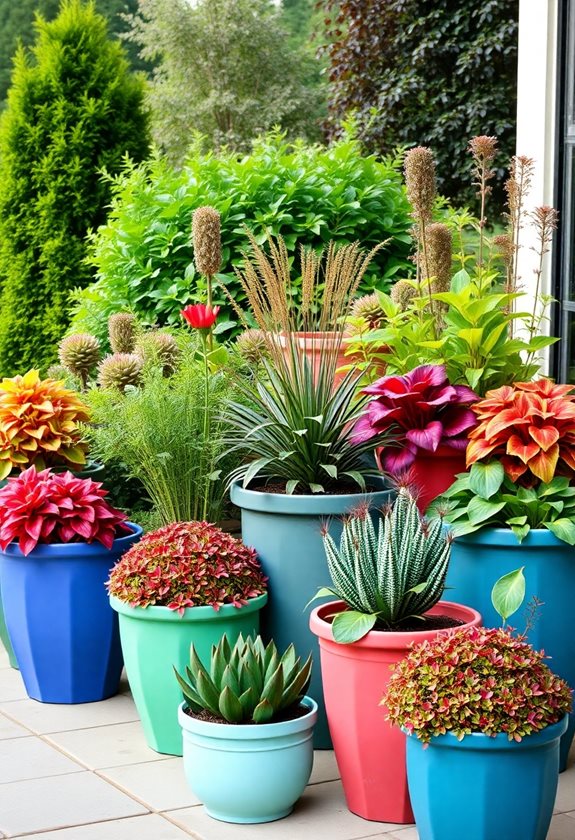
When it comes to gardening, understanding your climate zone is like having a secret map to success! Knowing your zone helps you choose plants that thrive in your environment, keeping your garden safe and flourishing. For instance, if you’re in a colder zone, opting for hardy perennials can save you from planting failures. Additionally, incorporating stunning native flowers can enhance your garden’s beauty while supporting local ecosystems.
- Check local resources to find your zone.
- Consider factors like frost dates and rainfall.
Choosing the Right Containers
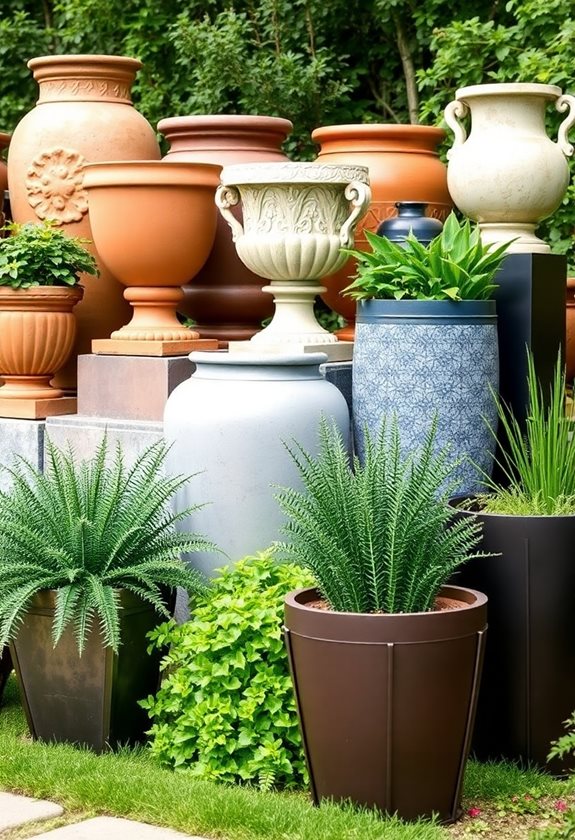
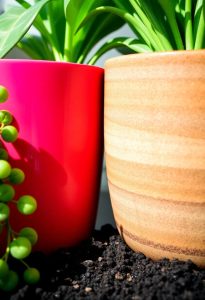
Choosing the right containers can feel a bit like picking the perfect pair of shoes for a big event—comfort and style are both important! Start by considering materials: lightweight plastic is easy to move, while clay offers a rustic charm. Ascertain your containers have proper drainage holes to prevent waterlogging, which can harm your plants. Think about size too—too small can stunt growth, while too large might overwhelm your space. Don’t forget color; it can enhance your garden’s aesthetic! Additionally, the choice of container materials can significantly affect both plant health and the longevity of the containers. So, what’s your style? Practical and chic or bold and fun? Your containers can reflect your personality while keeping your plants safe!
Selecting Seasonal Plants
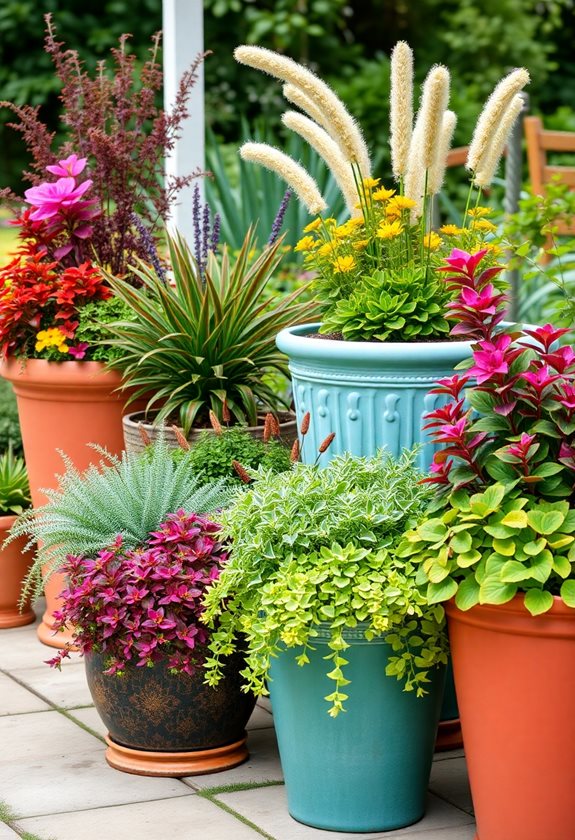
How do you pick the right plants for your seasonal containers? Start by considering your climate—some plants thrive in the sun, while others prefer shade. Think about colors and textures too! Mixing vibrant flowers with leafy greens can create an eye-catching display. Don’t forget to check for safe options, especially if you have pets or kids around. Remember, native plants often require less care and are better for local wildlife. Choosing the perfect plants can make all the difference in the success of your outdoor containers. Got a favorite plant from last year? Why not use it again? Gardening’s all about experimenting and having fun, so let your creativity bloom! Happy planting!
Soil and Drainage Considerations
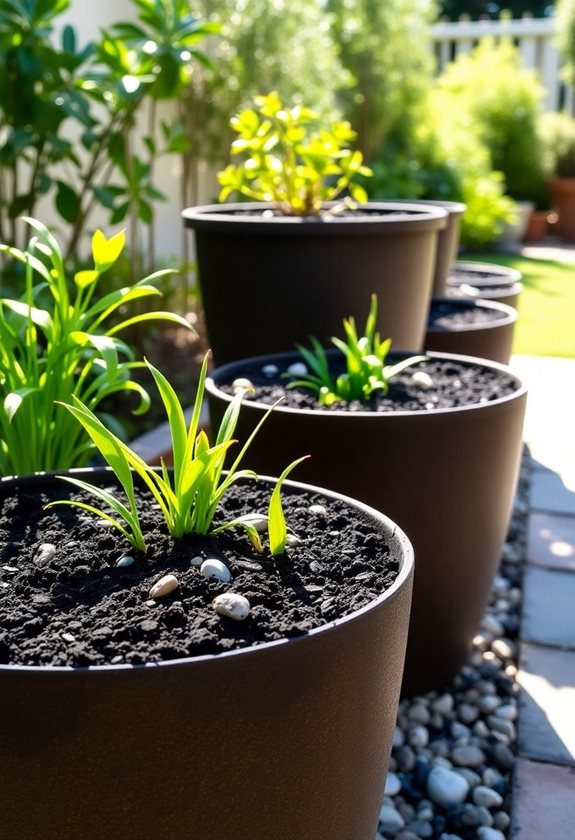
Selecting the right plants is just the beginning of creating stunning seasonal containers! You’ll want to pick a quality potting mix that’s light and airy, allowing roots to breathe. Plus, consider adding perlite or vermiculite for better drainage—nobody wants soggy roots, right?
Make sure your containers have drainage holes; you wouldn’t want your plants swimming! Here’s a tip: place a coffee filter over the holes to keep soil in while letting water escape. This simple trick can save you a lot of headaches! Additionally, using the best pots for vegetable gardening can enhance your plants’ growth and health. So, are you ready to create that perfect outdoor oasis? Let’s get planting!
Watering Techniques for Container Gardens
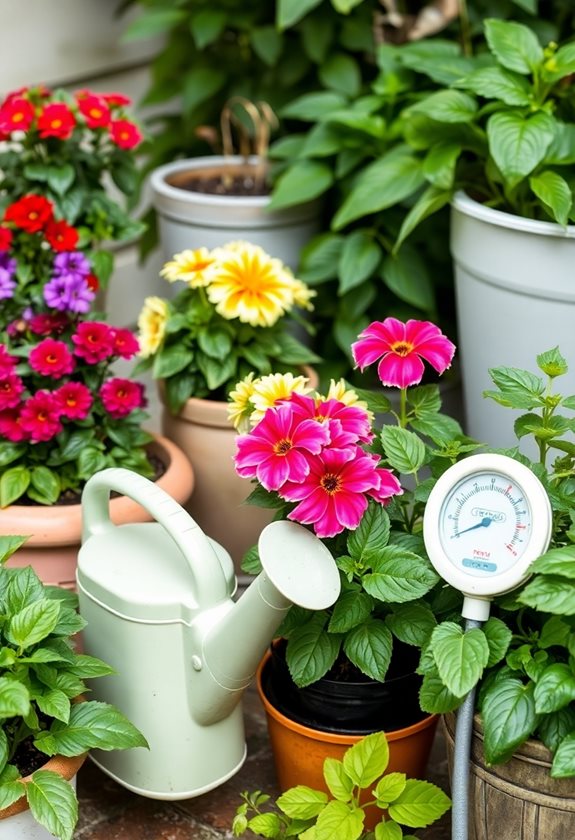
Watering your container garden can feel like a balancing act, but don’t worry—it’s easier than it sounds! To keep your plants thriving, try these simple techniques:
- Check the soil: Stick your finger an inch deep; if it’s dry, it’s time to water!
- Water thoroughly: Pour until you see it drain from the bottom—this guarantees all roots receive moisture.
- Time it right: Early morning or late afternoon is best to reduce evaporation.
And remember, overwatering can be just as harmful as underwatering! Additionally, using year-round container gardening tips can help you develop a consistent watering routine that adapts to seasonal changes. Got any tips of your own? Share your gardening journey with friends!
Fertilizing Tips for Healthy Growth
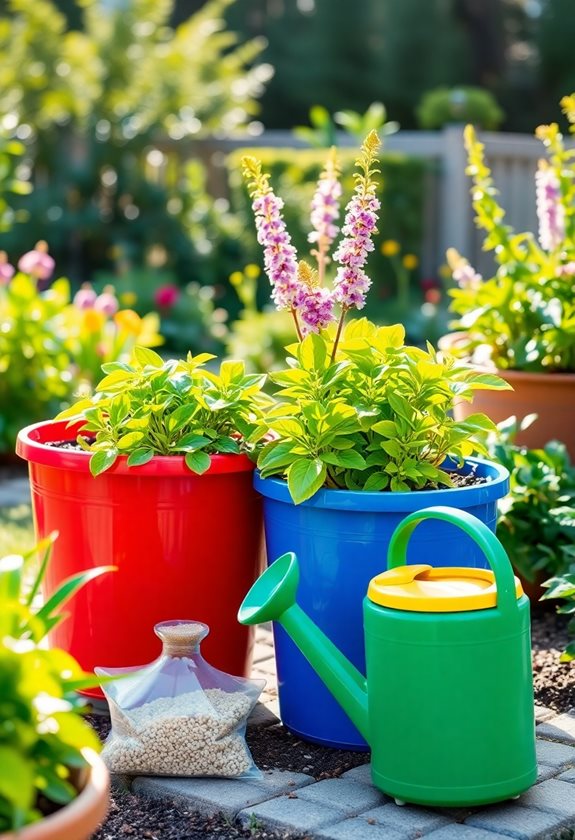
While it might seem like an intimidating task, fertilizing your outdoor containers is essential for ensuring your plants grow strong and healthy. Think of it as a special treat for your plants! Here are some tips to make it easier:
Fertilizing outdoor containers may seem daunting, but it’s a vital treat for your plants’ growth and health!
- Choose a balanced, slow-release fertilizer to avoid burning roots.
- Fertilize every 4-6 weeks during the growing season for best results.
- Water your plants before applying fertilizer to help them absorb nutrients.
- Follow the recommended dosage on the package; more isn’t always better!
Incorporating easy-care flowering plants into your containers can also enhance their overall health and vibrancy. With these tips, your garden will thrive, and who knows, you might even become a fertilizer pro!
Companion Planting for Vibrant Displays
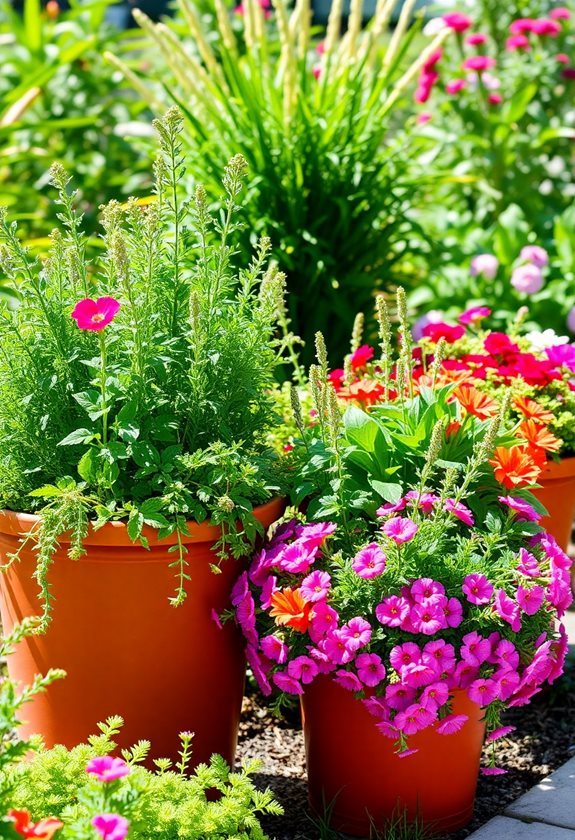
Have you ever noticed how some plants just seem to get along better than others? That’s the magic of companion planting! By pairing compatible plants, you can create vibrant displays and even boost growth. For instance, try mixing marigolds with your veggies; they repel pests while adding a splash of color!
Consider these pairings:
- Basil with tomatoes for enhanced flavor.
- Nasturtiums with cucumbers to deter aphids.
Experimenting with combinations can be fun, and you’ll love the results! Just remember, the right companions can create a thriving garden that’s not only beautiful but safer for your plants, too! Additionally, incorporating beneficial flower pairings can enhance your pest control efforts and ensure your garden flourishes. Happy planting!
Seasonal Maintenance and Care
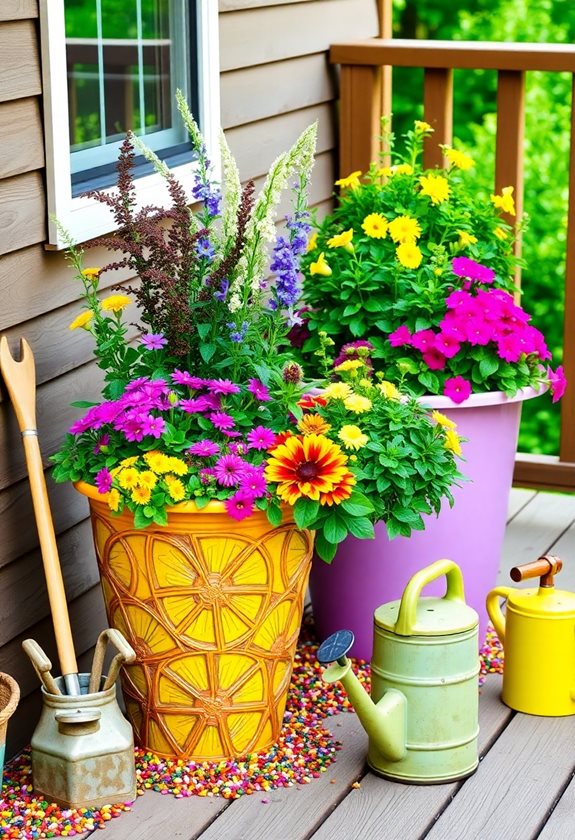
As the seasons change, so do the needs of your outdoor containers, and keeping up with that can feel a bit like juggling flaming torches! You’ll want to keep your plants happy and healthy, so here are some key maintenance tips to remember:
- Water regularly: Don’t let your plants dry out, but avoid overwatering!
- Fertilize: Use a balanced fertilizer to give them a nutrient boost.
- Prune and deadhead: This encourages new growth and keeps things tidy.
- Monitor for pests: Check regularly and take action if you spot any unwanted guests.
Additionally, consider using DIY potting mix for optimal soil health, as it provides the perfect blend of nutrients for your plants.
Your containers will thank you with vibrant blooms!
Creative Design Ideas for Outdoor Containers
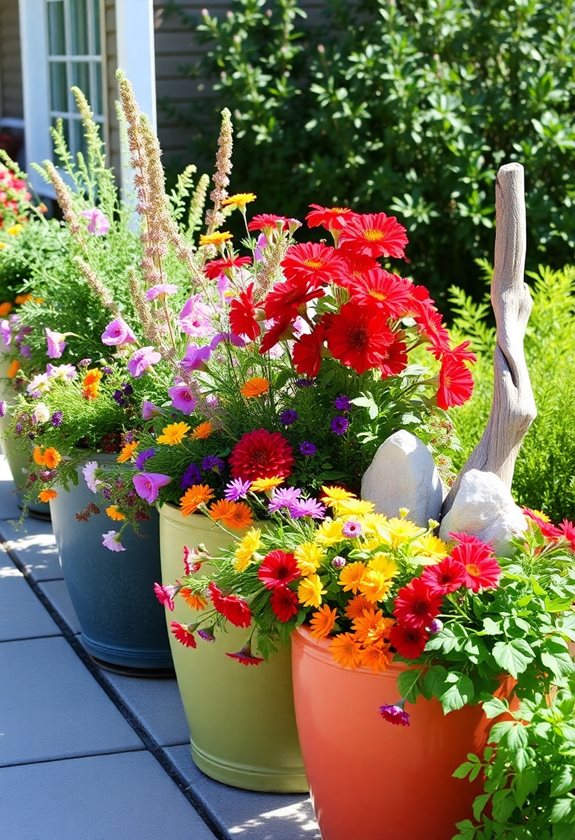
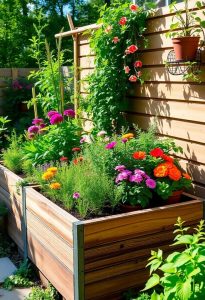
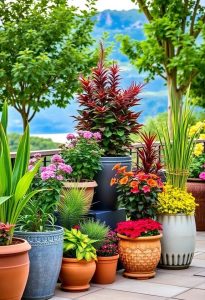
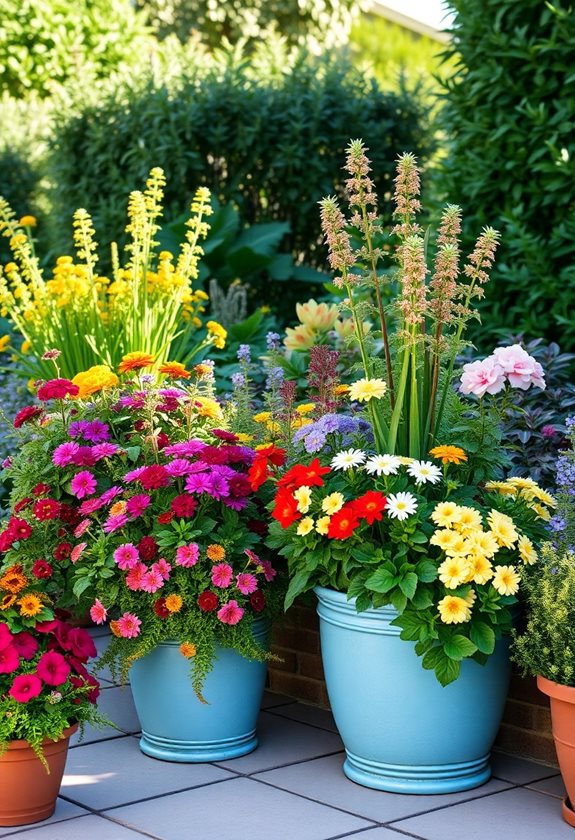
You’ve tended to your outdoor containers like a pro, but now it’s time to get a bit creative! Why not mix and match? Try using a tall plant, like a sunflower, in the center surrounded by colorful petunias or trailing ivy. Add elements like decorative stones or fairy lights for a whimsical touch! Just remember to choose non-toxic plants if pets are around. You could even create themed arrangements—think beach vibes with sand-colored pots and sea oats. What about painting your containers for a pop of color? It’s all about expressing yourself while keeping safety in mind! To enhance your containers further, consider incorporating vibrant flower beds that attract pollinators. Happy planting!
Frequently Asked Questions
How Do I Prevent Pests in My Container Gardens?
Think of your container garden as a cozy home—who wants unwanted guests? To keep pests away, start with healthy soil and plants. Regularly check for any signs of trouble, like wilting leaves. You can use natural repellents, such as neem oil or garlic spray, to fend off those pesky critters. Don’t forget to introduce beneficial insects like ladybugs! With these steps, you’ll create a safe sanctuary for your plants. Happy gardening!
Can I Reuse Soil From Last Season’S Containers?
Absolutely, you can reuse soil from last season’s containers! Just make sure to refresh it first. Here’s how:
- Remove any old roots and debris.
- Mix in new compost to boost nutrients.
- Check for pests or diseases—don’t want those hitchhikers!
What Are the Best Seasonal Plants for Attracting Pollinators?
Imagine your garden buzzing like a lively party! To attract pollinators, consider these fantastic plants:
- Lavender: Its sweet scent draws in bees.
- Coneflowers: Bright and cheerful, they’re a bee favorite.
- Milkweed: Essential for monarchs!
When you plant these beauties, you’re not just enhancing your garden; you’re creating a welcoming space for nature. So, why not plant a pollinator paradise? You’ll be amazed at the guests that show up!
How Can I Extend the Growing Season for My Containers?
You can definitely extend your growing season for containers with a few simple tricks! Have you thought about using row covers or cloches to protect your plants from chilly nights? Insulating your pots with bubble wrap helps too. Also, consider choosing cold-tolerant plants; they thrive when temperatures drop! And don’t forget to use a good potting mix—healthy roots mean happy plants! Isn’t it satisfying to see your garden thrive longer?
What Should I Do With My Containers in Winter?
When winter rolls in, what do you do with those beloved containers? You’ve got options! Consider:
- Bringing them indoors to protect your plants from frost.
- Covering them with burlap or frost cloth for extra warmth.
- Emptying and cleaning them if they’re empty—prepping for spring!
Don’t let winter dampen your gardening spirit! With a bit of care, your containers can stay safe and sound until the growing season returns. Exciting, right?