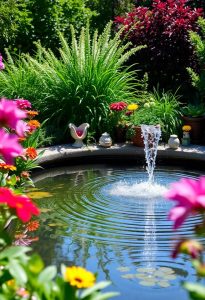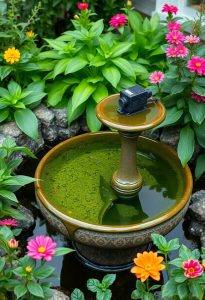
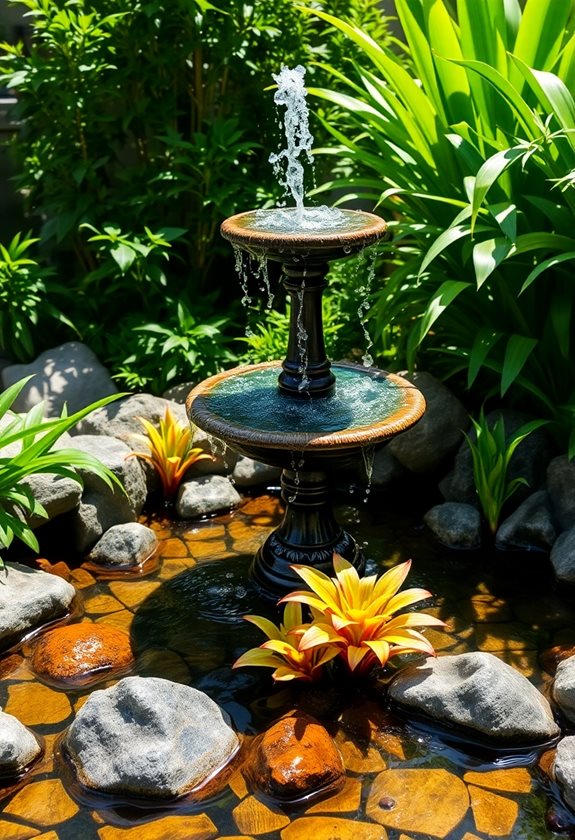
To keep algae at bay in your outdoor fountain, it’s essential to select a shadier spot, use a quality water pump, and maintain a strong water flow. Regular cleaning with a soft brush works wonders, too! Check water levels often and consider using algaecides wisely—just don’t overdo it! And don’t forget seasonal maintenance! Who knew fountain care could be so fun? Stick around to discover more tips that’ll keep your garden oasis thriving!
Design Highlights
- Choose a shady location for your fountain to keep water cool and reduce sunlight exposure, which promotes algae growth.
- Use a quality water pump that ensures effective circulation, preventing stagnant water where algae can thrive.
- Regularly check and maintain water levels, keeping them optimal to avoid excessive sunlight and stagnation.
- Scrub surfaces weekly and change water every two weeks to eliminate debris and prevent nutrient buildup.
- Monitor water quality frequently and adjust chemicals as needed to maintain a balanced ecosystem.
Choose the Right Location for Your Fountain
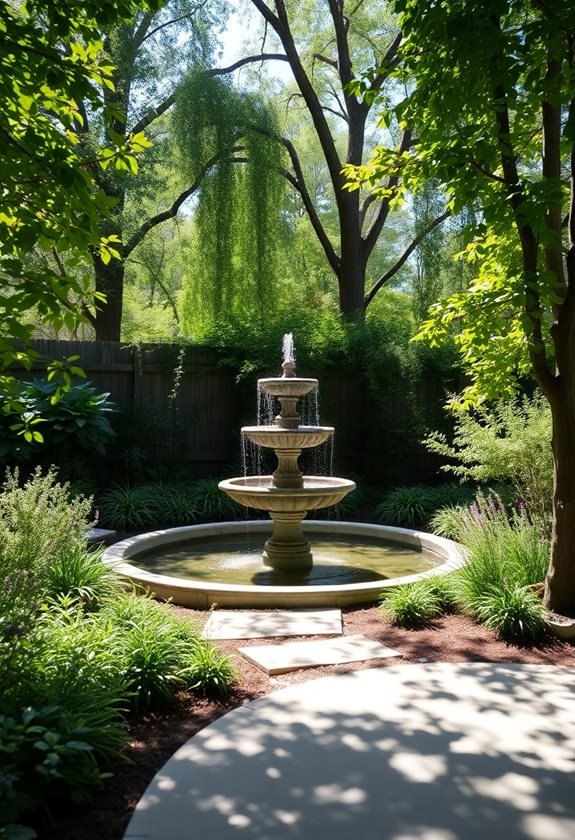
When you’re picking the perfect spot for your outdoor fountain, have you ever thought about how location can affect everything from aesthetics to algae growth? Choose a shady area to keep your water cool and slow down algae growth—who wants a green fountain, right? Look for a spot that’s easily visible but away from overhanging trees, which can drop leaves and debris. Consider nearby plants; some can even absorb excess nutrients! Additionally, ensure that your fountain has good water circulation, as proper water circulation is key to preventing algae buildup. Finally, verify the area’s safe—avoid slippery surfaces. A well-placed fountain not only beautifies your garden but also minimizes algae, making your outdoor space enjoyable. Happy fountain hunting!
Use a Quality Water Pump
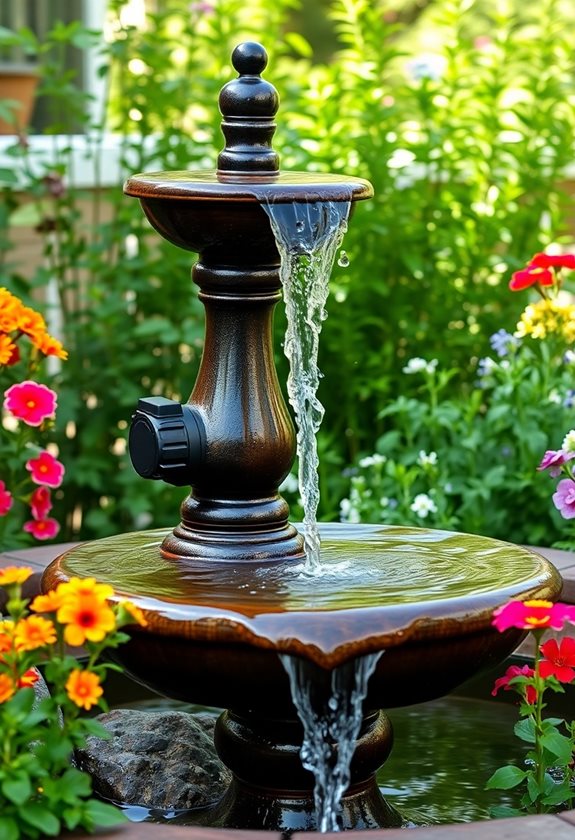
Picking the right location for your fountain sets the stage, but don’t underestimate the power of a quality water pump! A good pump circulates water effectively, reducing stagnant spots where algae thrive. Think of it as the heart of your fountain!
When choosing a pump, consider these tips:
- Flow Rate: Match it to your fountain’s size. Too weak? Algae win!
- Durability: Look for pumps designed for outdoor use; they’re built to last.
- Energy Efficiency: Save on energy costs while keeping your fountain safe and algae-free.
Investing in a quality pump means more peaceful moments enjoying your garden oasis! Additionally, a well-chosen pump contributes to effective water circulation, which is essential for preventing algae growth.
Keep the Water Flowing
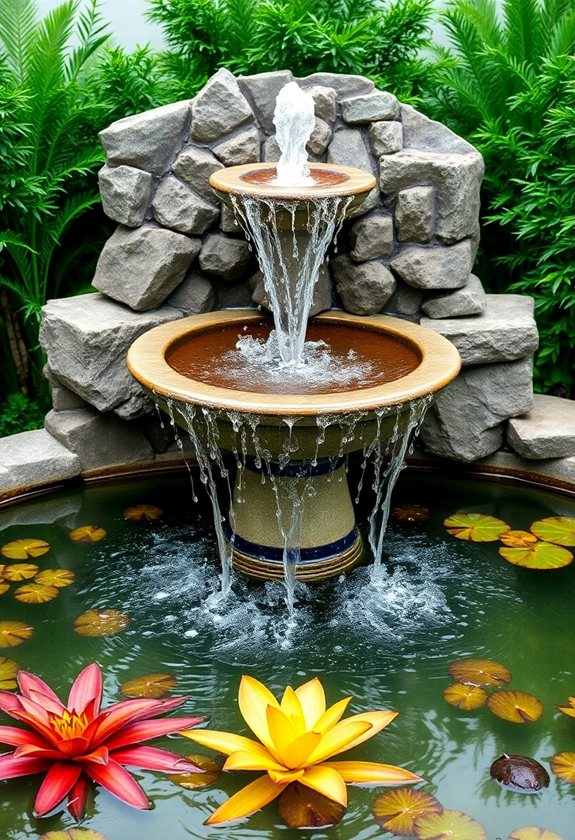
While it might seem like a simple task, keeping the water flowing in your outdoor fountain is essential for preventing algae growth and ensuring your garden oasis remains a serene escape. A strong current not only looks beautiful but also discourages those pesky algae. So, how can you maintain that flow?
- Check the pump regularly: Make sure it’s working efficiently.
- Adjust the water level: Too low, and the pump may struggle; too high, and it might overflow!
You want your fountain to sparkle, right? Keeping the water moving helps keep your oasis fresh, safe, and inviting! Don’t let stagnant water ruin your peaceful retreat! Additionally, regular maintenance is crucial for easy maintenance tips that will enhance the longevity of your water features.
Regularly Clean the Fountain
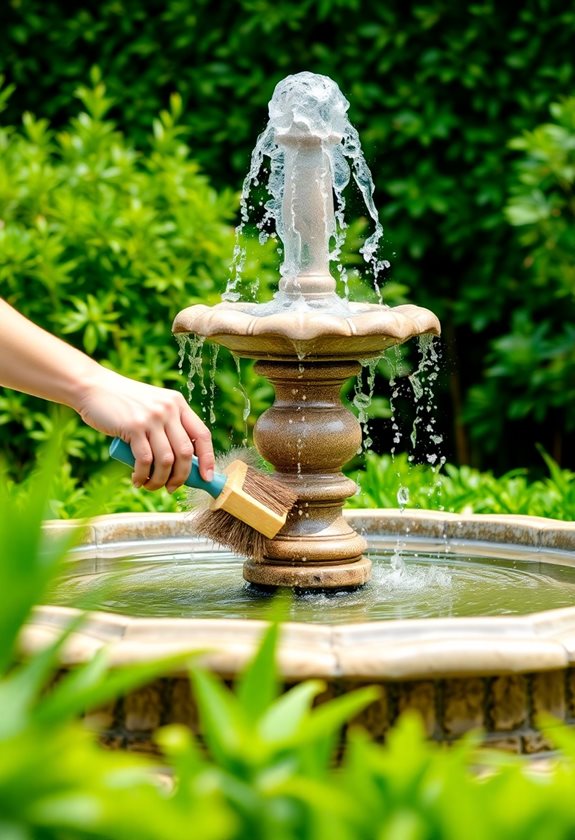
Keeping your outdoor fountain sparkling isn’t just about the water flow; regular cleaning plays a huge role too! It’s like giving your fountain a revitalizing spa day. You wouldn’t want algae crashing the party, right? Here are some simple cleaning tips to keep your fountain in tip-top shape:
Regular cleaning is essential for your outdoor fountain—think of it as a spa day to keep algae at bay!
- Scrub the surfaces weekly with a soft brush to remove debris.
- Change the water every two weeks to prevent buildup.
- Wipe down the pump and filter to guarantee they’re working efficiently.
- Inspect for cracks or leaks that could lead to bigger issues.
Additionally, using stunning pond products can enhance the overall maintenance of your fountain, keeping it algae-free and beautifully pristine. You’ll be amazed at how much of a difference it makes!
Monitor Water Levels
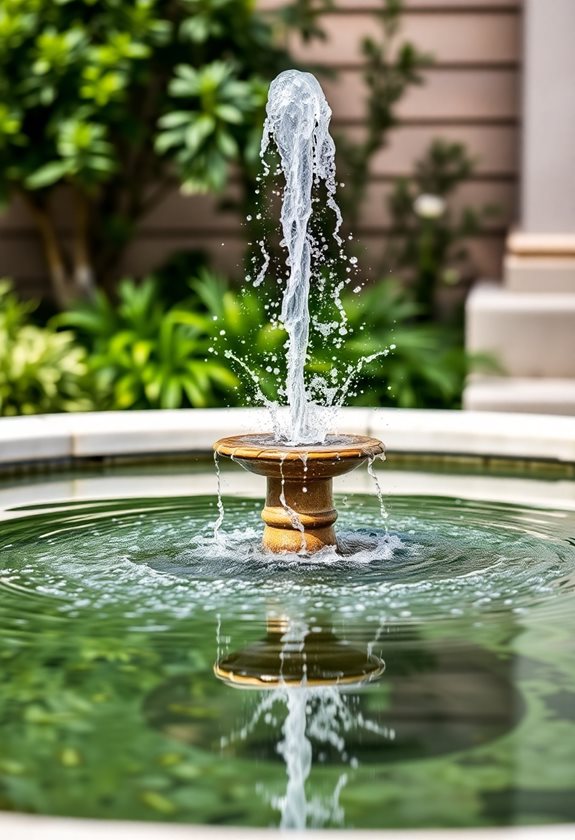
Although you might think of water levels as just a minor detail, keeping an eye on them is essential for preventing algae growth in your outdoor fountain. When the water dips too low, sunlight hits exposed surfaces, creating a perfect algae playground. So, how often should you check? Aim for a quick glance every few days!
- Keep a bucket handy for refills.
- Consider using a water level indicator.
Trust me, staying on top of this can save you from a green disaster! Plus, a well-maintained fountain keeps your outdoor space safe and inviting. Don’t let algae steal your serenity! In fact, maintaining optimal water quality levels is crucial for a thriving water garden.
Add Aquatic Plants
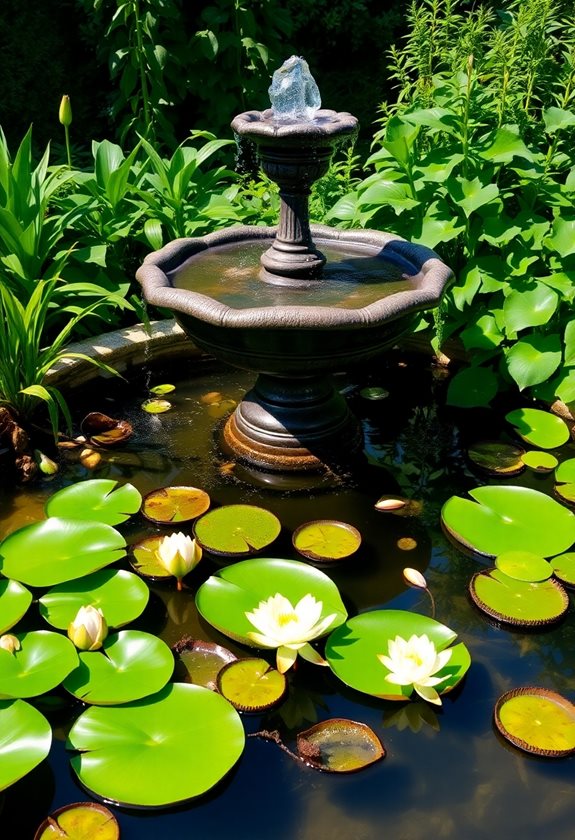
If you want to keep algae at bay and add a splash of life to your outdoor fountain, consider adding aquatic plants! They not only look beautiful but also help maintain water quality. Here are four great options:
- Water Lilies – Their large leaves provide shade, reducing sunlight for algae.
- Hornwort – This floating plant absorbs nutrients, competing with algae for resources.
- Cattails – Great for filtration, they help keep the water clear.
- Anacharis – Fast-growing and easy to care for, it’s perfect for beginners!
Additionally, introducing koi fish to your fountain can further enhance the ecosystem by creating a balanced environment. With these plants, you’ll create a stunning and healthy water feature!
Utilize Algaecides Wisely
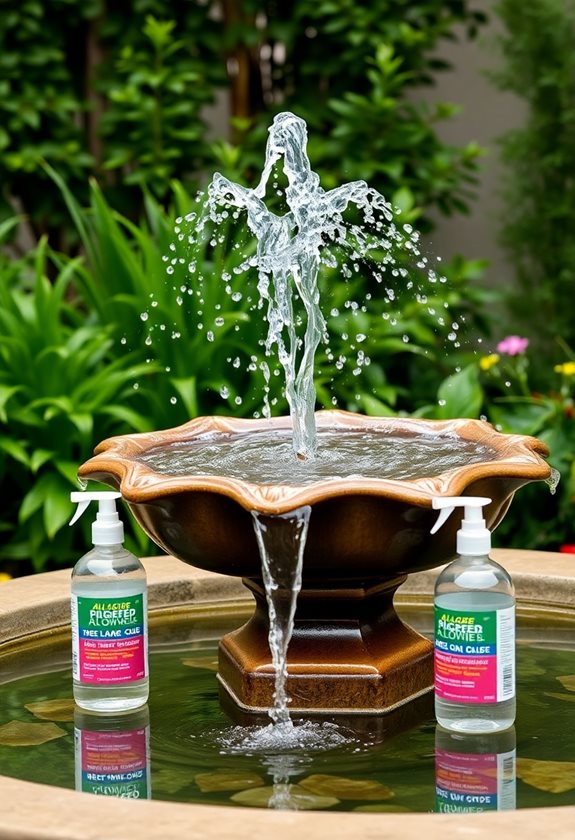
When you notice algae starting to take over your outdoor fountain, using algaecides might seem like the easiest solution, but there’s a right way to do it! First, choose a safe, environmentally-friendly algaecide to protect your plants and pets. Always follow the instructions—overdoing it can harm your fountain’s ecosystem!
Choose a safe, eco-friendly algaecide and follow instructions carefully to protect your fountain’s ecosystem!
Don’t forget to test the water’s pH before applying; this guarantees the algaecide works effectively.
And remember, timing is key! Apply it during the cooler parts of the day for the best results. Additionally, consider incorporating a wildlife-friendly water feature to help maintain a balanced ecosystem in your garden.
Got any favorite algaecides? Share your tips! Let’s keep those fountains sparkling!
Cover the Fountain When Not in Use
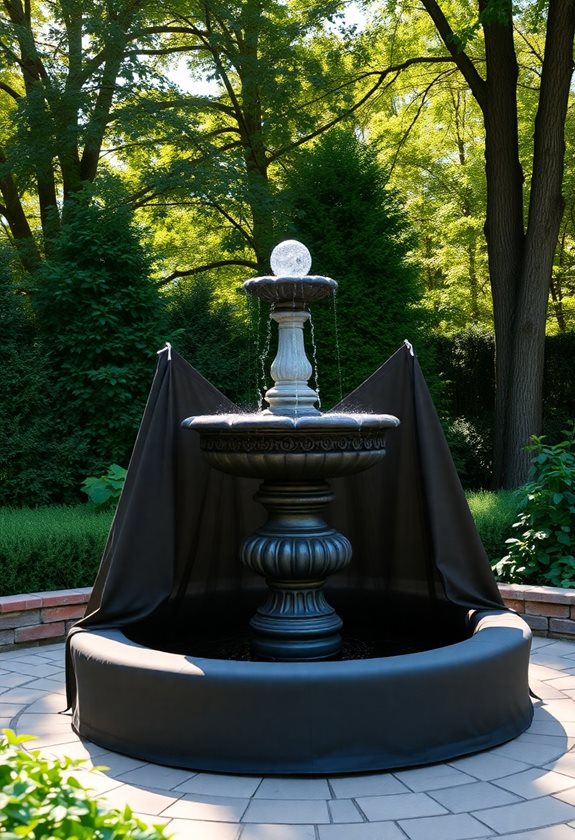
Covering your fountain when it’s not in use is one of those simple tricks that can save you a ton of hassle down the road! It helps keep debris out and prevents algae growth. Plus, it’s an easy way to guarantee your fountain stays safe from the elements. Here are some tips for covering your fountain effectively:
- Use a breathable cover to prevent moisture buildup.
- Secure the cover with weights or ties to avoid it blowing away.
- Check regularly for any signs of wear or damage.
- Store any removable parts indoors to prolong their lifespan.
Additionally, using a cover can enhance the overall aesthetic of your garden while protecting your decorative garden waterfalls. Trust me, your fountain will thank you!
Test Water Quality Regularly
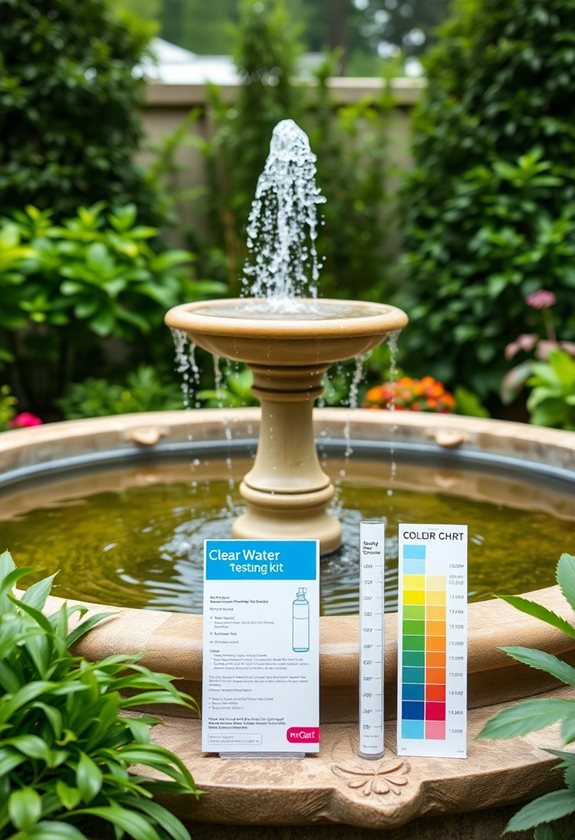
Testing your water quality regularly is like giving your fountain a wellness check-up—it’s essential for keeping it healthy and algae-free! You wouldn’t skip a doctor’s visit, right? Start by checking pH levels, ammonia, and nitrates. Aim for a pH between 6.5 and 7.5 for peak health.
Consider these quick tips:
- Use a water testing kit; they’re easy and affordable.
- Test at least once a month, or more often in hot weather.
- If results are off, adjust your fountain’s chemicals promptly.
Additionally, maintaining proper water quality parameters is crucial for preventing algae growth. Your fountain deserves the best care! After all, a happy fountain equals a beautiful backyard!
Implement a Seasonal Maintenance Schedule
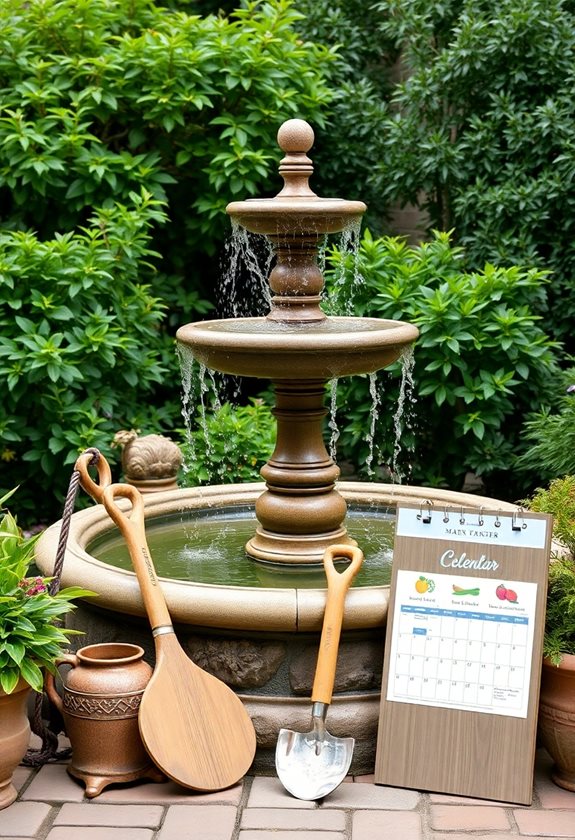
To keep your outdoor fountain sparkling and algae-free, implementing a seasonal maintenance schedule is key! You’ll find that regular upkeep not only prevents algae but also enhances your fountain’s beauty. Here’s a quick checklist to help you out:
- Spring Cleaning: Remove debris and scrub surfaces to kick off the season.
- Summer Checks: Monitor water levels and top up with fresh water regularly.
- Fall Prep: Drain and clean before winter to avoid damage from freezing.
- Winter Inspection: Ascertain everything’s secure and ready for the next season. Additionally, consider adding unique water features to your yard, as they can help maintain a balanced ecosystem that minimizes algae growth.
Frequently Asked Questions
Can Certain Fountain Materials Reduce Algae Growth?
Did you know that certain materials can reduce algae growth by up to 50%? When choosing fountain materials, consider non-porous options like fiberglass or resin. These surfaces don’t harbor algae-friendly bacteria as much as porous materials do. Plus, they’re easier to clean! You’ll save time and enjoy your garden more. Have you ever noticed how some fountains seem to stay clearer? That’s likely thanks to the right material choice!
How Do Temperature Changes Affect Algae Development in Fountains?
Temperature changes can really affect algae growth in your outdoor fountain! Warmer temperatures often lead to faster algae development, while cooler weather slows it down. Think about it: when the sun’s shining, the water warms up, creating a cozy home for algae. To keep things fresh, consider adding shade or using a fountain cover during hot spells. Have you noticed algae in the summer? Keeping an eye on temperature can make all the difference!
Are There Specific Aquatic Plants That Help Prevent Algae?
Imagine your garden’s serene pond, shimmering under the sun, but wait—algae threatens its beauty! You’ll love using aquatic plants like water lilies or duckweed. They not only add charm but also shade the water, starving algae of sunlight. Plus, they absorb excess nutrients! How cool is that? Consider adding native plants, too, as they’re usually low-maintenance. So, why not immerse yourself in this green adventure and keep your fountain pristine and safe?
What Are Natural Alternatives to Chemical Algaecides?
When you’re looking for natural alternatives to chemical algaecides, you’ve got some great options! Have you tried using vinegar? It’s a fantastic way to keep algae at bay. You might also consider introducing beneficial bacteria or using barley straw—both work wonders! And don’t forget about regular maintenance, like cleaning your fountain often. With a little effort, you can create a beautiful, algae-free oasis right in your backyard! Isn’t that exciting?
How Often Should I Test for Chlorine Levels in Fountain Water?
You should test the chlorine levels in your fountain water every week, especially during the warmer months. This helps keep the water clean and safe. You wouldn’t want your fountain to turn into a green soup, right? Use test strips for quick results, and if levels drop, add some chlorine. Remember, a balanced fountain is a happy fountain! So, keep an eye on it, and enjoy your beautiful outdoor space!