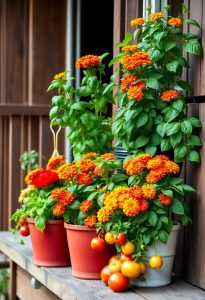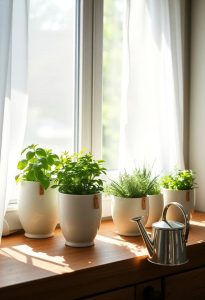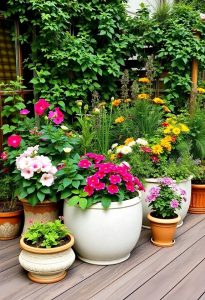
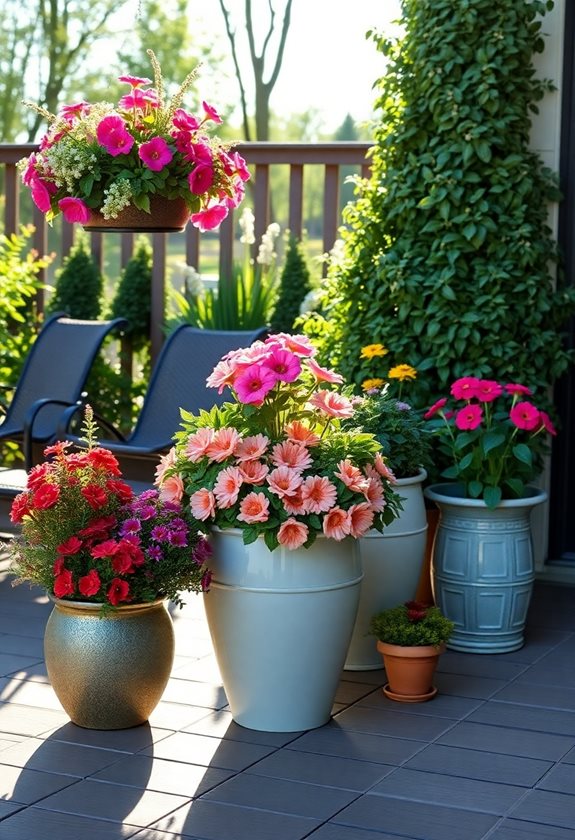
Ready to get your outdoor container arrangements blooming? Start by choosing lightweight containers with drainage holes to keep your plants happy. Mix textures and colors for a feast for the eyes, while considering height to create visual interest. Don’t forget to rotate your plants with the seasons for freshness! And please, give everything regular care—dead leaves don’t belong in your garden! Want to discover more tips and tricks? You’re in for a treat ahead!
Design Highlights
- Choose lightweight, durable containers with drainage holes to prevent waterlogged roots and enhance plant health.
- Select plants with complementary colors, heights, and textures that thrive under similar light and water conditions.
- Rotate plants seasonally to keep arrangements fresh and appealing throughout the year.
- Mix in decorative elements like stones or driftwood to add visual interest and reflect your personal style.
- Regularly check for pests and refresh containers by swapping out tired plants for new blooms or herbs.
Choose the Right Containers
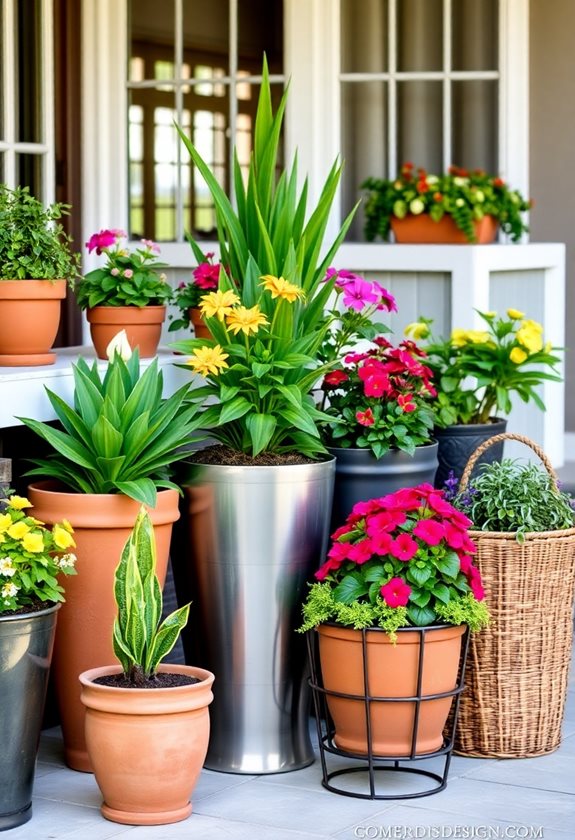
When it comes to choosing the right containers for your outdoor arrangements, it’s easy to feel a little overwhelmed—after all, there are so many options out there! Start by considering safety; lightweight, sturdy materials like plastic or fiberglass can prevent spills and breakage. You’ll want containers with drainage holes to avoid waterlogged roots. Think about size, too—larger containers hold more soil and retain moisture better, which means less frequent watering! Don’t forget aesthetics; choose colors and styles that match your outdoor space. Additionally, consider the material durability of your containers, as it can impact plant health and longevity. Remember, the right container can make all the difference in your gardening success. Ready to dig in? Let’s go!
Select Complementary Plants
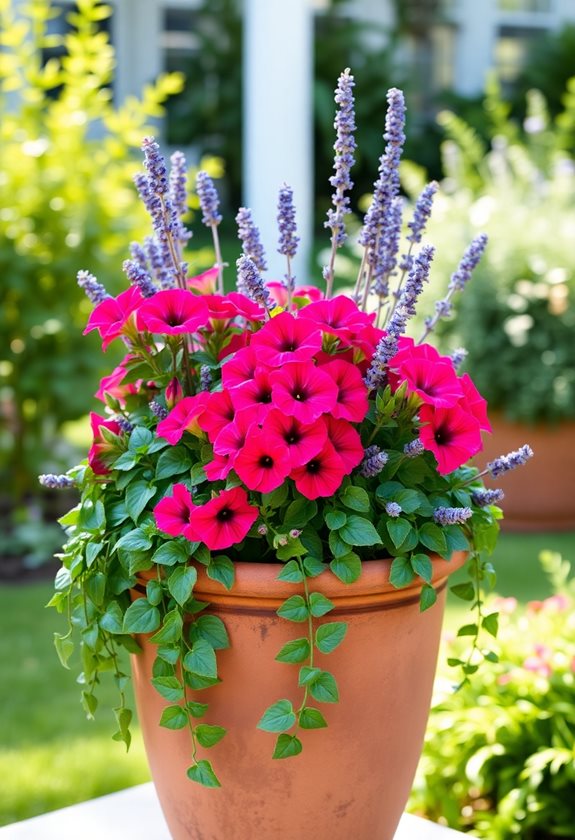
Selecting complementary plants can feel like a fun puzzle, especially when you think about how they’ll come together in your outdoor space! Start by mixing textures: pair smooth leaves with fuzzy ones. Choose colors that pop next to each other—like purple petunias with vibrant yellow marigolds! Don’t forget about height; tall plants can serve as a backdrop for shorter ones, creating layers. Consider plant needs too; make sure they thrive in the same light and water conditions. By balancing these elements, you’ll create stunning arrangements that not only look great but thrive safely. Additionally, explore unique container designs that can enhance your garden’s aesthetic. Ready to get planting? Let’s do this!
Consider Seasonal Interest
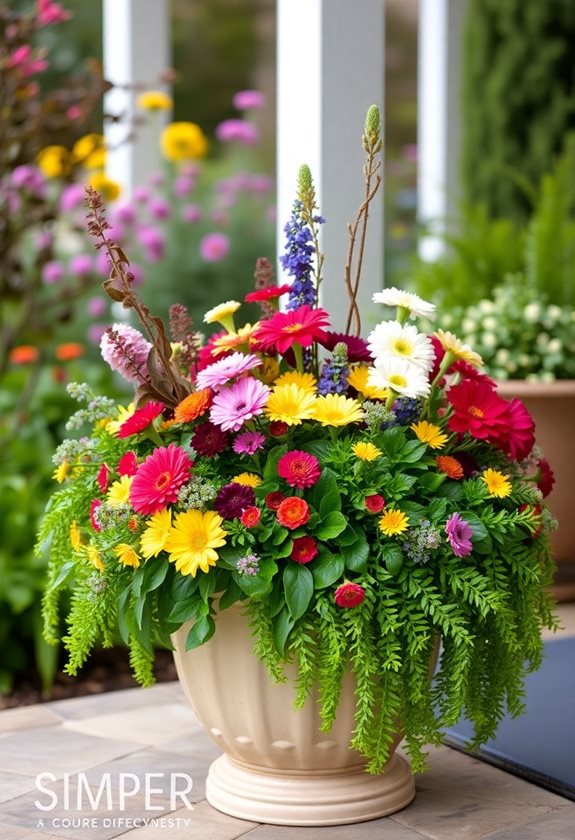
While planning your outdoor container arrangements, it’s easy to overlook seasonal interest, but trust me, it can truly transform your space! Think about how colors and textures change with the seasons. In spring, vibrant tulips and cheerful daisies can brighten your day. Summer brings lush greens and bold blooms, while fall offers warm hues with pumpkins and asters. Winter? Evergreens and bright berries can create a cozy look! By rotating plants seasonally, you keep your arrangements fresh and exciting. Incorporating colorful flower beds not only enhances your container displays but also attracts beneficial pollinators to your garden. Isn’t it fun to surprise your friends with a new look? So, let’s get planting and enjoy the changing beauty!
Play With Height and Texture
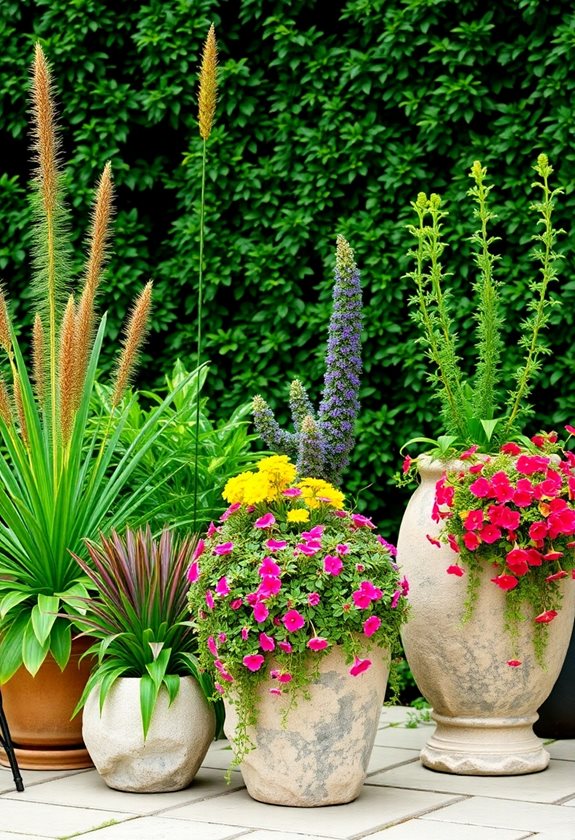
Creating stunning outdoor container arrangements is like crafting a living piece of art, and one of the best ways to elevate your designs is by playing with height and texture! Think about using tall plants, like ornamental grasses, to draw the eye upwards. Combine these with shorter, bushy plants for contrast. Don’t forget to mix textures—smooth leaves next to spiky ones can create a dynamic look. You might even add some decorative stones or driftwood for added interest. It’s all about balance! So, why not experiment? Your containers can be a fun reflection of your personality and creativity! Additionally, consider using self-watering containers to ensure your plants thrive while minimizing maintenance.
Use the Thrillers, Fillers, and Spillers Method
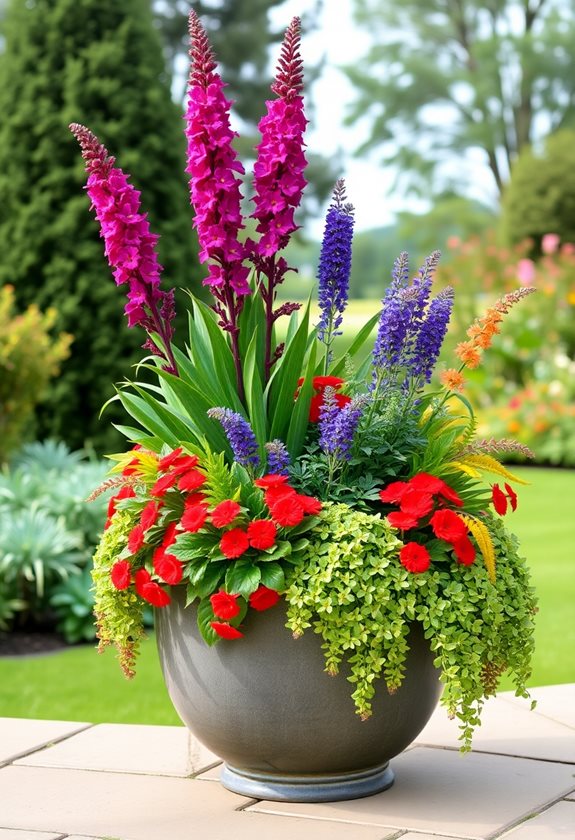
If you want your outdoor container arrangements to really pop, you’ve got to embrace the Thrillers, Fillers, and Spillers method! This technique helps you create visually stunning displays.
- Thrillers: Choose a tall, dramatic plant like a spiky grass or a vibrant flower to stand out.
- Fillers: Add medium-sized plants, like petunias or marigolds, to fill in the gaps.
- Spillers: Incorporate trailing plants, such as ivy or trailing geraniums, that cascade over the edge.
Mixing these elements creates depth and movement. Trust me, your containers will be the talk of the neighborhood! Choosing the perfect outdoor garden pots can also enhance your overall arrangement. Ready to get planting?
Ensure Proper Drainage
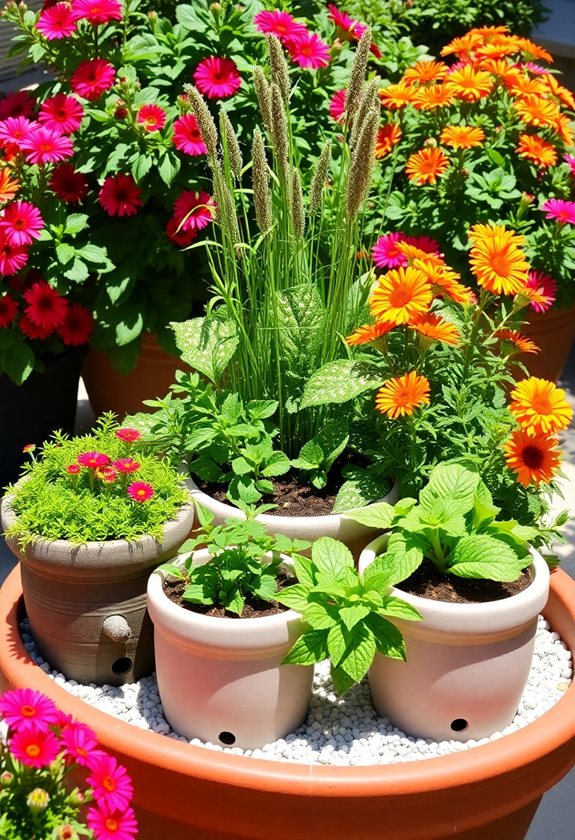
When you engage in container gardening, one of the most essential aspects to reflect on is drainage. Without proper drainage, your plants can drown—yikes! To keep your greens thriving, consider these tips:
- Choose containers with drainage holes. This simple step can save your plants!
- Add a layer of gravel or pebbles at the bottom. It helps excess water flow out.
- Use lightweight potting mix. It promotes airflow and drainage.
Additionally, using the best soil for container gardening ensures that your plants have the nutrients they need to thrive. Trust me, I learned the hard way when my beloved basil turned into mush! So, make sure your containers can breathe, and your garden will flourish. Happy planting!
Maintain and Refresh Regularly
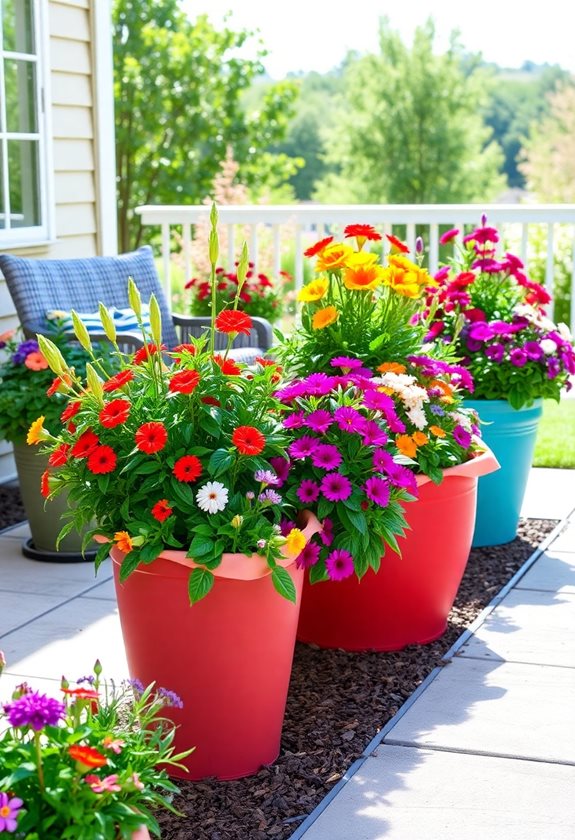
After ensuring your containers have that all-important drainage, it’s time to focus on keeping your plants healthy and vibrant. Regular maintenance can feel overwhelming, but it’s essential! Check for dead leaves or pests weekly—trust me, it’s easier to tackle issues early. Water your plants consistently but avoid soggy soil. Consider revitalizing your containers every season by swapping out tired plants for new blooms. You could even mix in some herbs! Have fun experimenting! And who doesn’t love a surprise? Remember, a little care goes a long way in creating a beautiful outdoor space you can enjoy safely. Additionally, using DIY succulent arrangements can enhance the aesthetics of your garden while keeping maintenance manageable. Happy gardening!
Frequently Asked Questions
What Materials Are Best for Outdoor Containers?
When choosing materials for outdoor containers, you’ve got some great options! Consider using:
- Ceramic: It’s stylish but can crack in freezing weather—so keep an eye on the forecast!
- Wood: It adds charm but needs treatment to resist rot.
- Plastic: Lightweight and durable, plus it won’t break easily!
- Metal: Super trendy, but remember, it can heat up quickly in the sun!
Which one catches your eye? Happy planting!
How Do I Protect Containers During Winter?
Winterizing your containers is like wrapping your plants in a warm blanket! To protect them, start by moving your pots to a sheltered spot, away from harsh winds. You can insulate them with bubble wrap or burlap, too. Don’t forget to reduce watering to avoid frozen roots! Consider adding mulch on top for extra coziness. Got any favorite winter plants? They can brighten your garden even in the cold! Happy gardening!
Can I Use Indoor Plants for Outdoor Arrangements?
You might be tempted to use indoor plants outdoors, but it’s a tricky move! Many indoor plants can’t handle the outdoor elements, and they’ll suffer. If you want to try it, consider using tough houseplants like succulents or ferns that can adapt. Just remember to bring them back inside if temperatures drop! Have you ever had a plant that thrived in one spot but flopped in another? It’s all about finding the right fit!
What Pests Should I Watch for in Container Gardens?
When you’re tending to your container garden, keep an eye out for pesky pests! You might spot aphids, spider mites, or even slugs. They can sneak in and munch on your plants before you know it. Check the leaves regularly—don’t let them ruin your hard work! If you see any, try using insecticidal soap or neem oil. Remember, a healthy garden is a happy garden! Isn’t it satisfying to keep those critters at bay?
How Often Should I Water My Container Plants?
You’ll want to water your container plants regularly, but the frequency can vary. On hot days, they might need watering daily, while cooler days could mean every 2-3 days. Always check the soil—if it feels dry an inch down, it’s time to water! Remember, over-watering can drown them. So, keep an eye out for wilting leaves or dry soil, and you’ll be on your way to thriving plants! Isn’t gardening fun?