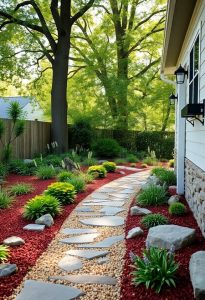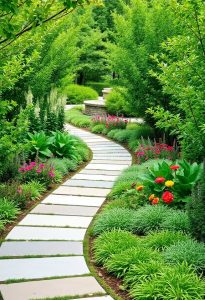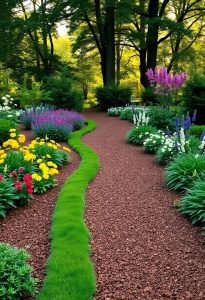
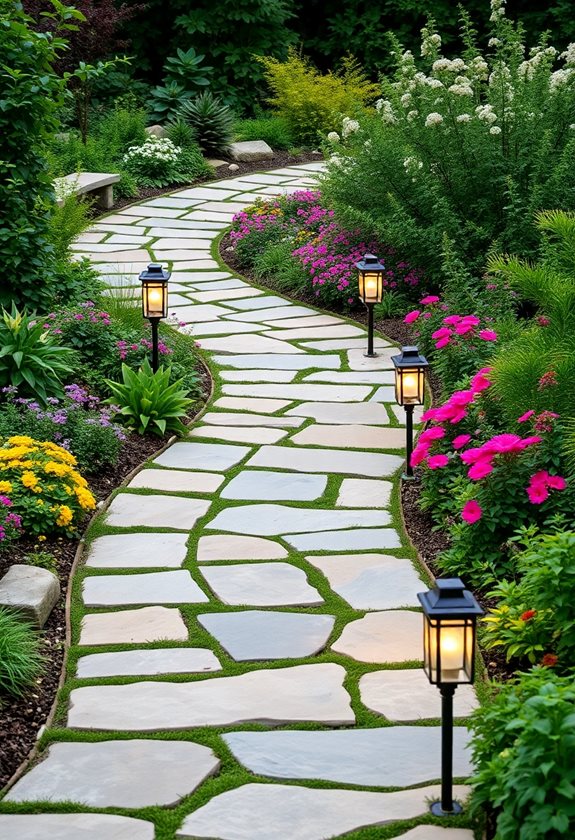
Lately, garden pathways are all about blending natural materials with sustainability! Think gravel for drainage, reclaimed wood for rustic charm, and colorful pavers for style. Curvy designs create a soft feel, while mixing textures and patterns adds a fun touch! You can even light them up for nighttime magic! Plus, it’s not just about looks—great pathways make your garden easier to maintain. So, why not explore creative ways to enhance your space? Trust me, the possibilities are endless!
Design Highlights
- Curvilinear designs are trending, offering softer aesthetics and enhancing safety by minimizing sharp edges in garden pathways.
- Mixing textures and patterns, such as combining smooth stones with rustic bricks, adds visual interest to pathways.
- Eco-friendly materials like reclaimed wood and recycled glass are popular for promoting sustainability while enhancing garden beauty.
- Unique patterns created with various materials provide artistic appeal, allowing for personalized and stylish garden designs.
- Regular maintenance is essential, focusing on safety features and effective drainage to ensure pathways remain functional and hazard-free.
Embracing Natural Materials
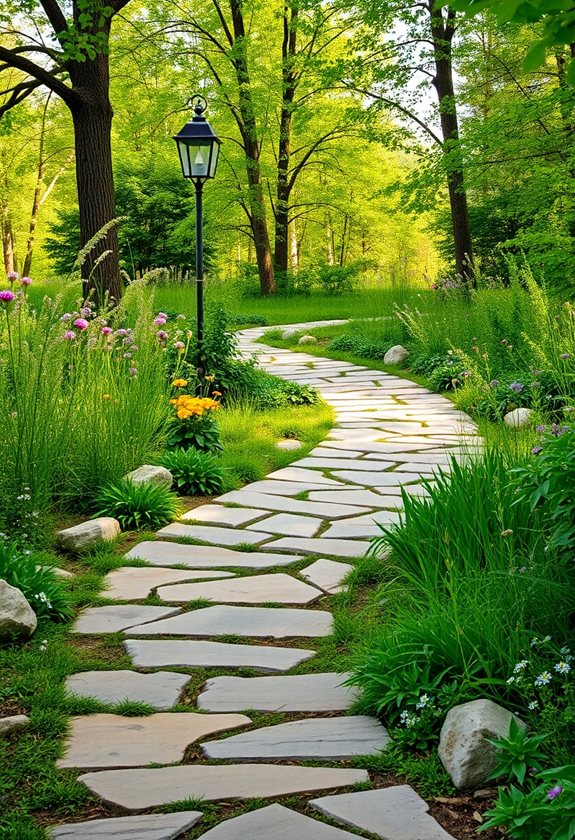
When you step outside into your garden, wouldn’t it be amazing if the pathway felt as much a part of nature as the flowers around it? Embracing natural materials like stone, wood, or gravel creates a warm, inviting atmosphere. Imagine walking on smooth pebbles or sturdy wooden planks—doesn’t that sound delightful?
Imagine a garden pathway that harmonizes with nature, inviting you to stroll on smooth stones or warm wooden planks.
Here are a few ideas to contemplate:
- Use reclaimed wood for a rustic look.
- Lay down flat stones for a safe, stable path.
- Incorporate native plants along the edges to blend everything together. Additionally, consider the benefits of using gravel vs stone pathways to enhance both aesthetics and functionality in your garden.
Sustainable and Eco-Friendly Options
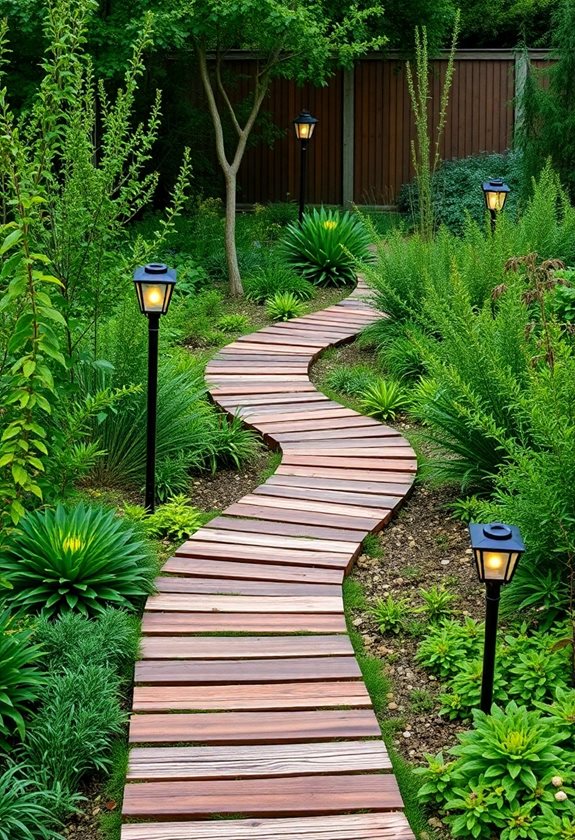
Choosing materials that not only look good but also tread lightly on the planet can truly transform your garden pathways. Imagine walking on reclaimed wood or permeable pavers that let rainwater soak in! You’ll feel good knowing you’re helping the environment.
Consider these eco-friendly options:
- Recycled glass: It sparkles and dazzles, adding a unique touch!
- Natural stone: Durable and timeless, it blends beautifully with nature.
- Gravel or mulch: Safe and budget-friendly, plus they’re easy to maintain!
Additionally, options like natural river rocks provide both beauty and durability, making them a great choice for sustainable pathways. Which eco-friendly option excites you the most? Embrace sustainability and enjoy your garden even more!
Curvilinear Designs for a Soft Aesthetic
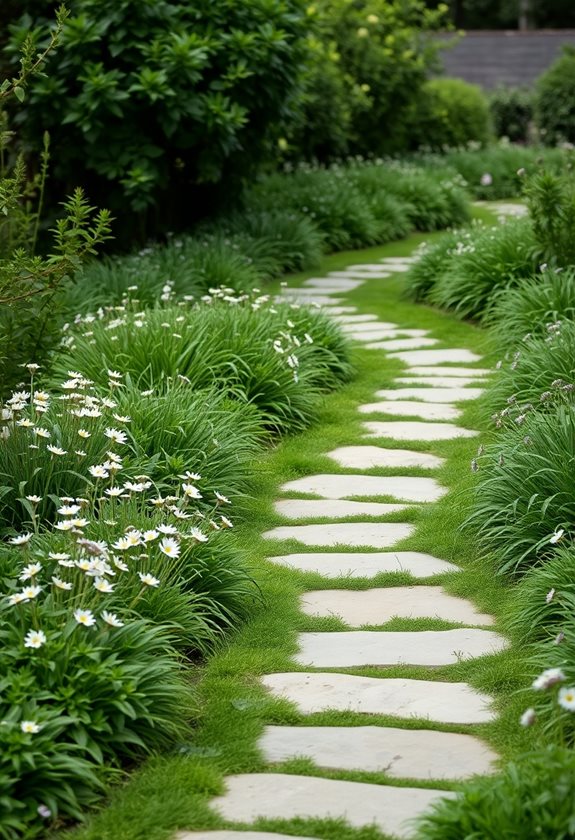
Curvilinear designs can effortlessly soften the look of your garden pathways, inviting you to wander and explore. Imagine a gentle curve guiding you through vibrant blooms, creating a sense of tranquility. These pathways not only look beautiful but also enhance safety by reducing sharp edges and promoting a smoother walking experience.
Consider using materials like gravel or stepping stones that blend seamlessly with the curves. You might even add low-growing plants along the edges for a natural border. Why not let your garden’s personality shine? Remember, a pathway should feel like a warm hug, leading you on a delightful adventure! Additionally, choosing between straight and winding paths can greatly influence the overall feel and functionality of your garden space.
Mixing Textures and Patterns
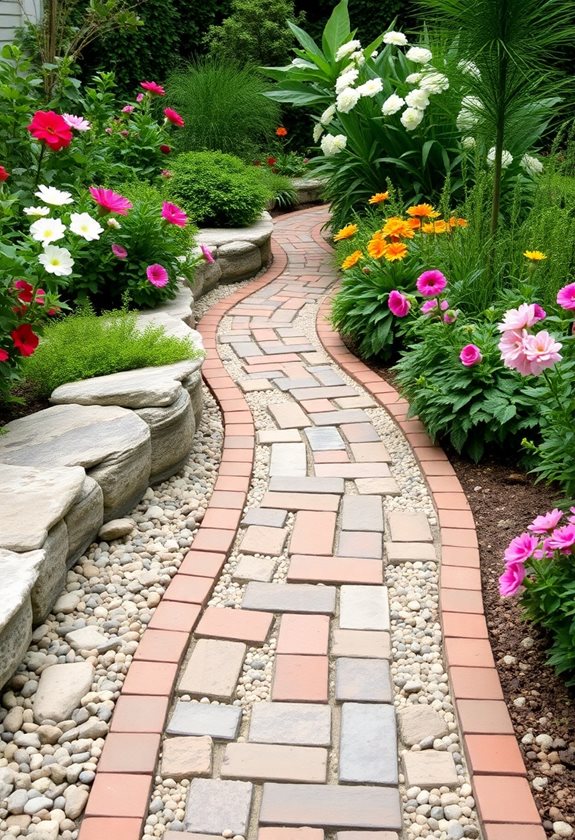
While you’re planning your garden pathway, mixing textures and patterns can truly elevate its charm and character. Imagine combining smooth stones with rustic bricks or soft grass with sturdy pavers—it’s a fun way to create interest!
Mixing textures and patterns in your garden pathway adds charm—think smooth stones with rustic bricks for delightful interest!
- Try using:
- Pebbles alongside wooden planks
- Colored tiles next to gravel
Just make certain everything’s safe to walk on. You don’t want anyone tripping! Have you ever accidentally stepped on a wobbly stone? Yikes! So, balance is key. Choose textures that complement each other while providing stability. Your pathway will not only look great but feel great to walk on, too! Incorporating pathway designs can enhance the overall beauty of your garden space.
Creative Use of Color
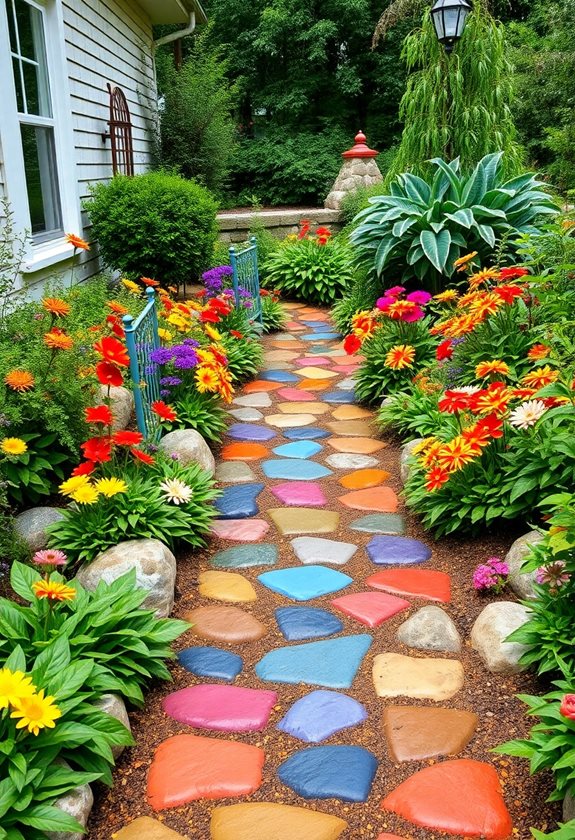
When you think about your garden pathway, don’t underestimate the power of color! Bold hues can transform a plain path into a vibrant journey. Consider using bright, non-slip pavers in shades like sunny yellow or earthy terracotta. These colors not only guide you but also add cheer to your outdoor space!
Here are a few ideas:
- Paint wooden planks with weather-resistant colors.
- Mix colorful gravel for an artistic touch.
- Plant flowers along the edges that complement your path.
Why not make your pathway not just safe, but a delightful walk? After all, a colorful path can brighten your day! Additionally, incorporating pathway lighting ideas can enhance the visual appeal and safety of your garden pathways at night.
Incorporating Lighting for Nighttime Appeal
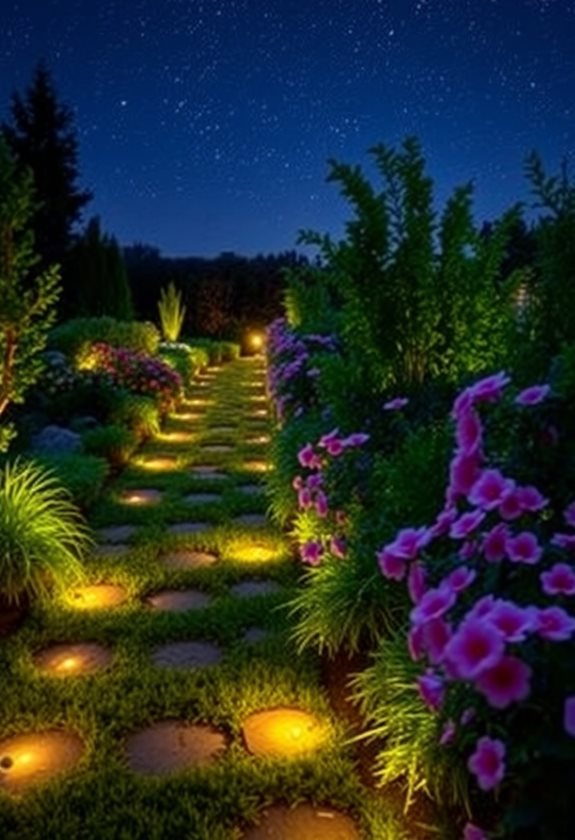
Imagine strolling through your garden pathway on a starry night, where each step is illuminated by soft, welcoming lights that guide your way. Incorporating lighting isn’t just about aesthetics; it enhances safety too! Consider these options:
- Solar path lights: They’re eco-friendly and easy to install.
- String lights: Drape them along edges for a magical touch.
- Spotlights: Highlight beautiful plants or features, creating a cozy ambiance.
Don’t forget to place lights where you walk most often. After all, who wants to trip over a garden gnome in the dark? Let your garden shine, even after sunset! Adding romantic outdoor lighting can elevate the atmosphere, making every evening feel special.
Pathways as Living Elements
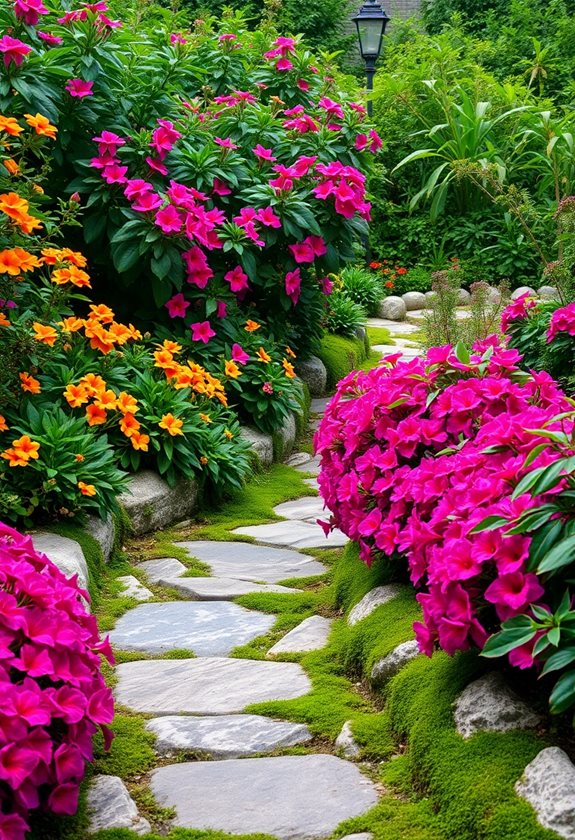
As you plan your garden pathways, think about how they can become living elements that enhance the beauty of your space, rather than just a means to get from point A to B. Imagine lining your path with fragrant herbs like lavender or rosemary—who wouldn’t love that aroma? You could even add colorful flowers that attract butterflies! Just remember, safety first: consider sturdy materials that won’t get slippery when wet. Plus, using plants that require little maintenance means more time enjoying your garden. Incorporating decorative stone pathways can create a visually stunning and functional design. Why not make your pathways a vibrant part of your garden’s story? Happy gardening!
Minimalist and Modern Approaches
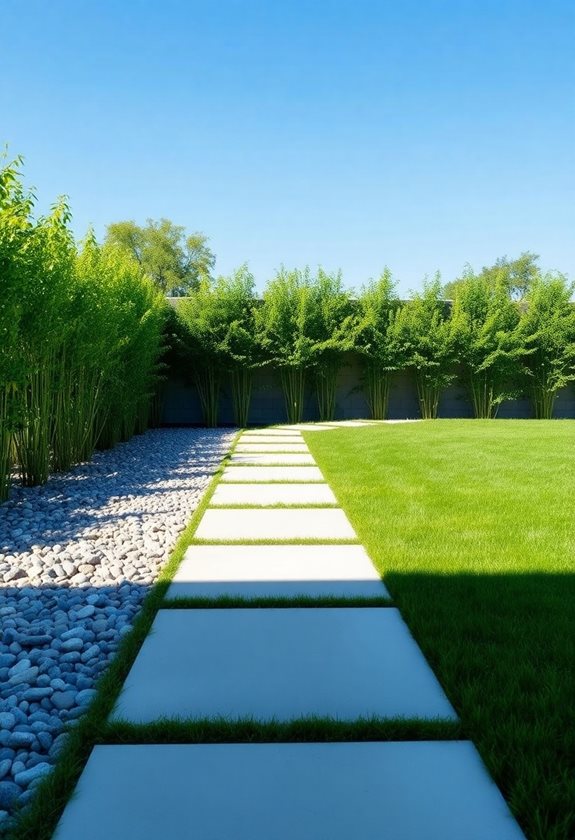
Garden pathways don’t always have to be about lush greenery and colorful blooms; sometimes, less really is more! Embracing minimalist and modern designs can enhance your garden’s charm while ensuring safety. Consider these three elements:
- Straight Lines: Clean, straight pathways create a sense of order and guide you safely through your space.
- Natural Materials: Use stone, gravel, or wood for a sleek, durable look that blends with nature.
- Simple Lighting: Soft, low-voltage lights add safety without overwhelming the design. Additionally, using high-quality cedar or sycamore for your pathways ensures longevity and durability against the elements.
With these tips, you’ll craft a modern pathway that’s not only stylish but also inviting. Ready to dig in?
Functional Pathways for Garden Maintenance
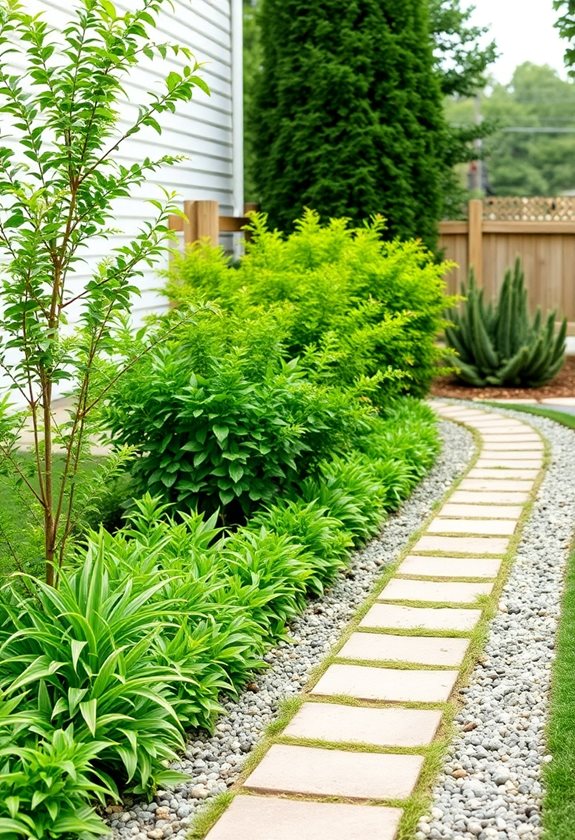
When you think about maintaining your garden, have you ever considered how the pathways play an essential role in keeping everything organized? Functional pathways help you navigate your garden safely and efficiently. They minimize mud, reduce tripping hazards, and keep tools and supplies within reach. Here are a few ideas:
Consider how essential pathways are in your garden; they enhance organization, safety, and accessibility while reducing mud and tripping hazards.
- Gravel paths: Easy to maintain and great for drainage.
- Mulch trails: Soft underfoot and eco-friendly.
- Paver stones: Durable and stylish!
Incorporating discreet pathway solutions can enhance the overall aesthetic of your garden while ensuring practicality.
Frequently Asked Questions
What Are the Best Plants to Line Garden Pathways?
Did you know that a well-planned garden can boost your mood by 30%? To line your garden pathways safely and beautifully, consider low-growing plants like lavender, which not only smell amazing but also deter pests! Other great options include creeping thyme or ornamental grasses. They create a soft, inviting edge while reducing tripping hazards. Just imagine strolling through your garden, inhaling those lovely scents—what a delightful escape! So, which plants will you choose?
How Do I Maintain My Garden Pathway?
Maintaining your garden pathway is easier than you might think! First, keep it clear of debris—who wants a tripping hazard, right? Regularly check for weeds and pull them out; they love to sneak in! If you’ve got stones or gravel, give them a good rake to keep them looking sharp. Finally, consider a seasonal wash with soapy water to brighten things up. Your pathway deserves a little love, don’t you think?
Can I DIY a Garden Pathway?
Absolutely, you can DIY a garden pathway! It’s a fun project that adds charm to your yard. Start by choosing materials like gravel, stones, or bricks. Measure your space, then outline your path with a garden hose for a visual guide. Dig out the area, level it, and lay your chosen material. Don’t forget to secure the edges! Have you thought about how it’ll look in your garden? Let your creativity shine!
What Are the Costs Associated With Garden Pathways?
Did you know that the average cost of a garden pathway can range from $1,000 to $5,000? That might sound steep, but it’s all about materials and design! To keep it safe and stylish, consider these options:
- Gravel: Affordable and easy to install.
- Pavers: Durable and eye-catching!
- Mulch: Budget-friendly and eco-friendly.
With a little planning, you can create a beautiful pathway that’s perfect for your backyard oasis! Isn’t that exciting?
How Do Pathways Affect Garden Drainage?
Pathways play a vital role in garden drainage! When you design your garden, think about how water flows. Good drainage keeps your plants healthy. You wouldn’t want soggy roots, right? Here are a few tips:
- Use permeable materials like gravel or bricks.
- Create slight slopes to direct water away from plant beds.
- Add drainage channels if needed!