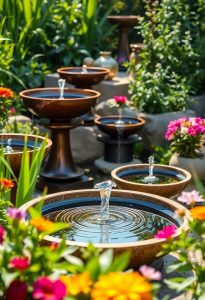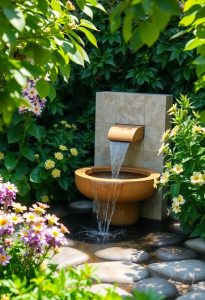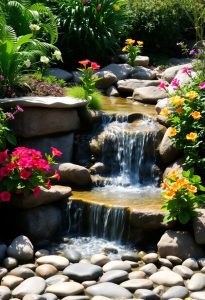
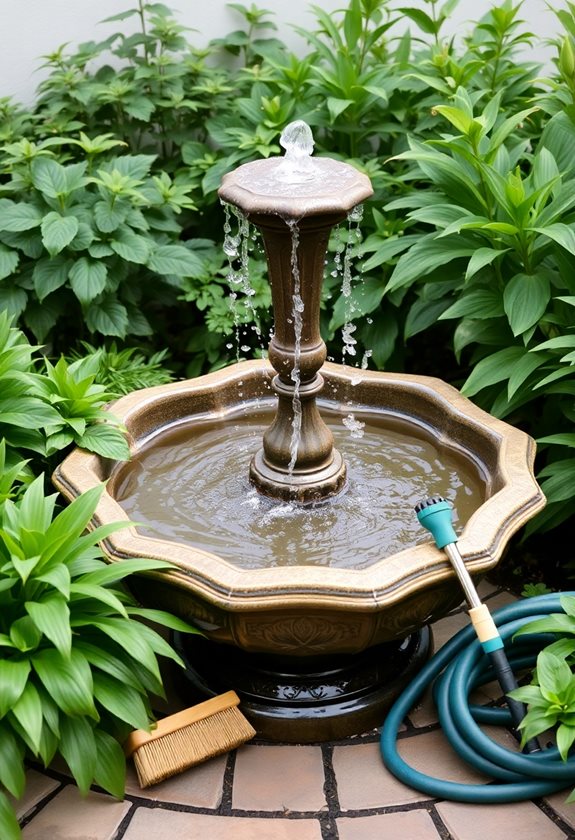
To keep your garden water features vibrant, you’ve gotta stay on top of maintenance! Start with regular cleaning—scoop out leaves and twigs weekly. Next, monitor water quality by testing pH and changing 10-15% of the water often. Don’t forget your pump and filter; clean them to avoid clogs and weird noises! Seasonal checklists help too: prepare for winter by insulating pipes. Want more tips to make your water feature thrive? There’s so much more to explore!
Design Highlights
- Regularly scoop leaves and debris to maintain clean water and prevent muck buildup in your garden water features.
- Test water pH levels monthly, aiming for a range of 6.5 to 7.5 for optimal health.
- Implement seasonal maintenance, including cleaning debris in spring and preparing for winter by draining water.
- Clean and maintain your pump and filter regularly to prevent clogs and ensure efficient operation.
- Monitor water levels and treat algae promptly to maintain clarity and prevent issues in your water features.
Regular Cleaning and Debris Removal
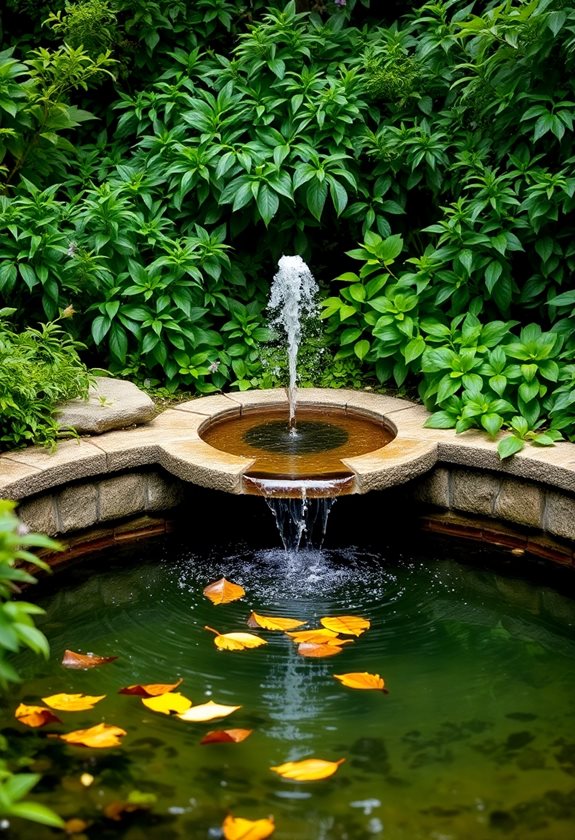
When it comes to maintaining your garden water features, regular cleaning and debris removal are key to keeping them looking their best—after all, nobody wants a pond that resembles a swamp! Start by scooping out leaves and twigs weekly; it’s a simple task that stops muck from piling up. You’ll also want to check your pump and filter—clean them monthly to avoid clogs. Don’t forget about the edges! A quick trim of overhanging plants prevents extra debris. Have you ever slipped on wet leaves? Yikes! Keeping your water features tidy not only looks great but also keeps your garden safe and inviting. Additionally, incorporating affordable DIY water features can enhance your garden while making maintenance easier.
Water Quality Management
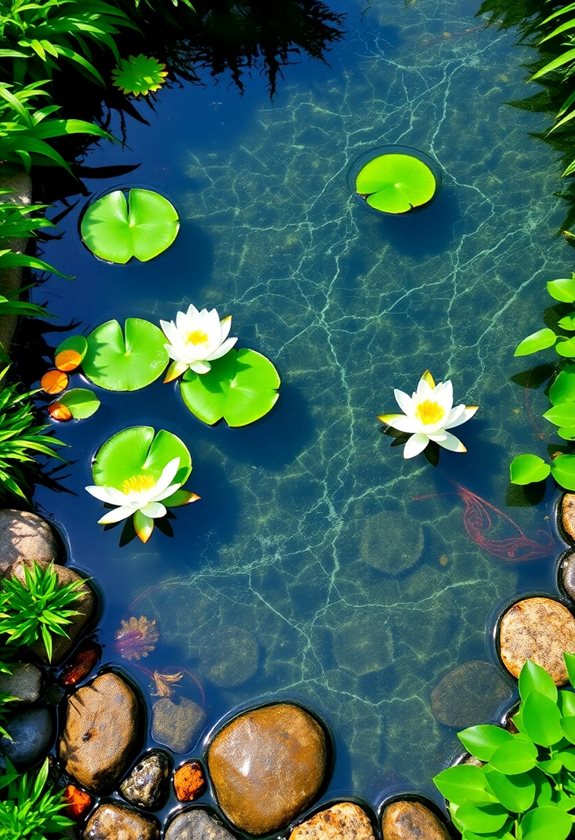
Water quality is the lifeblood of your garden water features, and keeping it pristine can feel like a never-ending quest. Have you ever noticed murky water or unpleasant odors? That’s a sign to act! Start by testing your water’s pH and clarity. Aim for a pH of 6.5 to 7.5 for optimum health.
Maintaining water quality is essential for your garden features—test pH regularly and watch for murkiness or odors!
- Regularly change 10-15% of the water.
- Use a quality water conditioner.
- Keep an eye out for algae and treat it promptly. Additionally, consider implementing algae prevention tips to maintain a healthier environment for your water features.
Seasonal Maintenance Checklist
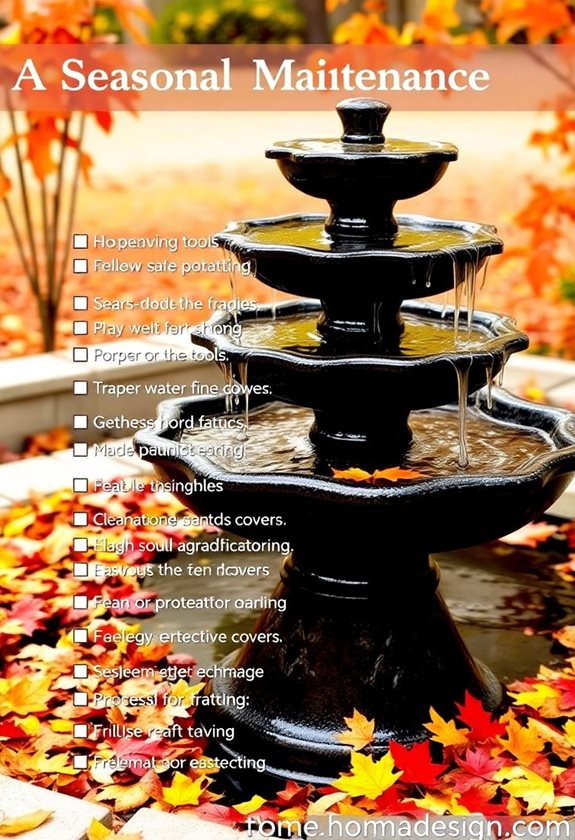
Every season brings its own charm and challenges for garden water features, and keeping up with maintenance can feel like a balancing act! To make it easier, here’s a seasonal checklist:
- Spring: Clean debris, check for leaks, and clear out any algae.
- Summer: Monitor water levels, add beneficial bacteria, and keep plants trimmed to guarantee safety.
- Fall: Remove fallen leaves and prepare for colder weather by draining water.
- Winter: Insulate pipes and consider using a heater to prevent freezing. Additionally, regular maintenance is essential to prolong the life of your water feature components.
Pump and Filter Maintenance
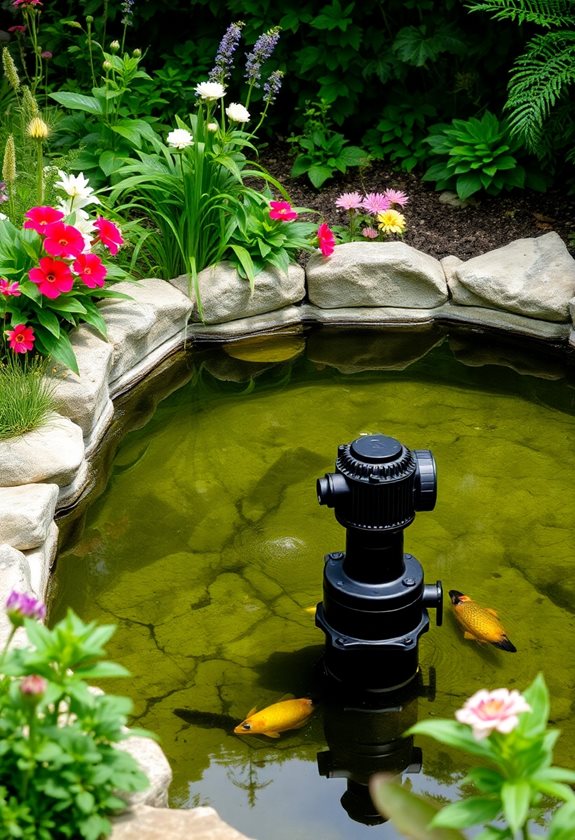
After you’ve tackled the seasonal chores, it’s time to focus on the heart of your garden water feature: the pump and filter. Keeping these components in tip-top shape guarantees your water flows smoothly and looks great! Start by unplugging the pump—safety first! Clean the filter regularly, removing debris like leaves and algae. Check for leaks and any unusual sounds; a humming pump might need attention! Did you know a clean filter helps prevent clogs? It’s true! Additionally, regular maintenance on your water feature design can enhance the overall aesthetic appeal of your garden. So, roll up your sleeves and give your pump some love this season. Your water feature will thank you with crystal-clear water!
Plant Care and Management
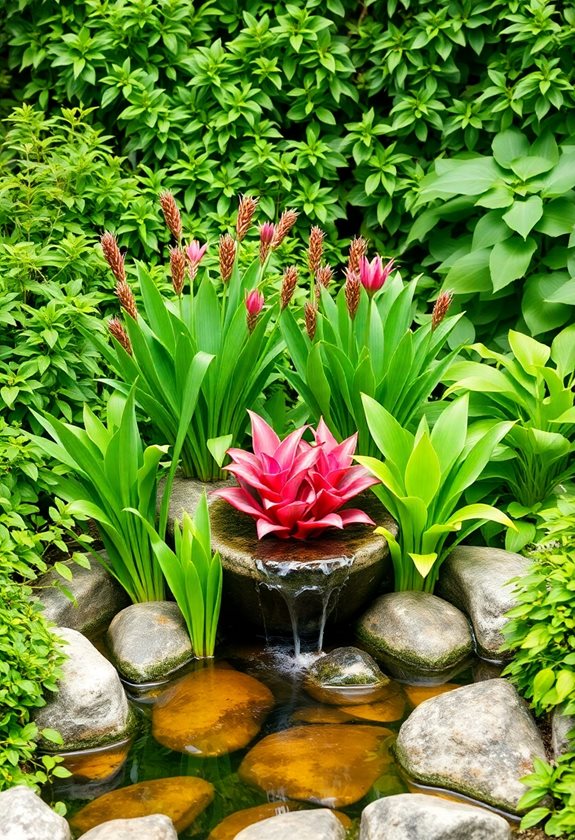
While you might think your garden water feature steals the show, the plants surrounding it deserve just as much attention! Keeping them healthy enhances your entire garden’s beauty. Here’s how you can manage your plants safely:
- Water Wisely: Guarantee your plants get adequate moisture, but avoid overwatering.
- Inspect Regularly: Check for pests or diseases weekly to catch any issues early.
- Prune Thoughtfully: Trim dead or overgrown branches to encourage growth and airflow.
- Fertilize Smartly: Use organic fertilizers to nourish your plants without harmful chemicals.
With some care, your plants will thrive alongside your water feature!
Winterization Tips
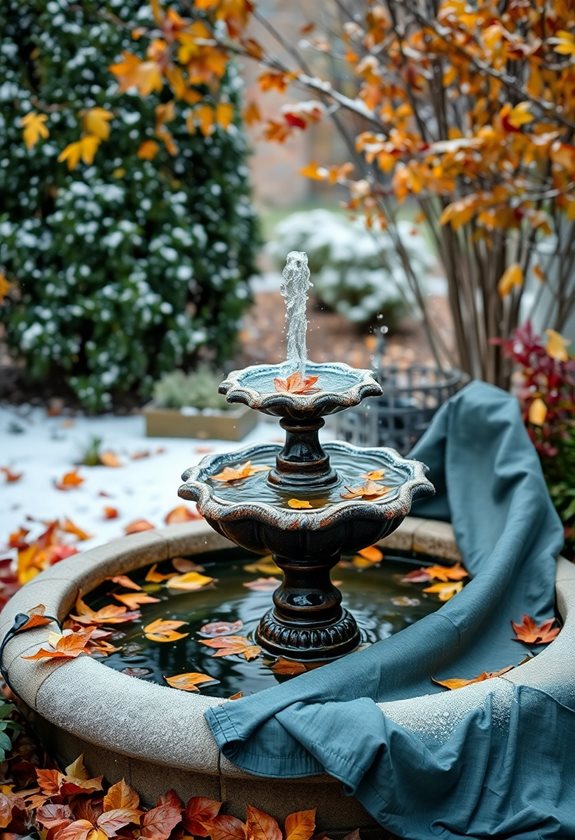
As the crisp air of autumn settles in, you might find yourself wondering how to best protect your beloved water features from the harsh winter ahead. Don’t fret! Start by draining the water to prevent freezing, and clean any debris. If you have a fountain, consider removing the pump and storing it indoors—trust me, it’ll thank you later! Wrap exposed pipes with insulation to safeguard against frost. And remember, if you’ve got fish, create a hole in the ice for oxygen. Seasonal care products are also available to help maintain your garden pond during winter. Winter’s tough, but with these tips, your garden can thrive come spring! Ready to tackle winter? Let’s do this!
Troubleshooting Common Issues
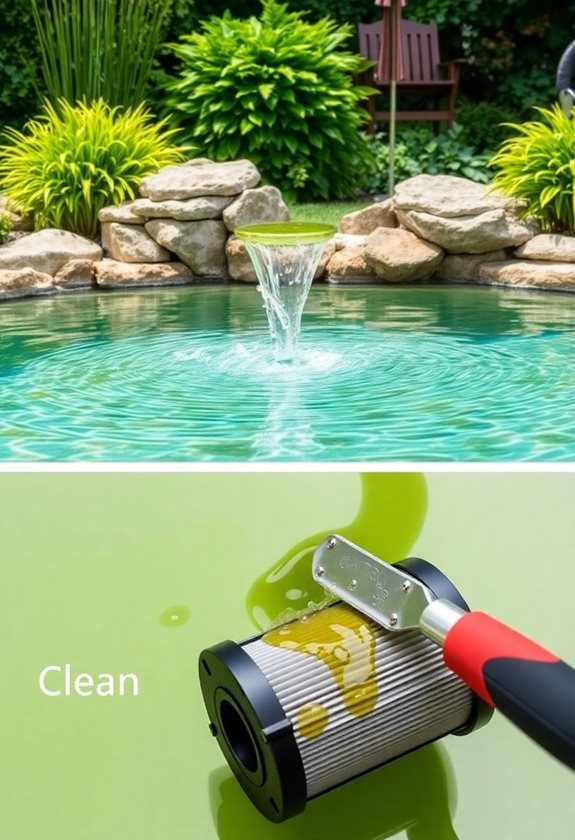
Even with winterization complete, your water features can still present a few pesky problems that might pop up. Don’t worry! Here’s how to troubleshoot:
- Low Water Levels: Check for evaporation or leaks.
- Clogged Filters: Clean or replace filters regularly to maintain flow.
- Pump Issues: Listen for strange noises; it may need repair or replacement.
- Green Algae: Use safe algaecides and guarantee proper sunlight exposure. Additionally, keep in mind that regular maintenance of water garden essentials can significantly reduce the likelihood of these issues arising.
Frequently Asked Questions
How Often Should I Change the Water in My Fountain?
You should change the water in your fountain every week or two, depending on its size and the weather. Stagnant water can attract mosquitoes—yikes! So, keep things fresh. If you notice debris or algae, it’s time for a swap. Just imagine how lovely it’ll look with crystal-clear water! Plus, regular changes mean less hassle later. So, why not make it a fun routine? Your fountain deserves a little love!
Can I Use Tap Water in My Water Feature?
Did you know that around 70% of households use tap water in their garden water features? You can definitely use tap water, but keep in mind that it might contain chlorine, which isn’t great for fish or plants. To make it safer, let the water sit for 24 hours before adding it to your feature. This way, the chlorine evaporates, and you create a healthier environment for your garden oasis! How cool is that?
What Plants Are Best for Aquatic Garden Features?
If you’re looking to add some life to your aquatic garden features, consider these fantastic plants! Water lilies are a classic choice, offering beautiful blooms and shade for fish. You can’t go wrong with cattails, either; they add height and attract wildlife. Don’t forget about floating plants like duckweed—easy to care for and they help keep the water clear. So, which plants will you choose to brighten up your water feature?
Are There Safe Treatments for Algae in Water Features?
Imagine your serene pond turning into a green soup! Algae can be pesky, but don’t worry; there are safe treatments. You can use barley straw, which naturally combats algae without harming your fish. Adding beneficial bacteria helps too—think of them as the cleanup crew for your water! Just remember to keep your water moving with a fountain or pump. Have you tried these methods yet? They might just be the magic touch your garden needs!
How Do I Attract Wildlife to My Water Feature?
To attract wildlife to your water feature, you’ll want to create a welcoming environment! Start by adding native plants around the edges—birds and butterflies love them! Consider placing rocks or logs for critters to perch on. A gentle fountain can provide a delightful sound that draws animals in. Have you thought about adding a small birdbath nearby? It’s a hit! Remember, the more diverse your setup, the more wildlife you’ll see! Exciting, right?