Want to turn your garden into a lush retreat? Start by choosing the right fern varieties for your space, mixing textures for visual appeal! Ferns can also be fantastic ground cover or accent plants in container gardens. Don’t forget to create a serene shade garden or vertical gardening solutions for a charming look! They can even beautify water features or make lovely natural borders. Curious about more tips to transform your garden with ferns?
Design Highlights
- Choose the right fern varieties based on light and moisture needs to ensure optimal growth and aesthetic appeal in your garden.
- Create layered textures by mixing tall and short ferns, enhancing visual interest and depth in your garden design.
- Use ferns as ground cover in shady spots to prevent soil erosion and support beneficial wildlife in your garden.
- Design a fern-focused shade garden with pathways and seating areas for a tranquil retreat that promotes relaxation.
- Explore vertical gardening with ferns to add lush greenery to walls and maximize limited space while enhancing your home’s aesthetic.
Choose the Right Varieties for Your Space
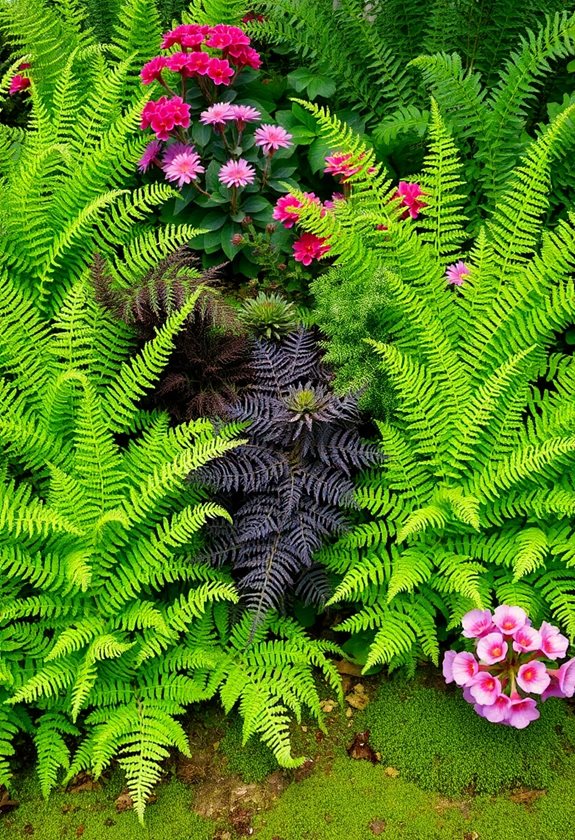
Have you ever wandered through a garden and felt that magical sense of calm wash over you? Choosing the right fern varieties can create that serene atmosphere in your own space! Start by considering your garden’s light conditions—some ferns thrive in shade, while others love dappled sunlight.
- Boston Fern: Great for hanging baskets!
- Maidenhair Fern: Perfect for moist areas.
Think about your garden’s size too; smaller ferns can fit snugly in borders, while larger ones make stunning focal points. Remember, don’t be afraid to experiment! Your garden is a canvas, and ferns add beautiful, lush textures. Incorporating beautiful ferns can truly transform your garden into a peaceful retreat. Enjoy the journey!
Create Layered Textures With Different Fern Species
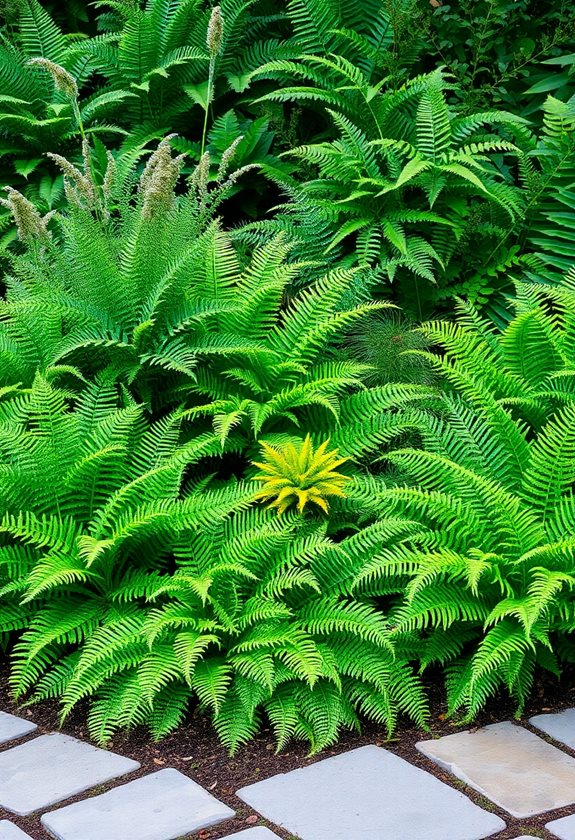
Creating layered textures with different fern species can transform your garden into a lush sanctuary, and believe me, it’s easier than it sounds! Start by mixing tall ferns, like the majestic ostrich fern, with shorter varieties, such as the delicate maidenhair. This layering creates visual interest and depth.
- Consider their light and moisture needs.
- Group them based on texture—some are frilly, while others are sleek.
Don’t forget to leave space for growth! Have you ever tried using ferns as a backdrop for colorful flowers? It’s magical! Additionally, layering plants effectively can enhance the overall design of your landscape. So, roll up those sleeves and let your creativity bloom!
Use Ferns as Ground Cover
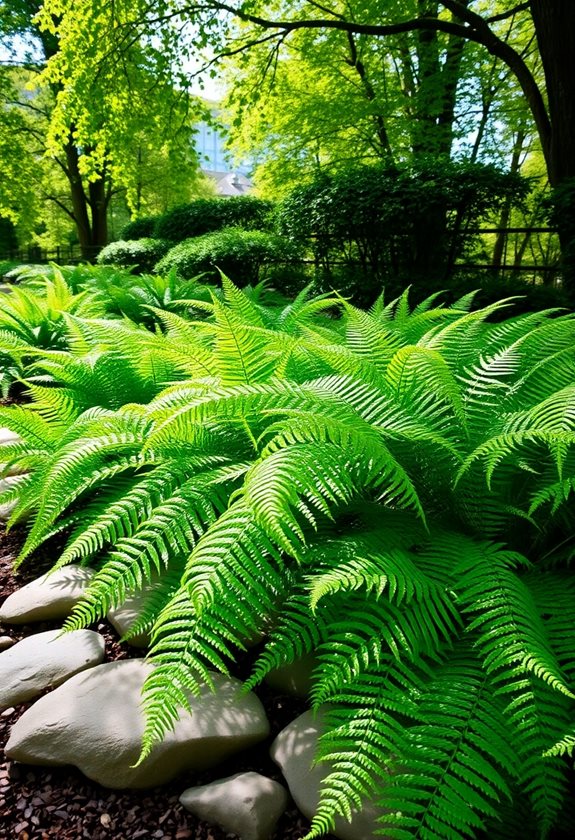
Ferns can be a fantastic option for ground cover, adding a lush, green carpet to your garden that feels inviting and alive! They’re not just pretty; they help prevent soil erosion and provide a safe habitat for beneficial critters. Consider planting hardy varieties like the Japanese painted fern or the lady fern.
Ferns create a vibrant, green ground cover that enhances your garden’s beauty while supporting the ecosystem.
Here’s how to make it work:
- Choose a shady spot.
- Prepare the soil by loosening it and adding compost.
- Space your ferns about 18 inches apart.
With a little patience, you’ll have a stunning, low-maintenance ground cover that’ll make your garden feel cozy and secure! Additionally, incorporating natural stones can enhance the aesthetic appeal of your garden while providing functional benefits.
Incorporate Ferns in Container Gardens
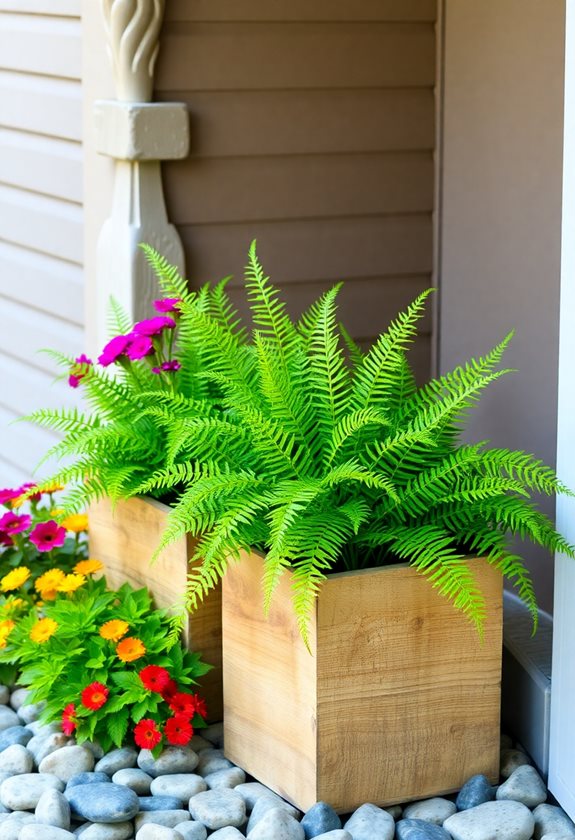
When you think about adding a touch of greenery to your container gardens, why not consider the elegant beauty of ferns? These plants thrive in various conditions and can bring a revitalizing vibe to your space. Try mixing different fern varieties for texture, or pair them with colorful annuals for a stunning contrast.
Here’s a quick tip: make sure your containers have proper drainage to avoid soggy roots. Don’t forget to keep your ferns hydrated, especially during hot days! Additionally, ferns can be grouped with other shade-loving plants to create a lush garden oasis that maximizes your small space. Are you ready to create your own fern masterpiece? Trust me, you’ll fall in love with their lush charm!
Design a Fern-Focused Shade Garden

Imagine stepping into a tranquil oasis, where lush greenery envelops you and whispers of nature surround your senses. Designing a fern-focused shade garden is easier than it sounds! Start by choosing a variety of ferns, like the elegant maidenhair or the hardy ostrich fern.
- Layer your ferns: Place taller varieties at the back and shorter ones in front for depth.
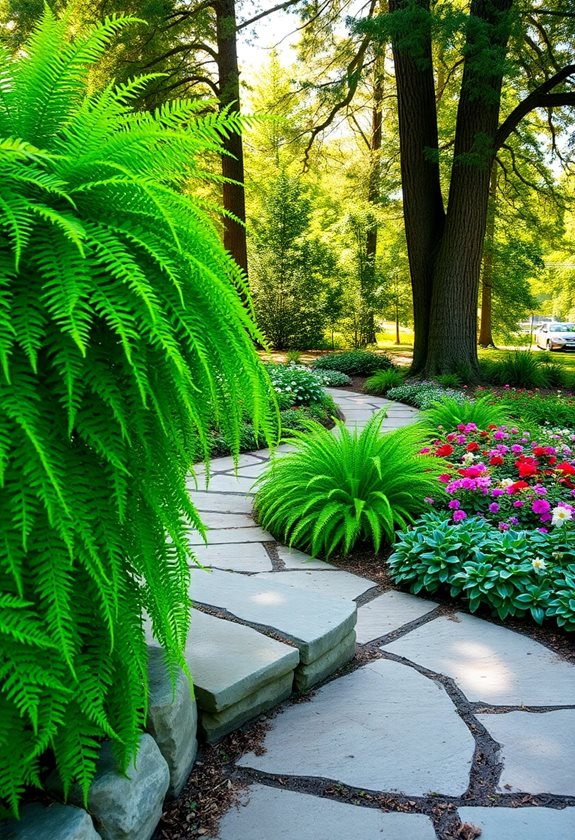
- Add pathways: Use mulch or stepping stones to create safe, inviting trails.
Don’t forget to include seating! Picture yourself sipping tea, surrounded by the soothing rustle of leaves. Isn’t that the dream? Let’s make it happen! Including shade-loving plants can enhance the overall aesthetic and health of your garden.
Pair Ferns With Other Shade-Loving Plants
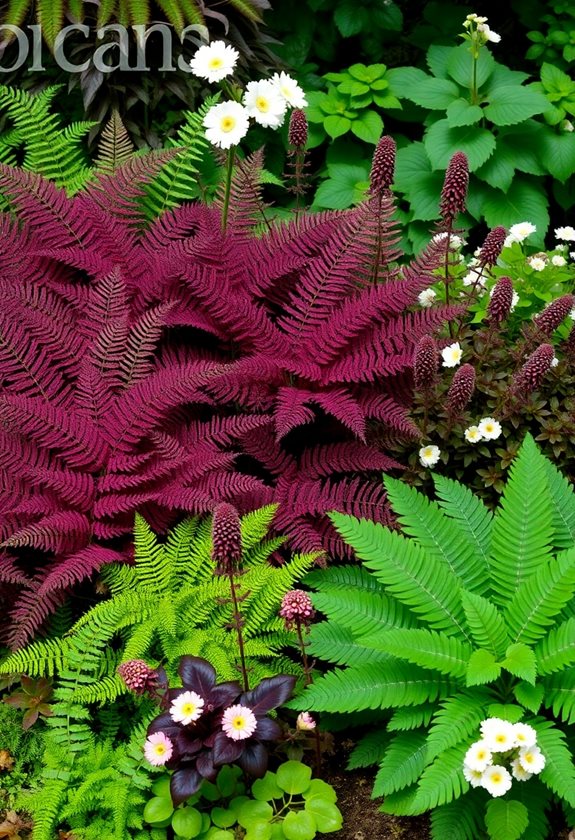
While creating a lush garden, it’s essential to contemplate how different plants can complement each other, especially when you’re working with shade-loving beauties like ferns. Pairing ferns with other plants can transform your space into a serene retreat! Consider adding:
- Hostas: Their large leaves create a vibrant contrast with delicate fern fronds.
- Astilbes: These colorful blooms add a pop of color beside your ferns.
- Heucheras: Their varied foliage colors can brighten up your shady corners.
Incorporating shade-loving plants alongside ferns not only enhances your garden’s beauty but also promotes a thriving ecosystem. Mixing these can enhance your garden’s beauty while ensuring a safe, peaceful environment. Ready to get planting? Let’s make your garden shine!
Use Ferns to Create Natural Borders
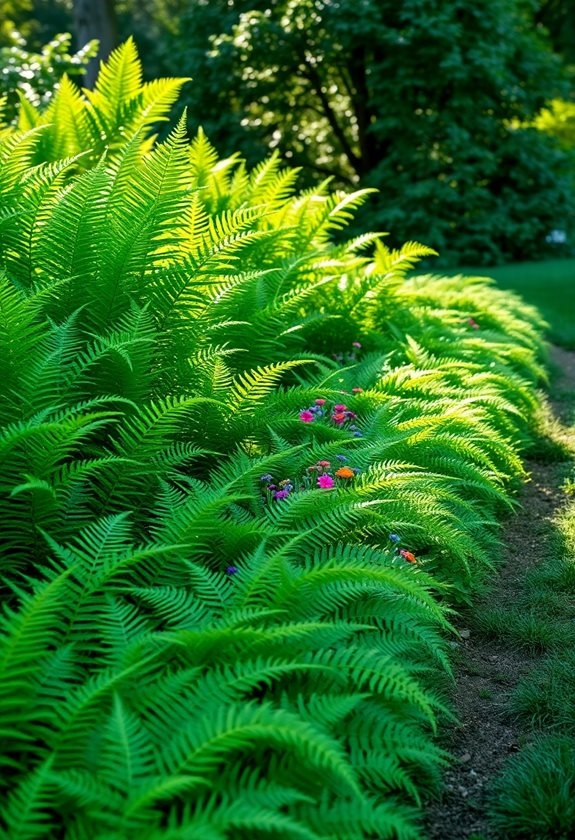
Creating natural borders in your garden can be a game-changer, especially when you think of using ferns! They’re not just beautiful; they provide a lush, green barrier that keeps your space looking neat. Consider planting a row of ferns along pathways or around flower beds.
Here’s how to do it:
- Choose hardy varieties like Boston or Maidenhair ferns.
- Space them about one foot apart for a full look.
- Water regularly, but don’t overdo it—soggy roots can be a problem!
Ferns are ideal for adding dense foliage plants that enhance the overall aesthetics of your garden. With ferns, you’ll have a charming, safe border that also adds depth and texture to your garden. Isn’t that exciting?
Enhance Water Features With Ferns
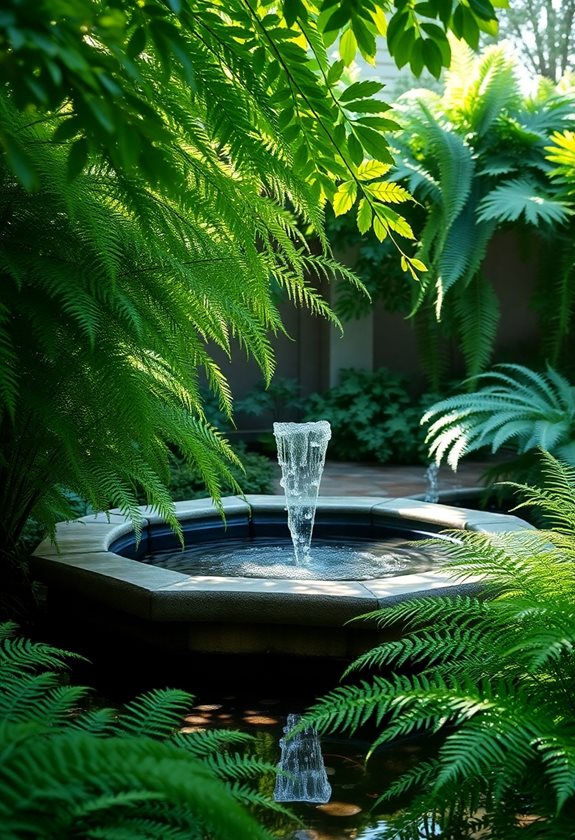
If you want to elevate the beauty of your water features, using ferns can be a fantastic choice! They add a lush, vibrant touch that complements the tranquil sound of flowing water. Here’s how you can enhance your space:
- Surround the pond with delicate ferns like the Maidenhair for a soft, feathery edge.
- Place ferns on rocks or ledges, creating a natural, layered look that feels inviting.
- Integrate taller varieties, such as Ostrich ferns, behind smaller ones to add depth and drama.
Additionally, consider incorporating the sound of flowing water from a garden waterfall to create a peaceful ambiance that harmonizes beautifully with your ferns. Trust me, your garden will feel like a serene oasis, and you’ll love spending time there!
Create a Woodland Garden Aesthetic
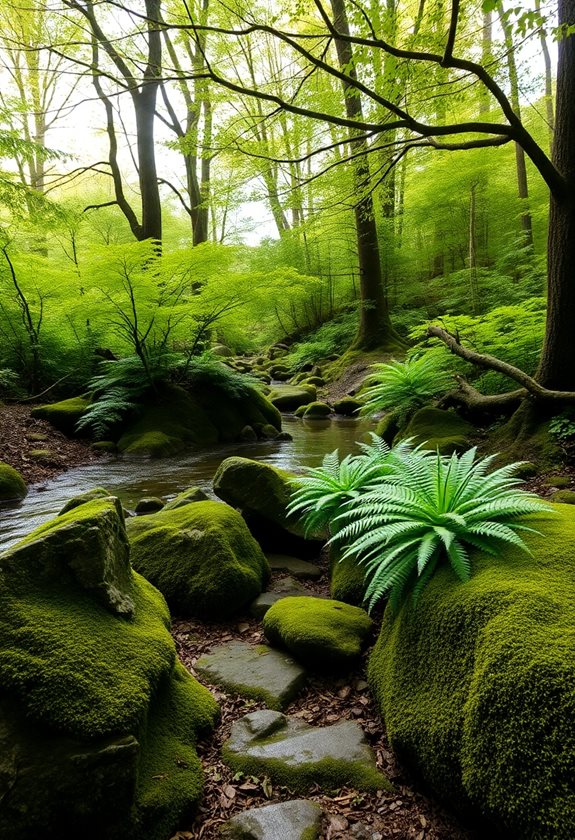
Transforming your garden into a woodland paradise can be an incredibly rewarding experience, especially when you embrace the enchanting qualities of ferns. Imagine stepping into a lush, green sanctuary where ferns create a serene atmosphere. Start by grouping different fern varieties—like the delicate maidenhair and sturdy ostrich ferns—together. This brings texture and depth! Consider adding soft mulch to keep the soil moist and prevent weeds. Don’t forget to include some shade-loving flowers for pops of color! What’s more fun than discovering hidden paths lined with ferns? Your woodland garden can be a safe, magical retreat—a place you’ll love spending time in! Additionally, incorporating small enclosed garden layout ideas can help maximize the beauty and functionality of your fern-filled oasis.
Incorporate Ferns in Vertical Gardening Solutions
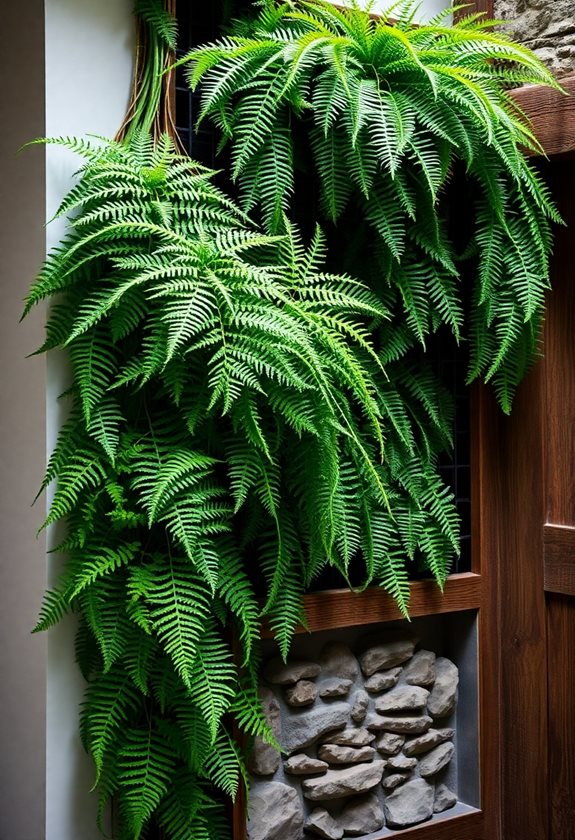
Ferns can add a delightful twist to your vertical gardening projects! Imagine creating a lush, green wall that’s not just beautiful but also safe for your space. Here’s how to incorporate ferns effectively:
Ferns bring charm to vertical gardens, creating a vibrant and safe green wall for your home.
- Choose the Right Wall: Opt for a sturdy surface with enough sunlight and moisture.
- Select Fern Varieties: Go for low-maintenance types like Boston or Maidenhair ferns that thrive in vertical spaces.
- Use Safe Planters: Make sure planters are secured well to prevent any falls or spills.
Incorporating vertical garden structures can enhance the overall aesthetic and functionality of your fern display. With a bit of creativity, your vertical garden can be a stunning, safe retreat filled with vibrant ferns! Happy gardening!
Frequently Asked Questions
How Do I Care for Ferns During Winter Months?
Did you know that some ferns can survive extreme cold, down to -30°F? To care for your ferns during winter, you should first trim any dead fronds. Then, cover the base with mulch to insulate the roots. Keep an eye on moisture; ferns need some but not too much, so don’t let them freeze solid! If you’re unsure, just check the soil. Isn’t it fun to keep your ferns happy and healthy?
Can Ferns Thrive in Full Sunlight?
Can ferns thrive in full sunlight? Honestly, most ferns prefer shady spots! They love dappled light or partial shade, where they can stay cool and moist. If you’ve got a super sunny area, consider planting ferns like the Autumn Brilliance, which can tolerate more sun, but remember to keep them well-watered. Have you ever tried moving them around to find their happy place? It’s like giving them a new home! Happy gardening!
What Pests Commonly Affect Ferns?
You might be surprised to learn that pests can really bug your ferns! Common culprits include aphids, spider mites, and slugs. These little troublemakers can suck the life out of your plants, leaving them weak and unhappy. To keep them at bay, check your ferns regularly, and don’t hesitate to use insecticidal soap or natural predators like ladybugs. Isn’t it funny how a tiny bug can cause such big problems? Happy gardening!
How Often Should I Fertilize My Ferns?
You should fertilize your ferns about once a month during the growing season, which typically runs from spring to summer. A balanced, water-soluble fertilizer works wonders! Just remember, too much can burn those delicate fronds. Have you ever accidentally over-fertilized? It’s a learning moment! Also, consider using compost as a natural alternative—your ferns will thrive! Keep an eye on their growth, and you’ll soon find the perfect rhythm for nourishing them!
Are Ferns Safe for Pets and Children?
You’ll be glad to know that most ferns are safe for pets and kids! They’re generally non-toxic, making them a great addition to your home or garden. However, always double-check specific varieties—some plants can be sneaky! For instance, the Boston fern is a friendly choice, while others might not be as suitable. So, keep an eye out, but don’t worry too much; ferns can add that lush vibe without the risk!