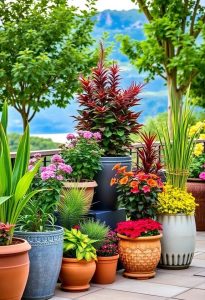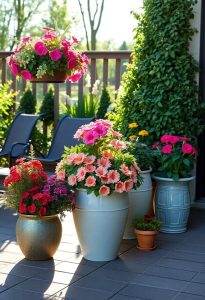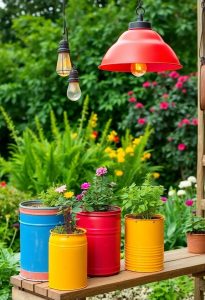
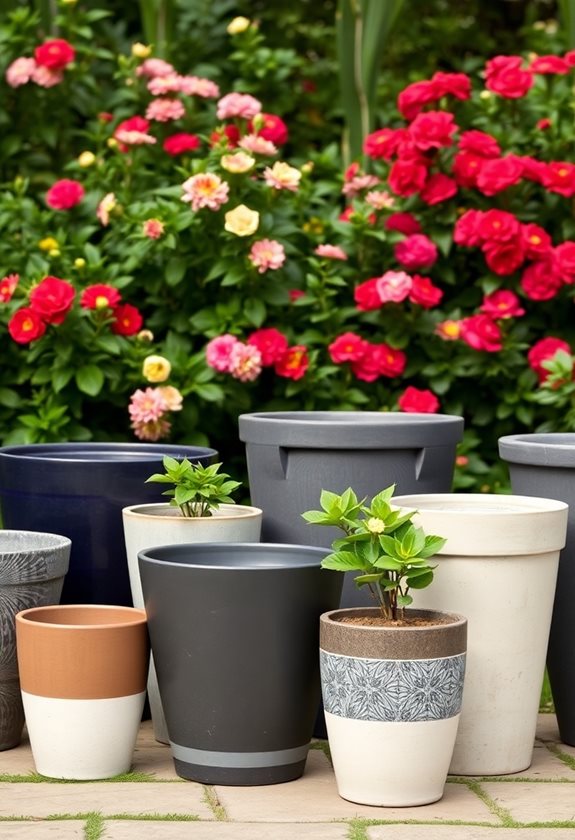
When picking outdoor garden pots, you’ve got to evaluate a few key things to keep your plants happy! First, match the pot size to your plants—small ones need 6 inches deep while larger plants want 14-16 inches. Material matters, too; terracotta’s classic but can crack, while plastic is light and affordable. Don’t forget about drainage—no one likes soggy roots! And hey, think about colors that make your garden pop! Curious about more tips? There’s plenty more to explore!
Design Highlights
- Select pot size based on plant type: small plants need 6 inches deep, medium 10-12 inches, and large 14-16 inches for healthy growth.
- Choose durable materials like terracotta, ceramic, fiberglass, or plastic that withstand weather changes and enhance aesthetic appeal.
- Ensure pots have adequate drainage holes and consider adding gravel to prevent waterlogging and promote root health.
- Consider your climate when selecting pots; ceramic keeps roots cool in hot climates, while thick-walled pots protect in cold ones.
- Evaluate pot shape, color, and maintenance ease to complement your landscape and ensure stability for top-heavy plants.
Consider the Size of Your Plants
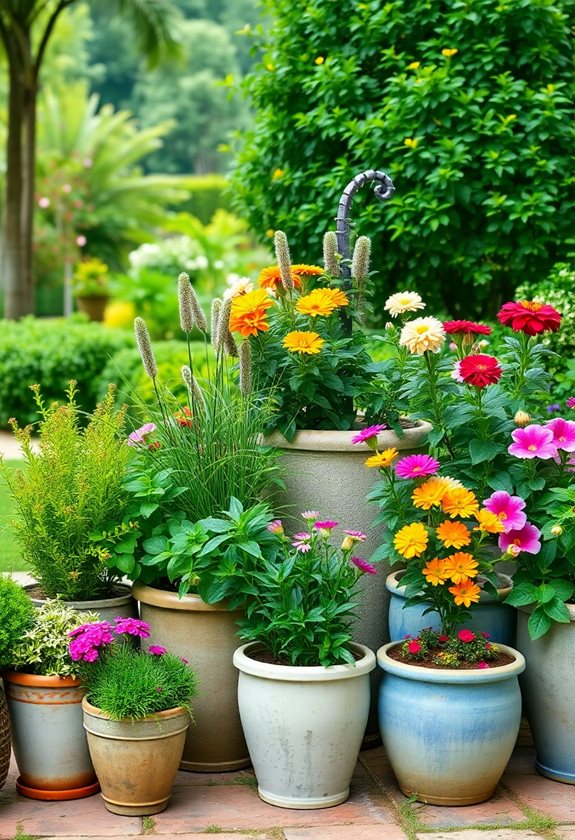
When you’re diving into the world of gardening, one of the first things you should think about is the size of your plants—after all, you wouldn’t want your little seedlings to feel cramped, right? Choosing the right pot size is essential for healthy growth.
Consider your plants’ size to ensure they have enough space to thrive; pot selection is key for their healthy growth.
- Small plants? Aim for pots about 6 inches deep.
- Medium plants? Go for 10-12 inches deep.
- Large plants? You’ll need at least 14-16 inches! Additionally, ensure that your chosen pots have proper drainage holes to prevent root rot and promote healthy plant growth.
Choose the Right Material
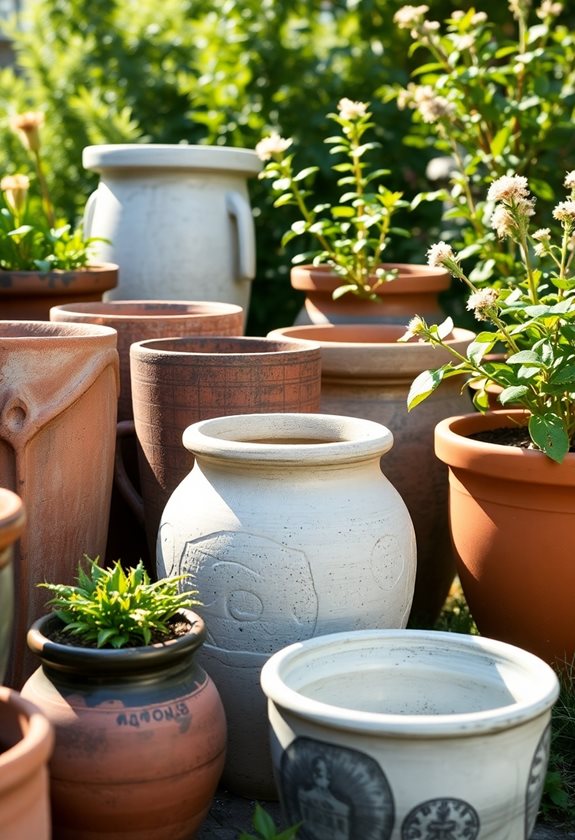
Choosing the right material for your outdoor garden pots can feel a bit overwhelming, especially with so many options out there, but it doesn’t have to be! You want your pots to be safe and durable, right? Here are three popular materials to take into account:
- Terracotta: Classic and breathable, but can crack in extreme weather.
- Plastic: Lightweight and affordable, plus it won’t shatter, making it perfect for kids’ gardens!
- Wood: Natural and rustic, but verify it’s treated to resist rot. Additionally, the best pots for vegetable gardening can enhance your gardening experience by ensuring optimal growth conditions for your plants.
Ensure Proper Drainage
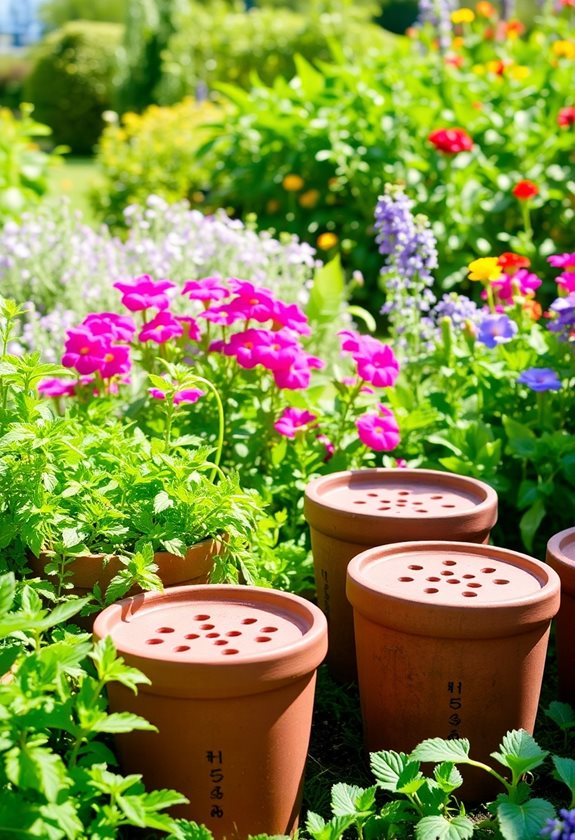
Having the right drainage in your outdoor garden pots can make all the difference in keeping your plants healthy and thriving—trust me, I’ve learned this the hard way! When water collects at the bottom, roots can rot, leading to sad, droopy plants. So, what can you do?
- Check for drainage holes: Make sure your pots have enough!
- Layer gravel or small rocks: This helps excess water escape.
- Use potting mix: It provides good aeration and drainage. Additionally, opting for planters with built-in drainage systems can significantly enhance root health by preventing waterlogging.
Think About Color and Style
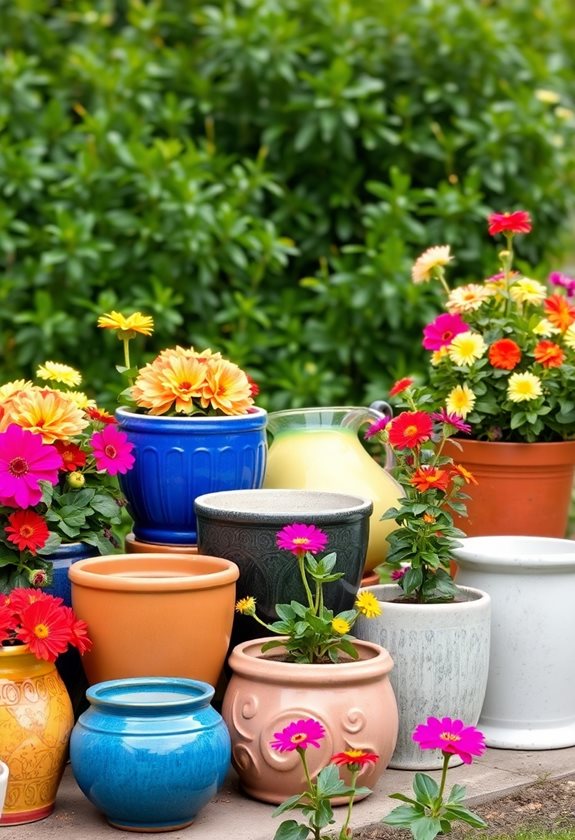
Have you ever walked through a nursery and found yourself drawn to a vibrant splash of color or a unique pot design? Choosing the right color and style for your outdoor garden pots can truly elevate your space! Here are three tips to reflect upon:
Exploring vibrant pots and colors can transform your garden into a stunning outdoor retreat!
- Complement Your Plants: Pick colors that highlight the foliage and blooms of your plants.
- Match Your Home’s Aesthetic: Choose styles that blend seamlessly with your home’s architecture.
- Think Seasonal: Don’t shy away from playful colors that change with the seasons—your garden will thank you!
Additionally, investing in beautiful garden flower pots can significantly enhance the overall appeal of your outdoor space. After all, a beautiful pot can be just as eye-catching as the plants it holds!
Factor in Weight and Portability
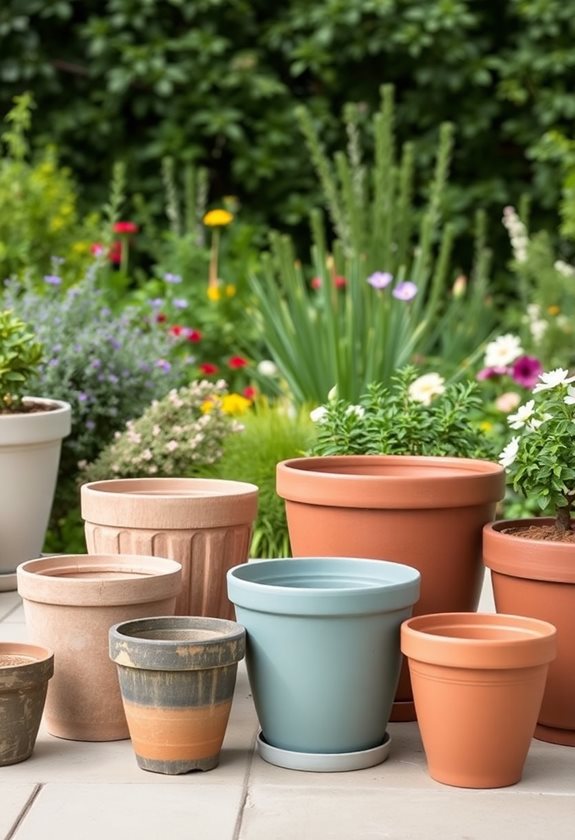
When you’re planning your outdoor garden, you might not think about the weight and portability of your pots right away, but trust me, it’s an essential factor! Lightweight pots are easier to rearrange, especially when you’re looking to optimize sunlight or protect plants from harsh weather. Plus, if you decide to move, you won’t want to lug heavy pots around!
Here are a few tips:
- Choose materials like resin or fiberglass for lighter options.
- Consider pots with wheels for even easier mobility. Additionally, choosing the right pot material can significantly affect the overall weight and ease of handling.
Match Pots to Your Climate
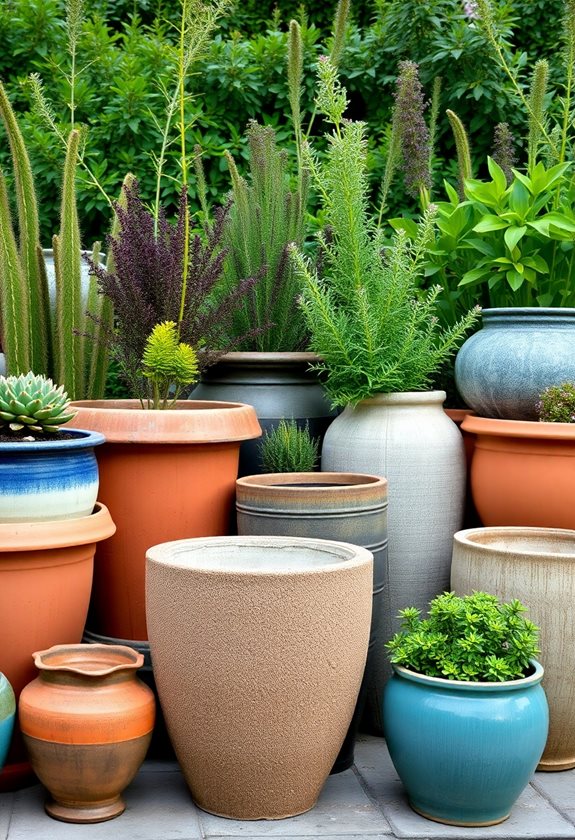
Choosing the right garden pots for your climate can make all the difference in your plants’ success—trust me, I’ve learned this the hard way! Different climates require different materials and styles, so here are a few tips to keep your plants safe and thriving:
- Hot climates: Opt for pots made of ceramic or terracotta to keep roots cool.
- Cold climates: Choose insulated or thick-walled pots to protect against freezing.
- Humid climates: Look for pots with drainage holes to prevent waterlogging. Additionally, selecting the appropriate pot size is essential for optimal growth and health of your plants.
Plan for Growth
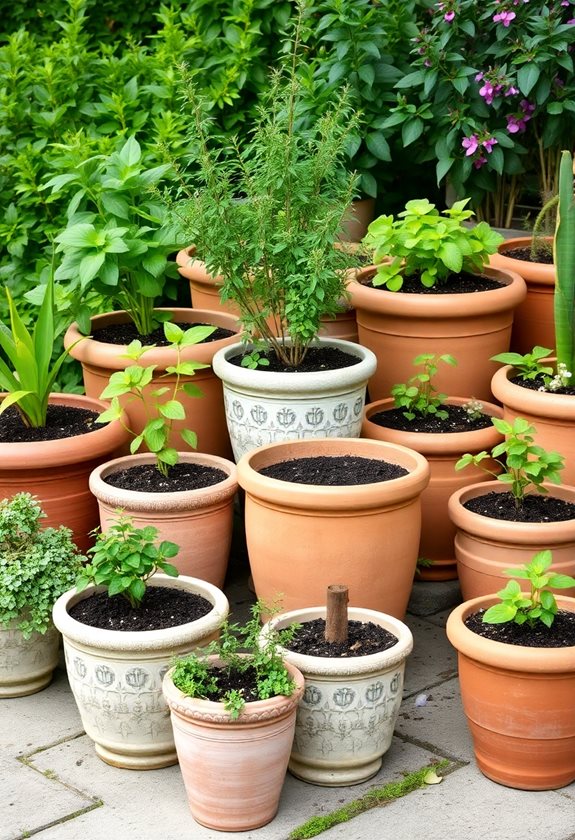
While you may be itching to fill your new pots with beautiful plants, it’s essential to plan for growth before you plunge in! Think about how big your plants will get. Will that cute little flower turn into a towering beauty? Here are some tips:
- Choose larger pots to give roots room to spread.
- Check the plant tags for height and spread info.
- Group plants with similar growth habits together.
Additionally, selecting the right pot size can significantly impact the health of your plants, allowing for better root development and overall growth.
Explore Self-Watering Options
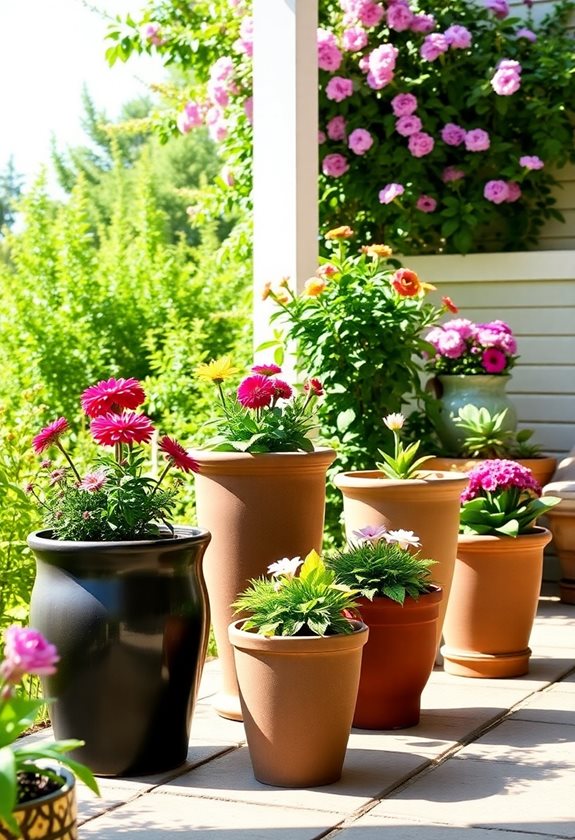
If you’ve ever come back from a weekend getaway to find your plants looking droopy and sad, you know how frustrating it can be! Self-watering pots can be a game-changer for busy gardeners like you. They keep your plants hydrated without the constant worry of over- or under-watering. Here are three things to take into account:
- Reservoir Size: Verify it holds enough water for your plants’ needs.
- Wicking Mechanism: Check that it effectively draws moisture upward.
- Material Safety: Look for non-toxic materials to protect your plants.
Additionally, self-watering containers can help you maintain a healthy garden during dry spells or when you’re on vacation. With self-watering options, your garden can thrive even when you’re away!
Group Pots for Visual Impact
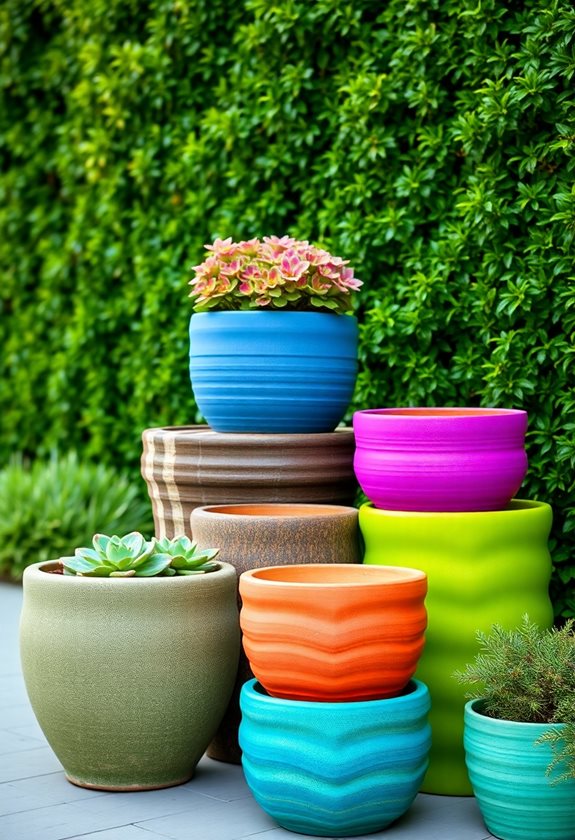
Grouping pots can transform your garden into a stunning visual masterpiece! Have you ever noticed how much more inviting a garden feels when pots are clustered together? Try varying the heights and shapes—tall, slender pots with short, round ones create dynamic interest. You can even mix colors and textures!
- Arrange your pots in odd numbers for a natural look.
- Consider grouping by theme, like herbs or flowers.
Don’t forget about safety! Make sure your pots are stable and won’t tip easily. With a little creativity, your garden can become a vibrant haven you’ll love to show off! Affordable outdoor planters can enhance your garden’s aesthetic even further. What are you waiting for?
Budget for Quality and Durability
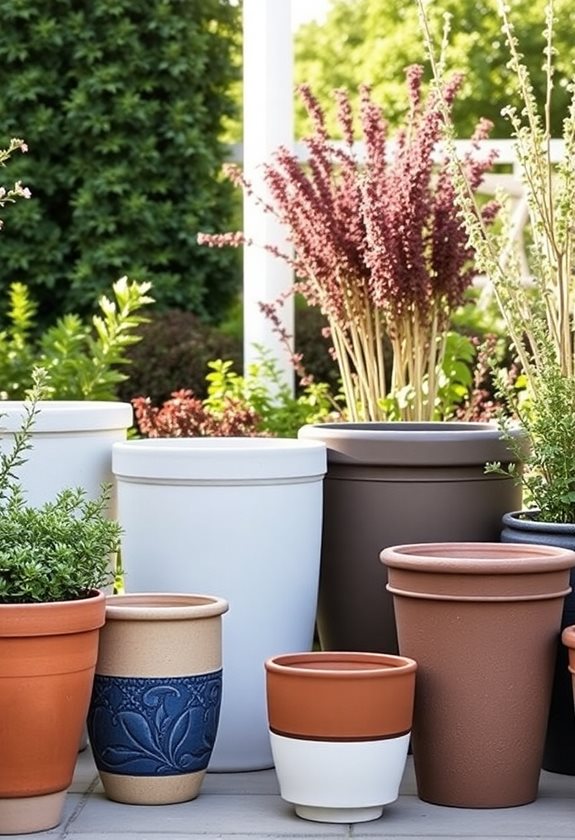
When you think about creating a beautiful outdoor space, it’s easy to get caught up in the excitement of picking out vibrant plants and stylish pots. But remember, your budget for quality and durability matters! Investing wisely guarantees your pots last through the seasons. Here’s what to take into account:
Creating a stunning outdoor space is thrilling, but don’t overlook the importance of quality pots for lasting beauty.
- Material Choice: Opt for weather-resistant materials like ceramic or fiberglass.
- Thickness: Thicker pots provide better insulation and can withstand extreme temperatures.
- Weight: Heavier pots are less likely to tip over in strong winds, keeping your plants safe! Additionally, choosing stunning flower pots can enhance the overall aesthetic of your garden.
Frequently Asked Questions
How Do I Clean Outdoor Garden Pots Effectively?
Cleaning outdoor garden pots isn’t just a chore; it’s a chance to give your plants a fresh start! Start by mixing equal parts water and vinegar for a natural solution. Scrub away dirt and algae with a brush, then rinse well. If you’ve got stubborn stains, a little baking soda works wonders! Just remember, a clean pot means healthier plants—who wouldn’t want that? So, roll up those sleeves and get scrubbing! 🌱✨
Can I Use Regular Soil in Outdoor Pots?
Sure, you can use regular soil in outdoor pots, but it’s not always the best choice! Regular soil can compact, limiting drainage and root growth. Instead, mix it with potting soil for better results. This combo provides nutrients and aeration. Think of it as creating a mini garden party for your plants! Just be sure to check for pests first. Wouldn’t want any uninvited guests crashing the bash, right? Happy gardening!
What Are the Best Plants for Container Gardening?
When you’re diving into container gardening, consider plants that thrive in smaller spaces. Herbs like basil and mint not only smell amazing but are super useful in the kitchen! Colorful flowers such as petunias and marigolds can brighten up any patio. Don’t forget about veggies like cherry tomatoes—they’re perfect for pots! Just think about sunlight and watering needs, and you’ll create a thriving, vibrant garden right at home. Isn’t that exciting?
How Do I Prevent Pests in Garden Pots?
Imagine your garden pots as a cozy fortress, protecting your plants from pesky invaders! To keep those garden pests at bay, you can try these simple tricks:
- Use neem oil spray to repel unwanted visitors.
- Keep a close watch for signs of trouble, like wilting leaves.
- Encourage good bugs, like ladybugs, to join your garden party.
With a bit of care, your plants will thrive, and you’ll enjoy a flourishing garden! Isn’t that exciting?
When Should I Repot My Plants in Larger Pots?
You should repot your plants when they outgrow their current home. Look for signs like roots coming out of the drainage holes or if the plant seems stunted. Typically, spring is a great time for this, as plants are waking up from dormancy. Just think of it as giving your plants a fresh start! Remember, a little extra room can make a big difference. Isn’t it fun to watch them thrive?