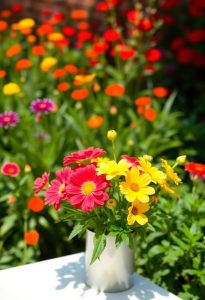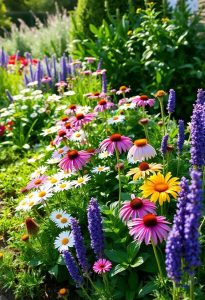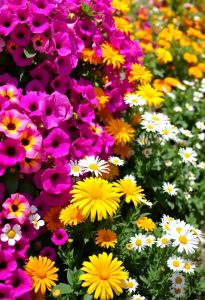

If you’re looking to brighten up your hot garden, consider these five heat-resistant annuals: Zinnia, with its bold blooms; cheerful Marigold, which keeps pests at bay; resilient Portulaca, thriving in drought; vibrant Salvia, a pollinator’s favorite; and hardy Cosmos that bloom from summer to frost. Each will not only withstand the heat but also add color and life to your backyard! Want to learn some tips on how to care for these beauties? Stick around!
Design Highlights
- Zinnia: Thrives in hot climates, tolerating neglect and offering bold blooms while attracting pollinators.
- Marigold: Cheerful flowers in sunny hues, well-drained soil, and acts as a pest deterrent for healthier gardens.
- Portulaca: A resilient, drought-resistant succulent that thrives in scorching temperatures and grows well in poor soil.
- Salvia: Heat-loving champion with vibrant colors, requiring well-drained soil and deep watering for strong root development.
- Cosmos: Hardy and vibrant, this annual tolerates drought, flourishes in heat, and enhances garden life by attracting butterflies and bees.
Zinnia
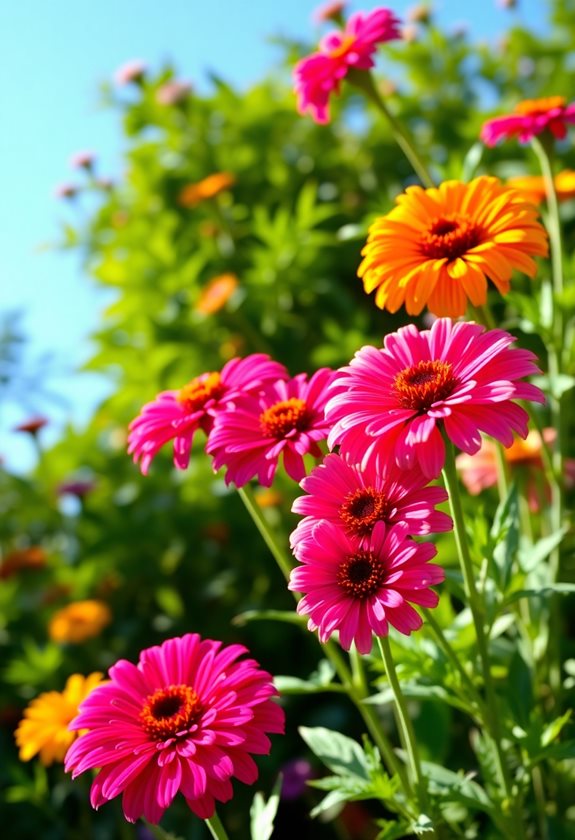
When you think of vibrant colors lighting up a summer garden, zinnias are likely the stars of the show! These beauties thrive in hot climates and don’t mind a bit of neglect. Want to plant some? Here’s how:
- Choose a sunny spot; zinnias love the warmth!
- Prepare the soil—mix in compost for nutrients.
- Plant seeds about an inch deep, spacing them out.
Water them well, but be careful not to drown them! You’ll be rewarded with bold blooms and happy pollinators. Isn’t it amazing how one flower can brighten your whole yard? Additionally, zinnias can be paired with edible plants to create an attractive and functional garden. Get ready to enjoy the show!
Marigold
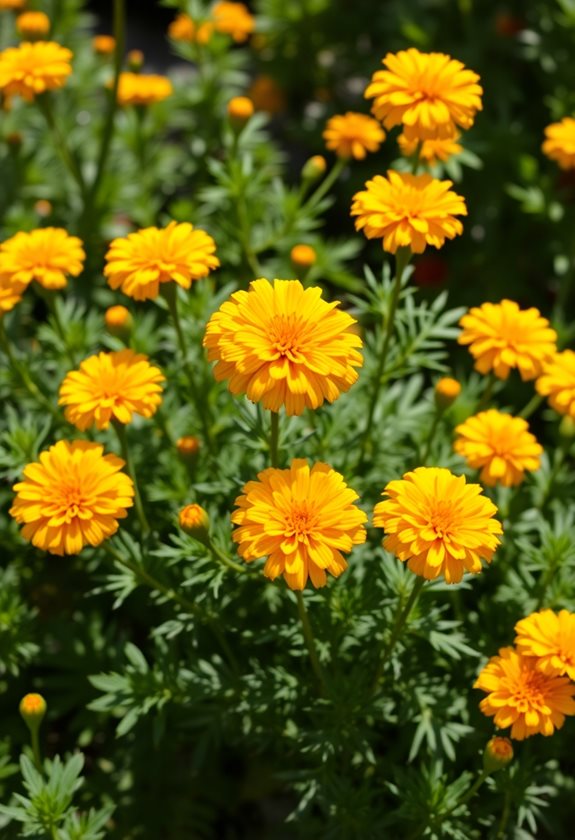
Marigolds are like the cheerful friends of your garden, always ready to brighten up the space with their sunny hues! These tough little flowers thrive in hot climates, needing little water once established. They’re perfect for your garden, offering a splash of color and pest deterrence—who knew they could help keep those pesky bugs away? Additionally, marigolds are a popular choice for low-maintenance colorful flower beds due to their resilience and vibrant blooms.
When planting marigolds, try these tips:
- Choose well-drained soil.
- Space them about 8-10 inches apart for airflow.
- Water deeply but infrequently to encourage strong roots.
Portulaca
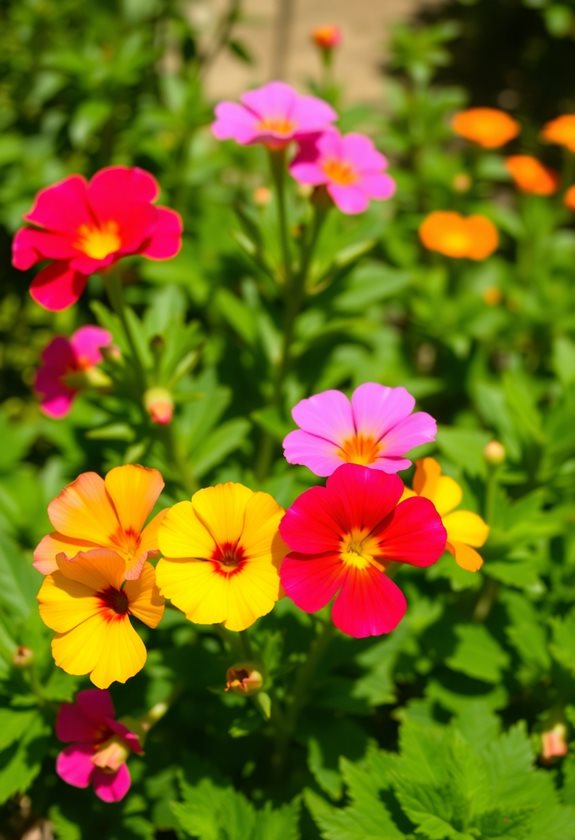
If you’re looking for a plant that can handle the heat like a champ, portulaca should definitely be on your list! This succulent annual thrives in scorching temperatures, making it perfect for your summer garden. Plus, it comes in vibrant colors that’ll brighten up any space. Just imagine how beautiful your backyard will look!
- Low maintenance and drought-resistant
- Attracts pollinators like bees and butterflies
- Grows well in poor soil conditions
- Can be easily propagated from cuttings
- Offers a variety of bloom colors
Additionally, portulaca is a fantastic choice for gardeners who want to avoid high-maintenance plants, ensuring a stress-free gardening experience.
Salvia
After you’ve admired the stunning blooms of portulaca, it’s time to contemplate another heat-loving champion: salvia. These vibrant plants thrive in hot climates, offering a burst of color and attracting pollinators. Have you ever noticed how resilient they are? Salvia can also be a great addition to shade-tolerant foliage plants, as they can provide contrast and interest even in less sunny spots.
To grow salvia successfully:
- Choose well-drained soil.
- Water them deeply but infrequently—this encourages strong roots.
- Plant in full sun to maximize their beauty.
With a bit of care, you’ll enjoy their long-lasting blooms throughout the summer. Plus, their drought tolerance means less worry about watering! Isn’t gardening a delightful adventure? Grab some salvia, and let your garden shine!
Cosmos
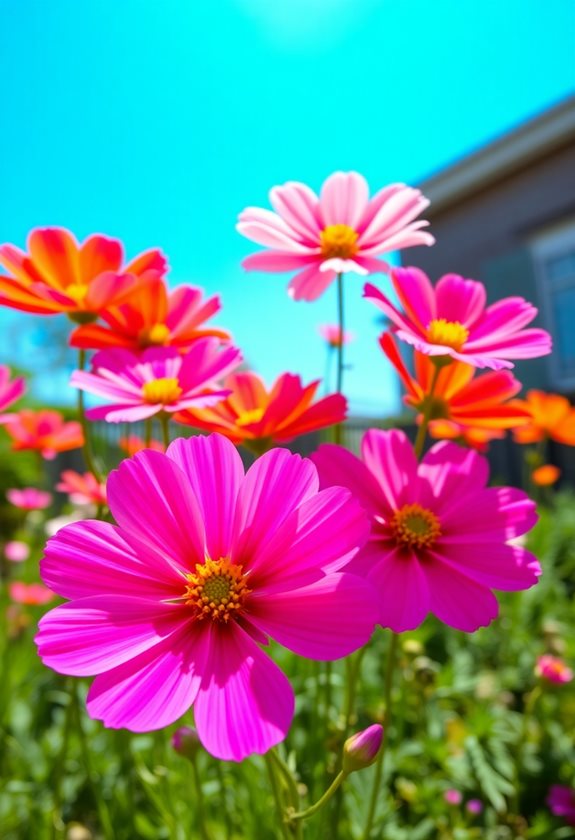
Imagine stepping into a garden overflowing with vibrant colors and cheerful blooms—this is what cosmos bring to your outdoor space! These hardy annuals thrive in heat, offering a delightful display of pinks, yellows, and whites. They’re easy to grow and low-maintenance, making them perfect for busy gardeners. Plus, they’re safe for pets!
- Attracts butterflies and bees
- Tolerates drought with ease
- Blooms from summer to frost
- Grows well in poor soil
- Provides a cheerful pop of color
In addition, cosmos are among the best plants for year-round garden color, ensuring your garden remains lively throughout the seasons.
Frequently Asked Questions
What Soil Type Is Best for Heat-Resistant Annuals?
When picking the best soil type for your plants, you’ll want a mix that drains well but retains some moisture. Sandy loam is a great choice, as it allows roots to breathe while holding nutrients. You can also add organic matter, like compost, to improve soil structure. Don’t forget to check your pH levels—most plants thrive in slightly acidic to neutral soil. Have you tried experimenting with different blends? It’s like a garden adventure!
How Often Should I Water These Plants in Hot Climates?
“Watering’s like cooking—too much or too little can ruin the meal!” In hot climates, you should water your plants deeply but less frequently. Aim for about once every 2-3 days, depending on the soil and weather. Check the soil moisture; if it’s dry an inch down, it’s time to water! Remember, early mornings or late afternoons are best to avoid evaporation. Got a favorite watering can? Use it with pride!
Can I Grow These Annuals in Containers?
Absolutely, you can grow annuals in containers! It’s a great way to manage space and make your garden pop. Just make sure your containers have drainage holes, so the roots don’t drown. Try using a lightweight potting mix, and don’t forget to water regularly—especially in hot weather. Have you thought about grouping pots together for a colorful display? It not only looks amazing but also helps retain moisture. Happy gardening!
Do Heat-Resistant Annuals Attract Pests?
You might think heat-resistant plants attract more pests, but that’s not necessarily true! Many of these plants actually repel unwanted critters due to their robust nature. Sure, some pests may still show up, but you can manage them easily. Consider using natural deterrents like neem oil or companion planting. Plus, healthy plants are less likely to suffer infestations. Isn’t it great knowing you can enjoy gardening while keeping your plants safe?
What Fertilizers Are Recommended for These Plants?
When it comes to fertilizers for your plants, you’ve got some great options! Start with a balanced, slow-release fertilizer—it’s like a buffet for your plants! Organic options like compost or fish emulsion work wonders too. Just remember, you don’t want to overdo it; a little goes a long way. Have you tried using worm castings? They’re like the secret ingredient! Happy gardening, and may your plants thrive with the right nutrients!