Want to make your garden thrive and dodge those pesky drainage problems? Check out these five amazing structures! First, French drains direct water away, keeping your plants happy. Rain gardens are not only beautiful but also absorb excess rainwater. Retaining walls give your landscape a makeover while preventing erosion. Use permeable pavers to allow rain to seep through, and don’t forget dry wells to manage excess water underground! Curious about how to build these essentials? Let’s explore more!
Design Highlights
- French Drains: Effective for managing excess water by directing it away from plants using gravel-filled trenches, preventing garden sogginess.
- Rain Gardens: Absorb excess rainwater, filter pollutants, and support local wildlife, enhancing both drainage and aesthetic appeal.
- Retaining Walls: Provide structural support to prevent soil erosion while managing drainage and creating terraced flower beds.
- Permeable Pavers: Allow rainwater to seep through, reducing runoff and erosion while creating solid, attractive pathways in the garden.
- Dry Wells: Collect excess water underground, promoting healthy root growth and preventing soggy spots, especially when placed near downspouts.
French Drains
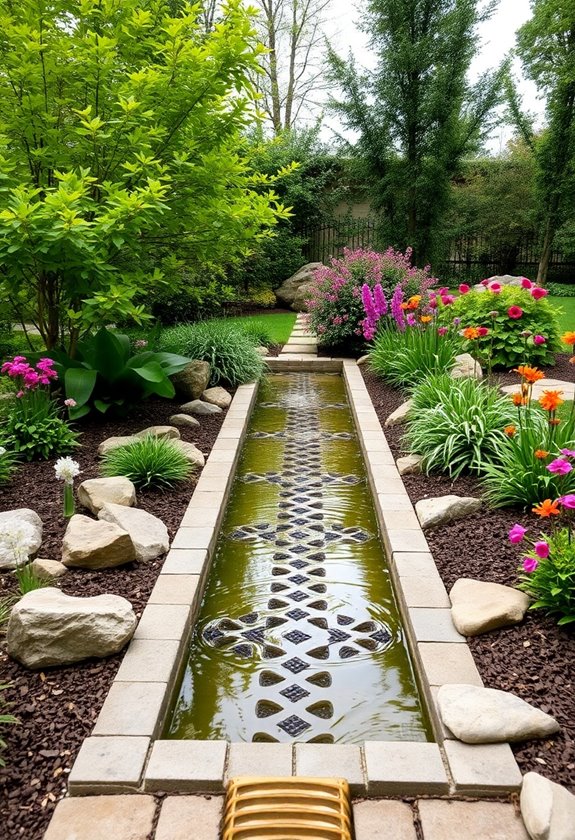
When it comes to managing excess water in your garden, French drains are a game-changer! They’re not just trenches; they’re your secret weapon against soggy soil. Imagine this: water flows into a gravel-filled trench, directing it away from your prized plants. Want to keep your garden thriving? Here’s how:
French drains are your ultimate solution for soggy soil, directing excess water away and keeping your garden flourishing!
- Dig a trench about 6 inches wide.
- Line it with landscape fabric to prevent clogs.
- Fill it with gravel, leaving a slight slope.
With French drains, you’ll conquer drainage issues while boosting your garden’s health! Durable design ensures that your drainage system remains effective for years to come. Who wouldn’t want a garden that thrives, even after heavy rain? Let’s get to work!
Rain Gardens
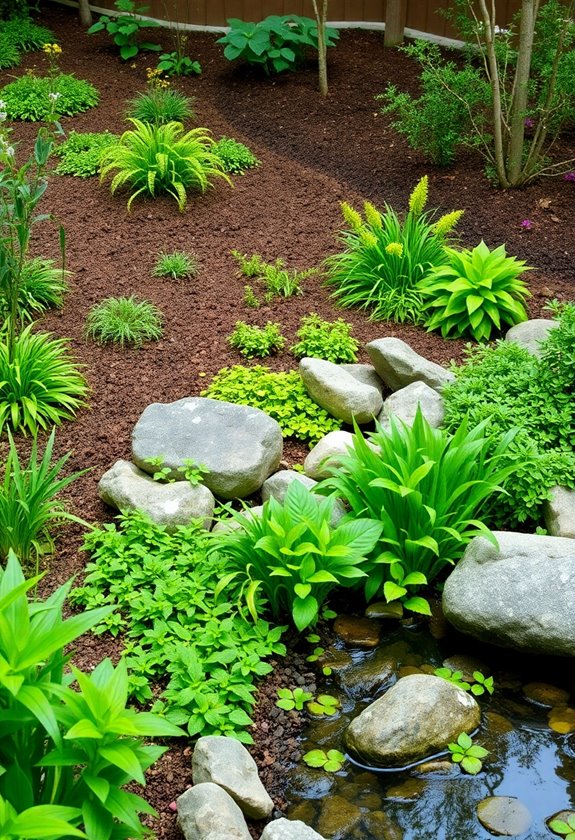
You might not think of a rain garden as just a pretty patch of plants, but it’s so much more than that! It’s a powerful tool for managing water runoff while adding beauty to your landscape. Imagine creating a lush oasis that thrives on rainfall!
Here are five benefits of rain gardens:
- Absorbs excess rainwater
- Filters pollutants from stormwater
- Supports local wildlife
- Reduces erosion
- Enhances your property’s aesthetics
Additionally, incorporating stunning water features into your rain garden can further enhance its effectiveness and appeal.
Retaining Walls
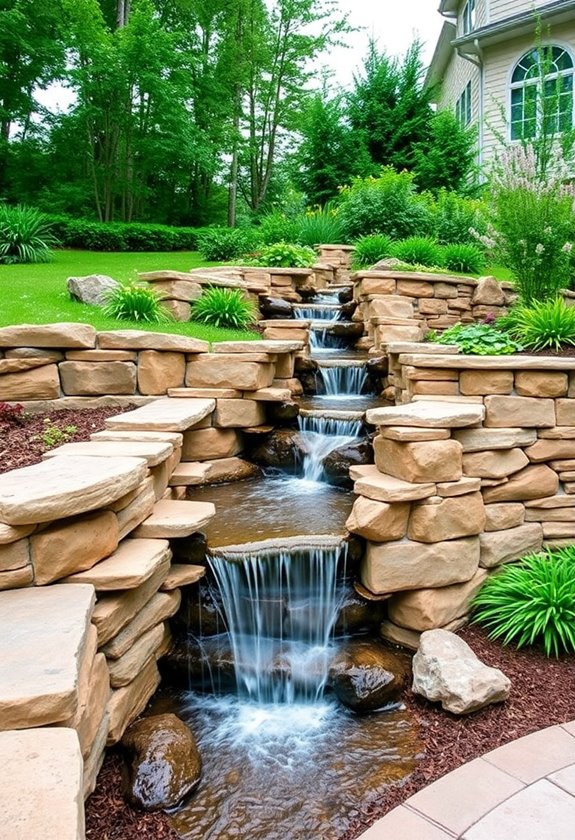
While you might think of retaining walls as just sturdy barriers, they’re actually essential for managing landscape drainage and can add a touch of charm to your yard. These walls help prevent soil erosion and direct water flow, keeping your garden healthy. Plus, they create stunning levels in your landscape! Imagine your flowers thriving on a beautiful terrace.
When choosing materials, consider:
- Natural stone for elegance
- Concrete for durability
- Timber for a rustic vibe
Additionally, incorporating weather-resistant materials into your design will ensure that your retaining walls withstand the elements over time. With the right design, you’ll transform your garden into a powerful, functional space. So, why not embrace the strength of retaining walls? They’ll elevate your landscape!
Permeable Pavers
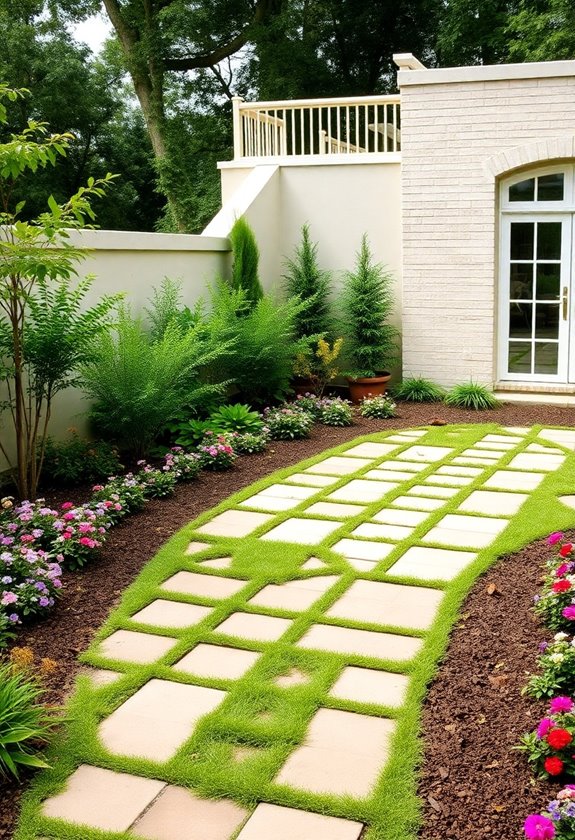
After setting up those sturdy retaining walls, you might be wondering how to keep your garden thriving and water issues at bay. Enter permeable pavers! These stylish solutions not only enhance your landscape but also promote proper drainage. Think of all the benefits they offer:
Discover how permeable pavers can elevate your garden while ensuring effective drainage and a beautiful landscape.
- Allows rainwater to seep through
- Reduces runoff and erosion
- Helps recharge groundwater
- Provides a solid surface for pathways
- Increases your property’s aesthetic appeal
Additionally, permeable pavers can significantly improve landscape drainage by allowing excess water to infiltrate the soil, preventing waterlogging and promoting healthier plant growth.
Dry Wells
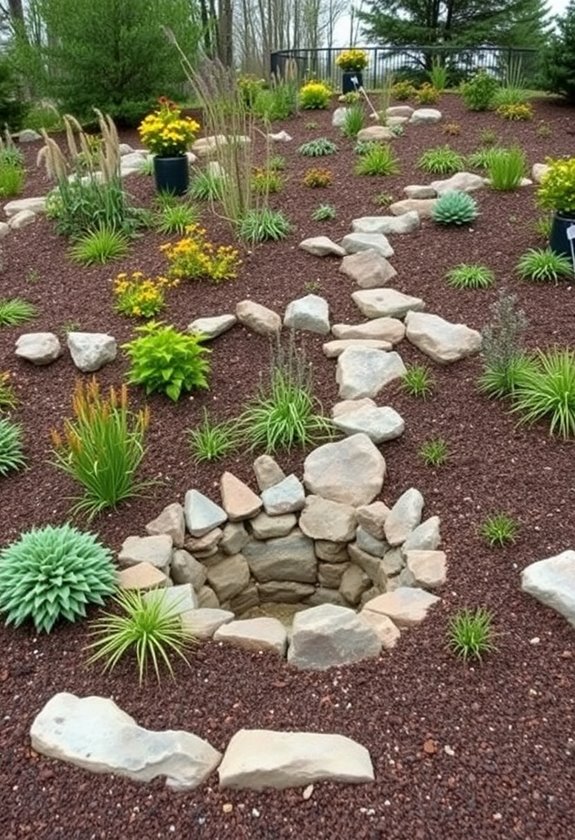
When it comes to tackling drainage issues in your garden, dry wells can be a true game-changer! These underground structures collect excess water, preventing soggy spots and promoting healthy roots. Imagine a dry well as your garden’s secret weapon against flooding!
To create one, dig a hole about three feet deep and fill it with gravel. Simple, right? You’ll marvel at how it absorbs rainwater like a sponge!
Want to boost your garden’s health? Consider incorporating eco-friendly options to enhance both drainage and sustainability.
- Install a dry well near downspouts.
- Cover it with soil and plant flowers on top.
Your plants will thrive, and you’ll feel like a gardening superstar!
Frequently Asked Questions
How Do Garden Structures Impact Soil Erosion and Drainage?
Imagine watching your vibrant flowers dance in the breeze, unharmed by muddy puddles. Garden structures, like raised beds or trellises, help combat soil erosion and improve drainage. They create barriers, directing water away from vulnerable areas. Plus, they elevate your plants, allowing roots to breathe! Have you considered adding a simple garden arch? It can enhance both beauty and functionality. So, let your creativity flow while keeping your garden safe and thriving!
Can Garden Structures Attract Pests or Insects?
Absolutely, garden structures can attract pests! Think of it this way: those cozy nooks and crannies might just be the perfect hideout for bugs. Here’s what you can do:
- Regularly inspect your structures for signs of pests.
- Use natural repellents like lavender or mint to keep them at bay.
- Consider planting pest-repellent flowers nearby.
Don’t let pests ruin your garden dreams! It’s all about staying one step ahead—trust me, you’ll thank yourself later!
What Maintenance Do Garden Structures Require for Optimal Drainage?
Have you ever wondered what it takes to keep your garden structures in prime shape? For ideal drainage, you need to keep an eye on a few key areas! Regularly check for debris—clogged gutters can be a nightmare. Clean them out, and inspect the foundation for settling. You might also want to adjust the slope around your structures to direct water away. Trust me, a little maintenance now saves big headaches later! Happy gardening!
Are There Any Plants That Help With Drainage in Garden Structures?
Certain plants can help improve drainage in your garden structures. For instance, you might consider:
- Bamboo: It loves moisture and helps absorb excess water.
- Daylilies: Their roots aerate the soil, promoting drainage.
- Black-eyed Susans: These beauties thrive in well-drained soil.
How Can I Incorporate Garden Structures Into a Sloped Landscape?
Think of your sloped landscape as a canvas waiting for your masterpiece! To incorporate garden structures, consider these steps:
- Terracing: Create flat areas using retaining walls.
- Raised Beds: Build them at different heights to add dimension.
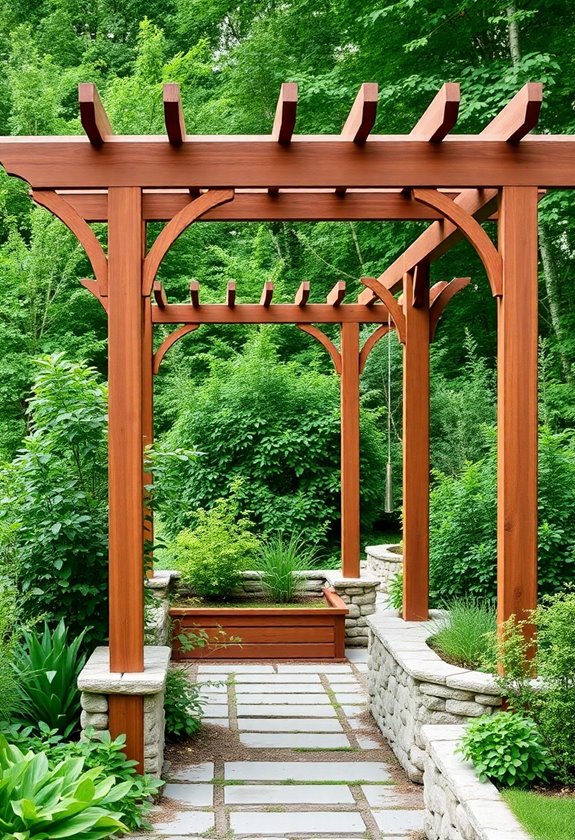
- Arbors & Pergolas: Install them to create vertical interest and shade.
Don’t forget to use paths between structures for easy access. What fun it’ll be watching your garden transform into a stunning showcase!