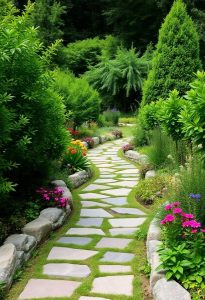
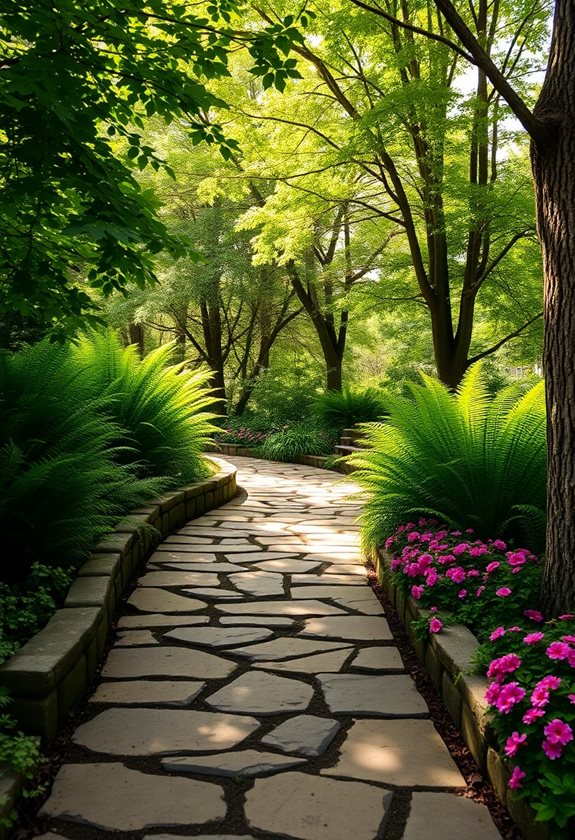
Transform your shady garden into a whimsical paradise with inspiring pathways! Think about using natural stone for that rustic charm—mix some flat stones for a steady walk and add boulders for fun accents. Or, consider gravel for a low-maintenance option that drains well and keeps your feet comfy. Edging can add personality too—wooden planks or bamboo fencing work wonders! Want to create a magical atmosphere? Let’s explore more ideas to enhance your garden paths!
Design Highlights
- Use natural stone for a rustic look that complements shady areas and adds charm to garden pathways.
- Incorporate curved pathways to enhance exploration and blend with the surrounding greenery in shaded spaces.
- Opt for gravel paths for low maintenance and excellent drainage, ensuring comfort with smaller stones.
- Consider using wooden planks or bamboo edging to define pathways while maintaining a natural aesthetic in the garden.
- Choose smooth stones or permeable pavers to ensure safety and prevent slips in shaded, potentially damp areas.
Choosing the Right Materials for Pathways
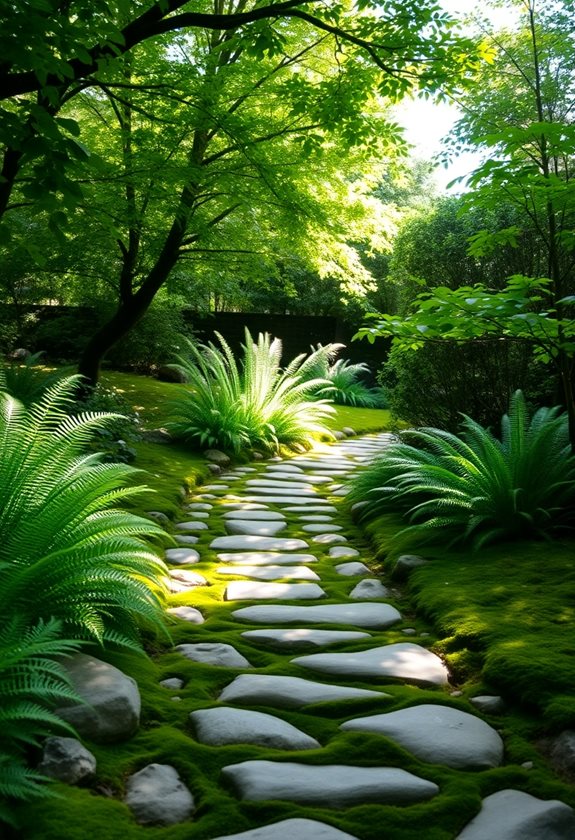
When you’re dreaming of a beautiful garden pathway, the materials you choose can make all the difference! Think about safety first—smooth stones or permeable pavers keep slips at bay. Wood can look fantastic, but make sure it’s treated to resist rot. Concrete’s durable, but you can jazz it up with patterns for a personal touch!
Choosing the right materials for your garden pathway enhances safety and style, creating an inviting and beautiful space.
Consider these options:
- Gravel: Great drainage but can shift.
- Bricks: Classic and sturdy, yet a bit tricky to install.
Incorporating eco-friendly options can also enhance your garden pathway while being kind to the environment. What materials resonate with your vision? Your pathway should invite, inspire, and keep you safe as you wander through your garden oasis!
Curved vs. Straight Pathways: Which Works Best?
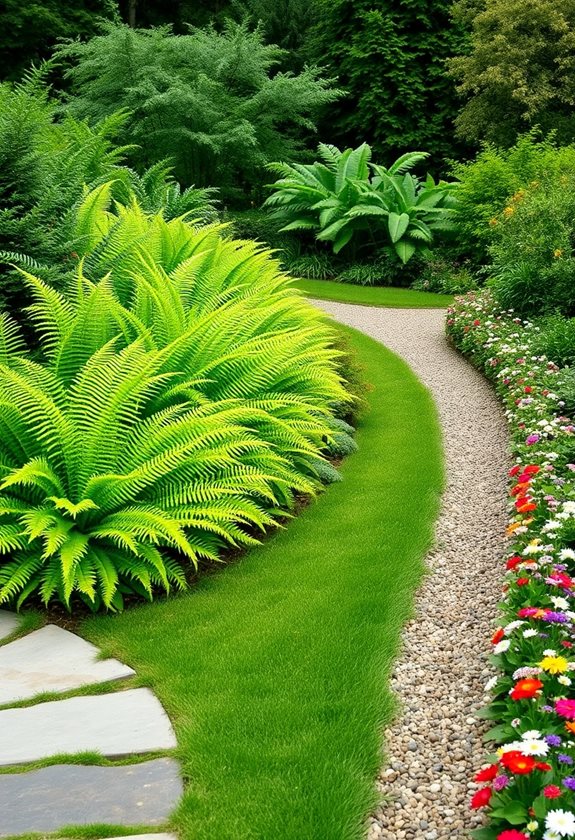
Have you ever stood in your yard, pondering whether a curved or straight pathway would best showcase your garden’s beauty? Straight pathways offer a clear, direct route, perfect for safety, especially if you’ve got kids or pets around. However, curved pathways invite exploration, creating a sense of wonder as you stroll through your garden. They can soften hard lines and fit snugly into a natural landscape. Think about your space!
- Want a focal point? Go curved!
- Need functionality? Stick to straight!
Each option has its charm, so choose what feels right for you and your garden’s personality! Remember that choosing between straight and winding paths can significantly impact your garden’s overall aesthetic and functionality.
Incorporating Natural Stone for a Rustic Look
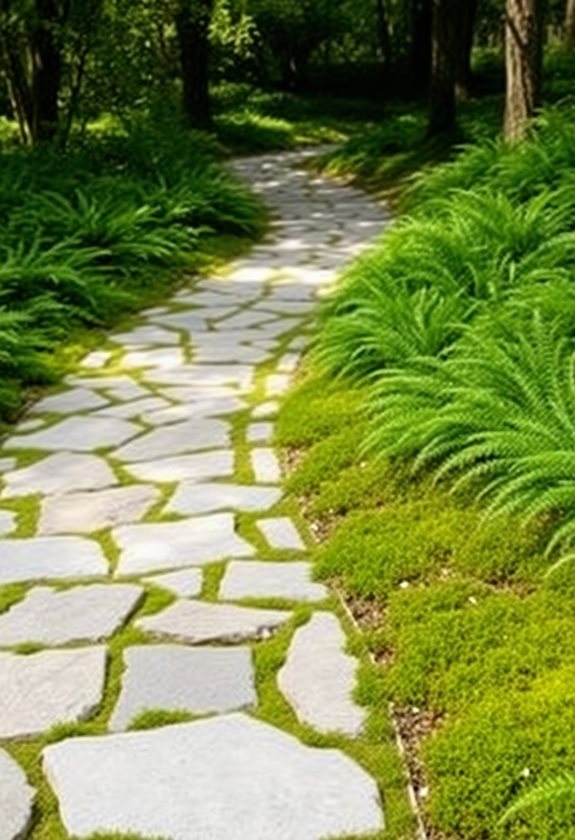
If you’re dreaming of a garden path that feels like it’s plucked straight from a storybook, incorporating natural stone might just be your best bet! Imagine walking on smooth, weathered stones that blend beautifully with your lush greenery. To create that rustic charm, choose stones in various shapes and sizes; this not only adds visual interest but also helps with safety. You can:
Dream of a storybook garden path? Embrace natural stone for a charming, rustic retreat!
- Mix flat stones for a solid base
- Use larger boulders as accents
Just make sure to secure them well, preventing any slips or trips! Trust me, your garden will feel like a cozy retreat after this upgrade! Additionally, consider using weather-resistant materials to enhance the durability of your pathway.
Using Gravel for a Low-Maintenance Option
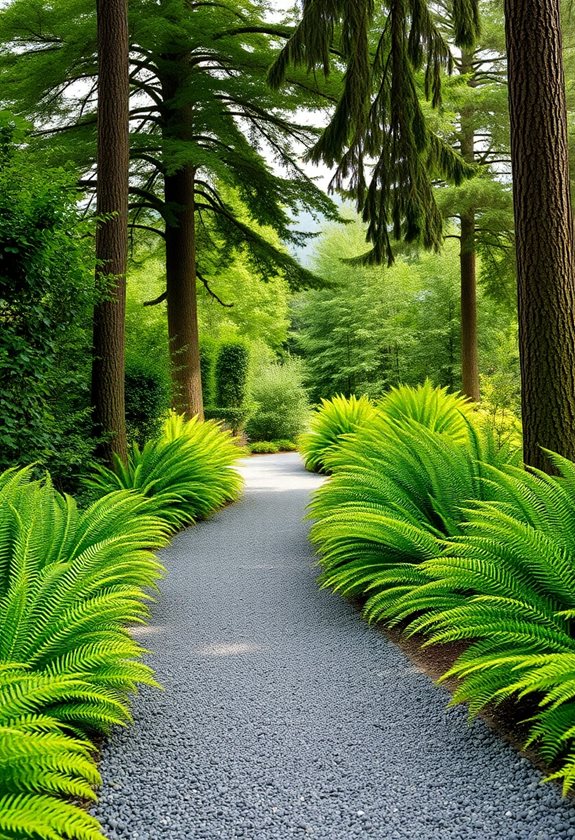
Looking for a way to spruce up your garden path without breaking a sweat? Gravel’s your best friend! It’s a low-maintenance option that looks great and offers excellent drainage. Plus, you won’t need to worry about weeding as much!
Here’s how to get started:
- Choose your gravel size—smaller stones are easier to walk on.
- Lay down landscaping fabric to keep those pesky weeds at bay.
- Pour the gravel thick enough for a sturdy path, about 2-3 inches.
Additionally, using gravel as a path can complement your garden’s eco-friendly pathways and create a harmonious outdoor space.
Voila! You’ve got a charming, safe walkway that invites you to explore your shady garden oasis!
Creative Edging Ideas to Define Pathways
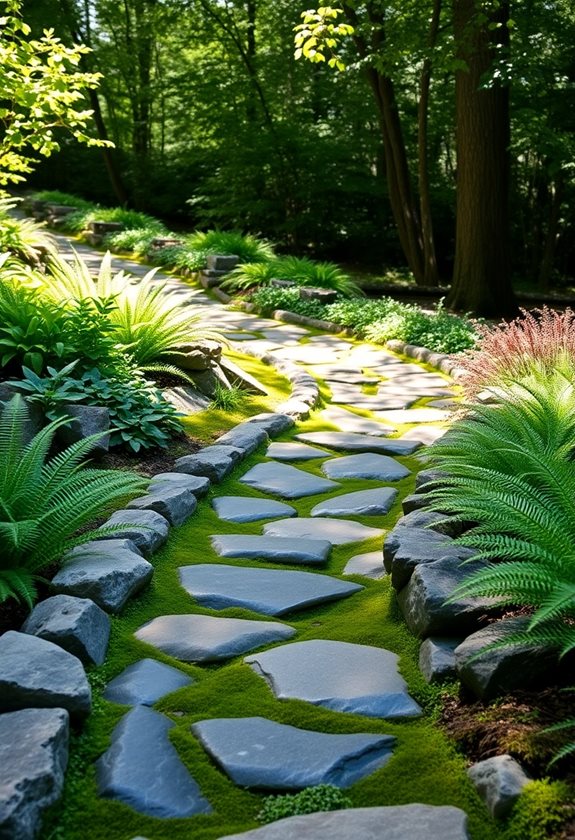
While you might think that defining your garden pathways is just about functionality, it’s actually a chance to showcase your creativity! Why not use fun materials like colorful bricks, rustic stones, or even repurposed wood to create a unique edge? These not only guide your steps but also add personality! Consider these ideas:
- Wooden Planks: Lay them down for a natural look.
- Brick Borders: They provide a classic feel and stability.
- Bamboo Fencing: It’s eco-friendly and easy to install! Additionally, incorporating beautiful pathway designs can enhance the overall aesthetic of your garden.
Lighting Solutions to Enhance Shady Pathways
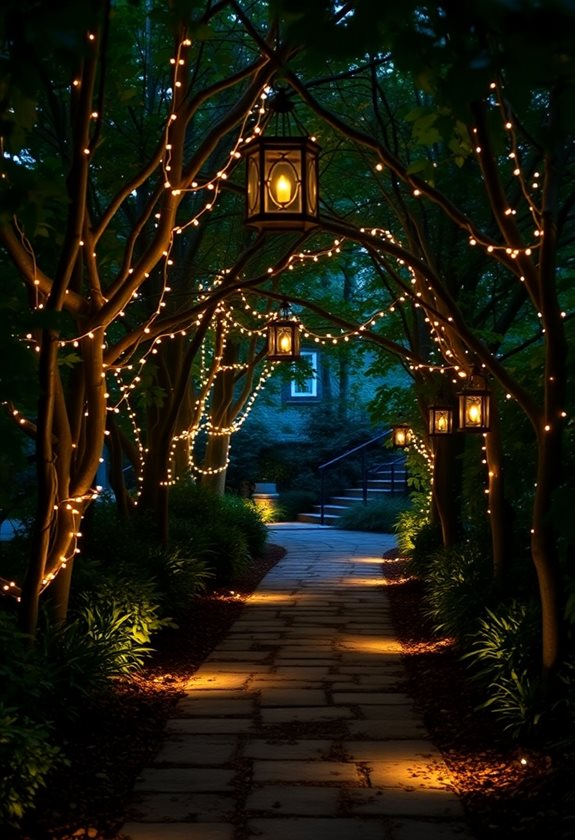
Creating a beautiful garden pathway is just the beginning; adding the right lighting can truly bring your space to life, especially in those shady spots where sunlight struggles to reach. Why not consider solar-powered lanterns? They’re eco-friendly and charge during the day, giving you a warm glow by night! You could also use string lights for a cozy ambiance—perfect for evening strolls. Remember to place lights near edges or steps to guarantee safety. Consider motion sensor lights, too; they’ll brighten your path without you having to lift a finger! Additionally, twinkling light magic can transform your garden into a magical retreat. So, what lighting solution will you choose to illuminate your secret garden?
Integrating Plant Life Along Pathways for Added Charm
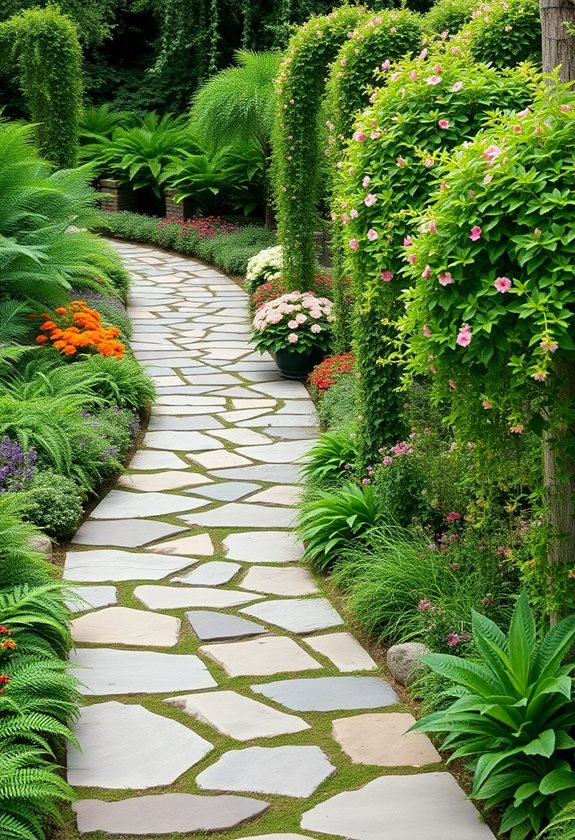
Integrating plant life along your garden pathway not only adds charm but also creates a welcoming atmosphere that beckons you to explore. Imagine fragrant lavender or colorful marigolds lining your path! Try planting low-growing herbs like thyme or creeping phlox; they’re not only beautiful but also safe to step on. Here are some tips:
- Use sturdy plants that can tolerate foot traffic.
- Incorporate a mix of heights for visual interest.
- Don’t forget to take into account seasonal blooms for year-round appeal! Additionally, consider incorporating shade-loving plants to thrive in those dimmer areas along your pathway.
Frequently Asked Questions
How Do I Prevent Moss Growth on My Pathway?
To prevent moss growth on your pathway, start by improving drainage. Moss loves dampness, so make certain your path has proper slope and drainage. You can also try these tips:
- Clear away debris regularly.
- Trim nearby trees to let in sunlight.
- Use a moss killer if needed, but follow safety guidelines.
And don’t forget to keep the pathway clean—who wants to slip on a mossy mess, right? Happy gardening!
What Plants Thrive Best in Shady Pathway Areas?
When it comes to plants that thrive in shady pathway areas, you’re in for a treat! Try hostas, ferns, or astilbes—they love low light. Isn’t it amazing how they can brighten up a dark corner? You could even add some shade-tolerant groundcovers like creeping thyme for a pop of color! Just think about how inviting your pathway could be. Which of these plants are you excited to try? Happy gardening!
How Can I Improve Drainage in Shaded Pathways?
Want to improve drainage in your shady pathways? It’s easier than you think! Start by adding gravel or crushed stone to create a drainage layer. You can also dig shallow trenches to redirect water away. How about using permeable pavers? They look great and let water seep through! Plus, consider planting moisture-loving plants along the edges for added charm. Remember, you’re not just gardening; you’re creating a functional, beautiful space! Isn’t that exciting?
Are There Any Eco-Friendly Pathway Materials Available?
So, you’re not keen on paving your path with concrete, huh? Good call! Eco-friendly options are out there, and they’re like the superheroes of your garden. Think about using recycled rubber tiles, or even decomposed granite. They drain well, and they’re safe to walk on! Plus, they add character to your space. Why not try creating a charming stepping stone path with local stone? Your garden deserves the best, don’t you think?
What Maintenance Is Required for Gravel Pathways?
Maintaining gravel pathways isn’t as intimidating as it sounds! You’ll want to regularly check for weeds and pull them out—trust me, it’s way easier to do it now than later! Raking the gravel to keep it even helps prevent those pesky dips. Don’t forget to replenish the gravel every few years, either. It keeps your path looking fresh and inviting! Isn’t it satisfying to see a neat, tidy pathway?