
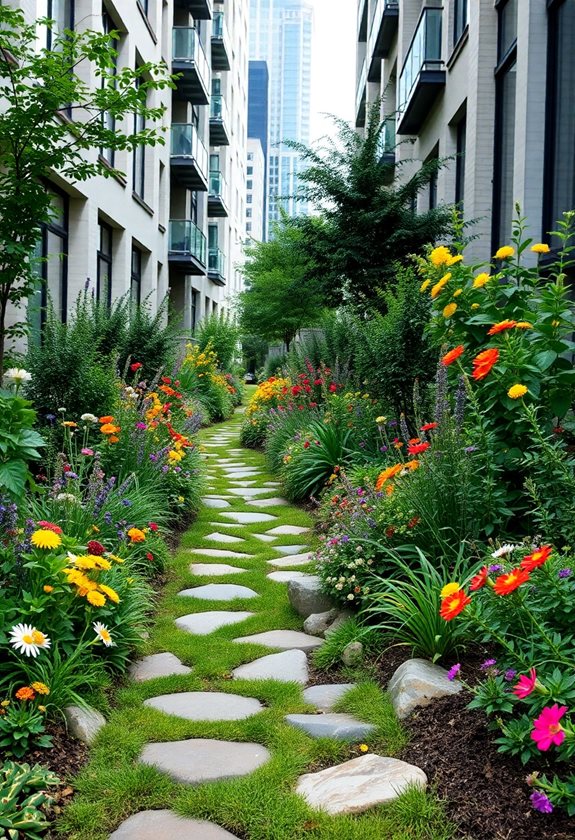
Want to create a vibrant garden path in the city? You can use native plants to invite butterflies and bees, plus eco-friendly materials like old bricks for a unique touch. Why not add some kinetic sculptures or a sound garden for fun? Cozy spots to relax, aromatic herbs for delightful scents, and even edible gardens can make your space inviting. Ready to explore more creative ideas for your garden paths? There’s so much to discover!
Design Highlights
- Utilize recycled materials like old bricks and wooden pallets to create eco-friendly and unique pathways in urban gardens.
- Incorporate colorful tiles for a visually appealing design that enhances the garden’s aesthetic.
- Design pathways that ensure safety and accessibility, preventing tripping hazards for all visitors.
- Create sensory experiences with textured pathways made from wood chips or crushed leaves, inviting leisurely strolls.
- Integrate kinetic sculptures or sound gardens along pathways to engage visitors and add interactive elements to the space.
Embracing Native Plants for Biodiversity
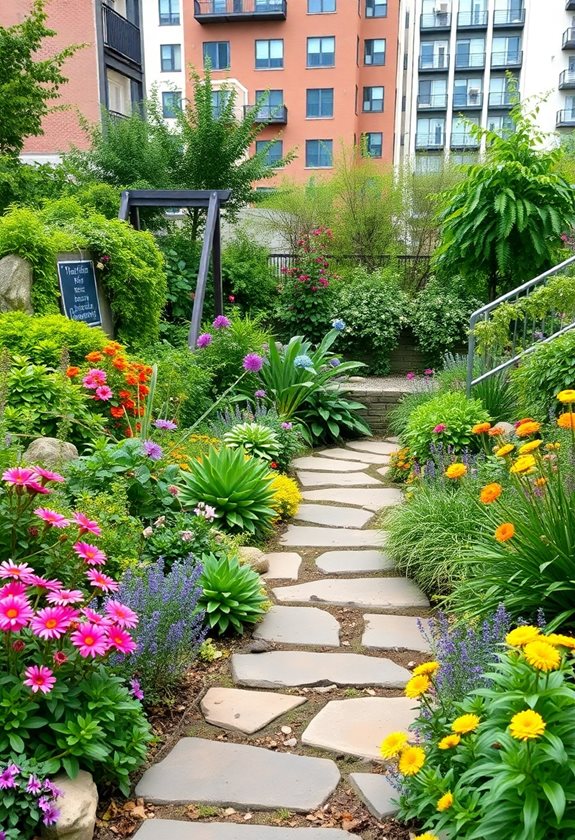
When you think about creating a vibrant garden, have you ever considered how embracing native plants can not only beautify your space but also support local biodiversity? Imagine vibrant wildflowers attracting butterflies and bees, all while requiring less water and care! Native plants are adapted to your soil and climate, making them a safe choice for your garden. Plus, they provide essential food and habitat for local wildlife. To get started, visit a local nursery and ask for native options. Trust me, your garden will thrive, and you’ll feel great knowing you’re helping the environment. Additionally, incorporating lush garden ideas can enhance the beauty of your small space. Isn’t that a win-win?
Utilizing Recycled Materials for Sustainable Pathways
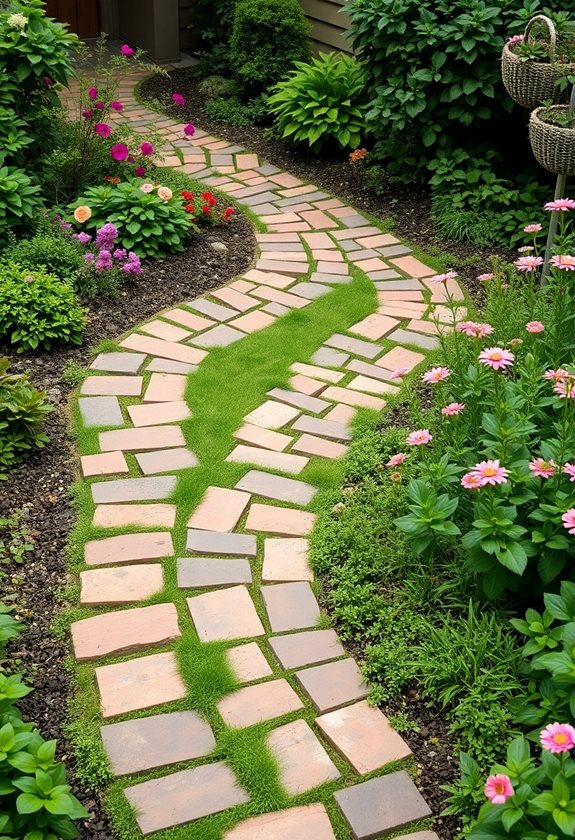
If you’ve ever looked at your garden and thought, “This path could use a little pizzazz,” you’re not alone! Why not spice it up with recycled materials? Using items like old bricks, crushed glass, or even wooden pallets can create durable, eco-friendly pathways. Imagine walking on a path made of colorful tiles—each one telling a story!
Here’s how to get started:
- Gather your recycled materials.
- Design a layout that’s safe and accessible.
- Confirm all pieces are secure, avoiding any tripping hazards.
With a little creativity, you’ll not only enhance your garden’s beauty but also contribute to sustainability! Upcycling materials for your garden can also transform your space while being kind to the environment.
Incorporating Interactive Art Installations
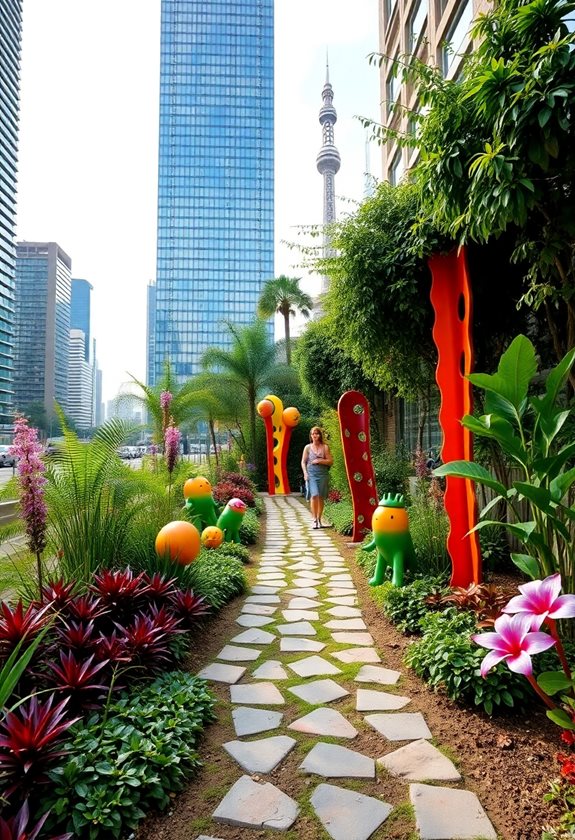
Adding interactive art installations to your garden can transform it into a vibrant space that invites engagement and creativity. Imagine the joy of exploring art while enjoying nature! Here are some ideas to inspire you:
Transform your garden into a vibrant space with interactive art that invites creativity and engagement amid nature.
- Kinetic Sculptures: Install moving art pieces that respond to the wind or touch.
- Sound Gardens: Create areas with musical instruments for everyone to play.
- Augmented Reality Experiences: Use apps to bring static art to life through your phone.
- Community Art Walls: Encourage local artists to showcase their work, allowing for rotating exhibitions. Additionally, consider incorporating peaceful water features like garden waterfalls to enhance the sensory experience of your garden.
Designing Multi-Functional Spaces
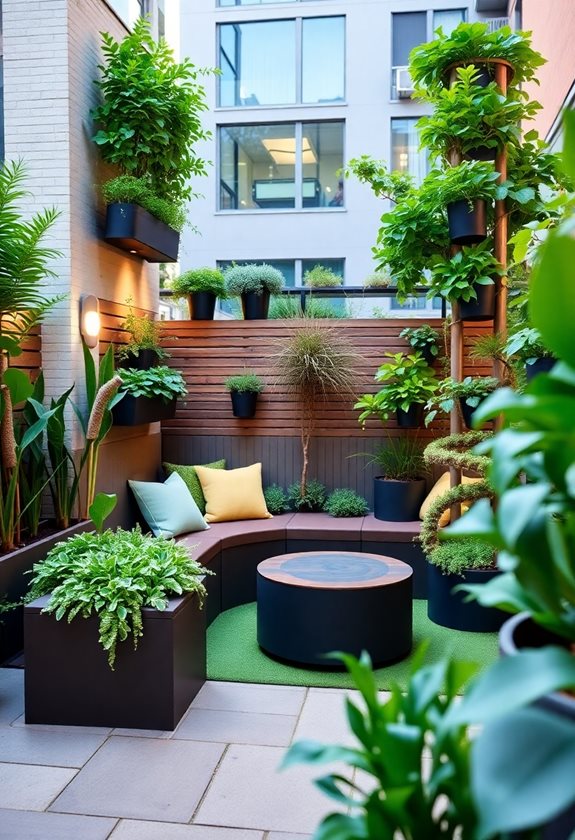
While you might think of gardens as simple patches of flowers and veggies, they can actually be so much more! Imagine transforming your garden into a vibrant space for relaxation, play, and community gatherings. You could create cozy seating areas, a small stage for performances, or even a picnic spot for friends.
Here are some ideas:
- Add a small fire pit for evening hangouts.
- Designate a corner for outdoor games.
- Include a pollinator garden to support local wildlife. Additionally, incorporating children’s garden structures can elevate the play experience and create magical play spaces for kids.
Creating Sensory Experiences With Textures and Scents
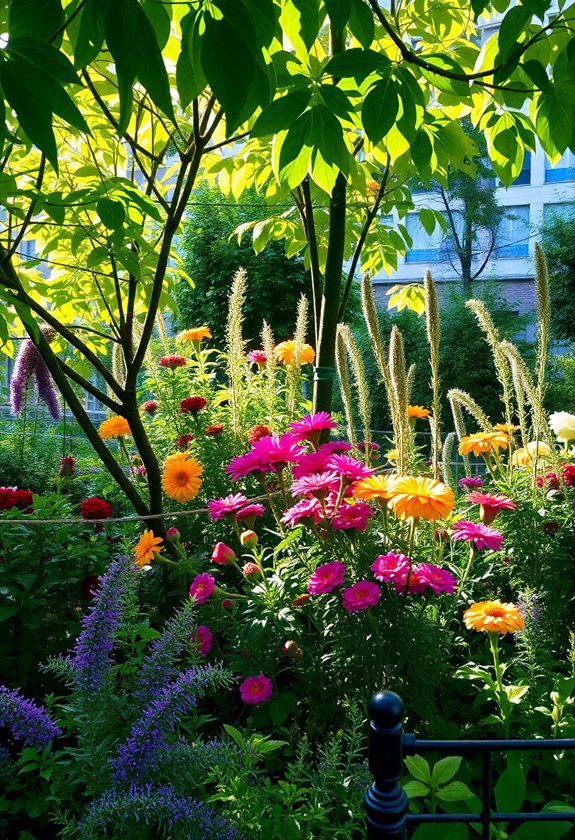
Gardens aren’t just about the sights; they can be a feast for the senses! When you create sensory experiences, you invite visitors to engage deeply with your garden. Here are some ideas to enhance textures and scents:
- Plant Aromatic Herbs: Basil, mint, and rosemary not only smell divine but are also safe to touch!
- Incorporate Different Textures: Mix soft ferns with rough bark or smooth stones for a fun tactile experience.
- Use Fragrant Flowers: Lavender and jasmine add delightful scents, especially in the evening.
- Add Scented Pathways: Lay down scented wood chips or crushed leaves for a fragrant stroll.
Additionally, consider using heat-resistant annuals to ensure your garden remains vibrant and aromatic even in the hottest months.
Isn’t that inviting?
Implementing Edible Gardens Along Pathways
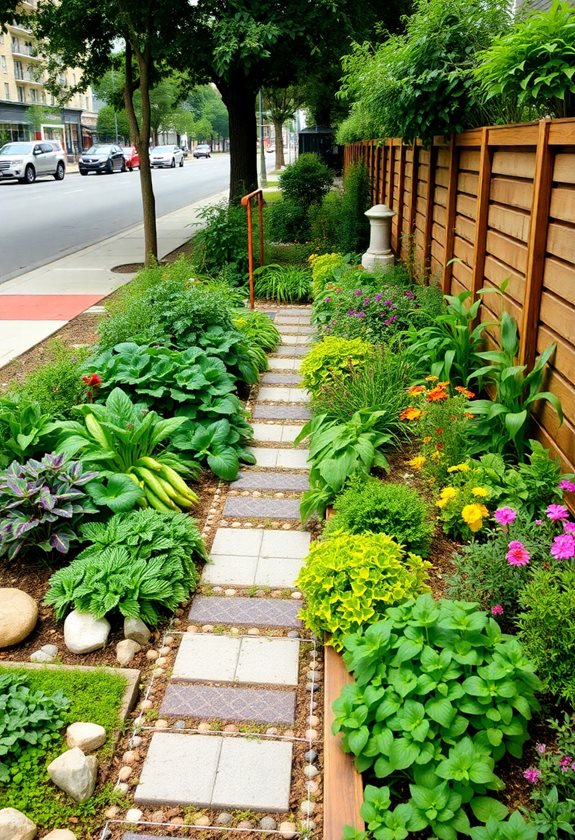
Imagine strolling down a pathway lined with vibrant colors and delicious aromas that tickle your senses! Edible gardens along pathways can transform ordinary walks into extraordinary adventures. Picture strawberries peeking from lush green leaves or herbs releasing fragrant scents as you brush by.
To create your own edible pathway, consider:
- Selecting safe, easy-to-grow plants: Think basil, mint, or cherry tomatoes.
- Incorporating raised beds: They can keep plants safe and accessible.
- Using signage: Label plants to educate passersby.
Additionally, incorporating edible plants can enhance both beauty and flavor in your garden design.
Enhancing Accessibility With Thoughtful Design
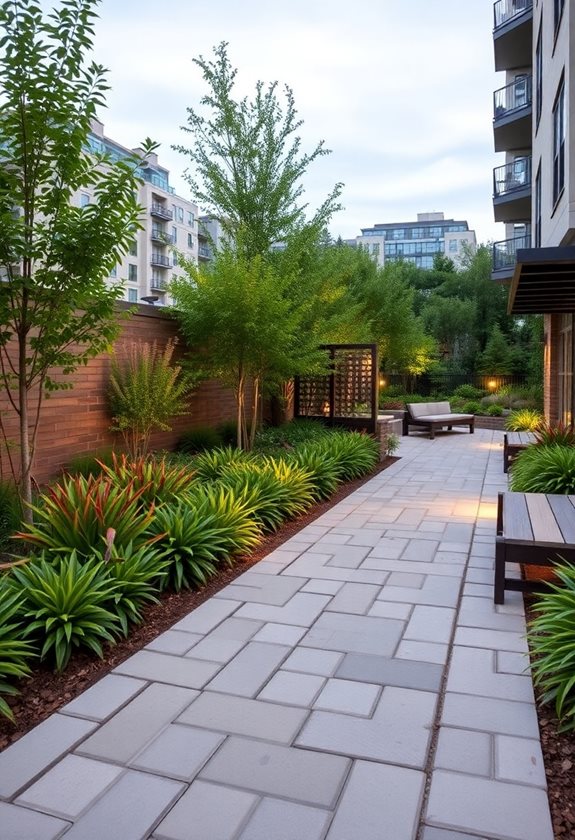
When you think about making pathways more inviting, it’s easy to overlook the importance of accessibility. You want everyone to enjoy your garden, right? Here are some thoughtful design ideas to enhance accessibility while keeping safety in mind:
- Smooth Surfaces: Use materials like pavers or compacted gravel for a stable walking surface.
- Clear Signage: Add signs that guide people safely through the space.
- Adequate Lighting: Install bright, warm lights to illuminate pathways at night.
- Seating Areas: Create resting spots with benches, allowing everyone to take a break.
Incorporating pathway lighting ideas can significantly enhance both safety and aesthetics in your garden.
Let’s make gardens accessible for all!
Frequently Asked Questions
How Can I Maintain a Creative Garden Path Throughout the Seasons?
To maintain a creative garden path throughout the seasons, you’ll want to contemplate a few key strategies! First, choose a mix of plants that bloom at different times—like tulips in spring and asters in fall. Don’t forget to add evergreens for winter interest! Regular pruning keeps everything tidy, and a little mulch can work wonders. Have you tried adding whimsical garden art? It’ll keep your space lively and inviting all year round!
What Are the Costs Associated With Implementing These Garden Path Ideas?
When you consider the costs of implementing those garden path ideas, you’ll want to think about materials, labor, and maintenance. Are you ready for some numbers? Here’s a quick breakdown:
- Plants and soil: $100-$500
- Pathway materials: $200-$1,000
- Labor: $50-$100 per hour
It adds up, but investing in your garden can bring joy and beauty! Plus, it’s a great way to get your hands dirty and have fun!
How Do I Choose Plants That Suit My Local Climate?
Choosing plants for your local climate’s easier than it sounds! Start by looking up your hardiness zone—this’ll guide your choices. Consider factors like sunlight, soil type, and water availability! For example, if you live in a hot area, succulents or drought-resistant plants can thrive. Have fun experimenting! Don’t forget to ask local gardeners for tips; they’ve got loads of experience! Remember, a little trial and error can lead to a beautiful garden!
Can I Involve the Community in Designing the Garden Path?
Absolutely, you can involve the community in designing your garden path! Why not host a brainstorming session? Invite friends, neighbors, and local schools to share their ideas. You could create a simple survey or a fun workshop to gather opinions. Think about:
- Plant preferences
- Color themes
- Fun features like benches or art
Getting everyone on board not only sparks creativity but also builds a sense of ownership. Plus, who doesn’t love a little teamwork?
What Tools Are Recommended for Building and Maintaining Garden Paths?
When building and maintaining garden paths, you’ll want some trusty tools by your side! Grab a sturdy shovel, a rake for leveling, and a wheelbarrow to haul materials. Don’t forget gloves to keep your hands safe! For maintenance, a broom’s great for clearing debris. Ever tried a garden fork? It works wonders for aerating soil. Remember, it’s all about having fun and creating a beautiful space! What are you waiting for? Let’s get started!