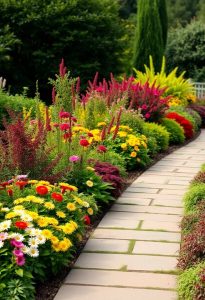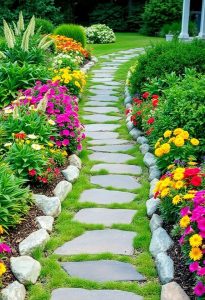
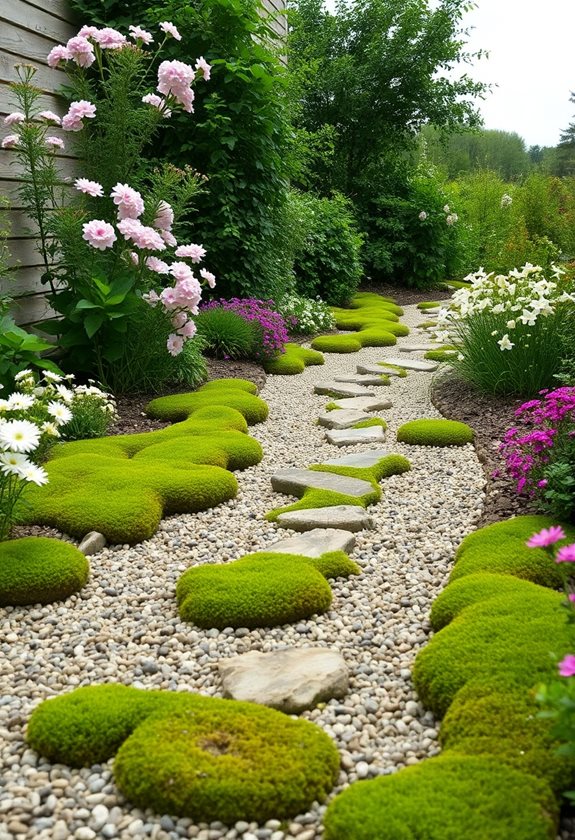
Thinking about sustainable materials for your garden pathways? You’ve got options! Recycled stones and gravel not only look great but are super durable. Ever tried permeable pavers? They’re perfect for allowing water to seep through! Or maybe you’re drawn to natural wood or clay bricks that add rustic charm. You could even consider living pathways with ground cover plants for a unique touch. Excited to explore how these choices can transform your garden? Stick around for more tips and ideas!
Design Highlights
- Recycled stones and gravel create durable, eco-friendly pathways while providing a visually appealing surface that allows for drainage.
- Permeable pavers reduce runoff by allowing water to seep through, offering diverse styles that enhance garden aesthetics.
- Natural wood and bark add rustic charm, promoting better drainage and soft landings, although they require regular maintenance for safety.
- Clay bricks and compressed earth blocks are eco-friendly options that offer unique character, durability, and compatibility with garden designs.
- Selecting sustainable materials for pathways enhances overall garden health and aligns with environmentally friendly gardening practices.
Recycled Stones and Gravel
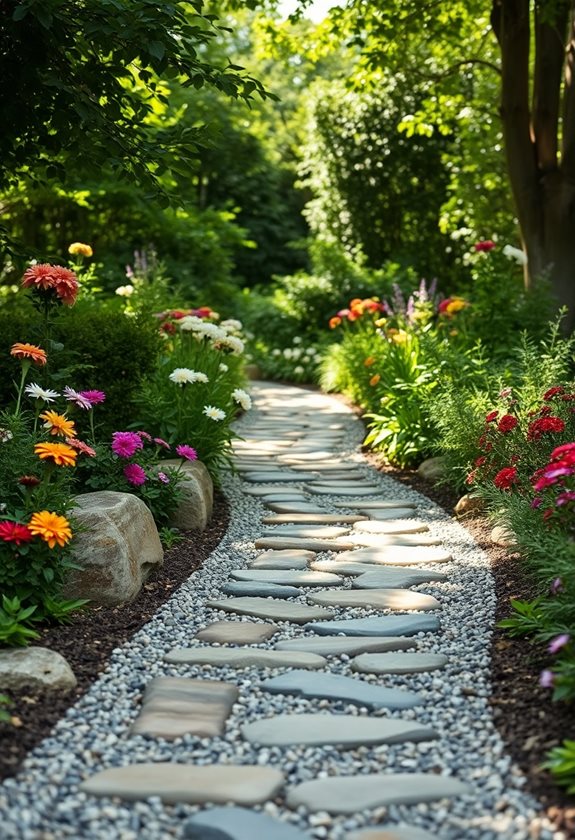
When it comes to creating a beautiful garden pathway, recycled stones and gravel can be your best friends! They’re not just eco-friendly; they offer incredible durability and safety. Imagine stepping onto a pathway that’s both visually stunning and solid underfoot! To get started, lay down a sturdy base of compacted gravel, then arrange your stones in a fun pattern.
You’ll want to:
- Choose stones that fit your garden’s style.
- Make certain they’re level to prevent tripping.
- Leave space for drainage to keep things safe and dry.
Incorporating decorative stone pathways can enhance the overall aesthetic of your garden. With a little creativity, your pathway can be both beautiful and secure—how exciting is that?
Permeable Pavers
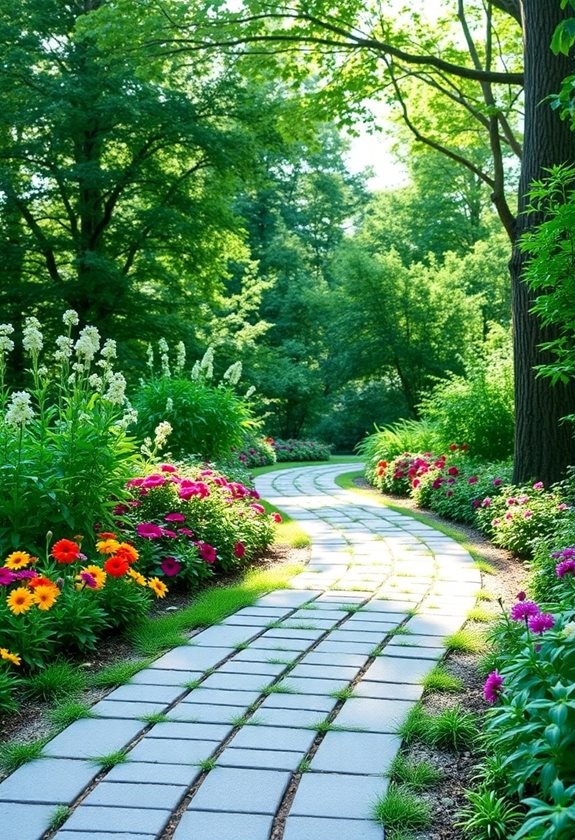
Imagine stepping onto a pathway that not only looks stunning but also helps our planet—sounds like a win-win, right? Permeable pavers let water seep through, reducing runoff and preventing puddles. You’ll feel safer knowing your walkway won’t turn into a slippery mess after rain!
Plus, they come in various styles and colors to match your garden.
- Easy to install, especially if you follow a simple layout.
- Durable, so they’ll withstand foot traffic without cracking.
These pavers are a fantastic choice because they utilize eco-friendly materials, aligning perfectly with sustainable gardening practices. Why not give your garden a stylish, eco-friendly upgrade? You’ll love the combination of beauty and functionality, and Mother Nature will thank you too!
Natural Wood and Bark
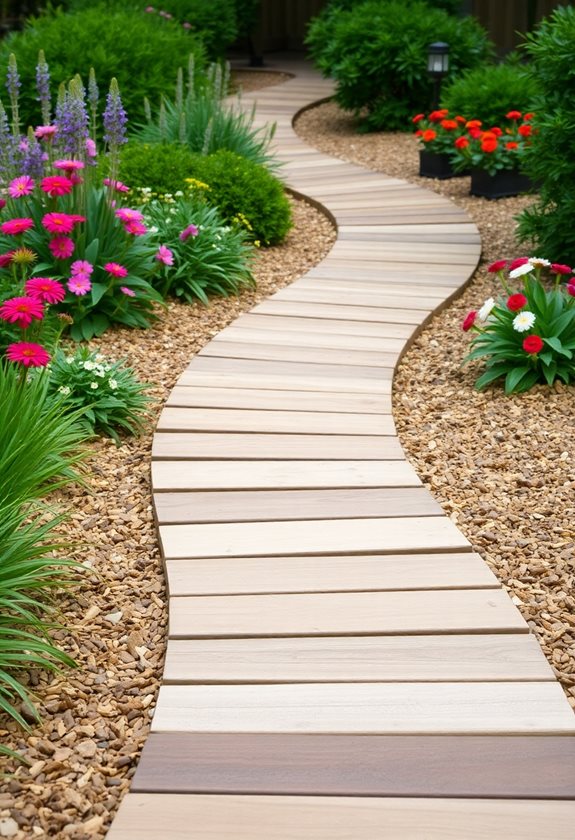
Natural wood and bark can add a warm, rustic charm to your garden pathways, making them feel inviting and alive. Imagine stepping onto a path lined with fragrant cedar or soft pine—doesn’t it sound lovely? Plus, using these materials can be safe and eco-friendly! Choosing the perfect wood for outdoor projects ensures durability and aesthetic appeal.
Here are some tips:
- Choose treated wood to resist rot.
- Use bark chips or mulch for a soft landing and better drainage.
Just make sure to maintain your pathways, as splinters or uneven surfaces can be a hazard. With a little care, your wood and bark paths will be both beautiful and safe!
Clay Bricks
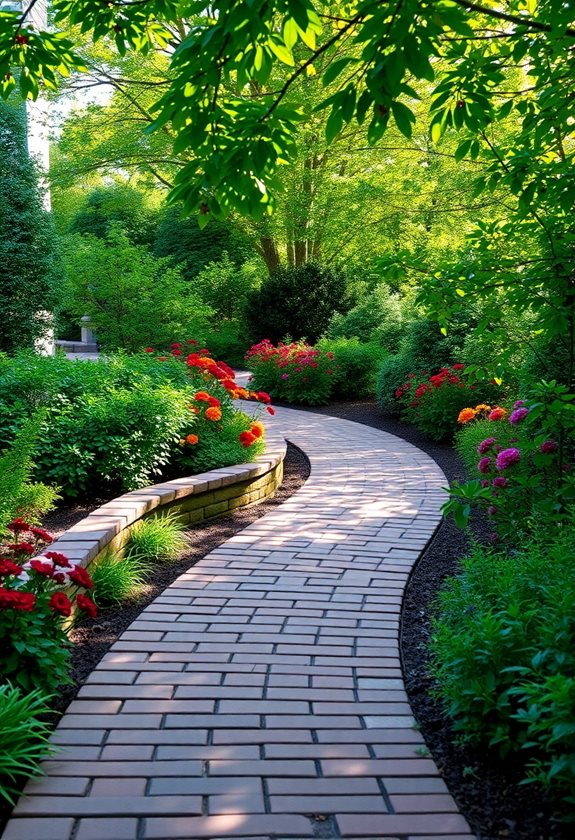
While you might think of clay bricks as just a practical choice for your garden pathways, they bring a unique character that can transform your outdoor space. Imagine walking on warm, earthy tones that blend beautifully with your plants! Clay bricks are sturdy, slip-resistant, and environmentally friendly, ensuring you stay safe while enjoying your garden. Plus, they’re easy to install—just lay them out in a pattern you love! Additionally, choosing the right materials ensures pathways withstand elements and foot traffic.
Consider these tips:
- Choose a color that complements your garden.
- Leave space for drainage to prevent puddles.
Why not give your pathway a charming twist? You’ll love the results!
Compressed Earth Blocks
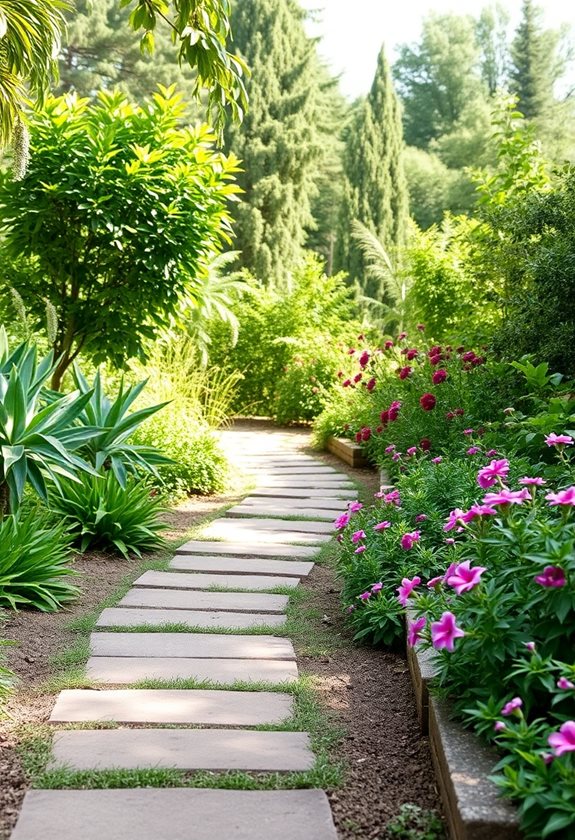
When it comes to creating a stunning garden pathway, compressed earth blocks might just be your new best friend! They’re eco-friendly, sturdy, and perfect for making your outdoor space shine. Here’s why you’ll love them:
- Durability: These blocks can withstand weather changes, keeping your pathway safe to walk on.
- Cost-Effective: They’re often cheaper than traditional materials, saving you money for more plants!
- Aesthetic Appeal: Their natural look blends beautifully with your garden.
- Sustainability: Made from local soil, they’re a great choice for eco-conscious gardeners like you! Additionally, they can be incorporated into sustainable fencing solutions that enhance your garden’s overall eco-friendliness.
Eco-Friendly Concrete Alternatives
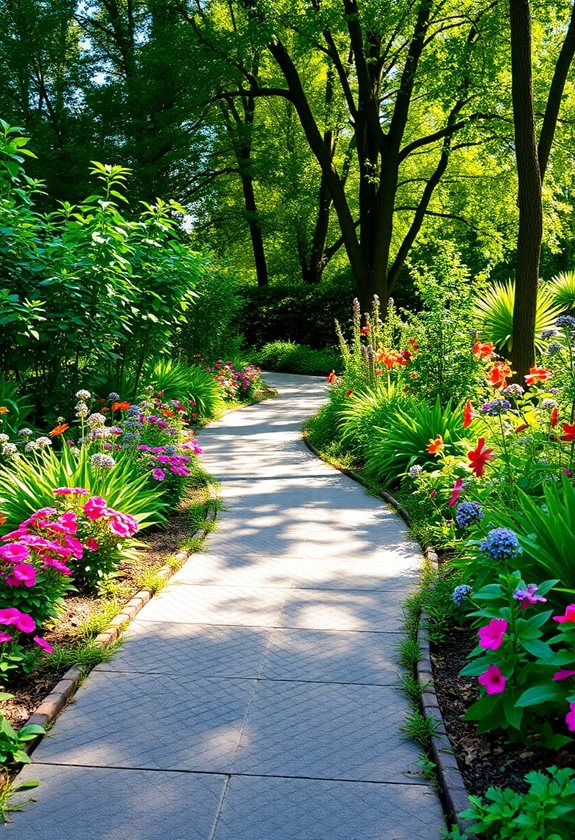
If you’ve ever found yourself staring at a dull concrete pathway and wishing for something a little more vibrant, you’re in for a treat! Eco-friendly concrete alternatives can not only brighten your garden but also keep it safe. Consider using permeable pavers or recycled aggregates—both allow water to flow through, reducing puddles and slips. You could also try stabilizing gravel; it’s like giving your path a strong backbone! Plus, using these materials often means less carbon footprint. Additionally, opting for sustainable pathways can enhance the natural beauty of your outdoor space. So, why not explore these options? You’ll create a stunning, sustainable pathway while ensuring safety for everyone who strolls through your garden!
Native Plant Borders
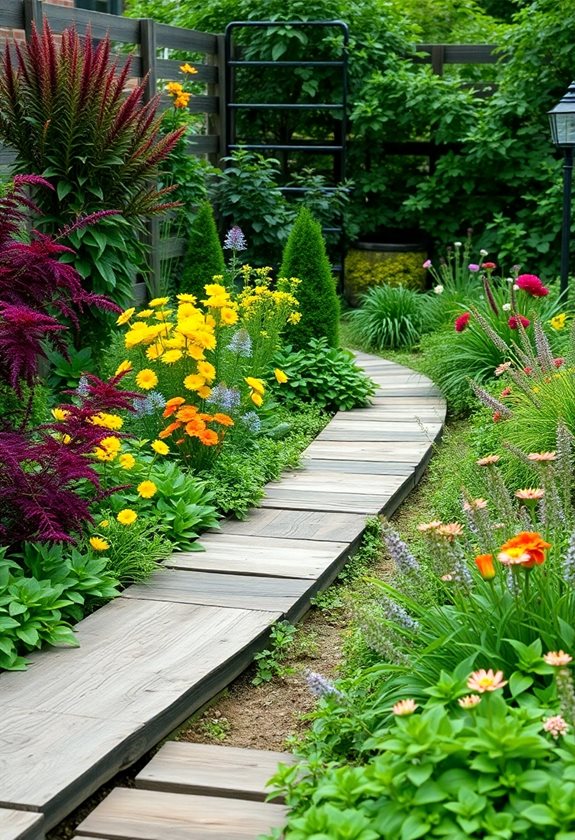
Creating a stunning garden pathway isn’t just about the materials you choose; it’s also about how you frame that path with the right plant life! Native plants offer beauty and safety, making them perfect for borders. Here’s how to get started:
Enhance your garden pathway by framing it with beautiful, low-maintenance native plants that attract pollinators.
- Choose local plants that thrive in your area.
- Consider height—mix shorter and taller plants for visual interest.
- Attract pollinators like bees and butterflies with colorful blooms.
- Ensure low maintenance—native plants usually need less water and care. Additionally, incorporating stunning native flowers can enhance the overall aesthetic of your garden pathway.
Mulch Pathways
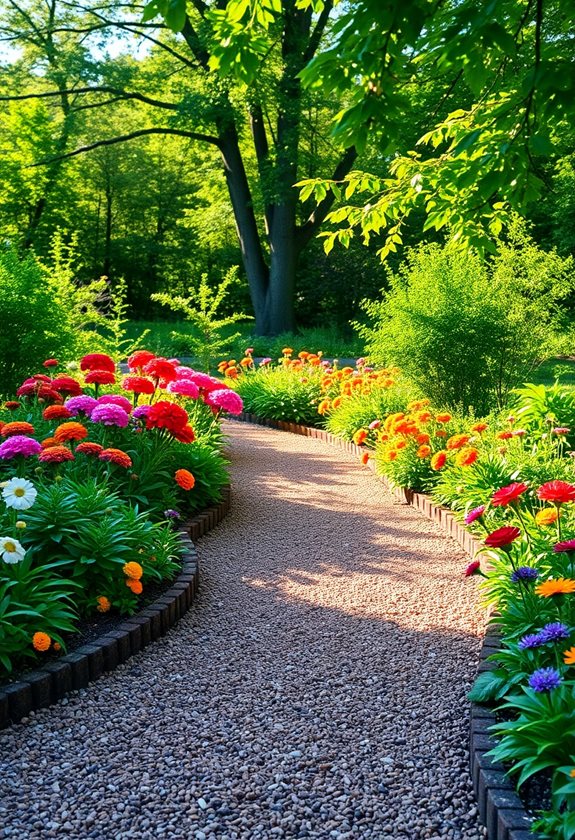
Mulch pathways can transform your garden into a cozy haven, offering both beauty and practicality! Imagine walking barefoot on soft, earthy mulch while surrounded by vibrant blooms. Plus, mulch helps suppress weeds, keeping your garden tidy and safe. To create your pathway, start with:
- A solid base of cardboard or landscape fabric.
- A generous layer of organic mulch, like wood chips or bark.
Make sure it’s thick enough to cushion your steps! And remember, regular maintenance helps keep it fresh. So, why not give it a try? Your garden deserves a stylish and safe pathway that invites you to explore! Additionally, using sustainable materials for your garden pathways not only enhances the visual appeal but also benefits the environment.
Living Pathways With Ground Cover Plants
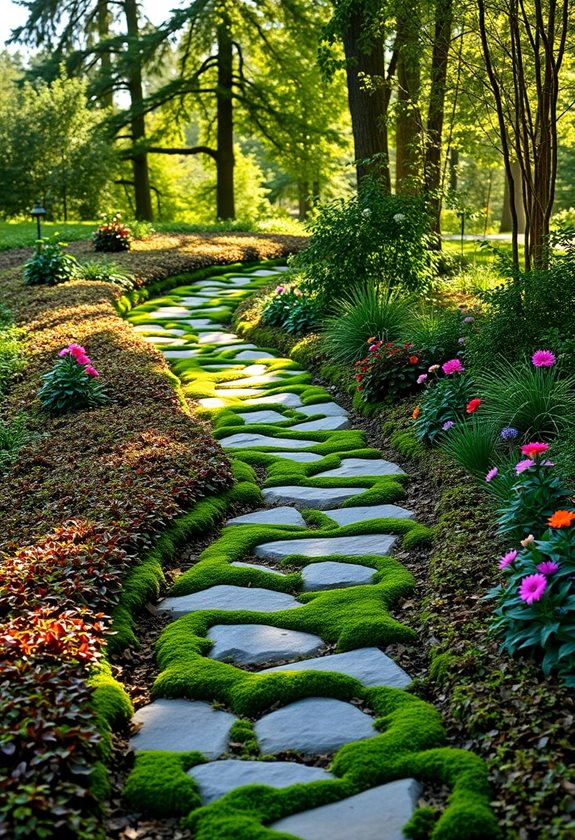
While you might think of pathways as just a way to navigate your garden, living pathways made with ground cover plants can truly elevate your outdoor space! These vibrant paths not only look stunning but also provide safety by minimizing slips and falls. You’ll love how they soften your garden while offering texture and color. Here are four great options to contemplate:
Living pathways created with ground cover plants enhance your garden’s beauty while ensuring safety and adding delightful texture.
- Creeping thyme for a fragrant touch.
- Irish moss for a lush, green carpet.
- Sedum for its drought resistance.
- Ajuga for its stunning purple flowers.
Incorporating drought-resistant plants like these can significantly reduce water usage in your garden.
Frequently Asked Questions
How Do I Maintain My Sustainable Garden Pathways?
Maintaining your garden pathways can be a fun adventure! Start by regularly checking for weeds—nobody wants those pesky intruders! Consider using a broom to sweep away debris, keeping it tidy. You might also want to add a fresh layer of mulch or gravel every season; it keeps things looking sharp. And don’t forget to inspect for any damage, like cracks or loose stones. Got any cool tips? Share them with me! Happy gardening!
What Is the Cost Comparison of Sustainable Materials?
When you’re comparing costs for materials, it’s important to take into account both your budget and the long-term benefits. Sustainable options like reclaimed wood or gravel might seem pricier upfront, but they can save you money over time with less maintenance! Here’s a quick comparison:
- Reclaimed Wood: $3-$5 per square foot
- Gravel: $1-$3 per square foot
Are There Any Health Risks With Certain Materials?
When choosing materials for your garden, you might wonder about health risks. Some materials can release harmful chemicals or dust. For example, treated wood and certain stones can contain toxins. It’s key to:
- Check labels
- Choose natural options like untreated wood or stone
Have you ever thought about how your choices affect your family? Staying safe while gardening is so important! So, let’s dig into safer alternatives together and keep our gardens healthy!
Can I Combine Different Materials for My Pathway?
Absolutely, you can combine different materials for your pathway! Mixing stones, bricks, and gravel not only adds visual interest but also offers a unique texture. Just think about the look you want—do you prefer a rustic vibe or something more modern? When planning, make certain the materials you choose are safe and stable. For example, consider using larger stones for edges to keep smaller gravel in place. Isn’t creating a personalized pathway exciting?
How Do I Prevent Weeds in My Garden Pathways?
Did you know that weeds can reduce your garden’s beauty by up to 50%? To keep those pesky invaders at bay, start by laying down landscape fabric before adding your pathway materials. Mulch is your best friend too! It not only looks great, but it also blocks sunlight, keeping weeds from sprouting. Regularly check for any stubborn sprouts—pulling them out by hand can be oddly satisfying! Happy gardening!