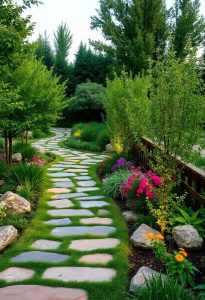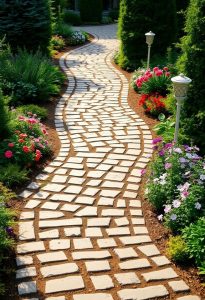

You want to create a garden that’s not just beautiful but accessible for everyone, right? Start with wide and smooth pathways, using materials like concrete or bricks for stability. Raised garden beds are a lifesaver, too! Don’t forget to add sensory elements, like textured paths with pebbles or mulch for that cozy feel. Incorporating benches for rest and adding clever lighting can make evening strolls magical. Curious about more ways to enhance your garden? There’s plenty more to explore!
Design Highlights
- Use concrete or bricks for smooth, stable surfaces that enhance accessibility and safety for all garden visitors.
- Design pathways at least 3 feet wide to allow easy movement, accommodating wheelbarrows and individuals with mobility aids.
- Incorporate textured pathways with materials like smooth pebbles and soft mulch to engage the senses while ensuring comfort and stability.
- Install proper lighting solutions, such as solar lights and lanterns, to improve visibility and safety during evening strolls in the garden.
- Regularly maintain pathways by inspecting for hazards and clearing debris to ensure a safe and accessible environment year-round.
Wide and Smooth Pathways
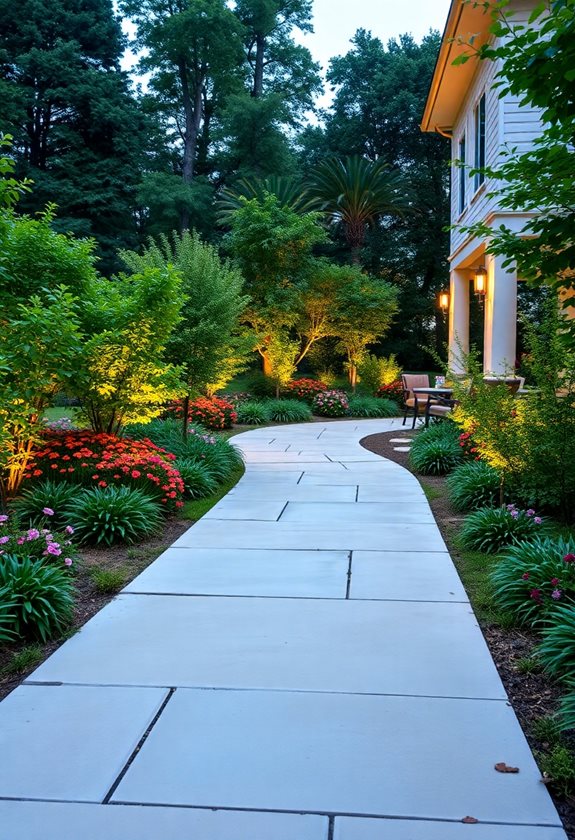
When you envision your garden, have you ever thought about how a wide and smooth pathway can truly elevate its charm? Imagine strolling through your garden without tripping or stumbling! A wider path not only feels safer but also invites everyone in.
Envision a charming garden with a wide, smooth pathway that invites safe and leisurely strolls for everyone.
Consider these points:
- It allows for easier navigation, especially with a wheelbarrow or when carrying plants.
- A smooth surface reduces the risk of falls.
Adding a pathway isn’t just practical; it’s a design statement that can transform your garden into a welcoming oasis. Choosing durable materials ensures that your pathway withstands the elements and foot traffic effectively. So, why not take the plunge and create one today? Your garden deserves it!
Material Choices for Accessibility
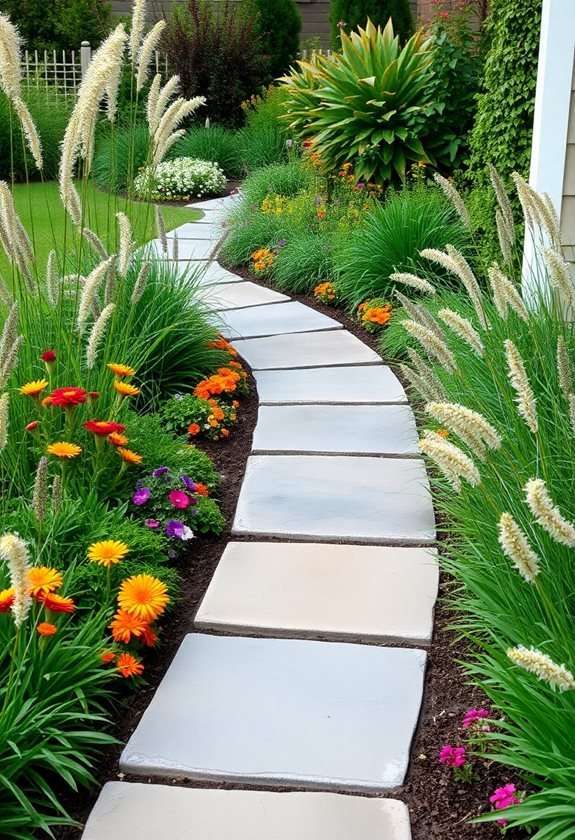
Choosing the right materials for your garden pathways can make all the difference in creating an accessible and enjoyable space. Think about using smooth concrete, brick, or permeable pavers—they’re sturdy and safe! Avoid materials that can shift or become uneven, like gravel.
Here are some ideas to reflect on:
- Concrete: Easy to walk on and can be textured for grip.
- Bricks: Classic charm that can be laid flat for stability.
- Permeable pavers: Great for drainage and eco-friendly!
Incorporating eco-friendly options into your pathway design can further enhance sustainability while ensuring accessibility.
Raised Garden Beds With Path Access
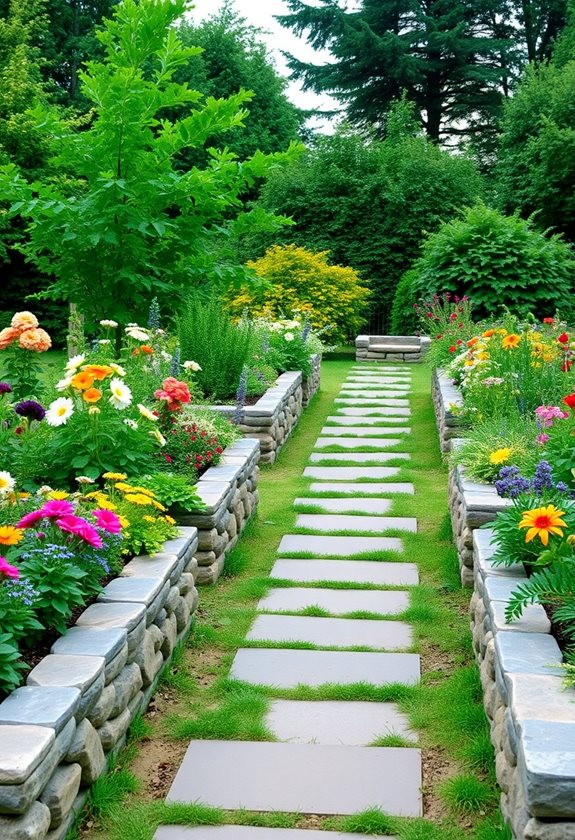
Creating raised garden beds with easy path access can transform your gardening experience, especially if you’ve ever found yourself straining over low beds or struggling to reach those pesky weeds at the back. Imagine being able to garden without bending or risking a tumble!
Transform your gardening experience with raised beds and accessible paths, making it easier to reach every corner without straining!
To make this work:
- Height matters: Aim for a height that’s comfortable for you.
- Pathway width: Guarantee at least 3 feet of space for easy movement.
- Materials: Use sturdy, non-slip surfaces for paths.
Incorporating beautiful winding paths can enhance both the functionality and aesthetics of your garden.
With these tips, you’ll enjoy your garden more safely and comfortably! Isn’t that what we all want? Happy gardening!
Sensory Gardens With Textured Paths
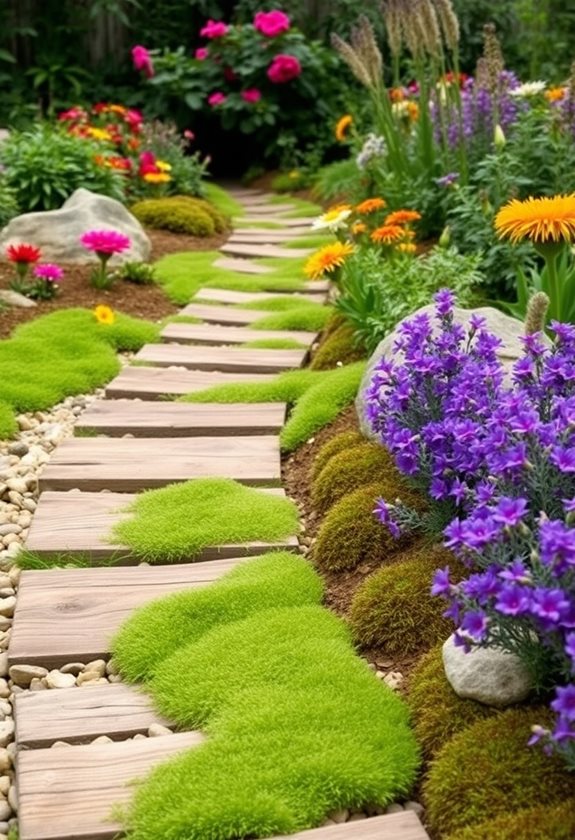
Imagine stepping into a garden where every path invites you to explore, tantalizing your senses with a delightful mix of textures underfoot. You’ll love how these textured paths can enhance your experience! Consider incorporating:
- Smooth pebbles that gently massage your feet as you stroll.
- Soft mulch that cushions your steps, providing a feeling of coziness.
- Rough bricks that create a sturdy path, adding a rustic charm.
These variations not only make your garden safe but also engage your senses, making every visit feel like an adventure. Beautiful pathway solutions can truly transform your outdoor space. Why not create a sensory experience that’s both fun and safe?
Edible Landscapes With Accessible Routes
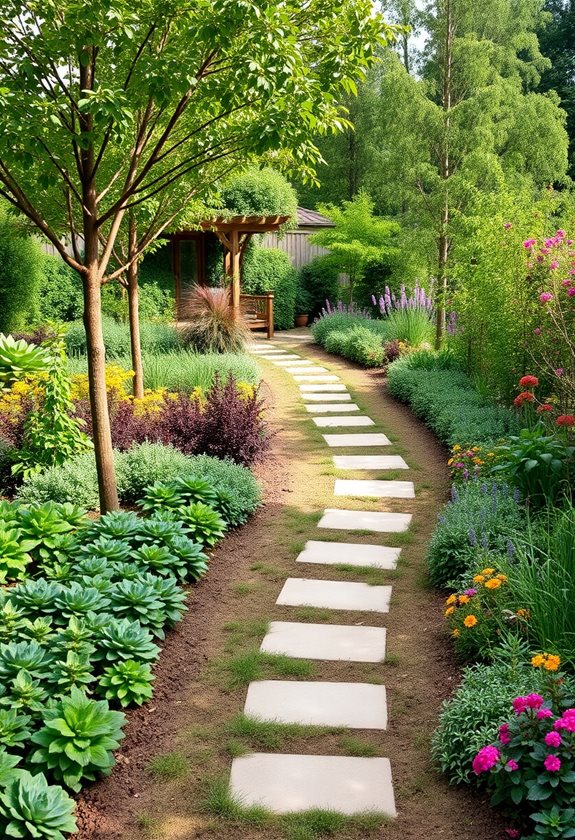
While textured paths can make your garden a sensory wonderland, why not take it a step further and grow something you can actually eat? Imagine strolling along accessible routes, surrounded by fresh veggies and herbs! Consider raised beds with wide pathways, allowing everyone easy access. You could plant tomatoes, basil, or even strawberries—delicious treats right in your backyard! Just make sure to choose sturdy materials for your paths, like gravel or pavers, to prevent slips. It’s not just about beauty; it’s about creating a safe space where you can enjoy the fruits of your labor. Affordable DIY décor ideas can help enhance your garden’s aesthetic while keeping costs low. Ready to dig in?
Color-Contrasting Pathway Markings
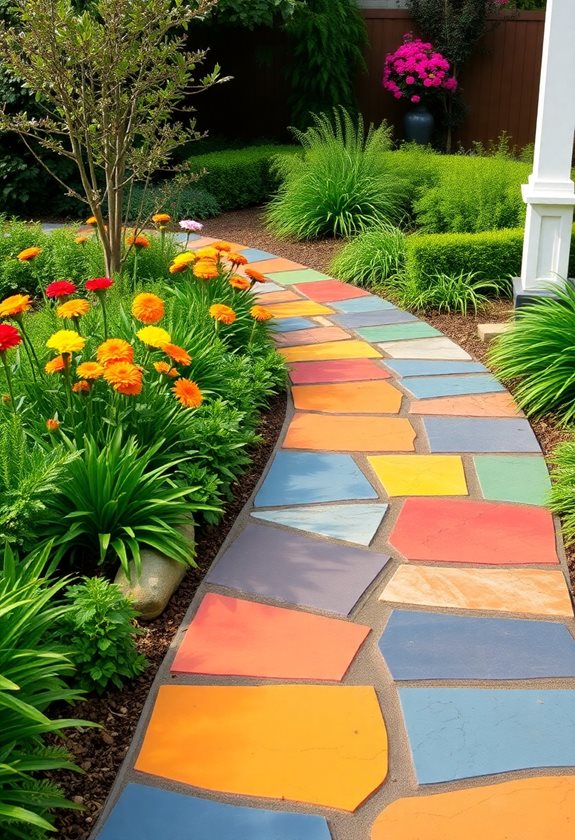
When you’re designing your garden pathways, adding color-contrasting markings can truly make a difference, especially if you want to keep things safe and visually appealing. These markings help guide visitors and prevent accidents. Try incorporating:
- Bright, bold borders that outline your path.
- Unique symbols or shapes to mark changes, like a flower or leaf.
- Fun, colorful tiles that create a pattern along the way.
Additionally, consider using pathway lighting options to enhance visibility during nighttime, making your garden both beautiful and safe for evening strolls.
Curved Pathways for a Natural Flow
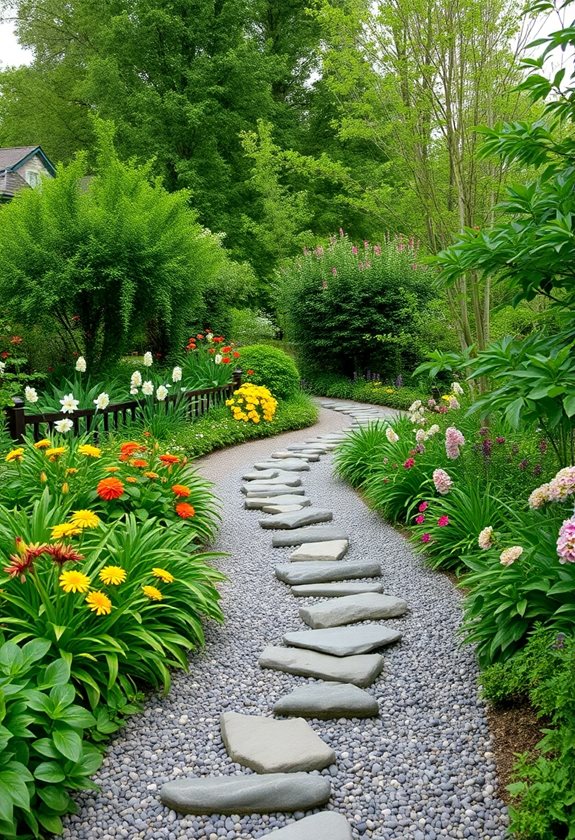
Curved pathways can work wonders in your garden, creating a gentle flow that draws the eye and invites exploration. They lead you through your space, making it feel larger and more inviting. Plus, they’re safer!
Think about these tips:
- Use smooth materials, like gravel or pavers, to minimize trip hazards.
- Incorporate gentle slopes instead of steep inclines for easy navigation.
- Add greenery alongside the path to create a cozy atmosphere.
Isn’t it nice to stroll through a garden that feels like a peaceful journey? So, why not embrace those curves and let your garden shine? Additionally, creating straight garden paths can enhance the overall design and usability of your small space garden.
Incorporating Benches and Rest Areas
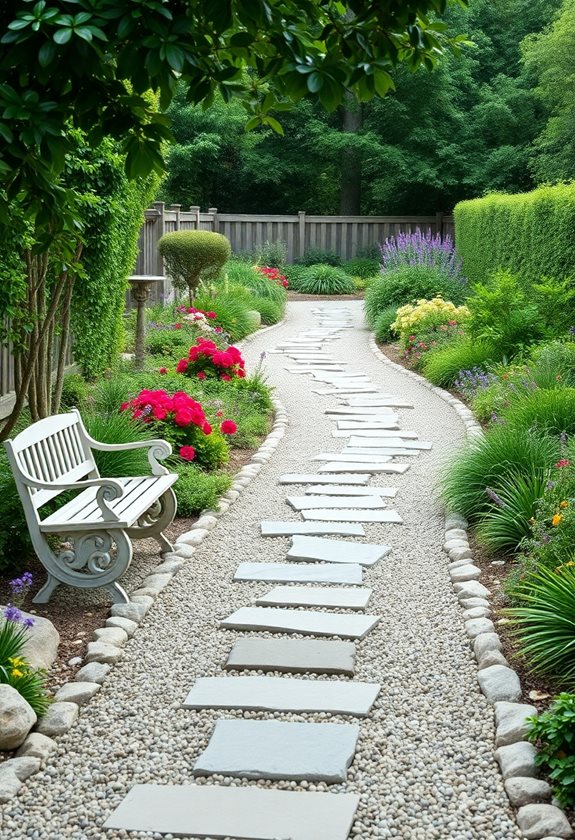
Creating cozy spots in your garden is like adding the perfect finishing touch to a masterpiece. You’ll love having places to pause and enjoy your hard work! Consider these ideas for benches and rest areas:
- Natural Wood Benches: Blend seamlessly with the surroundings—perfect for a rustic feel.
- Colorful Garden Chairs: Brighten up the space and invite friends to join you.
- Covered Pergolas: Provide shade and a serene atmosphere for relaxation.
Incorporating garden seating options into your design can enhance comfort and accessibility. These spots not only enhance beauty but also offer safety and comfort. After all, you deserve a peaceful place to unwind amidst nature’s splendor!
Lighting Solutions for Safe Navigation

Even though your garden might look stunning during the day, it’s just as important to guarantee it shines at night—especially if you want to enjoy those cozy benches and rest areas after sunset! You can create a welcoming atmosphere with strategically placed solar lights or LED path lights. They’ll guide your way and prevent any trips or falls. Consider using string lights for a magical touch, or even lanterns for a rustic feel. Remember, lighting isn’t just pretty; it’s practical! Adding pathway lighting solutions can enhance both safety and aesthetics in your outdoor space. So, what’s your favorite way to illuminate your garden? Let’s make those nighttime strolls safe and enchanting!
Seasonal Adaptations for Pathways
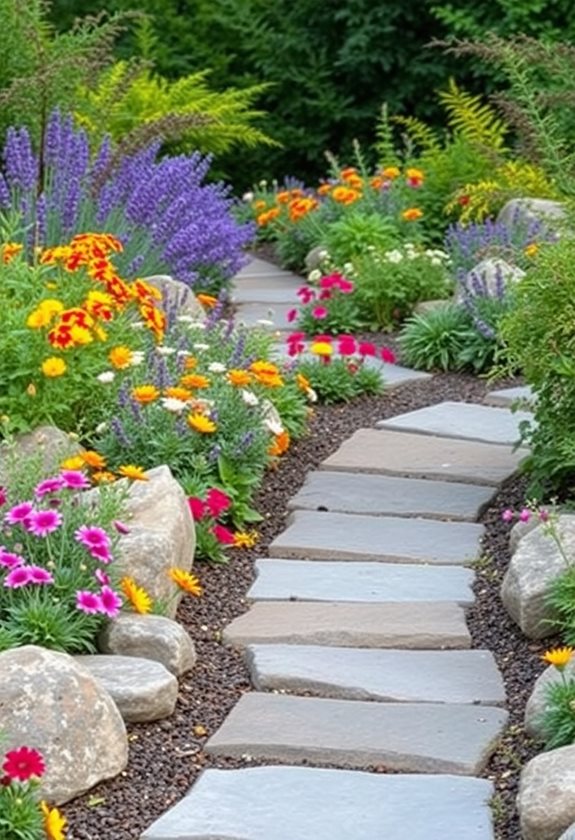
As the seasons change, so do your garden pathways, and adapting them can be a fun and rewarding challenge! Think about how you can enhance safety while keeping beauty in mind. Here are three seasonal adaptations to take into account:
- Winter: Add non-slip mats or gravel to prevent icy slips.
- Spring: Plant low-growing flowers along the edges for vibrant color and clear boundaries.
- Fall: Use leaves to create a natural mulch, providing traction and a cozy aesthetic!
Additionally, consider incorporating pathway lighting ideas to illuminate your garden during the darker months. Embrace these changes and turn your paths into a safe, inviting journey through your garden. Isn’t it exciting to see your garden evolve?
Frequently Asked Questions
How Can I Make My Garden Pathways Pet-Friendly?
You want your garden pathways to be pet-friendly? Great idea! Start by choosing materials like gravel or soft mulch—these are gentle on paws. Avoid toxic plants, and consider edging to keep pets safe from wandering off. Don’t forget to create shaded areas so your furry friends can relax. Regularly check for sharp objects or hazards. It’s all about creating a cozy, safe space for your pets while you enjoy your garden together!
What Is the Best Way to Maintain Accessible Pathways?
Imagine walking down a sun-dappled lane, where every step feels safe and secure. To maintain accessible pathways, keep them clear of debris, regularly check for cracks, and guarantee they’re wide enough for mobility aids. You can use non-slip materials like textured stones or rubber mats. Don’t forget to trim overhanging branches! What do you think—doesn’t a well-kept path invite you to explore your garden’s beauty? Happy gardening!
Can I Incorporate Water Features Into Accessible Pathways?
Absolutely, you can incorporate water features into accessible pathways! Just think about how calming the sound of water can be. To guarantee safety, consider using non-slip materials for any surfaces near the water. You could create a small pond or a fountain, but make sure there’s enough space around it for easy navigation. Adding plants around the water can enhance beauty, while also keeping it safe and inviting. Isn’t it exciting to blend nature with accessibility?
How Do I Ensure Pathways Are Safe During Winter?
To keep your pathways safe during winter, you’ll want to take some smart precautions! First, clear snow and ice regularly—trust me, it’s easier than slipping! You can use salt or sand to improve traction. How about installing some outdoor lighting? It’s a game changer for visibility! Also, consider a heated pathway system if you’re feeling fancy. Keeping things safe makes your garden enjoyable all year round, right? Happy gardening!
What Plants Are Best for Borders Along Accessible Pathways?
When you’re choosing plants for borders along pathways, think about safety and maintenance! You’ll want low-growing, sturdy plants that won’t obstruct walking. Some great options include:
- Lavender: It’s fragrant and attracts pollinators!
- Sedum: Low maintenance and drought-resistant.
- Hostas: Perfect for shady spots.
These plants not only look beautiful but also keep pathways clear. Plus, wouldn’t it be nice to have a garden that’s both safe and stunning? Happy gardening!