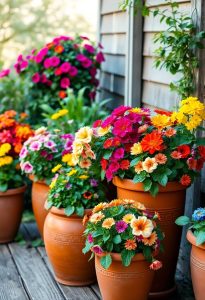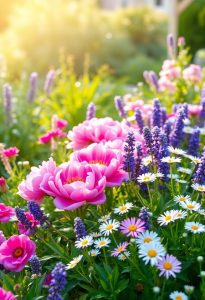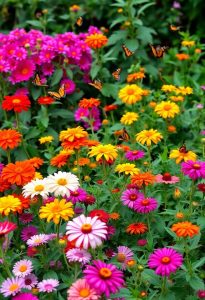
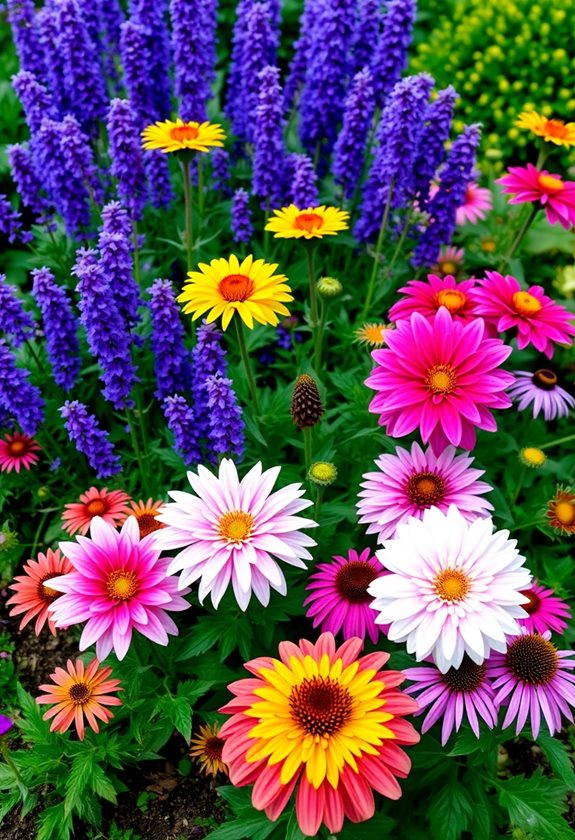
Looking to spice up your garden with unique perennial flower beds? You’ve got a world of options! Consider creating a color wheel garden to arrange warm and cool hues together. Don’t forget to layer heights—tall delphiniums in back, medium coneflowers in the middle, and creeping thyme up front. Adding striking foliage gives year-round appeal too! Mix in hardscape elements like stones or trellises for contrast. Curious about other tips to transform your outdoor space? Stick around!
Design Highlights
- Create a color wheel garden by arranging warm and cool flowers in a circular pattern for striking visual appeal.
- Incorporate a variety of perennial bloom times to ensure colorful displays throughout all seasons.
- Use unique foliage plants like hostas and ornamental grasses to add texture and year-round interest to the flower bed.
- Design layered flower beds with tall, medium, and low-growing plants for depth and visual dynamics.
- Integrate garden art that complements your color scheme, enhancing the overall aesthetic of your perennial garden.
Choosing the Right Perennials for Your Climate
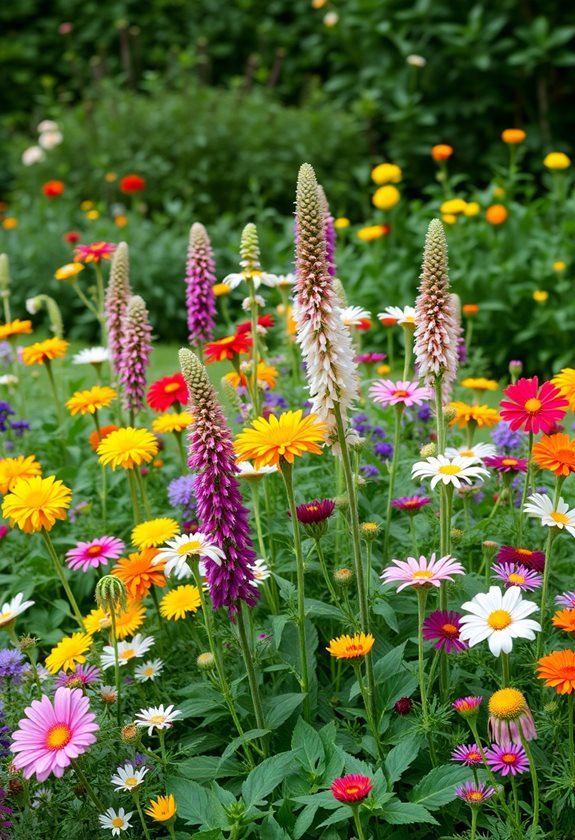
When you’re planning your perennial flower bed, you might wonder, “How do I choose the right plants for my climate?” Well, don’t worry! Start by researching your USDA hardiness zone; this tells you which plants thrive in your area. Look for perennials that suit your soil type and sunlight exposure too. For instance, daylilies and coneflowers love sunny spots, while hostas prefer shade. Don’t forget to take into account local pests and diseases! A little prep work saves you headaches later. Remember, gardening’s a journey; you’ll learn as you go! So, grab your trowel and let’s dig into creating a beautiful flower bed! Additionally, consider incorporating best flower varieties that provide continuous blooms throughout the season for a vibrant display.
Designing a Color Wheel Garden
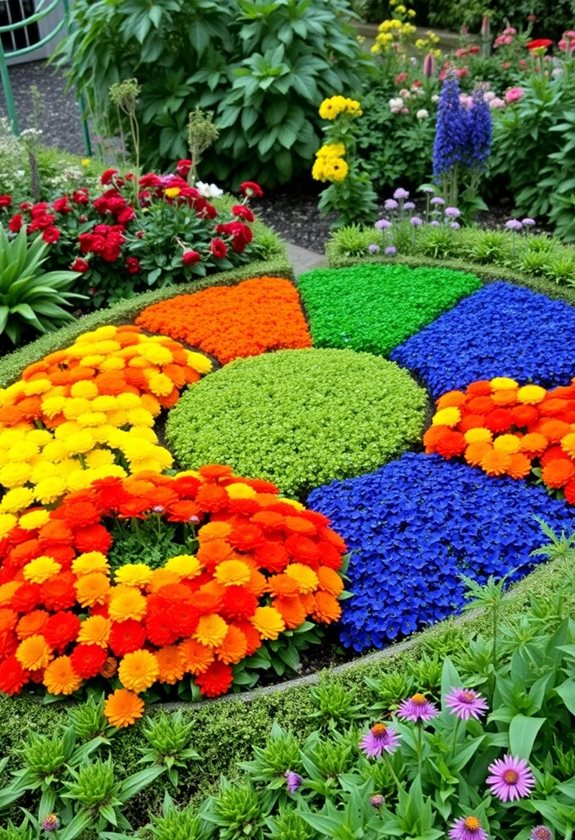
Diving into the vibrant world of a color wheel garden is like stepping into a painter’s palette, where every hue brings its own story and personality! Start by arranging flowers in a circular pattern, placing reds next to oranges, and yellows beside greens. This not only creates stunning visuals but also simplifies plant selection. You might choose sunflowers, marigolds, and lavender for vibrant pops of color. Remember to reflect on blooming seasons for year-round beauty. Feeling adventurous? Add some fun garden art to match your colors! With a little planning, you’ll have a colorful oasis that’s safe and inviting for everyone! Additionally, incorporating colorful flower beds can significantly enhance the garden’s appeal to pollinators.
Layering Heights for Visual Interest
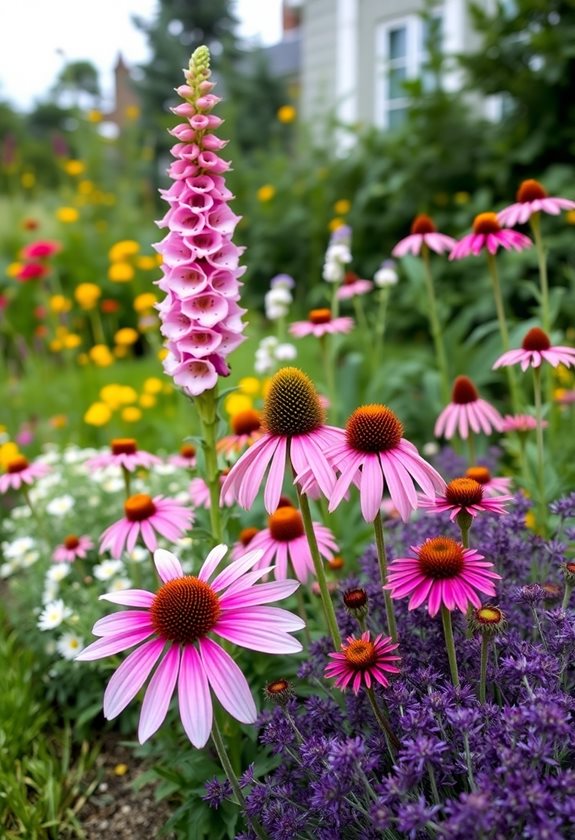
To create a garden that truly captivates the eye, you’ve got to think about layering heights, which adds depth and drama to your perennial flower bed. Imagine tall sunflowers reaching for the sky, with medium-height daisies swaying gently below, and low-growing ground covers filling in the gaps. It’s like creating a living sculpture!
- Choose tall plants for the back, like delphiniums.
- Place medium ones, like coneflowers, in the middle.
- Finish with low plants, such as creeping thyme, at the front.
This mix not only looks beautiful but also helps prevent weeds—safety first! Seasonal updates aren’t just for décor; they can also enhance the vibrancy of your flower bed throughout the year. Isn’t that a win-win?
Creating a Cottage Garden Aesthetic
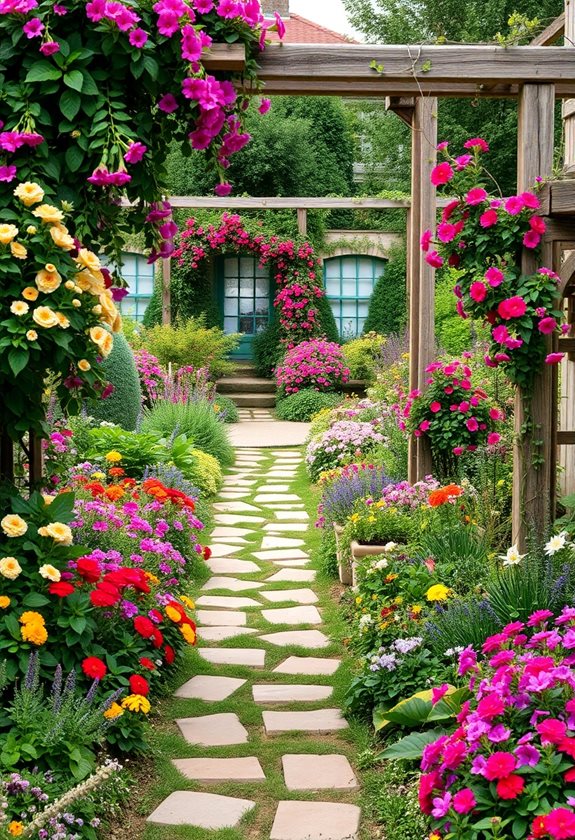
Have you ever strolled through a whimsical cottage garden and felt like you’d stepped into a fairytale? Creating this enchanting aesthetic at home is easier than you think! Start by mixing colorful perennials like foxgloves, daisies, and lavender for that charming, slightly wild look. Don’t forget to add some climbing roses on a trellis—it’s like nature’s confetti! Use a cozy path of stones or bricks to guide you through. And, of course, a few rustic garden ornaments can really tie it all together. So grab your trowel, and let your imagination run wild in this delightful project! Additionally, incorporating flower bed ideas can elevate the overall design and vibrancy of your cottage garden.
Incorporating Foliage for Year-Round Appeal
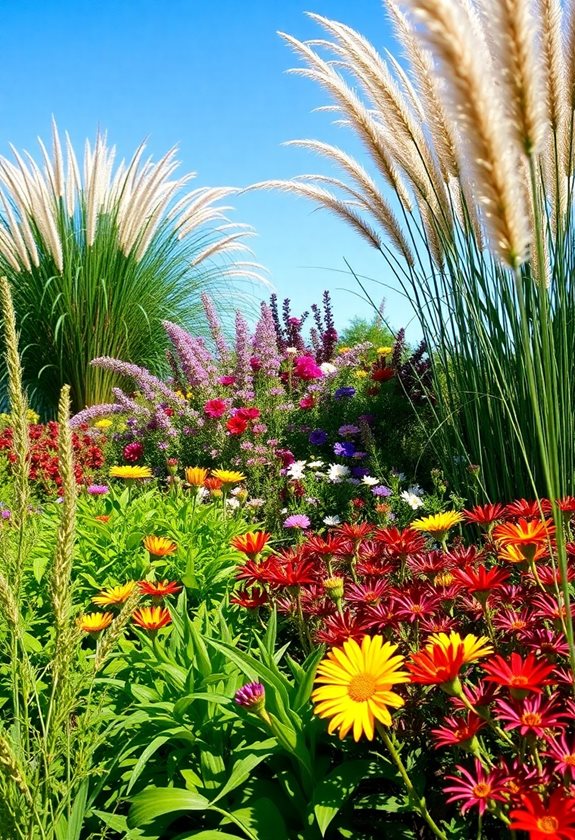
While you might think that colorful blooms are the stars of your flower bed, incorporating foliage can be the secret ingredient that adds depth and interest all year round! Think of those lush greens and unique leaf shapes as your garden’s supporting cast. Consider hostas for their big, bold leaves or ornamental grasses that sway in the breeze.
- Try mixing textures: smooth, spiky, or feathery!
- Choose plants with varying colors: deep purples, bright yellows, and silvery hues!
These elements help create a stunning backdrop, making your flowers pop even more. Additionally, layering techniques can enhance the visual appeal of your garden, creating a multi-dimensional space. So, are you ready to let foliage shine in your garden?
Utilizing Edging for Structure and Definition
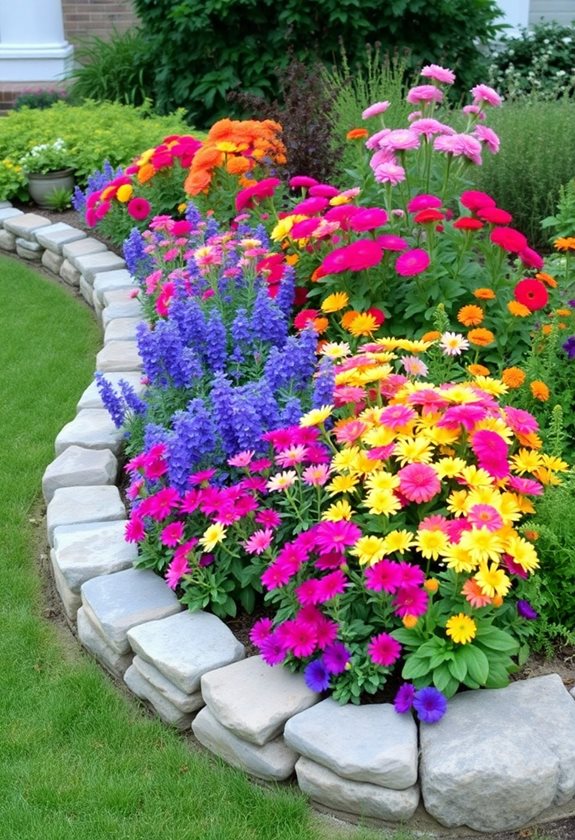
When you’ve taken the time to choose the perfect plants and foliage for your flower bed, you might find that the next step is just as important: defining the space! Edging gives your garden a polished look and keeps the plants contained. You can use stones, bricks, or even wood for a natural feel. Just imagine how neat it’ll look!
Defining your flower bed with edging not only enhances its appearance but also keeps your plants beautifully contained.
Here are quick tips for safe and effective edging:
- Verify materials are stable and won’t tip over.
- Avoid sharp edges that could cause injuries.
- Choose weather-resistant options for durability.
Additionally, using weather-resistant options can greatly enhance the longevity of your garden design.
Trust me, a defined edge makes a world of difference!
Adding Hardscape Elements for Contrast
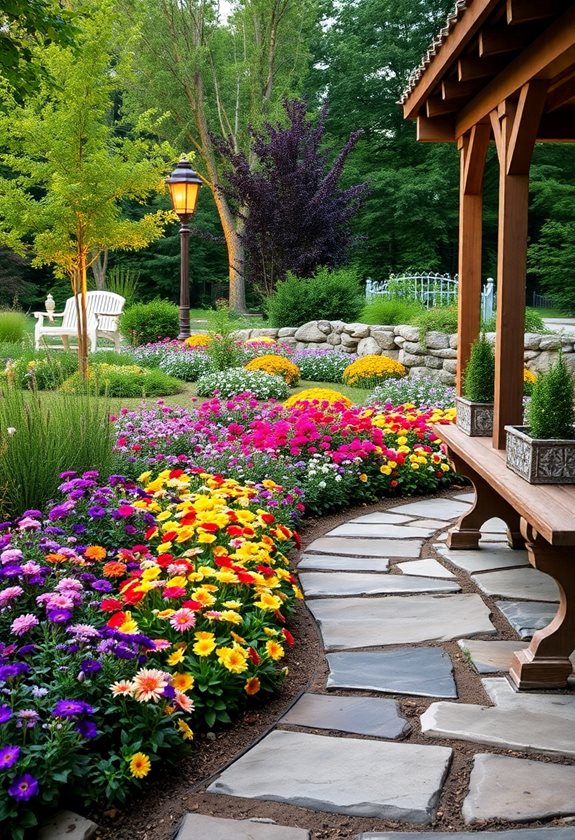
Adding hardscape elements to your flower bed can really transform the space, especially if you want to create a striking contrast with your vibrant blooms. Think about incorporating materials like stones, bricks, or even decorative gravel. These can frame your flowers beautifully, providing a solid backdrop that makes colors pop!
Try using:
- A stone pathway for a rustic feel
- A wooden bench for a cozy nook
- Raised beds for added dimension
Additionally, consider using weather-resistant materials to ensure the longevity of your hardscape features amidst the elements.
Planting in Drifts for a Natural Look
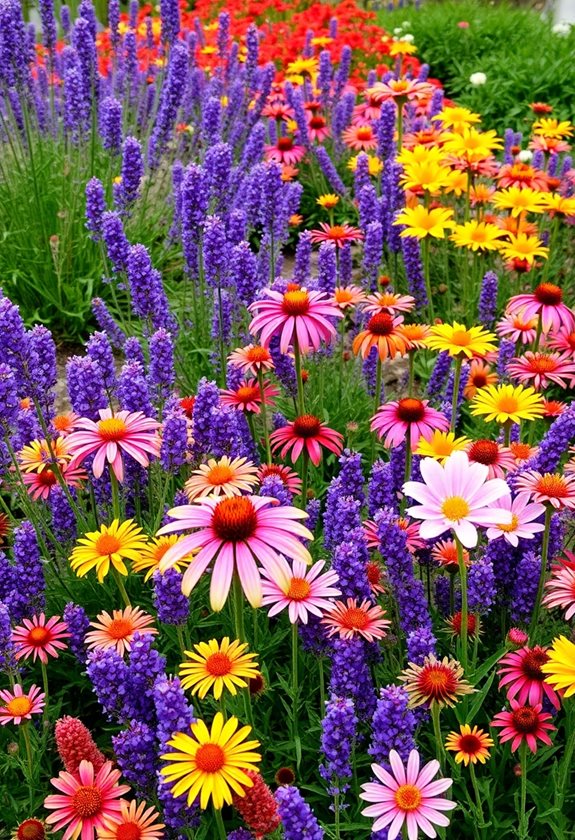
If you want your garden to feel like a vibrant, natural oasis, planting in drifts is a fantastic way to accomplish that! By grouping your flowers, you create a stunning visual impact. Here are some tips to help you get started:
- Choose a mix of colors and textures for dynamic drifts.
- Group plants in odd numbers for a more organic feel.
- Vary the height of your drifts to add depth and interest.
- Consider the blooming seasons to guarantee year-round color.
Additionally, incorporating lush garden ideas can enhance the overall aesthetic and functionality of your small space. Trust me, once you try this technique, you’ll wonder why you didn’t do it sooner! Happy gardening!
Attracting Pollinators With Diverse Plantings
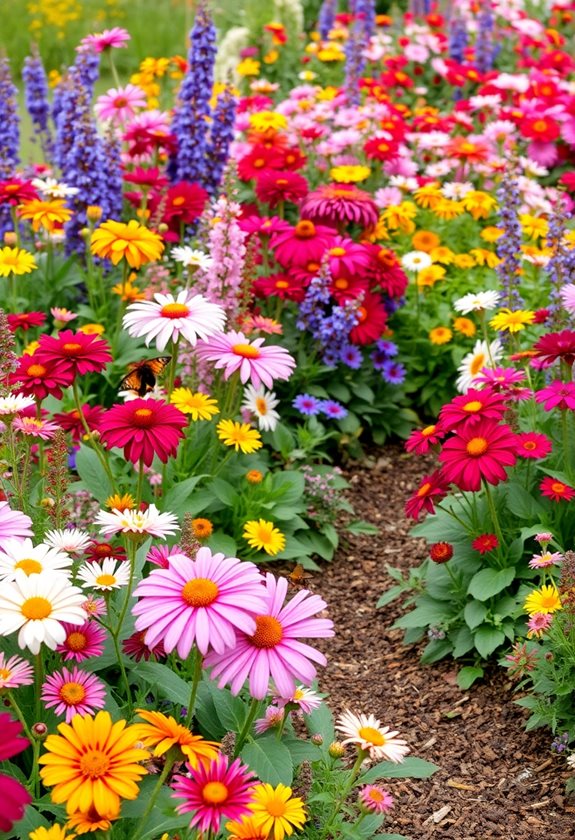
While you might be focused on creating a beautiful flower bed, have you ever stopped to think about the buzzing friends who can help make your garden thrive? Attracting pollinators like bees and butterflies is simpler than you think! Try planting a mix of colorful flowers, such as coneflowers, asters, and lavender.
- Choose native plants—they’re often irresistible to local pollinators!
- Group flowers in clusters for easy access to nectar.
And remember, avoid pesticides; they can harm our buzzing buddies. With a little effort, you’ll create a vibrant haven that supports nature and brings joy to your garden! Isn’t that exciting? Additionally, incorporating year-round perennial plants can provide constant beauty and support for pollinators throughout all seasons.
Seasonal Color Changes in Perennial Beds
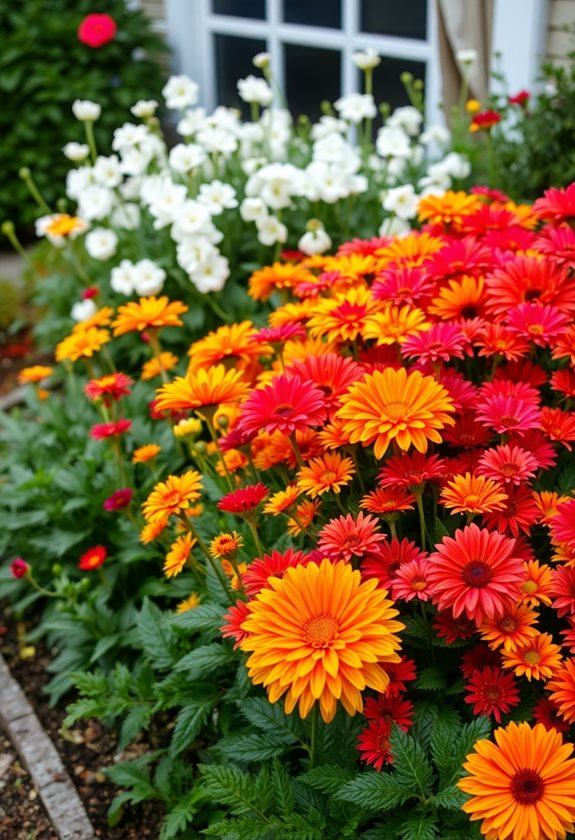
One of the most enchanting aspects of perennial flower beds is how they transform with the changing seasons. You’ll love watching your garden evolve! Each season brings its own unique palette.
- Spring bursts with vibrant tulips and daffodils.
- Summer showcases lush, colorful blooms like coneflowers and daylilies.
- Fall offers stunning foliage with asters and sedums.
- Winter can surprise you with evergreen textures and ornamental grasses.
A well-planned bed guarantees your garden remains a feast for the eyes all year round. Perennial flowers can ensure that your garden blooms beautifully through every season. Isn’t it exciting to think about the potential? Your garden can be a masterpiece through every season!
Frequently Asked Questions
What Are the Best Perennials for Low-Light Gardens?
If you’ve got a shady garden, don’t worry! Some perennials thrive in low light. Consider planting hostas for their lush foliage, or astilbes for vibrant blooms. You might also try ferns; they add a lovely, feathery texture. Have you thought about bleeding hearts? Their unique flowers are a real showstopper! Just imagine transforming that dark corner into a beautiful oasis! Remember, even low-light areas can shine with the right plants!
How Often Should I Fertilize My Perennial Flower Bed?
You should fertilize your perennial flower bed about twice a year—once in early spring and again in mid-summer. This helps your plants thrive and bloom beautifully! Use a balanced fertilizer and follow the package instructions. Have you ever noticed how happy your flowers look after a little boost? Just remember, too much fertilizer can actually harm them. So, let’s keep it simple and make your garden the talk of the neighborhood!
Can I Mix Perennials With Annuals in the Same Bed?
Mixing perennials with annuals in the same bed is like blending your favorite ice cream flavors—exciting and full of surprises! You can absolutely do it, and it creates vibrant, dynamic displays. Just guarantee you consider their growth habits. For example, plant taller annuals like sunflowers behind shorter perennials. This way, everyone gets their moment in the sun! Have fun experimenting, and you’ll find a combination that makes your garden shine!
What Is the Ideal Soil Type for Perennial Flowers?
The ideal soil for perennial flowers is well-draining, rich in organic matter, and slightly acidic to neutral. You want your plants to thrive, right? Here’s how to create that perfect environment:
- Mix compost into your soil for nutrients.
- Test pH levels; aim for 6.0 to 7.0.
- Add sand for drainage if your soil is heavy.
Trust me, your perennials will thank you with vibrant blooms! Isn’t gardening exciting?
How Do I Prevent Pests in My Perennial Garden?
Imagine stepping into your garden, only to find pesky pests munching on your flowers! To keep them at bay, you’ll want to use a mix of prevention tactics. Start with companion planting—some plants naturally repel bugs. Also, consider introducing beneficial insects like ladybugs. Regularly inspecting your plants helps catch any trouble early. And don’t forget, a little soapy water spray can do wonders! Who knew pest control could feel like a fun garden adventure?