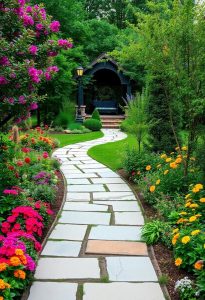
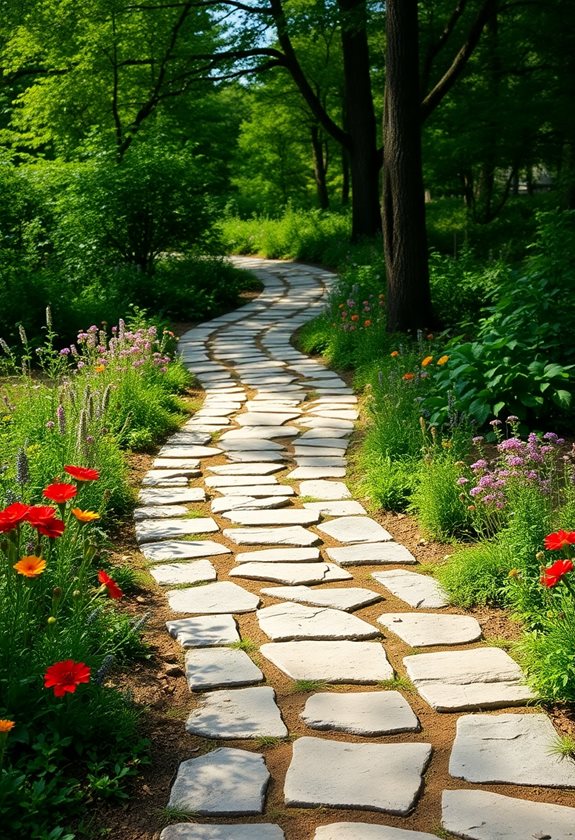
Designing a rustic garden path is easier than you think! Start by exploring your space—note slopes and existing plants. Choose sturdy materials like gravel or reclaimed wood, and keep the path wide enough for two! Add bends for charm and sprinkle in some native plants to soften edges. Regular maintenance is key: check for weeds and debris. Ready to bring your garden to life? There’s so much more to discover about creating your dream outdoor escape!
Design Highlights
- Assess your garden space by observing natural features and sketching a rough layout to determine the path’s flow and width for comfort.
- Choose materials like natural stone, gravel, or treated wood to ensure durability and blend with your garden’s aesthetics.
- Design the path with gentle bends and a width that accommodates two people walking side by side, promoting both safety and visual interest.
- Incorporate natural elements such as native plants, stepping stones, and mulch to enhance the rustic feel and maintain a cozy atmosphere.
- Regularly maintain the pathway by checking for weeds, debris, and erosion to ensure safety and preserve its beauty over time.
Assessing Your Garden Space
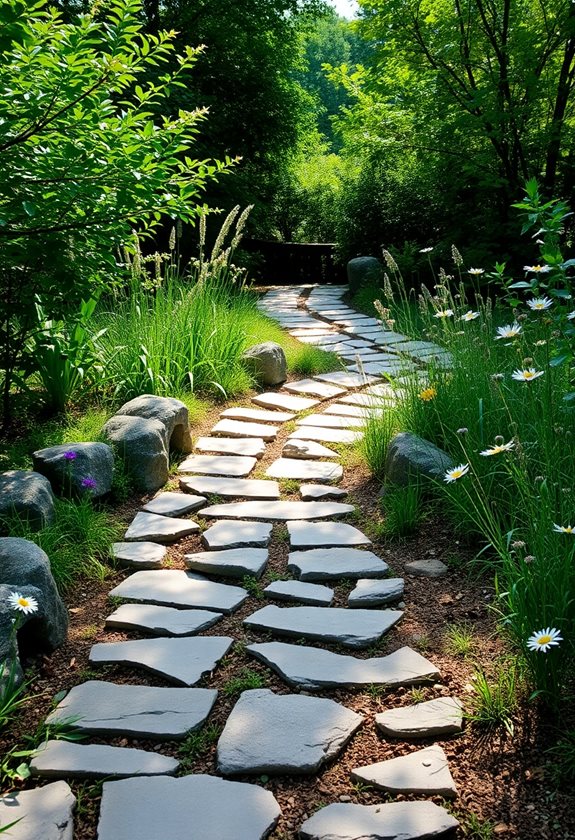
Have you ever strolled through a garden and thought, “Wow, how did they make that path look so inviting?” Well, the secret often lies in how well you assess your garden space before diving in. Start by observing the natural flow of your yard. Are there slopes, trees, or flower beds in the way? Take notes! You’ll want to sketch a rough layout. Consider how wide your path should be—enough for two people to walk side by side is ideal. And remember, safety first! Make sure the ground is firm and clear of obstacles to prevent trips. To enhance durability, consider using high-quality cedar for your pathway materials. Happy planning!
Choosing the Right Materials
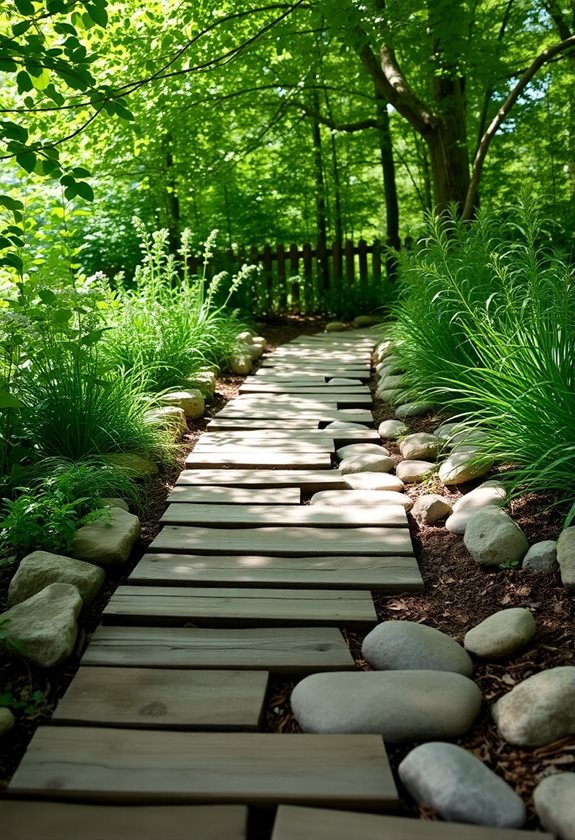
When it comes to creating a rustic garden path, the materials you choose can make all the difference—think of it as the foundation of your outdoor masterpiece! You’ll want to prioritize safety while keeping that charming vibe. Consider using:
- Natural stone or gravel for stability
- Wooden planks, treated to resist rot
- Reclaimed bricks for character
Remember to avoid slippery surfaces! I once slipped on a wet wooden path—yikes! Always guarantee the materials blend with your garden’s aesthetics. What’s your favorite natural material? With the right choices, your path can be both beautiful and safe, inviting everyone to explore your green haven! Additionally, incorporating weather-resistant materials can greatly enhance the longevity of your garden path.
Designing the Path Layout
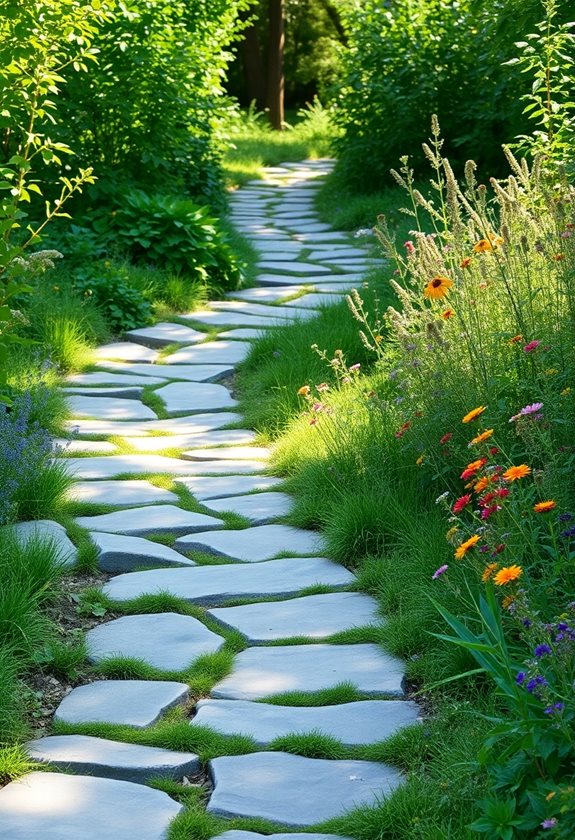
As you immerse yourself in designing your garden path layout, keep in mind that a well-planned route can transform your outdoor space into an enchanting journey! Start by considering these key elements for a safe and inviting path:
- Width: Make sure it’s wide enough for comfortable passage.
- Gradient: Keep slopes gentle to prevent slips.
- Materials: Choose non-slip surfaces, especially when wet.
- Curves: Incorporate gentle bends to add visual interest.
- Landmarks: Use plants or stones to guide the eye and enhance safety. Additionally, consider using modern design ideas to elevate the aesthetic of your garden pathways.
Incorporating Natural Elements
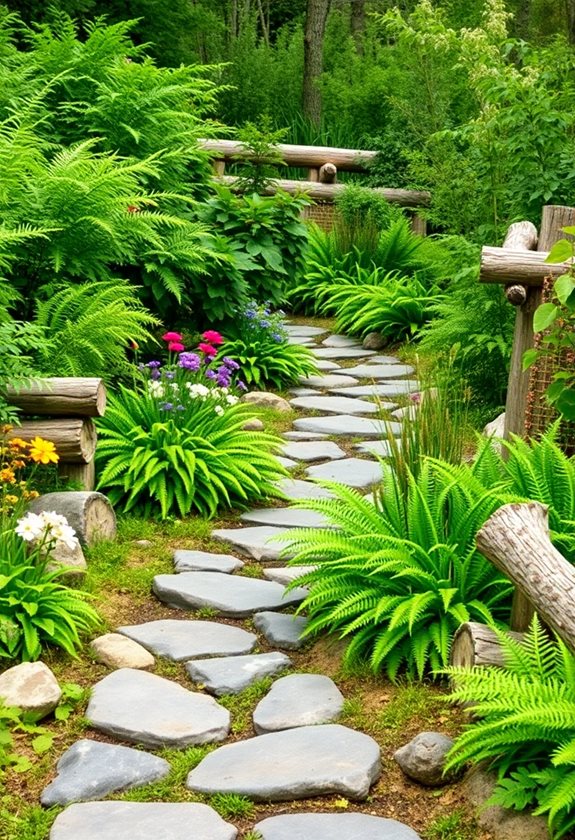
Incorporating natural elements into your rustic garden path can truly elevate its charm and character, especially if you want to create a space that feels like a serene escape from the everyday hustle. Think about using stones, pebbles, or even reclaimed wood for a cozy vibe. You might also add native plants—like wildflowers or ferns—to soften the edges and attract local wildlife. Consider integrating stepping stones or logs for safe, sturdy footing. And hey, don’t forget to sprinkle in some mulch; it keeps weeds at bay! Additionally, using beautiful winding paths can enhance the overall aesthetic of your garden. What natural touch will you add to make your garden path uniquely yours?
Adding Edging for Definition
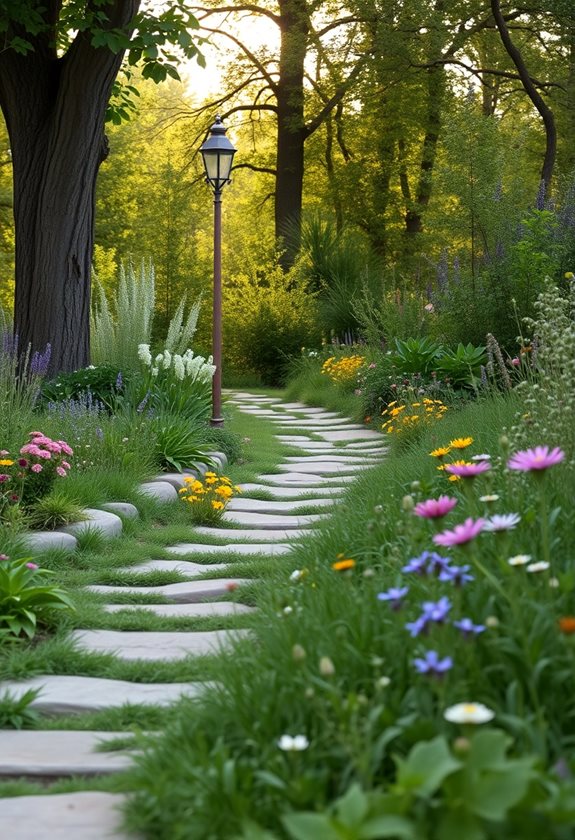
Adding edging to your garden path not only defines the space but also adds a touch of personality that can make all the difference. Plus, it keeps everything safe and tidy! Here are some great options:
Enhance your garden path with edging that defines the space and adds character while ensuring safety and tidiness.
- Wooden logs for a rustic charm.
- Stone bricks for a more structured look.
- Metal edging for a modern twist.
- Cedar planks that blend beautifully with nature.
- Recycled materials to showcase your creativity.
Incorporating unique walkway ideas can further enhance the character of your small garden. Whichever you choose, make sure it suits your style and feels safe to walk on. After all, you want your path to be both inviting and secure!
Enhancing With Plants and Flowers
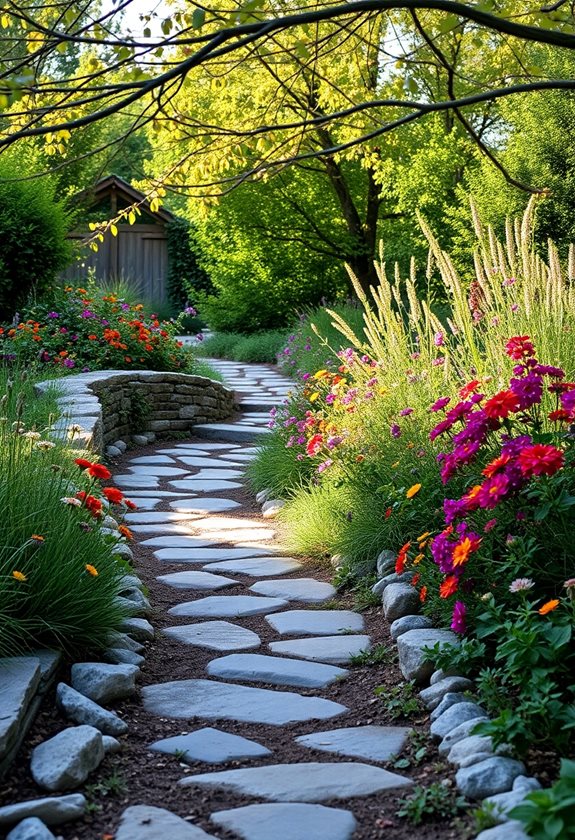
While it might seem like an afterthought, using plants and flowers to enhance your rustic garden path can truly transform it into a magical journey through your outdoor space. Imagine walking along a path lined with vibrant wildflowers and fragrant herbs! You can choose low-growing plants like creeping thyme or vibrant marigolds that won’t obstruct your path. Consider adding ornamental grasses for texture and movement. They’ll sway gently in the breeze! Just remember, select non-toxic plants if you have pets. Additionally, incorporating colorful flower beds can attract beneficial pollinators, enhancing the overall beauty and ecological health of your garden. So, why not experiment with colors and scents? Your garden path deserves to be as inviting as it is safe!
Creating Functional Features
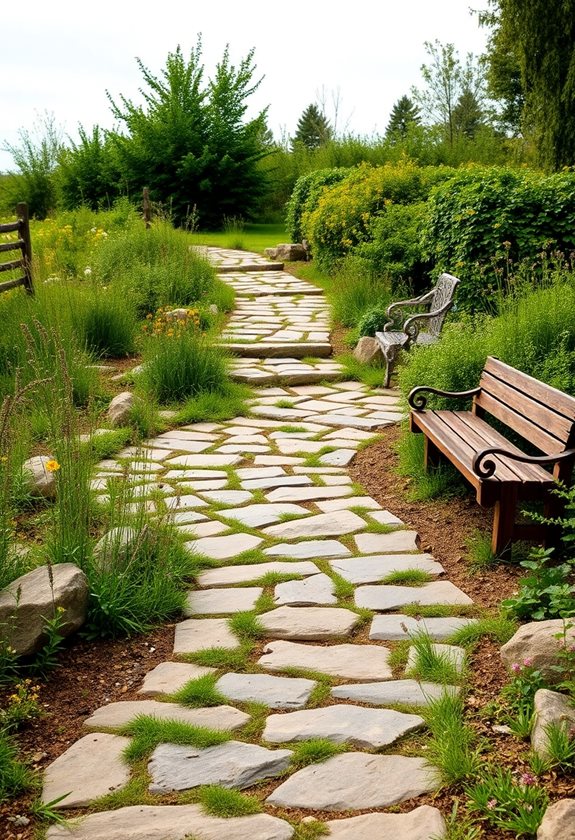
As you immerse yourself in creating your rustic garden path, it’s crucial to think beyond just aesthetics and embrace functional features that can make your outdoor space truly shine! Consider these five practical elements to enhance safety and usability:
- Lighting: Install solar lights along the path for visibility at night.
- Edging: Use natural stone or wood to define the path and prevent erosion.
- Drainage: Guarantee proper drainage to avoid puddles and slippery spots.
- Width: Make your path wide enough for two people to walk comfortably.
- Material: Choose non-slip surfaces like gravel or flagstone to prevent accidents.
In addition, ensure that your fountain is properly maintained to avoid algae growth, which can detract from the beauty of your garden path.
Happy gardening!
Maintaining Your Rustic Pathway
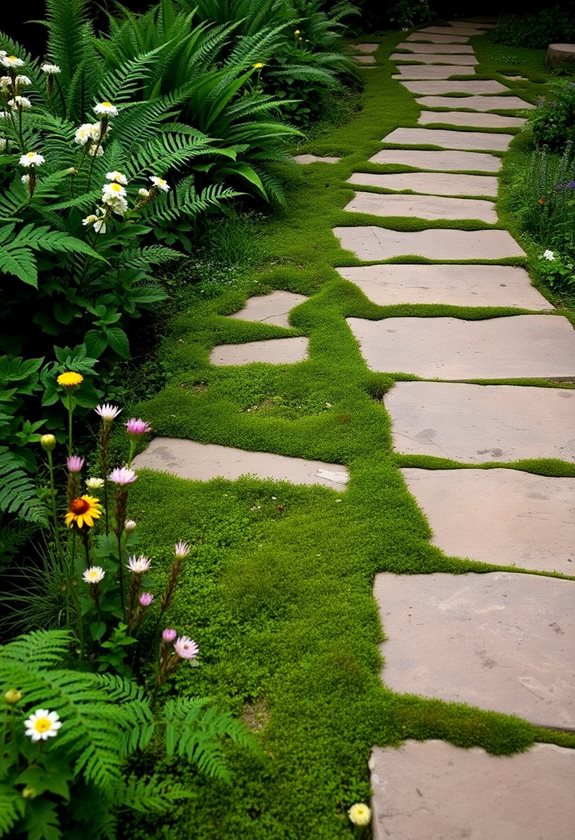
Maintaining your rustic pathway is essential if you want to keep it looking inviting and functional for years to come. Regularly check for weeds—those pesky invaders can trip you up! A quick pull here and there does wonders. Keep stones and wood surfaces clear of debris; it’ll prevent slips. After heavy rains, inspect for erosion or sinking—fix it promptly to avoid bigger problems. Use a garden hose to gently wash away dirt; it’s like giving your path a rejuvenating shower! Remember, a well-maintained path not only enhances beauty but also keeps you safe. Additionally, consider using budget-friendly materials to ensure your pathway remains sustainable and cost-effective. So, roll up your sleeves and enjoy the process!
Frequently Asked Questions
What Tools Do I Need for Building a Rustic Garden Path?
When you’re ready to build your rustic garden path, you’ll need a few essential tools! Grab a shovel, a garden rake, and a level to guarantee your path’s even. A wheelbarrow makes transporting materials easier, and a hammer or mallet will help set stones or pavers. Don’t forget gloves to protect your hands! With these tools, you’ll be well on your way to creating a charming path that’ll make your garden shine!
How Do I Prevent Weeds From Growing Between Path Materials?
To keep those pesky weeds at bay, you’ve got a few solid options! First, lay down a landscape fabric before adding your path materials; it blocks sunlight and stops weeds from sprouting. You can also use a vinegar solution or boiling water for a natural approach—just be careful where you pour! Regularly pulling out weeds as they appear is key. Isn’t it satisfying to see a clean, weed-free path? Happy gardening!
Can I Create a Rustic Path on a Slope?
Absolutely, you can create a rustic path on a slope! Think of it like crafting a whimsical trail through a forest. Just make sure it’s safe—use sturdy materials like flagstones or gravel to prevent slips. Consider adding steps or a gentle curve to reduce steepness. You might even plant ground cover along the sides for extra charm! Have you thought about how it’ll blend with your garden? It’ll be a delightful adventure!
What Is the Best Way to Ensure Path Stability?
To guarantee your path stays stable, start with a solid foundation! Dig a few inches deep and lay down gravel or sand for drainage. Then, choose materials like stones or bricks that fit snugly together—no wobbly stepping stones here! You could also add edging to keep everything in place. Trust me, a little planning goes a long way. Isn’t it satisfying when everything stays just where you want it? Happy gardening!
How Long Does It Take to Build a Rustic Garden Path?
Building a rustic garden path can feel like piecing together a puzzle, with each stone fitting just right. Depending on the design complexity, it usually takes a weekend or two to complete. You’ll need time for planning, gathering materials, and laying stones. Don’t forget to take into account drying times for any adhesives or sealants! So, are you ready to dig in and create a pathway that welcomes everyone into your little garden paradise?