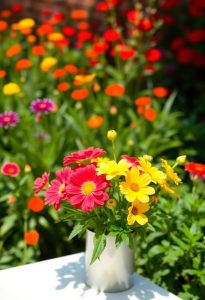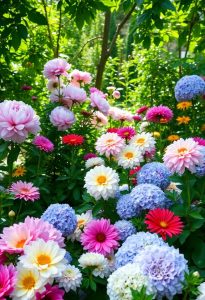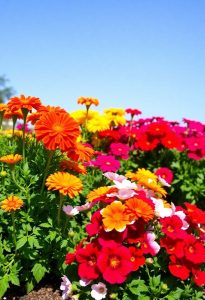
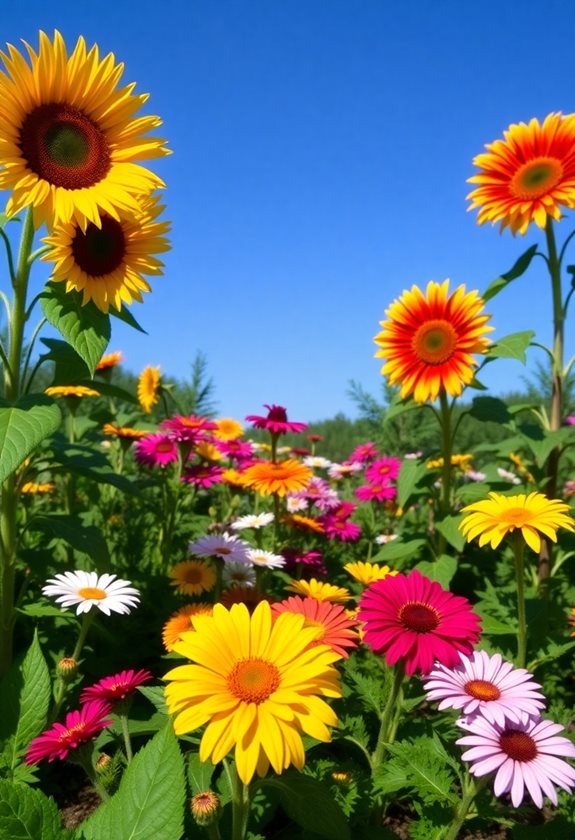
Looking to create a vibrant summer garden? Here are three flower bed ideas you’ll love! First, the Classic Cottage Flower Bed mixes colorful blooms like daisies and foxgloves. Then, try a Drought-Tolerant Xeriscape Flower Bed with resilient plants like sedum that thrive in dry conditions. Finally, go bold with a Vibrant Tropical Flower Bed filled with hibiscus and marigolds. It’s all about choosing the right flowers for your space, and guess what? There’s so much more to explore!
Design Highlights
- Classic Cottage Flower Bed: Features vibrant perennials like daisies and lavender, creating a colorful retreat that attracts pollinators all summer long.
- Drought-Tolerant Xeriscape Flower Bed: Utilizes native plants such as sedum and lavender, perfect for conserving water while providing bright summer blooms.
- Vibrant Tropical Flower Bed: Showcases exotic flowers like hibiscus and bird of paradise, adding lush colors and scents to your garden during the summer months.
- Regular Maintenance: Ensure consistent watering and weed removal to promote healthy growth and vibrant blooms throughout the summer season.
- Soil Preparation: Start with rich, well-draining soil to support the growth of summer flowers and enhance their blooming potential.
Classic Cottage Flower Bed
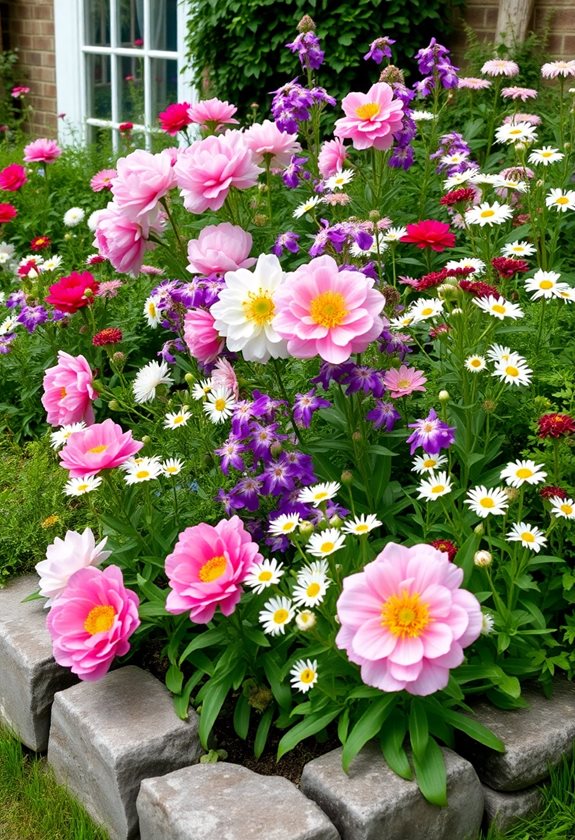
When you think of a classic cottage flower bed, don’t you just picture a charming, colorful oasis right in your backyard? You can create this delightful space with a mix of vibrant flowers like daisies, foxgloves, and lavender. These blooms not only add color but also attract butterflies! Start by selecting a sunny spot and prepare your soil for planting.
- Choose perennial flowers for long-lasting blooms.
- Mix heights and colors for visual interest.
In addition, incorporating colorful flower beds can significantly enhance the appeal of your garden and provide a welcoming habitat for various pollinators. Don’t forget to water regularly, especially during hot days, and pull out weeds to keep your garden safe and healthy. Ready to dig in? Happy gardening!
Drought-Tolerant Xeriscape Flower Bed
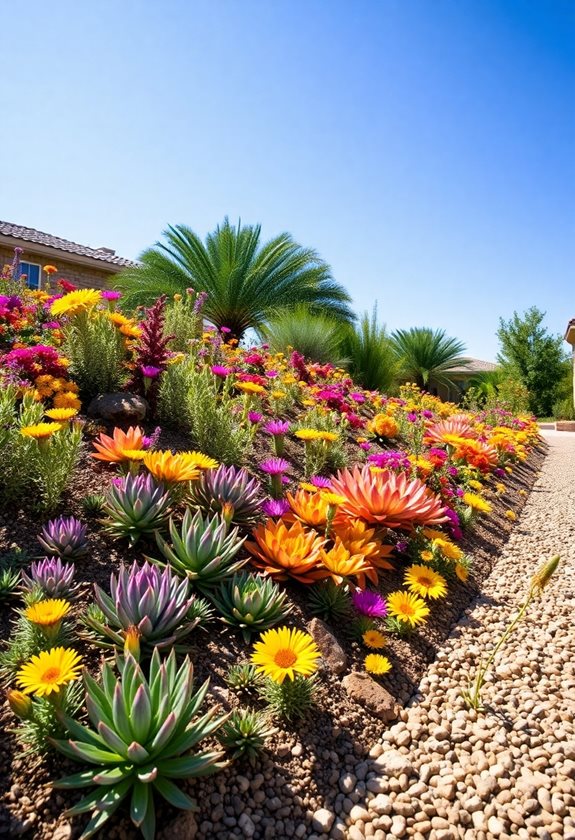
Creating a drought-tolerant xeriscape flower bed is not only a smart choice for conserving water but also a fantastic way to showcase some stunning blooms that thrive in sunny, dry conditions. Imagine bright, cheerful flowers like sedum and lavender, requiring little water while adding beauty to your space! To get started, choose well-draining soil and select native plants that fit your climate. Group similar plants together to create a visually appealing design. Don’t forget to add mulch to retain moisture! Additionally, incorporating drought-resistant plants can further enhance the resilience of your garden. Have you tried this approach? You might be surprised at how vibrant your garden can be, even in the summer heat!
Vibrant Tropical Flower Bed
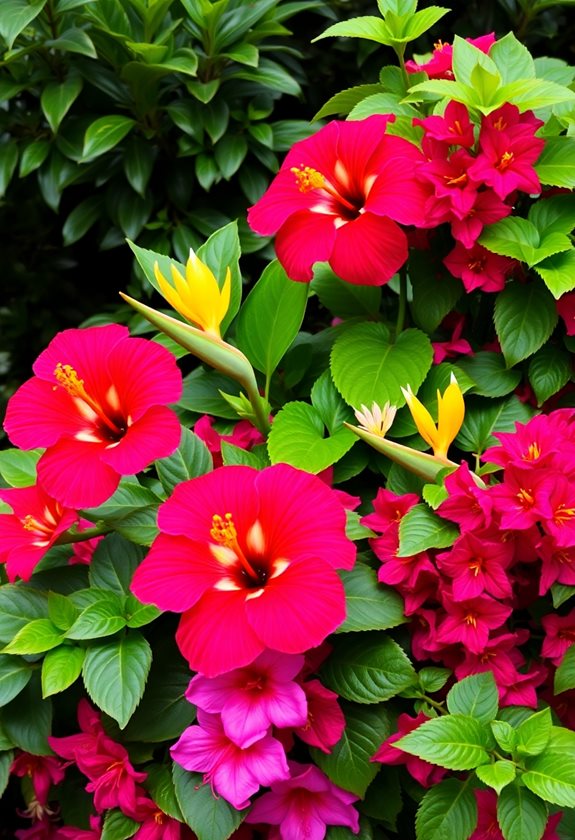
Imagine stepping into your backyard and being greeted by a riot of colors and exotic scents—there’s just something magical about a vibrant tropical flower bed! Picture lush hibiscus, cheerful marigolds, and bright bird of paradise swaying in the breeze. To create this oasis safely, choose non-toxic plants if you have pets or kids.
- Start with a solid base of rich soil.
- Layer in vibrant blooms, spacing them for airflow.
- Don’t forget to water regularly but avoid overwatering!
With a little care, you’ll bring the tropics home. Transforming small spaces is entirely possible with the right approach! Isn’t it time to transform your space into a colorful paradise?
Frequently Asked Questions
What Tools Are Essential for Maintaining Flower Beds?
When it comes to maintaining flower beds, you’ll find the right tools can make a world of difference. Think about it: a sharp spade versus a dull one! Essential tools include a hand trowel for planting, pruners for those pesky deadheads, and a hose or watering can for hydration. Don’t forget gloves to protect your hands! Have you ever tried digging without them? It’s a mess! Happy gardening! 🌼
How Do I Choose the Right Soil for Flower Beds?
Choosing the right soil for your flower beds is essential! You want a mix that drains well but retains moisture, right? Look for a high-quality potting mix or create your own with compost, peat moss, and perlite. Test the pH too—most flowers love slightly acidic to neutral soil. Don’t forget to check for pests! If you find any, it’s time for a little garden detective work. Happy planting! 🌼
When Should I Start Planting Summer Flowers?
When it comes to planting summer flowers, timing is everything! You don’t want to put the cart before the horse. Start planting after the last frost date in your area, usually between late March and early June. Check your local climate, and remember to prep your soil beforehand. Sunflowers, zinnias, and marigolds are all great choices. So, are you ready to dig in and watch your garden bloom? Let’s get started!
How Often Should I Water My Flower Beds?
You should water your flower beds regularly to keep them thriving! Typically, flowers need about an inch of water per week. To check, stick your finger in the soil; if it feels dry an inch down, it’s time to water. Don’t forget to water in the morning to reduce evaporation. And hey, if you see droopy petals, they might be thirsty! Keep that watering can handy, and let your garden flourish!
What Pests Commonly Affect Summer Flower Beds?
When it comes to summer flower beds, keeping an eye out for pests is essential—after all, a stitch in time saves nine! Aphids, slugs, and spider mites can wreak havoc on your blooms. You can prevent infestations by regularly checking your plants and using natural repellents, like neem oil. Ever thought about using companion planting? Marigolds can deter pests while brightening your garden. Stay vigilant, and your flowers will thrive!