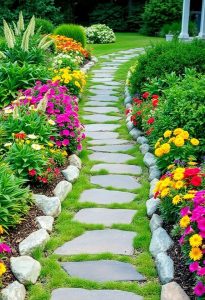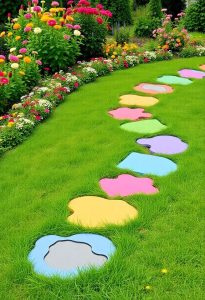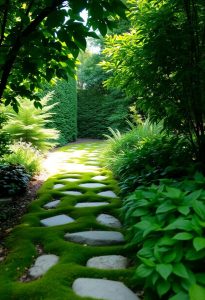
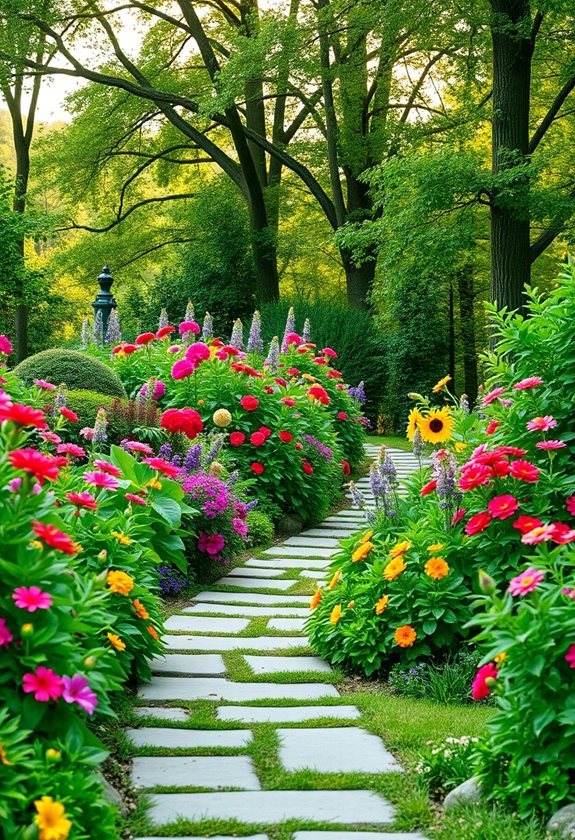
Want to create stunning garden borders and pathways? Start with low-maintenance perennials like daylilies and lavender! They’re not only beautiful but also easy to care for. Brighten up your pathways with colorful annuals like petunias and zinnias—talk about a mood boost! If you’re worried about water, try drought-resistant options like succulents or Russian sage. And don’t forget ground covers like creeping thyme to prevent erosion. Curious about mixing textures or adding vertical plants? There’s so much more to explore!
Design Highlights
- Choose low-maintenance perennials like daylilies and black-eyed Susans for vibrant and enduring garden borders.
- Incorporate colorful annuals such as petunias and marigolds to enhance pathways with bright, lively blooms.
- Opt for drought-resistant plants like succulents and ornamental grasses to create sustainable and low-upkeep gardens.
- Use ground covers like creeping thyme and clover to control erosion while adding beauty to your garden.
- Consider the hardiness zone and sunlight exposure to ensure selected plants thrive in your specific climate.
Choosing the Right Plants for Your Climate
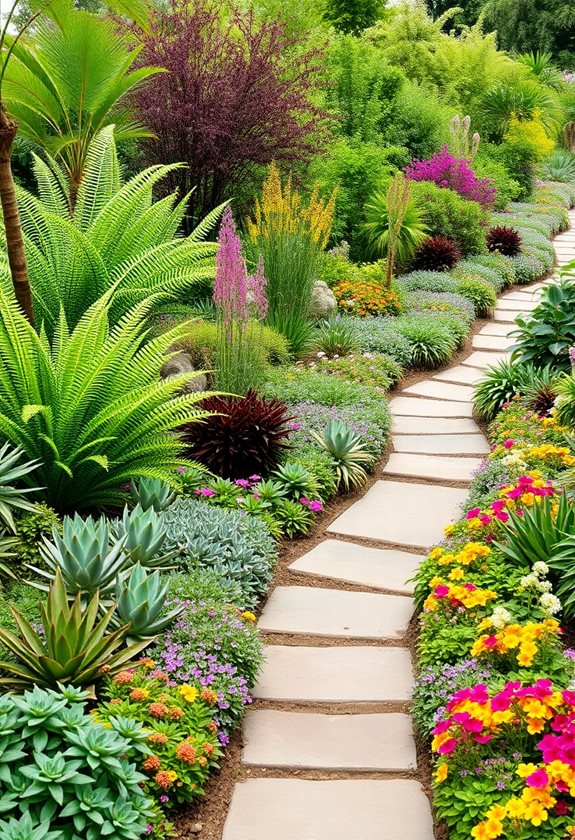
When you’re planning your garden border, one of the most important things to contemplate is your climate—after all, you wouldn’t want to plant tropical beauties in a frost-prone area, right? Understanding your hardiness zone can save you a lot of heartache! Consider these tips:
Planning your garden border? Start by understanding your climate to choose the right plants for your hardiness zone!
- Know your zone: Check your local extension service for specific plants that thrive.
- Seasonal changes: Pick plants that can handle your region’s temperature swings.
- Sunlight exposure: Observe how much sun your border gets daily. Additionally, border plants can enhance the aesthetic appeal of your garden while also providing functional benefits.
Low-Maintenance Perennials for Borders
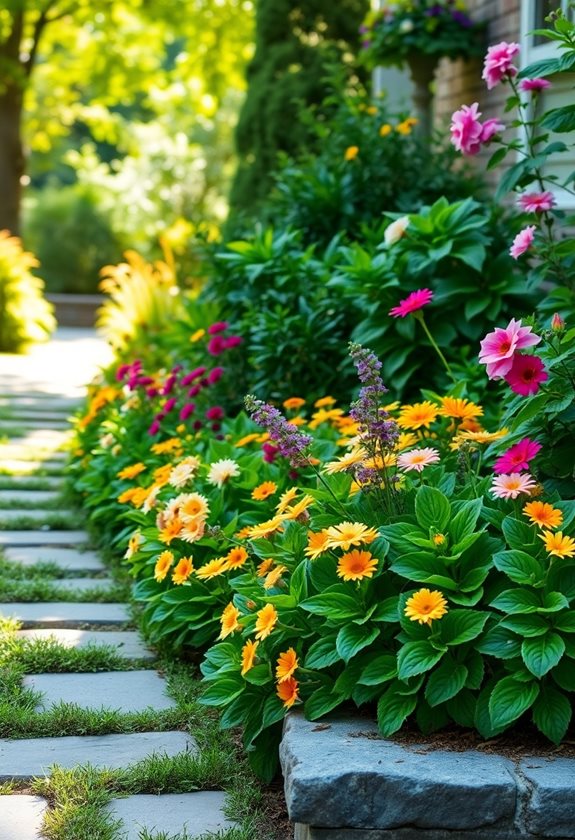
If you’re dreaming of a stunning garden border without the constant upkeep, low-maintenance perennials are the way to go! Think about plants like daylilies, which bloom beautifully with little care, or lavender, whose fragrant flowers attract pollinators while needing minimal watering. How about hostas for their lush foliage? They thrive in shady spots!
Here’s a quick list:
- Sedum: Drought-tolerant and resilient.
- Black-eyed Susans: Brighten up any space effortlessly.
Incorporating drought-resistant plants can further enhance your garden’s resilience to dry conditions. With these choices, you can enjoy a gorgeous garden and spend less time worrying about weeds and watering. Isn’t that a win-win? Happy gardening!
Colorful Annuals to Brighten Pathways
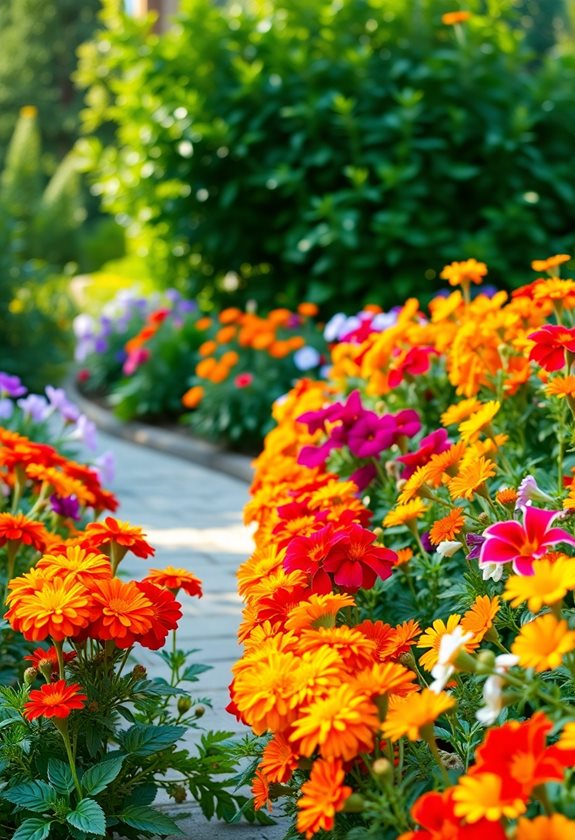
Imagine stepping into your garden and being greeted by a riot of colors that instantly lifts your spirits! Colorful annuals, like petunias and marigolds, can transform your pathways into vibrant walkways. They’re easy to plant and care for, making them perfect for any skill level.
Consider mixing:
- Zinnias for their long-lasting blooms
- Snapdragons for a playful touch
- Cosmos for a whimsical feel
These beauties attract pollinators, too! Just remember to deadhead regularly to keep them blooming. Stunning planting schemes can enhance the beauty of your garden borders even further. Why not try a few this season? You’ll love the cheerful atmosphere they create! Happy planting!
Drought-Resistant Options for Sustainable Gardens
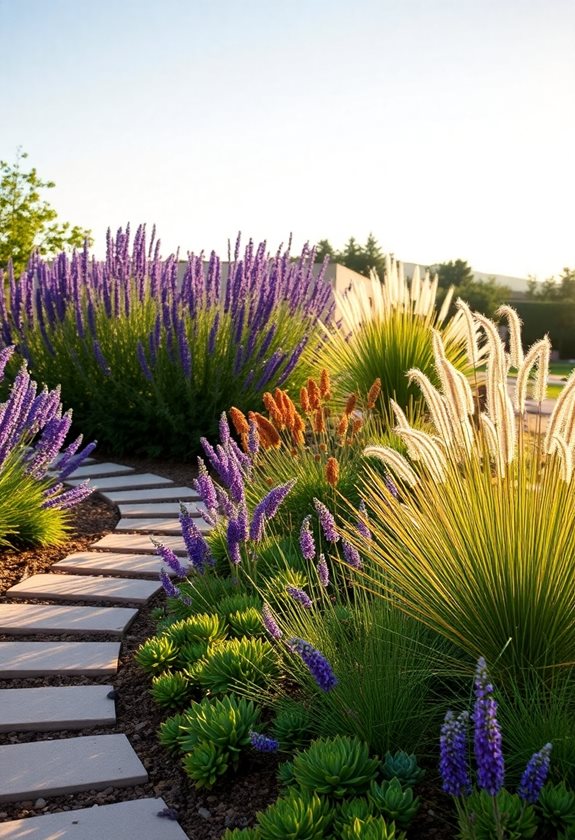
As you immerse yourself in the world of gardening, it’s essential to contemplate options that not only beautify your space but also thrive with minimal water. Drought-resistant plants, like succulents and lavender, are fantastic choices! They add color and texture while being low-maintenance. Have you tried planting ornamental grasses? They sway beautifully in the breeze!
Here are a few excellent options:
Here are some fantastic drought-resistant plants to consider for your low-maintenance garden!
- Sedum
- Russian sage
- Agave
These plants not only save water but can also reduce your garden’s upkeep. Additionally, incorporating lush foliage plants can enhance the aesthetic appeal of your garden. So, why not create a stunning, sustainable garden that makes you feel accomplished without the constant worry about watering?
Fragrant Plants to Enhance the Sensory Experience
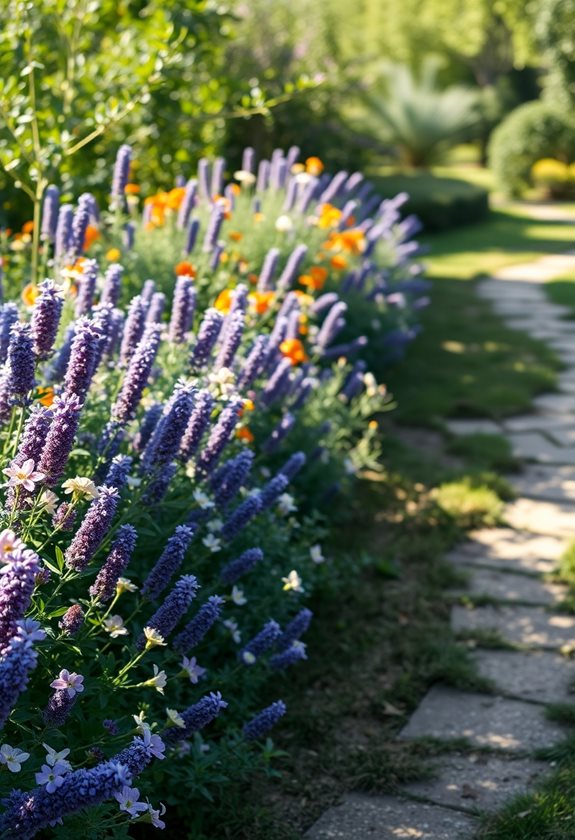
While drought-resistant plants are fantastic for keeping your garden low-maintenance, don’t forget about the power of fragrance in creating a welcoming outdoor space. Imagine walking through your garden with the sweet scents of lavender and rosemary wafting through the air! Here are a few fragrant plants to take into account:
- Lavender: Its calming aroma attracts pollinators and deters pests.
- Mint: Easy to grow, and it smells delightful!
- Jasmine: Perfect for evening blooms that fill the air with sweetness.
Incorporating native wildflowers can further enhance the sensory experience by attracting beneficial insects and supporting local biodiversity. Why not mix these into your borders? Your senses will thank you, and you’ll love spending time in your delightful garden!
Ground Covers for Erosion Control and Beauty
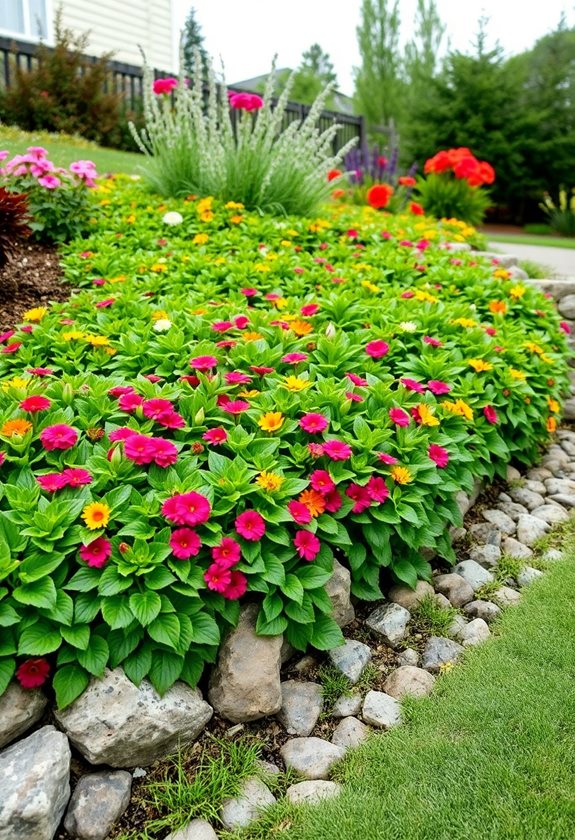
When you’re looking to keep your garden beautiful and prevent soil erosion, ground covers can be your best friend! These hardy plants, like creeping thyme and clover, not only provide a lush carpet of greenery but also stabilize your soil. Imagine walking through your yard, feeling secure that your hard work isn’t washing away!
Ground covers like creeping thyme and clover beautify your garden while keeping soil secure and preventing erosion.
- Why choose ground covers?
- They’re low-maintenance.
- They suppress weeds.
- They add color and texture!
Plus, they attract pollinators! Additionally, many ground covers are eco-friendly choices that contribute to creating a garden that is a haven for both people and the environment. So, why not give your garden the support it needs while enhancing its beauty? You’ll love the results! Happy gardening!
Tall Plants for Vertical Interest and Privacy
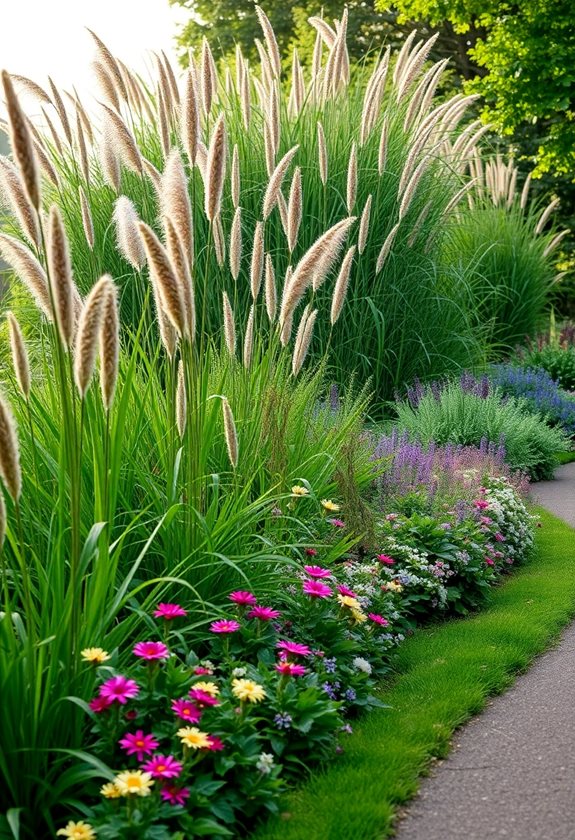
If you’re craving a bit of vertical flair in your garden or need some privacy from nosy neighbors, tall plants can be your secret weapon! Think about adding sunflowers, ornamental grasses, or even bamboo. These beauties not only create a stunning backdrop but also act as natural screens. Imagine sipping your morning coffee, feeling secure behind a lush wall of greenery!
- Sunflowers: Bright and cheerful, reaching heights of 6 feet or more!
- Ornamental Grasses: They sway gently in the breeze, adding movement and texture!
Additionally, consider incorporating perfect foliage plants that thrive in shaded areas to enhance the overall beauty of your garden.
Mixing Textures for a Dynamic Landscape Design
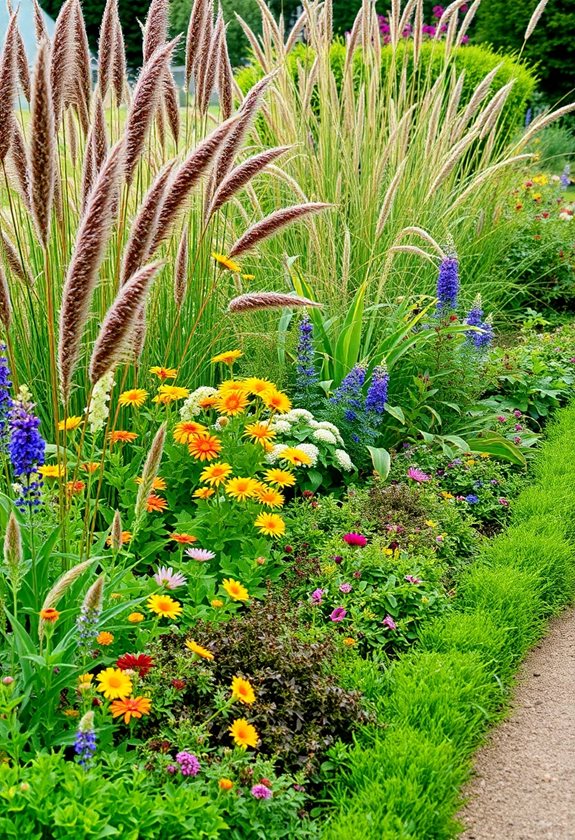
Creating a garden that truly stands out can feel like a fun puzzle, especially when you start mixing different textures! Imagine pairing soft, feathery ferns with bold, spiky succulents. It’s all about contrast! You can also try:
- Smooth-leaved hostas next to rough, stone paths.
- Velvety flowers like lamb’s ear alongside prickly cacti.
This variety not only looks gorgeous but keeps things safe by preventing accidental injuries, too. Have you ever felt the joy of running your fingers through different leaves? Mixing textures invites a hands-on experience. So, let your creativity flow and create a garden that’s as exciting as it is beautiful! Incorporating beautiful ferns into your garden design can enhance the overall aesthetic and provide a lush backdrop for other plants.
Frequently Asked Questions
How Do I Prevent Weeds in My Garden Borders?
To kick those pesky weeds to the curb, start by mulching your garden borders with organic materials like wood chips or straw. It not only looks great but also smothers those unwanted plants! You might also consider using landscape fabric to block sunlight. And don’t forget to regularly inspect and hand-pull any invaders you spot. Weeds can be tricky, but with a little effort, you’ll keep your garden looking fabulous!
What Is the Best Time to Plant Border Plants?
When’s the best time to plant? Think of it as setting the stage for a grand performance! Generally, spring and fall are your prime seasons. You want to avoid harsh temperatures, so wait until the soil warms up a bit in spring, or cools down in fall. Just picture those vibrant colors emerging! 🌼 Consider local climate too—what works in one area might not in another. Ready to dig in? Let’s grow together!
How Do I Maintain Soil Health for Pathway Plants?
To keep your pathway plants thriving, you’ve gotta focus on soil health! Start by adding organic matter like compost to enrich the soil. It’s like giving your plants a nutritious smoothie! Regularly check moisture levels—too dry or too soggy can cause trouble. Mulching helps retain moisture and suppress weeds. Don’t forget to test your soil pH; it makes a world of difference. Remember, happy soil means happy plants! Isn’t gardening fun?
Can I Use Edible Plants in My Garden Borders?
Imagine turning your garden border into a salad bar! You absolutely can use edible plants in your borders; they’re not just pretty, they’re practical! Think about herbs like basil or parsley, which smell amazing and are handy for cooking. Just make sure to choose plants that fit your climate and soil. You’ll not only beautify your space, but you’ll also have fresh ingredients at your fingertips—how cool is that? Happy gardening!
What Tools Are Essential for Planting and Maintaining Borders?
When you’re planting and maintaining borders, having the right tools makes all the difference! You’ll want a good trowel for digging, sturdy gloves to protect your hands, and a rake for leveling soil. A watering can or hose is essential, too—your plants will thank you! Don’t forget pruners for trimming! Have you ever tried gardening without these? It’s like cooking without a pot—totally chaotic! So gear up and get planting!