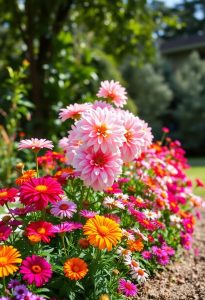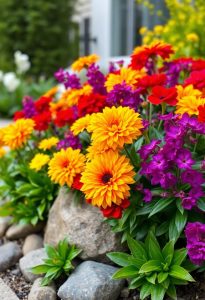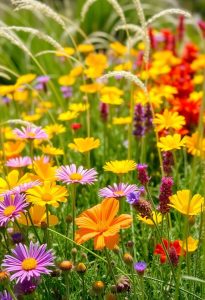

Want a garden that looks amazing all year? Start by choosing a mix of perennials, annuals, and bulbs! Perennials like daisies and lavender bloom season after season, while cheerful annuals like zinnias give instant color. Don’t forget about spring bulbs like tulips! For fall, try asters and chrysanthemums. Layer your planting for depth and consider local climate, too. Excited to learn how to keep your garden healthy and thriving? There’s so much more to explore!
Design Highlights
- Choose a mix of perennials and annuals to ensure continuous blooms throughout the seasons.
- Select bulbs that bloom in spring and summer for an early color boost.
- Incorporate fall-blooming varieties like asters and chrysanthemums to extend the blooming season.
- Plan your garden layout based on bloom times for a vibrant year-round display.
- Rotate plants seasonally to enhance soil health and prevent pest buildup.
Understanding Seasonal Flowering Cycles
When you plunge into the world of gardening, understanding seasonal flowering cycles can feel a bit like cracking a secret code. It’s thrilling, isn’t it? Knowing when to plant can make all the difference! Spring brings tulips and daffodils, while summer showcases vibrant sunflowers and zinnias. Autumn offers a canvas of asters and chrysanthemums. Each season has its charm, and timing is key! Just think: do you want to enjoy blooms year-round? Knowing these cycles helps you plan, ensuring your garden stays colorful and inviting. Incorporating colorful flower beds can also enhance your garden’s appeal to essential pollinators. So, grab those gardening gloves, and let’s decode this blooming mystery together!
Choosing Perennials for Long-Lasting Blooms

If you’re aiming for a garden that bursts with color year after year, choosing the right perennials is a must! Start by picking varieties that thrive in your climate. Think about:
- Daisies for cheerful yellow blooms
- Lavender for its calming fragrance and pollinator-friendly flowers
- Coneflowers for their resilience and stunning colors
Don’t forget to reflect on bloom times, too! By mixing early, mid, and late bloomers, you create a continuous show. Additionally, consider incorporating year-round color to keep your garden lively through every season. Remember, some perennials can be a bit fussy, but with a little patience, they’ll reward you with vibrant blooms for years to come. Happy planting!
Incorporating Annuals for Immediate Color

While perennials lay the foundation for a vibrant garden year after year, annuals swoop in to add immediate bursts of color. They’re like your garden’s party guests, bringing life and excitement! Consider planting zinnias, marigolds, or petunias for a dazzling display.
- Choose a sunny spot.
- Prepare the soil with compost.
- Water them regularly (but not too much!).
You’ll be amazed at how quickly they brighten your space. Plus, it’s fun experimenting with different colors and combinations! Have you ever tried a colorful border? Immerse yourself in annuals, and watch your garden transform in no time—it’s pure joy! Additionally, vibrant annuals can create stunning visual impact and attract pollinators to your garden.
Selecting Bulbs for Spring and Summer Delight

As you dream of a garden bursting with color, selecting the right bulbs for spring and summer can truly be a game-changer! Think about vibrant tulips, cheerful daffodils, and stunning lilies. When choosing bulbs, make sure they’re healthy—look for firm ones without mold or soft spots. Plant them at the right depth and in well-drained soil, ideally before the frost ends. Water them gently after planting, and watch your garden come alive! Additionally, consider incorporating best flowering plants that complement your bulbs for a stunning aesthetic. Don’t forget to reflect on bloom times for a continuous show. What’s more satisfying than seeing your hard work pay off? Happy planting!
Adding Fall-Blooming Varieties to Extend the Season

Even though summer’s warmth wraps around us like a cozy blanket, you might find yourself wishing for a splash of color in your garden as the days grow shorter. Why not add some fall-blooming varieties? Asters, chrysanthemums, and sedums bring vibrant hues just when we need them!
Try planting:
- Asters: These dainty flowers attract butterflies, adding a lively touch.
- Chrysanthemums: Available in various colors, they’re perfect for a cheerful display.
- Sedums: These hardy perennials offer unique textures and last into late fall.
With these additions, your garden can stay bright and inviting, even as summer bids farewell! Additionally, incorporating best flowers for continuous blooming will ensure your garden thrives throughout various seasons.
Creating a Layered Planting Strategy

Your garden doesn’t have to be a one-dimensional space! By creating a layered planting strategy, you can add depth and interest. Start with taller plants, like sunflowers, at the back, and gradually move to shorter varieties like pansies in front. This not only looks great but guarantees every flower gets sunlight!
- Mix colors and textures for a vibrant display.
- Consider bloom times to keep your garden lively year-round.
Have you ever seen a garden where every flower has its moment? It’s magical! Don’t forget to guarantee safe spacing to avoid overcrowding—your plants will thank you! Additionally, incorporating best plants for year-round color can ensure your garden remains visually stunning throughout all seasons. Happy gardening!
Considering Climate and Local Conditions

When you think about your garden, have you ever considered how the climate and local conditions can shape its success? It’s super important! Your region’s temperature, rainfall, and soil type directly impact which flowers will thrive. For example:
Consider how your local climate and conditions influence your garden’s success—it’s essential for thriving flowers!
- Hot and dry? Try drought-resistant varieties like lavender or succulents!
- Cool and damp? Go for hydrangeas or astilbes!
Don’t forget to observe your space—some areas get more sun than others. Keeping safety in mind, always check if any plants might cause allergies. Additionally, incorporating heat-resistant annuals can provide you with vibrant blooms even during the hottest months. So, take a moment, assess your garden’s unique conditions, and choose flowers that’ll bloom beautifully throughout the year!
Maximizing Color With Foliage Plants

Imagine walking into a garden bursting with color, where every corner boasts eye-catching hues, not just from flowers but also from stunning foliage plants. By incorporating vibrant leaves, you can add depth and interest. Here are some fantastic options to maximize color:
- Colorful Heuchera: Known for their striking foliage in purples, reds, and greens.
- Variegated Hostas: Their creamy edges contrast beautifully with their deep greens.
- Japanese Maples: Their delicate, colorful leaves provide a stunning focal point.
Choosing these plants not only enhances your garden’s beauty but also guarantees it remains a safe and inviting space for all! Additionally, using layering techniques in your garden design can create a dynamic visual experience throughout the seasons.
Maintenance Tips for a Thriving Year-Round Garden

To keep your garden thriving all year long, you’ll need a little bit of love and attention, but don’t worry—it’s totally rewarding! Start by watering consistently, but avoid overdoing it—nobody likes soggy roots! Regularly deadhead flowers to encourage new blooms and prune back dead branches for healthier growth. Mulching protects roots and keeps weeds at bay. And don’t forget about pests! A little soapy water can go a long way in keeping them off your plants. Finally, rotate your plants each season for balance. Seasonal flower bed planning is essential for maximizing your garden’s potential. Isn’t it exciting to see your garden flourish? Keep nurturing, and you’ll be amazed!
Frequently Asked Questions
What Are the Best Flowers for Attracting Pollinators Year-Round?
Want to attract pollinators all year? You can’t go wrong with these vibrant choices! Try planting:
- Lavender in spring for bees.
- Sunflowers in summer for butterflies.
- Asters in fall to keep those pollinators buzzing.
Mixing these in your garden creates a buffet for our buzzing buddies. Just imagine the joy of watching them thrive! So, why not give it a shot? Your garden will be the talk of the town—pollinators will love you!
How Do I Prevent Pests From Damaging My Flowering Plants?
To prevent pests from damaging your flowering plants, you’ve got a few tricks up your sleeve! Start by keeping your garden tidy; dead leaves and debris attract unwanted critters. Use natural repellents like neem oil or garlic spray, and consider introducing beneficial insects like ladybugs. Regularly inspect your plants for signs of trouble—catching issues early makes a huge difference! Remember, a little prevention goes a long way in keeping your blooms happy and healthy!
Can I Grow Flowers in Containers for Year-Round Blooms?
Absolutely, you can grow flowers in containers for year-round blooms! It’s a fun way to brighten up your space. Start by choosing flowers that thrive in your climate, like pansies or petunias for cooler months. Make sure your containers have drainage holes, and use quality potting soil. Don’t forget to water regularly and provide some sunlight! Have you ever tried mixing colors? It’s like creating your own little masterpiece! Happy gardening!
What Are the Top Native Flowers for My Region?
Ever wandered through a garden and thought, “Wow, I wish my yard looked like that”? When it comes to choosing native flowers, you can’t go wrong! Depending on your region, consider options like coneflowers, black-eyed Susans, or bee balm. These beauties not only thrive in your soil but also attract pollinators. Plus, they’re low maintenance! Why not start with a few and watch your garden bloom with life and color?
How Do I Choose Flowers Based on Soil Type?
Choosing flowers based on soil type can feel tricky, but it’s super important! Start by testing your soil’s pH and texture. Does it drain well, or is it heavy and clay-like? Here are some tips:
- For sandy soil, try sunflowers or lavender.
- Clay soil loves daylilies and asters.
Selecting the right flowers guarantees they thrive, so why not have fun experimenting? You’ll be amazed at what blooms when you match the right flowers with your soil!