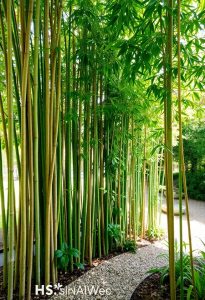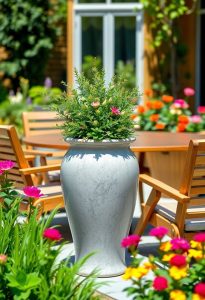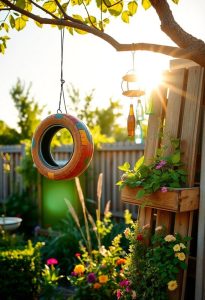
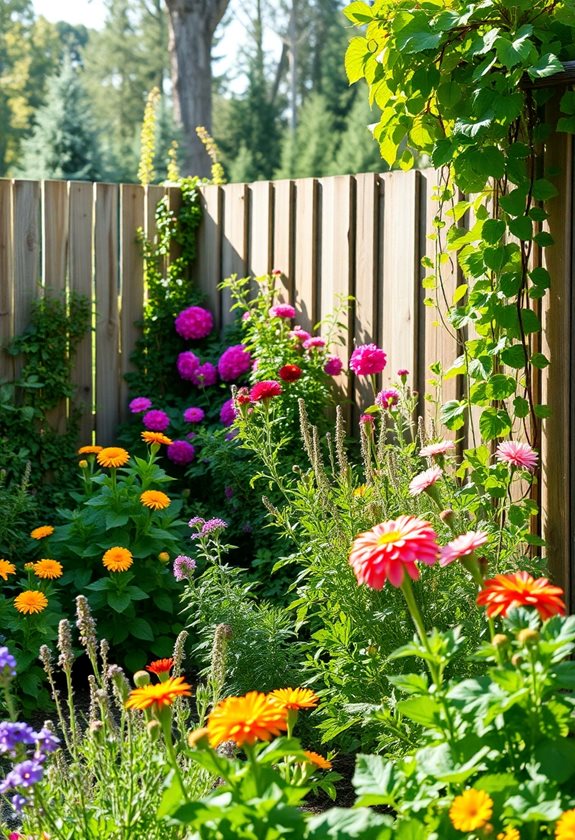
Want to transform your fenced garden into a lush paradise? Start with evergreen shrubs like Arborvitae for year-round privacy. Add vibrant flowering perennials, such as coneflowers and black-eyed Susans, to attract buzzing bees and butterflies. Don’t forget to include climbing vines like morning glories for a pop of vertical interest! Growing your own veggies, like lettuce and herbs, is rewarding too. With the right mix, you’ll have a stunning garden in no time! Imagine the possibilities!
Design Highlights
- Evergreen shrubs like Arborvitae provide year-round privacy, ideal for fenced garden spaces seeking a cozy atmosphere.
- Flowering perennials such as Coneflowers and Black-eyed Susans attract pollinators, enhancing the garden’s ecological value.
- Climbing vines like sweet peas add vertical interest, creating a vibrant and dynamic garden space.
- Edible plants, including lettuce and herbs, allow for fresh harvesting and enhance the garden’s productivity.
- Low-maintenance ground covers like creeping thyme suppress weeds and create a lush, inviting landscape in fenced areas.
Evergreen Shrubs for Year-Round Privacy
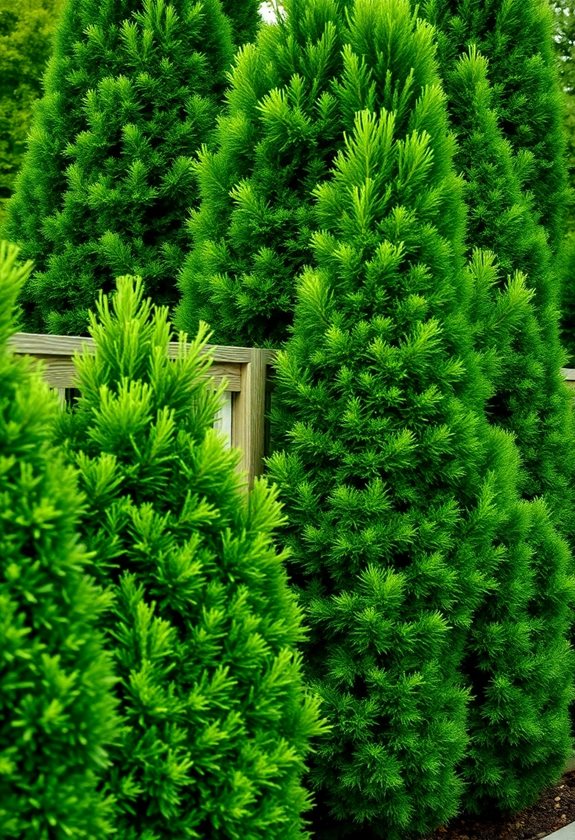
When you want to create a cozy oasis in your backyard, evergreen shrubs are your best friends! They offer year-round privacy, making your space feel secure and inviting. Consider planting varieties like Arborvitae or Boxwood; they grow tall and thick, acting as natural barriers. Plus, they’re low-maintenance! Additionally, these fast-growing shrubs can enhance your privacy and significantly reduce noise pollution in your garden.
- Choose the right spot with good sunlight.
- Water them regularly, especially during dry spells.
- Trim them occasionally to keep their shape.
Trust me, after a long day, there’s nothing better than relaxing behind a lush green wall. Ready to embark on your gardening adventure? Let’s get planting!
Flowering Perennials to Attract Pollinators
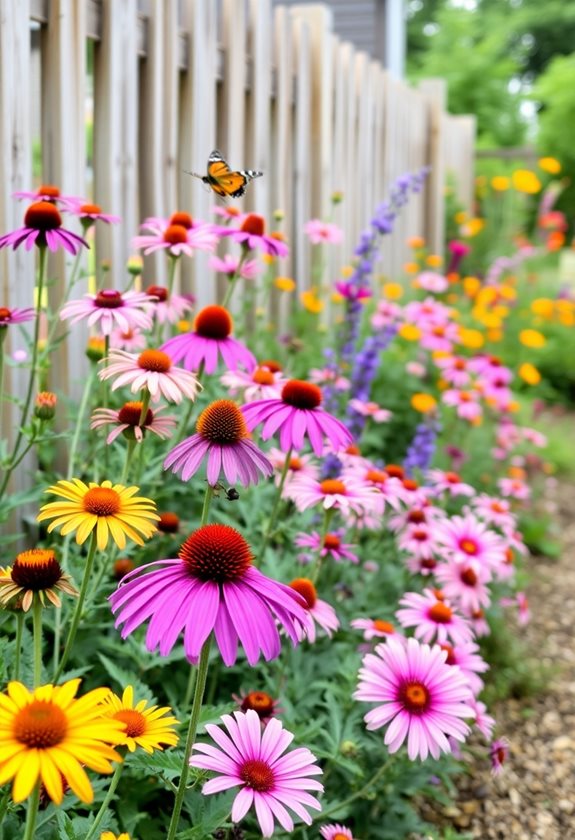
Creating a vibrant garden is not just about privacy; it’s also about bringing life to your outdoor space! Flowering perennials are perfect for attracting pollinators like bees and butterflies. Imagine the joy of watching these creatures flutter around your garden! Some excellent choices include:
- Coneflowers: Hardy and colorful, they bloom all summer.
- Black-eyed Susans: Bright yellow, they’re a favorite among pollinators.
- Lavender: Not only fragrant, but it also attracts bees!
Plant these beauties in sunny spots, and you’ll create a buzzing sanctuary. Plus, they’re low-maintenance—who doesn’t love that? Your garden will thank you! Additionally, incorporating year-round foliage ensures that your garden remains attractive even in the off-season.
Climbing Vines for Vertical Interest
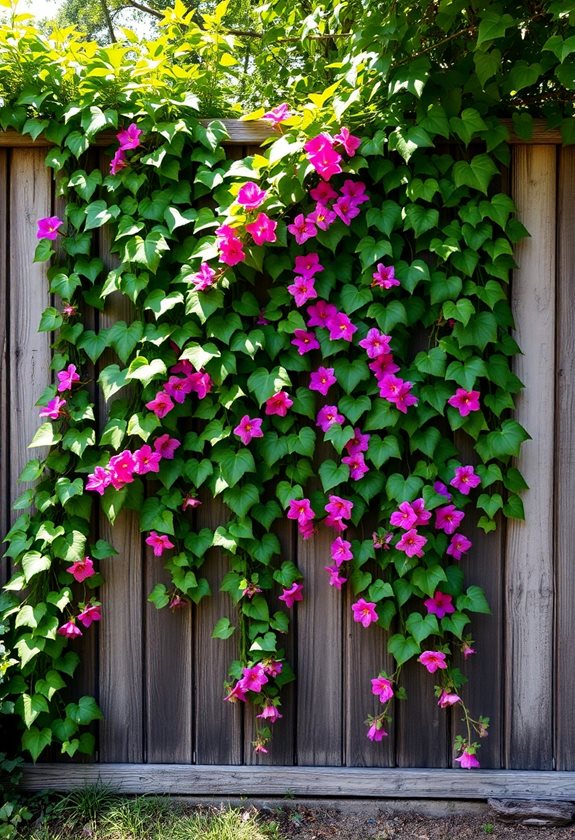
Looking to add some pizzazz to your garden? Climbing vines can transform your space into a vertical wonderland! They’re perfect for fences, creating a lush backdrop that’s both safe and stunning. Consider options like sweet peas or morning glories, which not only offer beauty but also attract friendly pollinators. Just make sure to choose non-toxic varieties if you have pets or kids around.
Here’s a quick tip: train your vines with garden twine to keep them neat and manageable. With a little care and creativity, you’ll have a vibrant garden that’s sure to impress! Additionally, incorporating best climbing plants can enhance the aesthetic appeal and diversity of your vertical garden. Ready to climb to new heights?
Edible Plants for a Productive Garden
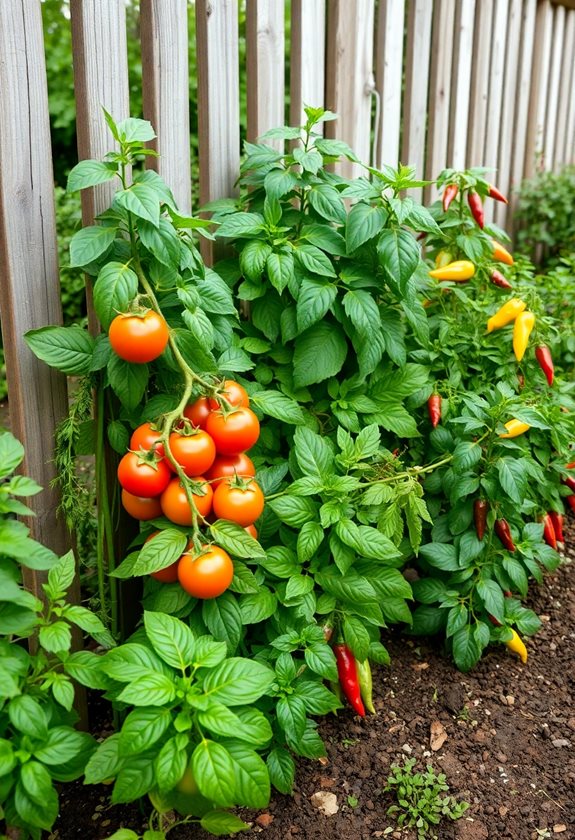
If you’ve ever dreamed of stepping into your backyard and plucking fresh veggies right off the vine, then edible plants are your ticket to a productive garden! Imagine biting into a juicy tomato or crisp cucumber you grew yourself. Start with easy-to-grow options like:
- Lettuce: Quick and rewarding!
- Radishes: They sprout in no time!
- Herbs: Basil and mint add flavor and fragrance.
Remember to check for pests safely, and use organic options if needed. It’s a journey, and you might face challenges, but the joy of harvesting makes it all worthwhile. Additionally, incorporating stunning native flowers can enhance your garden’s ecosystem while attracting beneficial pollinators. Ready to dig in?
Low-Maintenance Ground Covers
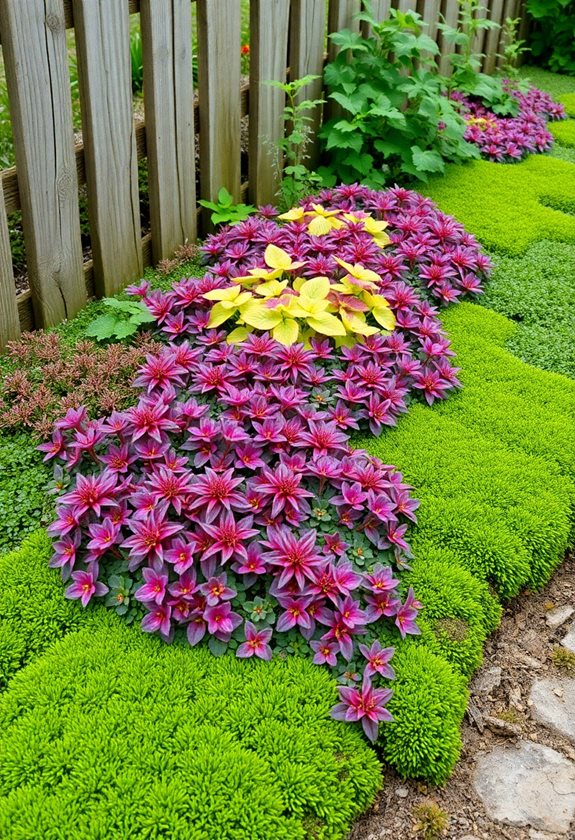
After enjoying the thrill of growing your own vegetables, you might be wondering how to keep those garden beds looking sharp without all the fuss. Low-maintenance ground covers are your best friends! They suppress weeds and add a lush green carpet to your garden. Consider options like creeping thyme or clover; they’re safe and kid-friendly! Plus, they attract pollinators—bonus! Using layering techniques in your garden can also enhance depth and visual interest.
Here’s a quick list:
- Creeping phlox
- Irish moss
- Sedum
With these, you’ll spend less time weeding and more time enjoying your beautiful garden. Isn’t that what we all want? Happy gardening!
Seasonal Bloomers for Continuous Color
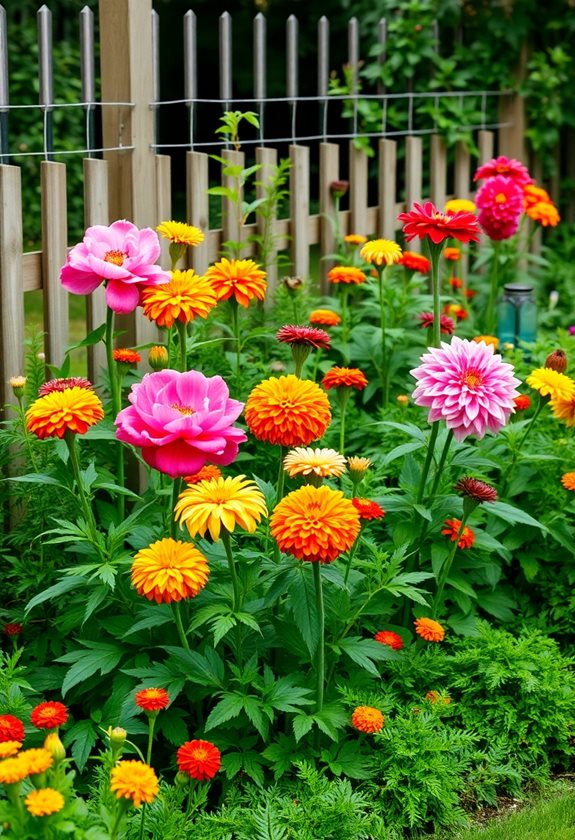
While it’s easy to get swept up in the excitement of planting a vibrant garden, have you ever thought about how to keep that color alive throughout the seasons? Seasonal bloomers are your best friends! Imagine peeking out and seeing:
Keep your garden bursting with color all year by planting seasonal bloomers for a vibrant display every season!
- Daffodils in spring
- Lavender in summer
- Chrysanthemums in fall
Mix them in your garden for continuous color! For added fun, try planting bulbs that bloom at different times. It’s like a bloom party all year round! Just remember, a little planning goes a long way. Additionally, consider incorporating pest-repelling flowers to enhance your garden’s health and beauty. So, what are you waiting for? Let’s make your garden a colorful masterpiece!
Fragrant Plants to Enhance the Atmosphere
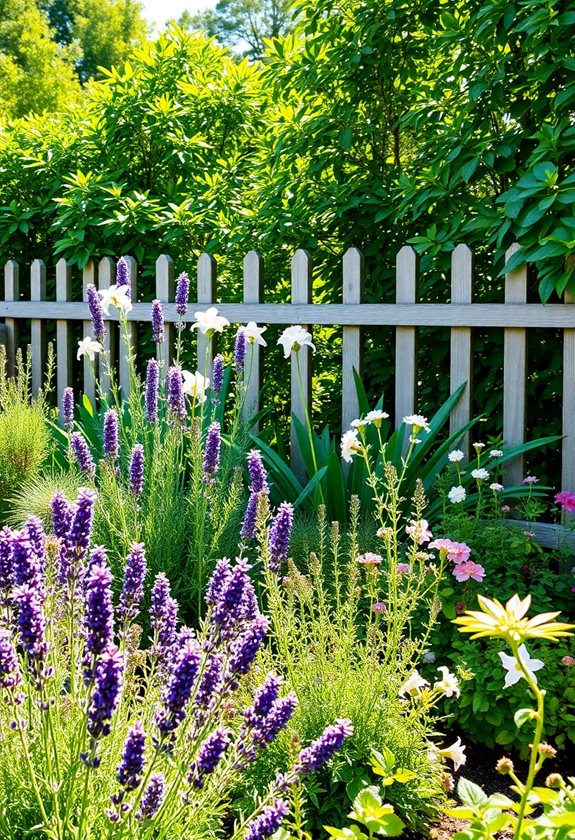
Imagine stepping into your garden, where the air is filled with delightful scents that transport you to a serene oasis. Fragrant plants not only enhance the atmosphere but also create a welcoming space. So, what should you plant? Here are three top choices:
- Lavender – Its calming scent is perfect for relaxation.
- Rosemary – This herb offers a savory aroma while being useful in the kitchen!
- Jasmine – Its sweet fragrance can lift your spirits, especially in the evening.
Incorporating edible plants into your garden design can further enhance both beauty and functionality. With these plants, you’ll create a lovely, safe haven that you, your family, and friends will adore! Why wait?
Frequently Asked Questions
What Are the Best Plants for Shaded Fenced Garden Areas?
If you’ve got a shaded fenced garden, don’t worry! You can still grow beautiful plants. Consider hostas for their lush foliage, or ferns for a wild, natural look. Astilbes add lovely color, while bleeding hearts bring a touch of whimsy. You might even try shade-tolerant herbs like mint! Remember, just because it’s shady doesn’t mean it can’t be vibrant. Isn’t that exciting? So, grab your gardening gloves and start planting!
How Do I Choose the Right Soil for My Garden Plants?
Choosing the right soil for your garden plants can feel overwhelming, but it doesn’t have to be! Start by checking your current soil’s texture and drainage. You want it loose enough for roots to breathe, yet rich in nutrients. Think about mixing in compost or organic matter—your plants will love it! Have you considered doing a pH test? It’s like a health check for your soil. Happy gardening! You’ve got this!
Which Plants Are Deer-Resistant for Fenced Gardens?
So, you wanna keep those pesky deer at bay, huh? You’ve got options! Consider planting lavender, marigolds, or rosemary. These beauties not only repel deer but also add vibrant colors and delightful scents to your garden. Did you know that deer typically avoid anything with a strong fragrance? Plus, they’re low-maintenance! Why not mix them in with your other plants? You’ll enjoy a flourishing garden while keeping those munching marauders away!
How Can I Improve Drainage in My Fenced Garden?
Improving drainage in your garden can feel like a puzzle, but it’s easier than it sounds! Start by adding organic matter like compost to enrich the soil. You can also create raised beds—think of them as cozy little homes for your plants! Installing a French drain might sound fancy, but it’s just a trench filled with gravel to redirect water. Have you tried these? Your plants will thank you for the dry feet!
What Are the Benefits of Companion Planting in a Garden?
Companion planting’s a game-changer in gardening! By pairing plants that benefit each other, you boost growth and deter pests. For instance, planting basil near tomatoes can enhance flavor and ward off bugs. It’s like a garden buddy system! Plus, you’ll create a thriving ecosystem that attracts pollinators. Who wouldn’t want that? Just think about how much more vibrant your garden could be with a little teamwork! Have you tried it yet?