
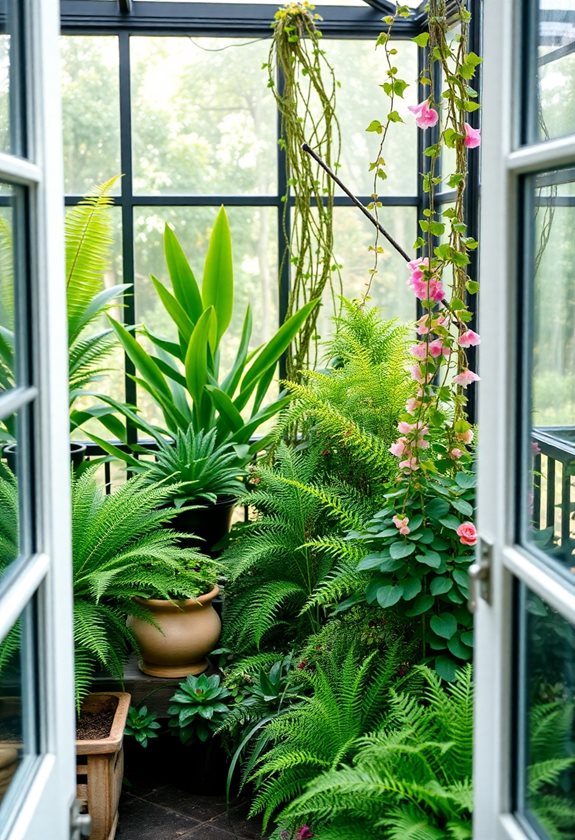
Looking to transform your enclosed garden? You’ve got some fantastic options! Think about hardy perennials like daisies and coneflowers for year-round color, or fragrant herbs like mint and lavender to add delightful scents. Compact veggies, such as cherry tomatoes, are perfect for small spaces, while colorful annuals like zinnias bring seasonal vibrancy. Don’t forget climbing plants for vertical interest! Curious to know more about which plants will thrive and how to care for them?
Design Highlights
- Hardy perennials like daisies and coneflowers thrive year-round, offering vibrant colors with minimal maintenance in enclosed gardens.
- Fragrant herbs such as basil and lavender not only enhance your space with pleasant scents but also attract beneficial pollinators.
- Compact vegetables, including cherry tomatoes and baby carrots, are perfect for small areas and can be grown in containers or vertical planters.
- Colorful annuals like petunias and marigolds provide seasonal vibrancy and visual appeal while helping deter pests.
- Climbing plants such as clematis and honeysuckle add vertical interest and transform bare walls into green spaces, enhancing the overall atmosphere.
Hardy Perennials for Year-Round Color
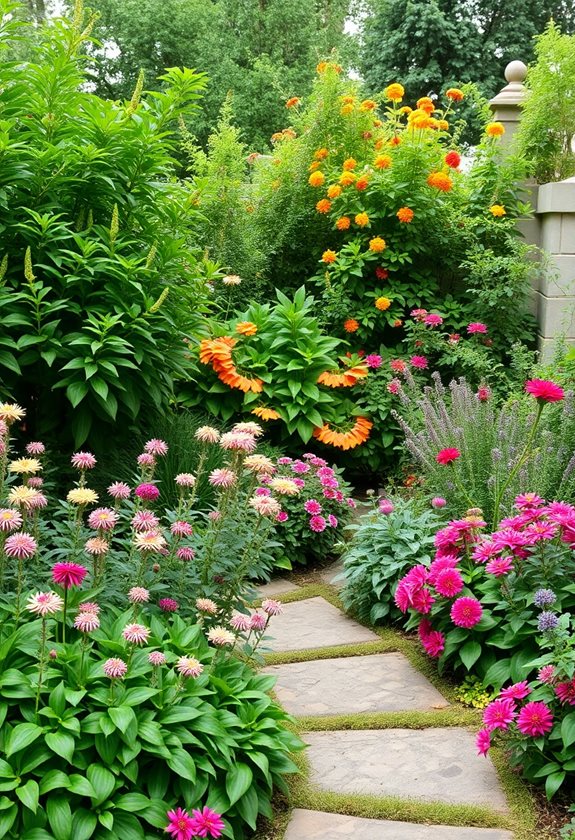
When you’re dreaming of a garden that bursts with color all year long, wouldn’t it be amazing to rely on hardy perennials that come back stronger each season? Imagine vibrant daisies and cheerful coneflowers lighting up your space! These plants are perfect for enclosed gardens since they thrive in various conditions. Plus, they’re low-maintenance!
Consider adding:
- Daylilies: They bloom in stunning shades and are tough as nails.
- Sedum: This succulent is drought-resistant and offers unique textures.
With these beauties, you’ll enjoy a colorful oasis without the worry of constant replanting. Choosing between low and high-maintenance plants can help you select the best options for your gardening style. Isn’t gardening just the best?
Fragrant Herbs to Enhance Your Space
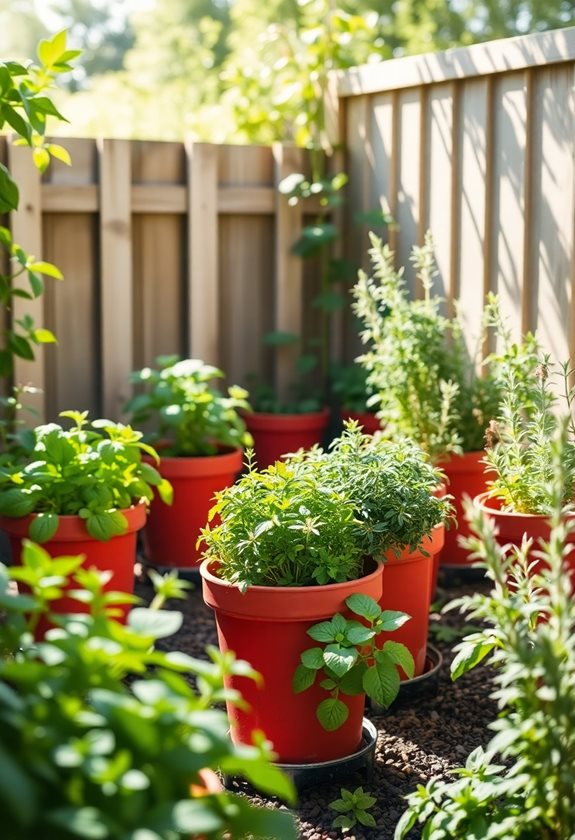
Imagine stepping into your enclosed garden and being greeted by a symphony of scents that instantly lifts your spirits. Fragrant herbs not only enhance your space but also add a touch of culinary magic! You’ll love how easy they are to grow and how they can transform your garden into a sensory haven. Consider adding these delightful herbs:
- Basil: Perfect for your pasta dishes and its sweet aroma is a joy!
- Mint: Revitalizing and invigorating; it thrives with minimal effort.
- Lavender: Calming and beautiful, it attracts beneficial pollinators.
Incorporating vibrant plants can further enhance your garden’s allure and ensure year-round color. Don’t underestimate the power of scent – your garden will thank you!
Compact Vegetables for Small Gardens
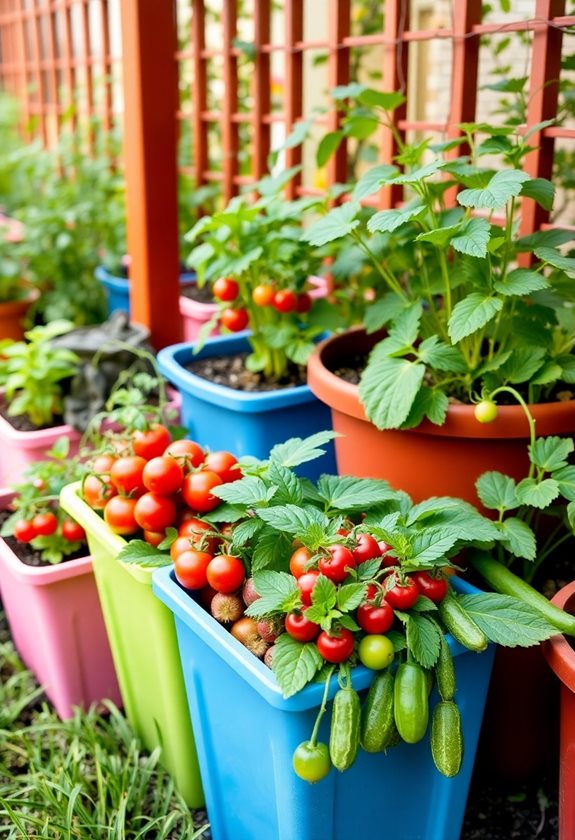
Even if your garden space is small, you can still cultivate a bountiful harvest with compact vegetables that fit perfectly into any nook or cranny. Think about growing cherry tomatoes, baby carrots, or dwarf zucchini—they’re not just space-savers but also delicious! You can even use vertical planters or hanging baskets to maximize your limited area. Have you tried container gardening? It’s a fun way to get creative! Remember, maintaining a safe environment means selecting organic seeds and using natural pest control methods. Additionally, using vertical planters can help you optimize your growing space significantly. So go ahead, dig in, and enjoy the thrill of watching your little garden flourish! Happy gardening!
Colorful Annuals for Seasonal Vibrancy
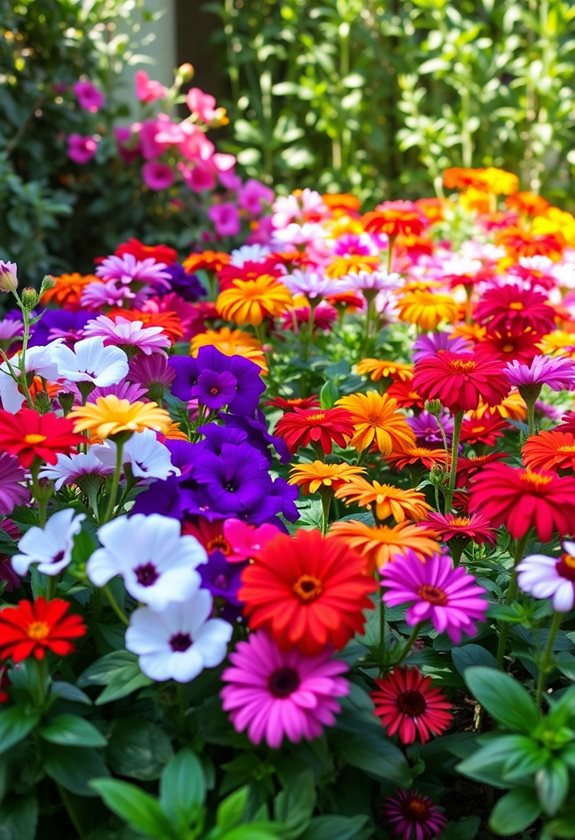
As you stroll through your garden, wouldn’t it be fantastic to see splashes of color dancing in the sunlight? Colorful annuals can bring that vibrancy and joy! These seasonal gems not only brighten your space but also attract cheerful pollinators. Here are three stunning options you might consider:
Imagine your garden filled with vibrant annuals, bringing joy and attracting delightful pollinators under the warm sun!
- Petunias: Easy to care for and available in various colors, they add a lovely touch.
- Marigolds: Bright yellows and oranges not only look great but also deter pests.
- Zinnias: These hardy flowers bloom all summer, offering a delightful array of hues. Additionally, planting colorful flower beds can significantly enhance the visual appeal while drawing in more pollinators.
Climbing Plants for Vertical Interest
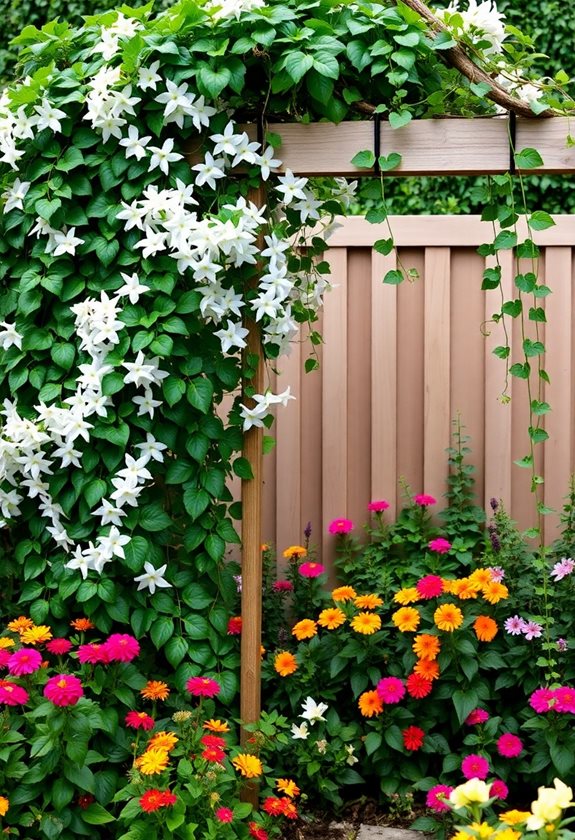
Once you’ve added those colorful annuals to your garden, why not elevate your space even further with some climbing plants? They can transform bare walls or fences into stunning green canvases! Consider:
- Clematis: Its vibrant blooms can add a pop of color.
- Honeysuckle: Sweet-smelling and attractive to pollinators!
- Ivy: Great for a lush, classic look.
Just make sure you choose non-invasive varieties. Don’t forget to provide a sturdy trellis or support for them to climb safely. Climbing plants not only beautify but also create a cozy, inviting atmosphere. Best climbing plants can enhance your vertical garden design even further. Ready to reach new heights in your garden?
Low-Maintenance Succulents and Cacti
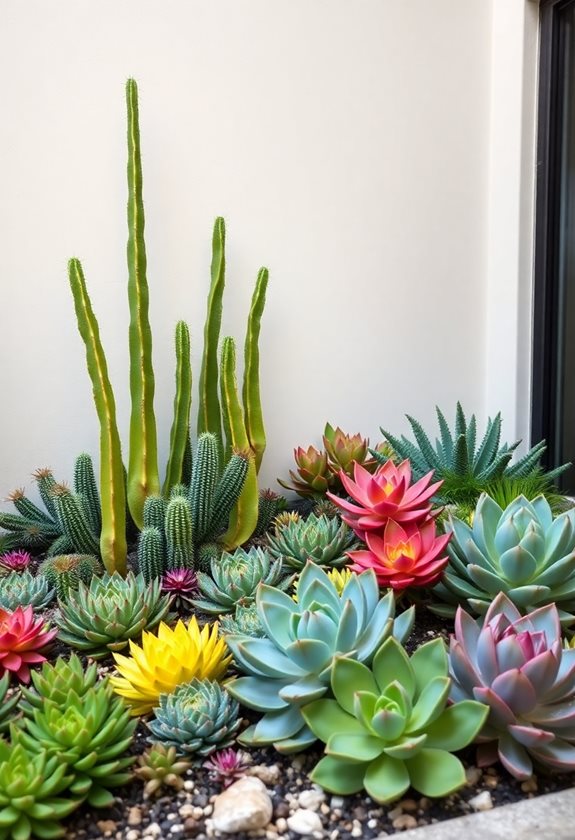
If you’re looking for plants that are as easy to care for as they are beautiful, succulents and cacti are your best friends! These low-maintenance gems thrive in enclosed garden spaces, bringing color and texture without the fuss. Plus, they’re perfect for those of us who sometimes forget to water!
Here are three fantastic options:
- Aloe Vera: Great for its healing properties and striking look.
- Echeveria: These rosette-shaped succulents add a touch of elegance.
- Barrel Cactus: Hardy and fun, they’re perfect for sunny spots! Additionally, many of these plants are known for being drought-resistant, making them ideal for effortless gardening.
Shade-Loving Plants for Darker Corners
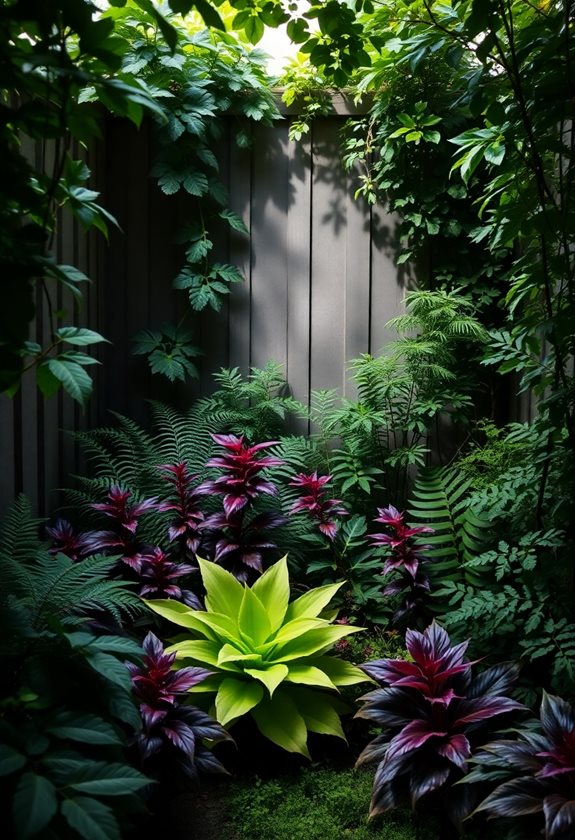
Even though you might think your garden is doomed in those dark corners, there are plenty of shade-loving plants that can turn those gloomy spots into vibrant oases! Consider adding ferns, hostas, or astilbes, which thrive in low light and add lush greenery. They’re not just safe but also low-maintenance—perfect for busy gardeners. How about some colorful caladiums for a pop of brightness? Don’t forget to check moisture levels, as shade can hold water longer. Shade-loving plants can provide a beautiful solution for those problematic areas in your garden. With a little creativity, those dark corners can become your favorite retreat! So, why not give it a try? Your garden deserves it!
Air Plants for Unique Displays
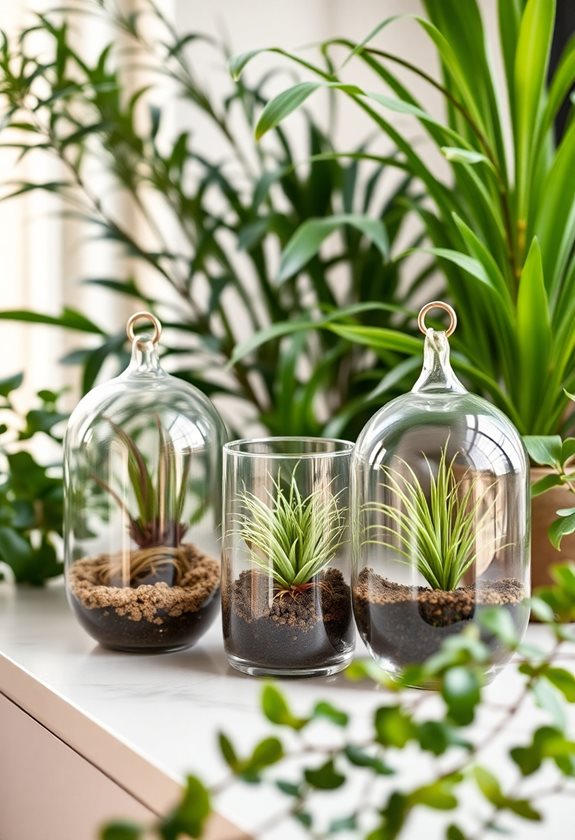
While you might think that air plants are just quirky little green decorations, they actually offer so much more when it comes to creating unique displays in your home or garden! These fascinating plants don’t need soil, making them perfect for imaginative arrangements. You can hang them, place them in terrariums, or even attach them to driftwood for a natural look.
Consider these ideas for your air plant displays:
- Use colorful pots to brighten up your space.
- Create a wall-mounted garden for a stunning focal point.
- Pair them with decorative stones for added texture.
Get creative and enjoy their low-maintenance beauty!
Decorative Foliage Plants to Add Texture
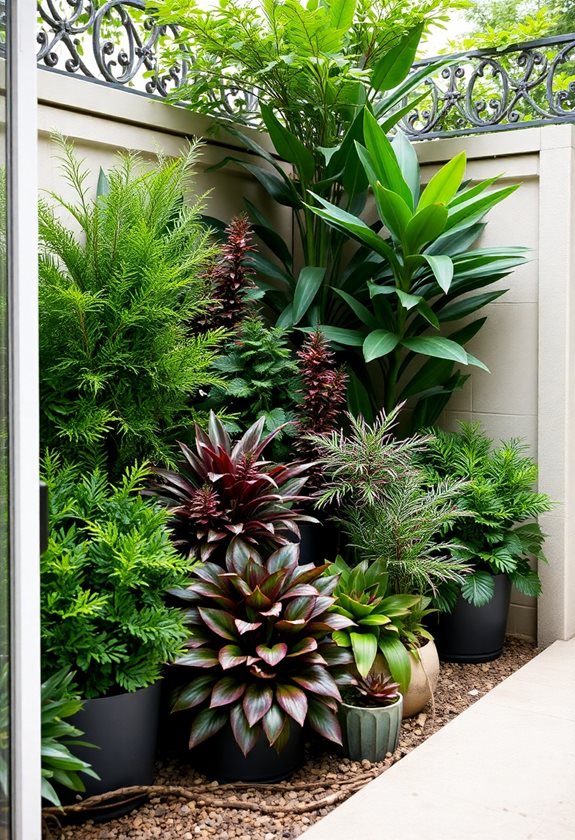
When you think about transforming your enclosed garden space, adding decorative foliage plants can truly elevate the overall vibe! Imagine lush ferns, vibrant caladiums, or striking snake plants—each adds a unique texture and personality to your garden. Have you ever felt the calming effect of surrounding yourself with greenery?
To get started:
- Choose plants with different leaf shapes and colors.
- Mix in some trailing vines for added depth.
- Don’t forget to take into account plant safety, especially if you have pets or kids!
Incorporating beautiful ferns into your garden design can significantly enhance its visual appeal. These simple touches not only beautify your space but also create a cozy, inviting atmosphere. Isn’t that what we all want?
Frequently Asked Questions
How Do I Choose the Right Potting Soil for My Plants?
Choosing the right potting soil isn’t as tricky as it sounds! Start by knowing your plants’ needs. Do they prefer well-drained soil or something more moisture-retentive? Look for potting mixes labeled for your plant type. Don’t forget to check for organic options—they’re safer for you and the environment! If you’re feeling adventurous, try blending your own with compost and perlite. Trust me, your plants will thank you with vibrant growth!
What Is the Best Watering Schedule for Enclosed Gardens?
Wondering about the best watering schedule for your enclosed garden? You’ll want to water your plants deeply but less frequently. Aim for once a week, adjusting based on weather. Check the soil; if it’s dry an inch down, it’s time to water! Early mornings are best to prevent evaporation. Don’t forget to take into account plant types—some like it drier, while others thrive in moisture. Happy gardening! Isn’t it exciting to see your plants flourish?
How Can I Improve Air Circulation in My Enclosed Space?
Improving air circulation in your enclosed space can really boost your plants’ health! You can start by adding small fans to create a gentle breeze. Open windows and doors when it’s safe, too. Consider using mesh screens; they let air flow while keeping pests out. Also, placing plants further apart allows air to circulate better. Have you thought about using vertical gardening? It’s a fun way to maximize space! Happy gardening!
What Pests Should I Watch for in Enclosed Gardens?
You might think enclosed gardens are safe from pests, but they can attract some sneaky visitors! Watch out for aphids, spider mites, and whiteflies; they love cozy spots. You can spot aphids by their tiny green bodies, while spider mites leave fine webs. To keep them at bay, introduce ladybugs or use neem oil. Have you ever seen a ladybug in action? They’re like nature’s little superheroes! Keep your garden healthy and thriving!
How Do I Manage Humidity Levels in a Closed Garden?
Managing humidity in your closed garden can be a fun challenge! You can start by using a hygrometer to monitor levels. If it’s too high, try these tips:
- Keep air circulating with a fan.
- Open vents when possible.
- Consider adding a dehumidifier.
And don’t forget about watering—overwatering can spike humidity! It’s all about finding that sweet spot. So, how’s your garden growing? Exciting, right?